
This page covers the NCERT International Trade Class 12 chapter — Chapter 8, “International Trade”, from the Class 12 Geography textbook Fundamentals of Human Geography. The chapter runs 7 pages, and the official PDF is right below, followed by a plain-language walkthrough of everything it contains.
| What the chapter holds | Count | Where it is used |
|---|---|---|
| Printed pages | 7 | |
| Figures with NCERT captions | 5 | |
| Exercise questions | 3 | answered in our NCERT Solutions |
| Activities | 1 | |
| Official NCERT PDF | Download the chapter PDF | the chapter exactly as NCERT publishes it |
International Trade Class 12 Chapter PDF
The file you want is Chapter 8 of Fundamentals of Human Geography, the NCERT Class 12 Geography book — seven pages of the official NCERT edition, complete with its photographs and exercise set.
The official NCERT International Trade Class 12 chapter PDF lives on ncert.nic.in in the same edition your school follows — open it for the complete chapter text, the original photographs and the printed exercises as they appear in the book. These are the textbook’s contents and figures, including the five diagrams reproduced and discussed in detail below.
Chapter 8 at a Glance: What’s Inside the PDF
The chapter-at-a-glance table on this page lists precisely how much the file holds — sections, figures and exercise questions, counted straight from the official PDF.
This is a text-based chapter: the ideas travel in prose and photographs rather than formulas, with an activity prompt mid-chapter and the exercises on the closing page.
What This Chapter Covers: From Barter to Global Trade Gateways
The chapter answers one question: how did trade grow from local barter into the arrangement that organises the world’s economy? Its story moves in four parts.
- History — from barter to money, along the Silk Route, through the slave trade, to the Industrial Revolution’s reversal of trade flows (chapter pages 1–2).
- Why trade exists — specialisation, comparative advantage, and the five bases of international trade (chapter pages 2–3).
- Rules and institutions — balance of trade, free trade and dumping, GATT becoming the WTO, and regional trade blocs (chapter pages 4–5).
- Ports as gateways — the facilities ports provide and the three ways the book classifies them (chapter page 6).
Key Concepts in International Trade, Explained Simply
These are the ideas the whole chapter builds on, in the order the chapter presents them. Each is stated plainly with its chapter page so you can follow along in the book.
Why trade exists: specialisation and comparative advantage
Specialisation is the chapter’s starting answer: international trade exists because countries concentrate on producing what they are relatively good at and then exchange the surplus. The book calls international trade the result of specialisation in production, linked to division of labour between countries (chapter p. 2).
Trade based on specialisation rests on comparative advantage — each country produces what it makes relatively better — supported by complementarity (the two partners need what the other produces) and transferability (the goods can actually be moved between them, favouring the two-sided relationship of trade between the two countries that exchange goods and services).
In principle trade should be mutually beneficial to both partners. In modern times it is the basis of the world’s economic organisation and is tied to the foreign policy of nations; with well-developed transport and communication systems, no country is willing to forego the benefits of participation (chapter p. 2).
The five bases of international trade
Trade happens because countries differ. The chapter names five differences — its five bases of international trade (chapter p. 3):
- Differences in national resources — geological structure (mineral base, crop variety, tourism from mountains), unevenly spread mineral resources, and climate, which decides what grows where — wool from cold regions, bananas, rubber and cocoa from the tropics that trade globally at every stage of economic activity.
- Population factors — cultural factors such as distinctive crafts valued worldwide (Chinese porcelain and brocades, Iranian carpets, North African leather work, Indonesian batik), and population size, which shapes how much a country trades internally versus imports from abroad.
- Stage of development — agricultural countries exchange agro products for manufactured goods, while industrialised nations export machinery and finished products and import food grains and other raw materials whose monetary value declined relative to manufactures after the Industrial Revolution shaped world trade flows.
- Extent of foreign investment — outside capital develops mining, oil drilling, heavy engineering, lumbering and plantation agriculture in developing countries, which steps up the volume of trade between nations while industrial nations gain markets for finished products.
- Transport — better rail, ocean and air links plus refrigeration expanded trade beyond the local area, since only high-value items such as gems, silk and spices once travelled over long distances; efficient transport is the reason trade has experienced spatial expansion in modern times with international trade becoming the basis of the world’s economic organisation (chapter p. 3).
Memorise the first letters — N-P-S-F-T as “New People Start Foreign Trade”: NPopulation, Stage of development, Foreign investment, Transport.
Balance of trade vs balance of payments
The balance of trade records the volume of goods and services a country imports and exports to other countries. When imports exceed exports, the country has a negative or unfavourable balance of trade; when exports exceed imports in value, the balance is positive or favourable (chapter p. 4).
The chapter links this record to the wider balance of payments. A negative balance means the country spends more on buying goods than it earns from selling its own — and that ultimately leads to the exhaustion of its financial reserves, which is serious for the national economy planning of trade policy.
By the same measure, a positive balance means the country earns more from exports than it spends on imports — the favourable direction every economy prefers (chapter p. 4).
Bilateral trade, multilateral trade and MFN status
Trade between two countries under an agreed list of specified commodities is bilateral trade; trade conducted with many countries at once is multilateral trade.
In this system a country may grant a trading partner the status of “Most Favoured Nation” (MFN (chapter p. 4 — one of the most asked MCQs on trade types). Original example with invented countries to fix the difference between the two types of trade: suppose Aldoria ships cotton to Bronwick and Bronwick ships tractors to Aldoria under a signed agreement — that pair of deals is bilateral trade between the two countries. Now let Aldoria also buy steel from Calveria, sell grain to a dozen other nations and grant Calveria MFN status — that wider web of many trading countries is multilateral trade, one country trading with a number of partners at the same time (chapter p. 4).
Free trade and the problem of dumping
Opening up economies by bringing down barriers such as tariffs is free tradedumping comes in: the practice of selling a commodity in two countries at a price that differs for reasons not related to costs is called dumping, and dumped goods of cheaper prices can harm domestic producers (chapter p. 4).
From GATT to WTO, and regional trade blocs (chapter p. 5 for the WTO’s members and members’ blocs’ descriptions of the regional blocs and intra-regional trade agreements generated by regional trade blocs (chapter p. 5 for playing the role of the failure of the global organisations’ ability to speed up intra-regional trade in practice today).
In 1948 the General Agreement on Tariffs and Trade (GATT) formed to liberalise the world and members from high customs tariffs and various other restrictions.
In 1994 the members agreed to set up a permanent institution to promote free and fair trade, and GATT was transformed into the World Trade Organisation (WTO) from 1 January 1995 — the only international organisation dealing with global rules of trade between nations, setting those rules and resolving disputes between member nations as the dispute settlement body of WTO does with its dispositive panels: the WTO’s two core activities are setting global trading rules and resolving disputes between members over trade between nations and trade’s services and intellectual rights and WTO membership counted 166 member countries as of December 2024 (chapter p. 5 for WTO formation history on the book page on page five of the chapter’s membership data that the formal body over which India holds founder member status with most trading rights), headquartered in Geneva, Switzerland, and having 166 members as of December 2024, with India a founder member (chapter p. 5 for world headquarters’ official facts and the 2024 membership figure from the chapter’s margin quotes in the boxed data).
Critics, however, argue that free trade widens the gulf between rich and poor by making rich countries richer, that influential WTO nations focus on their own commercial interests, that developed countries have not fully opened their markets to products from developing countries, and that issues of health, worker’s rights, child labour and environment are ignored by free trade’s effects which do not make ordinary people’s lives more prosperous (chapter p. 5 for WTO criticism listed after its functions).
Alongside the WTO, regional trade blocs encourage trade between countries with geographical proximity, similarity and complementarities in trading items, and to curb restrictions on trade of the developing world.
Today 120 regional trade blocs generate 52 per cent of the world’s trade; these blocs developed as a response to the failure of global organisations to speed up intra-regional trade, and they remove trade tariffs within member nations while intra-bloc free trade flourishes — though the chapter warns free trade between different blocs could get increasingly difficult in the future (chapter p. 5 for regional blocs’ formation and their share of world trade in numbers quoted in the book’s own text).
Ports: the gateways of world trade
Ports and harbours are the chief gateways of international trade — cargoes and travellers pass through them from one part of the world to another. The ports provide facilities of docking, loading, unloading and storage for cargo, with the port authorities also maintaining navigable channels and arranging tugs and barges, labour and managerial services (chapter p. 6).
A port’s importance is judged by the size of cargo and the number of ships handled, and the quantity of cargo handled is an indicator of the level of development of its hinterland — the region served inland from the port that produces the cargo traffic which flows through it (chapter p. 6).
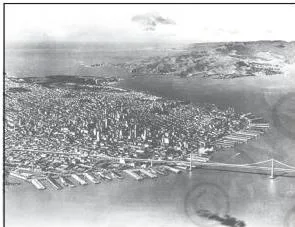
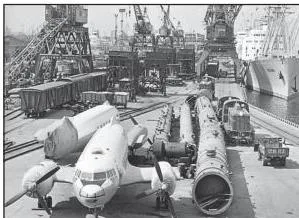
Figure 8.3 shows San Francisco, which the chapter calls the largest land-locked harbour in the world — a natural harbour acting as a gateway through which trade enters a region, typical of the most important world port cities built around natural harbours served by ocean-going ships able to approach and dock there safely in all seasons and weather conditions on the main sea routes of the trading world map.
Figure 8.4 shows the Leningrad Commercial Port — an example of commercial ports handling general cargo — packaged products and manufactured goods, and these ports also handle passenger traffic of travellers crossing between continents on passenger liners and cruise ships calling at harbour facilities and terminals of international trade of the country around the city hinterland (chapter p. 6 for both figures 8.3 and 8.4 pictures in the book accompanied by their printed captions above).
Figure Walkthrough: Barter, Slave Trade and the Port Images
Reference: NCERT Class 12 Geography textbook, chapter {chapter_number}, official edition on ncert.nic.in.
The chapter carries a small set of images, each marking a stage in the story of trade.
The two port photographs appeared above with the ports section; here are the remaining three figures from the chapter that a reader studying the book’s pages sees in sequence, and figures that tell the whole narrative of trade in pictures if read in order of history’s development of trade systems and their global expansion across the world with evolving means of transport and barter to money and industrial manufactures trading on the sea routes by ship and harbour, and the colonial period’s, slave-trade of human beings in the era of plantations on both sides of the Atlantic ocean, and finally the modern globalized twenty-first-century trade through gateways where giant container ships of every cargo type and cargo of every kind, in bulk and general cargo shipments of raw materials to finished products travel from port to port of trade blocs and free trade agreements at ports of call and entrepot ports between nations and regional trade blocs’ 120 blocs generating 52 per cent of the world trade of today and tomorrow and beyond, as portsgateways of world trade in all its forms old and new mingle at the docks of comprehensive ports: most of the world’s great ports, classified as industrial, commercial, inland, out ports, oil ports, naval ports, packet stations, and the great port cities of the world economy (pages 1–6 for the figures’ contexts listed in their captions from the NCERT text pages).
Each of the chapter’s five photographic figures below is captioned exactly as in the book, so you can flick to the page and compare the book’s own print quality against the PDF you’ve opened from the NCERT official edition link at the top of this page, to verify figures and text.
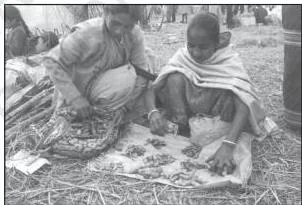
Figure 8.1 comes first in the story of trade history: it shows two women at Jon Beel Mela (chapter p. 1 for the barter fair at Jagiroad, 35 km from Guwahati, held every January after harvest season; it is possibly the only fair in India where the barter system is still alive, and organised as a big market where people from various tribes and communities exchange their products in this living example of barter trade practised by tribesmen and villagers in Assam and the Northeast region of India in the modern period side by side with currency, notes and coin of the Reserve Bank of India, and digital payment and UPI, of modern banking and finance and international trade of the twenty-first century that has long replaced barter everywhere else on earth — a unique surviving island of the old system prim’ in India FHG 12th NCERT Geography as printed margin, p. 69).
The next figure is unnumbered in the book and accompanies the sentence that the difficulties of the barter system were overcome by the introduction of money: before paper and coin currency came into being, rare objects with very high intrinsic value served as money — flintstones, obsidian, “ourte” (cowrie) shells, tiger’s paws, whale’s teeth, dogs’ teeth, skins, furs, cattle, rice, peppercorns, salt, small tools, copper, silver and gold, and the reader’s attention is drawn to the fact that the very word salary itself, from Latin salarium, means payment by salt and by the chapter’s “Do-You-Know” aside on chapter p. 2 (because producing salt from sea water was unknown then, rock salt was rare, expensive, and it therefore became a mode of payment, the origin of the word salary in the episodic historical development of money).

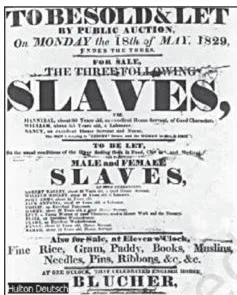
Figure 8.2 documents slavery as trade: an advertisement for slave auction printed on 1829’s newspapers, in America of the slave auction block, advertised slaves for sale or temporary hire by their owners, and buyers often paid as much as $2,000 for a skilled healthy slave, and auctions separated family members, many of whom never saw their loved ones again — and this brutal traffic of human beings in captive African natives by the Portuguese, Dutch, Spaniards and British who transported enslaved Africans to the Americas for labour in the plantations, a lucrative business for more than 200 years in the colonial era when European colonialism from the fifteenth century onward brought, along with exotic commodities trade in luxury items and goods and gems, gold, spices and silk of the east via the Silk Route, the Silk Route being an early example of long-distance trade connecting Rome to China along the 6,000 km route, transporting Chinese silk, Roman wool and precious metals and many other high value commodities; trade was restricted to local markets in ancient times when transporting goods over long distances was risky and people spent most of their resources on food and clothes basic necessities of life, and only the rich bought jewellery and costly dresses for luxury consumption and trade in luxury items, rose, but after Rome now commerce grew in twelfth, thirteenth centuries with ocean-going warships when trade between Europe and Asia grew and the Americas were discovered, European commerce grew after the disintegration of the Roman empire, and fifteenth century onward European colonialism brought about the simultaneous growth of slave trade as one of the most inhuman forms of trade in human history abolished in Denmark in 1792 and Britain in 1807, and the United States of America in 1808 (chapter p. 2 for the slave trade passage and figure’s context of slave auctions in America in the historical overview of international trade history of the chapter, page 70 of the book).
Definitions and the Port Classification Table — A Consolidated Reference for Revision
These terms are the definitions the exercise set tests most, and the port types are the single most heavily asked part of the chapter — the book scatters them across chapter page 6, so the consolidated tables below are the fastest way to revise the gateways of world trade: the port facilities themselves (docking of ships arriving from the sea route, loading, unloading and storage of cargo in warehouses and port sheds for cargoes of every kind, navigable channels, tugs and barges, labour and managerial services that keep the port operating day and night, week in and week out, loading and unloading from ocean-going vessels of every size range of tonnage and draught, river barges of flat bottom ships, container ships, tankers of oil ports and refinery ports and tanker ports, bulk carriers of ore, grain and chemicals cargoes to specialised industrial ports, general cargo of manufactured goods to commercial ports and comprehensive ports that handle both kinds of cargo in large volumes, the great ports of the world that handle bulk and general cargo in large volumes the basis by which a port’s importance is judged by, the size of cargo and number of ships handled, itself an indicator of the level of development of its hinterland (chapter p. 6 for the full ports paragraphs’ terms and definitions of location and function types as printed in the book, and chapter p. 4 for balance of trade terms and the definitions of trade types, MFN status on p. 4, and dumping definition and definition of free trade on p. 4, bilateral trade definition and multilateral trade definition on p. 4, which appear on p. 72–74 of the book’s sequence, designed here as a quick glossary of definitions without formulas, and of course there are no definitions, but there are also per NCERT’s own MCQs — into a two column quick-reference table format, compact and complete, one row per term, exam answers-ready, in alphabetical order for memorising the definitions table, and with page references of chapter pages added to each row to check against the textbook whenever you want to read the surrounding paragraph in full and in context). The definitions table, quick-reference:
| Term | Meaning in this chapter |
|---|---|
| Balance of trade | The record of the volume of goods and services imported as well as exported by a country to other countries (chapter p. 4) |
| Favourable balance of trade | Positive balance when the value of exports is more than the value of imports (chapter p. 4) |
| Unfavourable balance of trade | Negative balance when the value of imports is more than the value of exports — spending more than earning, exhausting the financial reserves (chapter p. 4) |
| Balance of payments | Related record with serious implications for the economy, linked by the chapter to the balance of trade, a negative balance meaning the country’s spending on buying goods is more than it earns by selling goods and services abroad (chapter p. 4) |
| Bilateral trade | Trade between two countries — they enter into agreement to trade specified commodities amongst them (chapter p. 4) |
| Multilateral trade | |
| Multilateral trade | Trade conducted with many trading countries at once — the same country trading with a number of other countries (chapter p. 4) |
| Most Favoured Nation (MFN) status | A status the country may grant to some of its trading partners (chapter p. 4) |
| Free trade (trade liberalisation) | The act of opening up economies by bringing down trade barriers like tariffs — letting goods and services from everywhere compete with domestic products and services (chapter p. 4) |
| Dumping | The practice of selling a commodity in two countries at a price that differs for reasons not related to costs — not merely “cheap goods” (chapter p. 4) |
| Entrepot port | Collection centres where goods are brought from different countries for export — Singapore for Asia, Rotterdam, Copenhagen (chapter p. 6) |
| Out port | A deep-water port built away from the actual port — serves the parent port by receiving ships unable to approach it due to their large size — classic combination, Athens and its out port Piraeus in Greece (chapter p. 6) |
| Packet station (ferry port, packet station) | Exclusively concerned with transportation of passengers and mail across water bodies covering short distances — stations occur in pairs facing each other across a water body, e.g. Dover in England and Calais in France across the English Channel (chapter p. 6) |
Now the complete port classification across its basis of cargo handled, basis of location, basis of specialised function, all nine types in one consolidated table — the classic exam question answered here with the chapter’s own examples and with page references for checking and revision, since the book spreads these port types across chapter page 6.
| Basis of classification | Type of port | What it handles / key fact + example |
|---|---|---|
| By cargo handled (traffic, i.e., types of traffic ports handle) | Industrial ports of the world commerce (industrial ports handle bulk cargo require specialisation) | Specialise in bulk cargo — grain, sugar, ore, oil, chemicals and similar materials (chapter p. 6) |
| By cargo | Commercial ports | Handle general cargo — packaged products and manufactured goods — and also handle passenger traffic (chapter p. 6) |
| By cargo | Comprehensive ports | Handle bulk and general cargo in large volumes — most of the world’s great ports are classified as comprehensive ports (chapter p. 6) |
| By location | Inland ports | Located away from the sea coast, linked to the sea through a river or a canal, accessible to flat-bottom ships or barges — Manchester (linked with a canal), Memphis (on the river Mississippi), Mannheim and Duisburg (on the Rhine), Kolkata (on the river Hoogli, a branch of the Ganga) (chapter p. 6) |
| By location | Out ports | Deep-water ports built away from the actual ports — serve the parent ports by receiving those ships which are unable to approach them due to their large size — Athens and its out port Piraeus in Greece (chapter p. 6) |
| By specialised function | Oil ports | Deal in processing and shipping of oil — tanker ports (Maracaibo in Venezuela, Esskhira in Tunisia, Tripoli in Lebanon) and refinery ports (Abadan on the Gulf of Persia) (chapter p. 6) |
| By specialised function | Ports of call | Originally developed as calling points on main sea routes where ships anchored for refuelling, watering and taking food items; later developed into commercial ports — Aden, Honolulu, Singapore (chapter p. 6) |
| By specialised function | Packet stations (ferry ports) | Exclusively concerned with transporting passengers and mail across water bodies covering short distances; occur in pairs facing each other across the water — Dover in England and Calais in France across the English Channel (chapter p. 6) |
| By specialised function | Entrepot ports | Collection centres where goods are brought from different countries for export — Singapore is an entrepot for Asia, Rotterdam for Europe, Copenhagen for the Baltic region (chapter p. 6) |
| By specialised function | Naval ports | Ports which have only strategic importance — serve warships and have repair workshops for them — Kochi and Karwar in India (chapter p. 6) |
One point that trips students up is why Singapore appears twice: the same port can be classified by more than one function because a port of call and an entrepot port are two different roles, not rival labels.
Singapore began, in the chapter’s account, as a calling point on a main sea route where ships anchored for refuelling, watering and food; later it developed into a commercial port — and today it is also the collection centre for Asia where goods are brought from different countries for export.
Both classifications are true because they answer different questions — where ships stopped originally, and what the port does now with cargo (chapter p. 6).
Common Mistakes Students Make in This Chapter
A handful of confusions recur because the chapter’s wording is specific. Each is named before you can make it, with the chapter page so you can check the original sentence.
| Mistake | Correct rule | How to check your answer |
|---|---|---|
| Treating balance of trade and balance of payments as the same record | The balance of trade records the volume of goods and services imported and exported; the chapter links it to balance of payments, warning that a negative balance means the country spends more than it earns and ultimately exhausts its financial reserves (chapter p. 4) | Ask what the record measures first — imports against exports — then state the consequence (spending more than earning drains reserves). |
| Calling dumping simply “cheap goods” | Dumping is selling a commodity in two countries at a price that differs for reasons not related to costs (chapter p. 4) — the price gap’s cause is part of the definition itself, not the low price alone. | Check the cause of the price difference — if it is not cost-related, the practice is dumping, and dumped cheap goods can harm domestic producers (chapter p. 4). |
| Confusing bilateral with multilateral trade, or treating MFN as a special favour | Bilateral trade is conducted by two countries with each other; multilateral trade is conducted with many trading countries at once; MFN is a status a country may grant to some of its trading partners (chapter p. 4) | Count the partners — two countries trading specified commodities means bilateral, many trading partners at once means multilateral; MFN status granted to partners operates within multilateral trade (chapter p. 4 for MFN status). |
| Mixing up port types — especially entrepot versus port of call (Singapore is both, chapter p. 6) and inland versus out ports (Kolkata is inland on the Hoogli, while Athens uses out port Piraeus, chapter p. 6) | Ports are classified separately by cargo handled (industrial, commercial, comprehensive), by location (inland, out ports (deep water ports serving parent ports, chapter p. 6) — and noting the chapter examples: Manchester linked with a canal; Memphis located on river Mississippi; Rhine ports like Mannheim and Duisburg; Kolkata on the Hoogli, a branch of the Ganga (all inland port examples, chapter p. 6) | Name the basis of classification first — cargo, location or function — and then give the type with its example; if a port collects goods for export say entrepot, if ships once anchored there for refuelling and water say port of call — one port can legitimately be both roles (Singapore, for Asia (chapter p. 6). |
| Assuming free trade always benefits every nation, with no downside | The chapter records the critique as well as the case for free trade, and the WTO criticism of unequal playing field conditions, widening rich-poor gulf, health and worker’s rights, child labour, environment, ignored issues, developed countries’ markets not fully opened — as does free trade’s adverse effect on developing countries’ economies by not giving an equal playing field (chapter p. 4 for the critique of opening up economies and globalisation’s unequal playing field — the case for free trade is on chapter p. 4, and criticisms of the WTO, and of trade liberalisation’s effects on the WTO, are both on chapter p. 5, and regional blocs’ effects on intra-regional trade are on chapter p. 5 in the chapter, and concerns related to international trade are on chapter p. 5 for notes on dependence, resource depletion, pollution and sustainable development’s absence of norms) | If the question asks for arguments on free trade, give both sides — the gains from specialisation, regional specialisation, higher production, better standards of living, worldwide availability of goods and equalisation of prices and wages versus the dangers of dependence, exploitation and commercial rivalry leading to wars (chapter p. 5 for the concerns paragraph that lists these as mutually beneficial versus detrimental effects of trade). |
Exam Notes: What the Exercises Test
Textbook contents and the examinable syllabus are not always identical — check the current Fundamentals of Human Geography official pages on ncert.nic.in and the current official CBSE syllabus before assuming every line here is examinable; this chapter’s exercise set itself maps neatly onto its pages, and you can see from the table that each question points back to the same three sections: port classification (page 6) and the WTO/trade-bloc paragraphs (page 5), with ports asked twice.
| Exercise | What it tests | Where the answer lives |
|---|---|---|
| Q1(i) — choose the right answer: most of the world’s great ports are classified as | Port classification by cargo handled | Chapter p. 6 — the sentence “Most of the world’s great ports are classified as comprehensive ports.” Answers point directly to the text and need no calculation; the chapter emphasises the concept. |
| Q1(ii) — multiple-choice question (ii), which one of the following continents has the maximum flow of global trade | The geography of trade flows across continents (Asia, North America, Europe (four given alternatives are Asia, North America, Europe, Africa), Europe’s trade dominance | Chapter pp. 1–2 lay out how trade flows are distributed historically, from local markets to long-distance routes and industrial nations becoming each other’s principal customers in the later half of the nineteenth century (p. 2 for the principal customers between industrial nations sentence, from which the continental pattern follows for the answer in the book, and verify in the PDF on the official NCERT page above) |
| Q2(i) — in about 30 words, what is the basic function of the World Trade Organisation | WTO’s role and dispute resolution | Chapter p. 5 — sets rules for the global trading system, resolves disputes between member nations, covers trade in services such as telecommunication and banking and issues such as intellectual property rights — one sentence twice checked (the chapter says “global rules of trade between nations” (see WTO’s functions paragraph on p. 5). |
| Q2(ii) — why is it detrimental for a nation to have negative balance of payments, in about 30 words | Balance of trade and payments | Chapter p. 4 — negative balance means spending more on buying goods than the country earns by selling its goods; leading to exhaustion of financial reserves; detrimental for the economy — ground the statement in the balance of trade and balance of payments implications which the chapter itself spells out (p. 2, p. 4 of the chapter on balance of trade and balance of payments paragraphs note: |
| Q2(iii) — what benefits do nations get by forming trading blocs, about 30 words | Regional trade blocs | Chapter. p. 5 — blocs encourage trade between countries with geographical proximity, similarity and complementarities in trading items, curb restrictions on trade of the developing world, remove trade tariffs within the member nations — and the benefits of regional blocs come from the failure of the global organisations to speed up intra-regional trade and from removal of intra-bloc barriers to free trade (p. 5 for the regional blocs (section of the chapter, p. 5) |
| Q3(i) — in not more than 150 words, how are ports helpful for trade and give classification of ports on the basis of their location’s location; a full-marks answer must do both parts separately | Port facilities. Then inland ports (Manchester, Memphis, Mannheim, Duisburg, Kolkata (on the Hoogli) ) — large flat-bottom ship access — then out ports: Athens, and its out port | Chapter. p. 6 for ports are helpful for trade: docking, loading, unloading, storage facilities for cargo and port authorities’ navigable channels, tugs and barges, labour and managerial services, hinterland indicators — then classification by location; port classification on the basis of location into the two inland/out port type and their channel, river and river examples, and for out port — deep-water ports built away from the parent. Port’s. Piraeus example for Athens — for chapter page references list the p. 6 references to chapter, p.6; full marks requires mentioning both location types; note each question part addressing facilities and classification addresses all the examples exactly as printed; 150 words is the ceiling for both parts, not per part, and each part’s answer should include chapter p. 6 examples. |
| where do nations gain from International Trade: not more than 150 words; gains | How trade helps each country, answer specialisation, division of labour and comparative advantage, complementarity and transferability should be mutually beneficial to trading partners;. | Chapter pp. 2–3 for specialisation and comparative advantage (p. 2, p. 3 (complementarity, transferability) |
port classification and the WTO/trade-bloc ideas are each asked more than once in the exercise set above (ports appear in Q1(i) and Q3(i); WTO and blocs appear in Q2(i), Q2(iii) — the chapter emphasises these two clusters of content, and your revision time is best spent on them. The chapter also carries one activity prompt on dumping: it asks you to think of reasons why dumping is becoming a serious concern among trading nations (chapter p. 5), which is a thinking prompt rather than a factual exercise question, plus a news clipping sidebar on page 4 about shrimp exports to the US where the WTO constituted a panel to examine the anti-dumping duty imposed by the US government against imported shrimp from India and Thailand, and elsewhere on that page the chapter notes the imposition of the customs bond requirement and the anti-dumping duty against shrimp from Thailand; the act hit India’s export since the US is the second-largest importer of marine products from India (chapter p. 4 for the world trade news on dumping discussed with the dumping concept and the activity: the chapter’s own thickness of the essay questions’ demands). There are no worked examples or formulas anywhere in this chapter, and the NCERT textbook chapter pages carry no tables of data either — every exercise is information recall and short-answer reasoning from the text you’ve read above; so a revision strategy of knowing the port table cold; the five bases and mnemonic; the balance-of-trade definition exact; the WTO date and headquarters and membership; regional blocs’ 52 per cent figure; Singapore’s double classification; and the two-part structure of the Q3(i) answer, covers the chapter fully.
Revision Summary: The Chapter in One Page
Trade, Chapter 8 reminds us first, is voluntary exchange of goods and services — the definition arrives from Chapter 7 of this same book, which introduces trade as a tertiary activity — and barter is the initial form, exchange of goods directly, still alive today in India at Jon Beel Mela in Jagiroad, 35 km from Guwahati, every January after harvest, in the annual fair where people from various tribes and communities exchange their products and where trade was once restricted to local markets; even in ancient eras when transport over long distances was risky, people spent resources on basic necessities, and luxury trade happened for the rich; the Silk Route was the first long-distance trade connecting Rome to China along 6,000 km — transporting Chinese silk, Roman wool, precious metals — and after the Roman empire’s disintegration, European commerce grew in the twelfth and thirteenth centuries with the development of ocean-going warships, trade between Europe and Asia grew and the Americas were discovered; the fifteenth century onward brought European colonialism and the slave trade, with the Portuguese, Dutch, Spaniards, and British capturing African natives, forcefully transporting them to newly discovered Americas for plantation labour, a lucrative business for more than two hundred years until abolished — Denmark 1792, Great Britain 1807, United States 1808; after the Industrial Revolution, demand for raw materials like grains, meat, wool expanded but their monetary value declined relative to manufactured goods — industrialised nations imported primary products as raw materials and exported value-added finished products to non-industrialised nations; thereafter regions producing primary goods were no longer so important, and industrial nations became each other’s principal customers; in World Wars I and II, countries imposed trade taxes and quantitative restrictions for the first time, and in the post-war period organisations like GATT — later WTO — helped reduce tariffs — trade in modern times is the basis of the world’s economic organisation related to the foreign policy of nations — with well-developed transportation and communication systems, no country is willing to forego the benefits derived from participation, so national well-being is tied up with international flows, trade being mutually beneficial; international trade exists because of specialisation in production — benefits the world economy if countries practise specialisation and division of labour in production of commodities or in the provision of services — each kind of specialisation can give rise to trade — and international trade is based on the principle of comparative advantage; requires complementarity and transferability of goods and services and, in principle, transferability does the transport work that trade depends on for trade’s five bases — 1 difference in national resources — geological structure which determines the mineral resource base; topographical differences ensuring diversity of crops and animals raised — lowlands greater agriculture potential, mountains attracting tourists and promoting tourism — mineral resources are unevenly distributed the world over, the availability of mineral resources; the basis, for industrial development; climate influences the type of flora and fauna surviving in a region, diversifying the range of products — wool production possible in cold regions, bananas, rubber and cocoa in tropical regions — 2 population factors of cultural factors, distinctive forms of art and craft developing in certain cultures valued worldwide — China the finest porcelains and brocades, Iranian carpets, North African leatherwork, Indonesian batik cloth — size of population, densely populated countries have large internal trade but little external trade — standard of living determines demand for better-quality imported products — 3 stage of economic development, nature of traded items change — agricultural countries, agro products exchanged for manufactured goods — industrialised nations exporting machinery and finished products, importing food grains and other raw materials — 4 extent of foreign investment boosting trade in developing countries lacking capital for mining, oil drilling, heavy engineering, lumbering and plantation agriculture — industrial nations ensure import of foodstuffs, minerals, create markets for finished products — stepping up the volume of trade — 5 transport — in olden times restricted trade to local areas, only gems, silk, spices traded over long distances; with rail, ocean, air expansion; better refrigeration and preservation trade experienced spatial expansion — balance of trade records volume of goods and services imported and exported — imports more than exports, negative or unfavourable — exports more than imports, positive or favourable — negative balance, spending more than earning, leads to exhaustion of financial reserves — trade conducted at two levels, international and national — types of international trade being bilateral (two countries agreeing to trade specified commodities) and multilateral (conducted with many trading countries) — the country within which MFN may be granted to trading partners — free trade opening up economies — case for free trade brings down barriers like tariffs — trade liberalisation allows goods to compete with domestic products — globalisation; along with free trade adversely affecting economies of developing countries by not giving equal playing field — caution on dumped goods cheaper prices harming domestic producers — dumping practice of selling a commodity in two countries at a price differing for reasons not related to costs — in 1948 GATT formed to liberalise the world from high customs tariffs, transformed into WTO in 1994 and WTO from 1 January 1995 set the rules for the global trade and resolve disputes between member nations; the WTO sets the rules and resolves disputes between its member nations — and also covers trade in services, telecommunication, banking, and intellectual rights — criticised by those worried about free trade and globalisation, arguing that ordinary people’s lives are not made more prosperous, that it widens the gulf between rich and poor by making rich countries richer — influential nations in the WTO focused on own commercial interests — developed countries not fully opening their markets to products of the developing countries — issues of health, worker’s rights, child labour and environment ignored — WTO Headquarters in Geneva, Switzerland — 166 countries as on December 2024 — India founder member — regional trade blocs, with geographical proximity, similarity and complementarities, 120 blocs generating 52 per cent of world trade, response to failure of global organisations to speed up intra-regional trade — removing tariffs within member nations — future free trade between blocs may get more difficult — concerns related to international trade: trade mutually beneficial where it leads to regional specialisation, higher production, better standard of living, worldwide availability of goods and services, equalisation of prices and wages, diffusion of knowledge and culture — detrimental where dependence, uneven development, exploitation, commercial rivalry leading to wars — global trade affects environment, health — production and use of natural resources spiral up — resources used up faster than replenished — marine life depleting, forests cut down, river basins sold to private drinking water companies, MNCs in oil, gas, mining, pharmaceuticals, agri-business expanding at all costs with pollution, without following norms of sustainable development — harbours and ports the chief gateways of the world of international trade — cargoes and travellers pass through these ports — ports provide docking, loading, unloading and storage facilities for cargo — port authorities maintain navigable channels, arrange tugs and barges, provide labour and managerial services — importance judged by size of cargo and number of ships handled — quantity of cargo handled an indicator of hinterland development — across all of which the table of ports sits above, classified by cargo, by location, by specialised function — nine types, ten kinds of ports including inland out ports, oil, ports of call, packet stations, entrepot port and naval ports — fully consolidated in the table, and the chapter closes; exercises test that content — 15 questions in three forms: alternative choice MCQs, short answers, long answers — the parts answered from the same pages listed in the exam-notes table above; end of revision summary; the tables at the top; the PDF link below; you now have the whole chapter on one page, in your words, with all its parts connected, re-read the page’s definition and think through the flow of its ideas — plus the NCERT’s official edition, 7 pages, in the download at the top (chapter pages listed throughout this page refer to the chapter-file’s internal page numbers 1–7).
Reading back through that flow in order, a night-before revision can hold onto one chain of memory: barter → money → Silk Route → slave trade; Industrial Revolution flips the direction of flows; specialisation + comparative advantage are why trade exists, on five bases — resources, people, stage, investment, transport — N-P-S-F-T “New People Start Foreign Trade” — the balance of trade, negative vs positive; MFN; free trade vs dumping, GATT to WTO in 1995 at Geneva, members 166; trade blocs at 52 per cent; concerns of dependence, resource depletion and pollution — and ports; classified nine ways; Singapore both call and entrepot — every exam answer in the chapter routes through one of those stations.
Related Resources: The Rest of the Book
This listing is maintained for the 2026-27 academic session using the NCERT textbook information available to us. NCERT remains the authority for confirming the latest edition.
The chapter deliberately builds on the definition of trade introduced in Chapter 7 of this same textbook — trade as a tertiary activity — and picks up again where Chapter 7’s account of tertiary activities ended, so if the opening definition of trade as voluntary exchange feels unfamiliar, go back to Chapter 7 first.
- Class 12 Geography notes hub — chapter-by-chapter revision notes for everything in Class 12 Geography, book by book.
- Class 12 revision notes hub — all subjects and books on one page, for moving between geography and the rest of Class 12.
- Transport and Communication notes — India People and Economy chapter, for the related geography of how goods and people move inside a country after this chapter on global movement.
- Geographical Perspective on Selected Issues and Problems notes — the later India People and Economy chapter, a natural next step in revision sequence.
The chapter PDF at the top of this page links to ncert.nic.in, and for verifying the edition your school follows before you read much further, the official pages for Fundamentals of Human Geography on ncert.nic.in list the whole book and its chapters, with the edition and printing information included at the top of the page listing this book’s contents.
Sources and Data Verification
- The content, page references and figure captions on this page describe the NCERT Class 12 Geography textbook Fundamentals of Human Geography, Chapter 8, “International Trade”, official edition on ncert.nic.in; the five images below and above are the chapter’s own photographs, captioned as printed in the book, with the PDFs hosted at ncert.nic.in and mirrored at the links above (the chapter’s 7 pages, Section 8, book offset p. 69–76, all page references in this article use chapter-file pages 1–7).
- This page covers the 7-page chapter PDF only — it does not cover the rest of Fundamentals of Human Geography or any other Class 12 Geography textbook; for the other books use the Class 12 Geography hub linked above.
- It is maintained for the current academic session using the NCERT information available to us, NCERT settles textbooks, editions and PDFs; CBSE settles curriculum, syllabus and examinations, and the official NCERT textbook pages are the authority for edition questions.
- Textbook contents and the examinable syllabus are not always identical — verify against the board’s current official syllabus on cbse.gov.in.
Frequently Asked Questions About International Trade
What is the difference between balance of trade and balance of payments?
The balance of trade records the volume of goods and services a country imports and exports — imports above exports in value give a negative or unfavourable balance of trade.
The chapter links balance of payments to it as the related record with serious implications for the economy, and a negative balance means the country spends more on buying goods than it earns from selling its own goods, eventually exhausting its financial reserves (chapter p. 4).
What is dumping and why is it a concern in international trade?
Dumping is the practice of selling a commodity in two countries at a price that differs for reasons not related to costs — cheap dumped goods of cheaper prices can harm domestic producers, which is why the chapter asks you to consider why dumping is becoming a serious concern among trading nations (chapter p. 4 for definition, chapter p. 5 for the activity prompt on dumping as a serious concern among trading nations; the anti-dumping duty and customs bond sidebar on shrimp imports to the US appears on chapter p. 4 for the WTO panel examining the US anti-dumping duty on imported shrimp from India and Thailand) — 4, and 5.
What are the different types of ports according to this chapter?
The chapter classifies ports by cargo handled — industrial ports for bulk cargo like grain, sugar ore, commercial ports handling general cargo packaged or manufactured goods and passenger traffic, comprehensive ports handling both in large volumes most of the world’s great ports; by location — inland ports; out ports with Athens’ Piraeus, Memphis on Mississippi, Kolkata on Hoogli river — out ports deep-water ports built away from ports for ships too large — e.g.
Athens and port, e.g., examples — and by specialised function — oil ports (tanker ports, refinery ports of Abadan, Maracaibo, etc.), ports of call — refuelling watering food; packet station — ferry ports; entrepot ports collection centres — and naval ports (chapter p. 6 for the full list of ports classified by types of cargo handled, and the p. 6 pages).
What does Most Favoured Nation (MFN) status mean?
MFN is a status that a country may grant to some of its trading partners, within multilateral trade conducted with many countries — the country may grant MFN status to some of the trading partners of the many it generally trades with a number of them (chapter p. 4 for the multi-lateral trading status of MFN — grant status of MFN to some of the trading partners of multi-lateral trade in the multipurpose global trade with many trading countries — the same country trades with a number of countries in multilateral trade).
When did GATT become the WTO and where is its headquarters?
GATT was formed in 1948 to liberalise the world from high customs tariffs and other restrictions, member countries decided in 1994 to set up a permanent institution, and GATT was transformed into the WTO from 1 January 1995 (chapter p. 5 for the 1995 transformation date, and p. 5 for GATT’s formation in 1948 in the same paragraph; the WTO’s headquarters are located in Geneva, Switzerland; 166 countries were members of WTO as on December 2024 — India has been one of the founder members of WTO on chapter p. 5 (boxed data on WTO headquarters — Geneva, the 2024 members — 166 — India founder member (chapter p. 5(data box titled world trade organisation b of the chapter’s page 5, and the events of 1995 on chapter’s p. 5 earlier paragraph).
Reference: NCERT Class 12 Geography textbook, chapter 8, official edition on ncert.nic.in.
Explore Class 12 Geography Books
- Previous: Transport and Communication
- Next: Geographical Perspective on Selected Issues and Problems
Related chapters: