These NCERT Solutions for Class 10 Science Chapter 7 give you step-by-step answers to every intext and exercise question from the current academic session. Each question is reproduced exactly as printed in the textbook, and every answer is written in our own words with the concept explained first.
We cover the in-text questions on pages 114, 118, and 126, along with all eleven end-of-chapter exercises on page 127. You can match each answer against the official NCERT textbook page for this chapter and revise the core Class 10 Science notes alongside.
DNA Copying and Variation (Intext Questions, Page 114)
This section tests whether you understand WHY reproduction begins with DNA copying and WHY variation matters for species survival in changing niches. The two questions cover the link between genetic blueprints and body design, and the role of variation when environmental conditions shift.
- DNA copying: the cell uses chemical reactions to build a copy of its DNA so the new cell carries its own blueprint for making proteins (NCERT, p. 114).
- Variation: small differences that arise in DNA copies because no biochemical reaction is perfectly accurate. The copies are similar but not identical to the original.
- Niche: the well-defined place a species occupies in an ecosystem, along with the conditions it is suited to. Niches can change due to factors beyond an organism’s control.
Question 1: What is the importance of DNA copying in reproduction?
DNA holds the information for making proteins, and proteins decide body design. A reproducing cell must therefore create a copy of its DNA so that the new individual gets its own blueprint rather than a bare fragment of the parent’s genetic material (NCERT, p. 114). Without this copy, the daughter cell would lack the instructions for maintaining life processes.
However, the cell cannot simply push out the extra DNA, because a naked copy has no organised cellular structure around it. So DNA copying is always accompanied by the creation of an additional cellular apparatus, after which the cell divides to give rise to two cells.
Because the copying reactions are not perfectly accurate, the two cells end up similar but not identical — and these small differences are the starting point of variation.
Question 2: Why is variation beneficial to the species but not necessarily for the individual?
Populations occupy well-defined niches in the ecosystem, and the consistency of DNA copying maintains the body design that lets a species use its particular niche (NCERT, p. 114). But niches can change for reasons beyond an organism’s control — temperatures rise, water levels shift, and these changes can wipe out a population that is perfectly adapted to the old conditions.
If every individual is identical, a single drastic change in the niche can eliminate the entire species. But if a few individuals carry variations, some of them may be resistant to the new condition and survive to rebuild the population.
The chapter’s example is bacteria in temperate waters: if global warming raises the temperature, most die, but heat-resistant variants live on. So variation helps the species over time, while a given individual variant may gain nothing in a stable niche.
Asexual Reproduction Modes (Intext Questions, Page 118)
These five questions test your understanding of the full range of asexual modes — fission (binary and multiple), regeneration, vegetative propagation, and spore formation — and the common thread that all create new individuals from a single parent.
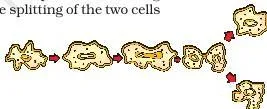
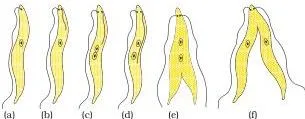
- Binary fission: a single cell splits into two equal halves. In Amoeba the split can occur in any plane; in Leishmania it occurs in a definite orientation in relation to the whip-like structure (NCERT, p. 115).
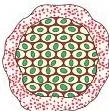
- Multiple fission: a single cell divides into many daughter cells simultaneously, as in Plasmodium, the malarial parasite.
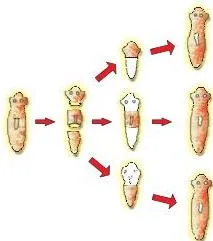
- Regeneration: cut pieces of an organism grow into complete individuals. Specialised cells proliferate and differentiate in an organised sequence called development. Seen in Hydra and Planaria (NCERT, p. 116).
- Budding: a small outgrowth develops on the parent body through repeated cell division, then separates and grows further. Seen in Yeast (unicellular) and Hydra (multicellular).
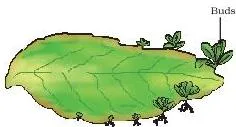
- Vegetative propagation: plant parts — root, stem, or leaf — develop into new plants under suitable conditions, as in Bryophyllum leaf buds or potato notches (NCERT, p. 117).
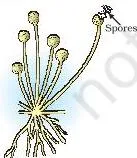
- Spore formation: sporangia release thick-walled spores that survive until they reach a moist surface and begin to grow, as in Rhizopus (NCERT, p. 118).
Question 1: How does binary fission differ from multiple fission?
Both are modes of asexual reproduction in single-celled organisms, but they differ in how many daughter cells are produced from one parent and in the organisation of the parent body. In binary fission the parent cell divides into two equal halves.
In organisms like Amoeba, the split can occur in any plane because the cell body has no special organisation; in Leishmania, which has a whip-like flagellum at one end, binary fission occurs in a definite orientation in relation to that structure.
In multiple fission, the parent divides into many daughter cells simultaneously rather than just two. The malarial parasite Plasmodium uses this mode. So the key differences are the number of offspring per division and whether the parent body shows organised splitting.
Question 2: How will an organism be benefited if it reproduces through spores?
Spores are thick-walled reproductive cells produced in sporangia. The thick outer wall protects the spore from harsh conditions — heat, dryness, lack of moisture — until it lands on a suitable moist surface and begins to grow. This protective wall is the main survival advantage, because it lets the organism wait out unfavourable periods that a naked cell would not survive.
A second benefit is numbers and dispersal. A single sporangium releases many spores, and agents like wind and water carry them over wide areas. If some spores land in unsuitable spots, others will find the right conditions.
Rhizopus, the bread mould, reproduces this way — the thread-like hyphae are body parts, but the tiny blob-on-a-stick sporangia are the reproductive structures (NCERT, p. 118).
Question 3: Can you think of reasons why more complex organisms cannot give rise to new individuals through regeneration?
Regeneration in simple animals like Hydra and Planaria works because specialised cells can proliferate and then differentiate into many cell types and tissues in an organised sequence (NCERT, p. 116). A cut piece grows into a complete organism because the full developmental program can be re-run from that piece.
In complex multicellular organisms, this strategy breaks down. Their cells are organised into specialised tissues and organs placed at definite positions in the body. Cell-by-cell division cannot reorganise this intricate arrangement — a cut piece of a complex animal does not carry the full blueprint in a form that can rebuild every organ in the right place.
So complex organisms need more complex reproductive modes that use specialised cell types designed for reproduction from the start, rather than regeneration from general body parts.
Question 4: Why is vegetative propagation practised for growing some types of plants?
Vegetative propagation uses plant parts — root, stem, or leaf — to grow new plants without seeds. It is practised for several practical reasons (NCERT, p. 117). First, plants raised vegetatively can bear flowers and fruits earlier than those grown from seeds, because they skip the seedling phase.
Second, it makes propagation possible for plants like banana, orange, rose, and jasmine that have lost the capacity to produce seeds.
Third, the offspring are genetically similar to the parent plant, so all useful characteristics — fruit quality, growth habit, disease resistance — are preserved. This predictability matters in agriculture. The Bryophyllum leaf shown in the figure carries buds in the notches along its margin; these buds fall on the soil and develop into new plants.
Methods like layering and grafting use the same principle for sugarcane, roses, and grapes.
Question 5: Why is DNA copying an essential part of the process of reproduction?
Reproduction creates a new individual, and that individual must have its own instructions for making proteins — the molecules that build and run the body. DNA is the information source for those proteins, so a copy of the parent’s DNA must be made and passed on.
Without DNA copying, the new cell would carry no blueprint at all and could not maintain life processes (NCERT, p. 114).
The copy is never perfectly identical to the original because the chemical reactions that build it are not absolutely accurate. This is not a flaw — it is the source of variation. Because the copy is accompanied by creation of new cellular apparatus and then cell division, reproduction produces cells that are similar to the parent but subtly different.
So DNA copying is essential both for preserving body design across generations and for introducing the variation that lets a species survive changing niches.
Sexual Reproduction and Human Reproductive System (Intext Questions, Page 126)
These questions test your grasp of sexual reproduction in flowering plants and in humans — the distinction between pollination and fertilisation, the male and female reproductive organs, adolescent changes, and the role of the placenta.
- Pollination: transfer of pollen grains from the stamen to the stigma. Self-pollination occurs within the same flower; cross-pollination occurs between two flowers, with agents like wind, water, or animals (NCERT, p. 120).
- Fertilisation: the fusion of the male germ-cell from the pollen grain with the female gamete (egg) in the ovule, producing a zygote.
- Placenta: a disc embedded in the uterine wall, containing villi on the embryo’s side and blood spaces on the mother’s side, providing a large surface area for glucose and oxygen to pass from mother to embryo, and for waste removal (NCERT, p. 124).
- Menstruation: the monthly cycle in which the uterine lining thickens to receive a fertilised egg; if fertilisation does not occur, the lining breaks and exits through the vagina as blood and mucous, roughly every month.
Question 1: How is the process of pollination different from fertilisation?
Pollination and fertilisation are two separate steps in the sexual reproduction of a flowering plant. Pollination is the transfer of pollen grains from the stamen (the male part) to the stigma (the sticky top of the female pistil). This transfer may happen within the same flower (self-pollination) or between two flowers (cross-pollination, carried by wind, water, or animals).
No fusion of cells is involved yet (NCERT, p. 120).
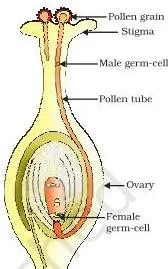
Fertilisation happens after pollination, when a tube grows out of the pollen grain on the stigma, travels down the style, and reaches the ovary. The male germ-cell then fuses with the female gamete inside the ovule to form a zygote. So pollination is about transfer; fertilisation is about fusion. One moves the pollen, the other combines the genetic material.
Question 2: What is the role of the seminal vesicles and the prostate gland?
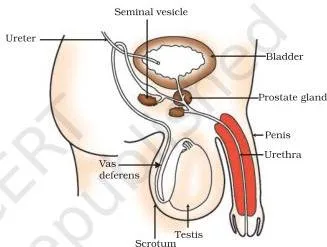
These two glands add secretions to the sperm along the vas deferens. The seminal vesicles and the prostate gland release fluids that make up the seminal fluid, the liquid in which sperms are carried. This fluid serves two purposes: it makes the transport of sperms easier and it provides them with nutrition (NCERT, p. 124).
Because sperms are tiny and consist mainly of genetic material and a long tail, they need a medium to move in and an energy source for that movement. The glandular secretions supply both.
So the role of these glands is not to produce sperms (that is the testes) but to support their journey from the male body to the female reproductive tract.
Question 3: What are the changes seen in girls at the time of puberty?
At puberty, both boys and girls show changes common to both sexes and changes specific to each. The changes seen specifically in girls at puberty are (NCERT, p. 122):
- Breast size begins to increase, with darkening of the skin of the nipples at the tips of the breasts.
- Menstruation begins at around this time.
In addition, girls share the general changes — thick hair growth in new areas like the armpits and the genital area between the thighs (which can also become darker), thinner hair on the legs, arms, and face, and oily skin that may develop pimples.
Each change does not complete all at once or at a fixed age; the changes are gradual and differ from person to person.
Question 4: How does the embryo get nourishment inside the mother’s body?
After fertilisation, the zygote divides and forms a ball of cells called the embryo, which implants in the lining of the uterus. The embryo gets nutrition from the mother’s blood through a placenta — a disc embedded in the uterine wall (NCERT, p. 124).
The placenta contains finger-like villi on the embryo’s side, and blood spaces on the mother’s side that surround the villi. This arrangement provides a large surface area for the transfer of glucose and oxygen from the mother’s blood to the embryo.
Waste substances produced by the developing embryo are removed in the reverse direction — transferred into the mother’s blood through the same placenta and disposed of by the mother’s body.
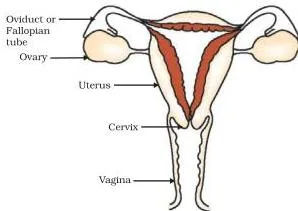
Question 5: If a woman is using a copper-T, will it help in protecting her from sexually transmitted diseases?
No, copper-T does not protect against sexually transmitted diseases. Copper-T is an intrauterine device placed in the uterus to prevent pregnancy — it stops the implantation of the fertilised egg. But it does not create a barrier against the bacteria or viruses that cause sexually transmitted infections (STIs) like gonorrhoea, syphilis, warts, and HIV-AIDS (NCERT, p. 125).
STIs spread through the intimate contact of bodily fluids during the sexual act. Only methods that physically block this fluid exchange — such as condoms covering the penis — help prevent transmission to some extent. Copper-T protects against pregnancy but not against infection. This is a common exam trap because students assume any contraceptive also blocks disease.
Exercise Solutions (Page 127)
The end-of-chapter exercise combines three MCQs that check factual recall with eight descriptive questions that need organised, concept-based answers. The MCQs test specific facts — budding organism, female reproductive part, anther contents — while the descriptive questions cover reproduction modes, organ functions, the flower diagram, contraception, and population stability.
- Budding organisms (Q1 MCQ): Yeast reproduces by budding. Amoeba, Plasmodium, and Leishmania use fission, not budding.
- Female reproductive system (Q2 MCQ): the vas deferens is a male structure; it is not part of the female reproductive system.
- Anther contents (Q3 MCQ): the anther contains pollen grains. Sepals, ovules, and pistil are other flower parts.
- Testis function (Q5): the testes produce sperms and secrete testosterone — both functions must be stated.
- Contraception categories (Q8): mechanical barrier (condoms), hormonal (pills), intrauterine devices (copper-T, loop), and surgical (blocking vas deferens or fallopian tubes).
Question 1: Asexual reproduction takes place through budding in
(a) Amoeba.
(b) Yeast.
(c) Plasmodium.
(d) Leishmania.
- (a) Amoeba
- (b) Yeast
- (c) Plasmodium
- (d) Leishmania
Correct answer: (b) Yeast. Yeast is a unicellular organism that puts out small buds which separate and grow further — the chapter describes this in Activity 7.1. The other three options fail because they reproduce by fission, not budding. Amoeba splits into two equal halves by binary fission in any plane (NCERT, p. 115).
Leishmania also uses binary fission, but in a definite orientation tied to its whip-like structure. Plasmodium uses multiple fission, dividing into many daughter cells simultaneously.
Question 2: Which of the following is not a part of the female reproductive system in human beings?
(a) Ovary
(b) Uterus
(c) Vas deferens
(d) Fallopian tube
- (a) Ovary
- (b) Uterus
- (c) Vas deferens
- (d) Fallopian tube
Correct answer: (c) Vas deferens. The female reproductive system consists of the ovaries (which make eggs), the fallopian tubes (oviducts that carry the egg to the uterus), the uterus (where the embryo implants and grows), and the vagina (NCERT, p. 124). The vas deferens is a tube in the male reproductive system that delivers sperms from the testes.
It unites with a tube from the urinary bladder to form the urethra, which is a common passage for both sperms and urine. So vas deferens is not part of the female system.
Question 3: The anther contains
(a) sepals.
(b) ovules.
(c) pistil.
(d) pollen grains.
- (a) sepals
- (b) ovules
- (c) pistil
- (d) pollen grains
Correct answer: (d) pollen grains. The stamen is the male reproductive part of the flower and it produces pollen grains that are yellowish in colour; these are located in the anther (NCERT, p. 120). The other options do not fit. Sepals are the outer protective parts of the flower.
Ovules are inside the ovary, which is part of the pistil (the female reproductive structure). The pistil itself is the whole female part, not something contained in the anther. So the anther contains pollen grains specifically.
Question 4: What are the advantages of sexual reproduction over asexual reproduction?
Sexual reproduction combines DNA from two different individuals, so each new generation carries new combinations of variants. This is the core advantage over asexual reproduction, where a single parent produces genetically identical copies (NCERT, p. 119).
- Greater variation: the offspring show more diversity because they inherit genetic material from two parents. Asexual reproduction produces nearly identical copies.
- Adaptation to changing niches: if the environment shifts, some variants in a sexually reproduced population may be better suited and survive, while others die. Asexual populations are uniform, so a single change can wipe them out.
- Disease resistance: greater genetic diversity means some individuals may carry resistance to diseases that would devastate a uniform asexual population.
So sexual reproduction is slower and uses more energy, but it gives a species the variation buffer it needs for long-term survival in changing conditions.
Question 5: What are the functions performed by the testis in human beings?
The testes perform two distinct functions in human beings and the answer must include both (NCERT, p. 124). First, they produce sperms — the formation of germ cells or sperms takes place in the testes.
Second, they secrete the hormone testosterone, which both regulates sperm formation and brings about the changes in appearance seen in boys at the time of puberty (such as new facial hair growth and voice cracking).
The testes are located outside the abdominal cavity in the scrotum because sperm formation requires a lower temperature than the normal body temperature. This dual role — sperm production and hormone secretion — makes the testes both an exocrine organ (producing cells) and an endocrine organ (producing a hormone).
Question 6: Why does menstruation occur?
The ovary releases one egg every month. To receive and nurture a possible fertilised egg, the uterus prepares itself every month by thickening its lining with a rich blood supply (NCERT, p. 125). This thick, spongy lining is what would nourish the growing embryo if fertilisation took place.
If the egg is not fertilised, this lining is no longer needed. The unfertilised egg lives for about one day and then breaks down. The thickened uterine lining slowly breaks down and comes out through the vagina as blood and mucous. This cycle occurs roughly every month and is called menstruation, usually lasting two to eight days.
So menstruation is the body’s way of shedding a lining that was prepared for a pregnancy that did not happen.
Question 7: Draw a labelled diagram of the longitudinal section of a flower.
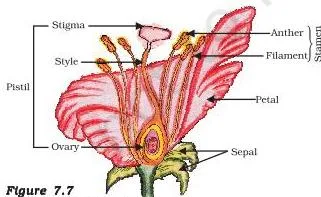
A flower has four main parts arranged in whorls: sepals, petals, stamens, and pistil. The stamens (male) and pistil (female) are the reproductive parts. In the longitudinal section, you should label all of these, along with the sub-parts of the stamen and pistil (NCERT, p. 120).
The stamen has two parts: the anther (the swollen top that contains pollen grains) and the filament (the stalk). The pistil has three parts: the stigma (the sticky terminal part that catches pollen), the style (the middle elongated tube), and the ovary (the swollen bottom part containing ovules, each with an egg cell).
Also label the sepal and petal on the outer side. Use the diagram below as your reference.
Question 8: What are the different methods of contraception?
Contraceptive methods prevent pregnancy and fall into several categories (NCERT, p. 125). Each works at a different stage of the reproductive process:
- Mechanical barrier: condoms on the penis or similar coverings worn in the vagina prevent the sperm from reaching the egg. Condoms also help prevent transmission of sexually transmitted infections to some extent.
- Hormonal methods: oral pills change the hormonal balance of the body so that eggs are not released and fertilisation cannot occur. Because they alter hormone levels, they can cause side-effects.
- Intrauterine devices: the loop or copper-T is placed in the uterus to prevent pregnancy. They can cause side effects due to irritation of the uterus.
- Surgical methods: blocking the vas deferens in males prevents sperm transfer; blocking the fallopian tube in females stops the egg from reaching the uterus. In both cases fertilisation cannot occur. Surgery is safe in the long run but can cause infections if not performed properly.
Each method has trade-offs between convenience, side-effects, and protection against infection.
Question 9: How are the modes for reproduction different in unicellular and multicellular organisms?
Unicellular and multicellular organisms reproduce differently because of their body organisation (NCERT, pp. 115-116). Unicellular organisms are single cells, so they can reproduce by simple cell division or fission. Bacteria and protozoa split into two equal halves (binary fission), while Plasmodium divides into many daughter cells at once (multiple fission). Yeast puts out small buds that separate and grow further.
Multicellular organisms cannot simply divide cell by cell because their cells are organised into specialised tissues and organs placed at definite positions in the body. Simple multicellular organisms like Spirogyra break into fragments that grow into new individuals, and Hydra and Planaria can regenerate from cut pieces.
Plants use vegetative propagation (root, stem, or leaf developing into a new plant) or spore formation. But complex multicellular organisms use more complex and specialised reproductive modes — including sexual reproduction, which uses specific cell types in specialised organs rather than whole-body fragmentation.
Question 10: How does reproduction help in providing stability to populations of species?
Reproduction provides stability to populations of species in two complementary ways (NCERT, p. 114). First, reproduction maintains the numbers of a species. Individuals die — from old age, disease, predators, or environmental changes — and if the species did not reproduce, its numbers would fall to zero. Reproduction replaces these lost individuals, keeping the population at a stable size across generations.
Second, the variation introduced during reproduction gives the species a buffer against changing niches. DNA copying is not perfectly accurate, so offspring are similar to but subtly different from their parents. If the environment changes, some variants may survive and continue the species where identical copies would all die.
So reproduction with variation maintains both the numbers and the adaptability that let a species hold its place in the ecosystem over time.
Question 11: What could be the reasons for adopting contraceptive methods?
People adopt contraceptive methods for several reasons, rooted in personal health, family well-being, and wider social concerns (NCERT, p. 125):
- Health of the mother: pregnancy makes major demands on the body and mind of a woman. If she is not ready for it, her health can be adversely affected. Contraception lets her avoid unwanted pregnancies until she is physically and mentally prepared.
- Spacing pregnancies: consecutive pregnancies without gaps weaken the mother’s body and reduce the care each child receives. Contraception allows spacing between births so both mother and children stay healthy.
- Preventing STD transmission: barrier methods like condoms help prevent the transmission of sexually transmitted diseases such as gonorrhoea, syphilis, warts, and HIV-AIDS to some extent. This is a reason to adopt barrier contraception in particular.
- Population stability: an expanding human population makes it harder to improve everyone’s standard of living. Contraceptive methods help control population growth, which is a social and economic concern.
Method Recap: Key Differences Students Confuse
This table consolidates the five most-confused concept pairs in the chapter and points you to the exact question number where that distinction is tested.
| Concept A | Concept B | Key Difference | Where it’s asked |
|---|---|---|---|
| Binary fission | Multiple fission | Two daughter cells vs many daughter cells simultaneously. Amoeba/Leishmania split in two; Plasmodium divides into many at once. | Intext Q1, page 118; Exercise Q9 |
| Pollination | Fertilisation | Pollination is the transfer of pollen from anther to stigma (no fusion). Fertilisation is the fusion of male and female gametes in the ovule. | Intext Q1, page 126 |
| Asexual reproduction | Sexual reproduction | Single parent vs two parents. Less variation vs more variation. Faster vs more adaptable. | Exercise Q4, Q9, Q10 |
| Regeneration | Reproduction | Regeneration is regrowth from body parts (not the normal reproductive route). Reproduction is a purposeful process for creating new individuals. | Intext Q3, page 118 |
| Copper-T | Condom | Copper-T prevents pregnancy but not STDs. Condom creates a physical barrier that helps prevent both pregnancy and STD transmission. | Intext Q5, page 126; Exercise Q8, Q11 |
These confusions happen because the paired concepts sound similar — pollination and fertilisation both involve pollen, regeneration and reproduction both produce new individuals. The trick on exam day is to state the distinction explicitly, not assume the examiner knows it. Write one sentence that names the precise difference in a single clause, then give the organism or example that proves it.
For the fission pair, always name the organism: “binary fission in Amoeba” versus “multiple fission in Plasmodium.” For contraception, always state whether the method protects against STDs — copper-T does not, condoms do. These two facts alone answer three separate questions in this chapter.
If you want to revise the full chapter as notes before attempting the exercise, check the Class 10 notes hub or the related chapters on Control and Coordination and Heredity, which build directly on the variation idea introduced here. You can also browse all CBSE notes for class 10 across subjects.
Frequently Asked Questions
Which organisms reproduce by budding according to NCERT Class 10 Science Chapter 7?
Yeast (unicellular) and Hydra (multicellular) reproduce by budding — a small outgrowth develops on the parent body, separates, and grows into a new individual. Amoeba and Plasmodium do not use budding; they reproduce by fission (binary and multiple respectively). Yeast is the budding organism named in Exercise Q1.
Why are the testes located outside the abdominal cavity in the scrotum?
Sperm formation requires a lower temperature than the normal body temperature. By sitting outside the abdominal cavity in the scrotum, the testes stay cooler than the rest of the body, which allows sperms to form properly. If the testes were inside the abdomen, the higher temperature would interfere with sperm production.
What is the difference between self-pollination and cross-pollination?
Self-pollination is the transfer of pollen from the stamen to the stigma of the same flower. Cross-pollination is the transfer of pollen from one flower to the stigma of another flower, usually carried out by agents like wind, water, or animals.
Does copper-T protect against sexually transmitted diseases?
No. Copper-T is an intrauterine device that prevents pregnancy by stopping implantation, but it does not create any barrier against the bacteria or viruses that cause sexually transmitted infections. Only barrier methods like condoms help prevent STD transmission to some extent.
Why can complex multicellular organisms not reproduce by regeneration?
Complex multicellular organisms have cells organised into specialised tissues and organs at definite body positions. A cut piece cannot reorganise this intricate arrangement into a whole new body, because cell-by-cell division cannot rebuild the precise body plan. Simple animals like Hydra and Planaria can regenerate because their body organisation is simple enough for specialised cells to rebuild a complete organism.
Reference: NCERT Class 10 Science textbook, chapter How do Organisms Reproduce?
Explore Class 10 Science NCERT Solutions
Class 10 Science on LearnCBSE:
Related chapters: