Life Processes Class 10 is the fifth chapter of the NCERT Class 10 Science textbook, running from page 78 to page 99 of the printed book. It explains the four maintenance jobs every living thing must keep doing — nutrition, respiration, transport and excretion — and why each one exists.
The official NCERT PDF of the chapter is right below, followed by a full walkthrough of what every section and figure teaches. Use the table of contents to jump straight to the topic you need.
Download the Life Processes Class 10 chapter PDF
The official Life Processes Class 10 NCERT Science Chapter 5 PDF is hosted by NCERT itself and is identical to the printed chapter, pages 78–99 of the Class 10 Science book, so it is safe to use for study and revision.
Chapter 5 at a glance: what is inside the PDF
The chapter occupies pages 78–99 of the printed book. The table below lists how many sections, figures, activities and questions the chapter holds, so you know its size and shape before you read.
| What the chapter holds | Count | Where it is used |
|---|---|---|
| Printed pages | 21 | |
| Sections in the chapter | 12 | |
| Figures with NCERT captions | 15 | |
| Exercise questions | 13 | answered in our NCERT Solutions |
| In-text questions | 21 | |
| Activities | 8 | |
| Official NCERT PDF | Download the chapter PDF | the chapter exactly as NCERT publishes it |
After the table, the rest of this page walks through the chapter’s content section by section, with the NCERT page numbers and all the original figures.
What Life Processes covers: the journey from food to waste
Much of the chapter is one long argument, and it starts on page 79: how do we decide that something is alive? Visible movement is not a reliable test — a sleeping animal, or a plant that is not visibly growing, is still alive. The test biologists use is molecular movement (NCERT, p. 79).
Keeping that invisible molecular movement going is what the life processes are for. The chapter then works through the four maintenance processes in order, each one solving a problem created by the last.
| Stage of the chapter | Where it is |
|---|---|
| The problem: what is alive, and why maintenance needs energy | p. 79–80 |
| Nutrition — how organisms take in food, from photosynthesis to human digestion | p. 81–86 |
| Respiration and breathing — how glucose yields energy, and how we get oxygen | p. 87–90 |
| Transport — how blood, xylem and phloem move materials around | p. 91–95 |
| Excretion — how the body removes nitrogenous waste, and what plants do instead | p. 96–98 |
| Closing recap and exercises | p. 98–99 |
The chapter closes with a recap titled “What you have learnt” (p. 98) and a set of exercises (p. 99). Use the map above to keep your place in the book as you study.
Key concepts: nutrition, respiration, transport and excretion
The processes which together perform the maintenance job are called life processes (NCERT, p. 79). This section goes through the four of them — nutrition, respiration, transport and excretion — in the order the book teaches, with the NCERT page beside every concept.
Why life needs maintenance processes
Living bodies are ordered structures — tissues made of cells, organs made of tissues. The environment constantly pushes against that order, so structures keep breaking down and must be repaired (NCERT, p. 79).
Repair needs energy, and energy comes from food taken in from outside. The process of transferring that energy source into the body is nutrition, and the process of using oxygen to break down food for cellular needs is respiration (NCERT, p. 80).
Why can’t diffusion handle all of this? In a single-celled organism the whole surface is in contact with the environment, so diffusion is enough. In a multi-cellular organism most cells are not in contact with the outside, so simple diffusion cannot meet their requirements (NCERT, p. 80).
That single idea — diffusion stops being enough as bodies grow — explains why the chapter then teaches specialised tissues for uptake, transport and excretion. The book’s edge case makes the same point: viruses show no molecular movement until they infect a cell, which is why their status as living things is debated (NCERT, p. 79).
Autotrophic nutrition: how plants make food
Autotrophs build their own food from simple inorganic materials — carbon dioxide and water — using energy from sunlight. Green plants and some bacteria are autotrophs (NCERT, p. 81).
Photosynthesis is the process by which autotrophs convert these outside substances into stored forms of energy (NCERT, p. 81). The reaction is given on page 82:
\[ 6\text{CO}_2 + 12\text{H}_2\text{O} \xrightarrow[\text{Sunlight}]{\text{Chlorophyll}} \text{C}_6\text{H}_{12}\text{O}_6 + 6\text{O}_2 + 6\text{H}_2\text{O} \]
Read the equation molecule by molecule. Carbon dioxide (\( \text{CO}_2 \)) enters from the air through stomata; water (\( \text{H}_2\text{O} \)) is taken up from the soil by roots; chlorophyll traps the light energy; glucose (\( \text{C}_6\text{H}_{12}\text{O}_6 \)), oxygen and water are produced (NCERT, p. 82–83).
Carbohydrates not used at once are stored as starch — our own energy store is glycogen (NCERT, p. 81).
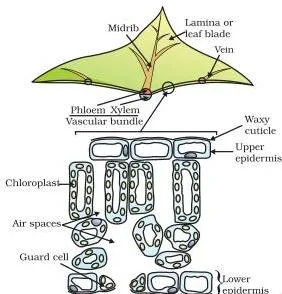
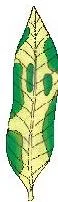
Look at the two leaf cross-sections above. The green dots inside some cells are chloroplasts, the cell organelles that contain chlorophyll (NCERT, p. 82). Chlorophyll absorbs light energy, and it is the first requirement of photosynthesis.
Photosynthesis happens in three events on page 82: chlorophyll absorbs light energy; light energy is converted to chemical energy while water splits into hydrogen and oxygen; and carbon dioxide is reduced to carbohydrates.
These steps need not follow one another immediately — desert plants take in carbon dioxide at night and keep an intermediate compound ready for the day’s light (NCERT, p. 82).
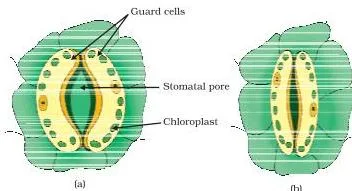
Carbon dioxide enters leaves through stomata — tiny pores on the leaf surface where massive amounts of gas exchange happen (NCERT, p. 83). The figure above shows the pore in two states.
When water flows into the guard cells they swell and the pore opens; when they shrink, the pore closes. Plants close the pores when carbon dioxide is not needed, which also limits water loss (NCERT, p. 83).
This is a common exam point: stomata are not permanently open. Carbon dioxide and water are not the only raw materials — nitrogen, phosphorus, iron and magnesium come from the soil, and nitrogen, essential for making proteins, is absorbed as nitrates or nitrites, or as organic compounds prepared by bacteria from atmospheric nitrogen (NCERT, p. 83).
Heterotrophic nutrition: how other organisms feed
Heterotrophs cannot make their own food. They take in complex substances made by other organisms and break them down with biocatalysts called enzymes. Animals and fungi are heterotrophs, and their survival depends directly or indirectly on autotrophs (NCERT, p. 81).
The chapter lists three feeding strategies on page 84:
- Break food down outside the body, then absorb it — used by fungi such as bread moulds, yeast and mushrooms.
- Take food in whole and digest it inside the body — the animal strategy, from Amoeba to humans.
- Parasitic nutrition — deriving food from a plant or animal without killing it, as cuscuta (amar-bel), ticks, lice, leeches and tapeworms do.
How does a single-celled organism manage this? See how Amoeba feeds in the figure below.
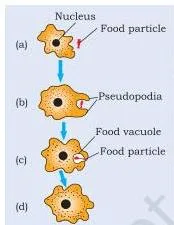
Temporary finger-like extensions of the cell surface fuse over the food particle, forming a food vacuole (NCERT, p. 84). Inside the vacuole, complex substances are broken into simpler ones which diffuse into the cytoplasm; the undigested remainder moves to the cell surface and is thrown out.
Paramoecium does it differently — the cell has a definite shape, food enters at a specific spot, and cilia sweeping the cell surface carry the food there (NCERT, p. 84).
Digestion in human beings: the alimentary canal at work
The alimentary canal is a long tube from the mouth to the anus, with different regions specialised for different jobs (NCERT, p. 84–85). Figure 5.6 on page 85 is the route map for this whole section.
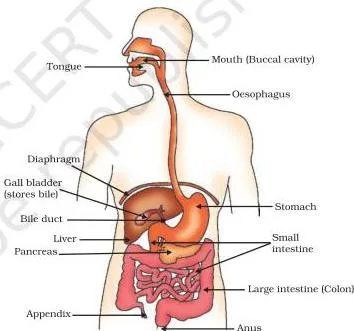
The route in order: mouth → oesophagus → stomach → small intestine → large intestine → anus. Digestion begins in the mouth, where teeth crush the food while saliva from the salivary glands wets it; an enzyme in saliva, salivary amylase, breaks starch into simple sugar (NCERT, p. 85).
Food is pushed along by peristalsis — rhythmic contractions of the muscles in the canal’s lining that occur all along the gut (NCERT, p. 85).
In the stomach, gastric glands release three things: hydrochloric acid, pepsin and mucus. The acid creates the acidic medium pepsin needs to digest proteins, and the mucus protects the stomach’s own lining from the acid — which is why adults complain of “acidity” when this protection fails (NCERT, p. 85).
A sphincter muscle releases food from the stomach into the small intestine in small amounts. The small intestine is the longest part of the canal, coiled to fit into a compact space, and it is the site of complete digestion of carbohydrates, proteins and fats (NCERT, p. 85).
Three juices do this work:
- Bile from the liver makes the acidic food alkaline so pancreatic enzymes can act, and its salts break large fat globules into smaller ones — an emulsifying action like soap acting on dirt (NCERT, p. 85).
- Pancreatic juice contains trypsin for digesting proteins and lipase for breaking down emulsified fats (NCERT, p. 85).
- Intestinal juice finishes the conversion — proteins to amino acids, complex carbohydrates to glucose, fats to fatty acids and glycerol (NCERT, p. 85).
The inner lining of the small intestine has finger-like projections called villi, which increase the surface area for absorption and are richly supplied with blood vessels (NCERT, p. 86). The blood carries the absorbed food to every cell of the body.
The large intestine absorbs water from the unabsorbed material, and the rest leaves the body through the anus, controlled by the anal sphincter (NCERT, p. 86).
Two design details are worth remembering. Herbivores that eat grass need a longer small intestine to digest cellulose, while carnivores like tigers manage with a shorter one (NCERT, p. 85).
The dental caries box on page 86 gives the cause of tooth decay in one line: bacteria acting on sugars produce acids that soften the enamel, and plaque blocks saliva from reaching the tooth surface to neutralise them.
Respiration: glucose, pyruvate and the three pathways
Respiration is the process of acquiring oxygen from outside the body and using it to break down food for cellular needs (NCERT, p. 80). The chapter traces one glucose molecule through a common trunk and three branches, shown in Fig 5.8.
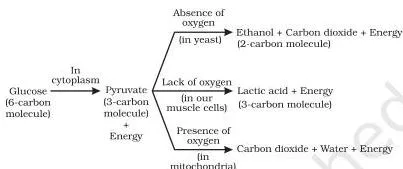
The trunk is the same for every organism: glucose, a six-carbon molecule, is broken down into pyruvate, a three-carbon molecule, in the cytoplasm (NCERT, p. 87). From there the branches diverge:
- Aerobic respiration — pyruvate is broken down in the mitochondria using oxygen, giving three molecules of carbon dioxide and water; the energy release is a lot greater than in anaerobic respiration (NCERT, p. 87–88).
- Anaerobic respiration (fermentation) — in yeast, pyruvate is converted to ethanol and carbon dioxide in the absence of oxygen (NCERT, p. 87).
- Muscle pathway — when muscle cells lack oxygen during sudden activity, pyruvate becomes lactic acid, and its build-up causes cramps (NCERT, p. 88).
The released energy is used to synthesise ATP — the energy currency of the cell — from ADP and inorganic phosphate (NCERT, p. 88).
\[ \text{ADP} + \text{P} \xrightarrow{\text{Energy}} \text{ATP} \]
When the terminal phosphate linkage of ATP is broken using water, about 30.5 kJ of energy is released per mole (NCERT, p. 88). The book compares ATP to a battery: one battery can power many different devices, and ATP can fuel muscle contraction, protein synthesis and nervous impulses (NCERT, p. 88).
| Feature | Aerobic respiration | Anaerobic respiration |
|---|---|---|
| Where pyruvate is broken down | In the mitochondria (NCERT, p. 87) | Not in mitochondria — in yeast during fermentation, or in muscle cells short of oxygen (NCERT, p. 87–88) |
| Oxygen needed? | Yes — that is the defining condition (NCERT, p. 87) | No (NCERT, p. 87) |
| End products | Carbon dioxide and water (NCERT, p. 87–88) | Ethanol and carbon dioxide in yeast; lactic acid in muscle (NCERT, p. 87–88) |
| Energy yield | A lot greater (NCERT, p. 88) | Much smaller |
| Who uses it | Most plants and animals, including us | Yeast; our muscle cells during sudden activity (NCERT, p. 88) |
Follow one glucose molecule from a bite of food to ATP — the complete route the chapter teaches, naming the organ, the cell part and the page at every stage:
- Mouth: salivary amylase breaks the starch in food into a simple sugar (NCERT, p. 85).
- Small intestine: intestinal enzymes convert the simple carbohydrate to glucose, and villi absorb it into the blood (NCERT, p. 85–86).
- Blood: the circulatory system carries glucose to a muscle cell (NCERT, p. 91).
- Cytoplasm of the cell: glucose (six-carbon) is split into pyruvate (three-carbon) (NCERT, p. 87).
- Mitochondria: with oxygen, pyruvate is broken into carbon dioxide and water; the released energy builds ATP from ADP and phosphate (NCERT, p. 87–88).
- Wherever work is done: ATP’s terminal phosphate is broken with water, releasing about 30.5 kJ/mol for contraction, synthesis or impulses (NCERT, p. 88).
Breathing and gas exchange in humans
Breathing supplies the oxygen that aerobic respiration needs and removes the carbon dioxide it makes. The chapter opens with a puzzle: water contains far less dissolved oxygen than air, so aquatic organisms must breathe much faster than terrestrial ones (NCERT, p. 89; Activity 5.6).
Fish take water in through the mouth and force it past the gills, where blood picks up the dissolved oxygen (NCERT, p. 89). Terrestrial animals absorb oxygen across organs that increase surface area; because that surface is fine and delicate, it is placed inside the body with passages to bring air to it (NCERT, p. 89).
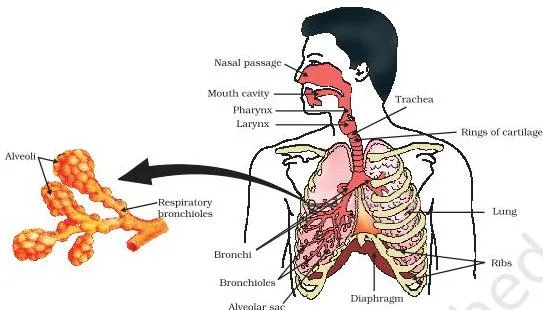
Trace the air path in the figure above: the nostrils filter air with fine hairs and mucus; the throat is kept open by rings of cartilage so the passage cannot collapse; the passage divides into smaller and smaller tubes that end in balloon-like alveoli inside the lungs (NCERT, p. 89–90).
The alveoli are the exchange surface, with an extensive network of blood vessels (NCERT, p. 90). Their design solves the problem of surface area: laid flat, the alveolar surface would cover about 80 m² (NCERT, p. 90).
Oxygen is carried by haemoglobin, the respiratory pigment in red blood corpuscles, which has a very high affinity for oxygen. Carbon dioxide, being more soluble in water, is mostly carried dissolved in blood (NCERT, p. 90).
A carrier is essential: by diffusion alone, an oxygen molecule would take about three years to travel from the lungs to the toes (NCERT, p. 90).
Breathing itself works by pressure — lifting the ribs and flattening the diaphragm enlarges the chest cavity and sucks air into the expanded alveoli, and a residual volume of air always remains in the lungs so there is time for exchange (NCERT, p. 90).
The tobacco warning boxes on pages 89–90 carry the chapter’s health note: smoking destroys the cilia that keep dust and germs out of the respiratory tract.
Transport in humans: blood, the heart and double circulation
Once food is digested and oxygen is absorbed, both must reach every cell — that is the job of the circulatory system. Blood does the carrying: plasma transports food, carbon dioxide and nitrogenous wastes in dissolved form, while red blood corpuscles carry oxygen (NCERT, p. 91).
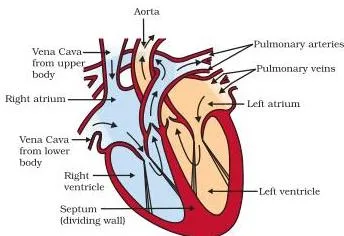
The heart is a muscular organ about the size of your fist, and its chambers stop oxygen-rich blood from mixing with carbon dioxide-rich blood (NCERT, p. 92). The sectional view above (Fig 5.10) shows the four chambers.
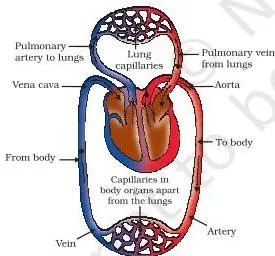
Follow one red blood cell around both circuits in Fig 5.11 (NCERT, p. 92):
- Lungs — oxygen-rich blood enters the thin-walled left atrium.
- Left atrium contracts — blood passes to the muscular left ventricle.
- Left ventricle contracts — blood is pumped out to the whole body.
- Deoxygenated blood returns — it enters the right atrium.
- Right atrium contracts — blood passes to the right ventricle.
- Right ventricle pumps — blood goes to the lungs to pick up oxygen again.
Two structural details make this possible. The ventricles have thicker muscular walls than the atria because they pump blood to all the organs, and valves ensure that blood never flows backwards when the chambers contract (NCERT, p. 92).
This arrangement is called double circulation — blood passes through the heart twice in one cycle around the body. The separation of the right and left sides keeps oxygenated and deoxygenated blood apart, giving a highly efficient oxygen supply (NCERT, p. 92).
That efficiency matters most in birds and mammals, which constantly use energy to maintain body temperature. Amphibians and many reptiles have three-chambered hearts and tolerate some mixing; fishes have two-chambered hearts and pump blood to the gills, then directly to the body, in a single pass (NCERT, p. 92).
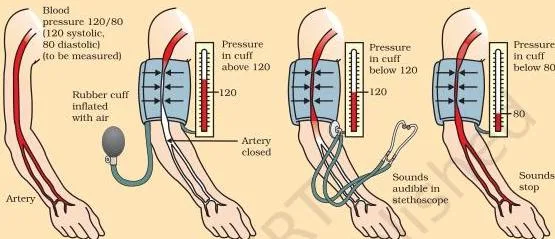
Blood pressure is the force blood exerts against the wall of a vessel, and it is much greater in arteries than in veins (NCERT, p. 93). Normal systolic pressure, during contraction of the ventricles, is about 120 mm of Hg; diastolic pressure, during relaxation, is about 80 mm of Hg (NCERT, p. 93).
Blood pressure is measured with a sphygmomanometer. Hypertension — high blood pressure — is caused by constriction of the arterioles, which increases resistance to flow and can rupture an artery (NCERT, p. 93).
The blood vessels complete the network (NCERT, p. 93):
- Arteries carry blood away from the heart under high pressure, so they have thick, elastic walls.
- Veins bring blood back to the heart; the blood is no longer under pressure, so veins have one-way valves instead of thick walls.
- Capillaries are the smallest vessels, one cell thick; exchange of material between blood and cells happens across their walls.
- Platelets plug leaks — they help blood clot at points of injury so pressure is not lost.
Lymph, or tissue fluid, is the second transport fluid. Some plasma, proteins and blood cells escape through capillary walls into the intercellular spaces, forming a colourless fluid with less protein than plasma; it carries digested fat from the intestine and drains excess fluid back into the blood (NCERT, p. 94).
Transport in plants: xylem, transpiration and phloem
Plants do not move, and many of their tissues are dead cells, so their energy needs are low and they can use slow transport — but the distances can be very large, as in a tall tree (NCERT, p. 94).
Two independent conducting tubes do the job (NCERT, p. 94): xylem carries water and minerals from the soil, and phloem carries the products of photosynthesis from the leaves to the rest of the plant.
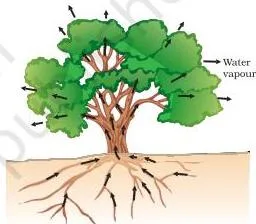
How does water climb to the top of a tall tree, as in Fig 5.12? At the roots, cells in contact with the soil actively take up ions, creating a concentration difference that pulls water into the root and pushes a column upward (NCERT, p. 94–95).
This root pressure alone is unlikely to lift water over the heights of tall plants (NCERT, p. 95). The main daytime force is transpiration pull: evaporation of water molecules from leaf cells creates a suction that pulls water up the xylem from the roots (NCERT, p. 95).
Transpiration is the loss of water in the form of vapour from the aerial parts of the plant (NCERT, p. 95). It drives the absorption and upward movement of water and dissolved minerals, and it helps regulate temperature (NCERT, p. 95).
At night, root pressure matters more; during the day, with stomata open, transpiration pull is the major driving force (NCERT, p. 95).
Moving food is a completely different process called translocation — the transport of soluble products of photosynthesis in the phloem, along with amino acids and other substances, to storage organs and growing organs (NCERT, p. 95).
Unlike xylem transport, which is explained by simple physical forces, translocation uses energy (NCERT, p. 95). Sucrose is loaded into the phloem using energy from ATP; this raises the osmotic pressure of the tissue, water enters, and the pressure moves the material toward tissues with less pressure (NCERT, p. 95).
That is why phloem can move food either upward or downward according to the plant’s needs — for example in spring, when sugar stored in the root or stem is transported to buds that need energy to grow (NCERT, p. 95).
| Feature | Xylem | Phloem |
|---|---|---|
| What it carries | Water and minerals from the soil (NCERT, p. 94) | Products of photosynthesis — sucrose and amino acids (NCERT, p. 95) |
| Direction of movement | Upward from roots to leaves (NCERT, p. 94) | Both upward and downward, wherever the plant needs the material (NCERT, p. 95) |
| Driving force | Transpiration pull by day; root pressure at night (NCERT, p. 95) | Osmotic pressure built when sucrose is loaded using ATP (NCERT, p. 95) |
| Energy cost | Largely explained by simple physical forces (NCERT, p. 95) | Requires energy from ATP (NCERT, p. 95) |
Excretion: nephrons, dialysis and what plants do with waste
Respiration and photosynthesis deal with gaseous wastes, but other metabolic activities produce nitrogenous materials that must be removed. Excretion is the biological process of removing these harmful metabolic wastes (NCERT, p. 96).
Single-celled organisms remove wastes by simple diffusion from the body surface; complex multi-cellular organisms use specialised organs (NCERT, p. 96).
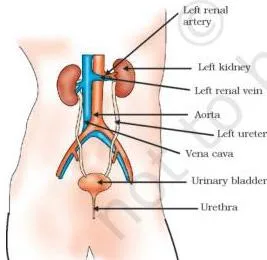
The human excretory system (Fig 5.13) includes a pair of kidneys, a pair of ureters, a urinary bladder and a urethra (NCERT, p. 96). The kidneys filter nitrogenous wastes such as urea and uric acid out of the blood.
Urine passes through the ureters into the bladder and leaves through the urethra (NCERT, p. 96).
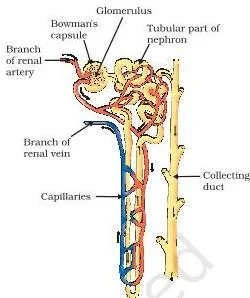
The kidney’s filtration unit is the nephron (Fig 5.14). Each nephron has a cluster of very thin-walled capillaries cupped by a cup-shaped structure called Bowman’s capsule, which collects the filtrate (NCERT, p. 96–97).
As the filtrate flows along the coiled tube, glucose, amino acids, salts and a major amount of water are selectively reabsorbed (NCERT, p. 97). How much water is reabsorbed depends on how much excess water the body has and how much dissolved waste must be excreted (NCERT, p. 97).
A quick estimate shows why reabsorption is the real story. About 180 L of filtrate forms daily, but only 1–2 L is passed as urine — roughly 99% is reabsorbed (NCERT, p. 97). Now suppose reabsorption fell to 90%:
\[ \text{urine per day} = 180\ \text{L} \times (1 – 0.90) = 18\ \text{L} \]
The result is 18 L of urine a day — about ten times the normal output. The body could not replace water and salts at that rate, which is exactly why the tubule’s selective reabsorption matters so much.
The bladder is muscular and under nervous control, so we can usually control the urge to urinate (NCERT, p. 97).
When kidneys fail, an artificial kidney can take over through dialysis: the patient’s blood is passed through tubes with a semi-permeable lining, suspended in a tank of dialysing fluid that has the same osmotic pressure as blood but no nitrogenous wastes; wastes diffuse out, and the purified blood returns to the body (NCERT, p. 97).
Unlike a real kidney, dialysis involves no reabsorption (NCERT, p. 97). The chapter’s organ-donation box (p. 98) adds that donating an organ can save or transform the life of someone whose organ has failed.
Plants remove wastes differently (NCERT, p. 98):
- Oxygen itself is a waste product of photosynthesis.
- Excess water is lost by transpiration.
- Many wastes are stored in cellular vacuoles, or in leaves that later fall off.
- Some are stored as resins and gums, especially in old xylem.
- Some are excreted into the soil around the plant.
What the eight activities in this chapter demonstrate
The chapter’s experiments, Activities 5.1 to 5.8, each prove one idea. Use this table to recall what each one shows without redoing it.
| Activity | Page | What it demonstrates |
|---|---|---|
| 5.1 | p. 82 | Chlorophyll is essential for photosynthesis — in a variegated leaf, only the green areas turn blue-black in the starch test. |
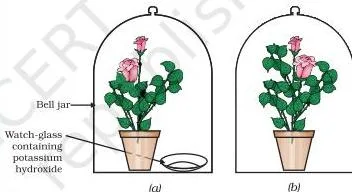
| 5.2 | p. 83 | Carbon dioxide is needed for photosynthesis — with potassium hydroxide absorbing the gas, the leaf makes no starch. |
| 5.3 | p. 85 | Saliva breaks starch into sugar — the test tube with saliva shows no blue-black colour with iodine. |
| 5.4 | p. 87 | Exhaled air is richer in carbon dioxide than inhaled air — exhaled breath turns lime water milky faster. |
| 5.5 | p. 87 | Fermentation releases carbon dioxide — yeast in a sugar solution produces gas that turns lime water milky. |
| 5.6 | p. 89 | Aquatic animals breathe faster than terrestrial ones — compare the fish’s mouth movements per minute with your own breaths. |
| 5.7 | p. 91 | A haemoglobin survey — an open field investigation comparing ranges across age, sex and species, with no single answer. |
| 5.8 | p. 95 | Plants lose water vapour through their leaves — moisture collects inside the plastic cover over the plant, not over the stick. |
Two activities are worth seeing as diagrams. Fig 5.2 shows the variegated leaf before and after the starch test: after iodine, the green areas turn blue-black while the non-green areas do not — that is the evidence that chlorophyll is essential (NCERT, p. 82).
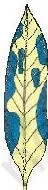
Fig 5.4 shows the two bell-jar set-ups used to test whether carbon dioxide is needed. In set-up (a), a watch-glass of potassium hydroxide absorbs carbon dioxide from the air, so the plant under this jar makes little or no starch.
Set-up (b), without potassium hydroxide, has carbon dioxide available and the leaf tests positive for starch (NCERT, p. 83).
How to read the diagrams in Life Processes
Five figures carry most of the exam weight of this chapter. Learn to trace each one in order — you have already seen all of them in the sections above.
| Figure | What to trace | What to label |
|---|---|---|
| Fig 5.6 — Human alimentary canal | Follow food from mouth to anus; name the region where each digestion event happens. | Oesophagus, stomach, small intestine, large intestine, anus. |
| Fig 5.8 — Glucose pathways | Trace the trunk from glucose to pyruvate, then each of the three branches and where it occurs. | Cytoplasm, mitochondria, glucose, pyruvate, ethanol, lactic acid. |
| Fig 5.9 — Respiratory system | Trace air from nostrils to alveoli, noting the cartilage rings that keep the passage open. | Nostrils, trachea rings, lungs, alveoli. |
| Fig 5.11 — Heart and circulation | Trace one red blood cell through both circuits, naming the four chambers in order. | Left/right atria, left/right ventricles, lungs, body. |
| Fig 5.14 — Nephron | Follow the filtrate from the capillary cluster into Bowman’s capsule and along the coiled tube. | Capillary cluster, Bowman’s capsule, tubule where reabsorption happens. |
Where students misread the drawings: in the heart, the left side of the diagram is the body’s left, not “our left as we look at the page” — the left atrium and left ventricle are the ones carrying oxygenated blood (NCERT, p. 92).
In the nephron, exchange happens in two stages — filtration into the capsule, then selective reabsorption along the tube — so label the capsule and the tubule separately.
Life Processes: key terms defined
Quick lookup for the chapter’s vocabulary, with the NCERT page where each term appears.
| Term | Meaning | NCERT page |
|---|---|---|
| Life processes | Maintenance functions that must keep running even when we are asleep | p. 79 |
| Nutrition | Transferring a source of energy (food) from outside the body to the inside | p. 80 |
| Autotrophic nutrition | Building food from simple inorganic materials using an external energy source | p. 81 |
| Heterotrophic nutrition | Taking in complex food material prepared by other organisms | p. 81 |
| Photosynthesis | The process by which autotrophs convert carbon dioxide and water into stored energy using sunlight and chlorophyll | p. 81 |
| Enzymes | Biocatalysts that break down complex substances into simpler ones | p. 81, 84 |
| Peristalsis | Rhythmic contractions of the gut lining that push food along the alimentary canal | p. 85 |
| Villi | Finger-like projections of the small intestine lining that increase the surface area for absorption | p. 86 |
| Aerobic respiration | Breakdown of pyruvate using oxygen, in the mitochondria, giving carbon dioxide and water | p. 87–88 |
| Anaerobic respiration | Breakdown of pyruvate without oxygen, giving ethanol and carbon dioxide (yeast) or lactic acid (muscle) | p. 87 |
| ATP | The energy currency of the cell, made from ADP and phosphate using energy released in respiration | p. 88 |
| Transpiration | Loss of water in vapour form from the aerial parts of a plant | p. 95 |
| Translocation | Transport of soluble products of photosynthesis and amino acids in the phloem, using energy | p. 95 |
| Excretion | Removal of harmful metabolic wastes from the body | p. 96 |
| Nephron | The kidney’s filtration unit — a capillary cluster cupped by Bowman’s capsule, with a coiled reabsorbing tube | p. 96–97 |
| Dialysis | Cleaning blood through an artificial kidney, where wastes diffuse across semi-permeable tubes into dialysing fluid | p. 97 |
Common mistakes students make in Life Processes
Six errors come up again and again in this chapter. The page at the end of each row is where the book settles it.
| Mistake | Why it happens | Correct rule | Page |
|---|---|---|---|
| Equating visible movement with being alive | Movement is our everyday evidence of life | A sleeping animal and a non-growing plant are still alive; the real test is molecular movement. Check: would the organism show molecular movement? | p. 79 |
| Misreading the heart diagram | Readers forget the diagram’s left is the body’s left | The left atrium and left ventricle carry oxygenated blood; the left ventricle pumps to the whole body. Check: trace one red cell from lungs to body. | p. 92 |
| Thinking stomata are always open | The guard-cell action is easy to miss | Guard cells close the pore when carbon dioxide is not needed, which also limits water loss. Check: ask what happens when water leaves the guard cells. | p. 83 |
| Saying fats are digested in the stomach | Stomach acid is associated with all digestion | Bile from the liver emulsifies fat globules and lipase in pancreatic juice digests fats — both act in the small intestine. Check: name the juice and the organ. | p. 85–86 |
| Mixing up where pyruvate is broken down | All three pathways start with the same molecule | Glucose → pyruvate happens in the cytoplasm; aerobic breakdown in the mitochondria; lactic acid forms in muscle cells short of oxygen. Check: match each product to its site. | p. 87–88 |
| Swapping transpiration and translocation | Similar names, both about plant transport | Transpiration is water vapour loss driven by suction in xylem; translocation is food and amino acids moved with energy in phloem. Check: which one uses ATP? | p. 95 |
How to use this chapter for exam preparation
No one can promise which question will appear, but the chapter’s own questions show where its ideas cluster. In-text question sets sit at pages 81, 87, 91, 96 and 98, and the closing exercises follow on page 99.
| Exercise (p. 99) | Concept it tests |
|---|---|
| Q1 | Excretion — the kidneys are part of the excretory system. |
| Q2 | Xylem — transport of water in plants. |
| Q3 | Conditions for autotrophic nutrition — carbon dioxide, water, chlorophyll and sunlight. |
| Q4 | Pyruvate breakdown — in the mitochondria. |
| Q5 | Fat digestion — bile emulsification and lipase in the small intestine. |
| Q6 | Saliva and salivary amylase in starch digestion. |
| Q7 | Raw materials and by-products of photosynthesis. |
| Q8 | Aerobic versus anaerobic respiration; anaerobic organisms such as yeast. |
| Q9 | Alveolar design for maximising gas exchange. |
| Q10 | Haemoglobin’s role in oxygen transport. |
| Q11 | Double circulation and why blood must be separated in mammals and birds. |
| Q12 | Xylem versus phloem transport. |
| Q13 | Comparing alveoli and nephrons — both use clusters of thin-walled capillaries for exchange. |
The first four exercises are objective-type; Q5 to Q10 need short, precise answers; Q11 to Q13 ask for comparisons, so give two or three clearly stated points each.
For diagram practice, label the heart (Figs 5.10 and 5.11), the nephron (Fig 5.14), the alimentary canal (Fig 5.6) and the glucose pathway (Fig 5.8) — these are the figures the chapter asks you to understand.
One caution: textbook contents and the examinable syllabus are not always identical — check the current official syllabus.
Ten points to remember from Life Processes
The chapter ends with its own recap on page 98. These ten points carry the same ideas in plainer words, and are enough for a last read before an exam.
- Movement of various kinds can be taken as an indication of life — not just visible movement.
- Maintaining life requires four processes: nutrition, respiration, transport and excretion.
- Autotrophic nutrition builds complex food from simple inorganic materials using an external energy source like sunlight.
- Heterotrophic nutrition takes in complex food material already prepared by other organisms.
- Food is broken down step by step along the alimentary canal, and the digested food is absorbed in the small intestine and carried to all cells.
- Respiration breaks down glucose to release energy in the form of ATP; ATP then powers other reactions in the cell.
- Respiration can be aerobic or anaerobic, and aerobic respiration makes much more energy available.
- In humans, the circulatory system — heart, blood and blood vessels — transports oxygen, carbon dioxide, food and wastes.
- In plants, the vascular tissue (xylem and phloem) transports water, minerals and food.
- In humans, nephrons remove soluble nitrogenous wastes; plants store wastes in vacuoles or as gum and resin, shed them in fallen leaves, or pass them into the soil.
The two equations worth writing from memory are in words: carbon dioxide + water, with sunlight and chlorophyll, gives glucose + oxygen + water (p. 82); and ADP + phosphate + energy gives ATP, whose terminal phosphate releases about 30.5 kJ/mol when split with water (p. 88).
Related chapters and resources
This listing is maintained for the 2026-27 academic session using the NCERT textbook information available to us. NCERT remains the authority for confirming the latest edition.
Keep studying around this chapter with the Class 10 material on this site.
- Class 10 Science notes — the Class 10 Science chapters in one place.
- Class 10 study material — notes across subjects for Class 10.
- CBSE notes — the full collection of chapter notes.
- Chapter 4: Carbon and its Compounds — the chapter before this one, including the soap action that bile is compared with.
- Chapter 6: Control and Coordination — the chapter that follows, on how organisms respond to stimuli.
The official Life Processes Class 10 NCERT Science Chapter 5 PDF from ncert.nic.in is the same file as the printed chapter, so use it for revision and for checking anything on this page against the book.
Sources and data verification
- The section, figure and question references on this page describe the NCERT Class 10 Science textbook, Chapter 5, “Life Processes”, as published on ncert.nic.in.
- This page covers Chapter 5 only, not the whole book.
- The listing is maintained for the current academic session from the NCERT information available to us.
- NCERT settles textbooks, editions and PDFs; CBSE settles curriculum, syllabus and examinations.
Reference: NCERT Class 10 Science textbook, chapter 5, official edition on ncert.nic.in.
Life Processes Class 10: common questions answered
Why is diffusion insufficient to meet the oxygen requirements of multi-cellular organisms like humans?
In multi-cellular organisms, not all cells are in direct contact with the outside environment. Oxygen is taken up at one place — the lungs — while every cell needs it, so diffusion alone cannot carry it across the distances involved. A specialised transport system is needed (NCERT, p. 80).
What are the different pathways by which pyruvate is broken down to provide energy in various organisms?
Pyruvate, formed from glucose in the cytoplasm, has three fates: it is broken down in mitochondria with oxygen to give carbon dioxide and water (aerobic); in yeast it becomes ethanol and carbon dioxide (fermentation); and in muscle cells short of oxygen it becomes lactic acid (NCERT, p. 87–88).
Why is it necessary to separate oxygenated and deoxygenated blood in mammals and birds?
Mammals and birds have high energy needs because they constantly use energy to maintain body temperature. Separating the two blood streams keeps the oxygen supply to the body highly efficient — any mixing would lower the oxygen delivered (NCERT, p. 92).
What is the difference between transpiration and translocation in plants?
Transpiration is the loss of water vapour from the aerial parts of a plant, and it drives the upward movement of water in xylem. Translocation is the transport of the products of photosynthesis and amino acids in phloem, using energy, and it can move material up or down as the plant needs (NCERT, p. 95).
How is the amount of urine produced regulated?
It depends on how much water is reabsorbed along the kidney tubule: the nephron reabsorbs more water when the body has little excess and less when there is more waste to excrete (NCERT, p. 97). The muscular urinary bladder is also under nervous control, so passing urine is normally something we can control (NCERT, p. 97).
How are fats digested in our bodies and where does this process take place?
Bile from the liver emulsifies large fat globules into smaller ones, and lipase from the pancreas digests the emulsified fats. Both act in the small intestine (NCERT, p. 85; exercise Q5, p. 99).
Explore Class 10 Science Books
Class 10 Science on LearnCBSE:
Related chapters:
- Chemical Reactions and Equations
- Acids, Bases and Salts
- Metals and Non-metals