How do Organisms Reproduce? Class 10 Science Chapter 7 is a 15-page chapter of the NCERT textbook. It runs from the DNA-copying basis of reproduction to human reproductive health.
The official NCERT chapter PDF is linked right below. This page then maps the chapter section by section — what each part teaches, what each figure shows, and what the exercises test — with NCERT page references throughout.
Download the How do Organisms Reproduce? Class 10 Chapter PDF
NCERT publishes the official chapter file on its own website, so the version you get here is the same one your school uses — no re-typeset copies, no missing figures.
Download the How do Organisms Reproduce? Class 10 Science chapter PDF to read the chapter exactly as NCERT printed it, including all its diagrams and activities. The sections below summarise the same content for a quick overview before you read.
Chapter 7 at a Glance: Sections, Figures and Exercises
The table below lists how much the chapter holds — its sections, figures, activities and exercise questions. The list under it names the main sections in the order NCERT teaches them.
| What the chapter holds | Count | Where it is used |
|---|---|---|
| Printed pages | 15 | |
| Sections in the chapter | 17 | |
| Figures with NCERT captions | 12 | |
| Exercise questions | 11 | answered in our NCERT Solutions |
| In-text questions | 12 | |
| Activities | 7 | |
| Official NCERT PDF | Download the chapter PDF | the chapter exactly as NCERT publishes it |
- 7.1 Do organisms create exact copies of themselves? DNA copying and the importance of variation, ending with two in-text questions (pp. 114-115).
- 7.2 Modes of reproduction in simple organisms — fission, fragmentation, regeneration, budding, vegetative propagation (including tissue culture) and spore formation (pp. 115-118).
- 7.3 Sexual reproduction — why the sexual mode exists, flowering plants, human reproductive systems, menstruation and reproductive health (pp. 119-125).
- Closing — the “What you have learnt” summary and the exercises (pp. 126-127).
The activities (Activity 7.1 to Activity 7.7) sit inside these sections. Most are microscope observations or simple growing experiments you can repeat at home, and each one demonstrates one mode of reproduction.
What This Chapter Covers, in the Order NCERT Teaches It
Use this section as the chapter’s storyline. It shows where the argument starts and where it ends, so every page you read has a place.
- Why organisms reproduce, and how DNA copying creates variation (pp. 114-115). Reproduction begins with a DNA copy plus new cellular apparatus; imperfect copying produces variations that can save a species when a niche changes.
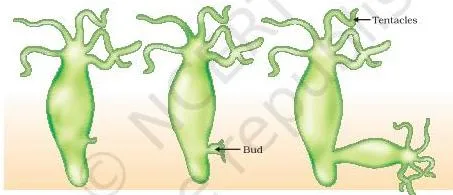
- Asexual modes for simpler organisms (pp. 115-118). Fission in single-celled organisms, fragmentation in Spirogyra, regeneration in Planaria, budding in Hydra and yeast, vegetative propagation and tissue culture in plants, and spore formation in Rhizopus.
- Sexual reproduction and flowering plants (pp. 119-120). Why combining DNA from two parents generates variation faster, how meiosis stops DNA from doubling, and then pollination, fertilisation and seed formation in flowers.
- Reproduction in human beings (pp. 121-125). Puberty changes, the male and female reproductive systems, the placenta, menstruation, and reproductive health including contraception.
- Summary and exercises (pp. 126-127). “What you have learnt” condenses the chapter into its key points, and the exercises check each block.
Activities 7.1 to 7.7: What Each Observation Shows
NCERT places seven activities inside the chapter so you can watch reproduction rather than only read about it. Each activity ends with an observation that becomes a revision point.
| Activity | What you do and observe | Concept it demonstrates |
|---|---|---|
| Activity 7.1, p. 115 | Yeast granules in sugar solution; after 1-2 hours the yeast cells show small outgrowths, or buds | Budding — new yeast individuals grow from a parent cell |
| Activity 7.2, p. 115 | A wet bread slice kept cool, moist and dark grows thread-like hyphae, then tiny spore-bearing sporangia | Spore formation in Rhizopus; compare with yeast budding from Activity 7.1 |
| Activity 7.3, p. 115 | A permanent slide of Amoeba in binary fission shows one cell dividing into two | Binary fission — cell division creates new individuals in unicellular organisms |
| Activity 7.4, p. 116 | Pond-water filaments of Spirogyra; the filament breaks into pieces that grow into new filaments | Fragmentation — a simple method for multicellular organisms |
| Activity 7.5, p. 118 | Potato pieces with a notch (bud) grow fresh green shoots and roots; pieces without a bud do not | Vegetative propagation — buds on a stem can form new plants |
| Activity 7.6, p. 118 | Money-plant cuttings that contain a leaf grow roots and fresh leaves in water; cuttings without a leaf do not | Vegetative propagation — a stem piece with a leaf can become a new plant |
| Activity 7.7, p. 121 | Soaked Bengal gram seeds are cut open and compared with Fig. 7.9 | Germination — the seed contains the embryo that becomes a seedling |
Key Concepts from How do Organisms Reproduce? Class 10
Everything in this chapter follows one idea: reproduction copies DNA, copying is never perfectly accurate, and the variation this creates is what makes sexual reproduction worth the extra effort. The subsections below teach each link in that argument.
DNA Copying and the Importance of Variation
Before an organism can make a new individual, its cells must copy the information that builds the body. That information is stored in DNA.
DNA sits in the nucleus as the information source for making proteins (NCERT, p. 114). Change the information and the proteins change, which eventually changes the body design. That is why reproduction starts with a DNA copy — the new individual must inherit the same design blueprints.
Making that copy is a chemical job, and no chemical reaction is perfectly reliable. The two DNA copies are therefore similar but not identical — this built-in tendency to drift is the source of variation. Copying alone cannot make a new organism, though: a bare DNA copy pushed out of a cell would have no cellular apparatus to keep it alive.
So the cell builds additional cellular apparatus, and the two copies separate, each with its own (NCERT, pp. 113-114). A cell divides to give rise to two cells.
Some variations are so drastic that the new cell cannot work with the apparatus it inherits, and it dies. Milder variation is harmless. The surviving cells are similar to, but subtly different from, each other. The in-text questions on page 114 ask why DNA copying matters and why variation helps the species more than the individual.
Why variation matters. Populations fill niches — well-defined places in the ecosystem — using their ability to reproduce. A niche can change: temperatures rise or fall, water levels shift, a meteorite hits. If a whole population is perfectly suited to one niche and that niche is destroyed, the population can be wiped out (NCERT, p. 114).
NCERT’s example is bacteria living in temperate waters — warm the water and most die, but heat-resistant variants survive and multiply. Variation is useful for the survival of the species over time.
The Five Asexual Modes, Compared
The mode of reproduction depends on the organism’s body design — a single cell can simply split, while a body with specialised tissues needs more complicated arrangements. This table separates the five modes NCERT teaches in Sections 7.2.1 to 7.2.6.
| Mode | How it works | Example from the chapter | NCERT page |
|---|---|---|---|
| Fission — binary | The parent cell splits into two equal halves; in Amoeba the split can be in any plane, while Leishmania divides in a definite orientation because of its whip-like structure | Amoeba, Leishmania (also many bacteria and protozoa) | p. 115 |
| Fission — multiple | The cell divides into many daughter cells at the same time | Plasmodium | p. 116 |
| Regeneration | Cut or broken pieces of the body grow into complete individuals, using specialised cells that reorganise into tissues in a sequence called development | Planaria (also Hydra) | p. 117 |
| Budding | A small outgrowth (bud) forms by repeated cell division at one site and separates as a new individual | Hydra; yeast puts out buds too | pp. 116-117 |
| Vegetative propagation | Roots, stems or leaves of a plant develop into new plants under appropriate conditions | Bryophyllum leaf buds, potato notches, money-plant cuttings | pp. 117-118 |
| Spore formation | Sporangia on thread-like hyphae release thick-walled spores that grow on a moist surface | Rhizopus (bread mould) | p. 118 |
NCERT’s conclusion after all five: every mode in this table creates new generations from a single individual, so together they are called asexual reproduction (NCERT, p. 118). The chapter also mentions fragmentation — Spirogyra simply breaks into pieces that grow into new individuals (NCERT, p. 116) — as an even simpler strategy for multicellular organisms with simple body organisation.
Sexual Reproduction and Why It Avoids Doubling DNA
Asexual reproduction is quick but produces near-identical copies, so variation accumulates too slowly for changing conditions. Sexual reproduction exists to mix DNA from two individuals and produce variation faster.
DNA-copying errors are a slow source of variation because copying is accurate most of the time. Each new variation is added to a DNA copy that already carries variations from previous generations, so two individuals in a population end up with quite different patterns of accumulated variation (NCERT, p. 119).
Combine two such individuals and you get novel combinations of variants — and because both sets are already working in living individuals, they are unlikely to be harmful.
Sexual reproduction therefore combines DNA from two different individuals during reproduction. But there is a catch: if every new generation received two complete DNA sets, the amount of DNA would double each generation. That would disrupt the control of the cellular apparatus by the DNA (NCERT, p. 119).
The meiosis solution. Complex multicellular organisms solve the doubling problem with special germ cells made by a cell division called meiosis. These germ cells carry only half the number of chromosomes and half the DNA of normal body cells.
When two germ cells fuse during sexual reproduction, the normal chromosome number and DNA content are restored in the new generation (NCERT, p. 119).
An analogy: if two parents each handed a complete instruction manual to a child, the child would own two full manuals and the next generation would get four — the pile would keep doubling. Instead, each parent contributes half a manual, and the child gets one complete manual of normal size.
As body designs become more complex, the germ cells specialise too. The male gamete is small and motile; the female gamete is large and carries the food stores (NCERT, p. 119). This difference explains much of why male and female reproductive organs differ.
Flowering Plants: Pollination, Fertilisation, Seed and Fruit
Flowers are the reproductive organs of flowering plants, and the chapter follows one pollen grain from the anther to the seed.
The reproductive parts of a flower are the stamen (male) and the pistil (female). The stamen produces yellowish pollen grains. The pistil has three parts: the sticky stigma at the top, the elongated style in the middle, and the swollen ovary at the base. The ovary contains ovules, and each ovule holds an egg cell (NCERT, p. 120).
A flower may be unisexual — papaya and watermelon carry either stamens or pistil — or bisexual, like Hibiscus and mustard, which carry both (NCERT, p. 120).
Pollination is the transfer of pollen from the stamen to the stigma. It is self-pollination when the pollen stays within the same flower, and cross-pollination when it moves from one flower to another, usually carried by wind, water or animals (NCERT, p. 120).
Landing on the stigma is only the start. A tube grows out of the pollen grain and travels down through the style to reach the ovary, where the male germ cell fuses with the egg cell in the ovule. This fusion — fertilisation — produces a zygote that can grow into a new plant (NCERT, p. 120).
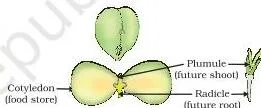
After fertilisation, the zygote divides to form an embryo inside the ovule. The ovule develops a tough coat and becomes the seed; the ovary ripens into the fruit; the petals, sepals, stamens, style and stigma shrivel and fall off. The seed holds the future plant, which develops into a seedling under the right conditions — this process is germination (NCERT, p. 121).
Do not mix up the sequence: pollination happens on the outside of the flower, and fertilisation happens inside the ovule of the ovary.
Human Reproduction: Puberty, Systems, Menstruation and Contraception
The human section starts before reproduction itself — with the body changes of puberty — and then works through the organs, the monthly cycle and reproductive health.
Puberty. While the body is growing to adult size, its resources go mostly into growth; reproductive tissues mature only as the rate of body growth slows. This period of adolescence is puberty (NCERT, p. 122).
Some changes are common to boys and girls — thicker, darker hair in the armpits and genital area, thinner hair on limbs and face, oilier skin with pimples. Others differ: girls see breast enlargement, darkening of the nipple skin and the start of menstruation; boys develop facial hair, a cracking voice and occasional erections (NCERT, p. 121).
These changes are gradual and vary from person to person.
Male reproductive system. The testes make sperms. They hang outside the abdominal cavity in the scrotum because sperm formation requires a lower temperature than normal body temperature (NCERT, p. 123). The testes also secrete testosterone, the hormone the previous chapter, Control and Coordination, discussed; testosterone regulates sperm formation and drives the appearance changes of puberty in boys.
Sperms travel through the vas deferens, which joins a tube from the urinary bladder, so the urethra is a common passage for sperms and urine. Along the path, the seminal vesicles and prostate gland add fluid that makes transport easier and provides nutrition (NCERT, p. 123).
A sperm is mostly genetic material plus a long tail for moving towards the female germ cell.
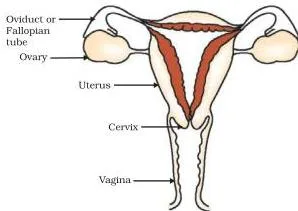
Female reproductive system. The ovaries make eggs and also some hormones. A girl is born with thousands of immature eggs; at puberty some begin maturing, and from then on one egg is produced roughly every month. The egg travels through the thin fallopian tube (oviduct) to the elastic, bag-like uterus, which opens into the vagina through the cervix (NCERT, p. 123).
Sperms enter through the vagina, swim up and may meet the egg in the oviduct — that is where fertilisation happens. The fertilised egg (zygote) divides into a ball of cells, the embryo, which implants in the lining of the uterus and develops organs to become a foetus.
The uterus lining thickens and fills with blood every month, ready to receive and nourish an embryo (NCERT, p. 123).
Placenta. The embryo does not feed directly from the mother’s blood. It gets glucose and oxygen through the placenta, a disc embedded in the uterine wall.
Villi on the embryo’s side lie inside blood spaces on the mother’s side, creating a large surface area for glucose and oxygen to pass across, and for the embryo’s waste to pass back (NCERT, p. 123). Development inside the mother takes about nine months, and the child is born through rhythmic contractions of the uterine muscles.
What happens when the egg is not fertilised? Follow the monthly sequence:
- The ovary releases one egg roughly every month.
- The uterus prepares each month: its lining becomes thick and spongy, with a rich blood supply, ready to nourish an embryo (NCERT, p. 123).
- If the egg is not fertilised, it survives for about one day (NCERT, p. 124).
- The thickened lining is no longer needed, so it slowly breaks down and comes out through the vagina as blood and mucous (NCERT, p. 124).
- This cycle repeats roughly every month and is called menstruation; it usually lasts about two to eight days (NCERT, p. 124).
Reproductive health and contraception. Sexual maturation is gradual, and some degree of maturation does not mean the body or mind is ready for sexual activity or parenthood (NCERT, p. 124). The sexual act can transmit diseases — bacterial infections such as gonorrhoea and syphilis, and viral infections such as warts and HIV-AIDS.
A condom helps prevent transmission of many of these infections to some extent (NCERT, p. 124).
Because every sexual act can lead to pregnancy, and pregnancy makes major demands on a woman’s body and mind, NCERT lists four categories of contraception (NCERT, pp. 124-125):
- Barrier methods — condoms or vaginal coverings stop sperm from reaching the egg.
- Hormonal methods — oral pills change the hormonal balance so eggs are not released; they can have side effects.
- Intrauterine devices — the loop or copper-T placed in the uterus prevents pregnancy, but can irritate the uterus.
- Surgical methods — blocking the vas deferens (male) or the fallopian tube (female) prevents fertilisation; safe in the long run, but surgery itself carries some risk.
The chapter also notes the social side: illegal sex-selective abortion of female foetuses is driving the child sex ratio down in some sections of society, although prenatal sex determination is prohibited by law (NCERT, p. 125). Birth and death rates together fix population size, and an expanding population makes it harder to improve living standards (NCERT, p. 125).
Figure Walkthrough: Reading the NCERT Diagrams
The figures carry much of the chapter’s real teaching — you cannot see a pollen tube or an embryo implant from reading alone. Each figure below appears where NCERT uses it, with the specific detail to look at. In-text question sets close each block on pages 114, 119 and 126, and work well as quick self-tests.
Binary and Multiple Fission: Figures 7.1 and 7.2
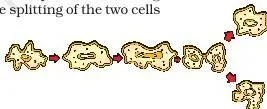
Figure 7.1(a) shows Amoeba splitting in two. Because Amoeba has no fixed organisation, the split can happen in any plane (NCERT, p. 115). Figure 7.1(b) shows Leishmania, the kala-azar parasite, which has a whip-like structure at one end; its division follows a definite orientation relative to that structure (NCERT, p. 115).
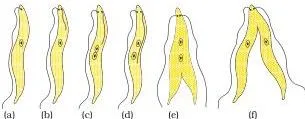
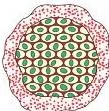
Compare both with Figure 7.2, Plasmodium, the malarial parasite. Instead of splitting into two, it divides into many daughter cells at once — multiple fission (NCERT, p. 116). The difference for the question “binary versus multiple” is simply: two daughter cells versus many.
Regeneration and Budding: Figures 7.3 and 7.4
Figure 7.3 shows regeneration in Planaria: cut the animal into pieces and each piece grows into a complete organism through specialised cells. NCERT adds a careful point: regeneration is not the same as reproduction, because most organisms do not depend on being cut up to reproduce (NCERT, p. 117).
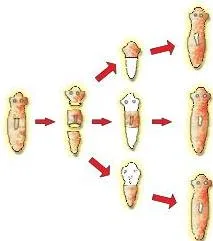
Figure 7.4 shows budding in Hydra. A bud appears as an outgrowth at one site, formed by repeated cell division, and later separates as a new individual (NCERT, p. 117). The visual difference: a fission figure shows one cell becoming two equal cells; a budding figure shows a small outgrowth on a larger parent.
Vegetative Propagation and Spores: Figures 7.5 and 7.6
Figure 7.5 shows a Bryophyllum leaf. Tiny buds sit in the notches along the leaf margin; they fall onto the soil and develop into new plants (NCERT, p. 118). This is the same idea your Activity 7.5 potato pieces demonstrate — a bud, not a seed, produces the new plant.
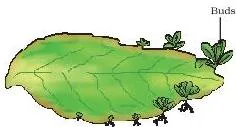
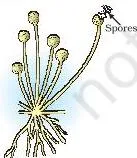
Figure 7.6 shows spore formation in Rhizopus, the bread mould from Activity 7.2. The thread-like structures are hyphae and are not reproductive; the tiny blob-on-a-stick structures are sporangia, and the cells inside them are spores. Thick walls protect the spores until they reach a moist surface and begin to grow (NCERT, p. 118).
Flower, Pollen Germination and Seed Germination: NCERT Pages 120-121
The flower diagram on NCERT page 120 is a longitudinal section, cut through the flower to show both sets of reproductive parts. Locate the stamen (anther with pollen grains) and the pistil — sticky stigma, long style and swollen ovary with ovules.
NCERT uses the same diagram to explain why a flower is unisexual (papaya, watermelon) when it contains only one set, or bisexual (Hibiscus, mustard) when it contains both (NCERT, p. 120).
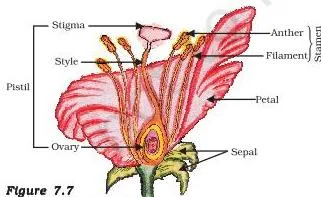
Figure 7.8 shows what happens after a pollen grain lands on a suitable stigma: the pollen germinates and a pollen tube grows down through the style towards the ovary, carrying the male germ cell to the egg. This is the physical link between pollination and fertilisation (NCERT, p. 121).
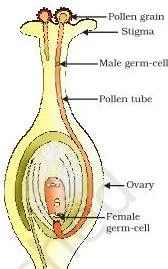
Figure 7.9 shows germination — a seed that has begun to grow. Activity 7.7 has you soak Bengal gram seeds overnight and cut one open to match the parts you see against this figure (NCERT, p. 121).
Human Male and Female Reproductive Systems: Figures 7.10 and 7.11
Figure 7.10, the human male reproductive system (NCERT, p. 123). Trace the route of a sperm with your finger: testes in the scrotum → vas deferens → the point where the vas deferens meets the tube from the urinary bladder → urethra. Then note the glands along the path — seminal vesicles and prostate — which add fluid, and the penis through which the urethra passes.
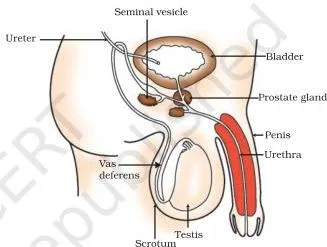
Figure 7.11, the human female reproductive system (NCERT, p. 123). Trace the egg: ovary → fallopian tube (oviduct) → uterus → cervix → vagina. One egg is released roughly every month; fertilisation happens in the oviduct; the embryo implants in the uterus lining.
Key Terms and Definitions from Chapter 7
Use this table as a quick lookup during revision. Each term is tied to the page where NCERT introduces it, and the definitions are in plain words.
| Term | Plain-language definition | NCERT page |
|---|---|---|
| DNA | Deoxyribo Nucleic Acid — the molecule in chromosomes that carries information for inheritance and acts as the information source for making proteins | p. 114 |
| Variation | The subtle differences between individuals of a species that appear because DNA copying is not perfectly accurate | p. 114 |
| Fission | Cell division in unicellular organisms that creates new individuals | p. 115 |
| Binary fission | Splitting into two equal halves, as in Amoeba and Leishmania | p. 115 |
| Multiple fission | Dividing into many daughter cells at once, as in Plasmodium | p. 116 |
| Regeneration | Growth of complete individuals from pieces of a broken body, carried out by specialised cells | p. 117 |
| Budding | A bud forms by repeated cell division at one site and separates as a new individual (Hydra, yeast) | p. 117 |
| Vegetative propagation | Roots, stems or leaves of a plant develop into new plants under appropriate conditions | p. 117 |
| Tissue culture | Growing new plants from growing-tip cells on an artificial medium, via a callus and then plantlets | p. 118 |
| Spore | A thick-walled cell inside a sporangium that can grow into a new individual on a moist surface | p. 118 |
| Gamete | A germ cell — the male gamete is small and motile, the female gamete is large with food stores | p. 119 |
| Fertilisation | Fusion of the male and female germ cells to form a zygote | p. 120 |
| Zygote | The cell formed by fertilisation, capable of growing into a new organism | p. 120 |
| Pollination | Transfer of pollen from the stamen to the stigma | p. 120 |
| Self-pollination | Pollen transfer within the same flower | p. 120 |
| Cross-pollination | Pollen transfer from one flower to another, by wind, water or animals | p. 120 |
| Placenta | Disc-like tissue embedded in the uterine wall through which glucose and oxygen pass to the embryo and waste passes back | p. 123 |
| Menstruation | Monthly breakdown of the uterine lining, released as blood and mucous when the egg is not fertilised | p. 124 |
| Puberty | The period of adolescence when reproductive tissues mature as general body growth slows | p. 122 |
| Contraception | Methods used to avoid pregnancy | p. 125 |
Common Mistakes Students Make in How do Organisms Reproduce?
These six confusions match NCERT’s own clarifications in the chapter. Read the correction before you make the mistake, not after.
| Mistake | Correct rule | How to check your answer |
|---|---|---|
| Treating regeneration as the same as reproduction | Regeneration needs the body to be cut or broken; most organisms never depend on that, so regeneration is not reproduction (NCERT, p. 117) | Ask: does the organism normally reproduce this way? Hydra reproduces by budding |
| Confusing Amoeba’s binary fission with budding | Fission: one cell splits into two equal halves. Budding: a small outgrowth forms and then separates (NCERT, pp. 115, 117) | Is the result two equal cells (fission) or a small bud on a larger parent (budding)? |
| Saying the testis only makes sperms | The testis also secretes testosterone, which regulates sperm formation and drives boys’ puberty changes (NCERT, p. 123) | List two testis functions — sperms and testosterone |
| Mixing up pollination and fertilisation | Pollination is pollen transfer to the stigma; fertilisation is germ-cell fusion inside the ovule. Pollination comes first (NCERT, p. 120) | Locate each: pollination happens outside the flower, fertilisation inside the ovary |
| Thinking the embryo feeds directly from the mother’s blood | Glucose and oxygen cross the placenta — a disc with villi against the mother’s blood spaces (NCERT, p. 123) | Name the tissue that transfers food and oxygen: the placenta |
| Assuming copper-T blocks sexually transmitted diseases | Copper-T prevents pregnancy by irritating the uterus; condoms help prevent transmission of many infections to some extent. Copper-T does not (NCERT, pp. 124-125) | Match method to job: barrier = infection and pregnancy; hormonal, intrauterine and surgical = pregnancy only |
Exam-Focused Notes and Exercise Map for Chapter 7
The exercise set at the end of the chapter is a quick way to check you have understood each block. The table maps every exercise to the section that answers it; the first three are multiple-choice, Question 7 is a drawing question, and the rest test concepts.
| Exercise | What it tests | Answer / where the answer lives |
|---|---|---|
| 1 | Budding in a unicellular organism (MCQ) | Section 7.2.4 and Activity 7.1, p. 116. Answer: (b) Yeast. |
| 2 | Parts of the female reproductive system (MCQ) | Section 7.3.3(b), p. 123. Answer: (c) Vas deferens — it belongs to the male system. |
| 3 | What the anther contains (MCQ) | Section 7.3.2, p. 120. Answer: (d) pollen grains. |
| 4 | Advantages of sexual reproduction | Section 7.3.1, p. 119 — combining DNA from two individuals creates new combinations of variations and speeds up variation. |
| 5 | Functions of the testis | Section 7.3.3(a), p. 123 — sperm formation and testosterone secretion. |
| 6 | Why menstruation occurs | Section 7.3.3(c), p. 124 — the unfertilised egg dies, and the thickened uterine lining breaks down. |
| 7 | Labelled longitudinal section of a flower | Section 7.3.2 and the flower diagram, p. 120 — a full-marks answer labels sepals, petals, stamen, stigma, style, ovary and ovules. |
| 8 | Methods of contraception | Section 7.3.3(d), pp. 124-125 — barrier, hormonal, intrauterine and surgical. |
| 9 | Unicellular vs multicellular reproduction | Sections 7.2.1-7.2.6, pp. 115-118 — a single cell divides by fission; complex bodies with specialised tissues need specialised cell types. |
| 10 | Stability of populations | Sections 7.1.1 and 7.3.3(d), pp. 114, 125 — reproduction maintains body designs that fit niches; birth and death rates fix population size. |
| 11 | Reasons for adopting contraception | Section 7.3.3(d), pp. 124-125 — avoid pregnancy when not ready, protect the woman’s health, control population size; condoms also cut STD transmission. |
Textbook contents and the examinable syllabus are not always identical — check the current official syllabus for this session. This mapping explains what each exercise asks; it does not predict exam questions or marks.
Revision Summary: What You Should Have Learnt
This is the chapter’s “What you have learnt” (NCERT, p. 126) rewritten for last-minute revision. Each point is one line you should be able to say without the book.
- Reproduction does not keep an individual alive — that role belongs to nutrition, respiration and excretion (NCERT, p. 126).
- Reproduction begins with a DNA copy plus additional cellular apparatus, so the new cell inherits both the information and the machinery to use it (NCERT, p. 113).
- The mode of reproduction follows the organism’s body design — simple bodies divide, complex bodies use specialised cells (NCERT, p. 126).
- In asexual reproduction — fission, regeneration, budding, vegetative propagation, spore formation — new generations come from a single individual (NCERT, p. 118).
- Sexual reproduction involves two individuals and combines their DNA, generating variation faster than copying alone (NCERT, p. 119).
- Flowering plants reproduce through pollination followed by fertilisation; the ovule becomes the seed and the ovary the fruit (NCERT, p. 120).
- In humans, puberty changes signal sexual maturation; fertilisation occurs in the fallopian tube and the embryo grows in the uterus (NCERT, p. 123).
- Pregnancy can be avoided by barrier, hormonal, intrauterine or surgical contraception (NCERT, pp. 124-125).
Related Class 10 Science Resources
This listing is maintained for the 2026-27 academic session using the NCERT textbook information available to us. NCERT remains the authority for confirming the latest edition.
This chapter sits between two closely connected ones. The previous chapter, Control and Coordination, explains hormones like testosterone that this chapter relies on, and the next chapter, Heredity, builds directly on DNA copying and variation — the book opens Chapter 7 with the variation idea precisely because heredity starts from it.
For the rest of the subject, keep the Class 10 Science notes page open alongside the Class 10 notes hub, or browse the full CBSE notes directory. The official How do Organisms Reproduce? chapter PDF and the rest of the textbook are on the official NCERT website.
Sources and Data Verification
- This page describes Chapter 7 of the NCERT Class 10 Science textbook (Science, NCERT), a 15-page chapter (printed pages 113-127), using the official PDF published on ncert.nic.in.
- It covers this chapter only — not other editions of the book, not state-board textbooks, and not other subjects.
- The page is maintained for the current academic session using NCERT’s published textbook information.
- NCERT settles textbooks, editions and PDFs; CBSE settles the curriculum, syllabus and examinations.
Reference: NCERT Class 10 Science textbook, chapter 7, official edition on ncert.nic.in.
Frequently Asked Questions About How do Organisms Reproduce? Class 10
Why is reproduction not essential for the survival of an individual organism?
It is not essential because reproduction does nothing to keep an individual alive — unlike nutrition, respiration and excretion, which are essential life processes (NCERT, p. 113). Reproduction spends an organism’s energy on creating more individuals. The payoff is at the level of the species: reproducing organisms create the large populations that bring a species to our notice.
How is binary fission different from multiple fission?
Binary fission produces two daughter cells; multiple fission produces many. Amoeba and Leishmania split into two, with Leishmania dividing in a definite orientation because of its whip-like structure, while Plasmodium divides into many daughter cells at the same time (NCERT, pp. 115-116).
Why are the testes located outside the abdominal cavity?
The testes lie outside the abdominal cavity in the scrotum because sperm formation requires a lower temperature than the normal body temperature (NCERT, p. 123).
What is the difference between pollination and fertilisation?
Pollination is the transfer of pollen from the stamen to the stigma — it happens on the outside of the flower. Fertilisation is the fusion of the male germ cell with the egg cell inside the ovule, after a pollen tube carries the male cell down the style (NCERT, p. 120). Pollination always comes first.
How does the embryo get nutrition and oxygen inside the mother?
The embryo gets glucose and oxygen from the mother’s blood through the placenta, a disc embedded in the uterine wall. Villi on the embryo’s side sit inside blood spaces on the mother’s side, creating a large surface area for exchange; waste passes back the same way (NCERT, p. 123).
Does copper-T protect a woman from sexually transmitted diseases?
No. Copper-T is an intrauterine device that prevents pregnancy but does nothing against sexually transmitted diseases. Only barrier methods such as condoms help prevent transmission of many of these infections, and that too only to some extent (NCERT, pp. 124-125).
Explore Class 10 Science Books
Class 10 Science on LearnCBSE:
Related chapters:
- Chemical Reactions and Equations
- Acids, Bases and Salts
- Metals and Non-metals