Looking for the heredity class 10 chapter from NCERT? This page gives you the official Class 10 Science Chapter 8, Heredity, as a PDF, then explains everything inside it.
The chapter begins on printed page 127 of the NCERT Science textbook and spans six pages. The official file is right below; keep it open beside this page and follow each idea by its NCERT page number.
Download the heredity class 10 NCERT chapter PDF
The official file is the chapter exactly as printed in the textbook, with every section, figure, activity and question in place. Get the heredity class 10 NCERT chapter PDF from ncert.nic.in to read the chapter in its original published form.
Prefer to browse the whole book? The official NCERT Class 10 Science textbook page hosts this chapter alongside the others.
What is inside Chapter 8 of the Class 10 Science book
The table below shows the chapter’s shape — how many sections, figures, activities and questions the official file holds.
| What the chapter holds | Count | Where it is used |
|---|---|---|
| Printed pages | 6 | |
| Sections in the chapter | 6 | |
| Figures with NCERT captions | 4 | |
| Exercise questions | 4 | answered in our NCERT Solutions |
| In-text questions | 6 | |
| Activities | 2 | |
| Official NCERT PDF | Download the chapter PDF | the chapter exactly as NCERT publishes it |
Here is where each topic begins in the printed book:
- 8.1 Accumulation of variation during reproduction — p. 127
- 8.2 Heredity — p. 127
- 8.2.1 Inherited traits — p. 128
- 8.2.2 Rules for the inheritance of traits: Mendel’s contributions — pp. 128–130
- 8.2.3 How do these traits get expressed? — pp. 130–131
- 8.2.4 Sex determination — pp. 131–132
- What you have learnt — p. 132, followed by the chapter exercises on p. 133
The chapter also includes two short activities: Activity 8.1 makes you collect and count earlobe types, and Activity 8.2 asks how you would confirm the F2 combination ratio. The closing summary and the exercise questions fill the last pages.
The journey of the chapter: from variation to sex determination
Read this section first if the chapter felt like disconnected topics. It is the chapter’s argument in order — each idea builds on the one before it.
- Reproduction creates variation. DNA copying is not perfectly accurate, and these small inaccuracies produce subtle differences between offspring. Asexually reproducing organisms show only minor variation; sexual reproduction produces much more, and the environment then selects which variants survive best (NCERT, p. 127).
- Both parents matter equally. Since the father and mother each contribute genetic material, every offspring carries two versions of each trait, one from each parent — the starting point for everything Mendel found (NCERT, p. 128).
- Mendel’s crosses revealed how the two versions behave: one can hide the other, and separate traits are inherited independently (NCERT, pp. 128–130).
- Genes work through proteins. A gene is a DNA section carrying the information for one protein, and that protein can control a trait such as plant height (NCERT, pp. 130–131).
- Chromosomes keep the two gene sets separate, so germ cells carry a single set and fertilisation restores two — the mechanism that lets traits recombine (NCERT, p. 131).
- Finally, a special chromosome pair decides sex: women are XX, men are XY, and the father’s contribution determines the child’s sex (NCERT, pp. 131–132).
Key concepts of the heredity chapter, explained simply
These ideas are the whole chapter: where variation comes from, how it is inherited, and how it is expressed. Each one below starts with why it matters, then shows the mechanism, with the NCERT page where the book develops it.
Variation accumulates over generations — p. 127
Why it matters: this opening section answers a simple question — why offspring are similar to their parents but never identical. The answer is that reproduction itself creates small differences, and the environment sorts them.
During DNA copying, tiny inaccuracies slip in. If one bacterium divides and its two descendants divide again, the four bacteria are very similar, with only minor differences from those copying errors.
Sexual reproduction produces far greater diversity, because two individuals combine their DNA. Not every variation has the same chance of surviving — a bacterium that tolerates heat survives a heat wave better, so environmental factors select among variants. This selection is the raw material of evolution (NCERT, p. 127).
Two copies of every gene — pp. 127–128
Why it matters: this is the concept that makes all of Mendel’s results possible. If only one parent contributed, there would be nothing to hide or combine.
For traits in human beings, the rules of inheritance reflect the fact that the father and mother contribute practically equal amounts of genetic material to the child. Every trait can be influenced by both paternal and maternal DNA, so each child carries two versions of every trait — one inherited from each parent (NCERT, pp. 127–128).
Mendel’s monohybrid cross: the 3:1 result with a worked example — pp. 129–130
Why it matters: the tall-short cross is the experiment the whole chapter turns on. Mendel (1822–1884) was the first to keep count of individuals showing each trait in every generation — the step earlier observers missed, and the reason he could state these rules (NCERT, p. 129).
Work through this problem as you read, then check your answer against the steps.
Step 1 – Write the parents.
A pea plant that breeds true for tallness is TT; one that breeds true for shortness is tt.
Each has two identical copies of the height factor.
Step 2 – Cross them.
Each parent passes one copy to its offspring.
Every F1 plant receives a T from the tall parent and a t from the short parent, so all F1 plants are Tt.
Step 3 – Look at the F1.
There were no “medium-height” plants; all were tall.
Tallness did not blend with shortness, it hid it (NCERT, p. 129).
Step 4 – Self-pollinate the F1.
An F1 plant (Tt with Tt) makes two kinds of germ cells: half carry T and half carry t.
Step 5 – Combine the germ cells.
The table shows the four equally likely combinations:
| T germ cell | t germ cell | |
|---|---|---|
| T germ cell | TT | Tt |
| t germ cell | tT | tt |
Step 6 – Read the two ratios.
The four outcomes are equally likely, so the combination ratio is 1 : 2 : 1 (one TT, two Tt, one tt).
But a single copy of T is enough to make a plant tall; only tt is short (NCERT, p. 130).
So three of every four plants look tall and one looks short — the visible 3 : 1 ratio.
Final answer: combination ratio 1 : 2 : 1 (TT : Tt : tt); visible ratio 3 : 1 (tall : short).
Why one T is enough: traits act through proteins. The book’s own example — an enzyme that builds a growth hormone — explains it: if the gene for that enzyme works well, enough hormone is made and the plant is tall. A single working copy produces enough of the gene’s product, which is why Tt looks like TT (NCERT, pp. 130–131).
Two traits at once: independent inheritance — p. 130
Why it matters: the monohybrid cross explains one trait. This two-trait cross explains something bigger — why children can show combinations neither parent had.
Cross a tall plant with round seeds against a short plant with wrinkled seeds. All the F1 plants are tall with round seeds, since tallness and round shape are dominant.
But when the F1 is self-pollinated, the F2 is not only tall-round and short-wrinkled: some F2 plants are tall with wrinkled seeds and some are short with round seeds — new combinations neither grandparent showed.
The height pair and the seed-shape pair are independently inherited, because the factors recombine when the zygote forms (NCERT, p. 130).
From gene to protein to trait — pp. 130–131
Why it matters: Mendel’s “factors” were abstract. This section explains what they physically are — pieces of DNA that build proteins.
Cellular DNA is the information source for making proteins. A section of DNA that provides the information for one protein is called the gene for that protein.
The chain for height runs like this: plant height depends on the amount of a particular plant hormone; the amount of hormone depends on how efficiently an enzyme makes it; the efficiency of that enzyme depends on the gene for it.
If the gene is altered so the enzyme works less efficiently, less hormone is made and the plant is short (NCERT, pp. 130–131).
Germ cells and chromosomes — p. 131
Why it matters: if every cell has two gene sets, how does a germ cell pass on just one? The answer — separate chromosomes — is also what makes independent inheritance possible.
Each gene set is not one long thread of DNA; it is divided into separate pieces called chromosomes. Every body cell has two copies of each chromosome, one from the male parent and one from the female. Each germ cell takes one chromosome from each pair, and that single chromosome may be of maternal or paternal origin.
When two germ cells combine, they restore the normal chromosome number, keeping the species’ DNA stable. Because the factors for different traits sit on separate chromosomes, they are not stuck together — which is why seed shape and colour can recombine into new combinations (NCERT, p. 131).
X and Y: how sex is decided — pp. 131–132
Why it matters: this last puzzle — if both parents pass similar gene sets, how can the two sexes differ? — closes the chapter.
Species differ in how they decide sex. Some reptiles use the temperature at which eggs are kept; some snails can change sex. In human beings, sex is largely genetically determined.
Humans have 22 pairs of matching chromosomes, but the 23rd pair — the sex chromosomes — is not always a perfect pair. Women have two X chromosomes (XX); men have one X and a short Y (XY).
Every child inherits an X from its mother, so the deciding contribution comes from the father: an X from him makes a girl, a Y from him makes a boy (NCERT, pp. 131–132).
Reading the figures in the heredity chapter
The four diagrams below are the key figures of this chapter — each one shows a claim the text makes, so learning to read them is learning the chapter.
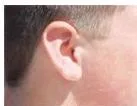
Figure 8.2 shows the two visible forms of one human trait. The lowest part of the ear, the earlobe, hangs free in some people and is closely attached to the side of the head in others.
The book introduces these pictures right where it argues that both parents contribute equal genetic material — because free and attached earlobes are exactly the kind of contrasting variant that runs in families.
Activity 8.1 makes this concrete: count free and attached earlobes in your class, calculate the percentage of each, compare students with their parents, and propose a rule of inheritance from the evidence (NCERT, pp. 128–129).
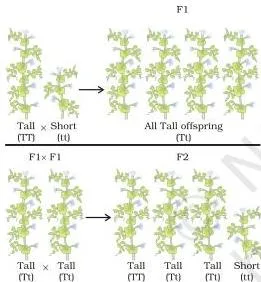
Figure 8.3 is the monohybrid cross drawn as a diagram. Read it as the assumption made visible: each plant carries two copies of the height factor, and the two copies may be identical or different depending on parentage.
The diagram shows the parents, the all-Tt F1 generation, and the F2 combinations TT, Tt, tt that sit behind the visible 3 : 1 tall-to-short result. It is also the basis of Activity 8.2, which asks what experiment would confirm that the F2 really is in the 1 : 2 : 1 combination ratio (NCERT, p. 130).
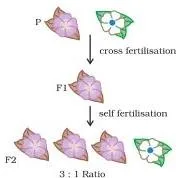
This diagram answers the mechanical question posed at the start of Section 8.2.3: every body cell has two copies of each gene set, so how does a germ cell end up with only one?
The answer the figure illustrates is the chromosome mechanism — each germ cell takes one chromosome from each pair, so the two full sets are never passed on together.
This matters for the two-trait cross. If a germ cell passed on an entire parental gene set, seed shape and seed colour would always travel together and new combinations could never appear. Separate chromosomes are what let them recombine (NCERT, p. 131).
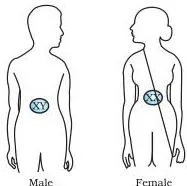
Figure 8.6 walks through all four possible children. The mother is XX and can pass only an X. The father is XY and his sperm carries either an X or a Y.
Follow the four combinations: child 1 gets the mother’s X and the father’s X, giving XX — a girl; child 2 gets the mother’s X and the father’s Y, giving XY — a boy; children 3 and 4 repeat the same two outcomes.
Half the children are girls and half are boys — and since the mother contributed an X in every case, the father’s sperm decides the sex (NCERT, p. 132).
Key terms from the heredity chapter, defined simply
Use this glossary the moment a term stops you. Each definition is in plain words, with the printed page where the chapter introduces the idea.
| Term | What it means | In the NCERT chapter |
|---|---|---|
| variation | Differences between individuals of the same kind, produced by small inaccuracies in DNA copying during reproduction. | Section 8.1, p. 127 |
| trait | A characteristic, such as plant height or earlobe type, that is inherited. | pp. 127–128 |
| gene | A section of DNA carrying the information for one protein. The book first calls it a “factor”, then notes these factors are now called genes. | pp. 129–131 |
| two versions of a gene | Since both parents contribute, every sexually reproducing individual carries two copies of the gene for each trait; they may be identical or different. | pp. 128–129 |
| F1 and F2 progeny | The first generation from a cross, and the second generation produced by self-pollinating the F1. | p. 129 |
| self-pollination | A plant reproducing with its own pollen; the method Mendel used to test his crosses. | p. 129 |
| dominant trait and recessive trait | When the two copies differ, the version that gets expressed is dominant; the version that is hidden is recessive. | p. 130 |
| chromosome | A separate piece of DNA carrying a gene set; body cells have two copies of each chromosome, one from each parent. | p. 131 |
| germ cell | A sex cell that carries one chromosome from each pair — a single gene set. | p. 131 |
| zygote | The cell formed when two germ cells combine, restoring the normal chromosome number. | pp. 130–131 |
| sex chromosomes X and Y | The one chromosome pair that is not a perfect match in men: women are XX, men are XY. | p. 132 |
One honest note: this Class 10 chapter deliberately stays with the words “version”, “factor” and “combination”. It never uses allele, genotype, phenotype or Punnett square — those terms belong to later classes, so their absence here is not a gap.
Mistakes students make in the heredity chapter
The questions in this chapter look simple, and that is exactly when errors happen. Each mistake below is named before you make it, with the correction straight from the chapter.
| Mistake | Correct rule | How to check your answer |
|---|---|---|
| Expecting blended traits — “tall crossed with short must give medium-height plants” | The F1 had no medium-height plants; all were tall. Tallness did not mix with shortness, it hid it (p. 129). | Ask: does the cross show an intermediate form? In Mendel’s F1 it does not — one parent’s trait appears in full. |
| Treating the F1 tall plants as identical to the tall parent plant | The tall parent was TT; every F1 plant is Tt — same appearance, different combination (p. 129). | Check the F2: self-pollinated Tt plants throw one quarter short offspring. A TT plant can never produce tt offspring. |
| Confusing the 3 : 1 visible ratio with the 1 : 2 : 1 combination ratio | 3 : 1 tall-to-short is what you see; 1 : 2 : 1 (TT : Tt : tt) is the underlying combination ratio (p. 130). | Count TT and Tt together as the “3” — combinations and appearance are two different levels. |
| Blaming the mother for a baby’s sex | Every child gets an X from the mother; the father’s sperm decides — X gives a girl, Y gives a boy (p. 132). | Trace the chromosomes at fertilisation: the mother always supplies X, so only the father’s contribution varies. |
| Reading the 10% and 60% trait question as “which trait is stronger” | The question asks which trait arose earlier — a trait in 60% of an asexually reproducing population has spread across more generations, so it is likely the older one (p. 128). | Re-read the question: if it says “arisen earlier”, you are comparing time, not strength. |
| Concluding dominance from family resemblance | One family — blood group A father, O mother, O daughter — or light-eyed parents with light-eyed children cannot fix dominance, because the hidden version can travel silently (in-text Q3, p. 132; Exercise Q2, p. 133). | Ask: have the two versions been made to meet in a controlled cross with counted offspring? Only that method decides dominance. |
What the questions in this chapter actually test
Every question in the chapter, in-text and exercise, tests reasoning rather than calculation. This table maps each one to the idea it checks and the page where the book explains that idea.
| Question | Idea it tests | Where the idea is explained |
|---|---|---|
| Trait A in 10% of a population, trait B in 60% — which arose earlier? | A widespread trait in an asexually reproducing population has had more generations to spread. | Section 8.1, pp. 127–128 |
| How does variation in a species promote survival? | Environmental factors select among variants; some variants give their carriers an advantage. | Section 8.1, p. 127 |
| How do Mendel’s experiments show traits can be dominant or recessive? | F1 all tall, F2 one quarter short — one version expressed, one hidden. | Section 8.2.2, pp. 129–130 |
| How do Mendel’s experiments show traits are inherited independently? | The two-trait cross produces new combinations — tall wrinkled and short round. | Section 8.2.2, p. 130 |
| Blood group A father, O mother, O daughter: enough to fix dominance? | Limits of single-family evidence; the hidden version travels silently. | Section 8.2.2, p. 132 |
| How is the sex of a child determined in human beings? | Mother gives X; father’s X or Y decides the child’s sex. | Section 8.2.4, p. 132 |
| Exercise Q1: tall violet crossed with short white, nearly half the progeny short | Reading a Mendelian result and deducing the tall parent’s combination. | pp. 130 and 133 |
| Exercise Q2: light-eyed parents usually have light-eyed children | Resemblance alone cannot fix dominance. | p. 133 |
| Exercise Q3: outline a project to find the dominant coat colour in dogs | Designing a breeding experiment that counts traits per generation. | Mendel’s method, p. 129; question on p. 133 |
| Exercise Q4: how is equal genetic contribution of parents ensured? | Germ cells carry one chromosome from each pair; fertilisation restores two. | p. 131 |
Exercise Q1 solved step by step: the violet-flower tall parent question
This is the chapter’s only multiple-choice question, and it is a reasoning puzzle, not a memorised fact. Restated briefly: tall violet pea plants are bred with short white pea plants; the progeny all have violet flowers but almost half are short. Which option gives the tall parent’s genetic make-up?
Step 1 – Fix the symbols.
The options use T for tall and t for short, W for violet and w for white.
The short parent must be tt, and the white parent must be ww — a recessive trait shows only when both copies are the recessive version (p. 130).
Step 2 – Rule out the TT options.
Nearly half the progeny are short, so they are tt, receiving t from each parent.
The white parent supplies t every time, and each short offspring gets a second t from the tall parent about half the time.
A TT parent could never supply t, so options (a) TTWW and (b) TTww are impossible.
Step 3 – Fix the flower colour.
All progeny are violet.
The white parent supplies w every time, so every violet offspring must have received W from the tall parent.
That means the tall parent is WW for flower colour — if it were Ww, roughly half the offspring would be white.
This rules out (d) TtWw.
Step 4 – Combine the two conclusions.
The tall parent is Tt for height and WW for colour: TtWW.
Correct answer: (c) TtWW. It explains both observations at once — Tt lets half the offspring be short, and WW makes every offspring violet.
The skill all ten questions share. Read them together and one demand runs through every one: interpret experimental results, design a breeding project, and argue from evidence.
Exercise Q3 is the clearest example — a full answer follows Mendel’s method: take dogs of contrasting coat colours, cross them, and count the coat colour of the first-generation offspring; whichever colour appears in that generation is the dominant one (Mendel’s method, p. 129). A conclusion without reasoning does not answer these questions — every “why or why not?” demands the argument.
Heredity in one page: what to remember
This is the chapter’s own closing summary — “What you have learnt” — put into plainer words for a quick revision pass (NCERT, p. 133).
- Variations that arise during reproduction can be inherited and passed to the next generation.
- Some variations improve an individual’s chance of survival — a heat-tolerant bacterium does better in a heat wave (NCERT, p. 127).
- Sexually reproducing individuals carry two copies of the gene for each trait; when the copies differ, the expressed one is the dominant trait and the hidden one is the recessive trait (NCERT, p. 133).
- Traits in one individual can be inherited separately, so sexual reproduction keeps generating new combinations of traits (NCERT, p. 133).
- In human beings the child’s sex depends on whether the father’s sperm carries X (girl) or Y (boy) (NCERT, p. 132).
The chapter in one sentence: heredity is the mechanism that passes variation from one generation to the next — and sexual reproduction, with its two gene copies and independent inheritance, is what keeps producing new variants (NCERT, p. 133).
The two activities in the chapter: what they train you to do
The two activities are not busywork — each trains exactly the skill the chapter’s questions test.
Activity 8.1 — earlobes (pp. 128–129). You observe the ears of every student in the class, list who has free earlobes and who has attached earlobes, calculate the percentage of each, then find out the parents’ earlobes and correlate. That is Mendel’s method in miniature: observe a trait, count it, compare across generations, and propose a rule of inheritance from the evidence.
Doing it once makes the idea of two inherited versions of one trait concrete instead of abstract.
Activity 8.2 — confirming the F2 ratio (pp. 129–130). The activity asks what experiment would confirm that the F2 generation really is in the 1 : 2 : 1 ratio of TT, Tt and tt.
Since TT and Tt both look tall, the test is to self-pollinate the tall F2 plants and examine their offspring: a tall plant that produces any short offspring must have been Tt, while one that breeds all tall is TT. This is the same self-pollination method Mendel applied to the F1 (p. 129).
Neither activity is something to skip; the point is the skill they build. If you can do both, Exercise Q3’s dog-coat project is already half solved.
Related chapters and official resources
This listing is maintained for the 2026-27 academic session using the NCERT textbook information available to us. NCERT remains the authority for confirming the latest edition.
Heredity sits between two chapters that connect to it directly, and the official NCERT source is linked below for verification.
- The previous chapter, How do Organisms Reproduce?, covers the reproduction that creates the variations this chapter inherits.
- The next chapter, Light – Reflection and Refraction, begins the physics section of the book.
- Class 10 Science revision notes cover the whole subject.
- Class 10 study material and the CBSE notes home page are the starting points for every subject.
- The official NCERT Class 10 Science textbook page on ncert.nic.in is the place to verify the book and its PDFs.
Reference: NCERT Class 10 Science textbook, chapter 8, official edition on ncert.nic.in.
Sources and data verification
- This page describes Chapter 8, Heredity, of the NCERT Science textbook for Class 10, official edition published by NCERT on ncert.nic.in. The chapter begins on printed page 127 of the book.
- It covers this one chapter, not the whole textbook.
- The listing is maintained for the current academic session using the NCERT information available to us.
- NCERT settles textbooks, editions and PDFs; CBSE settles curriculum, syllabus and examinations.
- Textbook contents and the examinable syllabus are not always identical — check the current official syllabus.
Frequently asked questions about this chapter
Why were all the F1 plants tall even though the short trait was inherited?
Because tallness hid shortness instead of blending with it. Each F1 plant received one T from the tall parent and one t from the short parent, making every F1 plant Tt — and a single T copy is enough to make a plant tall (NCERT, p. 130).
The short trait was present but unexpressed; it reappeared only when two t copies came together in one quarter of the F2 plants (NCERT, p. 129).
What is the difference between the 3 : 1 tall-to-short ratio and the 1 : 2 : 1 TT : Tt : tt ratio?
3 : 1 is what you see; 1 : 2 : 1 is what sits underneath. When Tt plants self-pollinate, the equally likely outcomes are one TT, two Tt and one tt — the 1 : 2 : 1 combination ratio. Since TT and Tt both look tall, those three plants together make the visible 3 : 1 ratio (NCERT, p. 130).
Is the father or the mother responsible for the sex of a baby?
The father decides. Every child inherits an X chromosome from the mother, so the mother’s contribution is the same for boys and girls. The father’s sperm carries either an X or a Y: an X makes a girl (XX), a Y makes a boy (XY), so half the children are girls and half are boys (NCERT, p. 132).
Why is the blood group information not enough to decide whether blood group A is dominant over O?
Because one family shows outcomes, not a rule. The father’s blood group A does not reveal his two versions of the gene — he could be carrying O silently, and that hidden version can travel through a family without showing.
Dominance is a conclusion drawn from many crosses with counted offspring, the way Mendel worked; a single family cannot establish which version is dominant (NCERT, pp. 129 and 132).
Are free earlobes dominant and attached earlobes recessive?
The chapter does not say. It presents free and attached earlobes as two variants of one human trait (NCERT, p. 129) and leaves the dominance question to you through Activity 8.1 — collect the class data, compare with parents, and propose a rule. Without such counts, neither version can be labelled dominant.
Can light eye colour be called dominant because light-eyed parents usually have light-eyed children?
No. Family resemblance alone cannot fix dominance (NCERT, p. 133). In fact the observation fits a recessive pattern even better: if light eyes need two light copies to show, a light-eyed parent passes a light copy to every child, so light-eyed parents will have light-eyed children. The hidden darker version could be carried silently.
What decides dominance is breeding and counting across generations, not family resemblance.
Explore Class 10 Science Books
Class 10 Science on LearnCBSE:
Related chapters:
- Chemical Reactions and Equations
- Acids, Bases and Salts
- Metals and Non-metals