
This is the NCERT Class 12 History Chapter 1, “Through the Eyes of Travellers”, from Themes in Indian History – Part II — the chapter that opens at textbook page 114 and runs 25 printed pages. It compares what three foreign travellers wrote about the subcontinent between the eleventh and seventeenth centuries: Al-Biruni, Ibn Battuta and François Bernier.
The official NCERT PDF is directly below, and the rest of this page maps what the chapter contains so you can jump straight to the traveller you need.
Download the Through the Eyes of Travellers Class 12 Chapter PDF
This is the first chapter of the History book, textbook code LEHS201 on the NCERT website. Open the NCERT Class 12 History Chapter 1 Through the Eyes of Travellers PDF directly from ncert.nic.in — this is the original published file, not a scanned re-upload, and it carries every figure, map and exercise exactly as printed in the book.
| What the chapter holds | Count | Where it is used |
|---|---|---|
| Printed pages | 25 | |
| Sections in the chapter | 12 | |
| Figures with NCERT captions | 9 | |
| Official NCERT PDF | Download the chapter PDF | the chapter exactly as NCERT publishes it |
Through the Eyes of Travellers Class 12: Chapter at a Glance
Before you open the file, here is the shape of the chapter. It is built around three traveller-accounts, each given a distinct treatment: the scholar, the curious wanderer and the comparing political philosopher. The table on this page gives the file’s totals; this list focuses on how the chapter works.
- It opens with why people travel and which accounts survive, noting that almost no accounts by women survive (NCERT, p. 114).
- Al-Biruni’s section (pp. 115-116) covers how he reached Ghazni, learned Sanskrit and wrote the Kitab-ul-Hind.
- Ibn Battuta’s section (pp. 117-128) follows his route into the subcontinent and his excitement at the unfamiliar — coconut, paan, cities, the postal system.
- Bernier’s section (pp. 121-133) is a running comparison of Mughal India with Europe, closing on a more complex picture of towns and merchants.
- The chapter closes with a dated list of travellers who left accounts (p. 136), then an exercise block of short answers, short essays, one map-work item and two project choices (pp. 137-138).
- “Discuss” boxes are scattered through the chapter as its built-in discussion prompts.
What This Chapter Covers: Three Travellers, Three Perspectives
Use this as a route-map before you read: each row names a part of the chapter and where it sits in the printed book.
| Chapter section | Textbook pages | What it does |
|---|---|---|
| Opening theme | 114 | Why people travel; which accounts survive; the note that almost no accounts by women survive. |
| Al-Biruni’s objectives; 1.1 From Khwarizm to the Punjab | 115-116 | How Al-Biruni came to Ghazni, learned Sanskrit and translated texts. |
| 1.2 The Kitab-ul-Hind | 116 | The structure and scope of Al-Biruni’s Arabic work; the word “Hindu”. |
| The bird leaves its nest; 2.1 An early globe-trotter | 117-118 | Ibn Battuta’s departure from Tangier, his route to Delhi and his appointment as qazi. |
| 2.2 The “enjoyment of curiosities” | 119-120 | How the Rihla came to be written; later travellers in his footsteps. |
| Bernier — A doctor with a difference; 3.1 Comparing “East” and “West” | 121-122 | Bernier’s life in India and his habit of comparing India with Europe. |
| 4.1 Overcoming barriers; 4.2 Al-Biruni’s description of the caste system | 123-124 | Al-Biruni’s three barriers; his varna account and his criticism of pollution. |
| 5. Ibn Battuta and the excitement of the unfamiliar | 125-128 | Coconut and paan, Delhi and Daulatabad, the uluq and dawa postal system. |
| 6. Bernier and the “degenerate” East | 129-133 | The landownership argument, the karkhanas, towns and merchant communities. |
| Slaves, sati and labourers | 134-135 | What the travellers recorded about slavery and sati; women’s labour. |
| Some travellers who left accounts | 136 | A dated list of travellers from the tenth to seventeenth centuries. |
| Exercises | 137-138 | Short answers, short essays, map work, projects and a further-reading list. |
Textbook contents and the examinable syllabus are not always identical — check the current official syllabus to see how much of this chapter your board exam requires this session.
Key Concepts: How Each Traveller Saw India
The chapter’s method is to read each account as a document shaped by the author’s training, audience and purpose — not as a neutral record of India. The table below fixes the basics of all three travellers; the sections after it go deeper.
| Traveller | Home region | Book and language | Sources he relied on | Who he wrote for |
|---|---|---|---|---|
| Al-Biruni (eleventh century) | Khwarizm, present-day Uzbekistan | Kitab-ul-Hind, in Arabic | Brahmanical texts: the Vedas, Puranas, Bhagavad Gita, Patanjali, Manusmriti | People living along the frontiers of the subcontinent |
| Ibn Battuta (fourteenth century) | Tangier, Morocco | Rihla, in Arabic, dictated to Ibn Juzayy | His own travels; the ruler ordered his stories recorded | The ruler and court; a narrative for “entertainment to the mind” |
| Bernier (seventeenth century) | France | Travels in the Mughal Empire, printed in Europe | His observations as court physician to Dara Shukoh | European policy-makers and intelligentsia |
A quick memory hook for the centuries: eleven hundred for Al-Biruni, fourteen hundred for Ibn Battuta, seventeen hundred for Bernier.
Al-Biruni, the scholar (eleventh century)
Al-Biruni was born in 973 in Khwarizm, an important centre of learning in present-day Uzbekistan. When Sultan Mahmud invaded Khwarizm in 1017, he took scholars back to his capital Ghazni — Al-Biruni among them, arriving as a hostage but staying for life.
He knew Syriac, Arabic, Persian, Hebrew and Sanskrit, read Plato in Arabic translation, and translated Patanjali’s grammar into Arabic and Euclid into Sanskrit (NCERT, p. 115).
The Kitab-ul-Hind, written in Arabic, is simple and lucid — 80 chapters on religion, philosophy, festivals, astronomy, social life, weights and measures, iconography and law. His usual structure was a question, a description based on Sanskritic traditions, then a comparison with other cultures; some scholars link that geometric precision to his mathematical training (NCERT, p. 116).
He identified three barriers to understanding: the enormous range of Sanskrit, differences in religious belief, and the insularity of the local population. Yet he depended almost exclusively on Brahmanical works — the Vedas, the Puranas, the Bhagavad Gita, Patanjali and the Manusmriti (NCERT, p. 123).
On caste, he looked for parallels in ancient Persia and criticised the notion of pollution as contrary to the laws of nature: everything impure, he argued, strives to regain its original purity, as the sun cleanses the air (NCERT, p. 123).
Ibn Battuta, the curious traveller (fourteenth century)
Born in Tangier in 1304 into a family known for expertise in Islamic law (shari’a), Ibn Battuta left home at 22 and returned about 30 years later. He reached Sind in 1333, travelled via Multan and Uch to Delhi, was appointed qazi (judge) of Delhi by Muhammad bin Tughlaq, and in 1342 was sent as the Sultan’s envoy to China (NCERT, p. 117).
His book, the Rihla, written in Arabic, was dictated to the writer Ibn Juzayy after the ruler ordered his stories recorded — a narrative that gave “entertainment to the mind” (NCERT, p. 120).
His strategy was to describe the unfamiliar through the familiar: the coconut was like a man’s head with two eyes, a mouth, brain-like inside and hair-like fibre for sewing ships; paan was chewed with areca nut and chalk (NCERT, pp. 125-126).
On cities, he described Delhi as the largest in India — a rampart eleven cubits wide, stone below, brick above, pierced with windows, with towers and 28 gates. Daulatabad, he said, easily rivalled Delhi (NCERT, p. 126).
On communication, he recorded the horse-post uluq with royal horses every four miles and the faster foot-post dawa with three stations per mile, couriers carrying letters with a bell-ringing rod (NCERT, p. 128).
Bernier, the political philosopher (seventeenth century)
A French doctor, political philosopher and historian, Bernier was in India from 1656 to 1668 as physician to Prince Dara Shukoh, eldest son of Shah Jahan (NCERT, p. 121). He wrote to influence European policy-makers, dedicating his major work to Louis XIV, and his writing works on a model of binary opposition — India presented as the inverse of Europe (NCERT, p. 129).
His core argument was that the Mughal emperor owned all land, so landholders would not invest and agriculture declined. Between the poorest and the richest, he asserted, “there is no middle state in India” (NCERT, pp. 129-130).
The chapter’s counter-evidence is direct. Abu’l Fazl called land revenue “remunerations of sovereignty” — the ruler’s claim on subjects for protection, not rent on owned land — and no Mughal official document says the state owned all land (NCERT, p. 131).
Bernier also described the imperial karkhanas (workshops) and dismissed Mughal cities as “camp towns”. The chapter answers with a more complex reality: about 15 per cent of the population lived in towns, and merchant bodies in western India — mahajans, headed by a sheth, with a nagarsheth in Ahmedabad — show a thriving urban economy (NCERT, p. 133).
His influence outlived him: Montesquieu’s “oriental despotism” and Marx’s “Asiatic mode of production” both drew on accounts like his (NCERT, p. 131).
Other voices and the limits of the accounts
The chapter places the three authors among many travellers. Abdur Razzaq Samarqandi visited south India in the 1440s and called Calicut’s people “a strange nation”, yet admired a temple near Mangalore. Mahmud Wali Balkhi travelled widely in the 1620s and became a sort of sanyasi; Shaikh Ali Hazin, arriving in the 1740s, was disappointed with India (NCERT, pp. 120, 128).
Duarte Barbosa, Jean-Baptiste Tavernier, the Italian doctor Manucci and the Dutch traveller Pelsaert appear too. Two limits matter. Almost no accounts of travel by women survive, even though women travelled (NCERT, p. 114).
And travellers’ contexts shaped what they noticed: ordinary women’s labour was crucial in both agricultural and non-agricultural production, yet it barely attracted the attention of Ibn Battuta and Bernier (NCERT, p. 135).
Reading the Chapter’s Figures: From the Coconut to the Campfire
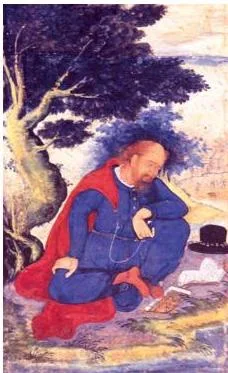
This chapter is built from words, so the book uses images to make the unfamiliar visible — and each figure doubles as a memory anchor for one traveller’s account.

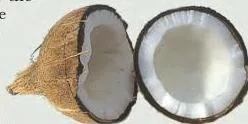
Figs 5.1a and 5.1b open the chapter (NCERT, p. 115). The book’s caption notes that the coconut and the paan were things that struck many travellers as unusual.
Ibn Battuta described the coconut as looking exactly like a man’s head — two eyes, a mouth, brain-like inside, hair-like fibre used to make cords for sewing ships — and paan as leaves chewed with areca nut and a little chalk.
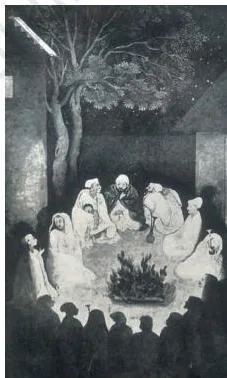
The painting of travellers around a campfire (NCERT, p. 120) introduces the chapter’s wider cast — writers such as Abdur Razzaq Samarqandi, Mahmud Wali Balkhi and Shaikh Ali Hazin who followed in the footsteps of Al-Biruni and Ibn Battuta.
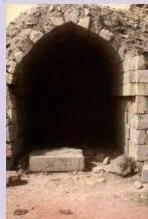
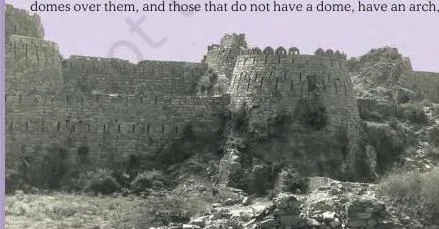
Figs 5.8 and 5.9 (NCERT, p. 127) are the visual evidence for Ibn Battuta’s Delhi: the rampart eleven cubits wide, stone below and brick above, with towers close together and 28 gates, each called a darwaza.
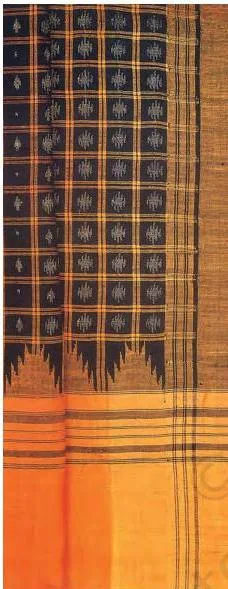
Fig 5.10 (NCERT, p. 128) illustrates the textile trade Ibn Battuta recorded — Indian cotton, fine muslins, silks, brocade and satin, some so expensive that only nobles could wear them.
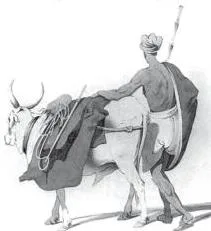
Fig 5.11 (NCERT, p. 131) belongs to Bernier’s section. The book’s caption warns that drawings such as this reinforced the notion of an unchanging rural society — the very picture Bernier painted, and the picture the chapter’s counter-evidence complicates.
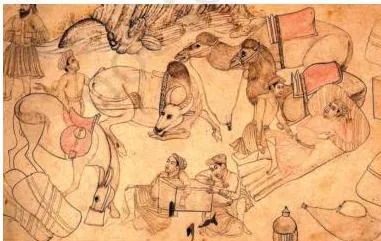
Fig 5.14, on the chapter’s closing page, shows travellers at rest. The book places it beside the final reflection: travellers’ accounts give a tantalising glimpse of these centuries, but were shaped by the contexts their authors came from, and much went unrecorded.
Terms in This Chapter Explained in One Line Each
The chapter mixes Arabic, Persian and Sanskrit terms, and exam answers need them defined correctly. One line each, with the textbook page where the term appears.
| Term | Meaning | Page |
|---|---|---|
| Hindu | Old Persian word for the region east of the river Sindhu; used for people, land and language, without religious meaning at first | 116 |
| Kitab-ul-Hind | Al-Biruni’s Arabic book on India, in 80 chapters | 116 |
| Rihla | Ibn Battuta’s Arabic account of his travels | 117 |
| qazi | Judge; Ibn Battuta was appointed qazi of Delhi | 117 |
| shari’a | Islamic religious law, in which Ibn Battuta’s family was expert | 117 |
| sanyasi | An ascetic; Mahmud Wali Balkhi became one for a time | 120 |
| varna | The four categories: Brahmana from the head, Kshatriya from shoulders and hands, Vaishya from the thigh, Shudra from the feet | 124 |
| antijaja | Literally “born outside the system”; socially oppressed yet included in economic networks | 124 |
| uluq | The horse-post, royal horses stationed every four miles | 128 |
| dawa | The foot-post, three stations per mile, quicker than the horse-post | 128 |
| karkhana | Imperial workshop, described in detail by Bernier | 133 |
| mahajan | Merchant bodies in western India | 133 |
| sheth | Chief of a merchant body | 133 |
| nagarsheth | Chief of the merchant community, as in Ahmedabad | 133 |
| tanka | A coin; the Sultan gave a preacher “a hundred thousand tankas“ | 134 |
| dola | Palanquin, on which slaves carried men and women | 134 |
| sati | Widow immolation; Bernier described a child sati at Lahore | 134 |
| oriental despotism | Montesquieu’s idea of absolute Asian rulers who owned all land | 131 |
| Asiatic mode of production | Marx’s concept of a stagnant system in which the state appropriated surplus | 131 |
| “remunerations of sovereignty” | Abu’l Fazl’s phrase for land revenue as a claim for protection, not rent | 131 |
Common Mistakes Students Make With This Chapter
This chapter punishes careless reading, because each traveller’s claims are opinions shaped by their context, not neutral facts. These are the errors to avoid, with the correction the chapter itself supplies.
| Mistake | Correct rule | How to check your answer |
|---|---|---|
| Taking Bernier’s “emperor owns all land” as fact | Abu’l Fazl called land revenue “remunerations of sovereignty” — payment for protection, not rent on owned land; no Mughal official document says the state owned all land (NCERT, p. 131) | Ask: does the chapter give counter-evidence from an official source? It does — Abu’l Fazl. |
| Reading Al-Biruni’s varna account as how caste actually worked | It reflects normative Brahmanical texts; antijaja groups, though socially oppressed, were included in economic networks (NCERT, p. 124) | Check: can you name a group that lived outside varna yet inside the economy? |
| Assuming “Hindu” meant a religion in these centuries | The word derived from Old Persian for the region east of the Sindhu; religious connotations came much later (NCERT, p. 116) | Check: does your answer use “Hindu” as region and people, not religion? |
| Thinking every traveller marvelled at India | Abdur Razzaq called Calicut’s people “a strange nation”; Hazin was disappointed; Bernier’s picture was uniformly bleak (NCERT, pp. 120, 128) | Check: can you quote one unfavourable judgement for each traveller? |
| Treating the accounts as complete records of society | Almost no accounts by women survive, and ordinary women’s labour went unremarked by Ibn Battuta and Bernier (NCERT, p. 135) | Check: does your answer state what the source does not show? |
| Swapping uluq and dawa | uluq is the horse-post with royal horses every four miles; dawa is the quicker foot-post with three stations per mile (NCERT, p. 128) | Check: which is faster? The foot-post, dawa. |
How the End-of-Chapter Exercises Test This Chapter
The chapter closes with an exercise block: short answers meant for 100-150 words each, short essays of about 250-300 words, one map-work item and two project choices. Each question tests a specific stretch of the chapter.
| Question | What it tests | Where to look |
|---|---|---|
| Q1 Note on the Kitab-ul-Hind | Structure and purpose of Al-Biruni’s work | Section 1.2, p. 116 |
| Q2 Ibn Battuta vs Bernier perspectives | Contrasting aims and methods of two travellers | Sections 2 and 6, pp. 117-133 |
| Q3 Urban centres from Bernier’s account | Towns, “camp towns”, the karkhanas | Sections 6.1-6.2, pp. 129-133 |
| Q4 Evidence for slavery from Ibn Battuta | Slave sales, slave women, household slavery | Slaves, sati and labourers, p. 134 |
| Q5 Elements of sati that drew Bernier | Bernier’s description of the child sati at Lahore | The child sati passage, p. 134 |
| Q6 Al-Biruni’s understanding of caste | Varna, Persian parallels, pollution, antijaja | Section 4.2, pp. 123-124 |
| Q7 Ibn Battuta and contemporary urban life | Cities, bazaars, Tarababad, trade networks | Section 5.2, pp. 126-127 |
| Q8 Bernier and rural society | Peasantry, landownership, the chapter’s counter-evidence | Section 6.1, pp. 129-131 |
| Q9 Crafts from the given excerpt | Artisanal skill and the imperial karkhanas | The karkhana description, p. 133 |
| Q10 Map work | Ibn Battuta’s route and the seas he crossed | Route text and Map 1, pp. 117-118 |
| Q11-12 Projects | Interview and research skills across the whole chapter | Whole chapter |
Answer strategy. For almost any question here, a full answer does three things: name the traveller’s context first (who he was and why he wrote), cite one specific piece of evidence from the chapter, then state what the account does not show.
Questions that say “Compare and contrast” or “Discuss the extent to which” expect both sides — the traveller’s picture and the chapter’s counter-evidence.
Textbook contents and the examinable syllabus are not always identical — check the current official syllabus before deciding how much of this chapter to prepare.
Map Work and Projects: Doing the Chapter’s Two Practical Tasks
The map-work item (Q10) asks you to mark the countries Ibn Battuta visited and name the seas he may have crossed. The chapter gives the route in its text; trace it in the order below.
- Start from Map 1 (NCERT, pp. 117-118), which shows Ibn Battuta’s places in Afghanistan, Sind and Punjab with the names he himself used.
- Route in order: Sind, then Multan and Uch, then Delhi; later Daulatabad, the Malabar coast, the Maldives (where he stayed eighteen months as qazi), Sri Lanka, back to the Malabar coast and Maldives, then Bengal and Assam.
- By sea to Sumatra, then another ship to Zaytun (now Quanzhou) in China; he travelled as far as Beijing and returned home in 1347.
- Seas he may have crossed: the Arabian Sea on the Sind-Malabar leg, the Bay of Bengal near Bengal, and the South China Sea on the Sumatra-China crossing.
Travel times as a knowledge check. The chapter records about forty days from Multan to Delhi and about fifty days from Sind to Delhi — against the five days the postal system needed. That gap is the point of the passage (NCERT, pp. 117, 128).
The two projects. Project 11 is an interview: ask an older relative who has travelled outside your town or village about where they went, how they travelled, how long it took, why they travelled and any difficulties they faced, then list similarities and differences in language, clothes, food, customs, buildings, roads and the lives of men and women.
Project 12 is a research report on one traveller from the dated list on page 136, comparing his descriptions with the excerpts in the chapter.
Revising This Chapter: One Paragraph per Traveller
The whole chapter in four paragraphs, for last-night revision.
Al-Biruni. An eleventh-century scholar from Khwarizm, he wrote the Arabic Kitab-ul-Hind in 80 chapters, each built as question-description-comparison. He named language, religious difference and insularity as barriers to understanding, described the varnas from Brahmanical texts, and criticised pollution as contrary to the laws of nature.
Ibn Battuta. A fourteenth-century Moroccan qazi, he dictated the Rihla for the entertainment and edification of his audience. He described the unfamiliar through the familiar — the head-like coconut, chewed paan — and left rich details of Delhi, Daulatabad’s Tarababad, the uluq and dawa postal system, and the trade in slaves.
Bernier. A seventeenth-century French doctor, he compared Mughal India with Europe on a binary model, blamed crown ownership of land for poverty and decline, and influenced oriental despotism and the Asiatic mode of production. The chapter’s counter-evidence — Abu’l Fazl, towns, merchant communities — shows a more complex reality.
The closing reflection. Travellers’ accounts give a tantalising glimpse of these centuries, but they were shaped by the contexts their authors came from. Almost no accounts by women survive, and much of ordinary life went unrecorded.
Related Resources and Further Reading
This listing is maintained for the 2026-27 academic session using the NCERT textbook information available to us. NCERT remains the authority for confirming the latest edition.
For revision help, the Class 12 History notes on this site group the chapters thematically, and the Class 12 hub lists every subject. The Kings, Farmers and Towns chapter notes cover the earlier period that Al-Biruni and Bernier describe, and the general notes index organises everything by class.
The chapter itself closes with a reading list (NCERT, p. 138) for anyone going deeper into the travellers:
- Muzaffar Alam and Sanjay Subrahmanyam, Indo-Persian Travels in the Age of Discoveries 1400-1800 (2006)
- Catherine Asher and Cynthia Talbot, India Before Europe (2006)
- François Bernier, Travels in the Mogul Empire AD 1656-1668
- H.A.R. Gibb (ed.), The Travels of Ibn Battuta (1993)
- Mushirul Hasan (ed.), Westward Bound: Travels of Mirza Abu Talib (2005)
- H.K. Kaul (ed.), Travellers’ India – an Anthology (1997)
- Jean-Baptiste Tavernier, Travels in India (1993)
The book also directs readers to www.edumaritime.org for more information.
Sources and Data Verification
- This page describes the NCERT Class 12 History textbook, Themes in Indian History – Part II, chapter 1, “Through the Eyes of Travellers” — the official edition hosted on ncert.nic.in, which is the same edition referenced throughout.
- It covers this one chapter of this book. It does not cover other chapters of Part II, other Class 12 History books, or optional subjects.
- This listing is maintained for the current academic session using the NCERT information available to us.
- NCERT settles textbooks, editions and PDFs; CBSE settles the curriculum and examinations.
Reference: NCERT Class 12 History textbook, chapter 1, official edition on ncert.nic.in.
Frequently Asked Questions
Who are the three travellers in Class 12 History Chapter 1 “Through the Eyes of Travellers”?
Al-Biruni (eleventh century, from Khwarizm in present-day Uzbekistan), Ibn Battuta (fourteenth century, from Tangier in Morocco) and François Bernier (seventeenth century, from France). The chapter also places them among other travellers who left accounts (NCERT, p. 136).
What is the Kitab-ul-Hind?
Al-Biruni’s Arabic work, simple and lucid, in 80 chapters on religion, philosophy, festivals, astronomy, social life, weights and measures, iconography and law. Each chapter usually opens with a question, describes Sanskritic traditions, then compares them with other cultures (NCERT, p. 116).
What did Ibn Battuta write about the postal system in India?
Two systems: the horse-post uluq with royal horses every four miles, and the faster foot-post dawa with three stations per mile. Couriers ran with a bell-ringing rod, and spies’ reports from Sind reached the Sultan in five days against the fifty the journey took (NCERT, p. 128).
Why did Bernier compare Mughal India with Europe?
His intellectual tradition was to compare and rank; he presented India as the inverse of Europe to warn European rulers against crown ownership of land. His account later fed Montesquieu’s “oriental despotism” and Marx’s “Asiatic mode of production” (NCERT, pp. 129-131).
Was the caste system rigid according to Al-Biruni?
His description follows normative Brahmanical texts — the four varnas created from the body of Brahman. The chapter adds that antijaja groups, though socially oppressed, were included within economic networks (NCERT, p. 124).
Where can I download the official Class 12 History Chapter 1 PDF?
From NCERT’s official website, ncert.nic.in — the link is the first one on this page. It is the published edition of Themes in Indian History – Part II, chapter 1, with every figure, map and exercise intact.
Explore Class 12 History Books
- Previous: Thinkers, Beliefs and Buildings
- Next: Bhakti-Sufi Traditions: Changes in Religious Beliefs and Devotional Texts
Related chapters: