
This is the official Bhakti-Sufi Traditions Class 12 chapter — Chapter 2 of the NCERT History textbook Themes in Indian History Part II, where the book labels it Theme Six. Its full title is Bhakti-Sufi Traditions: Changes in Religious Beliefs and Devotional Texts (c. eighth to eighteenth century), and it runs about 30 printed pages (pages 140 to 169) in the current edition.
The official PDF of the chapter is right below.
Download the Bhakti-Sufi Traditions Class 12 PDF
The official Bhakti-Sufi Traditions Class 12 PDF lives inside the NCERT file for Themes in Indian History Part II (book code lehs202) and covers printed pages 140 to 169 of that book. If that direct file link ever changes, the NCERT textbook portal lists the same official edition.
| What the chapter holds | Count | Where it is used |
|---|---|---|
| Printed pages | 30 | |
| Sections in the chapter | 16 | |
| Figures with NCERT captions | 13 | |
| Tables | 2 | |
| Official NCERT PDF | Download the chapter PDF | the chapter exactly as NCERT publishes it |
Bhakti-Sufi Traditions at a Glance
The table below shows the chapter’s size in one view; the notes after it describe the structure those numbers cannot show.
| What the chapter holds | Count |
|---|---|
| Printed pages | 30 (pages 140–169) |
| Numbered sections | 9 |
| Figures | 19 |
| Tables | 2 |
| Exercise questions | 12 |
Beyond those totals, the chapter moves from south to north and from bhakti to Sufism through its numbered sections. It anchors its teacher lists in tables — the five major teachers of the Chishti silsila (NCERT, p. 155) and the major religious teachers of the subcontinent from about 500 to 1700 (NCERT, p. 168).
Scattered through the text are embedded source excerpts — compositions of poet-saints, an imperial order (farman), royal letters and sufi sayings — each with a question attached. The chapter closes with short-answer questions, essay questions, one map question and two project options (NCERT, pp. 168–170).
What This Chapter Covers: From Tamil Bhakti to the Sufis
The chapter is organised as a journey through regional traditions — Tamil Nadu, Karnataka, the north — while showing an ongoing conversation between Brahmanical, bhakti and Islamic ideas. The map below lists all nine numbered sections and the NCERT pages each one covers, so you can jump straight to the part a question asks about.
| Section | What happens in it | NCERT pages |
|---|---|---|
| 1. A Mosaic of Religious Beliefs and Practices | Two processes in parallel: Puranic texts in simple Sanskrit made accessible to women and Shudras, and Brahmanas absorbing and reworking local cults; the “great” and “little” tradition distinction; conflicts over Vedic versus Tantric practice | 141–143 |
| 2. Early Traditions of Bhakti | The Alvars and Nayanars of Tamil Nadu; their hymns in Tamil, attitudes to caste, women devotees, the compilations (Nalayira Divyaprabandham, Tevaram) and relations with the Chola state | 143–147 |
| 3. The Virashaiva Tradition in Karnataka | Basavanna’s movement; Lingayats, jangama monks and vachanas; rejection of caste, of rebirth and of Dharmashastra rites such as cremation | 147–148 |
| 4. Religious Ferment in North India | Why no Tamil-style bhakti corpus appears in the north until the fourteenth century; Naths, Jogis and Siddhas; the Delhi Sultanate and the coming of the sufis | 148–149 |
| 5. Islamic Traditions | Faiths of rulers and subjects; the shari’a, zimmi status and jizya; the five pillars overlaid with local practice; mosque architecture; the names used for communities | 149–153 |
| 6. The Growth of Sufism | What tasawwuf is; the institutions of the khanqah and the silsila; the difference between ba-shari’a and be-shari’a sufis | 153–154 |
| 7. The Chishtis in the Subcontinent | Life in the Chishti khanqah; ziyarat and qawwali; the languages of the Chishtis; the sufis and the state | 154–161 |
| 8. New Devotional Paths: Dialogue and Dissent in Northern India | Kabir, Baba Guru Nanak and Mirabai — their teachings and the ways their compositions were transmitted | 161–165 |
| 9. Reconstructing Histories of Religious Traditions | The variety of sources — sculpture, architecture and texts; the sufi source genres; Shankaradeva; why these still-lived traditions are hard to study | 165–168 |
Key Concepts in the Chapter, Explained Simply
Two ideas hold the whole chapter together: tremendous regional diversity in how people worshipped, and a continuous dialogue between Brahmanical, bhakti and Islamic traditions. Everything else in Theme 6 is a variation on those two.
The Three Regional Bhakti Movements Compared
| Movement | Leaders and time | Language | Deity | Stance on caste |
|---|---|---|---|---|
| Alvars and Nayanars (Tamil Nadu) | Alvars devoted to Vishnu, Nayanars to Shiva; from about the sixth century | Tamil hymns sung while travelling | Vishnu (Alvars); Shiva (Nayanars) | Devotees came from Brahmanas to “untouchable” castes; some historians see a protest or reform movement against caste and Brahmana dominance |
| Virashaivas / Lingayats (Karnataka) | Basavanna (1106–68), a Brahmana minister; twelfth century | Kannada vachanas | Shiva as the linga | Challenged caste and the idea of pollution; questioned rebirth; allowed post-puberty marriage and widow remarriage |
| Northern sants | Kabir (fourteenth–fifteenth centuries), Baba Guru Nanak (1469–1539), Mirabai (fifteenth–sixteenth centuries) | Several languages and dialects, including sant bhasha; Punjabi shabads | Nirguna — an abstract, formless Absolute; Guru Nanak’s “rab” had no gender or form | Kabir questioned entrenched religious and social institutions; Nanak repudiated external practices; Mirabai defied caste norms by taking Raidas, a leather worker, as preceptor |
Core Ideas, Made Plain
| Idea | What it means in plain words | NCERT page |
|---|---|---|
| Integration of cults | Brahmanas accepted and reworked local beliefs and practices while Puranic ideas spread to groups earlier excluded from Vedic learning | 141 |
| “Great” and “little” traditions | Robert Redfield’s terms for practices coming from dominant groups (great) and local peasant customs (little); the quotation marks flag scholars’ discomfort with the hierarchy | 142 |
| Saguna and nirguna bhakti | Worship of a deity with attributes and forms (saguna) versus worship of an abstract, formless god (nirguna) | 144 |
| Alvars and Nayanars | Tamil poet-saints devoted to Vishnu and to Shiva, who travelled singing hymns in Tamil | 144 |
| Tamil compilations | The Nalayira Divyaprabandham (Alvars) and the Tevaram (Nayanars), both compiled by the tenth century | 145 |
| Virashaivas and vachanas | Basavanna’s followers, “heroes of Shiva”; their sayings in Kannada, composed by both women and men | 147–148 |
| Shari’a, zimmi, jizya | Islamic law from the Qur’an and hadis; protected status and a tax for people of revealed scriptures, extended to Hindus in India | 150 |
| Five pillars and local practice | Universal duties (shahada, namaz, zakat, sawm, hajj) overlaid with sectarian and local customs, languages and genres | 151–152 |
| Sufi institutions | Khanqah (hospice), silsila (spiritual chain to the Prophet), dargah (tomb-shrine) — the framework of sufi organisation | 153–154 |
| Chishti devotionalism | Ziyarat (pilgrimage to saints’ tombs), qawwali and sama’ (mystical music) as ways of seeking barakat | 155–158 |
| Nirguna paths of Kabir and Nanak | A formless Absolute; rejection of external ritual; remembrance and repetition of the Divine Name | 162–164 |
| Source genres of sufi history | Malfuzat (recorded conversations), maktubat (letters), tazkiras (biographies) — each a different type of evidence | 166–167 |
Three Ideas Worth Reading Twice
How a wooden deity became Jagannatha. At Puri in Orissa, the principal local deity — an image still made of wood by local tribal specialists — was by the twelfth century recognised as Jagannatha (“lord of the world”), a form of Vishnu.
That single example shows integration of cults at work: a local god was given a place inside the Puranic pantheon, and Vishnu was visualised in a way found nowhere else in the subcontinent (NCERT, pp. 141–142). The same process absorbed local goddesses, often by identifying them as wives of Vishnu or Shiva.
Why “great” and “little” are in quotation marks. The labels come from the sociologist Robert Redfield, writing in the twentieth century about peasant societies: “great” for practices that flow down from dominant categories such as priests and rulers, “little” for local customs that do not match them.
The book keeps the quotation marks because the categories changed through interaction, and because scholars are uncomfortable with the ranking the words imply (NCERT, p. 142).
How spiritual power travels. Sufis believed that spiritual power and blessings (barakat) flowed through a silsila — literally a “chain” — that linked each master to his teacher and so, in an unbroken spiritual genealogy, back to the Prophet Muhammad.
A wali (“friend of God”) acquired God’s grace and could perform miracles (karamat); after his death his tomb-shrine became a place where devotees sought that grace through pilgrimage (ziyarat) (NCERT, p. 154).
The Chapter’s Figures, Read for You
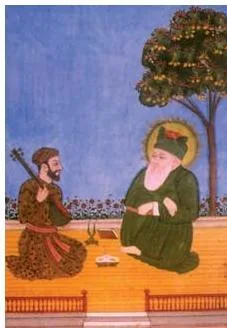
Each figure below is NCERT’s own image from this chapter. Read each one as evidence — what it shows, and what historians use it to argue.
Evidence of the Integration of Cults
These three images are the chapter’s visual proof of integration — local, Buddhist and Shaiva worship flowing into one another.
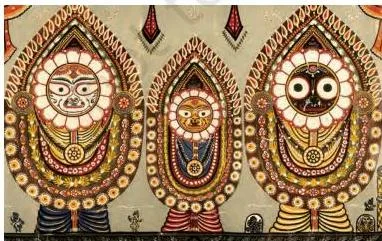
Notice the wooden image: the chapter notes that the deity’s image is still made of wood by local tribal specialists, and that Vishnu was visualised here very differently from elsewhere in the subcontinent. That is the point of the figure — integration did not erase the local form; it absorbed it (NCERT, pp. 141–142).
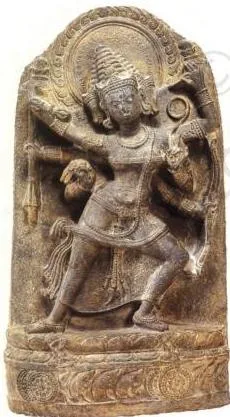
Why does a Buddhist goddess sit in a chapter on bhakti and Sufism? Goddess worship was widespread in simple forms — often a stone smeared with ochre — and Buddhist, Shaiva and Puranic traditions absorbed one another’s imagery. The caption itself calls the sculpture evidence of integration (NCERT, p. 142).
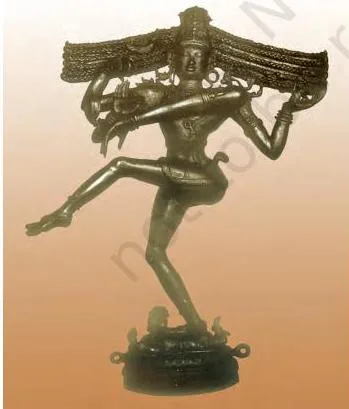
The chapter pairs this bronze with the Nayanars: their visions inspired artists, and Chola rulers filled their temples with stone and metal sculpture meant to recreate those visions in the language ordinary people spoke (NCERT, p. 146).
Evidence of Islam’s Arrival and Adaptation
These images trace how Islam acquired a local presence — from the written word to mosque architecture that blended universal features with regional building styles.
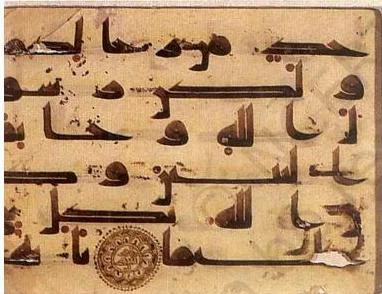
The chapter places this early Qur’an fragment where it turns to the coming of Islam, reminding us that Arab merchants had frequented the western coast from the first millennium and that from the seventh century the subcontinent became part of the Islamic world (NCERT, pp. 148–150).
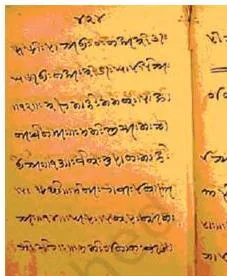
The Khojahs, a branch of the Ismailis (a Shi’a sect), spread Qur’anic ideas through indigenous literary genres — ginan, a word from Sanskrit jnana (“knowledge”) — sung in regional languages in daily prayer meetings. The manuscript shows Islam being communicated through entirely local scripts and genres (NCERT, pp. 151–152).
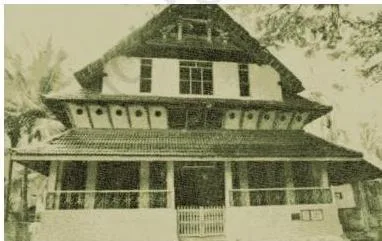
Look at the roof, which rises like a temple shikhara rather than a dome. The mihrab (prayer niche) and minbar (pulpit) still orient worship towards Mecca — the universal features — while the building itself uses local materials and forms. That combination is what the chapter means by a “complex blend of a universal faith with local traditions” (NCERT, p. 152).
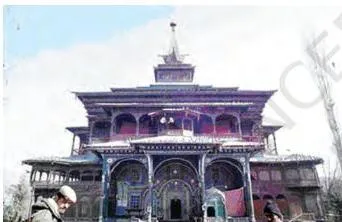
This is Kashmiri wooden architecture at its most famous, with a spire and carved eaves drawn from local craft traditions. The chapter’s third mosque figure — Fig. 6.10, the Atiya mosque in Mymensingh, Bangladesh, built of brick in 1609 — makes the same point with a different material (NCERT, p. 152).
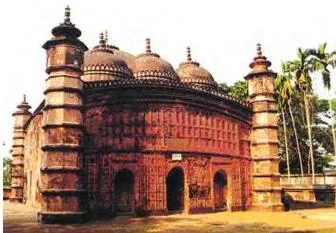
Evidence of Sufi Devotion
These images show the institutions of sufi devotion — the practices, and the shrines that grew around them.
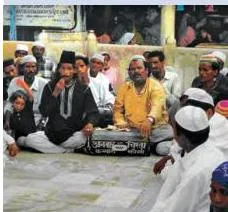
This photograph shows qawwali being performed at the shrine of Nizamuddin Auliya in Delhi — the practice the chapter traces to Amir Khusrau, the poet-musician disciple of the Shaikh who introduced the qaul, a hymn sung at the opening or closing of qawwali.
Music and mystical chants performed by trained qawwals are part of ziyarat, and sama’ was integral to the Chishtis (NCERT, pp. 158–159).
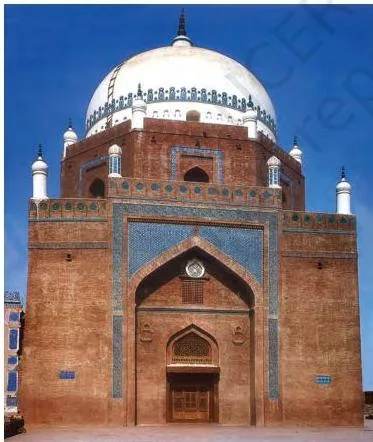
The chapter’s last image returns to where the sufi institution begins: after a shaikh‘s death, his tomb-shrine became the centre of devotion for his followers. Bahauddin Zakariya, listed among the major religious teachers of the thirteenth century in the chapter’s table, was buried at Multan, and his dargah drew pilgrims especially on his death anniversary or urs (NCERT, pp. 154, 168–169).
Evidence of a Bond with the State, and of Performance
The final pair shows how the sufis related to political power, and how the sants’ songs actually travelled.
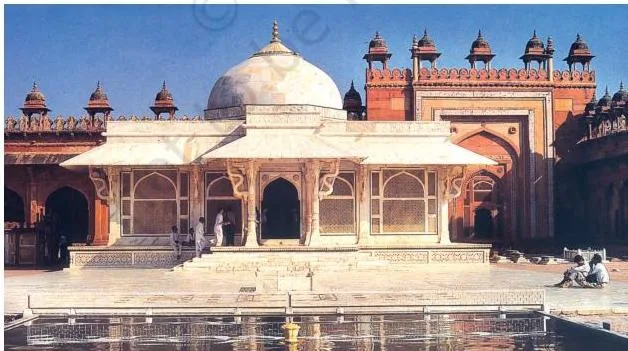
This image accompanies the chapter’s account of the Chishtis and the state. The Chishtis kept their distance from worldly power — the text even reproduces the episode where Nizamuddin Auliya declined a ruler’s gift of gardens and land — yet Akbar built his capital around the shrine of Shaikh Salim Chishti and visited the Ajmer dargah fourteen times.
The dargah at Fatehpur Sikri is the clearest visual statement that distance and connection existed at once (NCERT, pp. 157, 159–161).
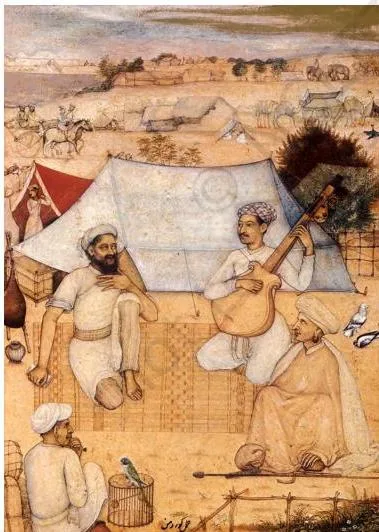
The chapter suggests it is likely that the compositions of the sants were sung by such musicians. The painting matters because almost everything in this chapter — Alvar hymns, vachanas, Kabir’s verses, Mirabai’s songs — was composed orally and set to music long before it was written down (NCERT, p. 162).
Key Terms: A Glossary for Theme 6
This chapter mixes Tamil, Kannada, Sanskrit, Arabic and Persian, and the exercise questions use those terms untranslated. Keep this lookup open while you read:
| Term | Plain meaning | First explained |
|---|---|---|
| bhakti | Devotion to a deity; the traditions of devotional worship this chapter traces | 143 |
| Alvar | A Tamil poet-saint “immersed” in devotion to Vishnu | 144 |
| Nayanar | A Tamil leader-saint devoted to Shiva | 144 |
| saguna | Bhakti “with attributes” — worship of deities with forms and qualities | 144 |
| nirguna | Bhakti “without attributes” — worship of an abstract, formless god | 144 |
| vachana | Literally “saying”; the Kannada devotional compositions of the Virashaivas | 148 |
| Virashaiva | “Heroes of Shiva” — followers of Basavanna’s movement | 148 |
| Lingayat | “Wearers of the linga” — another name for the Virashaivas; they revere jangama wandering monks | 148 |
| shari’a | The law governing the Muslim community, based on the Qur’an and the hadis (traditions of the Prophet) | 150 |
| ulama | Scholars of Islamic studies (plural of alim), performing religious, juridical and teaching functions | 150 |
| zimmi | “Protected” — a person following a revealed scripture under Muslim rule, entitled to protection | 150 |
| jizya | The tax a zimmi paid for that right to protection | 150 |
| ginan | Devotional poems of the Khojahs, a branch of the Ismailis; the word is from Sanskrit jnana, “knowledge” | 151–152 |
| mihrab | The prayer niche in a mosque, marking the direction of Mecca | 152 |
| minbar | The pulpit in a mosque | 152 |
| tasawwuf | The word used for Sufism in Islamic texts | 154 |
| khanqah | The hospice of a sufi community, controlled by a teaching master | 154 |
| shaikh / pir / murshid | The teaching master of a khanqah (Arabic and Persian terms); he enrolled disciples (murids) and appointed a successor (khalifa) | 154 |
| silsila | The “chain” linking master to disciple, unbroken back to the Prophet; also the sufi order itself | 154 |
| dargah | Persian for “court”; the tomb-shrine of a shaikh, centre of devotion after his death | 154 |
| ziyarat | Pilgrimage to a saint’s grave | 154 |
| urs | A saint’s death anniversary — “marriage”, the union of his soul with God | 154 |
| wali | A “friend of God” — a sufi who claimed proximity to Allah | 154 |
| barakat | God’s grace, acquired by a wali, enabling miracles (karamat) | 154 |
| langar | Open kitchen in the khanqah, run on futuh (unasked-for charity) | 155 |
| zikr | Remembering God by reciting the Divine Names | 158 |
| sama’ | “Audition” — the performance of mystical music to evoke God’s presence; integral to the Chishtis | 158 |
| qaul | Arabic for “saying”; the hymn sung at the opening or closing of qawwali; singers are qawwals | 159 |
| sant bhasha | The special language of the nirguna poets | 162 |
| sangat | Congregational worship with collective recitation, organised by Guru Nanak | 164 |
| gurbani | “Words of the Guru” — the hymns collected in the Adi Granth Sahib | 164 |
| malfuzat | “Uttered” — records of sufi saints’ conversations, compiled by disciples | 167 |
| maktubat | “Written” — letters of sufi masters to disciples and associates | 167 |
| tazkira | “To mention and memorialise” — biographical accounts of saints | 167 |
Common Mistakes Students Make in This Chapter
This chapter breeds specific confusions because it packs dozens of names, several languages and deliberately fluid traditions into thirty pages. The table names the traps before you fall into them.
| The mistake | What is actually true | How to check your answer |
|---|---|---|
| Mixing up the Alvars and the Nayanars | Alvars were devoted to Vishnu; Nayanars were devoted to Shiva. Both were Tamil poet-saints of about the sixth century | State the deity each group worshipped; check NCERT, p. 144 |
| Treating “great” and “little” as the book’s own ranking | The terms are Robert Redfield’s sociological categories for peasant societies; scholars are uncomfortable with the hierarchy, so the book writes them in quotation marks | If your answer implies “little” is inferior, re-read NCERT, p. 142 |
| Trusting hagiographies and sufi texts as literal records | They show how devotees perceived the saints, not exact events; sufi tazkiras are full of implausible, fantastic details | Write what a source reveals about perceptions, not about events; NCERT, pp. 141, 167 |
| Assuming every verse attributed to Kabir is his | The three compilations (Kabir Bijak, Kabir Granthavali, Adi Granth Sahib) were made long after his death and disagree with each other; scholars cannot be certain which verses are his | Write “compositions attributed to Kabir”, not “Kabir wrote…”; NCERT, pp. 162–163 |
| Thinking the Chishtis were cut off from the state | They kept their distance and refused some gifts, but accepted unsolicited grants and donations; rulers sought their legitimation | Re-read the “declining a royal gift” episode — distance, not isolation; NCERT, pp. 159–161 |
| Using “Hindu” and “Muslim” as timeless community labels | The terms were not current for centuries; texts used Turushka, Tajika, Parashika, Yavana, Shaka and mlechchha for the new migrants | Use the chapter’s own terms when describing the eighth to fourteenth centuries; NCERT, pp. 152–153 |
How the End-of-Chapter Questions Test This Material
The exercises at NCERT pages 168 to 170 are almost all drawn from named sections and the embedded sources, so mapping each question to its section saves you re-reading the whole chapter.
| Exercise | Section that answers it | NCERT pages |
|---|---|---|
| Q1. Integration of cults, with examples | 1.1 The integration of cults | 141–142 |
| Q2. Mosque architecture and universal ideals | 5.2 The popular practice of Islam | 151–152 |
| Q3. Be-shari’a and ba-shari’a sufis | 6.2 Outside the khanqah | 154 |
| Q4. Caste critiques of Alvars, Nayanars and Virashaivas | 2.2 Attitudes towards caste, and Section 3 | 144–145, 147–148 |
| Q5. Teachings of Kabir or Baba Guru Nanak, and their transmission | 8.1 Weaving a divine fabric: Kabir; 8.2 Baba Guru Nanak and the Sacred Word | 162–164 |
| Q6. Major beliefs and practices of Sufism (essay) | 6. The Growth of Sufism | 153–154 |
| Q7. Rulers’ connections with Nayanars and sufis (essay) | 2.4 Relations with the state; 7.4 Sufis and the state | 146–147, 159–161 |
| Q8. Why bhakti and sufi thinkers used many languages (essay) | 7.3 Languages and communication; 8.1 | 158–159, 162 |
| Q9. Read any five sources in the chapter (essay) | The embedded Sources spread across the chapter | 141–167 |
| Q10. Map work: three sufi shrines, three temple sites | The two chapter tables of teachers and shrines | 155, 168 |
| Q11–12. Projects on a teacher/saint or on pilgrimages | The whole chapter; especially 7.2 for the pilgrimage project | 141–168 |
Source-based questions work differently.
The chapter embeds eleven numbered sources — a Brahmana Alvar’s composition, a Nayanar’s verse against the law books, Karaikkal Ammaiyar’s self-portrait, Basavanna’s vachana, Akbar’s farman about a church, Aurangzeb’s letter to a Jogi, Jahanara’s account of her pilgrimage, a spinning-wheel song (Charkhanama), a malfuzat excerpt recording a refused royal gift, and the attributed songs of Kabir and Mirabai.
A question may quote one and ask what it reveals, so know which kind of evidence each is — a personal composition, an imperial order, a private letter or a disciple’s record.
One honest caveat: textbook contents and the examinable syllabus are not always identical — check the current official CBSE curriculum before you decide what to revise.
The Whole Chapter in One Page
One reading of the chapter’s own chronology, from the sixth-century Tamil poet-saints to the seventeenth-century compilation of scriptures, covers the whole argument.
- c. sixth century — The Alvars and Nayanars travel and sing hymns in Tamil in praise of Vishnu and Shiva.
- ninth to thirteenth centuries — Chola rulers support Brahmanical and bhakti traditions, build the great Shiva temples at Chidambaram, Thanjavur and Gangaikondacholapuram, and sponsor the singing of Tamil Shaiva hymns.
- tenth century — The Alvars’ compositions are compiled as the Nalayira Divyaprabandham and the Nayanars’ poems as the Tevaram.
- twelfth century — Basavanna leads the Virashaiva movement in Karnataka; the Bhagavata Purana takes shape from the ideas of the Tamil bhaktas.
- thirteenth century — Bhakti develops in Maharashtra; the Delhi Sultanate is established; the sufis arrive in the subcontinent and the Chishti order begins to adapt to the local environment.
- fourteenth to fifteenth centuries — Kabir’s verses crystallise in Awadh; Baba Guru Nanak (1469–1539) preaches nirguna devotion to a formless “rab”, expressed in shabads sung in ragas.
- late fifteenth century — Shankaradeva emerges as a leading Vaishnava voice in Assam, preaching naam kirtan in sat sanga and founding satra monasteries.
- fifteenth to sixteenth centuries — Mirabai, the Rajput princess of Merta, sings her defiant bhajans to Krishna.
- sixteenth to seventeenth centuries — Guru Arjan compiles the Adi Granth Sahib; Guru Gobind Singh adds the ninth Guru’s hymns as the Guru Granth Sahib and founds the Khalsa Panth; Akbar visits the Ajmer dargah fourteen times; Shaikh Ahmad Sirhindi writes his maktubat.
No single source records these traditions as they were: most were oral, composed in regional languages, set to music, and compiled by disciples only after the poet-saint’s death. Historians therefore work with texts, sculpture and architecture together, aware that each generation elaborated, modified or abandoned parts of the earlier message.
And because these traditions are still lived ones today, the chapter closes by noting that historians must study religious change with sensitivity — while recognising that religious traditions, like all traditions, are dynamic (NCERT, pp. 141, 167).
Related Resources and Further Reading
This listing is maintained for the 2026-27 academic session using the NCERT textbook information available to us. NCERT remains the authority for confirming the latest edition.
The rest of the book and its revision material sit on the Class 12 History notes hub; the Class 12 hub and the main CBSE notes hub cover the other subjects. Related pages on this site worth checking alongside this chapter include Colonialism and the Countryside and Chapter 3 of Themes in Indian History I.
NCERT itself suggests a short reading list at the end of this chapter (p. 170) for anyone going deeper:
- Richard M. Eaton (ed.), India’s Islamic Traditions (2003)
- John Stratton Hawley, Three Bhakti Voices: Mirabai, Surdas and Kabir in their times and ours (2005)
- David N. Lorenzen (ed.), Religious Movements in South Asia 600–1800 (2004)
- A.K. Ramanujan, Hymns for the Drowning (1981)
- Annemarie Schimmel, Mystical Dimensions of Islam (1975)
- David Smith, The Dance of Siva: Religion, Art and Poetry in South India (1998)
- Charlotte Vaudeville, A Weaver Named Kabir (1997)
If you want to read the chapter with your own margin notes, return to the official NCERT file for Themes in Indian History Part II on ncert.nic.in at any time.
Sources and Data Verification
- The page references and figure captions on this page describe NCERT’s Themes in Indian History Part II, Class 12 History, in the current official edition published on ncert.nic.in. The chapter discussed is Theme 6 (the second chapter of the book), printed pages 140 to 169.
- This page covers this one chapter. The same book also contains Themes 5, 7, 8 and 9, and this page does not attempt to describe the full CBSE subject scheme.
- This listing is maintained for the current academic session using the NCERT edition available on ncert.nic.in.
- NCERT settles textbooks, editions and official PDFs; CBSE settles the curriculum, syllabus and examinations.
Bhakti-Sufi Traditions Class 12: Frequently Asked Questions
What is the difference between the Alvars and the Nayanars?
The Alvars were Tamil poet-saints devoted to Vishnu — their name literally means those “immersed” in devotion to Vishnu — while the Nayanars were devotees of Shiva, their name meaning “leaders”. Both travelled singing Tamil hymns from about the sixth century, and their compositions were later compiled as the Nalayira Divyaprabandham and the Tevaram (NCERT, pp. 144–145).
What do “great” and “little” traditions mean in the Bhakti-Sufi chapter?
They are the sociologist Robert Redfield’s categories, coined in the twentieth century, for peasant societies: “great” describes practices coming from dominant categories such as priests and rulers, while “little” describes local customs that do not match them. The quotation marks signal that scholars are uncomfortable with the hierarchy the terms suggest (NCERT, p. 142).
What is the difference between saguna and nirguna bhakti?
Saguna bhakti worships a deity “with attributes” — Shiva, Vishnu and his avatars, or the goddess, in anthropomorphic form. Nirguna bhakti worships an abstract, formless god, “without attributes”. Kabir and Baba Guru Nanak are the chapter’s leading examples of nirguna devotion (NCERT, pp. 144, 162–164).
Why are poems attributed to Kabir found in so many different collections?
Because verses attributed to Kabir survive in three distinct but overlapping traditions — the Kabir Bijak of the Kabirpanth, the Kabir Granthavali of the Dadupanth, and the Adi Granth Sahib — and all were compiled long after his death, in different languages and dialects. The collections disagree with each other, so historians cannot be certain which verses are actually his (NCERT, pp. 162–163).
What is the difference between a khanqah, a dargah and a silsila?
A khanqah is the hospice where a sufi community lived around a teaching master; a silsila is the “chain” of spiritual descent linking each master to his disciple and on back to the Prophet Muhammad, and so also the name of the order itself; a dargah is the tomb-shrine of a shaikh, which became the centre of devotion and pilgrimage after his death (NCERT, p. 154).
How do historians reconstruct the history of the Sufi traditions from texts?
Historians use the text genres produced in and around khanqahs — malfuzat (recorded conversations of saints), maktubat (letters of masters), tazkiras (biographies of saints) and treatises such as Hujwiri’s Kashf-ul-Mahjub — together with architecture and sculpture.
Each genre has its own purpose and style, so historians read them for what they reveal about perceptions and life conditions rather than as exact records (NCERT, pp. 166–167).
Reference: NCERT Class 12 History textbook, chapter 2, official edition on ncert.nic.in.
Explore Class 12 History Books
- Previous: Through the Eyes of Travellers
- Next: An Imperial Capital
Related chapters:
- Bricks, Beads and Bones
- Kings, Farmers and Towns
- Kinship, Caste and Class