
These Microbes in Human Welfare Class 12 notes follow the 2026-27 session and cover NCERT Class 12 Biology Chapter 8 of the rationalised textbook (pages 149-160). The chapter shows the useful side of microbes: the side that makes curd, cheese and antibiotics, cleans sewage, produces biogas, and replaces chemical pesticides and fertilisers.
If you want the full textbook open beside these notes, you can download it from the official NCERT textbook portal.
You get the entire chapter in a form you can revise quickly: a one-screen map of the six sections, tables of every named microbe with textbook page references, a worked example on BOD ranking, common mistake corrections, and a two-minute revision summary. This page is part of the Class 12 Biology notes collection on this site.
Revise in three passes: read the at-a-glance table once, work through the section you are weakest in, then finish with the revision summary and memory devices the night before your test.
Chapter 8 at a glance: the six roles of microbes
Microbes are everywhere — in soil, water, air, inside our bodies, and in places where no other life-form survives: deep inside geysers where temperatures reach about 100°C, deep in the soil, under thick layers of snow, and in highly acidic environments (NCERT, p. 149). They include protozoa, bacteria, fungi, viruses, viroids and prions.
The previous chapter listed the diseases microbes cause (NCERT, p. 151) — revise that side in the Human Health and Disease notes. The message of Chapter 8 is the opposite of that list: not all microbes are harmful (NCERT, p. 151).
The chapter is organised into six sections. Keep this map in view while you revise; each row is a block you can finish in one sitting.
| Textbook section | What microbes do | NCERT pages |
|---|---|---|
| 8.1 Household products | Ferment milk, dough and cheese into everyday foods | 151 |
| 8.2 Industrial products | Make beverages, antibiotics, organic acids, enzymes and bioactive molecules | 151-153 |
| 8.3 Sewage treatment | Aerobic and anaerobic microbes clean municipal waste water | 153-155 |
| 8.4 Biogas production | Methanogens convert cattle dung and organic waste into methane-rich fuel | 155-156 |
| 8.5 Biocontrol agents | Microbes replace toxic chemical pesticides | 156-157 |
| 8.6 Biofertilisers | Microbes enrich soil nutrients and reduce dependence on chemical fertilisers | 157-158 |
Two cross-links matter for answers: methanogens connect sewage treatment to biogas, and both biocontrol and biofertilisers reduce our dependence on agricultural chemicals.
Household and industrial microbes: products you already use
The first two blocks answer one question: which daily items are actually made by microbes? Household products are fermented at home or in small workshops; industrial products are made in factories. Making anything on an industrial scale needs fermentors — large vessels in which microbes are grown in bulk (NCERT, p. 151).
The star of the household block is lactic acid bacteria (LAB), such as Lactobacillus. When LAB grow in milk, they produce acids that coagulate and partially digest the milk proteins, converting milk to curd; a spoonful of curd added to fresh milk acts as the inoculum or starter (NCERT, p. 151).
Fermentation also improves the nutritional quality of the curd by increasing vitamin B12, and LAB play a beneficial role in the stomach by checking disease-causing microbes.
Complete microbe-to-product table
This table maps every microbe named in the household and industrial sections to its product, with the NCERT page for each (NCERT, pp. 151-153).
| Product or use | Microbe(s) | What happens | NCERT page |
|---|---|---|---|
| Curd | Lactic acid bacteria (LAB), e.g. Lactobacillus | Acids coagulate and partly digest milk proteins; vitamin B12 increases; curd acts as starter | 151 |
| Dosa and idli dough | Fermenting bacteria | Bacteria ferment the dough; \( CO_2 \) puffs it up | 151 |
| Bread dough | Baker’s yeast Saccharomyces cerevisiae | Yeast ferments the dough so the bread rises | 151 |
| Toddy | Microbes fermenting palm sap | Traditional drink of parts of southern India | 151 |
| Fermented fish, soyabean, bamboo-shoots | Fermenting microbes | Traditional foods made by fermentation | 151 |
| Swiss cheese | Propionibacterium sharmanii | Bacterium produces large amounts of \( CO_2 \), making the holes | 151 |
| Roquefort cheese | A specific fungus | Ripens the cheese and gives its particular flavour | 151 |
| Wine and beer | Saccharomyces cerevisiae (brewer’s yeast) | Ferments malted cereals and fruit juices to ethanol; no distillation | 152 |
| Whisky, brandy, rum | Saccharomyces cerevisiae | Same fermentation, but the fermented broth is distilled | 152 |
| Penicillin | Mould Penicillium notatum | First antibiotic; kills or retards disease-causing microbes | 152 |
| Ethanol (commercial) | Yeast Saccharomyces cerevisiae | Ferments sugars to ethanol for industrial use | 153 |
| Citric acid | Aspergillus niger (fungus) | Organic acid produced commercially | 153 |
| Acetic acid | Acetobacter aceti (bacterium) | Organic acid produced commercially | 153 |
| Butyric acid | Clostridium butylicum (bacterium) | Organic acid produced commercially | 153 |
| Lactic acid | Lactobacillus (bacterium) | Organic acid produced commercially | 153 |
| Detergent formulations | Lipases | Enzymes help remove oily stains from laundry | 153 |
| Clear bottled fruit juices | Pectinases and proteases | Enzymes clarify the juice, so bottled juice looks clearer than home-made juice | 153 |
| Clot buster (streptokinase) | Streptococcus, modified by genetic engineering | Removes clots from blood vessels after myocardial infarction (heart attack) | 153 |
| Cyclosporin A | Fungus Trichoderma polysporum | Immunosuppressive agent for organ-transplant patients | 153 |
| Statins | Yeast Monascus purpureus | Lower blood cholesterol by competitively inhibiting the enzyme for cholesterol synthesis | 153 |
Cheese is one of the oldest foods made with microbes; each variety gets its texture, flavour and taste from the specific microbes used (NCERT, p. 151).
Industrial scale: Figures 8.4 and 8.5
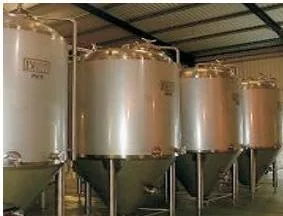
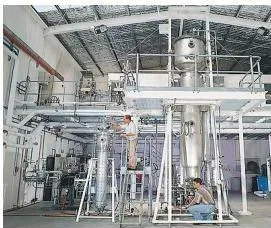
Figure 8.4 shows fermentors — the large vessels where an industrial microbe is grown in bulk, for example to make antibiotics or organic acids. Figure 8.5 shows a fermentation plant, the factory-scale version of the same setup (NCERT, p. 152).
The same yeast used for bread — Saccharomyces cerevisiae — is called brewer’s yeast here, because it ferments malted cereals and fruit juices to produce ethanol (NCERT, p. 152). The drink depends on processing: wine and beer are produced without distillation, while whisky, brandy and rum are produced by distilling the fermented broth.
Antibiotics: the chance discovery of penicillin
An antibiotic is a chemical substance produced by some microbes that can kill or retard the growth of other, disease-causing microbes (NCERT, p. 152). Penicillin was the first antibiotic and it was a chance discovery: Alexander Fleming noticed a mould growing in an unwashed culture plate, and around the mould the Staphylococci bacteria could not grow.
The chemical was produced by the mould Penicillium notatum, so Fleming named it penicillin; Ernest Chain and Howard Florey later established its full potential as a medicine. It was used extensively to treat American soldiers wounded in World War II, and Fleming, Chain and Florey shared the Nobel Prize in 1945 (NCERT, p. 152).
Antibiotics transformed the treatment of plague, whooping cough (kali khansi), diphtheria (gal ghotu) and leprosy (kusht rog).
Sewage treatment, BOD and biogas: microbes as cleaners and fuel makers
Sewage is municipal waste water whose major component is human excreta; it contains large amounts of organic matter and many pathogenic microbes (NCERT, p. 153). It cannot be discharged into rivers or streams directly, so it is treated in sewage treatment plants (STPs).
The cleanup is done by the heterotrophic microbes naturally present in the sewage, in the order below (NCERT, p. 154).
- Primary treatment (physical): floating debris is removed by sequential filtration, then grit (soil and small pebbles) is removed by sedimentation. The solids that settle form the primary sludge; the liquid above is the effluent that moves to the next stage.
- Secondary or biological treatment: the primary effluent enters large aeration tanks where it is constantly agitated and air is pumped in. Aerobic microbes grow into flocs — mesh-like masses of bacteria associated with fungal filaments.
- BOD reduction: while growing, the flocs consume most of the organic matter in the effluent, greatly reducing its BOD (biochemical oxygen demand).
- Settling: the treated effluent passes into a settling tank where the flocs sediment as activated sludge. A small part is pumped back into the aeration tank as inoculum; the rest goes to anaerobic sludge digesters.
- Anaerobic digestion: anaerobic bacteria digest the bacteria and fungi in the sludge, producing a gas mixture — methane, hydrogen sulphide and carbon dioxide — that forms biogas.
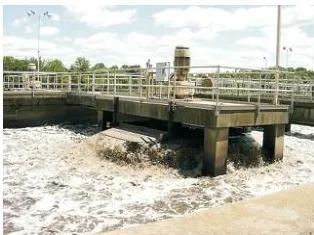
Figure 8.6 shows the aeration stage of this process — open tanks where air is pumped in so that flocs grow and BOD falls. The final effluent is released into natural water bodies like rivers and streams (NCERT, p. 154).
BOD is the amount of oxygen that would be consumed if all the organic matter in one litre of water were oxidised by bacteria (NCERT, p. 154). The BOD test measures the rate of oxygen uptake by micro-organisms in a water sample, so BOD indirectly measures the organic matter present. The greater the BOD, the greater the polluting potential.
When untreated sewage is discharged into rivers, the rivers get polluted and water-borne diseases increase. The Ministry of Environment and Forests launched the Ganga Action Plan and the Yamuna Action Plan to build more sewage treatment plants, so that only treated sewage is released into these rivers (NCERT, p. 155).
Biogas: methane from methanogens
Methanogens are bacteria that grow anaerobically on cellulosic material and produce large amounts of methane along with \( CO_2 \) and \( H_2 \); Methanobacterium is one common example (NCERT, p. 155). They are found in the anaerobic sludge of sewage plants and in the rumen (a part of the stomach) of cattle, where they help break down cellulose and support cattle nutrition.
Cattle dung — gobar — is rich in these bacteria, so it can be fermented to produce gobar gas.
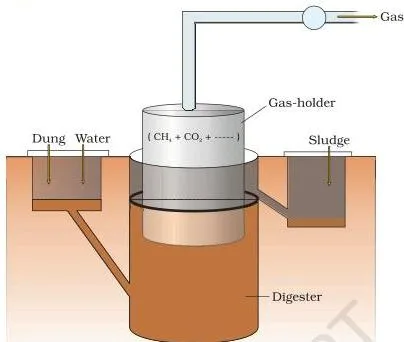
A typical biogas plant is a concrete tank (10-15 feet deep) into which bio-wastes and a slurry of dung are fed. A floating cover rises as the gas collects, an outlet pipe supplies the biogas to nearby houses, and spent slurry is removed through another outlet to be used as fertiliser (NCERT, pp. 155-156).
The technology was developed in India mainly by the Indian Agricultural Research Institute (IARI) and the Khadi and Village Industries Commission (KVIC). Figure 8.8 shows the complete setup.
Biocontrol agents and biofertilisers: microbes instead of chemicals
Two ideas share one goal: cutting our dependence on agricultural chemicals. Biocontrol uses biological methods to control plant diseases and pests (NCERT, p. 156) instead of toxic insecticides and pesticides. Biofertilisers are organisms that enrich the nutrient quality of the soil (NCERT, p. 158) instead of chemical fertilisers.
The context is organic farming, where pests are kept at manageable levels by the ecosystem’s checks and balances rather than eradicated (NCERT, p. 156).
Biocontrol agents
| Agent | Pest or disease it controls | How it works | NCERT page |
|---|---|---|---|
| Ladybird beetle | Aphids | The red-and-black beetle is a natural predator that gets rid of aphids | 157 |
| Dragonflies | Mosquitoes | Natural predators useful to get rid of mosquitoes | 157 |
| Bacillus thuringiensis (Bt) | Butterfly caterpillars | Dried spores are sprayed on plants such as brassicas and fruit trees; larvae eat them, a toxin is released in the larval gut, and the larvae are killed — other insects remain unharmed | 157 |
| Trichoderma | Several plant pathogens | Free-living fungus common in root ecosystems; effective biocontrol agent against plant pathogens | 157 |
| Nucleopolyhedrovirus (a baculovirus) | Insects and other arthropods | Species-specific and narrow-spectrum; no negative impact on plants, mammals, birds, fish or non-target insects; suits integrated pest management (IPM) | 157 |
Bt has taken the story further: genetic engineers have introduced the Bt toxin gene into plants, making them resistant to insect pests. Bt-cotton, cultivated in some states of India, is one such crop (NCERT, p. 157). You will study how these toxin genes are put into plants in the Biotechnology: Principles and Processes notes.
Biofertilisers
| Organism | Type | Role in the soil | NCERT page |
|---|---|---|---|
| Rhizobium | Symbiotic bacterium | Lives in root nodules of legumes; fixes atmospheric nitrogen into organic forms the plant can use | 158 |
| Azospirillum, Azotobacter | Free-living bacteria | Fix atmospheric nitrogen while free-living in the soil, enriching its nitrogen content | 158 |
| Glomus | Mycorrhizal fungus | Forms mycorrhiza with roots; absorbs phosphorus from the soil and passes it to the plant; also gives resistance to root-borne pathogens, tolerance to salinity and drought, and better growth | 158 |
| Anabaena, Nostoc, Oscillatoria | Cyanobacteria | Autotrophic and nitrogen-fixing; serve as an important biofertiliser in paddy fields and add organic matter to the soil | 158 |
Definitions table: terms you should be able to reproduce
These ten terms cover nearly every direct question this chapter can ask. Learn the meaning first, then the example; an answer that opens with a definition and closes with an example is a complete answer.
| Term | Meaning | Example | NCERT page |
|---|---|---|---|
| Lactic acid bacteria (LAB) | Bacteria such as Lactobacillus that grow in milk and convert it to curd, producing acids that coagulate and partly digest milk proteins | Curd made from milk | 151 |
| Antibiotic | Chemical substance produced by some microbes that can kill or retard the growth of other disease-causing microbes | Penicillin from Penicillium notatum | 152 |
| Fermentor | Large vessel in which microbes are grown on an industrial scale | Vessels used to make beverages and antibiotics | 151 |
| BOD (biochemical oxygen demand) | Oxygen that would be consumed if all the organic matter in one litre of water were oxidised by bacteria; greater BOD means greater polluting potential | Untreated sewage has very high BOD | 154 |
| Flocs | Mesh-like masses of bacteria associated with fungal filaments | Grow in the aeration tanks of secondary treatment | 154 |
| Activated sludge | Sediment of bacterial flocs that settles after secondary treatment | A small part is returned to the aeration tank as inoculum; the rest is digested anaerobically | 154 |
| Methanogens | Bacteria that grow anaerobically on cellulosic material and produce methane | Methanobacterium in the cattle rumen and anaerobic sludge | 155 |
| Biocontrol | Use of biological methods to control plant diseases and pests | Ladybird against aphids; Trichoderma against plant pathogens | 156 |
| Biofertiliser | Organism that enriches the nutrient quality of the soil | Rhizobium, Glomus, Anabaena | 158 |
| Mycorrhiza | Symbiotic association of fungi with plant roots | Glomus transfers phosphorus from soil to the plant | 158 |
The chapter’s formula-like ideas: BOD logic and gas patterns
This chapter has no formula boxes, but two relationships keep appearing and exam questions treat them like formulas. Learn them as rules, not as isolated facts.
The BOD rule: greater BOD means more organic matter, so greater polluting potential. BOD is measured by the rate of oxygen uptake by micro-organisms in a water sample (NCERT, p. 154). Whenever a question gives you BOD values, your only job is to rank them.
The gas patterns: the gas produced depends on the microbe and the organic substrate it uses (NCERT, p. 155). One pattern runs through the whole chapter — fermentation of a particular substrate gives a predictable gas.
| Process | Main gas or product | What it tells you |
|---|---|---|
| Dosa and idli dough | \( CO_2 \) | Carbon dioxide puffs up the dough |
| Bread dough (baker’s yeast) | \( CO_2 \) | Carbon dioxide raises the dough |
| Swiss cheese | \( CO_2 \) | Large amounts of carbon dioxide make the holes |
| Fermented beverages | Ethanol with \( CO_2 \) | Yeast ferments fruit juices or malted cereals to ethanol |
| Anaerobic sludge digestion | Methane, hydrogen sulphide, carbon dioxide | The mixture forms biogas |
| Biogas as fuel | Predominantly methane | Biogas is inflammable and burns as fuel |
Worked example: ranking water samples by BOD
Rule used: the greater the BOD of waste water, the greater its polluting potential (NCERT, p. 154).
Problem: Three water samples X, Y and Z gave BOD values of 350 mg/L, 18 mg/L and 6 mg/L respectively.
One is untreated sewage, one is relatively clean river water and one is secondary effluent from a sewage treatment plant.
Identify each sample and say which is most polluted.
Step 1 — Rank by the rule: higher BOD means more organic matter, hence more pollution.
The order from the data is 350 mg/L (highest), then 18 mg/L, then 6 mg/L (lowest).
Step 2 — Most polluted sample: untreated sewage carries the largest organic load, so it must have the highest BOD.
Sample X, at 350 mg/L, is untreated sewage.
Step 3 — Least polluted sample: secondary effluent has passed through aerobic treatment where flocs consumed most of the organic matter, so its BOD is the lowest.
Sample Z, at 6 mg/L, is secondary effluent.
Step 4 — Middle value: relatively clean river water falls between the two extremes.
Sample Y, at 18 mg/L, is river water.
Final answer: X = untreated sewage (350 mg/L); Y = river water (18 mg/L); Z = secondary effluent (6 mg/L). The most polluted sample is X.
NCERT Exercise 11 (p. 159) applies the same rule to BOD values of 20 mg/L, 8 mg/L and 400 mg/L — rank them with the same three steps.
Common mistakes in this chapter (and the corrections)
These six errors appear repeatedly in student answers. Learn the corrected version and the reason, so you do not repeat them.
| Students write | Correct is | Why |
|---|---|---|
| Primary sewage treatment uses microbes to digest the waste. | Primary treatment is physical: filtration removes floating debris and sedimentation removes grit. | Microbes act only in secondary (biological) treatment, where flocs consume the organic matter (NCERT, p. 154). |
| Flocs form in the anaerobic sludge digester. | Flocs — mesh-like masses of bacteria and fungal filaments — form in the aeration tank. | Flocs are aerobic; the digester is anaerobic and receives only the settled activated sludge (NCERT, p. 154). |
| Bt kills caterpillars by infecting them. | Bt acts by a toxin: the larva eats the sprayed spores and the toxin is released in its gut, killing it. | The action is the toxin inside the feeding larva, so other insects are left unharmed (NCERT, p. 157). |
| Cyclosporin A comes from Monascus; statins come from Trichoderma. | Cyclosporin A comes from the fungus Trichoderma polysporum; statins come from the yeast Monascus purpureus. | The two producers are the exact opposite — swapping them loses the answer (NCERT, p. 153). |
| Methanogens are aerobic bacteria. | Methanogens grow anaerobically on cellulosic material. | They live in the anaerobic sludge of sewage plants and in the cattle rumen, producing methane (NCERT, p. 155). |
| Mycorrhiza fixes nitrogen. | Mycorrhiza (e.g. Glomus) transfers phosphorus from the soil to the plant. | Nitrogen fixation is the job of Rhizobium, Azospirillum, Azotobacter and cyanobacteria (NCERT, p. 158). |
Exam notes: writing answers that start with the definition
- Open with the definition. For any term-based question, write the meaning first, then one NCERT example. For BOD ranking questions, state the rule (‘the greater the BOD, the greater the polluting potential’), then list the samples in order and finish each value with its unit (mg/L).
- Write scientific names correctly. Genus and species both matter: Saccharomyces cerevisiae, Propionibacterium sharmanii, Bacillus thuringiensis. In print, italicise the name; when writing by hand, underline it. Bt is short for Bacillus thuringiensis, so expand it the first time you use it.
- Exercise 6 caution: the chapter text names only one antibiotic-producing fungus — Penicillium notatum. The second species this exercise asks for is not named in the chapter, so take it from your teacher’s notes or class material instead of inventing one.
- Exercise 14 logic: when asked to arrange items in decreasing order of importance for human welfare, justify each position by the scale of its benefit — a life-saving medicine like penicillin outweighs a daily convenience like curd. Give a reason with every item, not just the final order.
- Answer ‘where have you seen this?’ questions with applications: use the real-life application map in the revision summary below — curd, Swiss cheese holes, clear bottled juice, the Ganga Action Plan, gobar gas and Bt-cotton.
Reading the figures: what each diagram shows
Diagram-based questions in this chapter usually ask you to identify a stage or name a part. For each NCERT figure, remember one identifying feature.
Figure 8.4 (Fermentors) and Figure 8.5 (Fermentation Plant)
Shown earlier in this page. Figure 8.4 is the fermentor — the large vessel in which microbes are grown for industrial production. Figure 8.5 is the whole fermentation plant, the large-scale version of the same idea (NCERT, p. 152). If a diagram shows large vessels for growing microbes, the answer is fermentors.
Figure 8.6 (Secondary treatment)
Shown earlier in the sewage section. This is the aeration stage. What to point out: the open tanks into which air is pumped and in which the effluent is agitated; this is where aerobic microbes grow into flocs and BOD falls (NCERT, p. 154).
Figure 8.7 (An aerial view of a sewage plant)
This figure is read from above, and the point is scale — the aerial view shows how large a sewage treatment plant is (NCERT, p. 155). If a question shows the whole plant from the air, the expected observation is its large size.
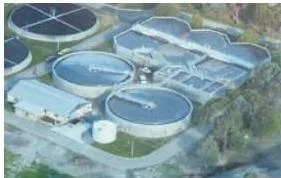
Figure 8.8 (A typical biogas plant)
Shown earlier in the biogas section. To read it, trace four parts: the concrete tank; the floating cover that rises as gas collects; the outlet pipe that carries biogas to nearby houses; and the second outlet from which spent slurry is removed for use as fertiliser (NCERT, pp. 155-156).
One-glance revision summary: the six sections and their key microbes
If you have two minutes before a test, read this table and the memory devices below it.
| Section | Must remember | Key names |
|---|---|---|
| Household products | LAB turn milk into curd; carbon dioxide puffs dough; Swiss cheese holes are carbon dioxide; Roquefort is ripened by a fungus | Lactobacillus, Saccharomyces cerevisiae, Propionibacterium sharmanii |
| Industrial products | Fermentors grow microbes at scale; wine and beer are undistilled, whisky, brandy and rum are distilled; penicillin was the first antibiotic | Penicillium notatum, Aspergillus niger, Acetobacter aceti, Clostridium butylicum, Streptococcus, Trichoderma polysporum, Monascus purpureus |
| Sewage treatment | Primary is physical; secondary is biological; flocs cut BOD; activated sludge is partly recycled as inoculum | Flocs, activated sludge |
| Biogas | Methanogens digest cellulose anaerobically to give methane-rich biogas; dung gives gobar gas | Methanobacterium |
| Biocontrol | Biological control of pests and plant diseases instead of pesticides | Ladybird, dragonflies, Bacillus thuringiensis, Trichoderma, Nucleopolyhedrovirus |
| Biofertilisers | Organisms that enrich soil nutrients, replacing chemical fertilisers | Rhizobium, Azospirillum, Azotobacter, Glomus, Anabaena, Nostoc, Oscillatoria |
Memory devices
The six sections in order spell H-I-S-B-B-B. Remember the sentence ‘How I Study Biology Beats Boredom’ — Household products, Industrial products, Sewage treatment, Biogas, Biocontrol, Biofertilisers.
The four organic-acid producers follow A-C-C-L. Aspergillus (citric acid), Acetobacter (acetic acid), Clostridium (butyric acid), Lactobacillus (lactic acid) (NCERT, p. 153).
Real-life application map
Connect each section to something you have actually seen. This is also how ‘give an example’ answers are built.
| Familiar item | Chapter section | What microbes do for it |
|---|---|---|
| Curd | Household products | LAB coagulate and partly digest milk proteins and raise vitamin B12 |
| Dosa and idli that puff up | Household products | Fermenting bacteria release carbon dioxide into the dough |
| Holes in Swiss cheese | Household products | Propionibacterium sharmanii produces large amounts of carbon dioxide |
| Clear bottled juice | Industrial products | Pectinases and proteases clarify the juice |
| Ganga Action Plan and Yamuna Action Plan | Sewage treatment | New sewage treatment plants ensure only treated sewage reaches the rivers |
| Gobar gas | Biogas | Methanogens in cattle dung produce methane-rich cooking and lighting fuel |
| Bt-cotton | Biocontrol | The Bt toxin gene makes the plant resistant to insect pests |
The frame statement of the whole chapter (NCERT, pp. 151, 158): not all microbes are harmful — many are essential to human welfare. If a question ever asks ‘are all microbes harmful?’, this is your opening line.
When you finish this chapter, revise other chapters from the Class 12 notes hub, or scan the full CBSE notes library for last-minute revision in other subjects.
FAQs on microbes in human welfare
Why does higher BOD mean more polluted water?
BOD is the oxygen that bacteria would consume to oxidise all the organic matter in one litre of water. More organic matter means more oxygen demand, so a higher BOD signals heavier organic pollution — hence greater polluting potential (NCERT, p. 154).
What is the difference between primary and secondary sewage treatment?
Primary treatment is physical: sequential filtration removes floating debris and sedimentation removes grit, leaving primary sludge and an effluent. Secondary treatment is biological: the effluent is aerated in tanks so aerobic microbes form flocs that consume most of the organic matter and reduce BOD (NCERT, p. 154).
Which microbes are used as biofertilisers in Class 12?
Rhizobium fixes nitrogen in the root nodules of legumes; Azospirillum and Azotobacter fix nitrogen while free-living in the soil; the mycorrhizal fungus Glomus transfers phosphorus to plants; and cyanobacteria such as Anabaena, Nostoc and Oscillatoria are important biofertilisers in paddy fields (NCERT, p. 158).
How does Bacillus thuringiensis kill caterpillars without harming other insects?
Dried spores are sprayed on plants; when a caterpillar larva eats them, a toxin is released in its gut and kills the larva. Because the toxin acts only inside a larva that feeds on the treated plant, other insects remain unharmed (NCERT, p. 157).
Which microbes are used to make cyclosporin A and statins?
Cyclosporin A — an immunosuppressive drug for organ-transplant patients — comes from the fungus Trichoderma polysporum. Statins, which lower blood cholesterol by competitively inhibiting the enzyme for cholesterol synthesis, come from the yeast Monascus purpureus (NCERT, p. 153).
Reference: NCERT Class 12 Biology textbook, chapter 8.
Explore Class 12 Biology Notes
- Class 12 Biology Notes
- Class 12 CBSE Notes
- CBSE Notes for Classes 9 to 12
- Previous: Human Health and Disease
- Next: Biotechnology : Principles and Processes
Class 12 Biology on LearnCBSE:
Related chapters:
- Sexual Reproduction in Flowering Plants notes
- Human Reproduction notes
- Reproductive Health notes