This page carries the official Environment and Sustainable Development Class 11 chapter — Chapter 7 of Indian Economic Development, the NCERT Economics textbook for Class 11, printed pages 114 to 130 of the current edition.
The official NCERT PDF of this chapter is published free on ncert.nic.in just below; open it to follow the text, then use the guide underneath to study the chapter.
Download the Environment and Sustainable Development Class 11 PDF
The Environment and Sustainable Development Class 11 PDF is Chapter 7 of the NCERT book Indian Economic Development, published free on ncert.nic.in.
If you want the file itself rather than the browse page, open the direct official chapter PDF on ncert.nic.in — it is the same chapter, ready for offline reading or printing, with no login required.
Chapter 7 at a Glance
The table below summarises how much this chapter holds — its sections, captioned figures and exercise questions — so you can size up the chapter before you start.
The chapter’s own introduction (Section 7.1, NCERT, p. 115) announces the plan: the functions and role of the environment, the state of India’s environment, and the steps and strategies for sustainable development.
| What the chapter holds | Count | Where it is used |
|---|---|---|
| Printed pages | 17 | |
| Sections in the chapter | 6 | |
| Figures with NCERT captions | 8 | |
| Tables | 2 | |
| Exercise questions | 19 | answered in our NCERT Solutions |
| Official NCERT PDF | Download the chapter PDF | the chapter exactly as NCERT publishes it |
What This Chapter Covers, Section by Section
The chapter moves from definitions to India’s specific problems to the strategies that fix them. Each bullet gives the printed page range so you can follow along with a finger on the book.
- 7.1 Introduction (p. 115) — economic development so far has come at a heavy price: the cost of environmental quality. The section asks us to learn from that past path and consciously choose sustainable development.
- 7.2 Environment — definition and functions (pp. 115–119) — the definition of environment, biotic and abiotic elements, the environment’s four functions, carrying capacity and absorptive capacity, and the reversal of supply and demand that makes the crisis recent. Box 7.1 Global Warming (p. 117) and Box 7.2 Ozone Depletion (pp. 118–119) sit inside this section.
- 7.3 State of India’s environment (pp. 119–124) — why a resource-rich country still faces an environmental crisis: the poverty-versus-affluence dichotomy, five priority concerns, the factors behind land degradation, and Box 7.4 on Pollution Control Boards (pp. 122–123). Box 7.3 Chipko or Appiko sits on p. 120.
- 7.4 Sustainable development (pp. 124–125) — the UNCED definition, the Brundtland Commission, Edward Barbier’s grass-roots view, Herman Daly’s conditions, and the 2015 UN Sustainable Development Goals.
- 7.5 Strategies for sustainable development (pp. 125–128) — non-conventional energy, LPG and gobar gas in rural areas, CNG in cities, wind power, solar photovoltaic cells, mini-hydel plants, traditional knowledge, biocomposting and biopest control.
- 7.6 Conclusion (p. 128) — development that ignores the environment destroys the environment that sustains life; sustainable development is the path that avoids that.
- End matter (pp. 129–130) — the chapter’s Recap, Exercises and Suggested Additional Activities close the chapter.
Box 7.3 close-up: Chipko and Appiko, the 1983 protest
Box 7.3 (NCERT, p. 120) compares the better-known Chipko Movement — aimed at protecting forests in the Himalayas — with Karnataka’s Appiko movement, whose name means “to hug”. The details of the 1983 protest are the facts worth carrying:
| Aspect | What the box says (NCERT, p. 120) |
|---|---|
| Where | Chipko: the Himalayas. Appiko: the Salkani forest in Sirsi district, Karnataka. |
| The name | Appiko means “to hug”; the chapter gives no translation for Chipko, only that it aimed at protecting Himalayan forests. |
| The 8 September 1983 protest | 160 men, women and children hugged the trees and forced the woodcutters to leave; they kept vigil in the forest for the next six weeks. |
| The outcome | Felling was discontinued, 12,000 trees were saved, and within months the movement spread to adjoining districts. |
| The rules demanded | Local people should be consulted before trees are marked for felling; no felling within 100 metres of a water source or on a slope of 30 degrees or above. |
The box also notes why such protests mattered: twelve years after a paper mill began operating in the Uttar Kanara area, bamboo had been wiped out from that region — the kind of damage the movement fought.
In-Chapter Activities and Discussion Points (Work These Out)
NCERT scatters short activities in the margins to turn the chapter into discussion; they are also ready-made practice for short answers. The main ones:
- Diseases from pollution (p. 116) — the book’s table starts you off with asthma under air pollution and cholera under water pollution. You can add bronchitis for air and typhoid for water; the noise column is left blank for you to complete in class.
- Why has water become an economic commodity? (p. 116) — the answer to discuss: past development has polluted and dried up rivers and aquifers, so clean water now has to be bought like any other scarce good.
- Product-to-nature chain game (p. 121) — name a product and trace its roots back to nature and the earth. Original worked example: a cotton shirt → cotton fibre → cotton plant → soil, water and sunlight → earth. Try a second chain: a mobile phone → plastic and metal → petroleum and mineral ores → earth.
- The Rs 10,000 challan (p. 121) — a truck driver fined for emitting black soot. Soot is visible air pollution, vehicles are ground-level sources that affect people directly, and the fine makes the polluter pay for the harm — that is why it was justified.
- Factory visit (p. 122) — visit a nearby factory or irrigation department and collect the details of the measures it adopts to control water and air pollution.
- Diwali air-quality news item (p. 123) — cut out the air-pollution reading from a national daily a week before Diwali, on Diwali day and two days after, then compare the values.
- Delhi’s CNG and odd-even debate (p. 125) — CNG buses, solar street lights and the odd-even vehicle scheme; organise a class debate on the need for sustainable development practices in India.
Key Concepts in the Chapter
This chapter asks one question: how does economic activity degrade the environment, and what is “sustainable development” supposed to fix? The ideas below are the spine of the answer.
- The four functions of the environment (NCERT, pp. 115–116) — the environment supplies resources, assimilates waste, sustains life by providing genetic and biodiversity, and provides aesthetic services such as scenery.
- Carrying capacity (NCERT, p. 116) — the load the environment can bear: resource extraction must not exceed the rate of regeneration, and wastes must stay within the assimilating capacity. Exceed it and the environment fails its vital life-sustaining function — that is an environmental crisis.
- Absorptive capacity (NCERT, pp. 116–117) — the environment’s ability to absorb degradation. The two capacities are related but different: one is about taking resources out, the other about putting waste in.
- Renewable and non-renewable resources (NCERT, pp. 115–116) — renewable resources such as trees and fishes can be used without depletion because a continuous supply remains. Non-renewable resources such as fossil fuels get exhausted with extraction and use; the chapter also treats water and iron-ore as non-renewable.
- The supply-demand reversal (NCERT, pp. 118–119) — the chapter’s core explanation for why the crisis is recent. Early on, demand for environmental resources was less than supply; after population explosion and industrialisation, demand crossed the rate of regeneration and the absorptive capacity, so supply is now limited by overuse and misuse.
- Sustainable development — the UNCED definition (NCERT, p. 124) — “development that meets the needs of the present generation without compromising the ability of the future generation to meet their own needs”. The catch phrases are “needs” and “future generations”: “needs” links the definition to the distribution of resources.
- Intergenerational equity (NCERT, p. 124) — the moral obligation to hand over the planet in good order: leave the next generation a stock of “quality of life” assets no less than what we inherited.
- Edward Barbier’s view (NCERT, p. 124) — sustainable development means raising the material standard of living of the poor at the grass-root level, measured in income, educational services, health care, sanitation and water supply.
- Herman Daly’s conditions (NCERT, pp. 124–125) — five operating rules: population within carrying capacity; input-efficient technology; extraction of renewables at or below regeneration; depletion of non-renewables no faster than renewable substitutes are created; and correction of inefficiencies arising from pollution. His plimsoll-line analogy: carrying capacity is the ship’s load-limit mark, and without it the human economy grows beyond the earth’s capacity.
- The 2015 UN Sustainable Development Goals (NCERT, p. 125) — 17 goals formulated by the UN, intended to be achieved by 2030; the chapter suggests collecting details of the goals and discussing them in the Indian context.
Reading the Chapter’s Figures
The chapter’s captioned figures each carry part of the argument. The walkthrough below says what each one shows and why it sits where it does.
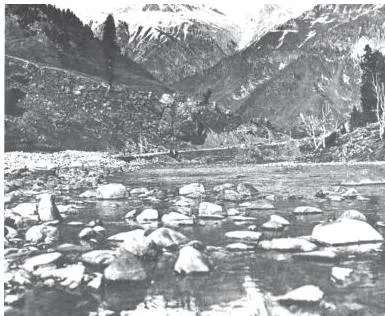
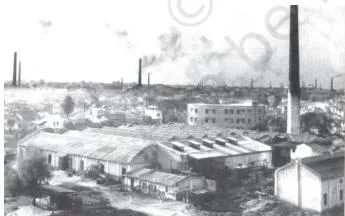
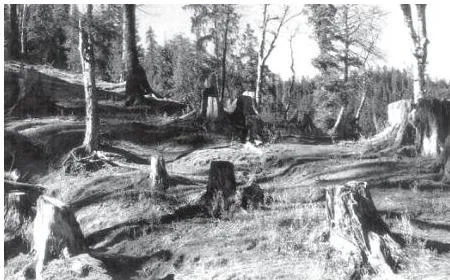
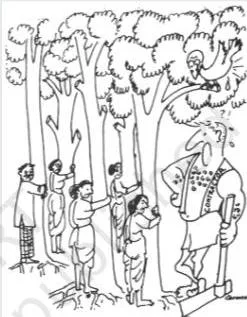


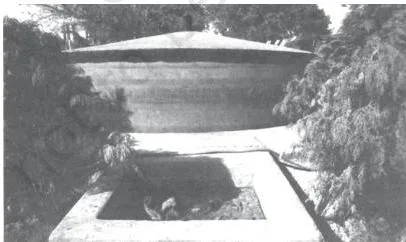

Figure 7.1: Himalayan streams as the last clean water (p. 117)
The caption tells you the chapter’s running worry: most water bodies are polluted, and only remote snow-fed Himalayan streams remain clean.
That is exactly why the chapter says development has made water an economic good (p. 116) and why the seventy per cent figure for polluted water in India (p. 118) matters.
Figure 7.2: The Damodar Valley as an industrial warning (p. 119)
This is the chapter’s concrete example of industrial pollution. The Damodar valley shows what happens when industrialisation meets a river: the same heavy industries that make a region prosperous also turn its waterway into an ecological disaster.
Keep this image in mind when you read that the CPCB has identified seventeen categories of significantly polluting industries (pp. 123–124).
Figure 7.3: Deforestation as a single cause, three results (p. 120)
Read the diagram as a chain: one act — cutting forests — feeds three different problems. Land degrades because tree roots no longer bind the soil; biodiversity is lost because habitats disappear; air pollution worsens because fewer trees means less \( CO_2 \) absorbed.
The land-degradation factors listed on p. 121 — loss of vegetation, unsustainable fuelwood and fodder extraction, forest fires, overgrazing — all plug into this figure.
Figure 7.4: Gobar gas as a village-level strategy (p. 126)
The gobar gas plant is the chapter’s micro-example of a sustainable strategy: cattle dung is fed into the plant, gas is produced for fuel, and the slurry left over is a good organic fertiliser and soil conditioner (NCERT, p. 126).
One input solves three problems at the village level — energy, waste and fertiliser — which is why the chapter treats it as part of the LPG-and-biogas answer to rural fuel use.
Key Terms and What They Mean
A quick glossary for short answers; each term appears in the chapter at the page given.
| Term | Plain meaning | NCERT page |
|---|---|---|
| Environment | The total planetary inheritance and the totality of all resources — everything that surrounds and sustains us. | 115 |
| Biotic / abiotic elements | Living elements (birds, animals, plants, forests, fisheries) / non-living elements (air, water, land, rocks, sunlight). | 115 |
| Renewable resources | Resources usable without depletion — a continuous supply remains; examples: trees, fish. | 115–116 |
| Non-renewable resources | Resources exhausted with extraction and use; examples: fossil fuels, water, iron-ore. | 115–116 |
| Carrying capacity | The load limit of the environment — extraction within regeneration, waste within assimilating capacity. | 116 |
| Absorptive capacity | The environment’s ability to absorb degradation. | 116–117 |
| Opportunity cost of environmental damage | The sacrifice negative environmental impact forces — spending on technology, research, health, and added government commitments. | 118 |
| Global warming / greenhouse gases | The gradual rise in the average temperature of the earth’s lower atmosphere, caused by heat-absorbing gases (carbon dioxide, methane) released since the Industrial Revolution. | 117 |
| Ozone depletion | The reduction of ozone in the stratosphere, caused by chlorofluorocarbons (CFCs) and bromofluorocarbons (halons), letting more UV radiation reach Earth. | 118–119 |
| Montreal Protocol | The international agreement banning CFCs and other ozone-depleting chemicals. | 118–119 |
| Sustainable development | Development that meets present needs without compromising the future generation’s ability to meet its own needs. | 124 |
| Intergenerational equity | The moral obligation to leave the future generation a stock of quality-of-life assets no less than what we inherited. | 124 |
| Dichotomy of India’s problems | India’s environmental crisis is both poverty-induced degradation and pollution from affluence and a rapidly growing industrial sector. | 119 |
India’s Environment in Numbers
The chapter scatters statistics across many pages; the table below gathers the ones students most often need, each with its page.
| Indicator | Figure in the chapter | NCERT page |
|---|---|---|
| India’s share of the world’s human / livestock population | About 17 per cent of humans and 20 per cent of livestock on 2.5 per cent of the world’s geographical area | 121 |
| Per capita forest land | 0.06 hectare against a requirement of 0.47 hectare — excess felling of about 15 million cubic metres over the permissible limit | 121 |
| Soil erosion and nutrient loss | 5.3 billion tonnes of soil eroded a year; annual loss of 0.8 million tonnes of nitrogen, 1.8 million tonnes of phosphorus, 26.3 million tonnes of potassium | 121–122 |
| Polluted water | 70 per cent of India’s water polluted | 118 |
| Motor vehicles | From about 3 lakh in 1951 to 35 crores in 2022; two-wheelers and cars about 85 per cent of registered vehicles | 122–123 |
| Rivers monitored by CPCB | Water quality monitored in 125 rivers | 123 |
| Polluting industries identified by CPCB | Seventeen categories of significantly polluting industries (large and medium scale) | 123–124 |
| Atmospheric gases since 1750 | \( CO_2 \) up 31 per cent and \( CH_4 \) up 149 per cent above pre-industrial levels | 117 |
| Temperature rise | \( 1.1^\circ\text{F} (0.6^\circ\text{C}) \) over the past century | 117 |
| Ozone layer | Down about 5 per cent between 1979 and 1990 | 118 |
Common Mistakes Students Make in This Chapter
The mistakes below are the ones students actually make in tests; naming them now is cheaper than realising it in an exam.
| Mistake | Correct rule | How to check your answer |
|---|---|---|
| Calling water or iron-ore renewable because they seem abundant. | They are non-renewable — they get exhausted with extraction and use (NCERT, pp. 115–116). | Ask: does using it today leave less for tomorrow? Trees and fish regenerate; water and iron-ore do not. |
| Confusing carrying capacity with absorptive capacity. | Carrying capacity is about extraction versus regeneration; absorptive capacity is the environment’s ability to absorb degradation (NCERT, p. 116). | Ask of the question: is it about taking resources out, or about soaking up waste? |
| Calling wind and solar power “conventional” sources. | They are non-conventional sources. One line on NCERT p. 125 says conventional, but the section heading “Use of Non-conventional Sources of Energy” treats them as non-conventional everywhere else. | Cross-check with the heading of Section 7.5. |
| Mixing up global warming and ozone depletion. | Global warming comes from greenhouse gases (carbon dioxide, methane) and was addressed by the 1997 Kyoto agreement; ozone depletion comes from CFCs and halons in the stratosphere and was addressed by the Montreal Protocol (pp. 117–119). | Match cause to fix: greenhouse gases → Kyoto; CFCs → Montreal. |
| Answering “is the environmental crisis recent?” without the reversal. | The crisis is recent because the supply-demand relationship for environmental quality reversed: demand once fell below supply; after population explosion and industrialisation it crossed regeneration and absorptive capacity (pp. 118–119). | Does your answer contain the idea of the “reversal of supply-demand relationship for environmental quality”? |
| Quoting the sustainable development definition without its catch words. | The UNCED definition must carry both “needs” and “future generations” — these are its catch phrases (p. 124). | Re-read your answer: does it use the words “needs” and “future generations”? |
Exam Notes: Which Idea Each Exercise Tests
The exercise questions at the end of the chapter (pp. 129–130) each test one of a handful of core ideas. The table below maps each question to the concept it tests so you can revise by idea rather than by number.
| Question | Idea it tests | Where the answer lives |
|---|---|---|
| Q1, Q6 | Meaning of environment and its four functions | pp. 115–116 |
| Q2 | What happens when extraction exceeds regeneration — environmental crisis | p. 116 |
| Q3 | Classifying trees, fish, petroleum, coal, iron-ore and water as renewable or non-renewable | pp. 115–116 |
| Q4 | The two major global environmental issues — global warming and ozone depletion | pp. 117–119 |
| Q5 | How rising population, air pollution, water contamination, affluence, illiteracy, industrialisation, urbanisation, poaching, global warming and other factors drive India’s crisis, and the problems they pose for the government | pp. 119–124 |
| Q7 | Six factors contributing to land degradation | p. 121 |
| Q8, Q14 | Opportunity costs of negative environmental impact | p. 118 |
| Q9, Q18 | Steps and strategies for sustainable development | pp. 125–128 |
| Q10 | India’s abundant natural resources | p. 119 |
| Q11 | Is the crisis recent, and why — the supply-demand reversal | pp. 118–119 |
| Q12 | Instances of overuse and misuse of environmental resources | pp. 121–122 |
| Q13 | Four pressing environmental concerns of India | p. 119 |
| Q15 | The supply-demand reversal explained in detail | pp. 118–119 |
| Q16 | Adverse consequences of development and the poverty-versus-affluence dichotomy | pp. 119–120 |
| Q17 | The definition of sustainable development | p. 124 |
| Q19 | Intergenerational equity in the definition | pp. 124–125 |
A few honest notes on how to use this. The questions are short-answer and descriptive in style — this chapter has no numerical problems.
The UNCED definition (Q17) and the strategies list (Q9, Q18) are the most reusable content, because several other answers build on them. Textbook contents and the examinable syllabus are not always identical — check the current official syllabus for what is examinable this session.
Revision Summary
The chapter closes with its own Recap (NCERT, p. 129) and conclusion (p. 128). The points below are the same ideas in fresher words.
- The environment performs four functions: it supplies resources, assimilates waste, sustains life through genetic and biodiversity, and provides aesthetic services (p. 129).
- Population explosion and affluent consumption and production standards have placed huge stress on the environment (pp. 116–119).
- India’s developmental activity has put immense pressure on its finite natural resources and on human health and well-being (pp. 119–120).
- India’s threat is two-sided: poverty-induced environmental degradation on one side, pollution from affluence and a rapidly growing industrial sector on the other (pp. 119–120).
- Government measures alone are not enough — safeguarding the environment also requires adopting the path of sustainable development (pp. 123–124).
- Sustainable development meets the needs of the present generation without compromising the future generation’s ability to meet its own needs (p. 124).
- Conservation of natural assets, preserving the regenerative capacity of ecological systems, and avoiding added costs or risks on future generations are what make development last (pp. 124–125).
- The strategies — non-conventional energy, biogas and LPG, CNG, solar and wind power, mini-hydel, traditional knowledge, biocomposting and biopest control — are the practical path (pp. 125–128).
Best memory device: the plimsoll line. Herman Daly compares carrying capacity to a ship’s load-limit mark — overload the ship and it sinks, overload the environment past its carrying capacity and the ecology fails (NCERT, pp. 124–125).
Related Resources
This listing is maintained for the 2026-27 academic session using the NCERT textbook information available to us. NCERT remains the authority for confirming the latest edition.
Move to the neighbouring chapters, the full book, or the notes for this syllabus without a new search.
- Class 11 Economics book page — all chapters of Indian Economic Development in one place.
- Rural Development — the previous chapter, which looks at credit, marketing and agriculture in rural India.
- Comparative Development Experiences of India and its Neighbours — the next chapter.
- Class 11 Economics notes hub, plus the correlation chapter notes from the Statistics for Economics book.
- Notes for the next chapter on comparative development experiences.
- Class 11 notes across subjects.
- CBSE notes index — the full set of chapter notes on this site.
Sources and Data Verification
Environment and Sustainable Development is Chapter 7 of Indian Economic Development, the NCERT Economics textbook for Class 11. The page references on this page (printed pages 114 to 130) follow the NCERT edition published on ncert.nic.in.
This listing is maintained for the current academic session using the NCERT information available to us. NCERT settles textbooks, editions and official PDFs; CBSE settles the curriculum, syllabus and examinations. Textbook contents and the examinable syllabus are not always identical, so the current official syllabus remains the authority for what is examinable.
Frequently Asked Questions
Direct answers to the questions students search when they get stuck in this chapter.
What is meant by environment in Class 11 Economics?
The environment is the total planetary inheritance and the totality of all resources. It includes biotic elements — living things such as birds, animals, plants, forests and fisheries — and abiotic elements such as air, water, land, rocks and sunlight, which influence each other (NCERT, p. 115).
What are the four functions of the environment?
The environment (i) supplies resources, both renewable and non-renewable; (ii) assimilates waste; (iii) sustains life by providing genetic and biodiversity; and (iv) provides aesthetic services such as scenery (NCERT, p. 115). It performs all four only while demand stays within its carrying capacity (p. 116).
What is the difference between global warming and ozone depletion?
They are different problems with different causes and different fixes. Global warming is the gradual rise in the average temperature of the earth’s lower atmosphere, caused by greenhouse gases such as carbon dioxide and methane released since the Industrial Revolution (NCERT, p. 117).
Ozone depletion is the reduction of ozone in the stratosphere, caused by chlorofluorocarbons (CFCs) and bromofluorocarbons (halons) (NCERT, pp. 118–119). The 1997 Kyoto agreement targeted greenhouse gas emissions, while the Montreal Protocol banned CFCs and other ozone-depleting chemicals.
What is sustainable development and what role do future generations play in its definition?
Sustainable development, as defined by UNCED, is “development that meets the needs of the present generation without compromising the ability of the future generation to meet their own needs” (NCERT, p. 124).
“Needs” and “future generations” are the definition’s catch phrases. They carry the moral weight of intergenerational equity: the present generation should leave the next a stock of quality-of-life assets no less than what it inherited (NCERT, p. 124).
What are renewable and non-renewable resources? Give examples from the chapter.
Renewable resources can be used without the possibility of depletion, so a continuous supply remains — the chapter’s examples are trees in forests and fishes in the ocean (NCERT, pp. 115–116). Non-renewable resources get exhausted with extraction and use; fossil fuels are the classic example, and the chapter’s exercise also treats water and iron-ore as non-renewable.
Why is the environmental crisis called a recent phenomenon?
Because the supply-demand relationship for environmental quality reversed. Before population explosion and industrialisation, the demand for environmental resources and services was less than their supply, so pollution stayed within the absorptive capacity and extraction stayed below regeneration (NCERT, pp. 118–119).
After them, demand overtook both, and supply is now limited by overuse and misuse — which is why waste generation and pollution became critical only recently.
Reference: NCERT Class 11 Economics textbook, chapter 7, official edition on ncert.nic.in.
Explore Class 11 Economics Books
- Previous: Correlation
- Next: Development Experiences of India: a Comparison with Neighbours
Related chapters:
- Development Policies and Experience (1947-90)
- Why Economics?
- Indian Economy