
Looking for the agriculture class 10 chapter PDF? This is Chapter 4, “Agriculture”, of the NCERT Class 10 Social Science book Contemporary India II (Geography). In the printed textbook the chapter runs from page 29 to page 41; the official PDF is directly below, followed by a section-by-section walkthrough of farming types, cropping seasons, major crops and the reforms that changed Indian agriculture.
Download the Agriculture Class 10 Chapter PDF
If you want the plain official file, open the NCERT Class 10 Social Science Agriculture chapter PDF directly from NCERT’s own website — it is exactly the edition schools follow, with no reformatting and no missing pages. This is the fourth chapter of Contemporary India II, and the page numbers cited in this article match the print edition.
The next section lists what the file contains; everything after that explains it.
| What the chapter holds | Count | Where it is used |
|---|---|---|
| Printed pages | 12 | |
| Figures with NCERT captions | 26 | |
| Tables | 1 | |
| Exercise questions | 3 | answered in our NCERT Solutions |
| Activities | 3 | |
| Official NCERT PDF | Download the chapter PDF | the chapter exactly as NCERT publishes it |
Agriculture at a Glance: What Is Inside the Chapter
The table below lists how much this chapter holds — its sections, figures, activities, exercise questions and the printed page range — in one place, so the numbers always agree with the book you just opened.
The chapter teaches in steady blocks: Types of Farming (primitive subsistence, intensive subsistence and commercial farming), Cropping Pattern (the rabi–kharif–zaid seasons), Major Crops, Food Crops other than Grains, Non-Food Crops, Technological and Institutional Reforms, the Bhoodan–Gramdan story, and the closing exercises with their word-puzzle Activity.
That is also the order in which the ideas build on one another.
What the Chapter Teaches, and the Order to Learn It
This section is a roadmap. It tells you why each block of the chapter exists and the order to learn the material in, so the details in the next section have somewhere to sit.
- Why agriculture matters. The chapter opens by calling India an agriculturally important country: two-thirds of its population is engaged in agriculture, a primary activity that produces most of the food we consume, raw material for industries, and exports such as tea, coffee and spices (NCERT, p. 29).
- Types of farming. Farming ranges from subsistence to commercial; the chapter distinguishes three forms and the conditions that produce each (NCERT, pp. 29–31).
- Cropping pattern. India grows crops in three seasons — rabi, kharif and zaid — and the season a crop belongs to quietly decides most of its other facts (NCERT, pp. 31–32).
- Major crops, then other food crops, then non-food crops. The chapter groups crops by use: staple grains, food crops other than grains, and non-food crops (NCERT, pp. 32–38).
- Technological and institutional reforms. How the government tried to raise production — from land reforms after Independence to the Green and White Revolutions and later farmer schemes (NCERT, pp. 38–39).
- The closing pages. The Bhoodan–Gramdan story, the exercises and a word puzzle finish the chapter (NCERT, pp. 39–41).
Learn in that order: the seasons explain the crops, the crops explain the maps, and the reforms explain the recent history.
Key Concepts: Farming Types, Seasons and Crops
This section carries the working knowledge of the chapter — what each farming type, season and crop group actually means, not just its name. Read it once for understanding; the compressed tables are in the revision section at the end.
Three Ways Indian Farmers Cultivate
Primitive subsistence farming is still practised in a few pockets of India. Farmers work small patches with primitive tools — the hoe, dao and digging sticks — using family or community labour, and depend entirely on the monsoon, natural soil fertility and suitable environmental conditions (NCERT, p. 29).
It is a “slash and burn” agriculture: farmers clear a patch, grow cereals and other food crops to sustain the family, and shift to a fresh patch when soil fertility declines, letting nature replenish the old plot. Productivity is low because no fertilisers or modern inputs are used.
The same practice is called jhumming in the north-eastern states, and it carries a long list of regional names across India (NCERT, p. 30). Outside India the identical practice is known as Milpa in Mexico and Central America, Conuco in Venezuela, Roca in Brazil, Masole in Central Africa, Ladang in Indonesia and Ray in Vietnam — useful as a memory hook.
A quick grouping aid for the Indian names, region by region:
- North-east: Jhumming (Assam, Meghalaya, Mizoram, Nagaland), Pamlou (Manipur), Dipa (Bastar district of Chhattisgarh and the Andaman and Nicobar Islands).
- Central belt: Bewar or Dahiya (Madhya Pradesh), Pama Dabi, Koman or Bringa (Odisha), Kuruwa (Jharkhand).
- South: Podu or Penda (Andhra Pradesh), Kumari (Western Ghats).
- North and west: Khil (Himalayan belt), Valre or Waltre (south-eastern Rajasthan).
Intensive subsistence farming appears where population pressure on land is high. It is labour-intensive, using high doses of biochemical inputs and irrigation to obtain higher production. The right of inheritance has divided land among successive generations, making holdings uneconomically small — yet farmers still take maximum output from limited land because they have no alternative source of livelihood (NCERT, p. 30).
Commercial farming is defined by modern inputs: high-yielding variety (HYV) seeds, chemical fertilisers, insecticides and pesticides, all for higher productivity. The degree of commercialisation varies by region — rice is a commercial crop in Haryana and Punjab but a subsistence crop in Odisha (NCERT, p. 30).
Plantation agriculture is a type of commercial farming: a single crop grown on a large area, an interface of agriculture and industry, using capital-intensive inputs and migrant labour, with all the produce going as raw material to industry. Tea, coffee, rubber, sugarcane and banana are important plantation crops — tea in Assam and North Bengal, coffee in Karnataka (NCERT, p. 31).
Three Cropping Seasons: Rabi, Kharif and Zaid
India has three cropping seasons, and most crop facts in the chapter hang off which season the crop belongs to (NCERT, p. 31).
- Rabi — sown in winter, October to December, and harvested in summer, April to June. Crops: wheat, barley, peas, gram and mustard. Winter precipitation from western temperate cyclones helps these crops, and the Green Revolution in Punjab, Haryana, western Uttar Pradesh and parts of Rajasthan strengthened their growth (NCERT, p. 31).
- Kharif — grown with the onset of the monsoon, harvested in September–October. Crops: paddy, maize, jowar, bajra, tur (arhar), moong, urad, cotton, jute, groundnut and soyabean. In Assam, West Bengal and Odisha three crops of paddy are grown in a year — Aus, Aman and Boro (NCERT, pp. 31–32).
- Zaid — the short season in the summer months between rabi and kharif. Crops: watermelon, muskmelon, cucumber, vegetables and fodder crops. Sugarcane takes almost a year to grow (NCERT, p. 32).
The Crops and the Conditions They Need
The chapter groups crops by use. Each group shares a logic: staple grains feed the population, other food crops add variety and cash, and non-food crops supply industry. The full state-by-state detail sits in the revision table; here are the defining conditions.
Staple grains (NCERT, pp. 32–35):
- Rice — the staple food of a majority of Indians; kharif; above 25°C, high humidity, annual rainfall above 100 cm; grows with irrigation where rainfall is less.
- Wheat — the second most important cereal; rabi; 50–75 cm rainfall; the Ganga-Satluj plains and the black soil region of the Deccan.
- Millets — jowar, bajra and ragi; known as coarse grains but very high in nutritional value; ragi is rich in iron and calcium.
- Maize — kharif; 21–27°C; old alluvial soil; used as both food and fodder.
- Pulses — leguminous crops; all except arhar restore soil fertility by fixing nitrogen from the air, so they are grown in rotation.
Food crops other than grains (NCERT, pp. 36–37): sugarcane is tropical and subtropical, needing hot, humid climate at 21–27°C with 75–100 cm rainfall; oil seeds cover about 12 per cent of the total cropped area, with groundnut a kharif crop that accounts for about half of the major oilseeds; tea is a plantation crop needing a warm, moist, frost-free climate; coffee — the Arabica variety brought initially from Yemen — is confined to the Nilgiri region; horticulture makes India the second largest producer of fruits and vegetables.
Non-food crops (NCERT, p. 38): rubber is an equatorial crop needing rainfall above 200 cm and temperature above 25°C; cotton grows in the drier parts of the black cotton soil of the Deccan plateau, needs 210 frost-free days, and is a kharif crop taking 6 to 8 months to mature; jute, the golden fibre, grows in flood plains where soils are renewed every year; hemp and natural silk complete the four major fibre crops, with silk coming from silkworm cocoons — sericulture.
Notice the pattern that holds the whole chapter together: every crop statement is just “season + temperature + rainfall + soil + states”. Learn that template and you can rebuild any crop fact from memory.
Reading the Chapter’s Figures: What the Photographs Show


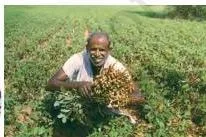
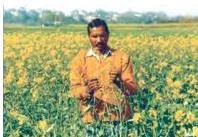
None of the photographs in this chapter is decoration. Each one is NCERT’s evidence for a crop condition or a farming type — read them as data and they will fix the facts in your memory faster than a list will. The page numbers let you follow along in your own book.
Fig 4.1 — Slash-and-burn clearing (p. 30)
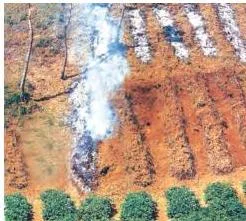
This photograph shows a freshly cleared patch on the hillside — land after slashing and burning the vegetation, ready for a family’s cereal and food crops.
It is the visual signature of primitive subsistence farming: the patch is small, the tools are basic, and when fertility falls the family will abandon it and clear another, exactly as Rinjha’s family does in the story on this page (NCERT, p. 30).
Figs 4.2 and 4.3 — Plantation crops: banana in the south, bamboo in the north-east (p. 31)
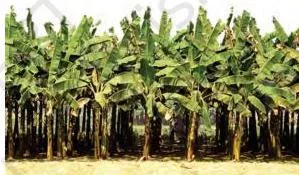
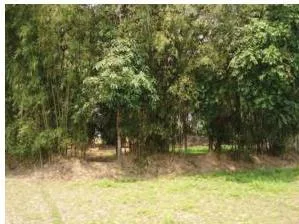
Both photographs show the scale and uniformity that define plantation agriculture — a single crop covering a large area, capital-intensive and market-oriented. This is the exact definition tested in the chapter’s first multiple-choice question, where “a single crop grown on a large area” describes plantation agriculture (NCERT, p. 31).
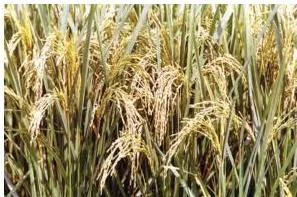
Figs 4.4 (a) and (b) — Rice: cultivation and harvest (p. 32)
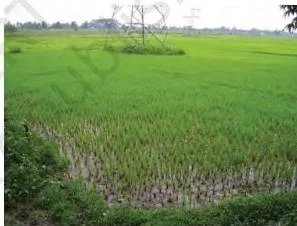
The flooded paddy in the first photograph makes the kharif condition visible: rice needs high temperature above 25°C, high humidity and rainfall above 100 cm, and where rainfall is less it grows under irrigation (NCERT, p. 32).
The second photograph shows the ripe crop ready for harvest — the staple food of a majority of Indians, and the point from which the chapter builds every other rice fact (NCERT, p. 32).
Figs 4.5, 4.6 and 4.7 — Wheat, bajra and maize (p. 34)
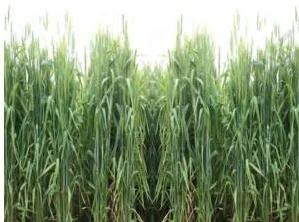
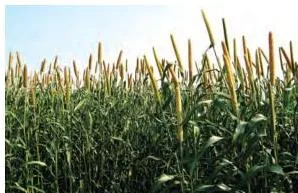
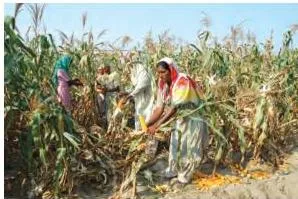
Three staple grains, three different conditions. Wheat is the rabi crop of the Ganga-Satluj plains and the Deccan black soil region, needing 50–75 cm rainfall.
Bajra grows well on sandy soils and shallow black soil — the reason Rajasthan, Uttar Pradesh, Maharashtra, Gujarat and Haryana are its major producers. Maize is a kharif crop of old alluvial soil, used as both food and fodder (NCERT, p. 34).
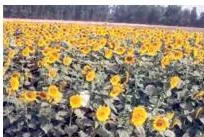
Figs 4.8 and 4.9 — Sugarcane and oil seeds (p. 36)
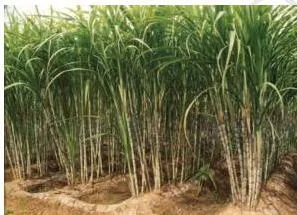
Sugarcane, tall and dense in the photograph, is a crop of hot, humid climate — 21°C to 27°C with 75–100 cm rainfall — and India is the second largest producer after Brazil (NCERT, p. 36).
The oil-seed photograph combines groundnut (a kharif crop, about half of India’s major oilseeds), sunflower and mustard (a rabi crop) — the three faces of a group that covers about 12 per cent of the total cropped area (NCERT, p. 36).
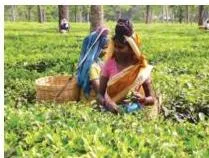
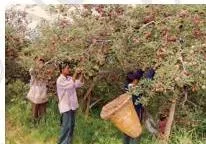
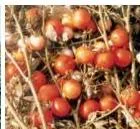
Figs 4.10, 4.11, 4.12 and 4.13 — Tea, tea harvest, fruits and vegetables (p. 37)
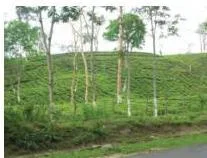
The neat rows of tea bushes are plantation agriculture at its clearest: tea needs a warm, moist, frost-free climate all year and is processed within the garden to keep it fresh (NCERT, p. 37).
The harvesting photograph supplies the other half of the story — tea is labour-intensive and needs abundant, cheap and skilled labour. The fruits and vegetables show horticulture’s range: India grows tropical as well as temperate fruits and is an important producer of pea, cauliflower, onion, cabbage, tomato, brinjal and potato (NCERT, p. 37).
Figs 4.14 and 4.15 — Cotton and modern equipment (pp. 38–39)
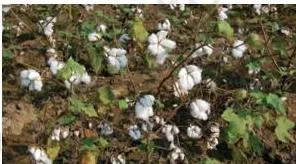
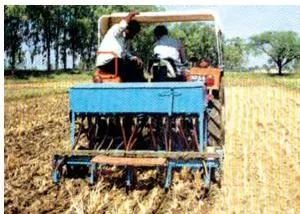
Cotton in the photograph stands in the drier parts of the black cotton soil of the Deccan plateau, where it needs high temperature, light rainfall or irrigation, 210 frost-free days and bright sunshine — a kharif crop taking 6 to 8 months to mature (NCERT, p. 38).
The modern equipment photograph closes the chapter’s argument: sustained use of land without techno-institutional change had hindered progress, and this machinery is the visual side of the technological reforms the government pushed from the 1960s onward (NCERT, p. 39).
Key Terms in the Agriculture Chapter, Explained in Plain Words
The chapter compresses a lot of processes into single labels. Here is each term in plainer language with the NCERT page where it appears; read the term and meaning, then go back to the page if you need the full sentence.
| Term | Plain meaning | NCERT page |
|---|---|---|
| Primary activity | An economic activity that draws products directly from nature; agriculture is India’s chief one | p. 29 |
| Subsistence farming | Farming to feed the farmer’s own family rather than to sell to the market | pp. 29–30 |
| Slash-and-burn agriculture | Clearing a forest patch, burning the vegetation, and moving on when soil fertility declines | p. 30 |
| Jhumming | The north-eastern name for slash-and-burn agriculture | p. 30 |
| Intensive subsistence farming | Labour-heavy farming with biochemical inputs and irrigation where population pressure on land is high | p. 30 |
| Commercial farming | Farming with HYV seeds, chemical fertilisers and pesticides for high productivity and the market | p. 30 |
| HYV (high-yielding variety) seeds | Improved seed varieties that respond to fertilisers and irrigation with higher yields | p. 30 |
| Plantation agriculture | A single crop grown on a large area, an interface of agriculture and industry | p. 31 |
| Rabi | Winter season: sown October–December, harvested April–June | p. 31 |
| Kharif | Monsoon season: grown with the onset of the monsoon, harvested September–October | p. 31 |
| Zaid | Short summer season between rabi and kharif | p. 32 |
| Staple crop | The main food crop of a region’s people; rice in most of India | p. 32 |
| Coarse grains (millets) | Jowar, bajra and ragi — high in nutritional value despite the name | p. 34 |
| Leguminous crops | Crops that restore soil fertility by fixing nitrogen from the air; the pulses except arhar | p. 35 |
| Horticulture | Cultivation of fruits, vegetables and flowers | p. 37 |
| Sericulture | Rearing silkworms on green leaves (mulberry) for silk fibre | p. 38 |
| Golden fibre | Jute, used for gunny bags, mats, ropes and yarn | p. 38 |
| Land reforms | Institutional measures: collectivisation, consolidation of holdings, cooperation, abolition of zamindari | pp. 38–39 |
| Green Revolution | Package-technology strategy of the 1960s–70s that raised food-grain production | p. 39 |
| White Revolution (Operation Flood) | Companion strategy of the 1960s–70s aimed at improving Indian agriculture | p. 39 |
| Kisan Credit Card (KCC) | Government credit scheme introduced for the benefit of farmers | p. 39 |
| Personal Accident Insurance Scheme (PAIS) | Government insurance scheme introduced for the benefit of farmers | p. 39 |
| Minimum support price | A price announced by the government to check exploitation of farmers by speculators and middlemen | p. 39 |
| Bhoodan and Gramdan | Vinoba Bhave’s land-gift and village-gift movement, also called the Blood-less Revolution | p. 39 |
Common Mistakes in the Agriculture Chapter and How to Avoid Them
This chapter is memory-heavy, and most lost marks come from swapping one fact for a lookalike. Each row below names the mistake before you make it.
| Mistake | Correct rule | How to check your answer |
|---|---|---|
| Mixing up rabi and kharif — writing gram or wheat as kharif | Gram and wheat are rabi; rice, cotton, maize, jowar and bajra are kharif | Ask when the crop is sown: rabi is sown October–December, kharif with the monsoon. Question 1(ii) of the chapter tests exactly this |
| Believing every pulse fixes nitrogen | All the listed pulses except arhar help restore soil fertility by fixing nitrogen | Remember “pulses minus arhar = nitrogen fixers” (NCERT, p. 35) |
| Confusing the regional names of slash-and-burn farming | Jhumming is the North-east; Bewar/Dahiya is Madhya Pradesh; Podu/Penda is Andhra Pradesh; Kumari is the Western Ghats | Group by direction: North-east, central, south (NCERT, p. 30) |
| Assuming a crop has one fixed status everywhere | Rice is commercial in Haryana and Punjab but subsistence in Odisha | Ask whether the crop is grown for the market or for the family in that region (NCERT, p. 30) |
| Treating zaid as a full third season | Zaid is the short summer gap between rabi and kharif | Its crops — watermelon, muskmelon, cucumber — are short-duration (NCERT, pp. 31–32) |
| Reciting rainfall figures wrongly | Rubber: more than 200 cm; rice: above 100 cm; wheat: 50–75 cm; sugarcane: 75–100 cm | Memorise the ladder: rubber is double of rice; wheat and sugarcane sit between 50 and 100 cm |
| Crediting the Bhoodan offering to Vinoba Bhave | Bhave led the movement; Shri Ram Chandra Reddy offered the first 80 acres at Pochampally | “Bhave began, Reddy gave” (NCERT, p. 39) |
Using the Agriculture Chapter for Board Preparation
This section turns the chapter’s content into answer-shaped revision. The question patterns below come from the chapter’s own exercises (NCERT, p. 40) — no pattern here is a prediction of anything.
Exercise question shapes. Question 1 is a set of direct-concept multiple-choice items: the definition of plantation agriculture, which crop is rabi, which crop is leguminous. Question 2 asks for 30-word answers; question 3 for about 120 words on government initiatives and the conditions for growing rice.
A full-marks answer to the rice question must include the season (kharif), the temperature (above 25°C), high humidity, rainfall above 100 cm, the role of irrigation where rainfall is less, and the regions — the plains of north and north-eastern India, coastal and deltaic areas, plus Punjab, Haryana, western Uttar Pradesh and parts of Rajasthan under irrigation (NCERT, pp. 32–33).
Build a crop card template. Every crop in this chapter is a card with five slots: season, temperature, rainfall, soil, producing states. The chapter fills in every card and the exercises ask you to reproduce them. Learn the card, not the sentences.
Practise the map. The project work asks you to show wheat-producing areas on an outline map of India (NCERT, p. 40). The chapter names Punjab, Haryana, Uttar Pradesh, Madhya Pradesh, Bihar and Rajasthan as the major wheat producers, in two zones — the Ganga-Satluj plains and the black soil region of the Deccan (NCERT, pp. 33–34).
Mark those states and you have the map.
Learn the reforms as a timeline, not a list. Land reforms came first with the First Five Year Plan, then the Green and White Revolutions in the 1960s–70s, then the comprehensive 1980s–90s programme (crop insurance, Grameen banks, cheaper loans), and finally the Kisan Credit Card, PAIS, weather bulletins and minimum support price (NCERT, pp. 38–39).
The timeline table below compresses this into one glance.
Note: textbook contents and the examinable syllabus are not always identical — check the current official CBSE syllabus before you decide what to prioritise.
The Chapter’s Activities: Rinjha, the Farmers’ Portal and the Word Puzzle
The activities look like extras, but each one rehearses an examinable idea. Do not skip them.
1. Rinjha’s story (p. 30). Rinjha lives near Diphu in Assam and watches her family clear, slash and burn a patch of land, then irrigate it through a bamboo canal from a nearby spring.
The question behind the story is whether you can name the farming type — primitive subsistence (slash-and-burn) farming — and the crops grown that way: cereals and other food crops to sustain the family.
2. The Farmers’ Portal activity (p. 38). The chapter asks you to collect information about agriculture, horticulture and agricultural schemes from the official Farmers’ Portal at farmer.gov.in and discuss the benefits of the information. It connects the reforms section of the textbook to the support a farmer can actually access today.
3. The closing word puzzle (p. 41). The puzzle’s clues are the chapter’s own highlights. Words you can spot running across the printed grid include WHEAT, KHARIF, JOWAR, COFFEE and COTTON, and each clue’s answer comes straight from the text:
- The two staple food crops of India — rice and wheat (pp. 32–33).
- The summer cropping season — zaid (p. 32).
- What pulses like arhar, moong, gram and urad contain — protein (p. 35).
- A coarse grain — jowar, bajra or ragi (p. 34).
- The two important beverages — tea and coffee (p. 37).
- One of the four major fibres grown on black soils — cotton (p. 38).
Agriculture in One Page: Quick Revision Summary
Everything above, compressed. The chapter has no printed summary, so this block is our condensation of what it teaches — read it alone and you should be able to answer the chapter’s own exercises.
The Three Farming Types Compared
| Feature | Primitive subsistence | Intensive subsistence | Commercial |
|---|---|---|---|
| Land and tools | Small patches; hoe, dao, digging sticks | Small holdings split by inheritance; biochemical inputs and irrigation | Large areas; HYV seeds, chemical fertilisers, insecticides, pesticides |
| Labour | Family and community | Labour-intensive | Migrant labourers in plantations |
| Dependence | Monsoon and natural soil fertility | Irrigation and inputs | Modern inputs, transport and markets |
| Output | Low productivity | Maximum output from limited land | High productivity for the market |
| Marker | Slash and burn; jhumming in the North-east | High population pressure on land | Rice commercial in Haryana/Punjab, subsistence in Odisha |
Rabi, Kharif and Zaid at a Glance
| Season | Sown | Harvested | Main crops |
|---|---|---|---|
| Rabi | October–December (winter) | April–June (summer) | Wheat, barley, peas, gram, mustard |
| Kharif | With the onset of the monsoon | September–October | Paddy, maize, jowar, bajra, tur (arhar), moong, urad, cotton, jute, groundnut, soyabean |
| Zaid | Short summer season between rabi and kharif | — | Watermelon, muskmelon, cucumber, vegetables, fodder |
Crop Cards: Every Major Crop’s Season, Condition and States
| Crop | Season | One climatic condition | Leading producing states |
|---|---|---|---|
| Rice | Kharif | Above 25°C with rainfall above 100 cm | Assam, West Bengal, coastal Odisha, Andhra Pradesh, Telangana, Tamil Nadu, Kerala, Maharashtra, Uttar Pradesh, Bihar |
| Wheat | Rabi | 50–75 cm rainfall over the growing season | Punjab, Haryana, Uttar Pradesh, Madhya Pradesh, Bihar, Rajasthan |
| Jowar | Kharif, rain-fed | Moist areas; hardly needs irrigation | Maharashtra, Karnataka, Andhra Pradesh, Madhya Pradesh |
| Bajra | Kharif | Sandy and shallow black soils | Rajasthan, Uttar Pradesh, Maharashtra, Gujarat, Haryana |
| Ragi | Kharif | Dry regions; red, black, sandy, loamy soils | Karnataka, Tamil Nadu, Himachal Pradesh, Uttarakhand, Sikkim, Jharkhand, Arunachal Pradesh |
| Maize | Kharif (rabi in Bihar) | 21–27°C; old alluvial soil | Karnataka, Madhya Pradesh, Uttar Pradesh, Bihar, Andhra Pradesh, Telangana |
| Pulses | Kharif and rabi | Need less moisture; leguminous, fix nitrogen | Madhya Pradesh, Rajasthan, Maharashtra, Uttar Pradesh, Karnataka |
| Sugarcane | Takes almost a year | 21–27°C; 75–100 cm rainfall | Uttar Pradesh, Maharashtra, Karnataka, Tamil Nadu, Andhra Pradesh, Telangana, Bihar, Punjab, Haryana |
| Groundnut | Kharif | About half of India’s major oilseeds | Gujarat, Rajasthan, Tamil Nadu |
| Tea | Plantation | Warm, moist, frost-free climate | Assam, Darjeeling and Jalpaiguri hills (West Bengal), Tamil Nadu, Kerala |
| Coffee | Plantation | Arabica variety in the Nilgiri region | Karnataka, Kerala, Tamil Nadu |
| Rubber | Equatorial | Rainfall above 200 cm; temperature above 25°C | Kerala, Tamil Nadu, Karnataka, Andaman and Nicobar, Garo hills (Meghalaya) |
| Cotton | Kharif | 210 frost-free days; black cotton soil | Maharashtra, Gujarat, Madhya Pradesh, Karnataka, Andhra Pradesh, Telangana, Tamil Nadu, Punjab, Haryana, Uttar Pradesh |
| Jute | — | Flood plains where soils are renewed every year | West Bengal, Bihar, Assam, Odisha, Meghalaya |
Reform Timeline: From the First Five Year Plan to the Kisan Credit Card
| Period | What the government did |
|---|---|
| After Independence / First Five Year Plan | Collectivisation, consolidation of holdings, cooperation and abolition of zamindari; land reform was the main focus |
| 1960s–1970s | Green Revolution based on package technology, and the White Revolution (Operation Flood) |
| 1980s–1990s | Comprehensive land development: crop insurance against drought, flood, cyclone, fire and disease; Grameen banks; cooperative societies and banks offering loans at lower interest |
| Later schemes | Kisan Credit Card (KCC), Personal Accident Insurance Scheme (PAIS), special weather bulletins and agricultural programmes on radio and television, minimum support price and remunerative/procurement prices |
| Bhoodan–Gramdan (p. 39) | Vinoba Bhave’s land-gift movement: Shri Ram Chandra Reddy’s 80 acres at Pochampally; village gifts called Gramdan; known as the Blood-less Revolution |
Related NCERT Resources
This listing is maintained for the 2026-27 academic session using the NCERT textbook information available to us. NCERT remains the authority for confirming the latest edition.
If you are working through the whole book, continue to the next chapter, Minerals and Energy Resources, or go back to the previous chapter (Water Resources) from the Class 10 Social Science notes index.
Notes for the other books in the same class — such as Money and Credit from Economics — sit in the Class 10 notes hub, part of the wider CBSE notes library.
The full Contemporary India II textbook is on the official NCERT website. For the government’s current view of agricultural support, the chapter itself points you to farmer.gov.in.
Reference: NCERT Class 10 Social Science textbook, chapter 4, official edition on ncert.nic.in.
Sources and Data Verification
Four plain statements about what this page describes and what it does not.
- This page describes the NCERT Class 10 textbook Contemporary India II (Geography), Chapter 4 “Agriculture”, in the official NCERT edition, pages 29–41 of the printed book.
- It covers this one chapter of this one book — not the other Class 10 Social Science books (History, Political Science and Economics) and not the full CBSE curriculum.
- The listing is maintained for the current academic session using the NCERT information available to us; textbook contents and the examinable syllabus are not always identical, so check the current official CBSE syllabus.
- NCERT settles textbooks, editions and PDFs; CBSE settles curriculum, syllabus and examinations.
Frequently Asked Questions About Class 10 Agriculture
Which are the three cropping seasons of India and when does each fall?
Rabi is sown in winter (October–December) and harvested in summer (April–June). Kharif is grown with the onset of the monsoon and harvested in September–October. Zaid is the short season in the summer months between the two (NCERT, pp. 31–32).
What is the difference between primitive subsistence and intensive subsistence farming?
Primitive subsistence farming uses small patches, primitive tools (hoe, dao and digging sticks) and family or community labour, depends on the monsoon and natural fertility, and has low productivity.
Intensive subsistence farming is practised where population pressure on land is high — it is labour-intensive and uses high doses of biochemical inputs and irrigation to get maximum output from limited land (NCERT, pp. 29–30).
Which are the major rice and wheat producing states of India?
For rice: Assam, West Bengal, the coastal regions of Odisha, Andhra Pradesh, Telangana, Tamil Nadu, Kerala and Maharashtra, along with Uttar Pradesh and Bihar; with irrigation, Punjab, Haryana, western Uttar Pradesh and parts of Rajasthan also grow it. For wheat: Punjab, Haryana, Uttar Pradesh, Madhya Pradesh, Bihar and Rajasthan (NCERT, pp. 32–34).
What is jhumming and in which parts of India is it practised?
Jhumming is the north-eastern name for slash-and-burn agriculture, practised in Assam, Meghalaya, Mizoram and Nagaland. The same primitive farming is called Pamlou in Manipur, Dipa in Bastar district and the Andaman and Nicobar Islands, and has other regional names in Madhya Pradesh, Andhra Pradesh, Odisha, the Western Ghats, south-eastern Rajasthan, the Himalayan belt and Jharkhand (NCERT, p. 30).
Which pulses help restore soil fertility by fixing nitrogen?
All the pulses listed in the chapter except arhar (tur) help restore soil fertility by fixing nitrogen from the air — which is why they are mostly grown in rotation with other crops. The exception is worth memorising (NCERT, p. 35).
What was the Bhoodan–Gramdan movement and who started it?
Vinoba Bhave started it after Gandhiji’s martyrdom, while on a padyatra spreading Gandhi’s message. At Pochampally in Telangana, landless villagers asked for land; Shri Ram Chandra Reddy stood up and offered 80 acres, an act known as Bhoodan. When zamindars later offered whole villages it was called Gramdan. The movement is also known as the Blood-less Revolution (NCERT, p. 39).
Explore Class 10 Social Science Books
Class 10 Social Science on LearnCBSE:
Related chapters:
- Resources and Development
- Power-sharing
- The Rise of Nationalism in Europe