
Nelson Mandela Class 10 is Chapter 2 of the NCERT First Flight English textbook — an extract from Mandela’s autobiography, Long Walk to Freedom, that runs about 16 printed pages and opens on page 17.
The same chapter block also contains the poem A Tiger in the Zoo by Leslie Norris.
The official NCERT PDF is right below.
Download the Nelson Mandela Class 10 PDF (First Flight Chapter 2)
Get the official NCERT Class 10 English First Flight Chapter 2 Nelson Mandela PDF from the NCERT website, where every chapter of the First Flight textbook is published for free.
The file contains the complete extract, all three Oral Comprehension Checks, the Thinking about the Text and Thinking about Language exercises, the speaking and writing tasks, the Homophones activity, and the poem A Tiger in the Zoo with its companion poems — the whole chapter block from page 17 to page 31.
| What the chapter holds | Count | Where it is used |
|---|---|---|
| Printed pages | 16 | |
| Figures with NCERT captions | 4 | |
| Tables | 3 | |
| Exercise questions | 10 | answered in our NCERT Solutions |
| In-text questions | 13 | |
| Activities | 1 | |
| Official NCERT PDF | Download the chapter PDF | the chapter exactly as NCERT publishes it |
Chapter at a glance
The table below is a quick inventory of the whole chapter block — how many of its pieces are prose extract, exercises, activities and visuals.
What the chapter actually contains
This chapter block has two parts: a long autobiographical prose extract and a poem with two companion poems.
| Part | What is in it | Book pages |
|---|---|---|
| Prose extract: Nelson Mandela: Long Walk to Freedom | BEFORE YOU READ activity; BBC news item of 10 May 1994; the extract itself; three Oral Comprehension Checks (pp. 18, 21, 24); Thinking about the Text (p. 24); Thinking about Language (pp. 24-25); Idiomatic Expressions (p. 26); Speaking and Looking at Contrasts (p. 26); Expressing Your Opinion (p. 27); WHAT WE HAVE DONE, WHAT YOU CAN DO and Homophones (p. 28) | 17-28 |
| Poem: A Tiger in the Zoo by Leslie Norris | Thinking about the Poem questions; companion poems The Tiger (p. 30), The Panther and The Greater Cats (p. 31) | 29-31 |
Key ideas in the extract
The extract moves from a single day — Mandela’s inauguration — to the lifetime of struggle behind it. A first-time reader usually catches the celebration and misses the argument; these seven ideas are the argument.
10 May 1994: the inauguration
The chapter opens on a single day because that day condensed a whole history: Mandela’s inauguration as South Africa’s first black President.
The ceremony took place at the Union Buildings amphitheatre in Pretoria, a sandstone building that for decades had been ‘the seat of white supremacy’ and was now hosting the installation of the country’s first democratic, non-racial government (NCERT, p. 17).
The BBC news item that follows the BEFORE YOU READ note adds the context: Mandela’s African National Congress had won 252 of the 400 seats in the first democratic elections, and politicians and dignitaries from more than 140 countries attended (NCERT, p. 17).
Mr de Klerk was sworn in as second deputy president, Thabo Mbeki as first, and Mandela pledged to uphold the Constitution. He told the gathering that the day conferred ‘glory and hope to newborn liberty’ (NCERT, p. 18).
The moment that symbolised the day for Mandela was the playing of two national anthems: whites singing ‘Nkosi Sikelel’ iAfrika’ and blacks singing ‘Die Stem’, the old anthem of the Republic. Neither group knew the words of the anthem they had once despised, but both would soon know them by heart (NCERT, p. 19).
Apartheid and the wound it left
To understand why the day mattered, you need to know what it replaced. Apartheid was a political system that separated people according to their race (NCERT, p. 17).
Mandela’s speech names it ‘an extraordinary human disaster that lasted too long’, and the extract calls the apartheid years one of the harshest, most inhumane societies the world has known. The policy, he says, created ‘a deep and lasting wound’ that would take generations to heal (NCERT, p. 20).
Against that disaster Mandela sets the ‘glorious … human achievement’ of the new society — born out of the disaster, a ‘common victory for justice, for peace, for human dignity’ (NCERT, p. 18).
Mandela also names the men the struggle produced — six African National Congress-era leaders he honours as patriots, proof that ‘depths of oppression’ can create ‘heights of character’ (NCERT, p. 20):
- Oliver Tambo
- Walter Sisulu
- Chief Luthuli
- Yusuf Dadoo
- Bram Fischer
- Robert Sobukwe
These are ‘comrades in the struggle’ from whom Mandela says he learned the meaning of courage, and he concludes that South Africa’s greatest wealth is not its minerals and gems but its people, ‘finer and truer than the purest diamonds’ (NCERT, p. 20).
Courage as triumph over fear
Mandela’s definition of courage is the line every student must be able to explain, because most people get it backwards.
He had seen his comrades face attacks and torture without breaking, showing ‘a strength and resilience that defies the imagination’. He concludes that courage ‘was not the absence of fear, but the triumph over it’ — the brave man is not the one who feels no fear but the one who conquers that fear (NCERT, pp. 20-21).
Here is a model answer to Oral Comprehension Check 2, Question 4 — ‘What does courage mean to Mandela?’: for Mandela, courage is not fearlessness.
He learned it from men and women who risked and gave their lives for an idea. Facing torture without breaking, they taught him that a brave person feels fear and acts in spite of it — courage, in his words, was ‘the triumph over’ fear, not the absence of it (NCERT, pp. 20-21).
The same passage answers Oral Comprehension Check 2, Question 5: Mandela thinks love is natural, not hate. ‘People must learn to hate’, he says, and since they can learn to hate they can be taught to love, ‘for love comes more naturally to the human heart’ (NCERT, p. 21).
The twin obligations
This is the chapter’s hardest idea: a just man can be forced to choose between his family and his people.
Mandela says every man has twin obligations — one to his family, his parents, his wife and children, and one to his people, his community and his country. In a civil and humane society both can be fulfilled (NCERT, pp. 21-22).
Under apartheid both were nearly impossible for a man of Mandela’s colour. A black man who tried to live as a human being was punished and isolated; one who tried to serve his people was ‘inevitably ripped from his family’ and forced into ‘a twilight existence of secrecy and rebellion’ (NCERT, p. 22).
Model answer to Oral Comprehension Check 3, Question 1 — ‘What twin obligations does Mandela mention?’: the duty to family — parents, wife and children — and the duty to people, community and country. Apartheid made it almost impossible to fulfil both, because serving the people meant being cut off from the family (NCERT, pp. 21-22).
Three stages of freedom
Mandela tracks his own idea of freedom through three stages before it became a political hunger.
| Stage | What freedom meant to Mandela | What changed |
|---|---|---|
| Boyhood | Running in the fields, swimming in the clear stream, roasting mealies, riding the broad backs of bulls — free, he thought, and answerable only to his father and tribal customs | He learned his ‘boyhood freedom was an illusion’: his freedom had already been taken from him (p. 22) |
| Student years | The ‘transitory freedoms’ of staying out at night, reading what he pleased, going where he chose | He wanted freedom only for himself (p. 22) |
| Young man in Johannesburg | The ‘basic and honourable freedoms’ — achieving his potential, earning his keep, marrying and having a family | He saw that his brothers and sisters were not free, and joined the African National Congress (p. 23) |
The turning point was seeing that ‘it was not just my freedom that was curtailed, but the freedom of everyone who looked like I did’. A personal hunger became the greater hunger for the freedom of his people (NCERT, p. 23).
That hunger, Mandela says, transformed his whole life — it made a frightened young man bold, turned a law-abiding attorney into someone the state called a criminal, and a family-loving husband into a man without a home (NCERT, p. 23).
Freedom is indivisible — the oppressor is a prisoner too
The most quoted idea in the extract is also the most misunderstood: freedom cannot be split into yours and mine.
Mandela says he could not even enjoy the limited freedoms he was allowed while his people were not free: ‘the chains on all of my people were the chains on me’ (NCERT, p. 23).
Then comes the paradox: ‘the oppressor must be liberated just as surely as the oppressed’. A man who takes away another’s freedom is ‘a prisoner of hatred’, locked behind ‘the bars of prejudice and narrow-mindedness’ — the bars here deliberately echo a prison cell (NCERT, p. 23).
The conclusion is that ‘the oppressed and the oppressor alike are robbed of their humanity’. Neither side is truly free while the other is in chains — which is why Mandela calls freedom indivisible (NCERT, p. 23).
The poem: a tiger’s two worlds
The poem repeats the extract’s theme in miniature: what confinement does to a creature made for freedom.
A Tiger in the Zoo by Leslie Norris moves from the cage to the jungle and back to the cage — the poem’s note tells you to watch which stanzas are which.
The cage stanzas show the tiger stalking ‘the few steps of his cage’ on ‘pads of velvet quiet’. The jungle stanzas imagine where ‘he should be lurking’: in shadow, sliding through long grass near the water hole, terrorising the village (NCERT, p. 29).
The repetition the poem exercise asks about links the two worlds. ‘Quiet’ appears twice — the silken quiet of his pads and the ‘quiet rage’ of a creature with no outlet. ‘Brilliant’ appears twice — his eyes and the stars, two bright points meeting through the bars at night (NCERT, p. 29).
The effect is to bind the animal to his cage: his fury has no voice, and the only free thing within sight is the stars. The same freedom-versus-confinement contrast runs through the prose extract, where Mandela calls his own life under apartheid ‘a twilight existence’ (NCERT, pp. 22, 29).
Figures in the chapter and what they show
The chapter block uses its images deliberately — each one carries a small lesson you can use in an answer.

The title image on page 17 does what a title page should: it tells you this is Mandela’s own story. Everything that follows — the inauguration, the anthems, the struggle behind the scenes — comes from Long Walk to Freedom, the autobiography he wrote about his life and the fight against apartheid (NCERT, p. 17).

The illustration on page 26 introduces the Looking at Contrasts exercise. Mandela’s writing is ‘marked by balance’ — many sentences fall into two balancing halves, such as ‘courage was not the absence of fear … but the triumph over it’ or ‘it requires such depths of oppression … to create such heights of character’.
The exercise gives you one half and asks you to supply the other (NCERT, p. 26).

The page 28 image plays on homophones — words that sound alike but have different meanings. The chapter gives two sentences to sort out (NCERT, p. 28):
- ‘The bandage was wound around the wound.’ — wound (rhymes with ‘found’) means wrapped around; wound (rhymes with ‘moon’) means an injury.
- ‘The soldier decided to desert his dessert in the desert.’ — desert (verb) means to abandon; dessert is the sweet course after a meal; desert (noun) is a dry, sandy region.
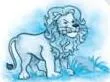
The last image in the block closes the poem section with the final line of Victoria Sackville-West’s The Greater Cats: ‘Deserts are there, and different skies, / And night with different stars.’ (NCERT, p. 31).
It ties together the companion poems’ captive-beast theme. Peter Niblett’s tiger growls, snarls and roars behind bars; Rainer Maria Rilke’s panther paces ‘cramped circles’ until its vision can hold nothing else; and the ‘greater cats with golden eyes / stare out between the bars’ at that world of deserts and different stars (NCERT, pp. 30-31).
All three poems circle the same idea as the prose: a powerful creature reduced to pacing, whose real world exists just beyond the bars.
Words and phrases you need to know
The textbook margins gloss roughly twenty words in the extract, and the language exercises test several of them — knowing them keeps your reading flow unbroken.
| Term | Meaning | NCERT page |
|---|---|---|
| apartheid | A political system that separates people according to their race | 17 |
| besieged | Surrounded closely — here, by well-wishers crowding in | 18 |
| amphitheatre | A roofless building with rows of seats rising in steps, like ancient Greek theatres | 18 |
| confer | To give or grant, in a formal way | 18 |
| emancipation | Freedom from restriction; being set free | 18 |
| deprivation | Being denied what you have a right to | 18 |
| discrimination | Being treated differently or unfavourably because of who you are | 18 |
| not unmindful of | Fully aware of; not forgetful of | 19 |
| despised | Had a very low opinion of; looked down on | 19 |
| wrought | Done or achieved (an old-fashioned, formal word) | 20 |
| profound | Deep and strong | 20 |
| resilience | The ability to deal with hardship and recover from its effects | 21 |
| pushed to our limits | Pressed to the last point of what a person can bear | 21 |
| twilight existence | A half-secret life, like living in the fading light between sunset and darkness | 22 |
| illusion | Something that appears real but is not | 22 |
| transitory | Not permanent; lasting only a short time | 22 |
| curtailed | Reduced or cut short | 23 |
| prejudice | A strong dislike formed without good reason | 23 |
Common mistakes students make in this chapter
This chapter trips students in predictable places — the book’s own questions point at several of them.
| Mistake | Correct rule | How to check your answer |
|---|---|---|
| Assuming 10 May is a summer day | May is autumn in the southern hemisphere — South Africa’s seasons are the reverse of India’s, so the text calls it ‘that lovely autumn day’ (NCERT, p. 18) | Ask where South Africa is: below the equator, so its autumn falls in May |
| Reading ‘I was not unmindful of the fact’ as ‘I forgot’ | The double negative means the opposite: ‘I was fully aware of the fact’ (NCERT, p. 19) | Cancel the two negatives: not + unmindful = aware |
| Writing that brave men feel no fear | For Mandela, courage ‘was not the absence of fear, but the triumph over it’ — the brave man conquers fear (NCERT, p. 20) | Quote the definition and add that even brave men feel fear |
| Reading ‘the Oliver Tambos, the Walter Sisulus’ as many men with those names | ‘The’ + a plural proper noun means ‘men of their kind’ — the famous names stand for all the unknown patriots like them (NCERT, p. 25) | Exercise II on page 25 gives option (b) as the right answer — check it |
| Confusing desert and dessert | Desert (verb) means to abandon; dessert is the sweet course; desert (noun) is a dry region (NCERT, p. 28) | Look at spelling: dessert has the extra ‘s’, like the extra sweetness |
| Treating A Tiger in the Zoo as an animal-rights protest | Its subject is the contrast between natural freedom and confinement, shown through word choice and repetition (NCERT, p. 29) | Follow the poem’s movement: cage → jungle → cage → night stars |
| Mixing up the two national anthems | Whites sang ‘Nkosi Sikelel’ iAfrika’ while blacks sang ‘Die Stem’, the old anthem of the Republic — the symbol was each group singing the anthem it had once despised (NCERT, p. 19) | Remember the point is reconciliation, not which anthem is ‘better’ |
Speaking and writing activities in the chapter
The chapter sets four activities that build the same skills its written questions test.
- Activity (p. 17): match six expressions to their meanings before reading — a pre-reading habit. The list includes ‘a twilight existence’ and ‘resilience that defies the imagination’.
- Speaking (p. 26): prepare a two-minute speech on ‘True liberty is freedom from poverty, deprivation and all forms of discrimination’, using three suggested points — causes of poverty and means of overcoming it; discrimination based on gender, religion and class; constitutionally guaranteed human rights.
- Expressing Your Opinion (p. 27): write a paragraph of 100 to 150 words on colour prejudice in our own country, with the option of making it humorous — the book offers a short verse about being called ‘coloured’.
- WHAT YOU CAN DO (p. 28): in groups, research black Americans and their fight against discrimination, women and their fight for equality, and the Vietnamese and their fight for independence — then present a short summary to the class.
The speech and the paragraph share one discipline: settle the idea, organise three points, then support each with an example — the same skeleton a long answer needs.
How to use this chapter for exam preparation
Used properly, the chapter’s own exercises train exactly the skills your answers get judged on.
| Part of the chapter | What it trains | Where it is |
|---|---|---|
| Three Oral Comprehension Checks | Quick recall of the text — short one- or two-sentence answers | pp. 18, 21, 24 |
| Thinking about the Text | Discussion-length answers built from idea, evidence and explanation | p. 24 |
| Thinking about Language | Noun-verb pairs, the definite article with proper nouns, idiomatic expressions | pp. 24-26 |
| Poem section | Contrast, repetition and imagery analysis | pp. 29-31 |
For the value-based questions this extract produces — on courage, freedom and equality — use a three-step pattern:
- State the idea plainly in your own words.
- Quote a short clause from the text, with the page.
- Explain the quote — what it means and why it matters.
Try it on the question ‘What does Mandela mean when he says he is simply the sum of all those African patriots?’
- State: Mandela means his place in history belongs to everyone who struggled before him.
- Quote: ‘the sum of all those African patriots who had gone before me’ (NCERT, p. 20).
- Explain: the ‘long and noble line’ of the struggle ended and began again with him — and he was pained that those who made the day possible could not see it.
Textbook contents and the examinable syllabus are not always identical — check the current official CBSE syllabus before deciding what to revise.
The chapter from start to finish: a quick recap
This is the whole chapter in one breath — read it once and the shape of the chapter will stay with you.
On 10 May 1994, at the sandstone amphitheatre of the Union Buildings in Pretoria, Nelson Mandela was sworn in as South Africa’s first black President. For days beforehand he had been ‘pleasantly besieged’ by dignitaries and world leaders — the largest gathering of international leaders ever on South African soil (NCERT, p. 17).
In his speech Mandela told the watching world that the land would ‘never, never and never again’ experience the oppression of one by another, and he thanked the nations for sharing ‘a common victory for justice, for peace, for human dignity’ (NCERT, p. 18).
Then came the fly-past and the two anthems: generals who would once have arrested him saluted him, and whites and blacks joined in each other’s songs. Mandela was ‘overwhelmed with a sense of history’ — in his own lifetime a system of racial domination had been built and, in his eighth decade, overturned (NCERT, p. 19).
The day was the sum of many sacrifices. Mandela names six patriots of the struggle — among them Oliver Tambo and Walter Sisulu — and says the ‘depths of oppression’ produced such ‘heights of character’.
From them he learned that courage ‘was not the absence of fear, but the triumph over it’, and that love comes more naturally to the human heart than hate (NCERT, pp. 20-21).
His own understanding of freedom moved from boyhood ease to transitory freedoms to the basic freedoms of a lawful life — and finally to the hunger for collective freedom, because ‘freedom is indivisible’. Even the oppressor, he says, is ‘a prisoner of hatred’ (NCERT, p. 23).
The block ends with a change of register but the same theme: A Tiger in the Zoo shows a creature made for the long grass pacing ‘the few steps of his cage’. The book’s own note calls the chapter Mandela’s ‘moving description of his inauguration … and his thoughts on freedom’ (NCERT, pp. 28-29).
Related resources
This listing is maintained for the 2026-27 academic session using the NCERT textbook information available to us. NCERT remains the authority for confirming the latest edition.
From here you can move through the rest of the book, back to the Class 10 hub, or on to the official NCERT source.
- Chapter 1: A Letter to God — the previous chapter in First Flight; the A Letter to God notes and Words and Expressions practice can help you revise it.
- Chapter 3: Two Stories about Flying — the next chapter in First Flight; the Two Stories about Flying notes give you a quick walkthrough when you reach it.
- NCERT Class 10 English First Flight book page — every chapter of the book with its PDF.
- NCERT Class 10 book pages — the full set of Class 10 NCERT titles.
- Class 10 English notes — chapter notes across First Flight and Footprints Without Feet.
- CBSE Class 10 notes hub — all subjects in one place, with the main notes page if you are starting from the top.
Sources and data verification
- The chapter described on this page is ‘Nelson Mandela: Long Walk to Freedom’ with the poem ‘A Tiger in the Zoo’, from the NCERT Class 10 English textbook First Flight (current NCERT edition).
- This page covers that chapter block only — not other First Flight chapters, and not the Footprints Without Feet book.
- The page is maintained for the current academic session using the NCERT textbook as published on ncert.nic.in.
- NCERT settles textbooks, editions and PDFs; CBSE settles curriculum, syllabus and examinations.
Reference: NCERT Class 10 English First Flight textbook, chapter 2, official edition on ncert.nic.in.
Frequently asked questions
Why is 10 May called an autumn day in South Africa?
Because May is an autumn month in the southern hemisphere. South Africa lies south of the equator, so its seasons are opposite to those in India — May falls in autumn, not summer. That is why the extract describes ‘that lovely autumn day’ (NCERT, p. 18). The question in Oral Comprehension Check 1 on the same page is testing exactly this geographic detail.
What does Mandela mean by ‘courage was not the absence of fear’?
He means that bravery is not the same as fearlessness. Everyone feels fear; the brave person acts in spite of it. Mandela says he learned this watching comrades who faced attacks and torture without breaking, and he concludes that the brave man is not the one who feels no fear but the one who conquers that fear (NCERT, pp. 20-21).
So courage, for Mandela, is fear overcome, not fear forgotten.
What are the ‘twin obligations’ Mandela talks about?
They are a man’s duty to his family — parents, wife and children — and his duty to his people, his community and his country (NCERT, pp. 21-22). In a just society a man fulfils both.
Under apartheid Mandela says a black man who tried to serve his people was ‘inevitably ripped from his family’ and forced to live a ‘twilight existence of secrecy and rebellion’, so fulfilling both was almost impossible.
How did Mandela’s understanding of freedom change as he grew older?
As a boy he believed he was born free — free to run in the fields and swim in the stream near his mother’s hut. As a student he wanted ‘transitory freedoms’: staying out at night, reading what he pleased, going where he chose.
As a young man he wanted the ‘basic and honourable freedoms’ of earning his keep and raising a family. Only when he saw that his people were not free did his own hunger become a hunger for collective freedom (NCERT, pp. 22-23).
Who are ‘the Oliver Tambos and the Walter Sisulus’ Mandela refers to?
He means men of their kind, not several people with those names. ‘The’ plus a plural proper noun carries a special meaning: men like Oliver Tambo and Walter Sisulu, whose names may not all be well known (NCERT, p. 25). The passage names six such leaders — Oliver Tambo, Walter Sisulu, Chief Luthuli, Yusuf Dadoo, Bram Fischer and Robert Sobukwe (NCERT, p. 20).
Is A Tiger in the Zoo part of the same First Flight chapter as Nelson Mandela?
Yes. In the NCERT First Flight textbook, the poem ‘A Tiger in the Zoo’ by Leslie Norris is part of the same chapter block as the Nelson Mandela extract, on pages 29-31. The chapter PDF contains both the extract and the poem, along with the extract’s exercises and the companion poems The Tiger, The Panther and The Greater Cats.
Explore Class 10 English Books
- Previous: A Letter to God
- Next: Two Stories about Flying
Class 10 English on LearnCBSE:
Related chapters: