
Two Stories About Flying Class 10 is Chapter 3 of the NCERT Class 10 English textbook First Flight, and the official chapter PDF is published here by NCERT. The chapter pairs Liam O’Flaherty’s His First Flight — a young seagull afraid to fly — with Frederick Forsyth’s The Black Aeroplane, a pilot lost in storm clouds.
Download the Two Stories About Flying Class 10 PDF
Take the Two Stories About Flying Class 10 PDF straight from NCERT — this is the exact chapter file as published, with the full text of both stories, the margin word meanings, every exercise and the two poems, ready to read on any device or print for offline study.
After the link you will find what each part of the chapter contains, model answers to the questions printed after each story, and a ten-line recap for the night before the exam. If you prefer the whole book, the official NCERT textbook portal keeps every chapter of First Flight in the same PDF format.
| What the chapter holds | Count | Where it is used |
|---|---|---|
| Printed pages | 16 | |
| Figures with NCERT captions | 9 | |
| Tables | 2 | |
| Exercise questions | 16 | answered in our NCERT Solutions |
| Official NCERT PDF | Download the chapter PDF | the chapter exactly as NCERT publishes it |
Chapter 3 at a Glance: What Is Inside This PDF
Here is the order in which the chapter’s parts appear in the book, with the NCERT printed page numbers, so you always know where you are inside the file.
- His First Flight by Liam O’Flaherty — the full seagull story with margin word meanings (NCERT, pp. 33–36).
- Thinking about the Text questions, Speaking and Writing tasks for the seagull story (NCERT, p. 36).
- The Black Aeroplane by Frederick Forsyth — the pilot’s story (NCERT, pp. 37–39).
- Thinking about the Text questions for the pilot’s story (NCERT, p. 40).
- Thinking about Language — six shades of “black”, phrases built on “fly”, and a flight-word exercise (NCERT, pp. 40–41).
- Writing task — a paragraph narrating a thunderstorm experience (NCERT, p. 41).
- Compound Words Whose Parts Mean Just the Opposite or Something Else (NCERT, p. 42).
- How to Tell Wild Animals by Carolyn Wells, with glossary and poem questions (NCERT, pp. 43–45).
- The Ball Poem by John Berryman, with glossary and poem questions (NCERT, pp. 45–46).
What This Chapter Covers: Fear, Risk, and the Push to Fly
The book opens the unit with a note headed BEFORE YOU READ (NCERT, p. 33): since the earliest times, humans have dreamed of conquering the skies, and here are two stories about flying. The first asks how a young seagull conquers his fear of flight; the second asks whether a pilot lost in storm clouds arrives safe, and who helps him.
The two stories answer those questions very differently. The seagull’s fear is beaten by hunger and instinct; the pilot’s danger is beaten by risk and by trust in an unknown guide.
The textbook’s own closing note (WHAT WE HAVE DONE, NCERT, p. 41) sums up the unit: it gave the reader two stories about flying — one about a bird, the other about a human being in a plane.
The same PDF block also carries two poems, How to Tell Wild Animals and The Ball Poem, plus a compound-words page and an “English is funny” strip, all explained below.
Key Ideas in the Two Stories
Read both stories as two answers to one question: what makes a frightened creature take the leap it has been avoiding? Each character acts only when pushed — one by hunger, the other by the wish to get home.
| Aspect | The young seagull | The pilot in the Dakota |
|---|---|---|
| What each fears | The sea “miles down” below his ledge — a plunge he is sure his wings cannot carry (NCERT, p. 33) | Storm clouds he can neither climb over nor fly around with the fuel he has (NCERT, p. 37) |
| Why fear wins at first | He is certain his wings will never support him | His compass, other instruments and radio all die inside the clouds (NCERT, p. 38) |
| What finally makes each act | Hunger — his mother holds a fish almost within reach, then halts (NCERT, p. 34) | The wish to reach home: “I’ll take the risk” (NCERT, p. 37) |
| Who or what helps | His own instinct — the dive spreads his wings and he soars | A strange black aeroplane without lights that signals “Follow me” (NCERT, p. 38) |
| How it ends | He lands floating on the sea; the family feeds him (NCERT, p. 36) | He follows the guide down to a runway and lands safely (NCERT, p. 39) |
His First Flight: Fear, Hunger, and the Dive
The seagull’s story runs in three clear stages: the paralysis of fear, the hunger that breaks it, and the flight that follows.
Stage 1 — Fear. The seagull is alone on his ledge while his brothers and sister have already flown. He has tried running to the brink and flapping his wings, but the sea looks “miles down”, and he is certain his wings will never support him (NCERT, p. 33).
His parents call to him, upbraiding him and threatening to let him starve unless he flies — but for the life of him he cannot move. That was twenty-four hours ago, and since then nobody has come near him.
Stage 2 — Hunger. The sun blazes on his south-facing ledge; he has not eaten since the previous nightfall. He watches his mother tear at a piece of fish, and the sight of the food maddened him.
She picks up the fish and flies across to him, then halts with her wings motionless — the fish in her beak almost within reach of his beak (NCERT, p. 34). This is the family’s trap: to reach the food, he must leave the ledge.
Stage 3 — The dive. Maddened by hunger, he dives at the fish and falls outwards and downwards into space. A monstrous terror seizes him and his heart stands still, but it lasts only a minute.
The next moment his wings spread outwards. The wind rushes against his breast feathers, then under his stomach and against his wings, and he feels the wing tips cutting through the air. He is not falling headlong now — he is soaring gradually downwards and outwards, and he is no longer afraid (NCERT, p. 36).
He flaps once and soars upwards. His mother swoops past him, his father flies over him screaming, and his brothers and sister circle around him, curveting and banking and diving. He is near the sea now, flying straight out over the ocean.
He drops his legs to stand on the green sea; his feet sink into it, then his belly touches it and he sinks no farther. He is floating, and around him the family is screaming praise and offering him scraps of dog-fish. He had made his first flight.
The mother’s trick is the key to the story: she did not drop the fish, and she did not feed him. She stopped just out of reach so that hunger, not kindness, would push him off the ledge — and once the dive forced his wings open, instinct took over.
The Black Aeroplane: Instruments Dead, a Guide Appears
The pilot’s story also runs in three stages: the decision to take the risk, the failure of every instrument, and the mysterious rescue.
Stage 1 — The risk. The narrator is flying an old Dakota from France back to England at one thirty in the morning, dreaming of his holiday and of breakfast. Paris Control asks him to turn twelve degrees west; he checks the map and compass, switches to his second and last fuel tank, and turns.
About 150 kilometres behind him, Paris is out of sight when he sees the storm clouds — huge, like black mountains across the sky. He cannot fly over them or around them for lack of fuel. He thinks of turning back, but he wants to get home. “I’ll take the risk,” he decides, and flies straight into the storm (NCERT, p. 37).
Stage 2 — Everything fails. Inside the clouds everything is suddenly black. The old aeroplane jumps and twists; the compass spins round and round and dies, the other instruments die, and the radio gives no answer. He is lost in the storm (NCERT, p. 38).
Stage 3 — The guide and the mystery. Then, in the black clouds, he sees another aeroplane. It has no lights on its wings, but the pilot’s face is turned towards him, and he lifts one hand and waves: “Follow me.” The narrator follows like an obedient child (NCERT, p. 38).
After half an hour the strange black aeroplane is still there in front of him, and now there is only enough fuel in the last tank for five or ten minutes more. The guide begins to descend, and the narrator follows through the storm.
Suddenly he comes out of the clouds and sees two long straight lines of lights — a runway. He is safe (NCERT, p. 39).
When he looks for the black aeroplane, the sky is empty. In the control centre, a woman tells him no other aeroplanes were flying that night — his was the only one she could see on the radar. So the story ends with the open question: who helped me arrive safely, and who was the pilot of the strange black aeroplane?
The guide’s identity is deliberately left unexplained. The textbook’s own note (WHAT YOU CAN DO, NCERT, p. 41) asks the reader to decide whether the plane was really there or the pilot imagined it — and, if it was real, who could have been piloting it. There is evidence on both sides; the text locks in no single answer.
The Speaking and Writing Tasks in This Chapter
The chapter carries classroom activities as well as reading. They are not exam questions, but the skills they build — presenting, narrating, describing — are the same ones the questions test.
- Group presentations (NCERT, p. 36): prepare a presentation on one of four topics — the progression of models of airplanes, the progression of models of motorcars, birds and their wing span, or migratory birds and their flights.
- Humorous composition (NCERT, p. 36): write a short, funny composition about your first attempts at learning a skill, such as riding a bicycle or learning to swim.
- Personal narrative (NCERT, p. 41): write a paragraph narrating a time you were alone or away from home during a thunderstorm.
The Poems and Wordplay in the Same Section
The two poems sit in the same PDF block as the stories because the textbook groups this unit’s reading together: the prose first, then the poems, then wordplay. Keep each piece separate in your revision — the poems have their own glossaries and their own Thinking about the Poem questions.
- How to Tell Wild Animals by Carolyn Wells (NCERT, pp. 43–45) is a humorous poem that identifies wild animals by their dangerous behaviour. Its “simple rule” is a parody of nature guides: if the beast roars at you as you are dying, it is the Asian Lion; if it eats you, it is the Bengal Tiger; if it hugs you very hard, be sure it is a Bear.
- The Ball Poem by John Berryman (NCERT, pp. 45–46) is serious in tone. A boy loses his ball into the harbour and stands rigid, staring down. The poet refuses to intrude or buy another ball, because the boy is learning the “epistemology of loss” — what losing something means, and how to stand up knowing that balls will be lost always and no one buys a ball back.
- Wordplay: the Compound Words page (NCERT, p. 42) collects names whose parts mean the opposite of the whole — quicksand works slowly, there is no egg in eggplant nor ham in hamburger, and boxing rings are square. The “English is funny” strip (NCERT, p. 45) plays the same game: we have noses that run and feet that smell.
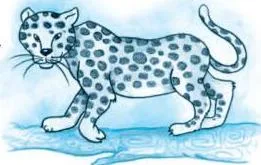
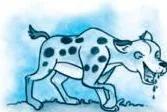
The poem’s illustrations work the same joke as the verses. The leopard that has leapt on you will only “lep and lep again”; the bear, if you doubt it, will give you just one more caress; and the weeping crocodile is exactly how the poem tells it from the smiling hyena.

The “English is funny” picture makes the wordplay visible: a nose that runs and feet that smell are everyday phrases whose literal meanings are absurd.

Figure Walkthrough: Reading the Chapter’s Illustrations

The textbook sets illustrations into both stories, and each one carries a caption taken from the story or poem itself. These are the four the chapter’s main sections depend on.
The first picture comes at the moment the pilot enters the storm. Its caption is the sentence in the text: “Inside the clouds, everything was suddenly black.” Total darkness — no sky, no stars, no ground — is exactly why the dead compass and radio matter: the pilot’s eyes are as useless as his instruments (NCERT, p. 37).

The second picture shows the guide: “After half an hour the strange black aeroplane was still there in front of me in the clouds.” It is a plane without lights, still ahead while the Dakota has fuel for five or ten more minutes (NCERT, p. 38).
The image makes the rescuer feel real, which is why the control room’s “no other aeroplanes” line later lands so heavily.

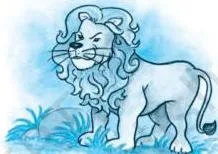
The third belongs to How to Tell Wild Animals: “You’ll know it is the Asian Lion…” because it roars at you as you’re dying. The joke of the identification guide is that the animal’s danger is exactly what identifies it (NCERT, p. 43).
The fourth comes from the compound-words page. “Boxing rings are square”: the name says one shape, reality is another, and the compound word has drifted away from the meanings of its parts (NCERT, p. 42).

Definitions: Words NCERT Glosses in the Margins
For the difficult words in His First Flight, the textbook prints meanings in the margin so a reader never has to leave the page. Here is each word with a plainer meaning and the printed page where it appears.
| Word | Plain meaning | NCERT page |
|---|---|---|
| ledge | a narrow shelf of rock jutting out from a cliff | p. 33 |
| upbraiding | scolding; telling someone off | p. 33 |
| (to) skim | to move lightly just above a surface — here, the sea | p. 33 |
| herring | a small sea fish | p. 33 |
| preening | a bird cleaning and smoothing its feathers with its beak | p. 34 |
| (to) whet | to sharpen; here, working the beak as if sharpening it | p. 34 |
| derisively | mockingly; in a way that treats someone as stupid | p. 34 |
| dizzy | an uncomfortable feeling of spinning and losing balance | p. 36 |
| curveting | leaping, the way a horse leaps | p. 36 |
| banking | flying with one wing higher than the other | p. 36 |
Model Answers: Thinking About the Text Questions
The questions below are the same ones printed under Thinking about the Text after each story (NCERT, pp. 36 and 40). The answers are model responses in a student’s own words — adapt the personal ones to your own experience, and always keep the line from the story that supports your answer.
His First Flight — Thinking about the Text
Q1. Why was the young seagull afraid to fly? Do you think all young birds are afraid to make their first flight, or are some birds more timid than others? Do you think a human baby also finds it a challenge to take its first steps?
Answer. The seagull was afraid because the sea below his ledge looked impossibly far — the story calls it “miles down” — and he was certain his wings would never support him (NCERT, p. 33).
It is natural for young birds to hesitate before their first flight, but some are clearly more timid than others: his younger brother and sister had already flown while he could not. A human baby faces the same challenge with its first steps, because the fear of falling is part of every new physical skill.
Q2. “The sight of the food maddened him.” What does this suggest? What compelled the young seagull to finally fly?
Answer. The line suggests that hunger had grown stronger than fear. He had not eaten since the previous nightfall, and watching his mother tear at the fish drove him beyond caution.
What finally compelled him was the mother flying across with the fish and halting just out of reach. He dived for it, and the dive itself opened his wings (NCERT, p. 34).
Q3. “They were beckoning to him, calling shrilly.” Why did the seagull’s father and mother threaten him and cajole him to fly?
Answer. The parents knew he could fly — his younger siblings had managed it — and that only fear held him back. Threatening to let him starve was the push, and offering food just out of reach was the pull; both were deliberate.
The proof is the ending: the moment he landed on the sea, the family praised him and fed him scraps of dog-fish (NCERT, p. 36).
Q4. Have you ever had a similar experience, where your parents encouraged you to do something that you were too scared to try? Discuss this in pairs or groups.
Answer (model). When I learned to ride a bicycle, my father ran beside me holding the seat. The moment he let go I lost my balance and fell, but he made me get on again, and by the evening I could pedal on my own. Like the seagull, I found that the fear of falling was worse than falling itself.
Q5. In the case of a bird flying, it seems a natural act, and a foregone conclusion that it should succeed. In the examples you have given in answer to the previous question, was your success guaranteed, or was it important for you to try, regardless of a possibility of failure?
Answer. For a bird, flying is a natural act, so success is close to a foregone conclusion once the bird actually tries — the seagull’s problem was never inability but refusal to attempt.
In human examples like cycling or swimming, success is not guaranteed at all. The story’s point is that trying matters regardless of the chance of failure: the seagull becomes able to fly only by risking the fall.
The Black Aeroplane — Thinking about the Text
Q1. “I’ll take the risk.” What is the risk? Why does the narrator take it?
Answer. The risk is flying the Dakota into storm clouds that stretch like black mountains across the sky, with no way over or around and only his second and last fuel tank left — a gamble with his life (NCERT, p. 37).
He takes it because he wants to reach home in England. The thought of the big English breakfast he is looking forward to wins over the sensible option of turning back to Paris.
Q2. Describe the narrator’s experience as he flew the aeroplane into the storm.
Answer. The moment he entered the clouds everything went black. The plane jumped and twisted, the compass spun round and round and died, and the other instruments and the radio died too, leaving him lost with no way to navigate (NCERT, p. 38).
Then a black aeroplane without lights appeared, its pilot waving and saying “Follow me”. The narrator followed like an obedient child; when only five or ten minutes of fuel were left, the guide descended and led him down through the clouds to the lights of a runway.
Q3. Why does the narrator say, “I landed and was not sorry to walk away from the old Dakota…”?
Answer. Because the flight had almost killed him. He was relieved to be safe — the old Dakota had carried him through the terrifying black clouds, and walking away from it meant the danger was finally over. The sentence shows his exhaustion and relief, not dislike of the machine.
Q4. What made the woman in the control centre look at the narrator strangely?
Answer. He asked her who the other pilot was, so that he could say thank you. She looked at him strangely because she told him no other aeroplanes were flying that night — his was the only one she could see on the radar (NCERT, p. 39). His story of a guide plane made no sense to her.
Q5. Who do you think helped the narrator to reach safely? Discuss this among yourselves and give reasons for your answer.
Answer. The text gives no single correct answer, so a good answer argues a position with evidence. For a real plane: the narrator saw the pilot’s face turned towards him, the plane turned north and waited half an hour, and it led him to an actual runway.
Against a real plane: it had no lights, it vanished the moment he landed, and the control centre confirmed no other aeroplane was on the radar (NCERT, p. 39).
You might argue that the narrator, under extreme stress, imagined a guide and reached safety through his own flying — or that the writer keeps the rescue deliberately mysterious. State your view, support it with the radar detail, and note that the textbook itself asks whether the plane was really there or the pilot imagined it (NCERT, p. 41).
Language Work in This Chapter: Six Shades of Black
The language section turns a word from the story into a mini vocabulary lesson. The textbook first separates two senses of “black”: the darkest colour, as in the “black mountains” of storm clouds, and without light, as in “everything was suddenly black” (NCERT, p. 40). Then come six sentences where black means something different each time.
| Sentence from the exercise | What “black” means here |
|---|---|
| “your hands and face are absolutely black” | dirty, covered in grime |
| “gave Ratan a black look” | an angry, unfriendly look |
| “the blackest crimes against humanity” | evil, wicked |
| “Harold Pinter’s black comedy” | dark humour — comedy dealing with grim subjects |
| “sell these in black” | on the black market — illegally, at inflated prices |
| “beaten the criminal black and blue” | bruised all over |
A second exercise builds idioms from the verb “fly”. Match Column A with Column B this way:
| Phrase | Meaning |
|---|---|
| Fly a flag | Display a flag on a long pole |
| Fly into rage | Become suddenly very angry |
| Fly along | Move quickly/suddenly |
| Fly high | Be successful |
| Fly the coop | Escape from a place |
The last part of the exercise lists words and asks you to tick those that share the bird sense of “fly” — moving through air using wings. Swoop, flit, flutter, ascend, float, skim, dart, hover, glide, soar, shoot, sail and flap all belong on the tick list; paddle, ride, sink, descend, spring, stay and fall do not share that sense.
Common Mistakes Students Make in These Two Stories
These are the errors students most often carry into answers about the two stories. Catch each one before it costs you marks — the correction is grounded in the text itself.
| Mistake | Correct rule | How to check your answer |
|---|---|---|
| Writing that the seagull’s parents were cruel or unloving. | The taunting, threats and the fish held just out of reach are a deliberate push — the family knows he can fly and is forcing him to act. | Look at the ending: the family praises him and feeds him the moment he lands (NCERT, p. 36). |
| Saying the mother accidentally dropped the fish, so he fell trying to catch it. | She halted with her wings motionless, the fish almost within reach of his beak — the dive was engineered, not accidental (NCERT, p. 34). | Quote “she halted, her wings motionless” and explain that hunger, not a dropped fish, made him dive. |
| Calling the black aeroplane “definitely a ghost” or “definitely imagined”. | The story never settles it; the only hard fact is the control room’s radar statement (NCERT, p. 39). Any claim is an interpretation. | Your sentence should say “the text shows…” then “this suggests…” — never “the story proves…”. |
| Adding a cause for the instrument failure, such as lightning. | The text only says the compass turned round and round and was dead, and the other instruments and radio were dead too (NCERT, p. 38). No cause is given. | Stick to what the page says; if the story does not state a reason, don’t invent one. |
| Treating all six uses of “black” in the exercise as the same. | In the story passages black means the darkest colour or without light; in the six sentences it means dirty, angry, evil, dark-humoured, illegal and bruised. | Use the context clue in each sentence — bath, look, crime, comedy, sell, beaten. |
| Saying the pilot had plenty of fuel left. | He had already switched to his second and last fuel tank before the storm; after half an hour of following the guide, fuel remained for only five or ten minutes more (NCERT, p. 38). | Quote “second and last fuel tank” and “five or ten minutes more”. |
Exam Notes: The Skill This Chapter Really Tests
Every question in this chapter tests one of four skills: literal comprehension, inference, vocabulary in context, or personal response. Recognise which one you are facing, and answer accordingly.
- Literal comprehension — “Why was the young seagull afraid to fly?”, “Describe the narrator’s experience…”. The answer sits in the story; quote the exact lines (“miles down”, “the compass was turning round and round”).
- Inference — “What does this suggest?” The story does not say it directly; you explain what the action implies. The mother’s halt, for example, shows hunger being used deliberately to force the dive.
- Vocabulary in context — the “black” and “fly” exercises. The meaning comes from the sentence, not from a memorised dictionary entry.
- Personal response — “Have you ever…?” and question 5 of The Black Aeroplane. Give your own experience or opinion, then tie it back to the story.
A full-marks answer for this chapter follows three steps: answer in the first line, support with a short quote, then explain what the quote shows. The open-ended question about the pilot’s helper rewards a reasoned opinion backed by the radar detail — not a memorised conclusion.
Textbook contents and the examinable syllabus are not always identical — before the exam, check the current official syllabus to see exactly which parts of this unit are in the paper. No question is guaranteed to appear; the skills above are the ones the chapter’s questions are built to practise.
Two Stories About Flying in Ten Lines
If you have one minute before the exam, this is the chapter.
- A young seagull is alone on his ledge while his brothers and sister have already flown (NCERT, p. 33).
- The sea looks “miles down” and he is certain his wings will never support him, so fear keeps him grounded.
- For twenty-four hours the family ignores and taunts him; his parents threaten to let him starve.
- His mother flies across with a fish and halts just out of reach (NCERT, p. 34).
- Maddened by hunger, he dives — and his wings open; he soars, no longer afraid (NCERT, p. 36).
- He lands floating on the sea, and the family praises him and feeds him. He had made his first flight.
- A pilot flying an old Dakota from France to England at 1:30 a.m. chooses to risk the storm rather than turn back (NCERT, p. 37).
- Inside the clouds his compass, instruments and radio all die; he is lost (NCERT, p. 38).
- A black aeroplane without lights signals “Follow me” and guides him down to a runway (NCERT, p. 38).
- The control centre says no other plane was on the radar, so the guide’s identity stays a mystery (NCERT, p. 39).
The chapter’s own summary: it gave the reader two stories about flying — one about a bird, the other about a human being in a plane (NCERT, p. 41). The seagull learns that fear, not inability, held him back; the pilot survives because he risks and trusts. Both stories carry the same lesson — you become able to fly only by trying.
Related Chapters in First Flight
Two Stories about Flying sits between two other prose chapters in First Flight. The links below take you to the book page, the chapters around this one, and the wider Class 10 notes.
- First Flight book page — every chapter of this textbook, listed chapter by chapter.
- Nelson Mandela: Long Walk to Freedom — the previous chapter, on courage of a very different kind.
- From the Diary of Anne Frank — the next chapter, which follows this one in the book.
- Class 10 hub — notes for the other subjects of Class 10.
- CBSE notes library — the full collection across all classes.
Sources and Data Verification
This listing is maintained for the 2026-27 academic session using the NCERT textbook information available to us. NCERT remains the authority for confirming the latest edition.
Reference: NCERT Class 10 First Flight textbook, chapter 3, official edition on ncert.nic.in.
This page describes Chapter 3 exactly as printed in that edition — the NCERT page numbers, the captions of the illustrations, and the exercise questions all follow the book. The chapter PDF above is the official file published by NCERT, and the whole book is available from the same portal.
NCERT settles textbook editions and PDFs; CBSE settles curriculum, syllabus and examinations. Because textbook contents and the examinable syllabus are not always identical, check the current official syllabus for the parts of this unit that are examinable. The official NCERT textbook portal is the authoritative source for every edition and file mentioned on this page; no other review is claimed.
Frequently Asked Questions
Who helped the narrator land safely in The Black Aeroplane?
The story leaves the answer open. The narrator follows a black aeroplane without lights whose pilot signals “Follow me”, but the woman at the control centre says no other aeroplanes were flying that night and his was the only one on the radar (NCERT, p. 39).
It could be a real pilot the story never explains, something the narrator imagined under extreme stress, or a deliberately mysterious, phantom-like guide — the textbook’s own note asks the same question (NCERT, p. 41). A good answer states one possibility and supports it with the radar detail.
Why was the young seagull afraid to make his first flight?
Because the sea below the ledge looked impossibly far — “miles down” — and he was certain his wings would never support him (NCERT, p. 33). He was held back by fear, not inability: his younger brother and sister had already flown on the same kind of wings.
Are How to Tell Wild Animals and The Ball Poem part of this chapter?
The two poems are printed in the same PDF block as the stories — How to Tell Wild Animals by Carolyn Wells and The Ball Poem by John Berryman — each with its own glossary and questions (NCERT, pp. 43–46). They travel with the chapter in the book, but they are separate poems with their own Thinking about the Poem sections.
Whether they are examined together with this chapter depends on the current official syllabus.
What is the common theme of the two stories?
Both stories are about fear and the act of flying. The seagull must conquer his terror of the sea “miles down”; the pilot must face a storm he cannot go around.
In each, the character acts only when pushed — hunger and instinct for the bird, risk and trust in an unknown guide for the pilot — and only by acting does either one succeed.
How should I answer the question about who helped the narrator?
Give your view in the first line, then support it with evidence. For a real plane: the narrator saw the pilot’s face and followed the plane to a runway. Against a real plane: it had no lights, vanished instantly, and the control centre said no other plane was on radar (NCERT, p. 39).
State your interpretation — for example, that the stressed pilot imagined a guide, or that the rescue is meant to stay mysterious — and quote the radar line. There is no single “correct” answer; the question tests reasoned opinion.
Reference: NCERT Class 10 First Flight textbook, chapter 3, official edition on ncert.nic.in.
Explore Class 10 English Books
- Previous: Nelson Mandela: Long Walk to Freedom
- Next: From the Diary of Anne Frank
Class 10 English on LearnCBSE:
Related chapters:
- A Letter to God
- A Triumph of Surgery
- A Letter to God