
The NCERT Class 12 Biology Chapter 3 — Reproductive Health — runs across printed pages 40–50 of the current textbook. This page offers the official Reproductive Health Class 12 Chapter 3 NCERT PDF for download, then walks you through every part of the chapter: the six contraceptive categories, MTP rules, STIs, infertility and the ART techniques, with all six NCERT diagrams explained one by one.
Reproductive Health Class 12 Chapter 3 PDF Download
The official file is hosted by NCERT itself, so what you download is exactly what is printed in the book. If you want to read or save the chapter as published, the Reproductive Health Class 12 Chapter 3 NCERT PDF opens the complete text — all five topics, every diagram and the end-of-chapter exercises — exactly as printed.
Use ncert.nic.in to confirm the edition you are being taught before you start revising.
| What the chapter holds | Count | Where it is used |
|---|---|---|
| Printed pages | 10 | |
| Sections in the chapter | 5 | |
| Figures with NCERT captions | 6 | |
| Exercise questions | 12 | answered in our NCERT Solutions |
| Official NCERT PDF | Download the chapter PDF | the chapter exactly as NCERT publishes it |
Chapter 3 at a Glance: Sections, Figures and Questions in the PDF
The table below shows what the chapter file holds — its sections, its diagrams and its exercise questions — so you know the shape of the PDF before you open it. The five main topics run across printed pages 40–50.
What This Chapter Teaches: Five Topics from Awareness to Infertility
The chapter takes a broad view of reproductive health — not just healthy organs — and then works through five practical problem areas, from public awareness to medical help for childless couples.
- 3.1 Reproductive Health – Problems and Strategies (pp. 40–42): national family planning since 1951, the RCH programmes, awareness drives, and the statutory ban on amniocentesis for sex determination.
- 3.2 Population Stabilisation and Birth Control (pp. 42–45): population growth figures from 1900 to 2011, and the six categories of contraceptives.
- 3.3 Medical Termination of Pregnancy (p. 46): what MTP is, the legal conditions, and two dangerous trends the book warns about.
- 3.4 Sexually Transmitted Infections (pp. 46–47): the common STIs, which ones are curable, and three prevention principles.
- 3.5 Infertility (pp. 47–48): the causes of infertility and the assisted reproductive technologies (ART) that help childless couples.
The chapter’s Summary sits on p. 49 and its exercises on p. 50.
Key Concepts: What Reproductive Health Means and Why Population Growth Mattered
Two ideas frame everything that follows: what reproductive health actually means, and the population problem that turned birth control into a national priority.
The WHO defines reproductive health as a total well-being in all aspects of reproduction — physical, emotional, behavioural and social (NCERT, p. 40). A reproductively healthy society is one where people have normal reproductive organs and healthy emotional and behavioural interactions in sex-related matters.
India was among the first countries in the world to launch national action plans for reproductive health. These ‘family planning’ programmes began in 1951 and are now run as Reproductive and Child Health Care (RCH) programmes, covering awareness, care during pregnancy and delivery, and post-natal care (NCERT, p. 40).
- Awareness drives use audio-visual and print media, supported by parents, relatives, teachers and friends; school sex education is encouraged so young people get correct information instead of myths and misconceptions (NCERT, p. 41).
- Medical care covers pregnancy, delivery, STDs, abortions, contraception, menstrual problems and infertility, backed by strong infrastructure and better techniques (NCERT, p. 41).
- Statutory ban on amniocentesis for sex determination: the test samples amniotic fluid to analyse fetal cells and is a legitimate tool for genetic disorders such as Down syndrome, haemophilia and sickle-cell anaemia — but using it to select sex feeds female foeticide and is banned (NCERT, pp. 41–42).
The size of the population problem, on NCERT p. 43:
- World population rose from about 2 billion in 1900 to about 6 billion by 2000 and 7.2 billion in 2011.
- India’s population went from roughly 350 million at independence to close to 1 billion by 2000 and crossed 1.2 billion in May 2011.
- Why it happened: a rapid decline in death rate, maternal mortality rate (MMR) and infant mortality rate (IMR), plus an increase in the number of people of reproductive age.
- The 2011 census put the growth rate below 2 per cent, i.e. 20 per 1000 per year — a rate at which our population could still outstrip even basic requirements like food, shelter and clothing.
That is why the government pushed the small-family message — the ‘Hum Do Hamare Do’ (we two, our two) slogan, a ‘one child norm’ taken up by many young urban couples, the statutory marriage age of 18 for females and 21 for males, and incentives for small families (NCERT, p. 43). This leads directly to the chapter’s core: the contraceptives.
Key Concepts: The Six Categories of Contraceptives
The book groups every available contraceptive into six broad categories, and this comparison table is the heart of the chapter. Learn the category, its examples and its mechanism together.
| Category | Examples named in the book | How it prevents conception |
|---|---|---|
| Natural / Traditional | Periodic abstinence, withdrawal (coitus interruptus), lactational amenorrhea | Based on avoiding the meeting of ovum and sperms. No medicines or devices, so side effects are almost nil — but the chance of failure is high. Lactational amenorrhea works only up to about six months after childbirth (NCERT, p. 43). |
| Barrier | Male condom (‘Nirodh’), female condom, diaphragms, cervical caps, vaults | Physical barriers stop sperms from meeting the ovum; the female ones cover the cervix during coitus. Spermicidal creams, jellies and foams are used with them. Condoms also protect against STIs and AIDS (NCERT, p. 44). |
| Intra Uterine Devices (IUDs) | Non-medicated Lippes loop; copper-releasing CuT, Cu7, Multiload 375; hormone-releasing Progestasert, LNG-20 | Inserted into the uterus by a doctor or expert nurse. They increase phagocytosis of sperms; copper ions suppress sperm motility and fertilising capacity; hormone-releasing types also make the uterus unsuitable for implantation (NCERT, p. 44). |
| Oral contraceptives (pills) | Progestogen or progestogen–estrogen tablets; Saheli (non-steroidal, once a week) | Inhibit ovulation and implantation, and alter cervical mucus to block sperms. A daily 21-day course with a 7-day gap is required (NCERT, pp. 44–45). |
| Injectables and implants | Progestogens alone or with estrogen, given as injections or implants under the skin | Mode of action similar to pills, but the effective period is much longer (NCERT, p. 45). |
| Surgical methods (sterilisation) | Vasectomy (male), tubectomy (female) | Block gamete transport so conception cannot occur. Highly effective, but reversibility is very poor (NCERT, p. 45). |
Before this list, the book sets the test for an ideal contraceptive: user-friendly, easily available, effective, reversible, with no or least side effects, and it must not interfere with the sexual drive, desire or the sexual act (NCERT, pp. 42–43).
One caution closes the section: contraceptives are not regular requirements for reproductive health. They are practised against a natural event — conception — so possible ill-effects such as nausea, abdominal pain, breakthrough bleeding, irregular menstrual bleeding or even breast cancer, though not very significant, should not be totally ignored (NCERT, p. 45).
Key Concepts: How IUDs, Pills and Emergency Contraceptives Actually Work
Exam questions ask how a method prevents conception, not just what it is called. Here is the biology behind the table above.
- IUDs (NCERT, p. 44): increase phagocytosis of sperms within the uterus; copper ions suppress sperm motility and fertilising capacity; hormone-releasing IUDs additionally make the uterus unsuitable for implantation and the cervix hostile to sperms.
- Pills (NCERT, pp. 44–45): inhibit ovulation and implantation and alter the quality of cervical mucus to prevent or slow the entry of sperms. The schedule is a daily tablet for 21 days, starting preferably within the first five days of the cycle, then a 7-day gap during which menstruation occurs — repeated in the same pattern until conception is no longer to be prevented.
- Saheli (NCERT, pp. 42, 45): a non-steroidal ‘once a week’ pill developed at the Central Drug Research Institute (CDRI) in Lucknow, with very few side effects and high contraceptive value.
- Injectables and implants (NCERT, p. 45): progestogens alone or with estrogen act like pills but their effective periods are much longer; Figure 3.3 shows the implants.
- Emergency contraceptives (NCERT, p. 45): progestogens, progestogen–estrogen combinations, or IUDs used within 72 hours of coitus — the window that matters after rape or casual unprotected intercourse.
- Surgical methods (NCERT, p. 45): block gamete transport, not gamete formation — highly effective, but the book warns their reversibility is very poor.
Medical Termination of Pregnancy: Legal Rules and Risks
MTP is the voluntary ending of a pregnancy before full term, and in this chapter the law matters as much as the biology.
Medical termination of pregnancy (MTP), or induced abortion, is the intentional termination of a pregnancy before full term. About 45 to 50 million MTPs are performed worldwide every year — roughly one-fifth of all conceived pregnancies (NCERT, p. 45).
India legalised MTP in 1971 with strict conditions to avoid misuse (NCERT, p. 46). Under the Medical Termination of Pregnancy (Amendment) Act 2017, a pregnancy may be ended within the first 12 weeks on the opinion of one registered medical practitioner; if it has lasted more than 12 but fewer than 24 weeks, two registered medical practitioners must form the opinion in good faith (NCERT, pp. 45–46).
The legal grounds are: (i) continuation of the pregnancy would involve a risk to the woman’s life or grave injury to her physical or mental health; or (ii) there is a substantial risk that the child, if born, would suffer physical or mental abnormalities serious enough to handicap it (NCERT, p. 46).
MTPs are performed to end unwanted pregnancies from casual unprotected intercourse or contraceptive failure, and after rape; they are also essential when continuing the pregnancy could be harmful or even fatal to the mother or the foetus (NCERT, p. 46).
First-trimester termination (up to 12 weeks) is relatively safe; second-trimester abortions are far riskier (NCERT, p. 46).
Two unhealthy trends disturb the book: a majority of MTPs are performed illegally by unqualified quacks, and amniocentesis is misused to determine the sex of the unborn child — when the foetus is found to be female, it is frequently followed by MTP, which is illegal and dangerous for both the young mother and the foetus (NCERT, p. 46).
Sexually Transmitted Infections: Which Are Curable and How to Stay Safe
STIs spread through sexual intercourse, and the single most testable fact in this section is which ones are completely curable.
Infections transmitted through sexual intercourse are called sexually transmitted infections (STIs), venereal diseases (VD) or reproductive tract infections (RTI) (NCERT, p. 46). The common ones are gonorrhoea, syphilis, genital herpes, chlamydiasis, genital warts, trichomoniasis, hepatitis-B, and HIV leading to AIDS (NCERT, p. 46). The book notes that HIV is the most dangerous and is discussed in detail in Chapter 7.
- Beyond intercourse: hepatitis-B and HIV can also spread through sharing injection needles or surgical instruments with infected persons, through blood transfusion, and from an infected mother to her foetus (NCERT, p. 47).
- Curable or not: except for hepatitis-B, genital herpes and HIV, all the other STIs are completely curable if detected early and treated properly (NCERT, p. 47).
- Why they go undetected: early symptoms are minor — itching, fluid discharge, slight pain, swellings in the genital region — and infected females are often asymptomatic, so they may remain undetected for long. Social stigma deters people from timely detection and treatment (NCERT, p. 47).
- Late complications: pelvic inflammatory diseases (PID), abortions, still births, ectopic pregnancies, infertility, or even cancer of the reproductive tract (NCERT, p. 47).
- Who is at risk: incidence is reported to be very high among persons in the 15–24 age group (NCERT, p. 47).
The book’s three prevention principles (NCERT, p. 47):
- Avoid sex with unknown or multiple partners.
- Always try to use condoms during coitus.
- In case of doubt, go to a qualified doctor for early detection and complete treatment.
Infertility and Assisted Reproductive Technologies: IVF, ZIFT, IUT, GIFT, ICSI, AI
Infertility means being unable to conceive despite unprotected sexual cohabitation — the book’s Summary adds ‘for about two years’ — and this section is where acronym confusion costs marks.
The causes are many — physical, congenital, disease, drugs, immunological or psychological (NCERT, p. 48). One honest point matters: in India the female is often blamed for a childless couple, but more often than not the problem lies in the male partner (NCERT, pp. 47–48). Where corrective treatment is not possible, couples can be helped by assisted reproductive technologies.
| Technique | What actually happens | Key detail to remember |
|---|---|---|
| IVF with embryo transfer (ET) | Fertilisation occurs outside the body under simulated laboratory conditions; ova and sperms are collected from the spouses or donors, and the zygote or embryo is transferred for further development | The ‘test-tube baby’ programme (NCERT, p. 48) |
| ZIFT — zygote intra fallopian transfer | A zygote or early embryo with up to 8 blastomeres is transferred into the fallopian tube | Z for zygote — early stage, into the tube (NCERT, p. 48) |
| IUT — intra uterine transfer | An embryo with more than 8 blastomeres is transferred into the uterus | More than 8 blastomeres — into the uterus (NCERT, p. 48) |
| GIFT — gamete intra fallopian transfer | An ovum collected from a donor is transferred into the fallopian tube of a woman who cannot produce ova but can provide a suitable environment for fertilisation | G for gamete — a donor’s egg, into the tube (NCERT, p. 48) |
| ICSI — intra cytoplasmic sperm injection | A sperm is injected directly into the ovum to form an embryo in the laboratory | Sperm injected straight into the egg (NCERT, p. 48) |
| Artificial insemination (AI) / IUI | Semen from the husband or a healthy donor is introduced into the vagina or into the uterus | For low sperm counts or inability to inseminate (NCERT, p. 48) |
Embryos formed by in-vivo fertilisation (fusion of gametes within the female) can also be transferred, helping women who cannot conceive (NCERT, p. 48).
All these techniques demand extremely high precision handling by specialised professionals and expensive instrumentation, so they are available at only a few centres and affordable to a limited number of people; emotional, religious and social factors also deter adoption.
Since the aim is parenthood, the book adds that India has many orphaned and destitute children, and legal adoption is one of the best methods for couples looking for parenthood (NCERT, p. 48).
Figure Walkthrough: The Six NCERT Diagrams of Contraceptive Devices
All six diagrams appear in your book on printed pages 44–45. Each shows a device and the part of the body it guards; here is what to look for in each.

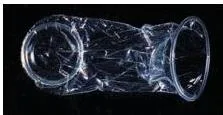
Both condoms are thin rubber or latex barriers worn just before coitus. The male condom (Fig. 3.1a) covers the penis so ejaculated semen cannot enter the female reproductive tract; the female condom (Fig. 3.1b) lines the vagina and covers the cervix with the same effect.
Both are disposable, can be self-inserted for privacy, and carry the extra benefit of reducing the risk of STIs and AIDS — ‘Nirodh’ is the book’s example of a popular male brand (NCERT, p. 44).
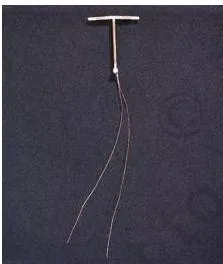
Figure 3.2 shows a Copper T — a copper-releasing IUD. A doctor or expert nurse inserts it into the uterus through the vagina. The copper ions it releases suppress sperm motility and the fertilising capacity of sperms, while the device itself increases phagocytosis of sperms within the uterus (NCERT, p. 44).
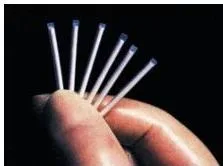
Figure 3.3 shows progestogen-releasing implants placed under the skin. Their mode of action is similar to pills — they inhibit ovulation and implantation and make the cervix hostile to sperms — but their effective period is much longer because the hormone is released steadily over time (NCERT, p. 45).
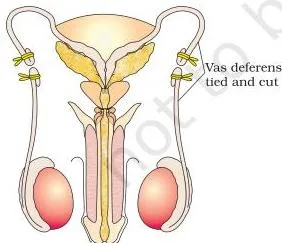
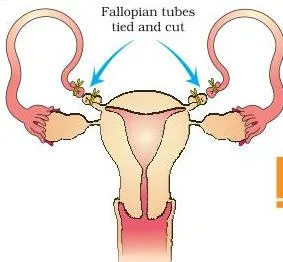
Figures 3.4(a) and (b) show surgical sterilisation. In vasectomy, a small part of the vas deferens is removed or tied up through a small incision on the scrotum (Fig. 3.4a); in tubectomy, a small part of the fallopian tube is removed or tied up through an incision in the abdomen or through the vagina (Fig. 3.4b).
Notice what is cut in each — a transport tube, not a hormone-producing organ — which is why gametes still form but can no longer meet; these methods are highly effective but their reversibility is very poor (NCERT, p. 45).
Key Terms in This Chapter, Explained in Plain Words
These are the terms exam answers depend on. Each definition is in plain words, with the printed page number to cross-check in your book.
| Term | Meaning in plain words |
|---|---|
| Reproductive health (p. 40) | Total well-being in physical, emotional, behavioural and social aspects of reproduction, in the WHO sense — not just healthy organs. |
| Family planning / RCH programmes (p. 40) | National programmes begun as ‘family planning’ in 1951, now run as Reproductive and Child Health Care to create awareness and provide reproductive care. |
| Fertile period and periodic abstinence (p. 43) | Days 10–17 of the menstrual cycle, when ovulation is expected and fertilisation is most likely; avoiding coitus in this window is periodic abstinence. |
| Lactational amenorrhea (p. 43) | Absence of menstruation during intense breastfeeding; it works as a natural contraceptive only up to about six months after childbirth. |
| IUD (p. 44) | A device inserted into the uterus by a doctor; the three types are non-medicated, copper-releasing and hormone-releasing. |
| Vasectomy / tubectomy (p. 45) | Surgical sterilisation that blocks gamete transport by cutting or tying the vas deferens (male) or the fallopian tube (female). |
| MTP (p. 46) | Intentional or voluntary termination of a pregnancy before full term; also called induced abortion. |
| STI / VD / RTI (p. 46) | Infections transmitted through sexual intercourse — also called venereal diseases or reproductive tract infections. |
| Infertility (pp. 47, 49) | Inability to conceive or produce children despite about two years of unprotected sexual cohabitation. |
| IVF, ZIFT, IUT, GIFT, ICSI, AI (p. 48) | Assisted reproductive technologies: fertilisation outside the body, transfer of a zygote/embryo/ovum, direct sperm injection, and artificial insemination. |
| Amniocentesis (pp. 41, 46) | Sampling of amniotic fluid to analyse fetal cells; used to detect genetic disorders, and banned for sex determination to prevent female foeticide. |
Common Mistakes: What NCERT’s True/False and Correction Exercises Catch
The chapter’s final exercises read like a list of classic mistakes. Here is the reasoning behind every correction the book expects.
Exercise 7 asks why removal of gonads cannot be a contraceptive option. The chapter’s own definition of contraception supplies the answer: an ideal method should be reversible and must not interfere with the sexual drive, desire or the sexual act (NCERT, p. 43). The gonads are not just gamete factories — they are the hormone-producing organs that keep the sexual system working.
Removing them would end sex-hormone production and with it normal sexual function: a drastic, irreversible step, not birth control. That is exactly why the book’s surgical methods (vasectomy, tubectomy) remove or tie only the transport tubes and leave the gonads intact (NCERT, p. 45).
| Mistake | Correct rule | How to check your answer |
|---|---|---|
| ‘Surgical methods prevent gamete formation’ (Q12a) | Surgical methods block gamete transport — sperms and ova still form, but they cannot meet (NCERT, p. 45). | Ask: does the method stop a hormone-producing organ? No — it only cuts the transport tube. |
| ‘All STIs are completely curable’ (Q12b) | Hepatitis-B, genital herpes and HIV are not completely curable; all the others are, if detected early (NCERT, p. 47). | Name the three exceptions before you write ‘curable’. |
| ‘Oral pills are popular among rural women’ (Q12c) | Pills demand a strict 21-day daily schedule with a 7-day gap, so they suit users who can maintain that regularity (NCERT, pp. 44–45). | Think: which method needs a daily routine you cannot skip? |
| ‘In ET, embryos are always transferred into the uterus’ (Q12d) | A zygote or early embryo with up to 8 blastomeres goes into the fallopian tube (ZIFT); only embryos with more than 8 blastomeres go into the uterus (IUT) (NCERT, p. 48). | Count the blastomeres before choosing the tube. |
| ‘Infertility is always the female’s fault’ (Q11b) | Often the problem lies in the male partner, not the female (NCERT, pp. 47–48). | The word ‘always’ makes the statement false — one counter-cause is enough. |
| ‘Complete lactation prevents conception permanently’ (Q11c) | Lactational amenorrhea works only up to about six months after childbirth, and only with full breastfeeding (NCERT, p. 43). | Check the time limit of the method before calling it reliable. |
| ‘Abortions are always induced’ (Q11a) | Abortions can happen spontaneously too; MTP is only the intentional or voluntary termination (NCERT, p. 45). | Recall that MTP is defined as ‘intentional or voluntary’ — the opposite exists. |
Two more traps from the chapter: infected females with STIs can be asymptomatic, so absence of symptoms is not proof of absence of infection (NCERT, p. 47); and MTP is relatively safe only in the first trimester — second-trimester termination is far riskier (NCERT, p. 46).
Exam Notes: How to Revise This Chapter and Answer Its Question Types
No one can promise what any exam will ask. What this section can honestly do is map the chapter’s exercise questions to the sections they test, and give you a frame for answering.
- Q1–Q4 draw on section 3.1: the significance of reproductive health, aspects needing special attention, the case for sex education, and areas of improvement over the past 50 years.
- Q5–Q6 draw on section 3.2: the suggested reasons for population explosion, and whether contraceptive use is justified.
- Q7 tests surgical contraception — the ‘why can’t we just remove gonads?’ question answered above.
- Q8 asks you to comment on the amniocentesis ban, joining sections 3.1 and 3.3.
- Q9 is ART — methods to assist infertile couples (section 3.5).
- Q10 is STI prevention (section 3.4).
- Q11–Q12 are whole-chapter concept checks: True/False with reasons, and statement corrections.
For ‘Why?’ questions, use a two-step frame: state the biological mechanism first, then the social or legal reason. For example — IUDs increase phagocytosis of sperms and copper ions suppress sperm motility (mechanism), and that is why they are a widely accepted method for delaying or spacing children in India (outcome). Full answers name both the mechanism and the consequence.
This chapter has no formulas — definitions, mechanisms and the ART table carry the marks. One honest caution: textbook contents and the examinable syllabus are not always identical — check the current official CBSE syllabus before you decide what to revise; no weightage claims are made here.
Revision Summary: The Chapter in Ten Lines
Each line below carries one idea from the chapter’s own Summary (NCERT, p. 49), in plainer words.
- Reproductive health means total well-being — physical, emotional, behavioural and social — in all aspects of reproduction.
- India was the first nation to initiate national action plans for a reproductively healthy society; these ‘family planning’ programmes began in 1951 and now run as RCH programmes.
- Awareness (through schools, the media and families) plus medical care are the two pillars; better care has reduced maternal and infant mortality.
- Better health and living conditions caused a population explosion — India crossed 1.2 billion in May 2011.
- The response is smaller families, using the six categories of contraceptives, chosen in consultation with qualified professionals.
- Contraceptives are not routine health needs — they are used against a natural event, pregnancy, so side effects must be weighed.
- MTP is legal in India under strict conditions and is safest in the first trimester; illegal abortions and sex-selective misuse are the dangers.
- STIs spread through intercourse; early detection cures most, and simple precautions — a known single partner, condoms, timely doctoring — prevent them.
- Infertility is the inability to conceive despite about two years of unprotected cohabitation, and the cause is often in the male partner.
- ART (IVF with embryo transfer — the ‘test-tube baby’ programme — plus ZIFT, IUT, GIFT, ICSI and AI) helps childless couples; legal adoption is an equally valid path.
Related Resources
This listing is maintained for the 2026-27 academic session using the NCERT textbook information available to us. NCERT remains the authority for confirming the latest edition.
Use these pages to move around the Class 12 Biology syllabus and the wider revision library.
- Class 12 Biology notes — the full set of chapter guides for this book.
- Class 12 hub — every subject, one landing page.
- Human Reproduction notes — Chapter 2, which this chapter builds on; it opens by reminding you that you have learnt about the human reproductive system and its functions there.
- Principles of Inheritance and Variation notes — Chapter 4, the next topic in the book.
- CBSE notes — the complete revision library across classes.
Sources and Data Verification
The section and figure references on this page describe the NCERT Class 12 Biology textbook, Chapter 3 (Reproductive Health), printed pages 40–50 of the current edition; the official PDF is on ncert.nic.in.
This page covers one chapter of one textbook — it is not a listing of the full CBSE curriculum. It is maintained for the current academic session using the NCERT information available to us. Where facts are stated, the NCERT page is cited so you can check them yourself.
NCERT settles textbooks, editions and PDFs; CBSE settles the curriculum, syllabus and examinations (cbse.gov.in).
Reference: NCERT Class 12 Biology textbook, Chapter 3, official edition on ncert.nic.in.
Frequently Asked Questions
What is the difference between ZIFT, IUT and GIFT?
ZIFT and IUT differ only by stage and destination: a zygote or early embryo with up to 8 blastomeres is transferred into the fallopian tube (ZIFT), while an embryo with more than 8 blastomeres is transferred into the uterus (IUT) (NCERT, p. 48).
GIFT is different — a donor’s ovum is placed in the fallopian tube of a woman who cannot produce ova but can carry a pregnancy. Remember: count the blastomeres to choose the tube.
Which contraceptives also protect against STIs?
Condoms — both the male condom and the female condom — protect against STIs and AIDS in addition to preventing conception (NCERT, p. 44). The book notes that this extra benefit is why condom use has increased in recent years.
Why is amniocentesis banned for sex determination?
Amniocentesis samples amniotic fluid to analyse fetal cells, and it is legitimately used to detect genetic disorders such as Down syndrome, haemophilia and sickle-cell anaemia (NCERT, pp. 41–42).
It is banned for sex determination because when the foetus is found to be female, the pregnancy is often terminated — female foeticide — which is illegal and dangerous for both the young mother and the foetus (NCERT, p. 46).
Which STIs are not completely curable?
Hepatitis-B, genital herpes and HIV are the three that are not completely curable (NCERT, p. 47). All the other common STIs — gonorrhoea, syphilis, chlamydiasis, genital warts and trichomoniasis — are completely curable if detected early and treated properly.
What is the 72-hour rule for emergency contraceptives?
Progestogens, progestogen–estrogen combinations, or IUDs can be used within 72 hours of coitus as emergency contraceptives (NCERT, p. 45). The book gives this window for avoiding possible pregnancy after rape or casual unprotected intercourse.
What does reproductive health mean according to WHO?
According to WHO, reproductive health means a total well-being in all aspects of reproduction — physical, emotional, behavioural and social (NCERT, p. 40). It is broader than ‘healthy reproductive organs’: it includes normal emotional and behavioural interactions in all sex-related matters.
Explore Class 12 Biology Books
- Previous: Human Reproduction
- Next: Principles of Inheritance and Variation
Class 12 Biology on LearnCBSE:
Related chapters: