
Microbes in human welfare class 12 is the eighth chapter of the NCERT Class 12 Biology textbook, printed on NCERT pages 150–160. It is a 12-page chapter that covers six sections — from the microbes in your curd and bread to those that treat sewage, produce biogas and replace chemical fertilisers. The official NCERT chapter PDF is right below.
Download the Microbes in Human Welfare Class 12 NCERT PDF
Get the microbes in human welfare class 12 NCERT chapter PDF from the official NCERT textbook portal at ncert.nic.in — this is the same file your school follows, in the current official edition, and it is the safest source for the chapter text and figures before an exam.
Reference: NCERT Class 12 Biology textbook, chapter 8, official edition on ncert.nic.in.
| What the chapter holds | Count | Where it is used |
|---|---|---|
| Printed pages | 12 | |
| Sections in the chapter | 9 | |
| Figures with NCERT captions | 10 | |
| Exercise questions | 15 | answered in our NCERT Solutions |
| Official NCERT PDF | Download the chapter PDF | the chapter exactly as NCERT publishes it |
Microbes in Human Welfare Class 12: Chapter at a Glance
The chapter statistics table below is rendered directly from the NCERT chapter record — it states how much the file holds, so you know what you are opening.
| Chapter feature | Count in this chapter |
|---|---|
| Sections | 13 |
| Figures | 10 |
| Exercise questions | 15 |
The chapter moves in one direction: microbes in household products (curd, dough, cheese), then industrial products (beverages, antibiotics, enzymes), then environmental applications (sewage treatment, biogas) and finally agricultural uses (biocontrol agents and biofertilisers).
What This Chapter Covers: From Curd to Biogas
The chapter’s opening makes its core point: microbes are everywhere — in soil, water, air and inside our bodies — yet only some cause disease. In fact, they even survive in geysers at 100°C, under snow and in highly acidic places.
This chapter lists their everyday, industrial and environmental uses, and it opens by contrasting with Human Health and Disease (chapter 7), which dealt with microbes as disease-causing agents.
- 8.1 Microbes in Household Products (NCERT pages 150–151) — LAB and curd, dough fermentation, toddy, cheese.
- 8.2 Microbes in Industrial Products (pages 151–153) — fermented beverages, antibiotics, chemicals and enzymes.
- 8.3 Microbes in Sewage Treatment (pages 153–155) — primary and secondary treatment, flocs, BOD, activated sludge.
- 8.4 Microbes in Production of Biogas (pages 155–156) — methanogens, Methanobacterium, the gobar gas plant.
- 8.5 Microbes as Biocontrol Agents (pages 156–157) — Bt, Trichoderma, baculoviruses.
- 8.6 Microbes as Biofertilisers (pages 157–158) — Rhizobium, Azospirillum, Azotobacter, mycorrhiza, cyanobacteria.
- Summary (pages 158–159) and Exercises (pages 159–160) close the chapter.
Key Concepts: What Each Section Actually Teaches
This chapter is organised around one idea: the same microbes you met as disease-causers in chapter 7 are, in three different settings — home, industry, and the environment or farm — essential to human welfare. Learn the microbe–product–process triple for each use and you have learned the chapter.
Household Products: LAB, Dough and Cheese (NCERT pp. 150–151)
This section matters because it shows you already use microbes daily without noticing. The star is lactic acid bacteria (LAB), a group that includes Lactobacillus and others. When LAB grow in milk, they produce acids that coagulate and partially digest milk proteins, turning milk into curd.
A spoonful of curd acts as the inoculum or starter, carrying millions of LAB that multiply at suitable temperatures. Curd made this way has better nutritional quality because vitamin B12 increases.
- The same LAB, in our stomach, help check disease-causing microbes (NCERT p. 150).
- Dough for dosa and idli is fermented by bacteria; the puffed-up look comes from CO2 gas produced during metabolism (p. 151).
- Bread dough is fermented by baker’s yeast, Saccharomyces cerevisiae.
- Toddy, a traditional southern Indian drink, is made by fermenting palm sap.
- Cheese texture and flavour come from the specific microbe used — Propionibacterium sharmanii produces the large CO2 holes in Swiss cheese, and fungi ripen Roquefort cheese.
Fermented Beverages: Distilled or Not (NCERT p. 152)
Beverages are produced when the same Saccharomyces cerevisiae (here called brewer’s yeast) ferments malted cereals and fruit juices to ethanol. What separates one drink from another is the raw material and whether the fermented broth is distilled.
| Type | Examples | Raw material / process |
|---|---|---|
| Produced without distillation | Wine, beer | Fermented broth used directly; yeast ferments fruit juices or malted cereals |
| Produced by distillation | Whisky, brandy, rum | The fermented broth is distilled to concentrate the alcohol |
Antibiotics: The Chance Discovery of Penicillin (NCERT pp. 152–153)
Antibiotics are chemical substances produced by some microbes that kill or retard the growth of other, disease-causing microbes. The word itself tells the story: anti means ‘against’ and bio means ‘life’. Penicillin, the first antibiotic, was a chance discovery — Alexander Fleming noticed that a mould growing on an unwashed culture plate stopped Staphylococci from growing around it.
He named the chemical penicillin after the mould Penicillium notatum. Its full potential was established later by Ernest Chain and Howard Florey, and the three shared the Nobel Prize in 1945.
Antibiotics transformed medicine’s ability to treat deadly diseases such as plague, whooping cough (kali khansi), diphtheria (gal ghotu) and leprosy (kusht rog). Notice the chapter’s examples are all bacterial diseases — that matters for a common mistake below.
Chemicals, Enzymes and Bioactive Molecules (NCERT p. 153)
Microbes are commercial factories for organic acids, alcohols and enzymes. Remember the producer with the product — this is the most asked pairing in the chapter.
| Microbe | Type | Product |
|---|---|---|
| Aspergillus niger | Fungus | Citric acid |
| Acetobacter aceti | Bacterium | Acetic acid |
| Clostridium butylicum | Bacterium | Butyric acid |
| Lactobacillus | Bacterium | Lactic acid |
| Saccharomyces cerevisiae | Yeast | Ethanol |
Mnemonic: acids in alphabetical order by product — Citric → Aspergillus, Acetic → Acetobacter, Butyric → Clostridium Butylicum, Lactic → Lactobacillus. The initials CA C A B L run ‘CA–CA–BL’ — a cat-like sound you can anchor to “the cat that makes curd”.
Enzymes and bioactive molecules: lipases go into detergent formulations to remove oily stains; pectinases and proteases clarify bottled fruit juices; streptokinase, produced by the bacterium Streptococcus and modified by genetic engineering, works as a ‘clot buster’ after myocardial infarction; cyclosporin A, an immunosuppressive agent for organ-transplant patients, comes from the fungus Trichoderma polysporum; and statins, blood-cholesterol lowering agents, come from the yeast Monascus purpureus.
Sewage Treatment: Two Stages, Flocs and BOD (NCERT pp. 153–155)
Sewage cannot be dumped into rivers directly — it carries huge amounts of organic matter and microbes, many pathogenic. Sewage treatment plants (STPs) use the heterotrophic microbes that are naturally present in the sewage itself. This is a two-stage process.
| Feature | Primary treatment | Secondary (biological) treatment |
|---|---|---|
| Nature | Physical removal of particles | Biological breakdown of organic matter |
| Key steps | Sequential filtration (floating debris), then sedimentation (grit) | Aeration in large tanks, then settling of flocs |
| Microbes used | None directly | Aerobic microbes growing as flocs; then anaerobic bacteria in digesters |
| Products / outcome | Primary sludge (settled solids) + effluent (supernatant) | Reduced BOD; activated sludge that is partly digested anaerobically to biogas |
What is BOD? BOD (biochemical oxygen demand) is the amount of oxygen that would be consumed if all the organic matter in one litre of water were oxidised by bacteria. It is therefore an indirect measure of the organic matter present. The greater the BOD, the greater the polluting potential (NCERT p. 154).
Worked example (original values): A laboratory received four samples — river water, untreated sewage, and the secondary effluent of a sewage plant — but the labels were mixed up. The BOD values recorded were 340 mg/L, 20 mg/L and 6 mg/L.
- Untreated sewage carries the most organic matter, so it must have the highest BOD — 340 mg/L.
- River water, assuming it is relatively clean, has the lowest BOD — 6 mg/L.
- Secondary effluent has had most of its organic matter consumed by microbes, so it sits between the two — 20 mg/L.
The reasoning chain to write in an answer: more organic matter → more oxygen needed to oxidise it → higher BOD → more polluted.
Biogas: Methanogens and Gobar Gas (NCERT pp. 155–156)
Certain bacteria grow anaerobically on cellulosic material and produce large amounts of methane along with CO2 and H2. These are methanogens, and one common example is Methanobacterium. They live in the anaerobic sludge of sewage treatment plants and in the rumen of cattle, where they help break down cellulose — a job our own digestive system cannot do.
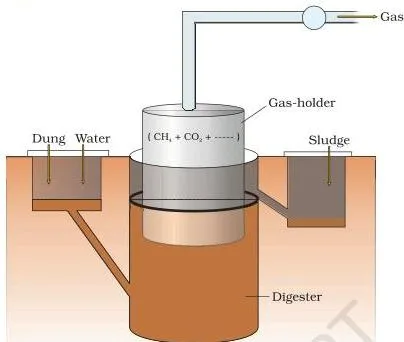
Cattle dung (gobar), rich in these bacteria, is fed into a concrete tank 10–15 feet deep; a floating cover rises as gas collects. The gas is used for cooking and lighting in rural areas, and the spent slurry serves as fertiliser. The technology was developed in India mainly through IARI and KVIC.
Biocontrol: Managing Pests, Not Erasing Them (NCERT pp. 156–157)
Biocontrol means using biological methods to control plant diseases and pests, instead of toxic chemicals. The organic approach does not aim to eradicate pests — it keeps them at manageable levels through the ecosystem’s own checks and balances. The chapter’s microbial biocontrol agents:
| Agent | Type | Controls |
|---|---|---|
| Bacillus thuringiensis (Bt) | Bacterium | Butterfly caterpillars; toxin released in the larval gut kills the larvae but leaves other insects unharmed |
| Trichoderma | Free-living fungus | Several plant pathogens (root ecosystems) |
| Baculoviruses (genus Nucleopolyhedrovirus) | Viruses | Insects and other arthropods; species-specific, no harm to non-target insects |
| Ladybird, Dragonflies | Predators | Aphids and mosquitoes respectively |
Bt’s toxin genes have also been introduced into plants by genetic engineering — Bt-cotton is one such example, and the book points forward to Biotechnology: Principles and Processes (chapter 10) for its genetics.
Biofertilisers: Enriching the Soil Naturally (NCERT pp. 157–158)
Biofertilisers are organisms that enrich the nutrient quality of the soil, reducing our dependence on chemical fertilisers. The main sources are bacteria, fungi and cyanobacteria.
| Biofertiliser | Type | How it enriches soil |
|---|---|---|
| Rhizobium | Symbiotic bacterium | Forms nodules on legume roots; fixes atmospheric nitrogen into organic forms |
| Azospirillum, Azotobacter | Free-living bacteria | Fix atmospheric nitrogen while free-living in soil |
| Mycorrhiza (Glomus) | Symbiotic fungus | Passes phosphorus from soil to the plant; also gives resistance to root pathogens, salinity and drought |
| Cyanobacteria (Anabaena, Nostoc, Oscillatoria) | Autotrophic microbes | Fix nitrogen in paddy fields and add organic matter to soil |
Figure Walkthrough: What NCERT Figures 8.1 to 8.8 Show
The book’s eight figures are not decoration — each one exists to make a specific point about scale, process or equipment. Here is what each diagram shows and why the book placed it there.
Figure 8.1: The Three Bacterial Shapes (NCERT p. 150)
This figure introduces the star organisms of the chapter under a microscope. The captions give the shapes and the magnification: a rod-shaped bacterium at 1500X, a spherical one at 1500X, and a rod-shaped bacterium showing flagella at 50,000X.
The point of the magnifications is scale — the third image needs a far higher magnification because it is showing a detail (flagella) invisible at 1500X.
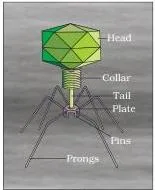
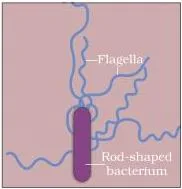
Figure 8.2: Viruses Seen at 1,00,000–1,50,000X (NCERT p. 150)
Viruses are far smaller than bacteria, which is why this figure’s magnification is so much higher. It shows a bacteriophage (a virus that attacks bacteria), an adenovirus that causes respiratory infections, and the rod-shaped Tobacco Mosaic Virus (TMV). The book includes them to remind you that the word ‘microbe’ covers viruses too — including the baculoviruses used later as biocontrol agents.
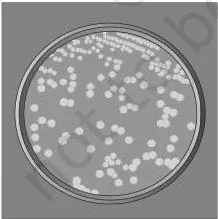
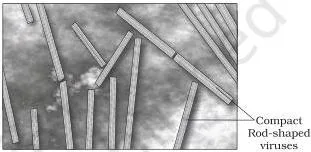
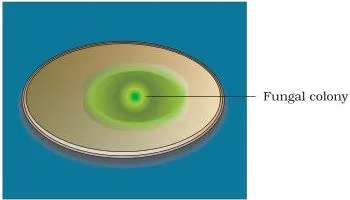
Figure 8.3: Colonies Growing on Nutritive Media (NCERT p. 150)
Bacteria and many fungi are invisible singly, but they can be grown on nutritive media in a petri dish to form colonies visible to the naked eye. This is why culturing matters: it turns an invisible microbe into a visible, countable, studiable object, and it is how Fleming’s unwashed plate revealed penicillin.
Figures 8.4 and 8.5: Where Industry Grows Microbes (NCERT p. 152)
Industrial production needs microbes in very large vessels called fermentors (Figure 8.4), and the whole plant around them (Figure 8.5) supplies the raw material, controls conditions, and collects the product. These two figures take you from the petri dish to the factory floor — the same biology, at a vastly larger scale.

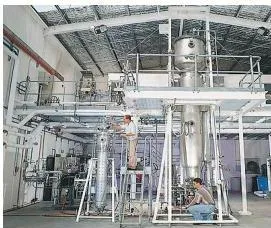
Figure 8.6: Secondary Treatment in Action (NCERT p. 154)
This is the aeration tank of secondary treatment. The primary effluent is constantly agitated mechanically while air is pumped in, allowing aerobic microbes to grow vigorously into flocs — mesh-like masses of bacteria associated with fungal filaments. While growing, these flocs consume the major part of the organic matter, cutting the BOD.
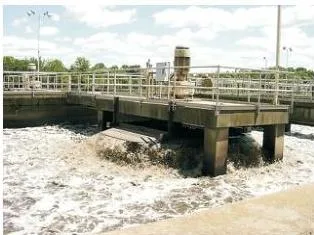
Figure 8.7: The Scale of a Sewage Plant (NCERT p. 155)
The aerial view shows why the chapter calls microbial sewage treatment a major role: treating millions of gallons of waste water every day requires an entire plant of settling and aeration tanks. It also supports the chapter’s point that microbial treatment has been practised for more than a century and no man-made technology has rivalled it.
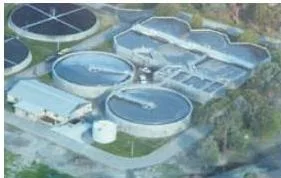
Figure 8.8: The Biogas Plant (NCERT p. 156)
The biogas plant is a concrete tank, 10–15 feet deep, into which a slurry of cattle dung is fed. A floating cover sits over the slurry and rises as gas is produced by microbial activity; a pipe carries the gas to nearby houses, and the spent slurry leaves through another outlet to be used as fertiliser.
Key Definitions: Terms to Remember
Use this as a quick lookup — every term is defined the way the chapter uses it, with its NCERT page.
- Lactic acid bacteria (LAB) — a group of bacteria (including Lactobacillus and others) that grow in milk, produce acids, and convert it to curd (p. 150).
- Inoculum / starter — a small amount of curd added to fresh milk, containing millions of LAB that multiply at suitable temperatures (p. 150).
- Fermentor — a very large vessel in which microbes are grown for industrial production (p. 151).
- Antibiotic — a chemical substance produced by some microbes that can kill or retard the growth of other, disease-causing microbes (p. 152).
- Primary sludge — the solids that settle out of sewage during primary (physical) treatment (p. 153).
- Effluent — the supernatant liquid left above the primary sludge after settling; it goes to secondary treatment (p. 153).
- Flocs — mesh-like masses of bacteria associated with fungal filaments, formed in the aeration tank (p. 153).
- BOD (biochemical oxygen demand) — the oxygen that would be consumed if all the organic matter in one litre of water were oxidised by bacteria; an indirect measure of organic matter (pp. 153–154).
- Activated sludge — the sediment formed when bacterial flocs settle in the settling tank after secondary treatment (p. 154).
- Anaerobic sludge digester — a large tank where anaerobic bacteria digest the bacteria and fungi in the sludge, producing biogas (p. 154).
- Methanogens — bacteria that grow anaerobically on cellulosic material and produce large amounts of methane along with CO2 and H2; e.g. Methanobacterium (p. 155).
- Biogas — a mixture of gases (predominantly methane, with CO2 and H2) produced by microbial activity, used as fuel (p. 155).
- Biocontrol — the use of biological methods for controlling plant diseases and pests (p. 156).
- Biofertilisers — organisms that enrich the nutrient quality of the soil (p. 157).
- Mycorrhiza — a symbiotic association between a fungus and plant roots; the fungus passes phosphorus from soil to the plant (p. 157).
- Single cell protein (SCP) — a term in Exercise 13 (p. 159); ask your teacher how microbes are used to produce protein-rich biomass for food and feed.
Common Mistakes Students Make in This Chapter
These are the confusions the chapter text itself warns against, named before you make them.
| Mistake | Correct rule | How to check your answer |
|---|---|---|
| Treating antibiotics as effective against viruses | The chapter’s antibiotics (penicillin, and the diseases they treat — plague, whooping cough, diphtheria, leprosy) work against bacteria (p. 152) | List the diseases named in the chapter — are any of them viral? |
| Confusing primary with secondary treatment | Primary is physical (filtration, sedimentation); secondary is biological (aeration, flocs, BOD reduction) (pp. 153–154) | Ask: does this step use microbes? If not, it is primary |
| Thinking BOD is oxygen already present in water | BOD is the oxygen that would be consumed to oxidise organic matter, so higher BOD = more organic matter = more pollution (p. 154) | Higher BOD means worse water — that is the direction to remember |
| Swapping cyclosporin A and statin producers | Cyclosporin A — fungus Trichoderma polysporum; statins — yeast Monascus purpureus (p. 153) | Both start with ‘T’? No — only cyclosporin A does. That is the hook. |
| Thinking methanogens need oxygen | They grow anaerobically — in the cattle rumen and in anaerobic sludge digesters (p. 155) | Recall the rumen: a stomach has little free oxygen |
| Thinking biocontrol means killing every pest | The organic approach keeps pests at manageable levels; eradicating them would kill the predators that depend on them (p. 156) | The chapter calls eradication ‘undesirable’ — that is the clue |
| Assuming only Lactobacillus makes curd | LAB is a group — Lactobacillus and others (p. 150) | The book never names a single species for curd |
Exam Notes: How to Revise This Chapter
Revise this chapter as one name-heavy unit: microbe names, products, and processes, with exactly one numerical reasoning question (the BOD question). Below is the map of the fifteen exercise questions to the sections they test (NCERT pp. 159–160).
| Questions | Section tested | What a full-marks answer needs |
|---|---|---|
| Q1–Q4 | Household products (pp. 150–151) | Name a sample carrying microbes (Q1); gas released during metabolism — CO2 from dough and beverages (Q2); LAB in curd and their useful roles (Q3); fermented Indian foods (Q4) |
| Q5–Q6 | Antibiotics (pp. 152–153) | How antibiotics control bacterial diseases; two fungus species used to produce antibiotics |
| Q7–Q8 | Sewage treatment (pp. 153–154) | Define sewage; the key difference between primary and secondary treatment |
| Q9 | Biogas (p. 155) | Yes — methanogens produce methane from cattle dung |
| Q10 | Biocontrol and biofertilisers (pp. 156–158) | Name specific agents: Bt for pests, Rhizobium/mycorrhiza for soil nutrients |
| Q11 | BOD (pp. 153–154, 159) | The only calculation-style question — match BOD values to samples using the higher-BOD-means-more-polluted chain |
| Q12 | Bioactive molecules (p. 153) | Trichoderma polysporum and Monascus purpureus |
| Q13 | Single cell protein and soil (p. 159) | A discussion question — connect microbes to protein-rich food and to soil nutrient cycling |
| Q14 | Whole chapter (p. 159) | A reasoning question — any order is defensible only with reasons; cite what each product does for human welfare |
| Q15 | Biofertilisers (pp. 157–158) | Nitrogen fixation (Rhizobium, Azospirillum, Azotobacter, cyanobacteria) and phosphorus supply (mycorrhiza) |
Two questions are traps for rushed answers. Q11 is the only calculation-style question, and its reasoning chain is: more organic matter → higher BOD → more polluted. Q14 needs reasons, not just an ordering — the chapter’s closing summary argues that microbes as a whole are indispensable, so defend your order with each product’s role.
And remember: textbook contents and the examinable syllabus are not always identical — check the current official CBSE syllabus.
Revision Summary: The Chapter in One Page
A two-minute check, built from the chapter’s own summary (NCERT pp. 158–159) and reworded:
- Microbes are everywhere and not all are harmful — most are useful to human beings.
- LAB converts milk to curd and improves its nutritional quality (vitamin B12).
- Yeast (Saccharomyces cerevisiae) ferments dough for bread, idli and dosa.
- Bacteria and fungi give cheese its characteristic texture, taste and flavour.
- Industrial microbes produce organic acids, alcohol and enzymes.
- Penicillin came from a chance discovery and helped control diseases such as diphtheria, whooping cough and pneumonia.
- Sewage is treated by microbes in two stages using flocs and activated sludge, recycling water in nature.
- Methanogens produce biogas (methane) while degrading plant waste, giving rural areas a fuel source.
- Biocontrol reduces our dependence on toxic pesticides.
- Biofertilisers enrich soil nutrients in place of chemical fertilisers.
Related Resources: Class 12 Biology Chapters
This listing is maintained for the 2026-27 academic session using the NCERT textbook information available to us. NCERT remains the authority for confirming the latest edition.
If this chapter made sense, the natural next steps are the surrounding chapters of the same book:
- NCERT Class 12 Biology book page — open any other chapter of the book from one place.
- Class 12 NCERT book pages — jump to other subjects.
- Human Health and Disease (chapter 7) — the chapter this one opens by contrasting with, on microbes as disease-causers.
- Biotechnology: Principles and Processes (chapter 9) — where the book points forward for Bt-cotton genetics.
- CBSE notes for Class 12 Biology — exam-focused study notes for the same syllabus.
Sources and Data Verification
Four plain facts about where this page’s information comes from:
- This page describes the NCERT Class 12 Biology textbook, chapter 8 ‘Microbes in Human Welfare’, in its current official edition, from the official NCERT portal.
- It covers that single chapter of the Biology book — not other Class 12 subjects, books or syllabi.
- It is maintained for the current academic session using the NCERT information available to us.
- NCERT settles textbooks, editions and PDFs, while CBSE settles the curriculum, syllabus and examinations — textbook contents and the examinable syllabus are not always identical.
Reference: NCERT Class 12 Biology textbook, chapter 8, official edition on ncert.nic.in.
Frequently Asked Questions: Microbes in Human Welfare
Which microbes convert milk into curd and how do they work?
Lactic acid bacteria (LAB), a group that includes Lactobacillus and others, convert milk into curd. They grow in milk and produce acids that coagulate and partially digest the milk proteins; a little curd added to fresh milk acts as an inoculum carrying millions of LAB (NCERT p. 150).
What is the difference between primary and secondary sewage treatment?
Primary treatment is physical — filtration removes floating debris and sedimentation removes grit, leaving primary sludge and an effluent. Secondary (biological) treatment aerates the effluent so aerobic microbes grow into flocs that consume the organic matter, reducing BOD before the effluent is released (NCERT pp. 153–154).
Why does a higher BOD value mean more polluted water?
BOD is the oxygen that would be consumed if all the organic matter in one litre of water were oxidised by bacteria. More organic matter means more oxygen is needed, so a higher BOD means greater polluting potential (NCERT p. 154).
Which bacteria produce biogas and where are they found?
Methanogens such as Methanobacterium produce biogas — a mixture predominantly of methane, with CO2 and H2. They grow anaerobically on cellulosic material and are found in the anaerobic sludge of sewage treatment plants and in the rumen of cattle (NCERT p. 155).
Which microbe produces citric acid, acetic acid, butyric acid and lactic acid?
Citric acid comes from the fungus Aspergillus niger, acetic acid from the bacterium Acetobacter aceti, butyric acid from Clostridium butylicum, and lactic acid from Lactobacillus (NCERT p. 153).
What are biofertilisers and which organisms act as biofertilisers?
Biofertilisers are organisms that enrich the nutrient quality of the soil. The main sources are bacteria, fungi and cyanobacteria: Rhizobium (symbiotic nitrogen fixation in legumes), Azospirillum and Azotobacter (free-living nitrogen fixers), mycorrhizal fungi such as Glomus (phosphorus supply), and cyanobacteria like Anabaena and Nostoc (NCERT pp. 157–158).
Explore Class 12 Biology Books
- Previous: Human Health and Disease
- Next: Biotechnology : Principles and Processes
Class 12 Biology on LearnCBSE:
Related chapters: