
Human Health and Disease Class 12 is the seventh chapter of the NCERT Biology textbook, part of Unit VIII “Biology in Human Welfare”. This page carries the official PDF of the chapter, plus a section-by-section breakdown of what it teaches and the diagrams, definitions and exam skills that students revise most.
All page references below follow the official NCERT edition currently in use.
Download the NCERT Class 12 Biology Chapter 7 PDF
If you want the chapter itself — the full text, every diagram and all the exercise questions at the end — open the NCERT Class 12 Biology Chapter 7 Human Health and Disease PDF. It is the official NCERT edition hosted on ncert.nic.in, so the page numbers and diagrams match the printed textbook exactly.
The chapter covers five topics: common diseases in humans, immunity, AIDS, cancer, and drugs and alcohol abuse. Use the download for offline study; use the explanation below it to revise quickly.
| What the chapter holds | Count | Where it is used |
|---|---|---|
| Printed pages | 22 | |
| Sections in the chapter | 16 | |
| Figures with NCERT captions | 15 | |
| Exercise questions | 17 | answered in our NCERT Solutions |
| Official NCERT PDF | Download the chapter PDF | the chapter exactly as NCERT publishes it |
What is inside this chapter
The table below gives the chapter in numbers — its sections, figures and exercise questions, taken straight from the official file. Use it to judge the size of the chapter before you start.
The chapter opens Unit VIII “Biology in Human Welfare”, which also holds Chapter 8, Microbes in Human Welfare. The unit’s opening page (NCERT, p. 127) profiles M.S. Swaminathan, the plant geneticist known for his role in India’s Green Revolution and for developing short-duration, high-yielding rice varieties.
Human Health and Disease Class 12: how the five sections fit together
NCERT defines health not as “absence of disease” but as a state of complete physical, mental and social well-being (NCERT, p. 129). The book adds that mind and mental state affect health through the neural and endocrine systems, which influence the immune system — and that health is shaped by genetic disorders, infections and lifestyle.
The chapter then splits into five sections, which grow naturally out of that definition:
- 7.1 Common Diseases in Humans (p. 130) — eight diseases across five pathogen groups.
- 7.2 Immunity (p. 134) — how the body defends itself.
- 7.3 AIDS (p. 138) — when the defence system itself is destroyed.
- 7.4 Cancer (p. 140) — when control of cell division fails.
- 7.5 Drugs and Alcohol Abuse (p. 142) — when lifestyle harms health.
Read in order, the logic is simple: first you meet the attackers, then the defence, then three ways the defence or the body’s control can fail.
Common diseases in humans: the pathogen behind every illness
Pathogens are organisms that enter the body, multiply and interfere with normal vital activities, causing morphological and functional damage (NCERT, p. 130). Each pathogen is adapted to its host environment — gut pathogens, for example, must survive the stomach’s low pH and resist digestive enzymes. Section 7.1 takes one representative disease from each major pathogen group.
Work through the table disease by disease. For each one, name the pathogen, its type, how it travels and its signature symptom.
| Disease | Pathogen (type and name) | Transmission | Key symptoms | Prevention focus | NCERT page |
|---|---|---|---|---|---|
| Typhoid | Bacterium Salmonella typhi | Contaminated food and water; enters the small intestine and spreads through blood | Sustained high fever \( 39\text{-}40^\circ\text{C} \), weakness, stomach pain, constipation, headache, loss of appetite | Personal and public hygiene, clean water and food | 130 |
| Pneumonia | Bacteria Streptococcus pneumoniae, Haemophilus influenzae | Inhaling droplets or aerosols; sharing glasses and utensils | Fever, chills, cough, headache; alveoli fill with fluid; lips and nails turn grey-bluish in severe cases | Avoid close contact with infected persons; hygiene | 131 |
| Common cold | Rhino viruses | Droplets from cough or sneeze; contaminated objects such as pens, doorknobs, cups | Nasal congestion, sore throat, hoarseness, cough, headache; usually lasts 3–7 days | Avoid close contact with infected persons; hygiene | 131 |
| Malaria | Protozoan Plasmodium (several species) | Bite of infected female Anopheles mosquito | Chill and high fever recurring every 3–4 days as RBCs rupture and haemozoin is released | Vector control: no stagnant water, mosquito nets, Gambusia fish, insecticide | 132 |
| Amoebiasis (amoebic dysentery) | Protozoan Entamoeba histolytica | Houseflies carry the parasite from faeces to food; contaminated water and food | Constipation, abdominal pain and cramps, stools with excess mucus and blood clots | Clean water and food, proper waste disposal, hygiene | 132 |
| Ascariasis | Helminth Ascaris (round worm) | Eggs in faeces contaminate soil, water and plants; eaten with contaminated food | Internal bleeding, muscular pain, fever, anaemia, blockage of the intestinal passage | Hygiene, clean food and water | 133 |
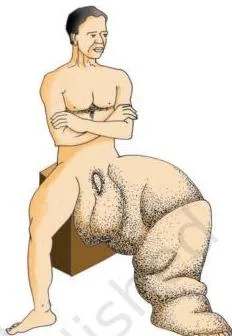
| Elephantiasis (filariasis) | Helminth Wuchereria (W. bancrofti, W. malayi) | Bite of female mosquito vectors | Chronic inflammation of lymphatic vessels of the lower limbs; genital organs may be affected | Vector control and elimination of breeding places | 133 |
| Ringworm | Fungi Microsporum, Trichophyton, Epidermophyton | Soil; shared towels, clothes and combs of infected people | Dry, scaly lesions on skin, nails and scalp with intense itching | Personal hygiene; avoid sharing personal items | 133 |
Typhoid’s human face: typhoid is confirmed by the Widal test, and NCERT records the classic case of Mary Mallon, nicknamed “Typhoid Mary” — a cook who remained a typhoid carrier and spread the disease for years through the food she prepared (NCERT, p. 130).
Malaria’s story matters most because the chapter returns to its life cycle in Figure 7.1 (see the figure walkthrough below). An infected female Anopheles mosquito injects sporozoites — the infectious form — when it bites. The parasites multiply in the liver, then attack red blood cells and rupture them.
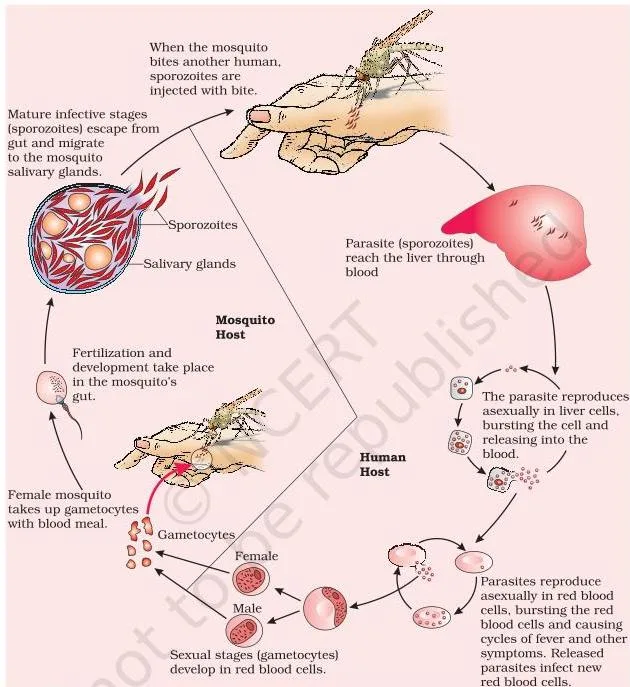
That rupture releases a toxic substance, haemozoin, which causes the chill and high fever that recur every three to four days (NCERT, p. 132). The parasite needs two hosts — human and mosquito — and the female Anopheles is both vector and second host.
Prevention is one block of hygiene measures. Food- and water-borne diseases such as typhoid, amoebiasis and ascariasis are checked by personal hygiene — a clean body, clean drinking water, clean food — and by public hygiene: proper disposal of waste and excreta, and cleaning of water reservoirs and tanks.
Air-borne diseases like pneumonia and the common cold need distance from infected people and their belongings. Vector-borne diseases like malaria and filariasis are fought by controlling vectors and their breeding places: no stagnant water, cleaned coolers, mosquito nets, Gambusia fish that eat larvae, insecticide in ditches, and wire mesh on doors and windows (NCERT, p. 133).
The image above is the chapter’s visual reminder that most of section 7.1’s diseases are preventable with hygiene and vector control.
Ringworm is the chapter’s fungal disease. Fungi of the genera Microsporum, Trichophyton and Epidermophyton cause dry, scaly lesions on the skin, nails and scalp, with intense itching (NCERT, p. 133). The infection is caught from soil or from shared towels, clothes and combs.
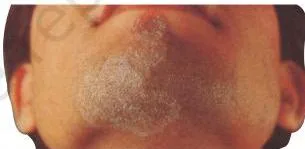
Heat and moisture make these fungi grow, which is why they thrive in skin folds such as the groin or between the toes — the diagram shows the affected skin area.
Immunity: the body’s four barriers and two responses
We are exposed to large numbers of infectious agents every day, but only a few exposures end in disease. The body’s overall ability to fight disease-causing organisms, conferred by the immune system, is called immunity (NCERT, p. 134). Immunity comes in two types: innate and acquired.
Innate immunity: four barriers you are born with
Innate immunity is non-specific — it blocks all foreign agents alike — and is present from birth. NCERT names four types of barriers (NCERT, pp. 134–135):
- Physical barriers — the skin, and the mucus coating of the epithelium lining the respiratory, gastrointestinal and urogenital tracts, which traps microbes.
- Physiological barriers — acid in the stomach, saliva in the mouth and tears from the eyes all prevent microbial growth.
- Cellular barriers — certain leukocytes: PMNL (neutrophils), monocytes and natural killer lymphocytes in the blood, and macrophages in tissues, phagocytose and destroy microbes.
- Cytokine barriers — virus-infected cells secrete interferons, proteins that protect non-infected cells from further viral infection.
Memory hook: skin, spit, soldiers, signals — physical, physiological, cellular, cytokine.
Acquired immunity: pathogen-specific and full of memory
Acquired immunity is pathogen-specific and is characterised by memory (NCERT, p. 135). A first encounter with a pathogen produces a low-intensity primary response; a later encounter with the same pathogen produces a far stronger secondary, or anamnestic, response — the body appears to remember the first meeting.
Two lymphocytes run this system. B-lymphocytes produce antibodies, so their defence is called the humoral immune response. T-lymphocytes mediate cell-mediated immunity (CMI) and help B-cells make antibodies.
Each antibody molecule has four peptide chains — two small light chains and two longer heavy chains — so it is written as \( H_2L_2 \); IgA, IgM, IgE and IgG are examples (NCERT, p. 135).
CMI also explains graft rejection: the body distinguishes “self” from “nonself”, so organs from an unrelated donor — even with tissue and blood-group matching — are rejected sooner or later, and the patient needs immunosuppressants for life.
Active vs passive immunity, vaccination, allergy, autoimmunity
The fastest way to separate active and passive immunity is to ask who made the antibodies (NCERT, p. 136):
- Active immunity — your own body produces antibodies after exposure to antigens, which may be living or dead microbes or other proteins. It is slow and takes time to reach full effect, and comes either from natural infection or from deliberate immunisation.
- Passive immunity — ready-made antibodies are given directly to the body. Examples: colostrum, the yellowish fluid from the mother’s early lactation that is rich in IgA antibodies and protects the newborn; antibodies crossing the placenta; antitoxin for tetanus; and antiserum for snake venom.
Vaccination works on immune memory. A vaccine is a preparation of antigenic proteins of a pathogen, or an inactivated or weakened pathogen. It generates memory B- and T-cells that recognise the pathogen on later exposure and overwhelm it with a massive antibody response.
When a quick response is essential — as in tetanus or snakebite — preformed antibodies (antitoxin) are injected directly; that is passive immunisation (NCERT, p. 136). Recombinant DNA technology now allows antigenic polypeptides of a pathogen to be produced in bacteria or yeast, as in the hepatitis B vaccine.
Allergy is the exaggerated immune response to certain environmental antigens called allergens; the antibodies involved are of the IgE type. Common allergens include mites in dust, pollens and animal dander. Allergy symptoms — sneezing, watery eyes, running nose, difficulty breathing — come from chemicals like histamine and serotonin released from mast cells; anti-histamines, adrenalin and steroids reduce them (NCERT, p. 137).
Autoimmunity happens when, for genetic or unknown reasons, the body attacks its own cells. NCERT’s example is rheumatoid arthritis (NCERT, p. 137).
Lymphoid organs: where immunity runs
Lymphoid organs are where lymphocytes originate, mature and proliferate (NCERT, pp. 137–138):
- Primary: bone marrow, the main organ where all blood cells including lymphocytes are produced, and the thymus, a lobed organ near the heart that is large at birth and shrinks by puberty. Both provide micro-environments for maturation of T-lymphocytes.
- Secondary: the spleen (filters blood, traps blood-borne micro-organisms, holds a large reservoir of erythrocytes), lymph nodes (trap micro-organisms and antigens from lymph and tissue fluid, activating lymphocytes), tonsils, Peyer’s patches of the small intestine and the appendix.
- MALT — mucosa-associated lymphoid tissue in the lining of the respiratory, digestive and urogenital tracts — forms about 50 per cent of the body’s lymphoid tissue.
AIDS: how HIV disables the immune system
AIDS stands for Acquired Immuno Deficiency Syndrome — a deficiency of the immune system acquired during the person’s lifetime, not a congenital disease, and “syndrome” means a group of symptoms. It is caused by the Human Immuno deficiency Virus (HIV), a retrovirus whose envelope encloses an RNA genome (NCERT, p. 138).
HIV transmission happens through four routes:
- sexual contact with an infected person;
- transfusion of contaminated blood and blood products;
- sharing infected needles, as in intravenous drug abusers;
- from an infected mother to her child through the placenta.
So the high-risk groups are people with multiple sexual partners, intravenous drug users, people who need repeated blood transfusions, and children born to HIV-infected mothers (NCERT, p. 138).
HIV is not spread by touch or physical contact — only by body fluids — so infected people must not be isolated; they need help and sympathy, and hiding the infection only spreads it further (NCERT, p. 139).
There is a time-lag between infection and symptoms, usually 5–10 years, during which the person suffers bouts of fever, diarrhoea and weight loss (NCERT, p. 139).
How HIV destroys immunity, step by step:
- HIV enters macrophages, where its RNA genome replicates to form viral DNA using the enzyme reverse transcriptase.
- The viral DNA is incorporated into the host cell’s DNA and directs the cell to produce virus particles — the macrophage acts like an HIV factory.
- HIV also enters helper T-lymphocytes (\( T_H \)), replicates, and the progeny viruses released into the blood attack other helper T-lymphocytes.
- The count of helper T-lymphocytes progressively falls, so the patient is left defenceless against infections that a healthy person would overcome — bacteria like Mycobacterium, viruses, fungi and even parasites like Toxoplasma (NCERT, p. 139).
The widely used diagnostic test is ELISA (enzyme linked immuno-sorbent assay). Anti-retroviral drugs are only partially effective — they prolong life but cannot prevent death (NCERT, p. 139).
Prevention is the only cure. In India, the National AIDS Control Organisation (NACO) and NGOs educate the public, and WHO runs prevention programmes. The chapter’s listed measures: safe blood from blood banks, disposable needles and syringes in hospitals and clinics, free distribution of condoms, controlling drug abuse, advocating safe sex, and regular check-ups for susceptible populations (NCERT, p. 139).
Cancer: when cells lose the stop signal
In the normal body, cell growth and differentiation are highly controlled and regulated. Cancer is a breakdown of these regulatory mechanisms (NCERT, p. 140).
Normal cells show contact inhibition — contact with other cells stops their uncontrolled growth. Cancer cells have lost this property, so they keep dividing and form masses of cells called tumors (NCERT, p. 140).
- Benign tumors remain confined to their original location, do not spread and cause little damage.
- Malignant tumors are masses of rapidly proliferating neoplastic cells that invade and damage surrounding normal tissues, competing with normal cells for nutrients.
- Metastasis — cells sloughed from a malignant tumor travel through the blood to distant sites, lodge there and start new tumors. It is the most feared property of malignant tumors (NCERT, pp. 140–141).
Three kinds of agents transform normal cells into cancerous ones, and all are called carcinogens (NCERT, p. 141):
- physical — ionising radiations like X-rays and gamma rays, and non-ionising UV, which damage DNA;
- chemical — carcinogens in tobacco smoke, a major cause of lung cancer;
- biological — oncogenic viruses carrying viral oncogenes, and cellular oncogenes (proto-oncogenes) in normal cells that, when activated, can transform cells.
Early detection matters because it allows the disease to be treated successfully in many cases.
Detection uses biopsy with histopathological study of the tissue; blood and bone-marrow tests for increased cell counts in leukemias; radiography, CT (computed tomography, which uses X-rays to build a three-dimensional image) and MRI (magnetic resonance imaging, using strong magnetic fields and non-ionising radiations); and antibodies against cancer-specific antigens (NCERT, p. 141).
Treatment uses surgery, radiotherapy (lethally irradiating tumor cells while protecting normal tissue), chemotherapy (drugs whose side effects include hair loss and anaemia), and biological response modifiers such as \( \alpha \)-interferon, which activate the immune system to destroy the tumor. Most cancers are treated by a combination of surgery, radiotherapy and chemotherapy (NCERT, p. 141).
Drugs and alcohol abuse: substances, sources and addiction
This listing is maintained for the 2026-27 academic session using the NCERT textbook information available to us. NCERT remains the authority for confirming the latest edition.
Survey statistics show drug and alcohol use has been rising, especially among the youth. The chapter’s job is to make you recognise the substances, understand why addiction grips people, and know the prevention measures (NCERT, p. 142).
Opioids: heroin from the opium poppy
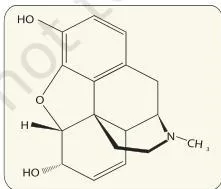
Opioids bind to specific opioid receptors in the central nervous system and gastrointestinal tract. Heroin, commonly called smack, is chemically diacetylmorphine — a white, odourless, bitter crystalline compound obtained by acetylation of morphine.
Morphine is extracted from the latex of the opium poppy Papaver somniferum; taken by snorting or injection, heroin is a depressant that slows down body functions (NCERT, p. 142).
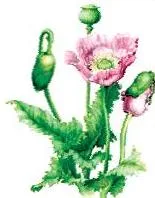
The plant in the figure above is the source plant — recognise it as the origin of morphine and heroin.
Cannabinoids: from Cannabis sativa
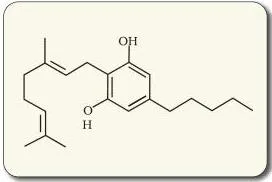
Cannabinoids interact with cannabinoid receptors mainly in the brain. They are obtained from the inflorescences of Cannabis sativa; its flower tops, leaves and resin are used in combinations to make marijuana, hashish, charas and ganja, taken by inhalation or oral ingestion, with effects on the cardiovascular system (NCERT, pp. 142–143).

The leaves shown here are the identifying feature of Cannabis sativa, the cannabis source plant.
Coca alkaloid and hallucinogens
Cocaine, called coke or crack, comes from the coca plant Erythroxylum coca, native to South America. It interferes with the transport of the neurotransmitter dopamine, has a potent stimulant action on the central nervous system producing euphoria and increased energy, and causes hallucinations in excessive doses.
Other plants with hallucinogenic properties are Atropa belladonna and Datura (NCERT, p. 143).
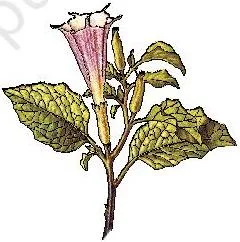
The flowering branch in the figure identifies Datura, one of the hallucinogenic plants the chapter names.
Tobacco: nicotine and its damage
Tobacco has been used for over 400 years, smoked, chewed or used as snuff. Its alkaloid nicotine stimulates the adrenal gland to release adrenaline and nor-adrenaline into the blood, raising blood pressure and heart rate.
Smoking is linked to cancers of the lung, urinary bladder and throat, bronchitis, emphysema, coronary heart disease and gastric ulcer; tobacco chewing raises the risk of oral-cavity cancer. Smoking also raises the carbon monoxide (CO) content of the blood and reduces haem-bound oxygen, causing oxygen deficiency (NCERT, p. 143).
Addiction vs dependence
Addiction is a psychological attachment to certain effects — euphoria and a temporary feeling of well-being — that drives people to take the drug even when it is not needed or becomes self-destructive. With repeated use the tolerance level of the receptors rises, so they respond only to higher doses, leading to greater intake.
Dependence is the tendency of the body to show a characteristic and unpleasant withdrawal syndrome — anxiety, shakiness, nausea, sweating — if the regular dose is suddenly stopped (NCERT, p. 145).
Effects and the five prevention measures
Immediate effects include reckless behaviour, vandalism and violence; excessive doses can cause coma and death from respiratory failure, heart failure or cerebral haemorrhage. Intravenous users risk AIDS and Hepatitis B through shared needles. Chronic use damages the nervous system and the liver (cirrhosis), and use during pregnancy harms the foetus (NCERT, p. 145).
The chapter lists five prevention measures (NCERT, pp. 146–147):
- Avoid undue peer pressure — respect and nurture each child’s own choice and personality.
- Education and counselling — teach children to face stress and disappointment, and channel energy into sports, reading, music and yoga.
- Seek help from parents and peers — early guidance vents anxiety and guilt.
- Look for danger signs — drop in academic performance, withdrawal, depression, changed habits.
- Seek professional and medical help — psychologists, psychiatrists and de-addiction programmes can lead to a completely normal life.
Reading the chapter’s diagrams


These figures carry the mechanisms of the chapter. If you can explain each one in your own words, you have understood the chapter.
Figure 7.1: stages in the life cycle of Plasmodium (NCERT, p. 132)

Trace the cycle through its two hosts. In the human: sporozoites enter through the bite of an infected female Anopheles mosquito, multiply in the liver, then attack red blood cells and rupture them, releasing haemozoin and causing the recurring chill and fever.
In the mosquito: a female Anopheles draws the parasites in with a blood meal, they multiply into sporozoites stored in the salivary glands, and the next bite injects them into a new human. The mosquito is therefore both the vector and the second host.
Figure 7.4: structure of an antibody molecule (NCERT, p. 135)
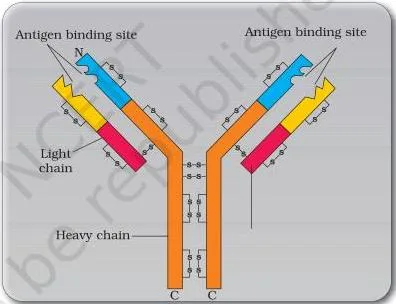
The antibody is drawn as a Y because it has two identical halves. Each molecule has four peptide chains — two light and two heavy — so it is represented as \( H_2L_2 \). The arms of the Y carry the antigen-binding region, which is why the diagram is drawn with the binding site at the tips.
Figure 7.5: diagrammatic representation of lymph nodes (NCERT, p. 138)
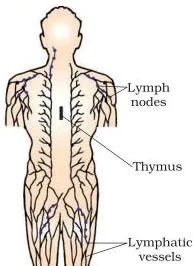
The figure locates the body’s lymphoid organs. The primary organs — bone marrow and thymus — prepare lymphocytes; the secondary organs — spleen, lymph nodes, tonsils, Peyer’s patches and appendix — are where lymphocytes meet antigens and are activated. Lymph nodes trap micro-organisms and antigens from lymph and tissue fluid, which is why their position along the lymphatic system matters.
Figure 7.6: replication of retrovirus (NCERT, p. 139)
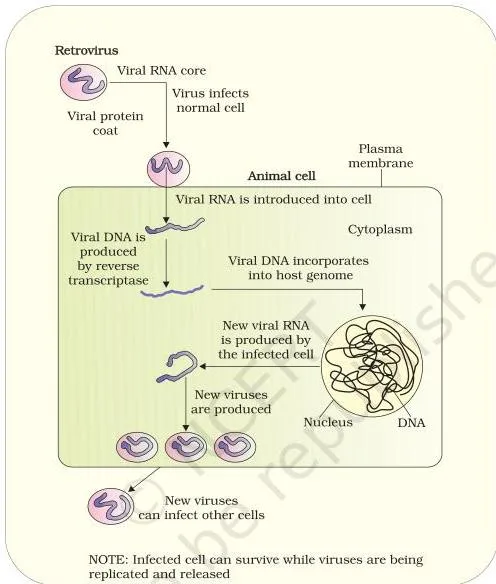
This diagram makes sense of the name “retrovirus”: the genetic information flows backwards, from RNA to DNA. The viral RNA is copied into DNA by reverse transcriptase, the viral DNA is inserted into the host cell’s DNA, and the cell then manufactures new virus particles.
Because each new particle attacks more helper T-lymphocytes, the diagram explains the progressive fall in \( T_H \) cells that defines AIDS.
Key terms and definitions
The chapter packs many one-line definitions, and the board expects them exact. Check your vocabulary against this table.
| Term | What it means |
|---|---|
| Health | A state of complete physical, mental and social well-being, not merely absence of disease (p. 129). |
| Pathogen | A disease-causing organism — bacteria, viruses, fungi, protozoans, helminths (p. 130). |
| Immunity | The host’s overall ability to fight disease-causing organisms, conferred by the immune system (p. 134). |
| Innate immunity | Non-specific defence present at birth, using four barriers — physical, physiological, cellular, cytokine (pp. 134–135). |
| Antibody | Protein produced by B-lymphocytes; each molecule has four peptide chains, two light and two heavy, written \( H_2L_2 \) (p. 135). |
| Active immunity | Antibodies made by your own body after exposure to antigens; slow to develop (p. 136). |
| Passive immunity | Readymade antibodies given to the body — colostrum, placental antibodies, antitoxin (p. 136). |
| Vaccine | A preparation of antigenic proteins or inactivated/weakened pathogen that generates immune memory (p. 136). |
| Allergen | Environmental substance that triggers an exaggerated IgE-mediated immune response (p. 137). |
| Auto-immune disease | The body attacking its own cells; example: rheumatoid arthritis (p. 137). |
| Vector | A transmitting agent — for malaria, the female Anopheles mosquito (p. 132). |
| Secondary lymphoid organs | Spleen, lymph nodes, tonsils, Peyer’s patches, appendix — sites where lymphocytes interact with antigens (pp. 137–138). |
| MALT | Mucosa-associated lymphoid tissue lining the respiratory, digestive and urogenital tracts; about 50% of lymphoid tissue (p. 138). |
| Carcinogen | Physical, chemical or biological agent that induces neoplastic transformation, e.g., X-rays, tobacco smoke (pp. 140–141). |
| Benign tumor | A tumor confined to its original location; causes little damage (p. 140). |
| Malignant tumor | A rapidly growing mass of neoplastic cells that invades and damages surrounding tissue (p. 141). |
| Metastasis | Malignant cells carried by blood to distant sites, where they start new tumors (p. 141). |
| Addiction | Psychological attachment to the effects (euphoria, well-being) of drugs or alcohol (p. 145). |
| Dependence | Withdrawal syndrome when the regular dose stops; tolerance forces higher doses (p. 145). |
Mistakes students make in this chapter
These are the confusions that cost marks — each is named before you make it, with the correction and a way to check yourself.
| Mistake | Correct rule | How to check your answer |
|---|---|---|
| Writing the pathogen as the disease itself — e.g., calling typhoid a bacterium. | Salmonella typhi is the pathogen that causes typhoid; the disease is the illness it produces (NCERT, p. 130). | Name the pathogen and name the disease separately in your answer. |
| Treating any high fever with chills as malaria. | A sustained high fever with constipation and headache suggests typhoid; malaria’s fever recurs every 3–4 days as RBCs rupture and haemozoin is released (NCERT, pp. 130, 132). | Ask: does the fever follow the 3–4 day rhythm? That cycle is malaria’s signature. |
| Believing vaccines contain live, fully virulent pathogens. | Vaccines use inactivated or weakened pathogens, or antigenic proteins; they work through the immune system’s memory (NCERT, p. 136). | Check your definition of vaccine — if it says “live strong germs”, it is wrong. |
| Swapping active and passive immunity. | The test is who made the antibodies: your own body (active, slow, lasting) or readymade antibodies given to you — colostrum IgA, antitoxin, snake-venom antiserum (passive, fast) (NCERT, p. 136). | For any example, ask “whose antibodies are these?” |
| Saying HIV destroys B-lymphocytes. | HIV progressively destroys helper T-lymphocytes (\( T_H \)); with them gone, opportunistic infections like Mycobacterium and Toxoplasma take over (NCERT, p. 139). | The trap option usually names B-cells — reject it; the mechanism always runs through \( T_H \) cells. |
| Calling every tumor cancer. | Benign tumors stay confined and cause little damage; only malignant tumors invade, grow rapidly and metastasise (NCERT, pp. 140–141). | Check for the word “metastasis” — it applies only to malignant tumors. |
| Confusing addiction with dependence. | Addiction is the psychological attachment to a drug’s effects; dependence is the withdrawal syndrome when the dose stops (NCERT, p. 145). | Match the keyword: psychology → addiction; withdrawal symptoms → dependence. |
How this chapter is asked in exams
Look at the exercise set on NCERT page 148 and the pattern shows itself: this chapter rewards precise vocabulary, and the questions test differentiation, abbreviation expansion, drawing and mechanisms. Textbook contents and the examinable syllabus are not always identical — check the current official syllabus for what is examinable this session.
- Differentiation pairs: Q8 asks you to differentiate innate/acquired and active/passive immunity — the classic “give examples of each” demand.
- Abbreviation expansion: Q7 asks for the full forms of MALT, CMI, AIDS, NACO and HIV.
- Drawing: Q9 asks for a well-labelled antibody diagram — use Figure 7.4 and the walkthrough above.
- Mechanisms: Q11 (how HIV makes the immune system deficient) and Q13 (metastasis) test the step-by-step explanations.
- Routes and lists: Q3 (transmission of amoebiasis, malaria, ascariasis, pneumonia), Q6 (lymphoid organs), Q10 (HIV routes) and Q14 (harmful effects of drug abuse) test recall of lists.
- Health measures: Q1, Q2 and Q4 ask for public health measures and how biology has helped control infectious diseases.
- Application and opinion questions: Q15 (peer influence), Q16 (why quitting is hard) and Q17 (what motivates youngsters) ask you to apply the chapter’s ideas to situations — answer with reasons, not just facts.
A full-mark answer for the mechanism questions names the specific cell or molecule — sporozoites or helper T-lymphocytes, for example — rather than saying “germs” or “cells” generally.
Recap of the chapter in plain words
This is the chapter’s own closing summary, delivered as a revision checklist — the ideas NCERT itself says matter most (NCERT, p. 147):
- Health is complete physical, mental, social and psychological well-being — not just absence of disease.
- Infectious diseases like typhoid, pneumonia and malaria are prevented by personal cleanliness, public hygiene (waste disposal, decontaminated water), vector control and immunisation.
- Innate barriers — skin, mucous membranes, antimicrobial substances in tears and saliva, phagocytic cells — block pathogens at entry.
- If pathogens get through, antibodies (humoral response) and cells (cell-mediated response) kill them.
- The immune system has memory: a second exposure to the same pathogen produces a faster, more intense response — that is the basis of vaccination.
- AIDS caused by HIV is fatal but preventable with precautions.
- Many cancers are curable if detected early and treated.
- Drug and alcohol abuse is driven by perceived benefits, stress and peer pressure; education, counselling and professional help can fully relieve the individual.
Related chapters and resources
The chapter before this one in the book deals with evolution; if you are revising the unit in order, work through the Class 12 Biology Evolution notes first, then return here.
The chapter that follows — Microbes in Human Welfare — continues the unit’s theme of biology in human welfare, and the Microbes in Human Welfare Class 12 notes are ready when you finish.
For the whole subject, use the Class 12 Biology notes hub, browse the Class 12 study material, or start from the CBSE notes library.
Sources and data verification
The descriptions on this page follow the NCERT Class 12 Biology textbook, official edition on ncert.nic.in, Chapter 7, Human Health and Disease (the PDF linked above). Four things to know about the data:
- Edition: the contents above describe this NCERT textbook chapter only; they are not drawn from any other edition or publisher.
- Coverage: this page covers Chapter 7 alone — it does not describe the other chapters of the Class 12 Biology book.
- Session: this listing is maintained for the current academic session using the NCERT information available to us.
- Authorities: NCERT settles textbooks, editions and PDFs; CBSE settles the curriculum, syllabus and examinations.
Reference: NCERT Class 12 Biology textbook, chapter 7, official edition on ncert.nic.in.
Frequently asked questions
How does Plasmodium cause the chills and fever of malaria?
Plasmodium causes the fever by destroying red blood cells. Sporozoites enter the body through the bite of an infected female Anopheles mosquito, multiply in the liver, then attack RBCs and rupture them. The rupture releases a toxic substance called haemozoin, which produces the chill and high fever that recur every three to four days (NCERT, p. 132).
Why is colostrum given to newborn babies?
Colostrum is the yellowish fluid secreted by the mother during the initial days of lactation and it is rich in antibodies, especially IgA. It is a form of passive immunity — readymade antibodies that protect the infant until its own immune system matures; the foetus also receives some antibodies through the placenta during pregnancy (NCERT, p. 136).
What is the difference between active and passive immunity?
The difference is who made the antibodies. In active immunity your own body produces antibodies after exposure to antigens — it is slow but lasting. In passive immunity readymade antibodies are given to the body, as in colostrum, antitoxin for tetanus and snake-venom antiserum — it is fast but temporary (NCERT, p. 136).
How does HIV infection reduce the body’s immunity?
HIV progressively destroys helper T-lymphocytes. Inside the body, HIV enters macrophages, where its RNA is copied to DNA by reverse transcriptase and integrated into the host DNA; the macrophage acts as an HIV factory.
HIV also infects helper T-lymphocytes and the progeny viruses attack more of them, so their numbers fall and the patient succumbs to opportunistic infections like Mycobacterium and Toxoplasma (NCERT, pp. 138–139).
Why do cancers spread to other parts of the body?
Cancers spread through metastasis. Malignant tumor cells are sloughed off, travel through the blood, lodge at distant sites and start new tumors there. Normal cells stop dividing on contact with other cells (contact inhibition), but cancer cells have lost this property and keep dividing (NCERT, pp. 140–141).
What are the warning signs of drug abuse in adolescents?
The most common warning signs are a drop in academic performance, unexplained absence from school or college, lack of interest in personal hygiene, withdrawal and isolation, depression, fatigue, aggressive and rebellious behaviour, deteriorating relationships with family and friends, loss of interest in hobbies, and changes in sleeping and eating habits with fluctuations in weight (NCERT, p. 145).
Explore Class 12 Biology Books
- Previous: Evolution
- Next: Microbes in Human Welfare
Class 12 Biology on LearnCBSE:
Related chapters: