
Chapter 4 of the NCERT Class 10 Social Science book India and the Contemporary World II is The Age of Industrialisation. It runs over 24 printed pages — book pages 79 to 102 — and asks whether industrialisation really was a story of triumphant progress.
This page is maintained for the current academic session. The official NCERT Class 10 Social Science Chapter 4 The Age of Industrialisation PDF is right below.
Download the Age of Industrialisation Class 10 Chapter PDF
The file below is the complete, unabridged Chapter 4 of the NCERT Class 10 Social Science book India and the Contemporary World II — all 24 printed pages, from page 79 to page 102 of that book.
Open the NCERT Class 10 Social Science Chapter 4 The Age of Industrialisation PDF to read the chapter exactly as printed: the six sections, every figure and its caption, and the Write in brief, Discuss and Project work exercises on page 102.
| What the chapter holds | Count | Where it is used |
|---|---|---|
| Printed pages | 24 | |
| Sections in the chapter | 9 | |
| Figures with NCERT captions | 22 | |
| Activities | 5 | |
| Official NCERT PDF | Download the chapter PDF | the chapter exactly as NCERT publishes it |
Chapter at a Glance
The chapter studies industrialisation in two countries: Britain, the first industrial nation, and India, whose industrialisation was conditioned by colonial rule. It opens by testing a celebrated image of progress, then moves from production before factories, to the factory and the worker, to the colonies, Indian entrepreneurs, the peculiarities of Indian growth, and finally the market for goods.
It closes with a short Conclusion and exercises titled Write in brief, Discuss and Project work (NCERT, p. 102).
What This Chapter Covers: A Section-by-Section Map
Six numbered sections carry the chapter, and each asks one central question. Use the map below to find where an idea lives; page numbers follow the printed book, whose pagination begins the chapter at page 79.
| Section | NCERT pages | What it asks |
|---|---|---|
| 1. Before the Industrial Revolution | 81–84 | How large-scale production existed before factories, what the factory changed, and how slowly change spread. |
| 2. Hand Labour and Steam Power | 85–88 | Why British industrialists kept hiring hands, and what the surplus of labour meant for workers. |
| 3. Industrialisation in the Colonies | 89–93 | How India’s world-dominant textile trade was broken by monopoly, gomasthas and Manchester cloth. |
| 4. Factories Come Up | 94–96 | Who built India’s first factories, where the capital came from, and who worked the mills. |
| 5. The Peculiarities of Industrial Growth | 97–99 | Why Indian growth differed from Britain’s — swadeshi, the First World War boom, and the survival of small-scale industry. |
| 6. Market for Goods | 100–101 | How advertising — labels, gods, calendars — persuaded people to buy new products. |
The Age of Industrialisation Class 10: Key Concepts
The eight ideas below carry the chapter. Each opens with a plain-sense answer to the question the section is asking, then gives the evidence the book uses.
Proto-industrialisation: Industry Before the Factory
Industrialisation did not begin with factories. In the seventeenth and eighteenth centuries, town merchants in Europe were already running large-scale production for an international market — but in the countryside, not in mills (NCERT, p. 81).
Merchants left the towns because the guilds were powerful there. These associations of producers trained craftspeople, controlled production, regulated competition and prices, and restricted the entry of new people into a trade. Rulers had granted guilds monopoly rights to produce and sell specific products, so new merchants could not easily set up business in towns.
Peasants agreed to work for them because enclosure had taken away common lands, and tiny plots could not support a household. Merchant advances supplemented their shrinking income and let the whole family work. The book’s word for this world is proto-industrialisation — ‘proto’ meaning the first or early form of something (NCERT, p. 81).
The chain ran: a merchant clothier bought wool from a stapler, carried it to spinners, then to weavers, fullers and dyers, with the finishing done in London — which came to be known as a finishing centre. At every stage 20 to 25 workers were employed, so one clothier controlled hundreds of people.
| Proto-industrial production | Factory production | |
|---|---|---|
| Where the work happened | Inside family farms and village households across the countryside | All processes brought together under one roof and one management |
| Who controlled it | Merchants based in towns, who gave advances and bought the output | Mill owners and managers on the spot |
| How many workers | 20–25 at each stage; one clothier controlled hundreds | All stages in one building, yet factory workers stayed a minority — under 20 per cent of Britain’s workforce even at the end of the nineteenth century (NCERT, p. 83) |
| Supervision | Difficult — producers were scattered | Careful supervision, quality watch and regulation of labour |
The Factory and the Slow Pace of Change
The factory was the chapter’s first big change, but the book keeps stressing how slowly it spread. If you learn one habit here, learn to distrust the phrase ‘it happened everywhere at once’ (NCERT, pp. 82–84).
Cotton was the leading sector of the first phase. Britain’s raw cotton imports rose from 2.5 million pounds in 1760 to 22 million pounds by 1787. A series of inventions speeded up carding, twisting, spinning and rolling, and then Richard Arkwright created the cotton mill, which brought all processes under one roof and one management (NCERT, p. 82).
That one roof meant careful supervision, a watch over quality and the regulation of labour — all difficult while production was scattered in the countryside. From the 1840s, as railways expanded in England (and in the colonies from the 1860s), iron and steel took over as the leading sector.
By 1873 Britain exported iron and steel worth about £77 million — double the value of its cotton exports (NCERT, p. 83).
Yet the book refuses a simple triumph story. Four qualifications matter:
- Even at the end of the nineteenth century, under 20 per cent of the total workforce worked in technologically advanced industrial sectors.
- A large portion of textile output was still produced outside factories, in domestic units.
- Non-mechanised sectors grew through small innovations — food processing, building, pottery, glass work, tanning, furniture making and implements.
- Technology spread slowly: James Watt patented his improved steam engine in 1781, yet at the beginning of the nineteenth century there were no more than 321 steam engines in all of England, only 80 of them in cotton (NCERT, p. 84).
Historians now recognise that the typical worker in mid-nineteenth-century Britain was a craftsperson, not a machine operator (NCERT, p. 84).
Why Hand Labour Survived in Britain
The most surprising question in the chapter: with machines available, why did British employers keep hiring hands? The answer inverts the usual story — labour was cheap, so machines were the expensive option (NCERT, p. 85).
Victorian Britain had no shortage of human labour. Plenty of labour meant low wages, and machines that replaced humans required large capital investment. So industrialists saw no need for them.
In many industries demand was seasonal. Gas works and breweries were especially busy through the cold months; book-binders and printers needed extra hands before Christmas; ships were repaired at the waterfront in winter. Employers preferred to hire hands for the season rather than buy machines.
Machines also made standardised goods, while the market wanted variety. Mid-nineteenth-century Britain produced 500 varieties of hammers and 45 kinds of axes — work that needed human skill. The upper classes prized handmade goods as refined, while machine-made goods went to the colonies. America, with scarce labour, mechanised eagerly instead (NCERT, p. 85).
Source A (p. 85) shows the human side: Will Thorne walked to London in November 1881 chasing seasonal work, slept out when his money ran out, and only then got a job at the Old Kent Road Gas Works.
Life of the Workers in Industrial Britain
An abundance of labour meant insecurity, not prosperity. This section follows job-seekers through the job market, the wage system and open resistance (NCERT, pp. 86–88).
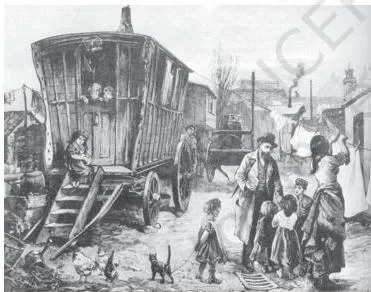
Getting a job depended on networks of friendship and kin. Many waited weeks, sleeping under bridges, in Night Refuges set up by private individuals, or in Casual Wards maintained by the Poor Law authorities, where people were examined, cleansed and made to do hard labour (p. 86).
Seasonality meant long stretches without work — odd jobs were difficult to find until the mid-nineteenth century.
Wages rose somewhat, but they tell us little. Average figures hid variation between trades and years; when prices rose sharply during the Napoleonic War, the real value of wages fell. The number of days worked mattered as much as the rate.
At the best of times about 10 per cent of the urban population were extremely poor, and in the 1830s slump unemployment ran between 35 and 75 per cent in different regions (p. 87).
Fear of unemployment made workers hostile to machines. When the Spinning Jenny — James Hargreaves’s machine of 1764 — entered the woollen industry, women who survived on hand spinning attacked it.
Source B is a magistrate’s report of 1790: colliers’ wives, who had lost their work to spinning engines, advanced on the machine ‘with much insolence’ and had to be talked out of cutting it to pieces (p. 87).
After the 1840s the picture improved. City building — roads, railway stations, tunnels, drainage, sewers, embanked rivers — opened up work, and transport workers doubled in number in the 1840s, doubling again over the next 30 years (p. 88).
Indian Textiles: From World Dominance to Collapse
Before machine industry, Indian silk and cotton dominated world textile markets. The section traces how colonial power and Manchester cloth broke that dominance in stages (NCERT, pp. 89–93).
Trade ran on two wheels. Overland, Armenian and Persian merchants carried goods from Punjab to Afghanistan, Persia and Central Asia; by sea, Surat connected India to the Gulf and Red Sea ports, while Masulipatam and Hoogly traded with Southeast Asia. Indian merchants and bankers financed production and carried supply (p. 89).
From the 1750s this Indian-controlled network broke down. European companies won concessions and monopoly rights, the old ports decayed — Surat’s trade fell from Rs 16 million to Rs 3 million by the 1740s — and Bombay and Calcutta grew as colonial ports (p. 89).
After the Company gained political power in the 1760s and 1770s, it took direct control of weavers. It appointed the gomastha, a paid supervisor; gave weavers advances that forced them to sell their cloth to the Company; marched in with sepoys and peons; and flogged weavers for delays in supply. Weavers deserted villages or revolted (pp. 90–91).
Then Manchester arrived. Britain imposed import duties to protect its own mills, and the Company sold British manufactures in India. The numbers tell the collapse: piece-goods fell from 33 per cent of India’s exports in 1811–12 to 3 per cent by 1850–51; cotton piece-goods rose to over 31 per cent of Indian imports by 1850 and over 50 per cent by the 1870s (p. 92).
The American Civil War added a final crisis: Britain turned to India for raw cotton, prices shot up, and weavers were starved of supply — they had to buy raw cotton at exorbitant prices, and weaving could not pay (p. 93).
| Stage | What happened | Evidence from the book |
|---|---|---|
| 1. European monopolies break the trade network | From the 1750s, European companies won concessions and monopoly rights; old ports decayed | Surat’s trade fell from Rs 16 million to Rs 3 million by the 1740s (p. 89) |
| 2. The Company masters the weavers | After political power in the 1760s–70s: gomasthas, advances, sepoys and flogging | Weavers deserted villages or revolted against the Company (pp. 90–91) |
| 3. Manchester floods the market | British import duties plus cheap machine-made cloth | Piece-goods: 33% of exports (1811–12) to 3% (1850–51); cotton piece-goods over 31% of imports by 1850, over 50% by the 1870s (p. 92) |
| Crisis within the collapse | American Civil War cut US cotton; Britain turned to India | Raw cotton prices shot up; weavers bought it at exorbitant rates (p. 93) |
Factories, Entrepreneurs and Workers in India
The chapter now turns to India’s own factories: their owners, their capital and their workforce (NCERT, pp. 94–96). The dates below are the book’s own milestones.
| Year | Event |
|---|---|
| 1854 | First cotton mill in Bombay; production began two years later |
| 1855 | First jute mill in Bengal; another followed in 1862 |
| 1860s | Elgin Mill in Kanpur; the first Ahmedabad cotton mill a year later |
| 1874 | First spinning and weaving mill in Madras began production |
| 1912 | J.N. Tata set up India’s first iron and steel works at Jamshedpur |
| 1917 | Seth Hukumchand set up the first Indian jute mill in Calcutta |
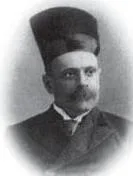
Much of the early capital came from the China trade in opium and tea. Dwarkanath Tagore made his fortune there and set up six joint-stock companies in the 1830s and 1840s; Parsis like Dinshaw Petit and Jamsetjee Nusserwanjee Tata built fortunes from exports to China and raw cotton to England; Seth Hukumchand and G.D.
Birla’s father and grandfather also traded with China (p. 94).
Yet European Managing Agencies — Bird Heiglers & Co., Andrew Yule, Jardine Skinner & Co. — controlled a large sector until the First World War. Indian financiers supplied the capital, Europeans made the investment and business decisions, and Indian businessmen were barred from their chambers of commerce (p. 94).
Workers came from surrounding districts: over 50 per cent of Bombay’s cotton workers in 1911 came from Ratnagiri. Millworkers moved between village and city, going home for harvests and festivals. The jobber — an old, trusted worker — recruited from his village, helped newcomers settle and lent money in crises; in return he demanded money and gifts and controlled workers’ lives (pp. 95–96).
Two worker voices close the section: Vasant Parkar remembers workers paying jobbers to get their sons into the mill, and mills granting leave for harvest; Bhai Bhosle recalls 10-hour night shifts (5 pm to 3 am) and a father who developed asthma after 35 years of mill work (p. 96).
The Peculiarities of Indian Industrial Growth
The book’s point is that Indian industrialisation was different, not a failed copy of Britain’s. Four features defined it (NCERT, pp. 97–99).
First, European agencies invested in plantations and export goods — tea, coffee, indigo, jute — for export, not for the Indian home market. Second, early Indian mills made coarse yarn, not cloth, to avoid competing with Manchester; the yarn fed Indian handlooms or went to China (p. 97).
Third, the swadeshi movement changed the pattern. As nationalists mobilised people to boycott foreign cloth, and as the Chinese market for Indian yarn declined from 1906, mills shifted from yarn to cloth — Indian piece-goods production doubled between 1900 and 1912 (p. 97).
Fourth, the First World War transformed demand. Manchester imports declined; Indian mills gained a vast home market and war orders — jute bags, uniforms, tents, leather boots, saddles. New factories opened, old ones ran multiple shifts, and industrial production boomed. After the war Britain could not recapture its old position in India (pp. 97–98).
Yet factory industry stayed small. About 67 per cent of large industries sat in Bengal and Bombay in 1911; only 5 per cent of the industrial labour force worked in registered factories in 1911 (10 per cent by 1931); the rest worked in small workshops and household units. Handloom cloth production almost trebled between 1900 and 1940 (p. 98).
The fly shuttle explains part of the handloom survival: this mechanical device, moved by ropes and pulleys, places the weft into the warp and allowed weavers to operate larger looms. By 1941 over 35 per cent of Indian handlooms were fitted with it — 70 to 80 per cent in regions like Travancore, Madras, Mysore, Cochin and Bengal.
Fine specialised weaves — Banarasi and Baluchari saris, Madras lungis and handkerchiefs — survived because mills could not imitate them (pp. 98–99).
Creating a Market: Labels, Gods and Calendars
New products only sell if people are persuaded to want them. This section is the chapter’s most visual: how advertising made consumers (NCERT, pp. 100–101).
Manchester industrialists put labels on cloth bundles marked ‘MADE IN MANCHESTER’ — a label that named the maker and stood as a mark of quality. But labels also carried images: Indian gods and goddesses such as Kartika, Lakshmi and Saraswati appeared on imported cloth labels, as if giving divine approval — and making a foreign product feel familiar (p. 100).
By the late nineteenth century manufacturers printed calendars. Unlike newspapers, calendars were used even by people who could not read, hung in tea shops and poor homes as well as offices, and seen day after day all year. Figures of emperors and nawabs — Maharaja Ranjit Singh on a Manchester label — transferred respect from ruler to product (pp. 100–101).
Indian manufacturers then turned the same tools to the swadeshi message: if you care for the nation, buy Indian (Fig. 28). The book’s Conclusion looks back at Figs 1 and 2 with these lessons in hand — hand technology and small-scale production remained part of the industrial landscape, so the triumphant images deserve a second, critical look (p. 101).
Figure Walkthrough: Reading the Chapter’s Images


The chapter argues through images as much as text, and it repeatedly asks you to compare them. Work through the figures below in the order the book uses them, reading each as an argument rather than decoration (NCERT, pp. 79–101).
The opening claim: the angel of progress and the two magicians
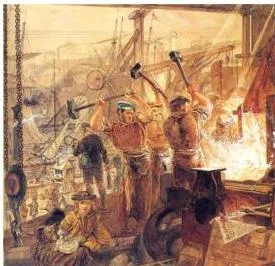
The book opens with Fig. 1, Dawn of the Century (1900), which shows the angel of progress flying on a winged wheel, with railway, camera, machines, printing press and factory floating behind her. Fig. 2 makes the same claim as a showdown between two magicians.
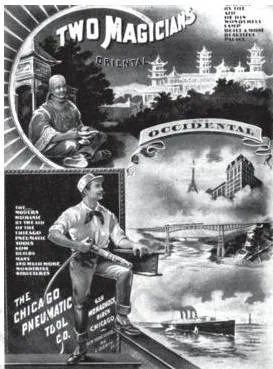
Aladdin from the Orient built a beautiful palace with a magic lamp; the modern mechanic builds bridges, ships, towers and high-rise buildings with modern tools. The book’s reading is blunt: Aladdin stands for the East and the past, the mechanic for the West and modernity.
This is the ‘triumphant account of the modern world’ the chapter spends 24 pages testing — and its Conclusion asks you to return to these images and re-judge them.
The spinning comparison: one wheel, then hundreds
Fig. 3 shows production before the factory. Every member of the family is at work, and one wheel moves a single spindle.
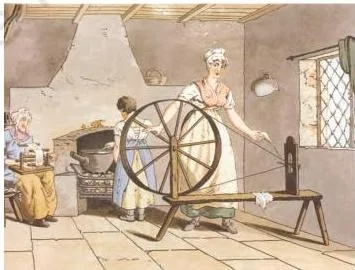
Now set it against two machine images you need to picture from the book. Fig. 7 (p. 84) is a spinning factory of 1830: giant wheels driven by steam set hundreds of spindles in motion. Fig. 11 (p. 87) is the Spinning Jenny, devised by James Hargreaves in 1764 — one wheel, many spindles, several threads at once.
The book’s Discuss prompt (p. 87) asks why workers opposed the jenny: it multiplied output per worker, which is exactly what threatened the family work in Fig. 3. Source B’s 1790 magistrate report shows women hand-spinners leading the attack on it.
The factory landscape: comparing Figs 4 and 5
Fig. 4 is a Lancashire cotton mill painted by C.E. Turner in 1925. The artist called it ‘a most impressive sight’ — ‘a huge cotton-mill aglow with electricity in the twilight’.
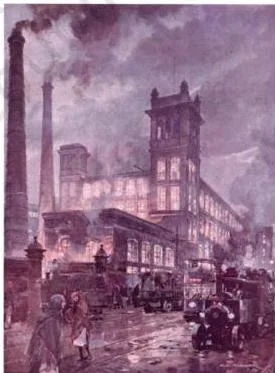
Fig. 5 is Industrial Manchester in 1857: chimneys billowing smoke come to characterise the whole landscape, not a single glowing mill.
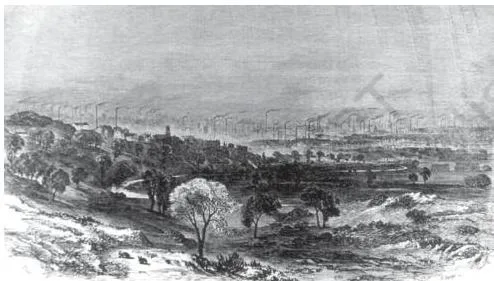
The book’s activity (p. 83) asks what each image makes you notice and what it hides. Fig. 4 dazzles — an imposing, electric temple of industry. Fig. 5 normalises the smoke. Both hide what Sections 1 and 2 established: the bylanes and workshops where production still continued, and the job-seekers who slept under bridges.
The railway age: a fitting shop in 1849
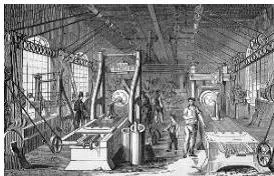
Fig. 6 is a fitting shop at an English railway works, where new locomotive engines were completed and old ones repaired.
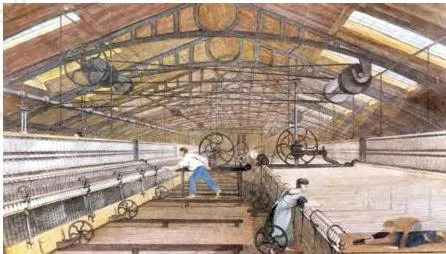
The figure sits exactly where the book discusses railway expansion from the 1840s and the iron-and-steel exports worth about £77 million by 1873 (p. 83). The railway was not just a carrier of goods; it was itself the customer that made iron and steel the leading sector of British industry.
The Indian handworker: a weaver at Gujarat
Fig. 14 shows a weaver at work in Gujarat.
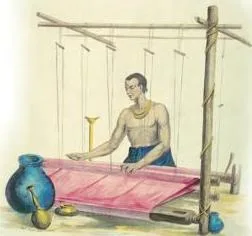
This handworker is the subject of Sections 3.2 and 3.3 — first tied to the Company by gomasthas and advances, then crushed by cheap Manchester cloth.
When you read Source C — the Patna commissioner reporting that the cloth trade at Jahanabad had entirely ceased — and Source D — the Koshtis, a weaver community, found unable to compete with ‘the showy goods which Manchester sends’ — Fig. 14 puts a face to the decline (pp. 92–93).
A map of uneven growth: large-scale industries in 1931
Fig. 24 maps large-scale industries in India in 1931; the circles show the size of industries in different regions.

This is the visual proof of a claim the book makes in numbers: about 67 per cent of large industries were located in Bengal and Bombay in 1911 (p. 98). The circles cluster in a few regions; elsewhere, small-scale production predominated — which is why the book calls Section 5.1 ‘Small-scale Industries Predominate’.
Gods that sell: calendars and labels
Fig. 25 is a Gripe Water calendar of 1928 by M.V. Dhurandhar, using baby Krishna to popularise a baby product.
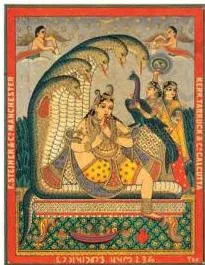
Calendars mattered because, unlike newspapers, they were seen daily by people who could not read — hung in tea shops and poor homes as well as offices, all through the year (p. 100). Fig. 26(a) and (b) show the same logic on Manchester labels: Indian gods such as Kartika, Lakshmi and Saraswati approving the cloth, and Maharaja Ranjit Singh lending it respect.
Fig. 27, the Sunlight soap calendar of 1934, shows God Vishnu bringing sunlight across the skies — divine approval for a foreign product.
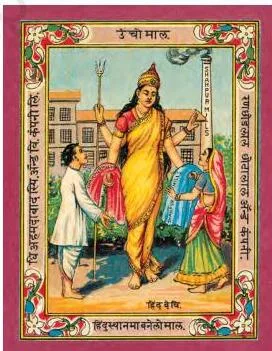
Fig. 28 completes the arc — an Indian mill label where a goddess offers cloth produced in an Ahmedabad mill, carrying the swadeshi message: if you care for the nation, buy Indian (p. 101).
Definitions: Key Terms in Plain Words
The chapter defines most of its technical terms in New words boxes as it goes. This table gathers them with the working terms the book uses without a box — check it the moment a name slows you down.
| Term | Plain meaning | Why it matters here |
|---|---|---|
| Orient | The term for countries east of the Mediterranean, usually Asia, shaped by a western viewpoint that saw the region as pre-modern, traditional and mysterious (p. 79). | The opening images cast the Orient as the past. |
| Proto | The first or early form of something (p. 81). | The root of proto-industrialisation. |
| Stapler | A person who sorts wool according to its fibre (p. 82). | First link in the clothier’s production chain. |
| Fuller | A person who gathers or pleats cloth (p. 82). | One stage between spinning and finishing. |
| Carding | Preparing fibres such as cotton or wool before spinning (p. 82). | One of the steps the new inventions speeded up. |
| Spinning Jenny | Machine devised by James Hargreaves in 1764: one wheel set many spindles spinning several threads at once (p. 87). | The symbol of machines taking hand work — women attacked it. |
| Sepoy | The British pronunciation of sipahi — an Indian soldier in British service (p. 91). | Gomasthas marched into villages with sepoys to punish weavers. |
| Fly shuttle | A mechanical weaving device, moved by ropes and pulleys, that places the weft into the warp; it let weavers operate large looms and weave wide cloth (p. 98). | Why handloom production expanded in the twentieth century. |
| Guild | An association of producers that trained craftspeople, controlled production, regulated competition and prices, and restricted entry (p. 81). | Why merchants left towns for the countryside. |
| Gomastha | The East India Company’s paid servant appointed to supervise weavers, collect supplies and examine quality (p. 91). | The instrument of Company control over village weavers. |
| Advances system | Weavers received loans to buy raw material; in return they had to hand over their cloth to the gomastha (p. 91). | How weavers were tied to the Company and lost the freedom to bargain. |
| Jobber | An old, trusted worker who recruited new labour for the mill, settled workers in the city and lent money in crises — then demanded money and gifts for the favour (pp. 95–96). | The gatekeeper every millworker had to please. |
| Managing Agency | Large European firms — Bird Heiglers & Co., Andrew Yule, Jardine Skinner & Co. — that mobilised capital, set up joint-stock companies and managed them (p. 94). | They made the investment decisions while Indians supplied the capital. |
| Swadeshi | The nationalist campaign that mobilised people to boycott foreign cloth (p. 97). | It pushed Indian mills from yarn production into cloth. |
Common Mistakes Students Make in This Chapter
Each error below is one the chapter’s own evidence corrects. Read the mistake first, then the rule the book supports, then how to check your answer.
| Mistake | What the chapter shows instead | How to check your answer |
|---|---|---|
| ‘Industrialisation means factories.’ | Even in Britain the typical mid-nineteenth-century worker was a craftsperson, not a machine operator; in India only 5 per cent of the industrial workforce worked in registered factories in 1911 (pp. 84, 98). | Ask what share of workers was actually in factories — under 20 per cent in advanced sectors in Britain even by 1900. |
| ‘Machines replaced hand labour everywhere at once.’ | At the start of the nineteenth century there were only 321 steam engines in all of England, 80 in cotton; employers preferred cheap hands (pp. 84–85). | Quote the 321 figure whenever the question is about the pace of change. |
| ‘The American Civil War helped Indian weavers.’ | Raw cotton exports boomed and prices shot up, but weavers were starved of supply and had to buy cotton at exorbitant prices — weaving could not pay (p. 93). | Read the Civil War paragraph to the end: the boom helped exporters, not weavers. |
| ‘Gomastha and jobber are the same person.’ | The gomastha was the Company’s paid supervisor over village weavers; the jobber was the mill’s recruiter over factory workers — different people, different settings, different power (pp. 91, 95–96). | Note who pays each one: the Company vs the mill. |
| ‘The First World War was a disaster for Indian industry.’ | The war cut Manchester imports, handed Indian mills a vast home market plus war orders, and industrial production boomed (p. 97). | The chapter says it directly: ‘Over the war years industrial production boomed.’ |
| ‘Machine-made goods killed Indian handloom.’ | Handloom cloth production almost trebled between 1900 and 1940 — the fly shuttle and fine, specialised weaves protected it (pp. 98–99). | Contrast the 1900–1940 trebling with the mill story instead of assuming handloom died. |
Exam Notes: Using the Chapter’s Own Exercises
The book’s own tests sit at the end of the chapter, on page 102, in three blocks: Write in brief, Discuss and Project work. Revising through them with this map is efficient because each question points at one section (NCERT, pp. 83–102).
| Exercise | Question | Where the answer lives |
|---|---|---|
| Write in brief Q1(a) | Why women workers attacked the Spinning Jenny | Section 2, p. 87 (Source B) |
| Write in brief Q1(b) | Seventeenth-century merchants employing villagers | Section 1, p. 81 |
| Write in brief Q1(c) | Decline of the port of Surat | Section 3.1, p. 89 |
| Write in brief Q1(d) | Why the Company appointed gomasthas | Section 3.2, pp. 90–91 |
| Write in brief Q2 | True-or-false statements | Sections 1.2 (a), 3.1 (b), 3.3 (c), 5.1 (d) |
| Write in brief Q3 | Meaning of proto-industrialisation | Section 1, p. 81 |
| Discuss Q1 | Hand labour over machines in nineteenth-century Europe | Section 2, p. 85 |
| Discuss Q2 | How the Company secured regular textile supplies | Section 3.2, pp. 90–91 |
| Discuss Q3 | Britain and the history of cotton | The whole chapter |
| Discuss Q4 | Why Indian industrial production increased in the First World War | Section 5, p. 97 |
Two activities also work as revision drills: the merchant’s letter refusing a new machine (p. 85), which tests the reasons employers kept hand labour, and the comparison of Figs 4 and 5 (p. 83), which practises reading images critically.
One honest note: textbook contents and the examinable syllabus are not always identical — check the current official syllabus before you decide what to revise. The book’s exercises are revision tools, not a promise about exam questions.
The Age of Industrialisation Class 10: Quick Recap
If you have ten minutes, read this. It is the chapter’s argument in the order it builds, in our words — use it to check you can retell the story yourself.
- Britain first. Production for an international market existed long before factories — proto-industrialisation, run by town merchants through village households. The factory brought processes under one roof, but change was slow: cotton led first, then iron and steel, while only 321 steam engines existed in England at the start of the nineteenth century, and the typical worker remained a craftsperson (pp. 81–84).
- Why hands survived. Cheap labour, seasonal demand, the market’s taste for variety, and the upper classes’ preference for hand-finished goods kept machines at bay. Workers bore the cost — night shelters, idle stretches, and attacks on machines like the Spinning Jenny (pp. 85–88).
- India’s cloth empire broke. Indian silk and cotton dominated world markets until European monopolies decayed the old ports, gomasthas and advances bound the weavers, and Manchester’s cheap cloth drowned the local market — piece-goods fell from 33 per cent of India’s exports in 1811–12 to 3 per cent by 1850–51 (pp. 89–93).
- Indian industry grew differently. China-trade capital built early mills (Dwarkanath Tagore, Dinshaw Petit, J.N. Tata, Seth Hukumchand); European Managing Agencies made the big decisions; jobbers recruited the workforce; swadeshi and the First World War powered a boom (pp. 94–98).
- Small-scale production predominated. Only 5 per cent of the industrial labour force worked in registered factories in 1911; the fly shuttle helped handloom cloth production almost treble between 1900 and 1940, and mills could not imitate fine weaves like Banarasi and Baluchari saris (pp. 98–99).
- Markets had to be created. Labels marked ‘MADE IN MANCHESTER’, gods and kings on labels and calendars, then the swadeshi counter-message — advertising built the consumer (pp. 100–101).
The chapter’s Conclusion returns to the opening images of triumphant progress: technology changed much, but hand technology and small-scale production remained part of the industrial landscape, so Figs 1 and 2 deserve a second, critical look (p. 101).
Related Resources
This listing is maintained for the 2026-27 academic session using the NCERT textbook information available to us. NCERT remains the authority for confirming the latest edition.
For notes and revision on this book and its companion subjects, start at the Class 10 Social Science notes hub or the wider Class 10 study hub. The CBSE notes library holds every subject and class.
- Money and Credit (Class 10 Economics) — the finance and banking that underwrite modern industry
- Minerals and Energy Resources (Class 10 Geography) — the raw materials behind industrialisation
In this book, Chapter 4 sits between The Making of a Global World (Chapter 3) and Print Culture and the Modern World (Chapter 5) — open the chapter PDF above to move between them in the same file.
Sources and Data Verification
- This page describes Chapter 4 of the NCERT Class 10 Social Science textbook India and the Contemporary World II, official edition available on ncert.nic.in.
- The chapter runs from printed page 79 to page 102 of that book; all page references above follow those printed pages.
- The page is maintained for the current session using the NCERT information available to us.
- NCERT settles textbooks, editions and PDFs; CBSE settles the curriculum, syllabus and examinations. Verify the current edition on the NCERT textbooks portal and the current syllabus on the CBSE academic portal.
- Textbook contents and the examinable syllabus are not always identical — check the current official syllabus before planning revision.
FAQs
What is proto-industrialisation in Class 10?
Proto-industrialisation is the phase of large-scale industrial production for an international market that existed before factories. In the seventeenth and eighteenth centuries, merchants from European towns moved to the countryside and gave advances to peasants and artisans to produce goods for export (NCERT, p. 81).
Why did British industrialists prefer hand labour to machines?
Because Victorian Britain had plenty of labour, wages were low, and machines required heavy capital investment. Seasonal demand, the need for varied and intricate goods, and the upper classes’ preference for hand-finished products all favoured hands (NCERT, p. 85).
Why did women workers in Britain attack the Spinning Jenny?
The Jenny let one worker spin several threads at once, which cut the demand for hand spinning — the work many women depended on. When it entered the woollen industry, women who survived on hand spinning attacked it, as Source B’s 1790 magistrate report records (NCERT, p. 87).
How did the East India Company control Indian weavers?
After gaining political power, the Company appointed gomasthas to supervise weavers, used the advances system so weavers had to sell their cloth to the Company, stopped them dealing with other buyers, and sent sepoys and peons to punish delays (NCERT, pp. 90–91).
What is the difference between a gomastha and a jobber?
A gomastha was the East India Company’s paid supervisor who controlled weavers in the villages. A jobber was a mill’s recruiter who brought workers from his village, settled them in the city and controlled their lives. One served the Company, the other served the mill (NCERT, pp. 91, 95).
Why did Indian industrial production increase during the First World War?
British mills were busy with war production, so Manchester imports into India declined. Indian mills suddenly had a vast home market plus war orders — jute bags, uniforms, tents, leather boots and saddles — and industrial production boomed (NCERT, p. 97).
Reference: NCERT Class 10 Social Science textbook, chapter 4, official edition on ncert.nic.in.
Explore Class 10 Social Science Books
- Previous: Money and Credit
- Next: Minerals and Energy Resources
Class 10 Social Science on LearnCBSE:
Related chapters:
- Resources and Development
- Power-sharing
- The Rise of Nationalism in Europe