
Looking for the NCERT Class 10 History chapter The Making of a Global World — Chapter 3 of India and the Contemporary World II? The file you want is the making of a global world class 10 chapter PDF, linked below straight from the NCERT website.
The rest of this page explains what that file contains — the four phases of the global world, key terms, figures and the questions the chapter ends with.
Download The Making of a Global World Class 10 Chapter PDF
Everything you need is here: the making of a global world class 10 chapter PDF, the official NCERT text of Chapter 3 of India and the Contemporary World II, free from the NCERT website and ready to read in your browser or save for offline study.
The rest of this page walks through what that file contains — the four phases, the figures, the terms and the closing questions — so you know what you are opening before you download it.
| What the chapter holds | Count | Where it is used |
|---|---|---|
| Printed pages | 28 | |
| Sections in the chapter | 19 | |
| Figures with NCERT captions | 22 | |
| Activities | 2 | |
| Official NCERT PDF | Download the chapter PDF | the chapter exactly as NCERT publishes it |
Chapter at a Glance
The table below shows what the chapter holds — sections, figures and question sets — so you can see the size of the file at a glance.
The chapter has no numbered exercise set; it closes with Write in brief, Discuss and a Project, so revision works best with the question map further down this page.
What This Chapter Covers: Four Phases of the Global World
This chapter answers one question: how did our interconnected world come to be? Its central claim is that globalisation has a long history of trade, migration and the movement of capital, not something that began in the last 50 years (NCERT, p. 53). The argument unfolds in four phases, and the timeline below places them.
| Phase | Period | What happens in it | NCERT pages |
|---|---|---|---|
| 1. The pre-modern world | From 3000 BCE to the 1500s | Coastal trade links the Indus valley with West Asia; silk routes carry goods, religions and germs between continents; food crops cross the Atlantic after Columbus. | pp. 53–56 |
| 2. The nineteenth century | 1815–1914 | Britain’s demand for cheap food builds a world agricultural economy; mass migration, new technology and colonial conquest change livelihoods everywhere. | pp. 57–67 |
| 3. The inter-war economy | 1914–1945 | Industrial war, Fordist mass production, then the Great Depression break the nineteenth-century system. | pp. 68–73 |
| 4. The post-war era | 1945 onwards | The Bretton Woods system (IMF and World Bank) manages growth under fixed exchange rates; decolonisation and the dollar’s fall open the era called globalisation. | pp. 74–77 |
One thread runs through all four phases: the three flows the chapter introduces for the nineteenth century — trade, labour and capital. Keep them in mind and every phase reads as an example of one of them (NCERT, p. 57).
The Three Flows: Trade, Labour and Capital
Economists read the nineteenth-century world economy through three movements, and every later section of the chapter is an example of one of them. Keep the three separate and the whole chapter stays organised.
| Flow | What moves | India example from the chapter | Page |
|---|---|---|---|
| Flow of trade | Goods — cloth, wheat, minerals | Raw cotton exports rising from 5 per cent to 35 per cent of India’s exports (1812–1871), feeding British textile mills | p. 66 |
| Flow of labour | People migrating in search of work | Hundreds of thousands of indentured labourers to the Caribbean, Mauritius, Fiji, Ceylon, Malaya and Assam | pp. 63–64 |
| Movement of capital | Money invested over long distances, short-term or long-term | Shikaripuri Shroffs and Nattukottai Chettiars financing export agriculture in Central and Southeast Asia | p. 65 |
The chapter’s warning: the three flows were closely interwoven, but labour was often more restricted than goods or capital (NCERT, p. 57). Closing question 7 asks you to give one example of each flow involving India — the table above and the India sections below supply all three.
The Pre-modern World: Silk, Spaghetti, Potatoes and Smallpox
Long before machines and factories, goods, ideas and germs were already moving across continents. This first phase of the chapter shows a world that was connected well before 1500.
Silk Routes Link the World
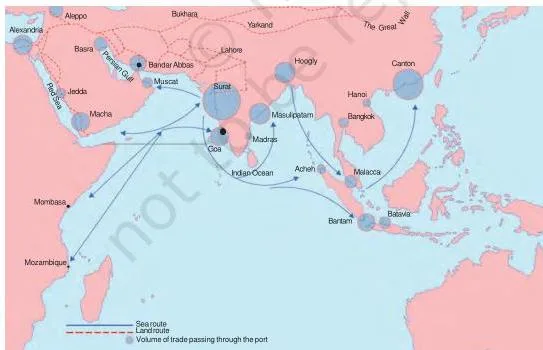
The silk routes were several overland and sea routes linking Asia with Europe and northern Africa. Chinese silk and pottery travelled west along them, as did textiles and spices from India and Southeast Asia; in return, gold and silver flowed from Europe to Asia (NCERT, p. 54).
The same roads carried more than goods. Buddhism spread from eastern India through crossing points on the routes, and later Christian missionaries and Muslim preachers travelled them too — trade and cultural exchange always went hand in hand (NCERT, p. 54).
Food Travels: Spaghetti and Potato
Food is the chapter’s second proof of long-distance contact. Noodles may have travelled west from China to become spaghetti, or Arab traders may have taken pasta to fifth-century Sicily — similar foods in India and Japan mean the true origin may never be settled (NCERT, p. 54).
What is certain is this: potatoes, soya, groundnuts, maize, tomatoes, chillies and sweet potatoes reached Europe and Asia only after Columbus discovered the Americas (NCERT, p. 54). The Irish Potato Famine of the mid-1840s shows the stakes — when disease destroyed the crop, hundreds of thousands of Ireland’s poorest starved (NCERT, pp. 54–55).
Conquest, Disease and the World That ‘Shrank’
Silver from Peru and Mexico financed Europe’s trade with Asia and fed legends of El Dorado, the fabled city of gold (NCERT, p. 55). But the Spanish conquerors’ most powerful weapon was not a gun: it was smallpox.
America had been cut off from the rest of the world for millions of years, so its people had no immunity to European diseases. Smallpox ran ahead of the conquerors and decimated whole communities, paving the way for conquest (NCERT, p. 55). A box on the same page records a colonial governor celebrating smallpox for clearing the land of its natives.
The chapter’s first Discuss question asks what we mean when we say the world ‘shrank’ in the 1500s (NCERT, p. 56). The planet did not get smaller — European sea routes made contact faster and more direct, and the centre of world trade moved westwards.
The Nineteenth Century: Britain, Cheap Food and the First Global Economy
This is the chapter’s core cause-and-effect chain: a British political decision that redrew world farming. Learn the chain in order and you can answer the Corn Laws question from memory.
- Population growth from the late eighteenth century raised the demand for food grain in Britain (NCERT, p. 57).
- The Corn Laws let the government restrict imports, keeping food prices high for the benefit of landed groups (NCERT, p. 57).
- Industrialists and urban dwellers forced the abolition of the Corn Laws (NCERT, p. 57).
- Cheap imported food then undercut British farming; land lay uncultivated and workers migrated to cities or overseas (NCERT, p. 57).
The scale of the migration is worth fixing: nearly 50 million Europeans emigrated to America and Australia, and some 150 million people worldwide left home in the nineteenth century (NCERT, p. 58).
Technology made it possible — railways, steamships and the telegraph moved food cheaply, and refrigerated ships turned meat from a luxury of the rich into part of a poor family’s diet (NCERT, p. 59).
The Canal Colonies of west Punjab show the same process closer home: canal irrigation turned semi-desert into wheat-and-cotton farmland for export (NCERT, p. 59). Between 1820 and 1914 world trade multiplied an estimated 25 to 40 times, nearly 60 per cent of it in primary products such as wheat, cotton and coal (NCERT, p. 59).
Two activities on the same page are quick self-checks: write a paragraph as an Irish agricultural worker who has just arrived in America, and draw a flow chart showing how Britain’s decision to import food led to migration to America and Australia (NCERT, p. 59).
Colonialism’s Human Cost: Rinderpest and Indentured Labour
The same expansion that fed Europe destroyed livelihoods elsewhere. The chapter insists that late-nineteenth-century trade growth had a darker side — loss of freedoms and livelihoods — and gives two examples (NCERT, p. 60).
Rinderpest, or the Cattle Plague
First, conquest. In 1885 the European powers met in Berlin and carved up Africa, drawing the ruler-straight borders you still see on maps of the continent (NCERT, pp. 60–61).
Then came rinderpest, a cattle plague carried by infected cattle imported from British Asia to feed Italian soldiers invading Eritrea. It swept west ‘like forest fire’, reached Africa’s Atlantic coast in 1892 and the Cape five years later, killing 90 per cent of the cattle (NCERT, p. 62).
Land and livestock had long kept Africans out of wage labour. With the cattle gone, planters and colonial governments monopolised the scarce herds and used that control to force Africans into mines and plantations (NCERT, p. 62).
Indentured Labour Migration from India
The second example is Indian indentured labour. Workers signed contracts that promised return travel to India after five years on an employer’s plantation (NCERT, p. 63).
Most came from eastern Uttar Pradesh, Bihar, central India and the dry districts of Tamil Nadu, pushed out by declining cottage industries, rising rents and deepening debt (NCERT, p. 63).
Their destinations were the Caribbean islands — Trinidad, Guyana, Surinam — Mauritius and Fiji; closer home, Tamil migrants went to Ceylon and Malaya, and workers were recruited for tea plantations in Assam (NCERT, pp. 63–64).
Recruiting agents, paid by commission, gave false information about destinations and conditions, and sometimes abducted unwilling migrants outright (NCERT, p. 63). The chapter prints the testimony of Ram Narain Tewary, who spent ten years on Demerara: his hands were bruised within days, unfinished tasks brought prosecution and jail, and wages were docked for work judged unsatisfactory (NCERT, p. 65).
| Point of comparison | Indentured labour | Slavery in the Americas |
|---|---|---|
| Legal basis | A contract with a fixed term and a promised return passage | Enslaved people treated as property, bought and sold |
| Term of service | Usually five years, after which workers could return or stay | For life; inherited by children |
| How people were recruited | Agents using false information, deception and sometimes abduction | Captured in Africa and sold at markets |
| Conditions | Harsh living and working conditions, few legal rights | Harsh conditions; slaves were dressed up to attract buyers |
| The chapter’s verdict | A ‘new system of slavery’ (p. 63) | Plantations worked by slaves grew cotton and sugar for European markets (p. 56) |
Workers found their own ways to survive. Many escaped into the wilds; others blended old and new cultures into something fresh — Trinidad’s Hosay carnival, chutney music and even links to Rastafarianism (NCERT, p. 64).
Most stayed on after their contracts ended. That is why descendants such as the Nobel Prize-winning writer V.S. Naipaul and West Indian cricketers Chanderpaul and Sarwan carry Indian names today (NCERT, p. 64). Indian nationalists opposed indenture from the 1900s, and the system was abolished in 1921 (NCERT, p. 64).
India’s Place in the Global System: Textiles, Opium and Trade Surplus
This section answers a question every Indian student asks: if India was among the world’s richest countries in 1800, why did that change? The short answer is a shift in what India exported.
| Export | How its share changed | What drove the change |
|---|---|---|
| Fine cotton textiles | About 30 per cent of exports around 1800, 15 per cent by 1815, below 3 per cent by the 1870s | British tariffs excluded Indian cloth from Britain; Indian textiles then faced stiff competition in other markets (pp. 65–66) |
| Raw cotton | 5 per cent in 1812 to 35 per cent in 1871 | British mills needed raw material; India became a raw-material exporter (p. 66) |
| Indigo | Important for many decades | Used for dyeing cloth (p. 66) |
| Opium | For a while India’s single largest export | Britain grew it in India, sold it to China, and used the earnings to finance tea imports from China (pp. 65–66) |
So the story is a swap: fine cotton manufactures out, raw materials in. Britain used the system to balance its books too.
That system is called multilateral settlement: Britain sold more to India than it bought, and used that trade surplus to settle its deficits with other countries (NCERT, p. 67). The surplus also paid Britain’s ‘home charges’ — private remittances of British officials, interest on India’s external debt, and pensions of British officials (NCERT, p. 67).
Indian capital moved abroad too. Shikaripuri Shroffs and Nattukottai Chettiars financed export agriculture in Central and Southeast Asia, and Hyderabadi Sindhi traders opened emporia at busy ports worldwide from the 1860s (NCERT, p. 65).
The Inter-war Years: Industrial War, Ford’s Assembly Line and the Great Depression
The First World War broke the nineteenth-century system, and the recovery attempt collapsed into the Great Depression. The section runs in three moves: the war, the boom, the crash.
The First World War (1914–18) was the first modern industrial war — machine guns, tanks, aircraft and chemical weapons on a massive scale, 9 million dead and 20 million injured (NCERT, p. 68).
With men at the front, women took over factory jobs. The war also flipped the US from an international debtor into an international creditor, because Britain borrowed heavily from US banks and the US public to pay for it (NCERT, pp. 68–69).
Post-war recovery proved hard for Britain. It had lost ground to industries in India and Japan, carried huge external debts, and in 1921 one in five British workers was unemployed (NCERT, p. 69). When eastern European wheat production revived, the resulting glut pushed grain prices down and farmers into debt (NCERT, p. 69).
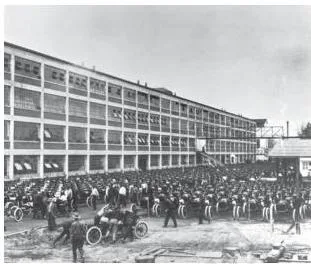
The US recovered faster, led by Henry Ford. He adapted a Chicago slaughterhouse’s conveyor belt to his Detroit car plant: the assembly line forced each worker to repeat one task at the pace of the belt, and T-Model Fords came off the line at three-minute intervals (NCERT, pp. 69–70).
The T-Model Ford was the world’s first mass-produced car (NCERT, p. 70). Workers quit under the strain, so in January 1914 Ford doubled the daily wage to $5 — a decision he later called his ‘best cost-cutting decision’ (NCERT, p. 70). Mass production and hire purchase spread the boom: US car production rose from 2 million in 1919 to more than 5 million in 1929 (NCERT, p. 70).
The Great Depression began around 1929 and lasted until the mid-1930s, and agricultural regions were hit hardest (NCERT, p. 71). The chapter gives three causes (NCERT, p. 71):
- Agricultural overproduction — prices slumped, farmers grew more to protect incomes, and the glut worsened.
- The withdrawal of US loans — from over $1 billion in the first half of 1928 to a quarter of that a year later.
- Higher US import duties — the US doubled them, dealing another blow to world trade.
The collapse was spectacular: by 1933 over 4,000 US banks had closed, and between 1929 and 1932 about 110,000 companies collapsed (NCERT, p. 71).
India felt the crisis because colonial India had become an exporter of agricultural goods and an importer of manufactures (NCERT, p. 72). India’s exports and imports nearly halved between 1928 and 1934; wheat prices fell 50 per cent; and Bengal raw jute — processed into gunny bags for export — crashed by more than 60 per cent (NCERT, pp. 72–73).
The chapter quotes the Bengal jute growers’ lament: ‘grow more jute, brothers, with the hope of greater cash. Costs and debts of jute will make your hopes get dashed’ (NCERT, p. 73). Traders sitting at home, not the growers, profited.
Peasants used up savings, mortgaged land and sold gold. Keynes thought India’s gold exports helped world recovery, but they did little for the peasant; rural unrest fed the civil disobedience movement launched at the height of the depression in 1931 (NCERT, p. 73).
The depression proved less grim for urban India. Town-dwelling landowners and salaried employees with fixed incomes were better off, because everything cost less (NCERT, p. 73).
Post-war Rebuilding: Bretton Woods, Decolonisation and the Start of Globalisation
After the Second World War — which killed at least 60 million people, about 3 per cent of the world’s 1939 population — leaders built a system to prevent another depression (NCERT, p. 74). Understanding that system’s rise and fall is the key to this final section.
Economists and politicians drew two lessons from the inter-war years (NCERT, p. 74):
- Mass production cannot survive without mass consumption, and mass consumption needs high, stable incomes — which need full employment.
- Markets alone cannot guarantee full employment, so governments must intervene and keep control over flows of goods, capital and labour.
So in July 1944, at the United Nations Monetary and Financial Conference in Bretton Woods, New Hampshire, the framework of the post-war economy was agreed. It created the two Bretton Woods institutions (NCERT, p. 74), whose separate jobs students often swap.
| International Monetary Fund (IMF) | World Bank (IBRD) | |
|---|---|---|
| Full name | International Monetary Fund | International Bank for Reconstruction and Development |
| Its job | Deals with external surpluses and deficits of member nations | Finances post-war reconstruction |
| Founded | At the Bretton Woods conference, July 1944; operations began in 1947 | Same conference; operations began in 1947 |
| Who controls it | Western industrial powers; the US has an effective veto (p. 74) | The same (p. 74) |
| Later shift | From the late 1950s, both turned more towards developing countries (p. 76) | |
The system ran on fixed exchange rates: national currencies were pegged to the dollar, and the dollar was anchored to gold at $35 per ounce (NCERT, p. 75). It worked — between 1950 and 1970 world trade grew over 8 per cent a year and incomes nearly 5 per cent, with unemployment mostly below 5 per cent in industrial countries (NCERT, p. 75).
As Europe and Japan rebuilt, most Asian and African colonies gained independence — but they were poor, and found themselves guided by international agencies dominated by the former colonial powers (NCERT, p. 76).
So they organised as the Group of 77, demanding a New International Economic Order: control over natural resources, more development assistance, fairer prices for raw materials, and better access for their manufactures (NCERT, p. 76).
Multinational corporations — large companies operating in several countries at once — multiplied in the 1950s and 1960s, partly because high import tariffs forced them to produce inside countries (NCERT, p. 76). From the 1960s the US dollar weakened, fixed exchange rates collapsed into floating exchange rates, and from the late 1970s MNCs shifted production to low-wage Asia — most visibly China (NCERT, p. 77).
Figure Walkthrough: Reading the Chapter’s Images as Evidence
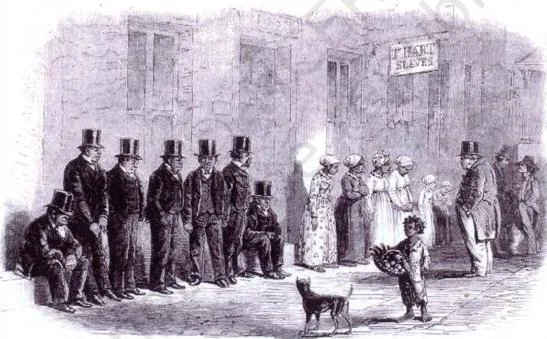
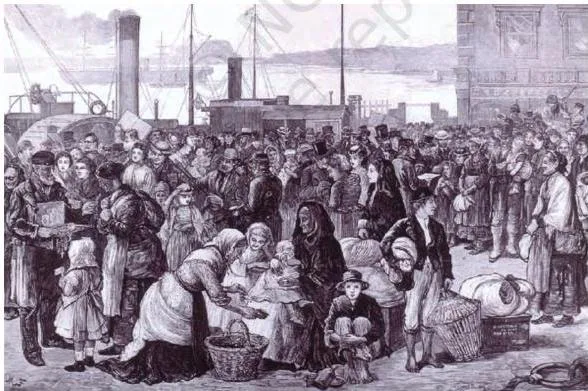
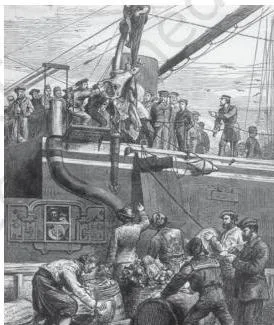
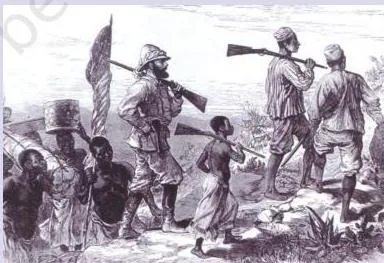
History chapters use images as evidence, and this one is built on contemporary illustrations and photographs. The ten figures below are grouped into four themes; each one is read as evidence — what it depicts, and what the chapter uses it to prove.
Pre-modern Trade: Ships, Camels and Merchants
The chapter’s first three figures record movement — of ships, goods and merchants.
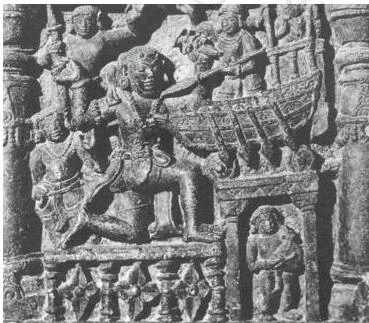
The memorial-stone ship from Goa Museum (Fig. 1) is the opening piece of evidence: from the ninth century, images of ships appear regularly on memorial stones of the western coast, showing how significant oceanic trade was there (NCERT, p. 53).
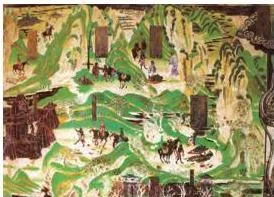
The silk-route cave painting (Fig. 2) makes the same point for Asia: an eighth-century artist at Cave 217 of the Mogao Grottoes in China depicted trade along the route that linked Asia with Europe (NCERT, p. 54).
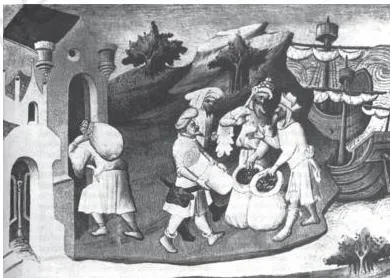
The fifteenth-century illustration from Marco Polo’s Book of Marvels (Fig. 3) captures the moment of exchange itself — Venetian merchants trading goods with the Orient (NCERT, p. 54).
Hunger and Migration: Two Faces of the Same Century
The next two figures show the human side of the new connections — the famine that pushed people out, and the ships that carried them.
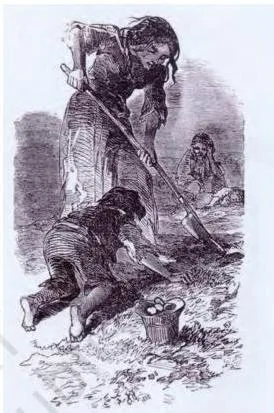
Fig. 4, from the Illustrated London News of 1849, shows hungry children digging for potatoes in an already-harvested field during the Irish Potato Famine (1845–49). Around a million people died of starvation and twice that number emigrated — evidence of what dependence on a single new crop could cost (NCERT, p. 55).
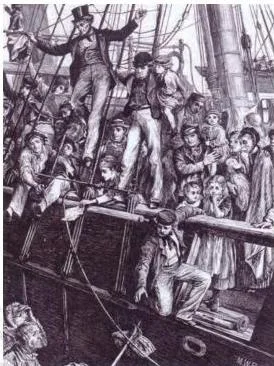
The emigrant ship leaving for the US (Fig. 6) gives the same story a more hopeful face: one vessel among the nearly 50 million Europeans who crossed the Atlantic to America and Australia (NCERT, p. 58).
Colonial Control: Maps, Rivers and Numbers
The next three images document domination — borders drawn at a table in Berlin, journeys forced by gold, and workers reduced to identification numbers.
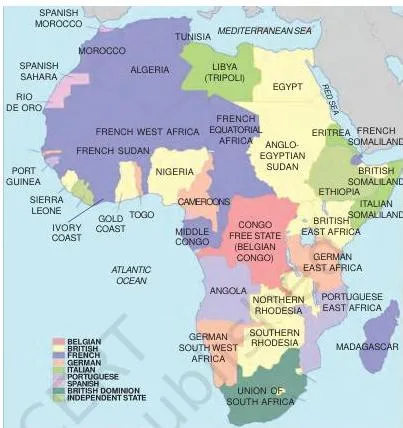
The map of colonial Africa (Fig. 10) shows borders running straight as if drawn with a ruler — which is almost exactly what happened when the European powers met in Berlin in 1885 to complete the carving up of Africa (NCERT, pp. 60–61).
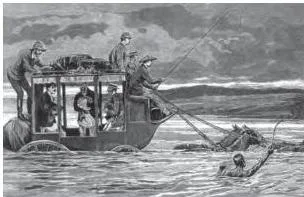
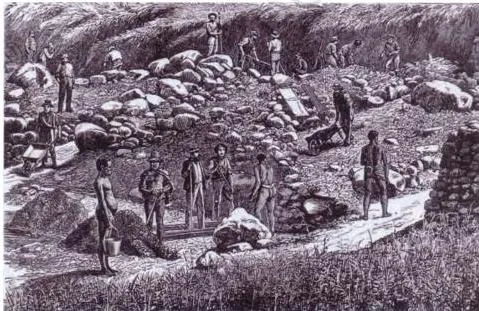
Crossing the Wilge river (Fig. 12) records the difficult journey to the Transvaal gold fields; by the 1890s South Africa contributed over 20 per cent of world gold production (NCERT, p. 62).
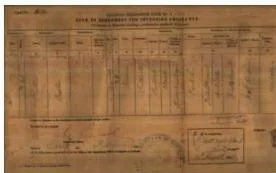
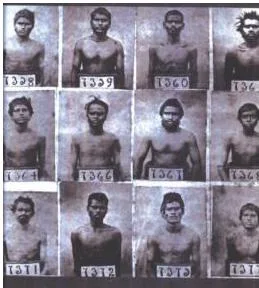
The identification photograph of indentured labourers (Fig. 15) is the bleakest of the three: for the employers, the numbers and not the names mattered (NCERT, p. 64).
Industry and Crisis: The Boom and the Bust
The last two figures bracket the 1920s — the boom’s symbol and the crash’s symbol.
T-Model automobiles lined up outside the factory (Fig. 21) show Fordist mass production at work: the T-Model was the world’s first mass-produced car (NCERT, p. 70).
Dorothea Lange’s 1938 photograph of people lining up for unemployment benefits (Fig. 23) came to symbolise the depression years — when unemployment reached 10 million, local governments began making small allowances, and the long queues stood for the poverty of the era (NCERT, p. 72).

Key Terms in This Chapter, Explained
History chapters expect you to carry four special terms from this chapter, and each one does real work in the argument.
- Dissenter — one who refuses to accept established beliefs and practices (NCERT, p. 56). The context: religious dissenters were persecuted in Europe, and thousands fled to America.
- Indentured labour — a bonded labourer under contract to work for an employer for a specific amount of time, to pay off passage to a new country or home (NCERT, p. 63). The chapter’s verdict on nineteenth-century indenture — ‘new system of slavery’ — is the phrase examiners expect you to recognise.
- Tariff — a tax imposed on a country’s imports, levied at the point of entry, at the border or airport (NCERT, p. 76). High tariffs are why MNCs located production inside countries.
- Exchange rates — the rates linking national currencies (NCERT, p. 77). Fixed rates: governments intervene to prevent movement. Floating rates: demand and supply in foreign exchange markets decide.
Common Mistakes Students Make With This Chapter
The mistakes this chapter invites come from skimming — the same words get read in the wrong sense. Name the error before it costs you in an answer.
| Mistake | Correct rule | How to check your answer |
|---|---|---|
| Thinking globalisation began in the last 50 years | The chapter’s opening claim is that the global world has a long history of trade, migration and capital movement (p. 53) | Ask which phase your example belongs to — the timeline on this page places it |
| Confusing the three flows | Trade = goods, labour = people, capital = money; labour was often more restricted than goods or capital (p. 57) | Give one India example of each: raw cotton, indentured migrants, Shikaripuri Shroffs |
| Writing that the world literally became smaller in the 1500s | ‘Shrank’ means European sea routes made contact faster and more direct (p. 56) | The Discuss question is about contact, not geography |
| Treating rinderpest as a human disease | Rinderpest was a cattle plague whose effect was economic — it destroyed livelihoods that kept Africans out of wage labour (p. 62) | Use the chapter’s own phrase ‘cattle plague’ |
| Saying indentured labour was the same as slavery | The chapter calls it a ‘new system of slavery’ but stresses the contract, the five-year term and the promised return passage — alongside the deception and coercion (p. 63) | A compare-and-contrast answer must mention BOTH the contract and the coercion |
| Assuming the Depression hurt everyone equally | Indian peasants were crushed, but urban Indians with fixed incomes were better off because prices fell (p. 72) | Check the example: Bengal jute growers vs town-dwelling landowners |
| Swapping the jobs of the IMF and the World Bank | IMF = external surpluses and deficits; World Bank = financing reconstruction (p. 74) | Ask: does the country need to balance payments, or to rebuild? |
If an answer of yours makes one of these mistakes, the correction is usually one phrase long — quote the chapter’s own terms (‘new system of slavery’, ‘cattle plague’, ‘fixed exchange rates’) and the argument fixes itself.
How to Revise: The Chapter’s Own Questions as a Checklist
The surest revision plan for a history chapter is to let the book set the questions. This one ends with nine questions — five under Write in brief, four under Discuss — plus a project, and every one maps to a section of this chapter.
| Q | Type | The question | Where the answer lives |
|---|---|---|---|
| 1 | Write in brief | Two examples of global exchange before the seventeenth century, one from Asia and one from the Americas | Sections 1.1–1.2, pp. 54–55 |
| 2 | Write in brief | How the global transfer of disease helped colonise the Americas | Section 1.3, p. 55 |
| 3a–3e | Write in brief | Notes on the Corn Laws, rinderpest, war deaths, the Depression in India, and MNC relocation | Sections 2.1 (p. 57), 2.4 (p. 62), 3.1 (p. 68), 3.5 (p. 72), 4.4 (p. 77) |
| 4 | Write in brief | Two examples of technology’s impact on food availability | Section 2.2, p. 59 (refrigerated ships; railways and steamships) |
| 5 | Write in brief | What the Bretton Woods Agreement meant | Section 4.1, p. 74 |
| 6 | Discuss | Letter from an indentured labourer in the Caribbean | Section 2.4, pp. 63–64 |
| 7 | Discuss | The three flows, with one example of each involving India | Section 2 (p. 57) plus the India examples in sections 2.4–2.6 |
| 8 | Discuss | Causes of the Great Depression | Section 3.4, p. 71 |
| 9 | Discuss | The G-77, and how it reacted to the Bretton Woods twins | Sections 4.3 (p. 76) and 4.1 (p. 74) |
A full answer to Q7 must define each flow, give one Indian example for it, and close with the chapter’s caveat that labour was often more restricted than goods or capital (NCERT, p. 57).
Use raw cotton for trade (5 per cent to 35 per cent of exports, 1812–1871), indentured migration for labour (from eastern UP, Bihar, central India and dry Tamil Nadu), and the Shikaripuri Shroffs and Nattukottai Chettiars for capital (NCERT, pp. 63, 65–66).
The two activities on p. 59 — the Irish worker’s paragraph and the food-imports-to-migration flow chart — are quick practice for Q4’s technology point. Dates and numbers worth fixing: Berlin 1885; indenture abolished 1921; the depression years 1929 to the mid-1930s; Bretton Woods, July 1944; the dollar at $35 per ounce of gold.
Textbook contents and the examinable syllabus are not always identical — check the current official syllabus before deciding what to study.
The Chapter in Brief: The Whole Argument in Ten Minutes
If you have ten minutes, this is the chapter’s whole argument without the examples: four phases, four paragraphs.
Phase one, the pre-modern world (3000 BCE to the 1500s): human societies were already interlinked. Ships on India’s western coast, cowrie shells from the Maldives, silk routes carrying goods and religions across Asia — all predate modern globalisation (NCERT, pp. 53–54).
Columbus’s crossing brought the potato and maize to Europe and Asia and carried smallpox to America, where it killed millions who had no immunity (NCERT, p. 55).
Phase two, the nineteenth century (1815–1914): Britain’s abolition of the Corn Laws let cheap imported food flood in, British farmland went idle, and workers migrated to cities or overseas (NCERT, p. 57).
Railways, steamships, refrigerated ships and 50 million emigrants built a world agricultural economy in which trade multiplied an estimated 25 to 40 times (NCERT, pp. 58–59). The same system ran on colonial conquest — the Berlin carve-up of Africa, rinderpest, and Indian indentured labour as a ‘new system of slavery’ (NCERT, pp. 61–63).
Phase three, the inter-war years (1914–1945): the first industrial war killed 9 million and turned the US from debtor to creditor (NCERT, p. 68). Ford’s assembly line and hire purchase built a 1920s boom, but the Great Depression broke it (NCERT, pp. 70–71). India’s peasants were hit hardest, and rural unrest fed the civil disobedience movement of 1931 (NCERT, pp. 72–73).
Phase four, the post-war era (after 1945): the July 1944 Bretton Woods conference created the IMF and the World Bank on a system of fixed exchange rates, with the dollar at $35 per ounce of gold (NCERT, pp. 74–75). World trade grew over 8 per cent a year for two decades, and decolonisation brought the Group of 77 demanding a fairer economic order (NCERT, pp. 75–76).
When the dollar weakened, fixed exchange rates gave way to floating rates, and MNCs shifting production to low-wage Asia opened the era we now call globalisation (NCERT, p. 77).
Related Resources
This listing is maintained for the 2026-27 academic session using the NCERT textbook information available to us. NCERT remains the authority for confirming the latest edition.
Chapter 3 sits inside India and the Contemporary World II, between Nationalism in India (Chapter 2) and The Age of Industrialisation (Chapter 4). The book’s other chapters continue the same story from national and industrial angles.
The Class 10 Social Science hub collects the History, Geography, Political Science and Economics chapters of the course, and the Class 10 hub is the starting point for all subjects.
For the economics behind today’s trade and livelihoods, the notes on sectors of the Indian economy and agriculture explain how the Indian economy works now, while this chapter shows how it was built into the nineteenth-century world system.
Sources and Data Verification
- Which editions the facts describe: the NCERT Class 10 History textbook India and the Contemporary World II, Chapter 3, ‘The Making of a Global World’, as published on ncert.nic.in. Page numbers refer to this edition.
- What this page covers: only this chapter of this book. It does not cover other Class 10 History books or other subjects.
- Session: this listing is maintained for the current academic session, checked against the NCERT editions currently available on the official portal.
- Who settles what: NCERT settles the textbooks, editions and PDFs; CBSE settles the curriculum, syllabus and examinations. A chapter appearing in a textbook does not prove every part of it is examinable — check the current official syllabus.
You can verify the current edition of the book on NCERT’s official textbook portal, where all NCERT chapter PDFs are published.
Frequently Asked Questions
Why does the chapter say the world ‘shrank’ in the 1500s?
It means contact became faster and more direct, not that the planet got smaller. In the 1500s European sailors found a sea route to Asia and crossed the western ocean to America; from then on, goods, people, knowledge and diseases moved between continents on European routes, and the centre of world trade shifted westwards (NCERT, p. 56).
How was indentured labour different from slavery?
Indenture was a contract, not lifelong ownership. Workers signed for a fixed term — usually five years — and were promised a return passage to India, whereas enslaved people were treated as property for life (NCERT, p. 56).
But the chapter warns against whitewashing the system: agents used false information and abduction, conditions were harsh, legal rights were few, and the chapter describes indenture as a ‘new system of slavery’ (NCERT, p. 63).
Why did the Great Depression affect Indian peasants more than Indian city dwellers?
Peasants’ incomes crashed while their costs did not. Agricultural prices fell sharply — wheat by 50 per cent, Bengal jute by more than 60 per cent — yet the colonial government refused to reduce revenue demands, so peasants sank into debt and sold their gold (NCERT, pp. 72–73). Urban Indians with fixed incomes were actually better off because everything cost less (NCERT, p. 73).
What were the Bretton Woods twins and what did each one do?
The Bretton Woods twins are the IMF and the World Bank, both created at the July 1944 conference in Bretton Woods, USA (NCERT, p. 74). The International Monetary Fund dealt with external surpluses and deficits of member nations; the International Bank for Reconstruction and Development — the World Bank — financed post-war reconstruction (NCERT, p. 74). Both began operations in 1947.
Why did India’s cotton textile exports collapse in the nineteenth century?
British industrialisation and tariffs did it. British manufacturers pressed the government to restrict cloth imports, so tariffs excluded Indian cottons from Britain; Indian textiles then faced stiff competition in other markets (NCERT, p. 65).
Cotton textiles fell from about 30 per cent of India’s exports around 1800 to below 3 per cent by the 1870s, while raw cotton exports rose from 5 per cent to 35 per cent between 1812 and 1871 (NCERT, p. 66).
What does the chapter mean when it says globalisation has a long history?
It means the interconnected world did not begin with the internet or with recent decades. The chapter opens by noting that globalisation is often treated as a system of the last 50 years, but the making of the global world has a long history of trade, migration, the movement of capital, and even the spread of disease (NCERT, p. 53).
Coastal trade linked the Indus valley with West Asia as early as 3000 BCE (NCERT, p. 53).
Reference: NCERT Class 10 India and the Contemporary World II textbook, chapter 3, official edition on ncert.nic.in.
Explore Class 10 Social Science Books
- Previous: Sectors of the Indian Economy
- Next: Agriculture
Class 10 Social Science on LearnCBSE:
Related chapters:
- Resources and Development
- Power-sharing
- The Rise of Nationalism in Europe