
These Bholi class 10 notes are designed for quick board revision, covering the plot, themes, character sketches, and exam pointers in a scannable format for the current academic session.
Bholi Class 10 Notes: Introduction and Overview
Written by K.A. Abbas, this story follows Sulekha, a girl nicknamed Bholi (the simpleton) (NCERT, p. 1). She suffers brain damage from a childhood fall and is disfigured by smallpox. Neglected by her family, she finds her voice through education. To revise more English chapters, check our Class 10 English notes for the complete set.
For a broader overview of all subjects, you can visit our Class 10 notes hub, or return to the main notes directory.
Bholi Chapter Summary: From a Frightened Child to an Assertive Woman
The story tracks a chronological arc of transformation. Here is the structured re-telling to help you revise the plot quickly.
Bholi’s Early Life and Neglect
- Brain damage: A fall from a cot at ten months damaged her brain, leaving her backward (NCERT, p. 1).
- Smallpox: At age two, smallpox left permanent black pock-marks, sparing only her eyes.
- Stammer: She learned to speak only at age five and stammered, leading children to mimic her.
- Family attitude: Her father Ramlal worried about her lack of looks and intelligence, while her mother was dismissive, calling her a dumb cow (NCERT, p. 2, p. 5).
The First Day at School
- Tehsildar’s order: A primary school opened, and the Tehsildar ordered Ramlal to set an example by sending his daughters to school. Ramlal’s wife insisted they send Bholi instead of the other girls (NCERT, p. 2).
- Fear: Bholi was terrified, remembering how their old cow Lakshmi was sold, thinking she was being discarded.
- New clothes: For the first time, she received a clean dress and oil in her hair, making her feel she was going to a better place.
- The teacher’s encouragement: A soft-voiced teacher comforted her stammering, gave her a picture book, and promised she would be learned and respected (NCERT, p. 2).
The Marriage Proposal
- Bishamber: Years later, a well-to-do but older, limping grocer named Bishamber Nath proposed. He did not ask for a dowry initially.
- Parents’ acceptance: Despite his age and limp, her parents accepted because he was from another village and unaware of her pock-marks.
The Wedding Confrontation
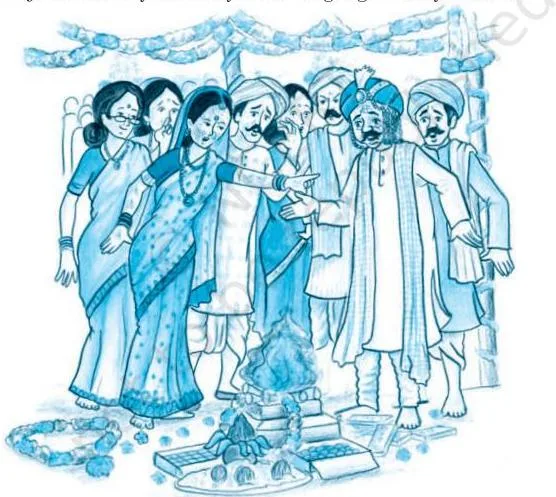
- Unexpected demand: During the wedding, Bishamber lifted Bholi’s veil, saw her pock-marks, and immediately demanded five thousand rupees to proceed.
- Garland flung: Ramlal paid the money, but Bholi threw her wedding garland into the sacred fire (NCERT, p. 5).
- Assertive speech: She spoke without stammering, refused to marry the mean, greedy and contemptible coward, and vowed to serve her parents and teach in the same school.
Theme Analysis: Education, Empowerment, and Gender Bias
| Theme | Evidence from Text | Why It Matters |
|---|---|---|
| Transformative Power of Education | The teacher promises Bholi she will be more learned than anyone else in the village (NCERT, p. 2). | Education gives Bholi the confidence to reject exploitation and speak clearly. |
| Gender Inequality and Dowry | The mother argues girls do not need school; Bishamber demands 5000 rupees after seeing her face (NCERT, p. 5). | Highlights how society commodifies women, tying their worth to appearance and money. |
| Courage and Self-Respect | Bholi refuses the marriage to protect her dignity, despite family pressure regarding honour (izzat). | Shows that empowerment allows an individual to challenge oppressive social Norms. |
The textbook specifically connects Bholi’s story to the Beti Bachao Beti Padhao scheme, highlighting the ongoing need to save and educate the girl child (NCERT, p. 9). You can compare these social themes with our notes on The Proposal or The Book That Saved the Earth.
For literature focusing on material greed, see our The Necklace notes.
Bholi Character Sketches: Sulekha, Her Teacher, and Bishamber
| Character | Key Traits | Evidence / Action |
|---|---|---|
| Bholi / Sulekha | Transforms from a stammering, fearful simpleton into a confident, assertive girl. Self-respecting. | When Bishamber demands 5000 rupees, she throws the garland into the fire and speaks without a stammer. |
| The Teacher | Soft-voiced, encouraging, patient. Treats Bholi like an artist’s masterpiece. | Comforts Bholi on her first day, patting her and telling her to put fear out of her heart (NCERT, p. 2). |
| Bishamber Nath | Greedy, hypocritical, superficial. Limps and is an older widower. | Demands a dowry only after lifting the veil and seeing her pock-marks at the wedding. |
| Ramlal (Father) | Worried about Bholi but submissive to societal pressure. | Places his turban—his honour—at Bishamber’s feet begging him to lower the demand (NCERT, p. 5). |
| Mother | Dismissive, practical, cares only for societal image. | Sends Bholi to school because there is little chance of her marrying anyway, calling her a dumb cow. |
Literary Devices: Simile, Metaphor, and Contrast in Bholi
| Device | Quote / Example | Explanation |
|---|---|---|
| Simile | “her hand struck out like a streak of lightning” (NCERT, p. 5) | Compares the speed and force of Bholi throwing the garland to lightning, showing decisive action. |
| Metaphor | The teacher feeling “the satisfaction that an artist feels when contemplating the completion of her masterpiece” (NCERT, p. 5) | Compares Bholi to artwork and the teacher to an artist, showing the successful shaping of her character. |
| Metaphor | “dumb-driven cow” | Used by the family to unjustly label Bholi as voiceless and intellectually inferior. |
| Contrast / Irony | Name Sulekha (good writer/speaker) vs. her stammering condition. | The irony resolves at the end when she finally speaks clearly, fulfilling her name’s true meaning. |
Important Quotes from Bholi with Explanations
- “Put the fear out of your heart and you will be able to speak like everyone else.”
The teacher’s first encouragement to Bholi. It shows that fear, not just physical brain damage, is trapping her voice. - “Pitaj! Take back your money. I am not going to marry this man.”
Bholi’s defining moment of assertion at the wedding. Spoken without a stammer, it marks her complete transformation. - “In her smiling eyes was the light of a deep satisfaction that an artist feels when contemplating the completion of her masterpiece.”
The final line, proving the teacher’s foundational role in Bholi’s empowerment. - “Maybe. But if I am to marry her, her father must give me five thousand rupees.”
Bishamber’s demand, exposing the greed and transactional nature of the marriage.
Textbook Questions and Answers Hints: Think About It
Use these pointers to guide your thinking for the Think about it section (NCERT, p. 9). Frame your answers using these hints:
- Q1: What made Bholi feel she was going to a better place?
Hint: Contrast her usual neglected state with being bathed, oiled, and given a clean dress for the first time. - Q2: Role of the teacher in changing Bholi’s life?
Hint: The teacher gave her hope, encouraged her to speak without fear, and promised she would be learned and respected. - Q3: Why did Bholi reject the marriage?
Hint: Bishamber’s greed in demanding 5000 rupees exposed his true character; she refused to marry a mean, greedy coward. - Q4: Why is she called Sulekha at the end?
Hint: She finally speaks clearly and independently, fulfilling the literal meaning of her real name (good writer/speaker).
Common Mistakes Students Make in Bholi Exam Answers
| Mistake | Correct Rule | How to Check Your Answer |
|---|---|---|
| Students say Bholi stammered because of smallpox. | She stammered due to a fall from a cot at 10 months that damaged her brain; smallpox only caused the pock-marks. | Separate the physical causes: fall = brain/stammer, smallpox = face/pock-marks. |
| Students think Bishamber demanded dowry from the start. | He demanded 5000 rupees only after seeing her pock-marks when the veil was lifted at the wedding. | Note the timeline: proposal had no dowry; the demand happened at the sacred fire. |
| Students call Bholi ‘dumb’ throughout the answer. | She is only referred to as Sulekha at the end to show her transformation into a confident speaker. | Always contrast ‘Bholi’ (the simpleton) at the start with ‘Sulekha’ (the writer/speaker) at the end. |
| Students confuse the mother’s and father’s attitudes. | The father shows reluctant concern; the mother is dismissive and mocks Bholi. | Contrast the father’s worry about her marriage with the mother’s ‘dumb cow’ comment. |
Exam Notes: What Examiners Look for in Bholi Answers
- Cite Specific Evidence: 5-mark questions on Bholi often ask about the role of education or her transformation. Examiners look for direct references to the teacher’s words or Bholi’s actions at the wedding.
- Connect the Name: Always explain why she is called Sulekha at the end of the story; this demonstrates a deeper understanding of the author’s intent.
- Trace Development: A character sketch should trace development from a stammering child to an assertive woman, not just describe her at the start.
- Mention Social Issues: Reference social issues like dowry and gender bias to show contextual understanding of the chapter’s themes.
Revision Summary: Bholi in Five Key Points
For a night-before-exam quick recap, review these takeaways:
- Childhood damage: Sulekha (Bholi) damaged her brain after a fall as a baby and suffered smallpox, leaving her with a stammer and pock-marks.
- Sent to school: Sent to school due to the Tehsildar’s order, where a kind teacher gave her hope and promised she would be learned.
- Marriage fixed: Parents fix her marriage with Bishamber, an older, lame grocer from another village.
- Greedy demand: At the wedding, Bishamber demands 5000 rupees after seeing her pock-marks, which her father pays to protect his honour.
- Assertive refusal: Bholi refuses to marry him, throws the garland into the fire, speaks without stammering, and vows to teach in the same school.
Author Background: K.A. Abbas
K.A. Abbas was a noted Indian film director, novelist, and journalist. His writing often focused on social issues and the lives of common people, which is reflected in his empathetic portrayal of Bholi’s struggle.
Frequently Asked Questions about Bholi
Why is Bholi sent to school?
Bholi is sent to school because the Tehsildar orders Ramlal to set an example for the village by sending his daughters to school. Her mother agrees to send only Bholi because she believes there is little chance of her getting married anyway due to her appearance and lack of sense.
Why did Bholi throw the wedding garland into the sacred fire?
Bholi threw the garland into the fire because Bishamber demanded a 5000-rupee dowry after seeing her pock-marks. She refused to marry a mean, greedy, and contemptible coward, asserting her self-respect over familial pressure.
What is the significance of the name Sulekha in the story?
Sulekha means a good writer or speaker. The name is ironic initially because she stammers, but it holds deep significance at the end when she finally speaks clearly and confidently, fulfilling her name’s meaning.
What are Bholi’s physical challenges as a child?
Bholi’s brain was damaged when she fell from a cot at ten months, causing a stammer. At age two, she contracted smallpox, which left her entire body permanently disfigured with deep black pock-marks.
What role did the teacher play in Bholi’s life?
The teacher provided the encouragement and education Bholi lacked at home. By telling her to put fear out of her heart and promising she would be learned, the teacher gave Bholi the confidence that ultimately allowed her to reject the oppressive marriage.
You can refer to the official NCERT textbook page for Footprints Without Feet to read the full chapter text.
Reference: NCERT Class 10 English textbook, chapter Bholi.
Explore Class 10 English Notes
Class 10 English on LearnCBSE:
Related chapters: