
If you are preparing for the CBSE 2026-27 board exams, these a triumph of surgery class 10 notes will give you a fast, complete revision of the chapter. James Herriot’s story shows how a practical vet rescues an overfed dog not with an operation, but with simple diet and playtime. Read on for the summary, character sketches, themes, and exam pointers.
Chapter Overview: Pampering vs Real Care
The story kicks off with the narrator, Mr Herriot, spotting Tricki, a small dog, looking terribly overweight and ill on the street. Tricki’s rich mistress, Mrs Pumphrey, explains she has been feeding him treats like malt, cod-liver oil, and Horlicks between meals to build him up, ignoring the vet’s prior advice to cut down on sweets (NCERT, p. 1-2).
This overindulgence is the core problem. Mrs Pumphrey means well but cannot refuse Tricki’s love for cream cakes and chocolates. She also fails to give him adequate exercise because her gardener is unwell. Within days, Tricki stops eating entirely and starts vomiting, forcing Mrs Pumphrey to call the vet in a panic.
| Aspect | Mrs Pumphrey’s Approach | Mr Herriot’s Approach |
|---|---|---|
| Diet | Extra treats, cream cakes, Horlicks, chocolates (p. 1) | Strict no-food for two days, only water (p. 3) |
| Exercise | Only short walks, no ring-throwing (p. 2) | Free running and play with a dog-pack all day (p. 3) |
| Medical view | Thinks he suffers from malnutrition (p. 1) | Diagnoses greed and lack of exercise as the real cause (p. 2) |
| Results | Tricki becomes a “bloated sausage” and falls ill (p. 1) | Tricki transforms into a “lithe, hard-muscled” animal (p. 5) |
How Mr Herriot Cures Tricki: Day-by-Day Recovery
Mr Herriot hospitalises Tricki at his surgery for a fortnight. The recovery process is entirely based on natural living and companionship. The story shows he receives no medicinal treatment of any kind (NCERT, p. 3).
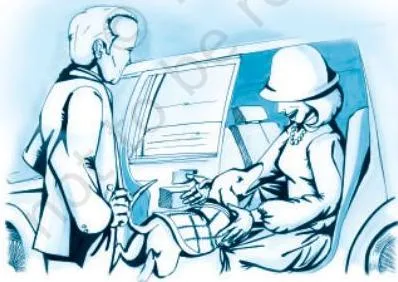
The image above shows Herriot carrying the recovered dog. Notice how the text describes Tricki as a little golden figure before he leaps into his mistress’s lap. This visual transformation is the climax of the story.
- Days 1-2: Kept in a warm loose box with no food, only plenty of water. Tricki lies motionless (p. 3).
- Day 3: Tricki hears the other dogs in the yard and starts whimpering. Herriot opens the door, and the dogs accept him into their pack.
- Feeding phase: Tricki watches the dogs eat, then begins licking their empty bowls. The next day, he gets his own bowl and jostles for his share.
- Full recovery: He joins in scrimmages, fights like a tiger for food, and hunts rats in the old hen-house (p. 3).
Mrs Pumphrey’s Misguided Generosity: The Eggs, Wine, and Brandy
While Tricki recovers, Mrs Pumphrey keeps ringing the surgery anxiously. When she hears Tricki is “convalescing,” she starts sending supplies to build his strength. Herriot and his partners end up consuming these luxurious gifts, creating a comedic subplot.
- Fresh eggs: Sent two dozen at a time; Herriot and partners eat two eggs each for breakfast (p. 4).
- Wine: Sent to enrich Tricki’s blood; the household drinks it during lunch.
- Brandy: Sent to put a final edge on his constitution; the partners reverently drink it by the fire.
Herriot admits it was a temptation to keep Tricki as a permanent guest, but he values Mrs Pumphrey’s feelings and returns the dog after the fortnight (p. 5). You can find more story analyses on our main Class 10 English notes page.
A real-life application of this subplot is seen in over-permissive parenting. Like Mrs Pumphrey, some parents substitute affection for discipline. They shower children with junk food, gadgets, and unearned luxuries, mistakenly believing that indulgence equals care. Just as Tricki fell ill, children can develop poor health and a lack of independence, highlighting the chapter’s Talk About It
theme that such behaviour is not merely silly—it causes real harm.
Theme Analysis: Overindulgence, Companionship, and the Title’s Irony
- Overindulgence spoils, it does not care. Mrs Pumphrey’s endless treats—cream cakes, Horlicks, and chocolates—cause Tricki’s illness, not his happiness. The story argues that giving someone whatever they want is not true care.
- Companionship and natural living heal. Tricki recovers not through surgery or medicines, but through play with other dogs, running in the open, and a strict routine. The dog-pack’s acceptance cures him faster than any prescription.
- Irony of the title. The title “A Triumph of Surgery” is ironic because Mrs Pumphrey calls the cure a triumph of surgery, but Mr Herriot performs no operation at all. He simply removes the dog from a toxic environment and lets nature take its course.
Explore CBSE revision notes for more chapter summaries to aid your study sessions.
Character Sketches: Mr Herriot and Mrs Pumphrey
For a 5-mark character sketch answer, link each adjective to textual evidence. Here are the traits you should remember.
Mr Herriot
- Tactful and firm: He suggests hospitalising Tricki despite Mrs Pumphrey’s swooning and wailing, knowing it is the only way to save the dog (p. 2-3).
- Practical and full of common sense: He diagnoses greed as the problem and cures Tricki with a strict diet and exercise, not medicines.
- Honest but tempted: He enjoys the eggs, wine, and brandy sent for Tricki, but ultimately returns the dog to his mistress because it is the right thing to do (p. 5).
Mrs Pumphrey
- Foolishly indulgent: She overfeeds Tricki with cream cakes and chocolates because she cannot bear to refuse him, causing his illness (p. 1).
- Rich and over-protective: She sends a day bed, night bed, coats, and toys to the surgery, treating the dog like a spoiled child (p. 3).
- Lonely and anxious: She rings the surgery a dozen times a day for updates, showing her dependence on the dog for company (p. 3).
Literary Devices: Humour, Irony, and Contrast
| Device | Evidence from the text | Explanation |
|---|---|---|
| Simile / Humour | “like a bloated sausage with a leg at each corner” (p. 1) | Compares the fat dog to a sausage, creating a funny visual image of his obesity. |
| Irony | “This is a triumph of surgery!” (p. 5) | Mrs Pumphrey credits a surgical triumph, but the vet never performed any surgery. The cure was just diet and play. |
| Contrast (Before vs After) | “bloated sausage” vs “lithe, hard-muscled animal” (p. 1 vs p. 5) | Highlights the dramatic physical transformation caused by two weeks of natural living. |
To see how themes of struggle and transformation work in other chapters, check our notes on Nelson Mandela: Long Walk to Freedom.
Important Quotes from the Chapter
- “He had become hugely fat, like a bloated sausage with a leg at each corner” (p. 1) — Shows the physical effect of overfeeding.
- “The only way was to get Tricki out of the house for a period” (p. 2) — Reveals Mr Herriot’s decisive action to hospitalise the dog.
- “This is a triumph of surgery!” (p. 5) — The ironic line from Mrs Pumphrey that gives the story its title.
Approaching Think About It and Talk About It Questions
For the Think about it questions (p. 6), the focus is on arguing from textual evidence. When asked about the narrator’s personality, write that he is tactful and full of common sense, citing how he firmly manages Mrs Pumphrey’s panic while gently treating Tricki.
When discussing if Tricki was happy to go home, note the leap into Mrs Pumphrey’s lap as proof of affection, but consider if he will revert to being overfed.
For the Talk about it questions (p. 7), connect the story to real life. The textbook directly asks about parents like Mrs Pumphrey. If you are arguing as a member of her staff, describe how exhausting it would be to manage the constant stream of unnecessary beds, coats, and meals. You can find more revision materials on our Class 10 CBSE notes
hub.
Common Mistakes Students Make in This Chapter
Avoid these specific errors in your board answers. This misconception autopsy addresses the most frequent slip-ups.
| Mistake | Correct Rule | How to check your answer |
|---|---|---|
| Calling the chapter title literal. | It is ironic; Mr Herriot performs no surgery. | Check if you have stated that only diet and play were used. |
| Saying Tricki was given medicines. | The text explicitly says “no medicinal treatment of any kind” (p. 3). | Ensure you highlight the role of the dog-pack instead. |
| Writing Tricki’s breed. | NCERT never specifies a breed; he is only called a “little dog” or “golden figure”. | Remove any mention of a specific dog breed. |
| Calling Mrs Pumphrey cruel. | She is foolishly indulgent and lonely, motivated by affection, not cruelty. | Use words like “over-protective” and “misguided” rather than “abusive”. |
Exam Notes: What Examiners Look For
Use this exam-pattern mapping to structure your answers correctly:
- Character sketch (5 marks): Always link an adjective to evidence. Do not just write “Herriot is practical”—write “Herriot is practical as seen when he puts Tricki on a strict no-food regime instead of prescribing medicines.”
- Title-irony question (3-5 marks): State the irony explicitly. Explain that the title is a phrase used by Mrs Pumphrey, but it is ironic because the cure involved absolutely no operation.
- Thematic question (5 marks): Keep answers anchored in textual events. Focus on the contrast between pampering and natural living, rather than deep medical details. The story is about human behaviour using a dog as the subject.
Revision Recap: Key Facts to Remember
- Dog’s name: Tricki
- Mistress: Mrs Pumphrey
- Vet / Narrator: Mr Herriot
- Herriot’s assistant: Tristan
- Cause of illness: Overfeeding and lack of exercise
- Cure: Hospitalisation for a fortnight, no food for two days, water, dog-pack play, and no medicines
- Subplot: Eggs, wine, and brandy sent for Tricki were consumed by Herriot and his partners
- Key word: The word “triumph” is ironic
FAQs on A Triumph of Surgery
Why is the chapter ironic in its title ‘A Triumph of Surgery’?
The title is ironic because Mrs Pumphrey calls the cure a triumph of surgery, but Mr Herriot never performs any operation. He simply removes Tricki from his overfed environment, puts him on a strict diet of water, and lets him play with other dogs to recover naturally.
What did Mr Herriot actually do to cure Tricki, and was it surgery?
Mr Herriot hospitalised Tricki for a fortnight. He gave the dog no food for two days, only water, and then allowed him to integrate with a pack of household dogs. He provided no medicinal treatment. This natural cure through diet and exercise was not surgery at all.
Why was Mrs Pumphrey constantly worried about Tricki?
Mrs Pumphrey was lonely and over-protective, leading her to overfeed Tricki with treats like cream cakes and chocolates. When he became listless and began vomiting, she panicked and rang the vet a dozen times a day for updates.
What character traits of Mr Herriot make him a good veterinary surgeon?
Mr Herriot is tactful, firm, and full of common sense. He is observant enough to diagnose greed as the root cause, practical enough to prescribe a strict diet and play, and compassionate enough to return the dog to his mistress despite the tempting gifts of wine and eggs.
What is the moral or lesson of A Triumph of Surgery Class 10?
The lesson is that overindulgence is not care; it causes harm. The story shows the importance of a disciplined diet, exercise, and natural living for well-being, warning against misguided affection like that shown by Mrs Pumphrey.
You can read the original story on the official NCERT supplementary reader page to confirm the chapter details.
Reference: NCERT Class 10 English textbook, chapter A Triumph of Surgery.
Explore Class 10 English Notes
Class 10 English on LearnCBSE:
Related chapters: