
These the making of a scientist class 10 notes cover Chapter 6 of the Footprints without Feet reader for the current academic session. Written by Robert W. Peterson, the chapter is a biographical account of Richard H. Ebright, a Harvard student whose fascination with butterflies led him to publish a new theory on cell life at the age of twenty-two.
Ebright’s journey begins with a childhood hobby — collecting butterflies — and culminates in serious scientific research on DNA. By the end of the chapter, Peterson identifies the three ingredients of scientific success: a first-rate mind, curiosity, and the will to win for the right reasons. These notes trace that arc so you can revise quickly for your board exam.
You can find more English notes for Class 10 and revise the entire Class 10 syllabus with our broader revision resources.
Chapter Overview: The Butterfly to DNA Pathway
Instead of narrating the story, here is Ebright’s scientific growth as a sequence of distinct phases. Each step built on the knowledge gained from the previous hobby or experiment.
- Kindergarten collecting (NCERT, p. 1): Began collecting butterflies, rocks, fossils, and coins near Reading, Pennsylvania. By second grade, he had collected all twenty-five local butterfly species.
- The turning-point book (NCERT, p. 2): His mother bought him The Travels of Monarch X, which explained butterfly migration and opened the world of science to him.
- Seventh-grade science fair loss (NCERT, p. 3): Entered with frog tissue slides and lost. Realised real experiments beat neat displays.
- Eighth-grade beetle experiment (NCERT, p. 3): Tested whether a beetle carries a viral disease that kills monarch caterpillars. Won despite having no conclusive results because he showed a real experiment.
- Ninth-grade viceroy mimicry project (NCERT, p. 1): Tested whether birds eat monarchs, finding a starling would eat them. Placed first in zoology and third overall.
- Gold-spot hormone discovery (NCERT, p. 4): Built a device showing pupa spots produce a hormone needed for butterfly development. Won first place at the county fair and entered the International Science Fair.
- DNA cell theory at twenty-two (NCERT, p. 5): Co-authored a paper with room-mate James R. Wong explaining how cells read their DNA blueprint, published in the Proceedings of the National Academy of Science.
The butterfly collecting season around Reading lasts only six weeks in late summer, illustrated by the graph below.
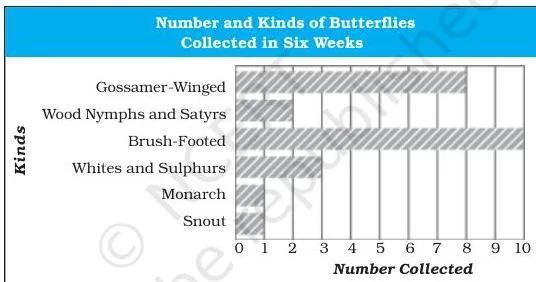
Because the season was so brief — visible in the graph — Ebright switched from chasing butterflies to raising them in his basement. He tagged their wings and released them to track migration, spending several years on this work.
Summary of the Making of a Scientist
Early collection and the turning point
Ebright was an only child whose father died early. His mother became his companion, buying him microscopes and telescopes. He collected every butterfly species around Reading. The decisive moment came when his mother bought him The Travels of Monarch X, a book about butterfly migration that shifted his hobby toward real science.
Science fair lessons and real experiments
In seventh grade, Ebright lost a county science fair for displaying frog tissue slides instead of running an experiment. He wrote to Dr Urquhart for ideas, launching a string of real experiments: testing a beetle’s role in a caterpillar disease, and testing the viceroy mimicry theory by observing whether a starling eats monarchs.
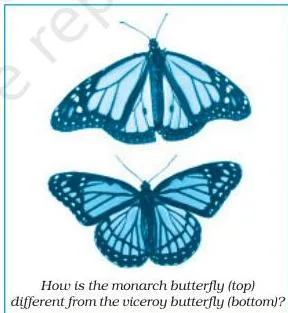
The image above demonstrates his project: a starling ate the monarchs it was offered, supporting the theory of mimicry.
Gold-spot hormone and the DNA cell theory
In high school, Ebright investigated the twelve tiny gold spots on a monarch pupa. Most experts assumed they were ornamental, but Dr Urquhart disagreed. Ebright built a device proving the spots produce a hormone necessary for the butterfly’s full development. Identifying that hormone’s chemical structure led to his new theory on cell life, published at the age of twenty-two.
Theme Analysis: What Makes a Scientist
The central themes of the chapter are mapped below, each with a cited moment that proves the point. Evidence-based answers always score higher than unsupported statements.
| Theme | Evidence from the chapter |
|---|---|
| Curiosity as the seed of science (NCERT, p. 1) | Ebright had a driving curiosity from the start, collecting butterflies since kindergarten and star-gazing all night. |
| The right kind of competitiveness (NCERT, p. 6) | Mr Weiherer observed that Ebright was competitive but “not in a bad sense” — he wanted to do the best job, not just win a prize. |
| Mentorship and support (NCERT, p. 1-2) | His mother bought him equipment and spent evenings at the dining table; Dr Urquhart sent experiment suggestions. |
Character Sketch of Richard Ebright
Pair each trait with a specific event from the chapter. This keeps an answer grounded in evidence and earns full marks.
| Trait | Evidence from the chapter |
|---|---|
| Curious | Collected butterflies, rocks, fossils, and coins from kindergarten; became an avid astronomer (NCERT, p. 1). |
| Determined | Spent years raising thousands of monarchs in his basement (NCERT, p. 2). |
| Competitive in a good sense | Channelled the sting of a science fair loss into running real experiments (NCERT, p. 3). |
| Versatile | Champion debater, public speaker, canoeist, and nature photographer (NCERT, p. 6). |
| Grateful | Credited his teacher Mr Weiherer for opening his mind to new ideas (NCERT, p. 6). |
For a five-mark question, you can reproduce this compact sketch: Richard Ebright was a curious and determined learner who collected butterflies since kindergarten. He was competitive in a positive sense, channelling his first science fair loss into genuine experiments. A versatile student, he excelled in debating, canoeing, and photography alongside his research.
He was supported by his mother and Dr Urquhart, whose mentorship guided him from butterfly tagging to his DNA cell theory. Ebright graduated from Harvard with highest honours, second in a class of 1,510 students.
Supporting Figures: Mother, Dr Urquhart, and Mr Weiherer
Ebright’s mother
She was his only companion and bought telescopes, microscopes, and cameras for him. She brought home friends for him and spent evenings at the dining table learning with him. She was the one who bought The Travels of Monarch X.
Dr Urquhart
When Ebright lost interest in tagging, he wrote to Dr Urquhart, a leading entomologist, who sent back a stack of experiment suggestions. These ideas powered Ebright’s high school science projects.
Mr Weiherer
His social studies teacher and adviser to the Debating Club. Ebright admired him for opening his mind. Mr Weiherer observed that Ebright gave that extra effort and was competitive “not in a bad sense”.
Literary Devices in the Chapter
The opening paragraph uses a striking analogy: having a paper published in a major scientific journal at twenty-two is compared to a baseball player making the big leagues and hitting a home run on his first time at bat (NCERT, p. 1). This device makes a rare academic achievement instantly understandable to a general reader.
| Device | How it works in the chapter |
|---|---|
| Baseball home run analogy | Ebright’s journal publication is compared to a home run on a first at-bat, emphasising the scale of his early success (NCERT, p.1). |
| Contrast | The chapter contrasts neat display slides with real experiments, distinguishing mere display from actual scientific inquiry (NCERT, p. 3). |
| Anecdotal biographical style | The narrative builds through distinct episodes from science fairs and lab work, rather than a flat list of dates and facts. |
Peterson’s opening page references Ebright’s early awards. The first figure below establishes his credibility as a decorated scientist.

Important Quotes from the Chapter
- “I certainly couldn’t play football or baseball with a team of one…” — Ebright explains why collecting became his focus. Use this to show his early initiative and isolation as an only child (NCERT, p. 1).
- “It was really a sad feeling to sit there and not get anything…” — Ebright reflects on losing the seventh-grade science fair. Use this to explain the lesson: real experiments, not neat displays, win (NCERT, p. 3).
- “Richard was competitive… but not in a bad sense.” — Mr Weiherer clarifies that Ebright aimed for excellence, not prizes. Drop this quote into any answer on his character (NCERT, p. 6).
- “Everyone assumed the spots were just ornamental.” — Ebright on the gold spots, showing how questioning assumptions drives science (NCERT, p. 4).
Textbook Questions and Discussion Points
The chapter’s exercises ask for discussion rather than factual recall. Here is what each section asks and what a complete answer should include.
Think about it (NCERT, p. 7)
- Question 1: How does one become a scientist, historian, or economist? Answer guidance: State that reading alone is not enough; becoming a scientist requires observing, thinking, and doing experiments.
- Question 2: Discuss Ebright’s work based on what you have read about cells and DNA. Answer guidance: Connect his gold-spot hormone discovery to his cell theory and mention which field you would work in and why.
Talk about it (NCERT, p. 7)
- Prompt 1: Discuss questions from Discovered Questions by Prof Yash Pal and Dr Rahul Pal or answer them.
- Prompt 2: Discuss your own questions about the world.
These reference Discovered Questions (NCERT, 2006) to draw a link between childhood curiosity and scientific inquiry. Full worked answers for these prompts are available in a separate solutions guide; these notes focus on revision.
Common Mistakes Students Make in This Chapter
Examiners frequently see the following factual confusions in student answers. Read the corrections before your exam.
| Mistake | Correct rule | How to check your answer |
|---|---|---|
| Ebright lost interest in tagging because it failed. | He lost interest because it was tedious and offered little feedback (NCERT, p. 2). | Check whether your answer mentions tedium and feedback, not failure. |
| Ebright discovered the viceroy mimicry theory. | He tested whether birds eat monarchs; later research by others supported the mimicry theory (NCERT, p. 3). | Check whether you credit other researchers with the later conclusion. |
| The gold spots are simply ornamental. | They produce a hormone necessary for the butterfly’s full development (NCERT, p. 4). | Check whether you mention the hormone, not just the appearance of the spots. |
| Ebright lost the science fair because his slides were bad. | He lost because a neat display is not a real experiment (NCERT, p. 3). | Check that you cite the difference between display and experiment. |
Exam Notes: What Examiners Look For
Here are observed patterns on how this chapter is typically assessed in board exams.
- Character sketch (5 marks): Clarity earns marks; adding the DNA cell theory shows depth. Each trait needs a cited event.
- Turning point (3-5 marks): The role of The Travels of Monarch X appears often. Naming the book earns one mark; explaining it opened the world of science earns another.
- Science fair lesson (3 marks): State that real experiments beat neat displays. Mentioning his beetle and viceroy experiments adds substance.
- Mother’s role (3 marks): Listing equipment is a start; mentioning evening companionship and the dining table demonstrates thorough recall.
Revision Summary: One-Page Recap
A student revising the night before can scan this table to recall the entire chapter. For a broader overview, check our revision notes hub for all subjects.
| Milestone | Significance |
|---|---|
| Kindergarten collecting | Developed a driving curiosity |
| Mother’s support (NCERT, p. 1) | Provided equipment and companionship |
| The Travels of Monarch X (NCERT, p. 2) | Opened the world of science; turned hobby into research |
| Science fair loss (NCERT, p. 3) | Taught him that real experiments matter more than displays |
| Gold-spot hormone discovery (NCERT, p. 4) | Led to his cell theory and an unknown insect hormone |
| DNA cell theory at 22 (NCERT, p. 5) | Published in a major journal; could advance cancer research |
| Graduation with honours (NCERT, p. 6) | Graduated second in a class of 1,510 at Harvard |
The title question — what makes a scientist — is answered by combining a first-rate mind, curiosity, and the will to win for the right reasons. For context, our notes on Footprints without Feet cover the previous chapter, and Madam Rides the Bus covers the next.
Frequently Asked Questions
What was the turning point in Richard Ebright’s life as a scientist?
The turning point came when his mother bought him the children’s book The Travels of Monarch X (NCERT, p. 2). The book explained how monarch butterflies migrate to Central America. It transformed his hobby of collecting butterflies into serious scientific research.
How did Ebright’s mother help him become a scientist?
His mother bought him telescopes, microscopes, cameras, and other equipment (NCERT, p. 1). She took him on trips and spent evenings learning with him at the dining room table. She was his only companion and brought friends home for him after school.
What lesson did Ebright learn when he lost at the county science fair?
In the seventh grade, Ebright entered a county science fair and lost because he displayed frog tissue slides (NCERT, p. 3). He learned that winners run real experiments rather than just making neat displays. This drove him to write to Dr Urquhart for experiment ideas the next year.
What is the purpose of the twelve gold spots on a monarch pupa?
Experts assumed the spots were ornamental, but Ebright found they are not (NCERT, p. 4). He built a device showing that the spots produce a hormone necessary for the butterfly’s full development. This discovery of an unknown insect hormone led him to his theory on cell life.
What qualities go into the making of a scientist according to the chapter?
According to the chapter, the ingredients are a first-rate mind, curiosity, and the will to win for the right reasons (NCERT, p. 6). Ebright showed all these traits, driven by mentors like his mother and Mr Weiherer. His journey shows that reading alone is not enough; experimenting is essential.
Reference: NCERT Class 10 English textbook, chapter The Making of a Scientist. For the original text, visit the official NCERT textbook page.
Explore Class 10 English Notes
Class 10 English on LearnCBSE:
Related chapters: