
These madam rides the bus class 10 notes cover the summary, themes, character sketches, literary devices, important quotes, exam pointers and revision recap for the current session. Valli, an eight-year-old village girl with no playmates, spends her afternoons watching the street from her front doorway.
Her curiosity about the hourly bus sparks a deeply planned first solo ride into the nearby town.
Madam Rides the Bus is a Tamil short story translated by Vallikannan, illustrated by R. K. Laxman (NCERT, p. 12). The BEFORE YOU READ note on page 1 frames the core idea: her first journey is also her induction into the mystery of life and death, exposing the gap between knowing death exists and truly understanding it.
For more chapter-wise revision across English, check our full Class 10 English notes hub or the wider Class 10 notes index on LearnCBSE. You can also revisit an earlier prose piece like Chapter 6 notes or move ahead to Chapter 8 notes.
Chapter Snapshot: Movements of the Ride
Valli stands at her front door each afternoon, watching the hourly bus. A tiny wish grows into an overwhelming desire to ride it, even once. She eavesdrops on neighbours, gathers bus details in secret, and saves coins over months.
One spring afternoon, she flags down the one o’clock bus. The conductor jokes, calls her “madam,” and she boards. Onward, she sees a canal, palm trees, green fields, a running cow she finds hilarious, a railroad crossing, a rushing train and bright town shops. She refuses to get off or accept a treat, buys a return ticket, and stays seated.
On the return trip, the same cow lies dead by the roadside. Valli falls silent. Reaching home at 3:40, she finds her mother and aunt chatting about knowing versus understanding the world. She smiles to herself.
| Journey leg | What Valli sees | Her reaction |
|---|---|---|
| Planning (p. 2) | Bus passing hourly | Wistful longing, watchful |
| Boarding (p. 4) | Conductor’s joke, passengers laughing | Shy then proud, refuses help |
| Onward (p. 5-9) | Canal, fields, running cow, train, shops | Delighted, claps with glee |
| Town (p. 9) | Conductor offering a cold drink | Fear of town, refuses politely |
| Return (p. 10) | Dead cow by the roadside | Saddened, silent, looks away |
| Home (p. 10-12) | Mother and aunt chatting | Secret smile, inner satisfaction |
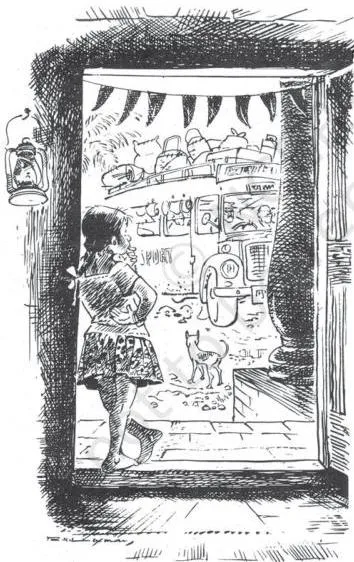
As the figure shows, the doorway is Valli’s window to the world. From here, the hourly bus passes and the seed of her journey is planted.
Stanza-to-Scene Summary: Journey Step by Step
The Longing Takes Root (p. 2)
Valliammai, called Valli, is eight with no age-mates on her street. Watching the street from her doorway is her favourite pastime. The bus passing hourly, filled with new passengers, becomes her unending joy.
A tiny wish crept into her head and grew into an overwhelming desire. She listens to neighbours and asks discreet questions. She calculates: town six miles away, thirty paise one way, forty-five minutes each leg. She decides on the one o’clock bus.
Boarding the Bus (p. 4)
One spring day, she flags the bus with a commanding tiny hand. The conductor, joking, says, “make way for madam.” Valli refuses his helping hand. Shy but proud, she walks to a front seat. The new bus gleams white with green stripes, with a beautiful clock above the windshield.
This clock, a detail she gathered through planning, marks the luxurious new bus.
Onward Journey (p. 5-9)

An elderly man tells her to sit. Valli replies haughtily that nobody here is a child. The conductor mimics her tone; she laughs along. An elderly woman sits beside her with repulsive earrings, smelling of betel nut. Valli finds her repulsive.
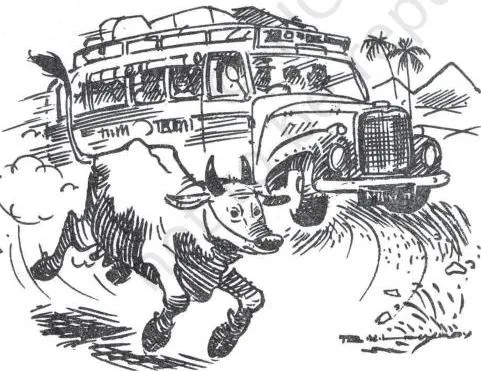
The bus passes a canal and palm trees, then fields stretching green, green, green. A cow runs in the road; Valli claps with glee until there are tears in her eyes. At a railroad crossing, a train rushes past with a tremendous roar and rattle. In town, she gapes at the bright shops but does not get off.
The Dead Cow (p. 10)
On the return trip, Valli sees a young cow lying dead by the roadside, struck by a fast vehicle. She recognises it as the same running cow. What had been a lovable creature now looks horrible and frightening.
The memory of the dead cow haunted her. She no longer wanted to look out the window. The mood shifts from joy to shock.
Homecoming (p. 10-12)
Valli reaches her village at 3:40 and runs home. Her mother and aunt are chatting. Her mother says we cannot understand everything completely. Valli agrees. Her aunt calls her a chit of a girl poking her nose. Valli smiles to herself.
Theme Analysis: Curiosity to Mortality
| Theme | Textual evidence | What it reveals |
|---|---|---|
| Curiosity | Day after day she watched the bus (p. 2) | A child’s desire to know the unknown |
| Self-reliance | Saves 60 paise, resists merry-go-round (p. 7) | Determination outweighs temptation |
| Illusion of adulthood | “There’s nobody here who’s a child” (p. 5) | Pride in her independence and paid fare |
| Encounter with death | The dead cow stops her looking out (p. 10) | The gap between knowing and understanding death (p. 1) |
Curiosity and planning drive the plot; self-reliance makes the ride possible. The illusion of adulthood shows Valli’s pride; the encounter with death introduces the story’s deeper layer.
Character Sketches: Valli and Others
Valli
Curious and determined: saves sixty paise and resists the merry-go-round (p. 7). Proud: insists she is not a child (p. 5). Independent: refuses the conductor’s hand boarding (p. 4) and refuses a cold drink (p. 9). Sensitive: falls silent at the dead cow (p. 10).
The Conductor
Jolly and teasing: calls her “madam” and makes way for her (p. 4). He mimics her tone playfully (p. 5). Kind enough to offer her a cold drink as his treat (p. 9).
The Elderly Man
Well-meaning but makes Valli feel small. He tells her to sit down for her safety (p. 5). Valli is annoyed by his attention.
The Elderly Woman
Repulsive to Valli. She has big holes in her ear lobes with ugly earrings, chews betel nut, and asks nosy questions (p. 5-7). Valli refuses to be sociable.
Valli’s Mother and Aunt
Unaware of Valli’s grand adventure. They chat about things beyond their knowledge (p. 10-12). The aunt calls Valli a chit of a girl who pokes her nose.
Analogy: Think of the ride as an arc from anticipation to discovery to disillusionment, much like a first dip in the sea that looks fun until the cold water hits.
Literary Devices in the Story
| Device | Quoted line | Effect |
|---|---|---|
| Personification | “Trees came running towards them” (p. 8) | Gives trees human motion, mirrors speed |
| Simile | “Struck dumb with wonder, Valli gaped” (p. 9) | Compares astonishment to being speechless |
| Onomatopoeia | “a tremendous roar and rattle” (p. 9) | Sound word imitates the train |
| Imagery | “palm trees, grassland, distant mountains, and the blue, blue sky” (p. 5) | Paints a vivid visual scene |
| Repetition | “green, green, green” (p. 5) | Stresses the endless fields |
Important Quotes for Exam Answers
- “Day after day she watched the bus, and gradually a tiny wish crept into her head” (p. 2) — shows longing building slowly.
- “I can get on by myself” (p. 4) — declares her independence.
- “There’s nobody here who’s a child” (p. 5) — shows her pride.
- “I just felt like having a bus ride, that’s all” (p. 9) — understates her grand plan.
- “The memory of the dead cow haunted her” (p. 10) — marks her loss of innocence.
Misconception autopsy: The dead cow is not just a sad scene; it is the thematic turning point that shifts the entire tone from joyous adventure to sober reflection.
Textbook Questions: What Examiners Ask
Oral Comprehension Check 1 (p. 4)
- Favourite pastime
- Source of unending joy and strongest desire
- Details gathered and how
- What she was planning to do
Oral Comprehension Check 2 (p. 7)
- Conductor calling her ‘madam’
- Standing on the seat and what she sees
- Telling the elderly man
- Not making friends with the elderly woman
Oral Comprehension Check 3 (p. 10)
- Saving money and its difficulty
- What made her laugh
- Not getting off at the bus station
- Refusing a drink
Thinking about the Text (p. 12)
- Deepest desire and supporting words
- Planning and saving
- Character clues from sentences
- Conductor’s ‘madam’ reference
- Enjoyment lines
- Refusing to look out the window
- Agreeing with her mother
- Child’s point of view evidence
These are the question types students should practise for this chapter.
Common Mistakes Students Make
| Mistake | Correct rule | How to check |
|---|---|---|
| Saying Valli was fearless throughout | She feared getting off in town and refused cold drink (p. 9) | Check if town fear is cited |
| Writing conductor was rude | He was jolly, offered a drink (p. 9) | Re-read the treat offer |
| Forgetting the dead cow | Dead cow turns the tone and introduces death (p. 10) | Ensure dead cow is mentioned |
| Calling Valli a child | She insists she is not a child (p. 5) | Quote “nobody here who’s a child” |
| Missing translation detail | Translated from Tamil by Vallikannan (p. 12) | Check endnote of story |
Exam Notes: How to Score Well
- Cite evidence: Character-sketch answers need a specific scene or action, not just an adjective.
- Child’s point of view: The page 12 Q8 is a frequent favourite — prepare examples like Valli finding the elderly woman repulsive for her earrings and betel nut (p. 5-7).
- Death theme: Always link the dead cow to the BEFORE YOU READ note on page 1 about understanding death.
- Quotes: Memorise 3-4 short quotes to embed in answers.
- 3-mark answers: Include at least two key incidents.
Memory device: Six-Sixty-Sad — six miles to town, sixty paise saved, sad dead cow. Six miles, sixty paise, sad cow.
Real-life link: Just as a first train ride feels thrilling until you see a flooded platform or accident news, so Valli’s joy curdles on seeing mortality.
Revision Summary: Six Things to Remember
- Valli is eight, lives in a village, saves sixty paise for the ride.
- Bus fare is thirty paise one way; town is six miles away; the trip takes forty-five minutes.
- Conductor jokes and calls her ‘madam’; Valli insists she is not a child.
- Onward: canal, fields, running cow, train crossing, bright shops.
- Return: the same cow is dead by the roadside — Valli falls silent.
- At home, mother and aunt talk about things they cannot fully understand — Valli smiles to herself.
Frequently Asked Questions
Why does the conductor call Valli ‘madam’?
The conductor calls her ‘madam’ as a jolly, teasing joke about her grown-up manner. He enjoys her pride in paying her own thirty-paise fare and travelling alone (p. 4).
Why does Valli refuse to get off the bus at the town bus station?
She is afraid to navigate the unfamiliar town alone and has no extra money. She tells the conductor she just felt like having a bus ride (p. 9).
Why is the dead cow important in Madam Rides the Bus?
The dead cow turns the tone from joy to shock. It is the same cow Valli laughed at earlier. The scene shows her first encounter with death, linking to the BEFORE YOU READ note on page 1 about understanding death.
What does Valli’s mother mean when she says we cannot understand everything?
Her mother means that even when we know about something, we often cannot understand it completely. Valli silently agrees because she has experienced something her mother knows nothing about (p. 10-12).
How does the story show events from a child’s point of view?
It shows wonder and fear through an eight-year-old’s eyes: clapping at a running cow, finding an elderly woman repulsive for her earrings, refusing help, and feeling shocked by the dead cow (p. 8, 5).
What is the moral or message of Madam Rides the Bus?
Desire and curiosity drive experience, and experience brings both joy and the sobering reality of mortality. Independence is strong, but understanding life means facing death too.
Reference: NCERT Class 10 English textbook, chapter Madam Rides the Bus. For the official chapter, see the NCERT First Flight textbook page.
Explore Class 10 English Notes
Class 10 English on LearnCBSE:
Related chapters: