
For the current academic session, Glimpses of India class 10 notes bring together three regional prose pieces by different authors and one poem into a single chapter in the First Flight textbook. The three parts (NCERT, p. 64) are A Baker from Goa by Lucio Rodrigues, Tea from Assam by Arup Kumar Datta, and Coorg by Lokesh Abrol.
The chapter then closes with the poem The Trees by Adrienne Rich (NCERT, p. 77). For more CBSE English revision material, see our full Class 10 English notes and the Class 10 notes index.
The chapter shows three faces of India: a Goan baker's village, a coffee district in Karnataka, and the tea gardens of Assam. Each piece links a place to its livelihood and its people. The poem adds a symbolic layer about freedom and confinement.
These notes cover the summary, themes, characters, devices, exam pointers, and the poem so the whole chapter is in one place.
A Baker from Goa: Summary of the Pader's World
Part I (NCERT, p. 64) is a pen-portrait of the traditional Goan village baker. Elders in Goa feel nostalgic about the old Portuguese days and the famous loaves of bread. Those eaters have vanished, but the makers remain; the time-tested furnaces still burn.
The baker is still known as the pader in Goa, and sons carry on the family trade (NCERT, p. 64).
The memory is sensory. The pader came twice a day (NCERT, p. 64), once at dawn and again when his basket was empty. The thud and jingle of his bamboo woke the children, and they ran to greet him. The loaves went to the elders; the children longed for bread-bangles chosen carefully.
The jhang, jhang of his specially made bamboo staff is the sound the author remembers.
Bread is tied to every Goan ceremony. The sweet bread bol makes marriage gifts meaningful; a party or feast loses its charm without bread. The lady of the house prepares sandwiches for a daughter's engagement. Bolinhas (Christmas cakes) are a must for Christmas and other festivals, so the baker's furnace is essential (NCERT, p. 65).
- bol — sweet bread for marriage gifts (NCERT, p. 65)
- bolinhas — cakes for Christmas and other festivals
- sandwiches — prepared by the lady of the house for a daughter's engagement
The old kabai was a single-piece long frock reaching the knees. When the author was young, bakers wore shirts with trousers shorter than full-length and longer than half-pants (NCERT, p. 65). The baker collected bills monthly, recording accounts on a wall in pencil. Baking was profitable; the family never starved, and a plump physique became proof of prosperity.
A jackfruit-like body is still compared to a baker's (NCERT, p. 65).
Coorg: Summary of Coffee Country
Part II (NCERT, p. 68) describes Coorg (Kodagu), the smallest district of Karnataka, midway between Mysore and Mangalore. Evergreen rainforests cover thirty per cent of the district, and the air smells of coffee. The best season runs September to March; the monsoon keeps many visitors away.
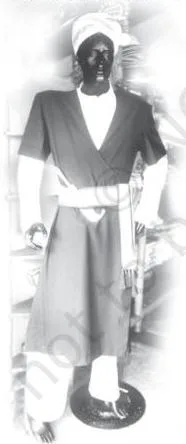
The Coorgi people are fiercely independent and possibly of Greek or Arabic descent. One story says a part of Alexander's army moved south and settled here. The Arab-origin theory rests on the long, black kuppia, which resembles the Arab kuffia (NCERT, p. 68).
The Coorgi military tradition is strong. The Coorg Regiment is one of the most decorated in the Indian Army, and the first Army Chief, General Cariappa, was a Coorgi. Kodavus are the only Indians permitted to carry firearms without a licence (NCERT, p. 69).
The river Kaveri rises in these hills; Mahaseer abound, and kingfishers, squirrels, langurs, and elephants appear in the wildlife passages.
Adventure runs high here. River-rafting, canoeing, rappelling, rock-climbing and mountain-biking convert laidback visitors into high-energy tourists (NCERT, p. 69). A panoramic view comes from the Brahmagiri hills; the rope bridge leads to the sixty-four-acre island of Nisargadhama, and visitors may sight Buddhist monks at Bylakuppe, India's largest Tibetan settlement (NCERT, p. 69).

- By air: nearest airports Mangalore (135 km) and Bangalore (260 km)
- By rail: nearest railheads Mysore, Mangalore and Hassan
- By road (from Bangalore): about 250-260 km via Mysore or via Neelamangal, Kunigal, Chanrayanapatna
Madikeri is the only gateway to Coorg and the base for its homestays and coffee estates (NCERT, p. 70).
Tea from Assam: Summary of Rajvir's Discovery
Part III (NCERT, p. 72) opens on a train ride. Classmates Pranjol (from Assam) and Rajvir (from Delhi) sip tea from a vendor calling"Chai garam." Rajvir shares that over eighty crore cups of tea are drunk daily worldwide (NCERT, p. 72).
Pranjol reads a detective book, but Rajvir watches the scenery shift from paddy to tea bushes against wooded hills.
Pranjol knows the area; Rajvir has read widely. Two tea legends appear (NCERT, p. 72):
- Chinese emperor legend — a few leaves from a burning twig fell into boiling water and gave it a delicious flavour; those were tea leaves.
- Bodhidharma legend — the Buddhist ascetic cut off his eyelids because he felt sleepy during meditation; ten tea plants grew from the eyelids, and the leaves banished sleep.
Rajvir adds tea history: first drunk in China as far back as 2700 BC, words chai and chini come from Chinese, and tea reached Europe in the sixteenth century, used more as medicine than beverage (NCERT, p. 72). At Mariani junction they meet Pranjol's parents and drive to Dhekiabari tea estate managed by Pranjol's father.

At Dhekiabari, tall shade-trees rise above dwarf tea bushes pruned to the same height. Pluckers in bamboo baskets and plastic aprons pick the newly sprouted leaves (NCERT, p. 73). Rajvir identifies the second-flush period May to July, which yields the best tea — impressing Pranjol's father, who says Rajvir has done his homework.
Common Themes Across All Three Parts
The table below maps what is central to each piece; a student can use these rows to answer unifying-theme questions.
| Region | Author | Central image | Identity marker | Economy |
|---|---|---|---|---|
| Goa | Lucio Rodrigues | Traditional baker with bamboo staff | Portuguese bread-baking tradition | Bread-baking as a profitable profession |
| Coorg | Lokesh Abrol | Coffee estates and evergreen rainforests | Coorg Regiment, kuppia coat | Coffee and spice plantations |
| Assam | Arup Kumar Datta | Sea of tea bushes against wooded hills | Tea legends, second-flush knowledge | Tea gardens, the largest concentration in the world |
Three threads run across the pieces:
- Each story celebrates regional identity and local pride.
- Each links landscape to livelihood — bread, coffee, tea.
- Colonial echoes appear throughout: Portuguese influence in Goa, the Greek-Arab origin debate in Coorg, British plantations in Assam.
The unifying theme is India's diversity held together by local pride and tradition. Each region keeps its customs while sharing a common national fabric.
Character and Narrator Sketches
| Character | Evidence from text | Sketch |
|---|---|---|
| The Goan baker (pader) | Visits twice a day; bamboo staff thuds and jingles; jackfruit-like physique; still called pader today | A friend, companion and guide to village children; central figure in Goan ceremonies; symbol of continuity and prosperity. |
| The Coorgi people | Coorg Regiment is most decorated; General Cariappa was Coorgi; firearms without licence; tales of valour recited in homes | A martial, hospitable and fiercely independent people, proud of their army tradition and warm to visitors. |
| Rajvir | Read about tea legends; knows second-flush dates (May to July); excited about scenery | Enthusiastic and well-read; a curious visitor eager to learn more. |
| Pranjol | Born and brought up on a plantation; buried in detective book; "didn't share Rajvir's excitement" | Familiar with tea country; calm and unexcited; contrasts with Rajvir's curiosity. |
Key Literary Devices in the Three Pieces
Sensory imagery grounds each piece in a physical place. The "thud and jingle of the traditional baker's bamboo" (NCERT, p. 64) marks the pader's arrival; "the air breathes of invigorating coffee" (NCERT, p. 68) makes Coorg olfactory; the "magnificent view" of tea bushes (NCERT, p. 72) is visual.
Simile appears in the poem — branches shuffle "like newly discharged patients," half-dazed at a clinic door (NCERT, p. 77). In the prose, the baker's plump body is compared to a jackfruit (NCERT, p. 65).
Nostalgia sets the tone of the Goa piece. Elders reminisce about "those good old Portuguese days" (NCERT, p. 64); the author's tone slides between fond memory and childlike mischief.
The Trees by Adrienne Rich: Stanza-wise Summary
Stanza 1 opens with indoor trees moving out into a forest that was empty all day and night, where no bird, insect, or sun's feet could reach. By morning, the forest will be full of trees (NCERT, p. 77).
Stanza 2 is the physical struggle to get free. The roots disengage from cracks in the veranda floor; leaves strain toward the glass; twigs stiffen; long-cramped branches shuffle under the roof "like newly discharged patients" moving half-dazed to the clinic doors.
Stanza 3 shifts to the speaker. She sits writing long letters in which she "scarcely mention[s] the departure of the forest from the house" (NCERT, p. 77). The whole moon shines in the open sky, and the smell of leaves and lichen reaches the rooms like a voice — a deliberate silence marks the scene.
Stanza 4 ends the break-out. Glass breaks; trees stumble into the night; winds rush to meet them. The moon is "broken like a mirror," with pieces flashing in the crown of the tallest oak (NCERT, p. 77).
Poetic Form of The Trees: Free Verse and Imagery
The poem is free verse; there is no regular rhyme scheme or metre. Line lengths are irregular, which reinforces the restless movement of the trees breaking out. The dominant image pattern moves from confinement (veranda floor, cracks, roof, glass) to freedom (forest, wind, moon).
Adrienne Rich "has been called a feminist and a radical poet" (NCERT, p. 77). That note supports reading the trees as a metaphor for women or confined beings breaking free, not just as potted plants going outside.
Important Quotes and What They Show
| Quote | Source / Context | What it shows |
|---|---|---|
| "thud and jingle" | Goa, baker's bamboo (NCERT, p. 64) | Sensory nostalgia for the pader's morning round. |
| "tiger never brushed his teeth" | Goa, children's logic (NCERT, p. 64) | Mischievous childlike tone that jokes to avoid brushing. |
| "a piece of heaven drifted from the kingdom of god" | Coorg opening (NCERT, p. 68) | Hyperbole for Coorg's natural beauty. |
| "kuppia resembles the kuffia" | Coorg origin theory (NCERT, p. 68) | Supports the Arab-descent theory of the Kodavus. |
| "over eighty crore cups" | Assam, Rajvir's statistic (NCERT, p. 72) | Tea's global reach; sets up Rajvir's homework. |
| "second-flush… May to July" | Assam, Rajvir at Dhekiabari (NCERT, p. 73) | Proves Rajvir read up on tea; impresses Mr Barua. |
| "scarcely mention the departure" | The Trees, stanza 3 (NCERT, p. 77) | The speaker's deliberate silence about the break-out. |
| "moon is broken like a mirror" | The Trees, stanza 4 (NCERT, p. 77) | Liberation imagery; the trees' exit shatters the moon's image. |
Textbook Exercise Questions and Exam Pointers
The chapter's textbook exercises fall into several categories by page. These pointers tell you what a full-mark answer must include, but they do not answer the questions. For worked answers, see our CBSE notes home and follow the First Flight solutions index; for related chapters, see A Question of Trust notes and Mijbil the Otter notes.
You may cross-check the original text on the official NCERT First Flight pages for this chapter.
- Oral Comprehension Check — Goa (NCERT, pp. 65-66): 4 + 5 short direct questions on nostalgia, the pader, bread's role, dress, monthly accounts, jackfruit appearance.
- Thinking about the Text — Goa (NCERT, p. 66): true/false statements on the pader's role, plus a tone-identification tick (nostalgic / hopeful / sad / naughty / matter-of-fact) with quoted phrases.
- Writing — Goa (NCERT, p. 67): complete a childhood-days table on how bread was baked/sold, what the pader wore, when paid, how he looked; then compare the text's extract with Nandakumar Kamat's piece on Goan paders.
- Thinking about the Text — Coorg (NCERT, pp. 70-71): 4 main questions on location, Kodavu descent, people and crop, sports, animals, distance and how to reach; plus a phrase-matching exercise on paragraphs.
- Collocations and adjectives (NCERT, p. 70): match nouns (culture, monks, surprise, experience, weather, tradition) with adjectives; complete phrases from the text; -ing/-ed adjective work.
- Tea from Assam — Thinking about Language (NCERT, pp. 74-75): verb + adverb compounds (upkeep, downpour, undergo, dropout, walk-in); combine verbs with over/by/through/out/up/down.
- Speaking and Writing — Tea (NCERT, p. 76): role play among tea planter, sales agent, tea lover, physician, shop owner; read the Ranjit Biswas extract from The Hindu; draft a tea advertisement.
- Thinking about the Poem — The Trees (NCERT, p. 78): three things impossible in a treeless forest; what roots, leaves, twigs do; branch comparison; moon at start vs end of stanza 3 (cause of change); the speaker's silence in her letters; compare with A Tiger in the Zoo (Class IX) and On Killing a Tree by Gieve Patel.
- Homophones (NCERT, p. 79): refuse/refuse, dove/dove, invalid/invalid.
Common Mistakes Students Make in This Chapter
| Mistake | Correct rule | How to check your answer |
|---|---|---|
| Say the Bodhidharma eyelid legend belongs to Coorg. | It is a tea-origin legend Rajvir tells on the train (Assam part). | Name the speaker (Rajvir) and the setting (train to Mariani). |
| Mix up bol and bolinhas as the same bread. | bol is sweet bread for marriage gifts; bolinhas are Christmas cakes. | Tie each name to its ceremony (marriage vs Christmas). |
| Say Coorgi people are only of Greek descent. | The author gives both Greek (Alexander's army) and Arabic (kuppia/kuffia) theories. | Quote "kuppia resembles the kuffia" for the Arab theory. |
| Read The Trees as only a literal nature poem. | The textbook calls Rich "a feminist and a radical poet" (NCERT, p. 77); trees = metaphor for women/confined beings breaking free. | Add a symbolic line: the trees stand for women seeking freedom. |
| Say the baker's kabai was full length. | kabai was a single-piece frock reaching the knees; later bakers wore half-pants. | Note the knee-length cut and "dressed like a pader" comment. |
Revision Recap: One-Glance Notes
| Part | Region | One-line essence | Key term |
|---|---|---|---|
| I | Goa | Nostalgia for the traditional Goan baker and bread in ceremonies | pader |
| II | Coorg | Coffee country; martial people, rainforests, adventure | kuppia |
| III | Assam | Train journey reveals tea legends and the Dhekiabari estate | second-flush |
| Poem | The Trees | Indoor trees break out into the forest; speaker stays silent | free verse |
Memory Device and a Real-Life Link
Use the mnemonic G-C-A — Goa, Coorg, Assam linked to the authors Rodrigues-Abrol-Datta, or RAD travel. For the poem, remember Glass Breaks = Freedom; the trees shattering glass is the moment of liberation.
A real-life application: the second-flush (May to July) Rajvir mentions is the reason premium Assam tea in shops is labelled "summer harvest." Students can connect the text to tea packaging they see at home — the textbook's fact becomes a label on a supermarket shelf.
FAQs on Glimpses of India Class 10 Notes
Q: Who wrote the three parts of Glimpses of India?
Answer: Lucio Rodrigues wrote "A Baker from Goa," Lokesh Abrol wrote "Coorg," and Arup Kumar Datta wrote "Tea from Assam" (NCERT, p. 64).
Q: What is the bol and why is it important in Goa?
Answer: bol is the sweet bread that makes marriage gifts meaningful in Goa; a party loses its charm without bread (NCERT, p. 65).
Q: Why does the poet not mention the departure of the forest in her letters?
Answer: The speaker "scarcely mentions" the departure (NCERT, p. 77), suggesting people often stay silent about events that are so unexpected or overwhelming that they embarrass us.
Q: What does second-flush mean in Tea from Assam?
Answer: The second-flush is the sprouting period from May to July that yields the best tea; Rajvir identifies it at Dhekiabari (NCERT, p. 73).
Q: Is The Trees by Adrienne Rich part of this chapter?
Answer: Yes; the textbook places the poem at the end of the Glimpses of India chapter (NCERT, p. 77), so the notes cover it here.
Reference: NCERT Class 10 First Flight textbook, chapter Glimpses of India.
Explore Class 10 English Notes
Class 10 English on LearnCBSE:
Related chapters: