
If you are revising A Letter to God for your CBSE Class 10 English board exam, these Class 10 English notes give you the complete chapter summary, themes, and character sketches in one place.
The A Letter to God class 10 notes are designed for a quick night-before revision so you can recall the plot, the irony, and the exam-critical points without rereading the full story. Chapter 1 of the First Flight textbook poses a simple but powerful question: can unwavering faith alone save a person, and what happens when that faith meets human imperfection?
The story is pinned to NCERT pages 1–7 of the rationalised edition.
Chapter Overview: The Farmer’s Crop and the Hailstorm
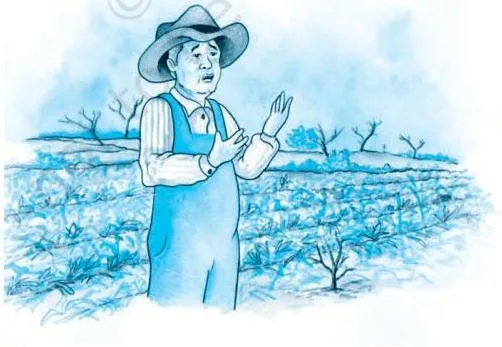
The story sets up a simple premise and then twists it. Lencho, a farmer, lives in a solitary house on a low hill in a valley, entirely dependent on rainfall for his cornfield. The arc moves through three clear phases.
- Anticipation: Lencho watches the north-east sky, confident that rain is coming to nurture his ripe crop.
- Destruction: A hailstorm, initially compared to silver coins, renders the entire field white like salt and leaves the family facing hunger (NCERT, p. 4).
- The Letter & Irony: Certain that God will help, Lencho writes a letter asking for a hundred pesos, triggering the ironic turn of the story.

Story Summary: From the First Letter to the Second
Lencho predicts rain and joyfully views the drops as “new coins”—big drops as ten-cent pieces and small ones as fives (NCERT, p. 3). The rain soon turns into a devastating hailstorm that strips the cornfield bare. Facing total ruin, Lencho places his sole hope in divine help.
Being a hardworking man who somehow knows how to write, he drafts a letter to God asking for a hundred pesos to resow his field and feed his family until the next harvest (NCERT, p. 5).
A postman discovers the letter addressed “To God” and shows it to the postmaster. The postmaster, a fat and amiable fellow, initially laughs but is moved by the writer’s faith—summing up as, What faith! He resolves to send the money to protect this belief.
He collects from his employees and friends, adding part of his own salary, but manages to gather only a little more than half the requested amount. He sends it in an envelope signed “God” (NCERT, p. 6).
When Lencho receives the envelope, he shows no surprise—so absolute is his confidence that God has answered him. However, upon counting and finding only seventy pesos, he is furious. He immediately writes a second letter, stating God could not have denied him the full amount.
He asks God to send the remaining money but warns God not to send it through the mail because the post office employees are a bunch of crooks (NCERT, pp. 6–7).
Theme Analysis: Faith, Nature, and Irony
The chapter carries three core themes that examiners frequently test. Use specific evidence from the text to support each theme in your answers.
| Theme | Evidence from the Text | What it Means |
|---|---|---|
| Unwavering Faith | Lencho shows no surprise upon receiving money; he believes God must have sent the full amount. | His trust in God is absolute and unquestioning. However, this blind faith makes him naive and completely unable to recognise the human charity that actually saved him. |
| Human vs Nature Conflict | The hailstorm destroys the cornfield entirely, threatening the family with hunger. | A farmer’s livelihood is entirely at the mercy of natural forces. Nature provides the rain that promises a harvest, then destroys the same harvest with hail. |
| Irony | Lencho labels the post office employees, who actually donated the money, as a “bunch of crooks.” | The outcome is the exact opposite of what the reader expects. The very people who go out of their way to help Lencho are wrongly accused of stealing from him. |
Why irony matters here: For a student, irony simply means an outcome that is the opposite of what is expected. We expect gratitude from Lencho for the charity he received. Instead, his simplified, unquestioning logic concludes that since God sent the money, the missing portion must have been stolen by the postal staff.
The story’s title asks if faith can move mountains; the ending quietly asks if blind faith can make us blind to human kindness.
Character Sketches: Lencho and the Postmaster
Literature answers need evidence. The table below pairs each character’s defining trait with the exact textual proof examiners want to see. Pair these directly with our broader Class 10 notes to frame your revision.
| Character | Trait | Evidence from the text |
|---|---|---|
| Lencho | Hardworking | Described as an ox of a man, working like an animal in the fields (NCERT, p. 5). |
| Deeply Faithful | He writes directly to God with absolute confidence and shows no surprise when money arrives. | |
| Naive & Ungrateful | He lacks suspicion of miracles, genuinely believing the remaining money was stolen by the post office employees. | |
| Postmaster | Amiable | Described as a fat, amiable fellow (NCERT, p. 5). |
| Sympathetic | He organises a charity collection to help a stranger rather than dismissing the letter. | |
| Resolute in Kindness | He sticks to his resolution to act as God’s representative, even giving part of his own salary (NCERT, p. 6). |

Literary Devices: Metaphor and Irony
NCERT explicitly teaches the metaphor concept in this chapter (NCERT, p. 11). A metaphor transfers a quality from one object to another. This chapter uses natural metaphors to show how a farmer values weather.
| Line from the Story | Device | What it Means |
|---|---|---|
| “These aren’t raindrops falling from the sky, they are new coins.” | Metaphor | Raindrops are compared to currency. Just as coins bring wealth, the rain brings prosperity to the farmer (NCERT, p. 3). |
| “These truly did resemble new silver coins.” | Metaphor (with Simile) | Hailstones initially seem valuable like silver coins, but this comparison turns tragic when the hail ruins the crop. |
| “Lencho was an ox of a man…” | Metaphor | His physical strength and tireless labour in the fields are compared to a beast of burden. |
| “…the post office employees are a bunch of crooks.” | Irony (Situational) | The exact opposite of the truth. The employees were the ones who donated the money, yet they are branded as thieves by the very man they helped. |
Important Quotes for Exam Answers
Drop these short lines into 3-mark and 5-mark answers to prove you have read the text. Limit each quote to one or two lines to keep it exam-safe.
- “These aren’t raindrops falling from the sky, they are new coins.” — Proves Lencho’s deep connection to his farmland and his optimistic outlook regarding the harvest (NCERT, p. 3).
- “The field was white, as if covered with salt.” — Establishes the total destruction of the crop, emphasizing the human vs nature conflict (NCERT, p. 4).
- “I wish I had the faith of the man who wrote this letter.” — The postmaster acknowledges the sheer strength and rarity of Lencho’s unquestioning belief (NCERT, p. 6).
- “…the post office employees are a bunch of crooks.” — The closing line of Lencho’s second letter, which highlights the chapter’s central irony and his naive nature.
Textbook Questions Overview
The Thinking about the Text exercises focus on three main thinking skills (NCERT, p. 7). A full-marks answer demands interpreting the text, not remembering it. Students often pair this page with resources for Nelson Mandela Chapter 2 or general CBSE notes to structure their English revision holistically. Here is what the core questions target:
- Q1 & Q3 (Faith & Expectation): Asks you to identify sentences proving Lencho’s complete faith and state why he never tried to find out who actually sent the money.
- Q4 (The Irony): Crucial 5-mark type question. You must state whom Lencho suspects stole the money and explicitly define irony before applying it to this twist.
- Q6 (The Two Conflicts): Requires you to explain human vs nature (the storm) and human vs human (Lencho’s accusation against the post office) conflicts.
Common Mistakes Students Make
Avoid these chapter-specific misunderstandings in your exam answers. This table pairs the standard error with the correction and a quick verification check.
| Mistake | Correct Rule | How to Check Your Answer |
|---|---|---|
| Writing that God sent the money. | The postmaster and his employees collected it as an act of charity. | Does your answer mention the employees giving part of their salaries? If not, fix it. |
| Calling Lencho entirely greedy and selfish at the end. | He is naive and unquestioning. He genuinely believes the postal staff stole the missing money. | Check if you have used the term “naive” to excuse his ingratitude rather than purely labelling him greedy. |
| Missing the second conflict in the chapter. | The story highlights both human vs nature (storm) and human vs human (Lencho vs the post office). | Ensure your conflict answer names both types and provides an example for each from the text. |
Exam Notes: Writing the 5-Mark Answer
For a 5-mark long answer on this chapter, the examiner looks for structure and an evaluation of the text, not a summary. Follow this method:
- Define the device first: State the definition of irony clearly before applying it to the second letter. This demonstrates an explicit evaluation step, which earns the thinking-skills mark.
- Name both conflicts: State that the chapter demonstrates human vs nature (the destruction of the field by hail) and human vs human (the irony of Lencho suspecting the helpers as thieves).
- Cite the proof: Quote the line where Lencho calls the post office employees a bunch of crooks. Examiners reward textual evidence with an extra mark.
- Compare expectations to reality: A student aiming for maximum marks clearly shows the gap between the postmaster’s kind gesture and Lencho’s tragic accusation.
Revision Summary: The Story in Five Bullet Points
Read this 30-second recap the night before your exam. To remember the story’s arc easily, use the FAITH memory device: Farm destroyed, Appeal to God, Irony of the crooks, Two letters written, Help from the postmaster.
- Farm destroyed: A devastating hailstorm leaves Lencho’s cornfield completely ruined, whiting out the valley like salt.
- Appeal to God: Having absolute faith, Lencho writes a letter to God asking for a hundred pesos to survive and resow his fields.
- Irony of the crooks: Upon receiving only a part of the money, he writes a second letter calling the post office employees “a bunch of crooks,” ironically branding the very people who helped him.
- Two letters written: The entire story pivots on these two letters: the first shows his faith, the second shows his naive blindness to human kindness.
- Help from the postmaster: The postmaster, moved by Lencho’s unwavering belief, gathers a little more than half the requested amount from his employees and friends and signs the envelope as “God.”
Frequently Asked Questions
Why did Lencho call the post office employees ‘a bunch of crooks’?
Lencho had absolute faith that God would send the full 100 pesos he requested. When he found only 70 pesos in the envelope, his unquestioning mind led him to believe that the post office staff must have stolen the remaining amount. Ironically, these were the very people who had donated the money they sent him.
How does the story ‘A Letter to God’ show the conflict between humans and nature?
The human vs nature conflict is shown when Lencho’s cornfield, which promised a good harvest, is entirely destroyed by a sudden and severe hailstorm. Despite his hard work, Lencho is helpless against the forces of nature, leaving him and his family facing poverty and hunger for the year.
What is the central irony in ‘A Letter to God’?
The central irony is that the postmaster and his employees, who selflessly collect money to help Lencho, are branded as a “bunch of crooks” by the very man they help. It is an unexpected outcome because a reader expects gratitude from Lencho, not an accusation of theft against his benefactors.
Which metaphors are used by the author in ‘A Letter to God’?
The author compares raindrops to “new coins” and hailstones to “new silver coins” to represent the financial value of rain to a farmer. Furthermore, Lencho is described as “an ox of a man,” a metaphor that highlights his tireless strength and physical labour in the fields.
Reference: NCERT Class 10 English textbook, chapter A Letter to God. You can also review the story directly on the official NCERT First Flight textbook page.
Explore Class 10 English Notes
Class 10 English on LearnCBSE:
Related chapters: