
From the Diary of Anne Frank Class 10 notes for Session 2026-27 give you Anne’s world in a tight, exam-ready frame. Chapter 4 of First Flight is an extract from The Diary of a Young Girl. Anne wrote it in Amsterdam while hiding from the Nazis.
This page condenses the chapter into two diary-entry summaries, theme analysis, character sketches, literary devices, key quotes, and exam pointers — so you revise in one sitting.
What Is Chapter 4 About?
Anne Frank was a German-born Jewish girl who moved to Amsterdam with her family after the Nazis came to power in Germany (NCERT, p. 1). The diary was a gift on her thirteenth birthday, 12 June 1942, and it chronicles her life from that date until 1 August 1944.
This chapter is an extract. It contains two entries — one about loneliness and naming her diary Kitty, and one about school life and her maths teacher Mr. Keesing. Anne wrote in Dutch; the version you study is a translated extract (NCERT, p. 1).
The chapter matters because it shows how one teenager used writing to turn loneliness and fear into something honest, funny, and lasting.
Chapter Overview and Historical Background
To make sense of the diary extract, you need three facts about Anne’s world.
| Fact | Detail (NCERT, p. 1) |
|---|---|
| Who | Anneliese Marie Frank, born 12 June 1929 |
| Where | Frankfurt, then Amsterdam after 1933 |
| Why hiding | Nazi occupation of the Netherlands; Jews faced arrest |
| When in hiding | July 1942, in her father Otto’s office building |
| What happened after | Group betrayed after two years; transported to camps |
| Anne’s death | Typhus at Bergen-Belsen, within days of Margot |
| Diary’s afterlife | Otto survived; published as The Diary of a Young Girl |
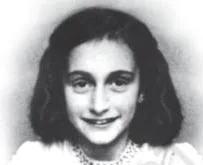
Anne’s photo caption in the textbook shows her aspiration: she wished always to look that way so she might have a chance to go to Hollywood (NCERT, p. 1). That hope sits beside the daily menace of Nazi round-ups — a contrast that gives the diary its emotional range.
Anne’s own life sketch adds family detail: her father married at 36, her mother Edith at 25; sister Margot was born in Frankfurt in 1926; Anne arrived 12 June 1929 (NCERT, p. 4). The family reunited in Holland in stages. Anne attended the Montessori nursery school, then later Mrs. Kuperus was her headmistress in the sixth form (NCERT, p. 4).
Chapter Summary: Two Diary Entries Explained
The chapter has two dated sections. Use this breakdown to revise without rereading the textbook in full.
Entry 1 — Loneliness and Kitty (before 20 June 1942)
Anne opens by saying writing in a diary feels strange — she has never written before and doubts anyone will care about a thirteen-year-old’s thoughts (NCERT, p. 2). Yet she has an urge to get things off her chest.
Her reason: she has loving parents, a sixteen-year-old sister, about thirty people she calls friends, aunts, a good home — but no one real confidante. Her group only talks about ordinary things, and they never confide in one another. Because she cannot share deeply, she turns to paper.
You should remember the saying she quotes: “Paper has more patience than people.” She decides her diary will be a friend she names Kitty (NCERT, p. 2).
Entry 2 — School and Mr. Keesing (Saturday, 20 June 1942)
Anne opens with “Dearest Kitty” and a mood of panic: the class is quaking in its boots because teachers will soon decide who is promoted (NCERT, p. 5). Half the class makes bets; two boys stake holiday savings on a pass or fail.
Anne is wary mainly about maths. She gets along with all nine teachers but clashes with Mr. Keesing, the maths teacher she calls an old fogey, because she talks too much (NCERT, p. 5).
Mr. Keesing’s punishments become a running thread in the entry:
- First essay: A Chatterbox — Anne argues talking is a student’s trait and blames her mother for the inherited habit (NCERT, p. 5-6).
- Second essay: An Incorrigible Chatterbox — Mr. Keesing laughs, but Anne talks again, so he assigns this topic (NCERT, p. 6).
- Third essay: Quack, Quack, Quack, Said Mistress Chatterbox — the class roars. Anne’s friend Sanne, good at poetry, helps her write the whole thing in verse (NCERT, p. 6).
The poem is about a mother duck, a father swan, and three ducklings the father bites to death for quacking too much. Mr. Keesing takes the joke well, reads the poem to the class (and other classes), adds his comments, and never assigns Anne extra homework again — he starts making jokes instead (NCERT, p. 7).
Theme Analysis: Loneliness, Self-Expression, and Growing Up
CBSE theme questions expect you to pair an idea with text evidence. Use the table below as a ready reference.
| Theme | Textual Evidence (NCERT) | Original Explanation |
|---|---|---|
| Loneliness despite company | “I have about thirty people I can call friends” but “I don’t have a friend” (p. 2) | Anne distinguishes possibility from depth; surface friends without trust leave a gap |
| Power of self-expression | “Paper has more patience than people.” (p. 2) | Writing becomes a safe confidante when human conversation isn’t available |
| Humour as defence mechanism | Essays turn scolding into playfulness; “the joke was on him” (p. 6) | Anne reclaims control by making punishment comic, not obedient |
| Coming of age | Insights about teachers being “unpredictable creatures” and inherited traits (p. 5-6) | She reasons about adult behaviour and family traits — beyond a child’s complaint |
These themes are exam-staple because each lets a student quote a short line and then explain what it reveals. Themes here move from inward (loneliness) to outward (school), which mirrors how adolescence itself feels.
Character Sketches
Five-mark character questions are standard. Here are the three figures the chapter gives in depth.
Anne Frank — the narrator and protagonist
- Observant and self-aware: she sees the difference between having friends and having confidantes (NCERT, p. 2).
- Witty and talkative: three essays about being a chatterbox, each one more inventive (p. 5-6).
- Mature beyond her age: writes as if her diary must make sense to Kitty, gives a family sketch first (p. 3-4).
- Affectionate: lights a candle for Grandma at the 1942 birthday (p. 4).
Mr. Keesing — the maths teacher who evolves
- Starts strict: assigns extra homework for Anne’s talking, escalating titles (p. 5-6).
- Takes the joke well: after Anne’s duckling poem, he reads it aloud to other classes and adds his own comments (p. 7).
- Flexible: never assigns extra homework after that lesson; makes jokes himself (p. 7).
This evolution is the detail competitors skip — boards reward it. Showing change in a character earns more marks than a one-line label.
Grandmother — a quiet presence
- Died January 1942 after an operation the previous summer (NCERT, p. 4).
- Deeply loved: Anne’s 1942 celebration lit “Grandma’s candle along with the rest” (p. 4). The candle is evidence — her affection survived loss.
Literary Devices in Anne Frank’s Diary
Boards ask students to identify devices with the exact line. Role names and order matter — don’t just list devices.
| Device | Exact Line (NCERT) | What It Does |
|---|---|---|
| Personification | “Paper has more patience than people.” (p. 2) | Treats paper as a patient listener, giving it a human virtue |
| Metaphor | Calling the diary Kitty (p. 2) | The diary becomes a close friend through naming |
| Idiom | “quaking in its boots” (p. 5) | Fixed phrase meaning trembling with nervousness, not literal boots |
| Humour / Irony | Essays as punishment while Anne keeps talking (p. 5-6) | Turning a scolding into play; the teacher’s tool used for comedy |
| First-person voice | “Dearest Kitty,” entries (p. 5) | Creates intimacy; the reader becomes a confidante |
The textbook also flags compound words (headmistress, long-awaited, homework), phrasal verbs (plunge in, ramble on, make up for, hand in), and idioms (the joke was on him, lose heart, laugh ourselves silly) in its language sections (p. 8-9). These help you see how spoken and written forms blend in a diary.
Important Quotes with Explanations
Questions often ask for context. Each quote here is an anchor exam line.
| Quote | Context / What It Means |
|---|---|
| “Paper has more patience than people.” | Anne explains why she turns to a diary; people interrupt, judge, or fail to listen, while paper waits |
| “I don’t have a friend.” | Despite thirty friends and family, she lacks one true confidante — her reason to start the diary |
| “the joke was on him.” | After Mr. Keesing’s third essay topic, Anne’s verse turns his punishment back on him; the teacher accepts it |
| “teachers are the most unpredictable creatures on earth.” | Anne’s wry summary before promotions — but Mr. Keesing later proves the point by softening |
| “Grandma’s candle was lit along with the rest.” | Anne keeps her grandmother’s memory alive on her 1942 birthday; a small ritual shows affection |
Thinking about the Text: Question Pointers
NCERT sets seven Thinking about the Text questions (p. 7) and three sets of Oral Comprehension Checks (p. 4, 7). For full answers, use our solutions for Chapter 4. Here’s what each targets so you can attempt them on your own first.
Oral Comprehension Checks
- Set 1 (p. 4): Why Anne starts a diary; why paper is more patient; what makes diary-writing strange.
- Set 2 (p. 4): Why Anne gives a life sketch; how she shows love for her grandmother.
- Set 3 (p. 7): Why Mr. Keesing was annoyed; how Anne justified being a chatterbox; whether he was strict; what changed his mind.
Thinking about the Text (p. 7)
- Q1: Was Anne right about no one caring for a thirteen-year-old’s musings?
- Q2: Compare diary examples from Before You Read with Anne’s; what language was the diary written in originally?
- Q3: Why Anne gives a family sketch; is Kitty an insider or outsider?
- Q4: How Anne feels about father, grandmother, Mrs. Kuperus, and Mr. Keesing — and what that reveals about her.
- Q5: What Anne writes in her first essay.
- Q6: Is Mr. Keesing unpredictable? In what way?
- Q7: What five statements reveal about Anne as a person.
Need help answering them? Check the related Chapter 3 notes and our Class 10 English hub for prose patterns you can mirror. You can also cross-check the original text on the official NCERT First Flight Chapter 4 page.
Common Mistakes Students Make
Strict error-to-correction pairs, specific to this chapter. Check your answers against these.
| Mistake | Correct Rule | How to Check |
|---|---|---|
| Calling Mr. Keesing strict throughout | He starts strict but changes after the duckling poem, reads it to other classes, starts making jokes (p. 7) | Quote “Since then I’ve been allowed to talk” to prove the shift |
| Saying Anne has no family | She has loving parents and a sixteen-year-old sister; she says “I’m not completely alone” (p. 2) | Reread the line before “I don’t have a friend” — family is named |
| Treating Kitty as a real friend | Kitty is the name Anne gives her diary (p. 2) | Look for the decision line: “I’m going to call this friend Kitty” |
| Saying Anne wrote the duckling poem alone | Her friend Sanne, good at poetry, helped her write it in verse (p. 6) | Locate the sentence naming Sanne before the poem detail |
Exam Notes: What Scores High
Honest, examiner-mindset pointers — observed patterns, not predictions. For more prose patterns, see Chapter 5 notes and the Chapter 1 notes to compare narrative approaches.
- Pair quote with trait. A five-mark answer needs the evidence plus your own explanation. “Paper has more patience than people” alone doesn’t earn the mark — add: it shows Anne trusts writing more than people.
- Show evolution. Mr. Keesing earns marks when you show change, not when you label him strict. Trace the three essays and the final turn.
- Original phrasing wins. Retelling the plot scores low. State the theme in your words: self-expression turns isolation into power, not a copied NCERT sentence.
- Use the candle detail. For Grandmother questions, the lit candle in 1942 is stronger evidence than a vague “she was loved.”
Revision Summary: Key Facts for Last-Minute Scan
| Item | Fact (NCERT reference) |
|---|---|
| Anne born | 12 June 1929, Frankfurt (p. 4) |
| Sister Margot born | 1926, Frankfurt (p. 4) |
| Diary started | 12 June 1942 (p. 1) |
| Diary name | Kitty (p. 2) |
| School | Montessori nursery; Mrs. Kuperus, headmistress (p. 4) |
| Maths teacher | Mr. Keesing, “old fogey” (p. 5) |
| Grandmother died | January 1942; candle lit in 1942 (p. 4) |
| First essay | A Chatterbox (p. 5) |
| Second essay | An Incorrigible Chatterbox (p. 6) |
| Third essay | Quack, Quack, Quack, Said Mistress Chatterbox (p. 6) |
| Poem helper | Sanne (p. 6) |
| Original language | Dutch (p. 1) |
Frequently Asked Questions
Why did Anne Frank name her diary ‘Kitty’?
Anne felt she had no true friend to confide in, though she had family and thirty people she could call friends. To make the diary feel like a real friend, she named it Kitty and addressed entries to it (NCERT, p. 2).
How did Mr. Keesing punish Anne for talking in class?
He assigned extra homework — essays with escalating titles. First A Chatterbox, then An Incorrigible Chatterbox, and finally Quack, Quack, Quack, Said Mistress Chatterbox (NCERT, p. 5-6).
What does ‘Paper has more patience than people’ mean in the chapter?
Anne means a diary listens without interrupting, judging, or breaking confidence. People — even friends — fail at this. Writing lets her express feelings without fear (NCERT, p. 2).
Who helped Anne write the poem for her third essay?
Her friend Sanne, who was good at poetry, offered to help Anne write the entire essay in verse. The poem was about ducklings punished for quacking too much (NCERT, p. 6).
Why does Anne give a brief sketch of her family in the diary?
She wants Kitty — her imagined reader — to understand her life before she plunges into daily events. The sketch gives context for later entries (NCERT, p. 3-4).
Moral and Message of the Chapter
The chapter shows that honest writing can transform hardship. Alone among people but not in spirit, Anne turns a diary into a confidante.
- Self-expression is a form of friendship. Naming the diary Kitty turns loneliness into conversation.
- Humour disarms conflict. The essays change Anne’s relationship with Mr. Keesing from clash to mutual jokes (p. 7).
- Ordinary voices become historical records. A teenager’s diary became one of the world’s most widely read books (NCERT, p. 1).
The takeaway for students: keeping a diary is not only a writing exercise — it is a way to think clearly under pressure. That practice still matters today.
Reference: NCERT Class 10 English textbook (First Flight), chapter 4, From the Diary of Anne Frank.
Explore Class 10 English Notes
Class 10 English on LearnCBSE:
Related chapters: