
Here is the official Consumer Rights Class 10 PDF — Chapter 5 of Understanding Economic Development, the NCERT Social Science economics textbook for Class 10.
The chapter opens on page 74 of the printed book and runs to the reference lists around page 92; this page carries the NCERT file and then teaches you the whole chapter — the six rights, the three tiers of consumer courts, and the real cases the book argues through.
If you already have the book open, skip the download and start at the table of contents below.
Download the Consumer Rights Class 10 PDF
The official Consumer Rights Class 10 PDF is published by NCERT as Chapter 5 of Understanding Economic Development; open it from the official NCERT page for the book if you want to read the printed chapter, its case studies and its exercises exactly as they appear in the board-followed edition.
The chapter sits inside the full book file on pages 74 to 92, and the copy printed in the book is the one to trust — so use the NCERT file rather than any edited version.
| What the chapter holds | Count | Where it is used |
|---|---|---|
| Printed pages | 19 | |
| Figures with NCERT captions | 12 | |
| Tables | 3 | |
| Exercise questions | 42 | answered in our NCERT Solutions |
| Official NCERT PDF | Download the chapter PDF | the chapter exactly as NCERT publishes it |
Chapter 5 Consumer Rights at a Glance
Here is how much the chapter actually holds, before we explain any of it:
What those counts mean in practice: NCERT opens the chapter with a collage of real newspaper verdicts — a Delhi University teacher who won ₹45,000 over a disputed ₹400 phone bill, an insurance firm ordered to pay ₹7,000 for a stolen phone, a bank fined ₹15,000 for sloppy service, and a society told to compensate an owner for poor construction.
The chapter then teaches through named case studies — Reji’s Suffering, Waiting…, A Refund and Prakash’s money-order case — with several “Let’s Work These Out” discussion blocks scattered between them. It ends with the ISI and Agmark section, the movement’s current problems, and a full set of exercises plus projects.
What This Chapter Covers: From Market Exploitation to Consumer Justice
Before studying, see how the parts connect. The chapter moves in seven steps:
- The hook: real verdict clippings showing ordinary people who went to consumer commissions and won (NCERT, p. 74).
- The problem: in the marketplace the seller usually holds the power, and consumers are exploited through unfair trade practices (NCERT, p. 76).
- The response: the consumer movement in India, from the 1960s to COPRA 1986 and its 2019 amendment (NCERT, pp. 77–78).
- The rights: each of the six consumer rights is taught through a story — Reji, the packaging labels, Abirami, Prakash.
- The machinery: where a consumer actually goes for justice — the three-tier system of commissions (NCERT, p. 83).
- The tools: becoming a well-informed consumer — MRP, RTI, and certification marks such as ISI and Agmark (NCERT, pp. 80, 85).
- The reality check: the movement’s honest problems and the consumer’s duties (NCERT, p. 86).
Key Concepts: The Consumer in the Marketplace
Every student is a consumer. Every time you buy a notebook, a bus ticket or a plate of food, you enter a market — and in that market the seller usually holds the power. The whole chapter starts from this one fact (NCERT, p. 76).
When a purchase goes wrong, the book says, the typical seller “tries to shift all the responsibility on to the buyer” — the attitude being, in the chapter’s words, “If you didn’t like what you bought, please go elsewhere”. Once a sale is completed, the seller acts as if the matter is closed.
Exploitation in the marketplace takes familiar forms, all listed on NCERT page 76:
- Unfair trade practices — shopkeepers weighing less than they should, adding charges that were never mentioned, or selling adulterated or defective goods.
- Manipulation by big producers — when producers are few and powerful while consumers buy in small amounts and are scattered, large companies use their wealth and reach to distort the market.
- False information — a baby-milk powder company sold its product worldwide as “better than mother’s milk” for years before being forced to admit the claim was false; cigarette manufacturers had to be dragged through court cases to accept that their product causes cancer.
Why does the chapter connect this to earlier ones? The same logic that protects informal-sector moneylenders’ borrowers (Chapter 3) and unorganised-sector workers applies to consumers — and market power only grows in the economy you studied in the globalisation and the Indian economy chapter. Rules and regulations exist because markets do not police themselves.
The Six Consumer Rights Under COPRA
The rights are not abstract — each one exists because a real consumer was harmed first. NCERT develops them across pages 79 to 85 and lists all six together in the “Let’s Work These Out” activity on pages 85–86. This is the table to memorise:
| Right | What it means | Case or example from the chapter |
|---|---|---|
| Right to safety | Protection against goods and services that are hazardous to life and property. | Reji Mathew, crippled for life after improper anaesthesia; his father won compensation from the hospital (NCERT, p. 79). |
| Right to information | Manufacturers must display ingredients, price, batch number, manufacture and expiry dates, and the manufacturer’s address. | The printed MRP; the RTI Act through Amritha’s case (NCERT, p. 80). |
| Right to choose | The consumer decides whether to continue receiving a service — no forced bundles. | Abirami’s refund from her coaching institute; the toothpaste-and-toothbrush and gas-stove examples (NCERT, p. 81). |
| Right to redressal | The right to complain and get compensation depending on the degree of damage. | Prakash’s money-order case, taken to a district commission (NCERT, p. 82). |
| Right to representation | The right to be heard in the Consumer Disputes Redressal Commissions, alone or in a group. | The Act itself, plus class action suits filed by many consumers together (NCERT, pp. 82–83). |
| Right to consumer education | The right to learn how to become a well-informed consumer. | The government’s awareness posters and consumer departments (NCERT, p. 84). |
Memory aid: string the first letters together — S-I-C-R-R-C (Safety, Information, Choice, Redressal, Representation, Consumer education). Say it once with the cases attached, and the right you are being asked about in a question will announce itself.
Where Consumers Get Justice: The Three-Tier Redressal System
Knowing your right is useless if you do not know the door to knock on. Under COPRA, complaints are heard by a three-tier quasi-judicial system set up at the district, state and national levels (NCERT, p. 83).
| Commission | Claims it hears | Notes |
|---|---|---|
| District Consumer Disputes Redressal Commission | Claims up to ₹1 crore | The first door for most consumers. |
| State Commission | Claims between ₹1 crore and ₹10 crore | Also hears appeals from the district level. |
| National Commission | Claims above ₹10 crore | The final appellate level described in the chapter. |
How an appeal moves: if a case is dismissed at the district level, the consumer can appeal to the State Commission, and then to the National Commission — the ladder always goes upward (NCERT, p. 83).
The complaint path is shown through Prakash’s money-order case: he sent money to his daughter for her marriage, it never reached her, and he filed a case in a district-level commission in Delhi.
The steps NCERT illustrates: the consumer files the complaint himself, with or without a lawyer, produces the evidence, attends the proceedings, and the judge announces the commission’s verdict. Cases can now be filed physically or through the internet, and conducted by video conferencing (NCERT, p. 82).
The 2019 amendment strengthened this machinery at all three tiers: online purchases are now covered; a service provider or manufacturer can be penalised — even imprisoned — for a defective product or service deficiency; and settlement through a neutral mediator, outside the commission, is now encouraged (NCERT, p. 86).
Becoming a Well-Informed Consumer: MRP, RTI and Certification Marks
Most consumer problems begin before the purchase — with what the buyer does not know. This section of the chapter gives you the everyday checklist (NCERT, pp. 80, 84–85).
Check the packet. When you buy any commodity, the packing must show the ingredients used, the price, the batch number, the date of manufacture, the expiry date and the manufacturer’s address. Medicines must add directions for proper use, side effects and risks; garments must carry washing instructions.
If a product proves defective within its expiry period, you can ask for a replacement — but only because the expiry date was printed and the manufacturer cannot dodge responsibility.
Respect the MRP. MRP stands for maximum retail price — the printed ceiling. A seller who charges more than the MRP can be protested against and complained about; a consumer can also bargain for less than the printed price (NCERT, p. 80).
Use the RTI Act. Enacted in October 2005, the Right to Information Act assures citizens information about the functioning of government departments. In the chapter’s “Waiting…” case, engineering graduate Amritha used RTI to learn why her job result was delayed — and received her call letter, since she had performed well in the interview (NCERT, p. 80).
Know your certification marks. ISI, Agmark, Hallmark and +F on a cover tell you that an organisation has checked the producer’s quality standards.
But certification is not compulsory for every product — only for goods that affect the health and safety of consumers or are items of mass consumption, such as LPG cylinders, food colours and additives, cement, and packaged drinking water (NCERT, p. 85).

That is why the chapter asks why so many goods in the market carry no ISI or Agmark mark — because for most products, the standards are voluntary (NCERT, p. 86).
The Consumer Movement: History and Current Challenges
The rights did not come from nowhere — people organised and struggled for them over a long period. This is a favourite long-answer topic, and the chapter gives you both the rise and the honest problems (NCERT, pp. 77–78, 86).
Origins in India:
- The consumer movement as a social force began in the 1960s, born out of rampant food shortages, hoarding, black marketing, and adulteration of food and edible oil.
- Till the 1970s, consumer organisations mainly wrote articles and held exhibitions, and formed groups to check malpractices in ration shops and overcrowding in road transport.
- A major step came in 1986, when Parliament enacted the Consumer Protection Act, popularly known as COPRA — amended later in 2019.
International context: in 1985, the United Nations adopted the UN Guidelines for Consumer Protection, which became the foundation of the consumer movement worldwide; today Consumers International is an umbrella body of over 200 member organisations from more than 100 countries (NCERT, p. 78).

The movement’s current problems — the chapter is honest about these (NCERT, p. 86):
- Of more than 2,000 consumer groups in India, only about 50–60 are well organised and recognised for their work.
- The redressal process is cumbersome, expensive and time-consuming; consumers often need to engage lawyers, and cases require time for filing and attending proceedings.
- In most purchases, cash memos are not issued, so evidence is hard to gather.
- Enforcement of laws that protect workers and rules for the working of markets is weak, and consumer awareness is spreading only slowly.

India observes 24 December as National Consumers’ Day — the day Parliament enacted COPRA in 1986. The chapter closes by noting that the movement can work only with the consumers’ active involvement, through voluntary effort and struggle.
Worked Example: Applying the Six Rights to a New Situation
This is the skill the chapter’s categorisation exercise trains — read a real complaint and name the rights it violates. Work through an original case the chapter does not use:
Scenario. Sunita buys a branded mixer-grinder from an electronics shop. The shopkeeper refuses to give a bill, saying the discount price “does not include billing”. The sealed box shows the machine was manufactured 18 months earlier. Within a week the machine sparks, overheats and stops working. The shop insists she must buy an extended warranty to get a replacement.
Step 1 — Classify the rights involved.
- Right to safety — a mixer that sparks is hazardous to life and property; the goods must be protected against hazards (NCERT, p. 79).
- Right to information — the manufacturer’s details, batch number and date of manufacture are mandatory on the packing, and old stock was passed off without disclosure (NCERT, p. 80).
- Right to choice — forcing Sunita to buy an extended warranty before replacing the defective machine denies her the choice to continue with the service on fair terms (NCERT, p. 81).
- Right to redressal — she is entitled to a replacement or compensation depending on the degree of damage (NCERT, p. 82).
Step 2 — Sequence the complaint correctly. The chapter’s ordering exercise demands exactly this chain:
- Complain first to the seller and the branch office — here, ask for the bill and a replacement.
- Keep the bill and warranty safely — but note the trap the chapter flags: most small purchases never get a cash memo, so evidence is hard to gather (NCERT, p. 86). Sunita’s missing bill is her weak point, and it is the fact the question wants you to notice.
- If the dealer refuses, file a case in the District Consumer Disputes Redressal Commission, since the claim is under ₹1 crore — with or without a lawyer (NCERT, pp. 82–83).
- Attend the proceedings and produce whatever evidence exists; the commission can then order the replacement.
Conclusion the exam expects: the case involves the right to safety, information, choice and redressal; the correct order is complain to the seller → keep evidence → file before the district commission → attend proceedings → receive the verdict.
Figure Walkthrough: Reading the Chapter’s Visuals



NCERT uses five images to carry its argument. Do not skip them — each one teaches one idea from the chapter.
This first figure (NCERT, p. 76) is the chapter’s core argument in one image: a handful of big producers on one side, many scattered consumers on the other. The imbalance it shows is why rules and regulations exist, and why the consumer movement had to organise.
The second figure (NCERT, p. 79) belongs to Reji’s case. It shows the right to safety in action: the State Commission first dismissed the case for lack of evidence, and the National Commission later held the hospital responsible and directed compensation — proof that a consumer must be ready to appeal upward.
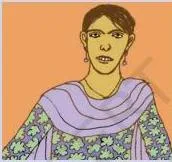
The third figure (NCERT, p. 81) is Abirami’s refund. The District Commission refunded ₹28,000 on the ground of the right to choose; the State Commission then fined the institute for a frivolous appeal and stopped institutes from demanding the whole course fee in advance. Read it as: a service consumer has the same rights as a goods consumer.
The fourth figure (NCERT, p. 80) pairs with the right to information and the Amritha case. It reminds you that the right to information goes beyond product labels — it now covers government services through the RTI Act of October 2005.
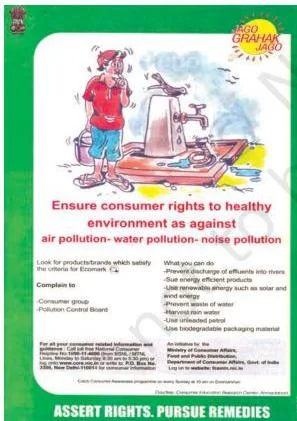
The fifth figure (NCERT, p. 83) is the Prakash complaint journey, drawn in numbered steps from the post office to the judge announcing the verdict. It teaches the right to representation — and it is the exact sequence you are asked to reconstruct in the chapter’s order-the-steps exercise.
Key Terms in This Chapter: A Quick Reference
These are the legal and technical terms the chapter actually uses, defined in simpler words:
| Term | Meaning | Page |
|---|---|---|
| Consumer Protection Act 1986 (COPRA) | The Indian law that gives consumers rights and sets up redressal machinery; amended in 2019. | p. 78 |
| RTI (Right to Information) Act | Law enacted in October 2005 that ensures citizens information about the functioning of government departments. | p. 80 |
| MRP | Maximum Retail Price — the printed ceiling on what a seller may charge. | p. 80 |
| Consumer Disputes Redressal Commission | Quasi-judicial body at district, state and national levels that hears consumer complaints. | p. 83 |
| Consumer protection council | A voluntary consumer organisation that guides consumers on filing cases and sometimes represents them. | p. 83 |
| ISI | Quality certification mark; compulsory for certain health-and-safety and mass-consumption products. | p. 85 |
| Agmark | Certification mark used for products such as edible oil and cereals. | p. 87 |
| Hallmark | Certification maintained for the standardisation of jewellery. | p. 87 |
| Consumers International | Umbrella body of over 200 member organisations from more than 100 countries. | p. 78 |
| UN Guidelines for Consumer Protection | Adopted in 1985; the international foundation of the consumer movement. | p. 78 |
| Class action suit | A complaint filed by a group of consumers together. | p. 82 |
| Mediator | A neutral intermediary who settles disputes outside the commissions; encouraged at all three tiers after 2019. | p. 86 |
Common Mistakes Students Make in Consumer Rights
These confusions come straight from the chapter’s own True or False items and discussion exercises. Name them before the exam names them to you:
| Mistake | Correct rule | How to check your answer |
|---|---|---|
| “COPRA applies only to goods.” | False — COPRA covers services too. Reji’s hospital case, Abirami’s coaching institute and the insurance cases are all services. | Ask: could this complaint involve a service? Hospital, telecom, insurance and coaching all count. |
| Confusing the consumer protection council with the Consumer Disputes Redressal Commission. | The council is a voluntary body that guides and represents consumers; the commission is a quasi-judicial body that hears and decides cases. | The chapter explicitly asks for this difference in its exercise — learn it as a pair. |
| “Every product must carry ISI or Agmark.” | Certification is compulsory only for products affecting health and safety or of mass consumption — LPG cylinders, food colours and additives, cement, packaged drinking water. | That is why the chapter asks why many goods sell without these marks (NCERT, p. 86). |
| “The redressal process is simple and quick.” | False — the chapter calls it cumbersome, expensive and time-consuming, and consumers often need lawyers. | The True/False item (vi) is false; the book’s own progress section says so. |
| Forgetting to keep the bill. | The bill and warranty are the evidence; commissions ask you to produce them. Cash memos are often not issued at all, so evidence is hard to gather. | In the order-the-steps exercise, the consumer is “asked to produce the bill and warranty before the commission”. |
Exam Notes: How to Use This Chapter for the Board Paper
No one can promise you a specific question, but the chapter clearly trains you in five skills that recur in its own exercises (NCERT, pp. 83, 85–87):
- Name the six rights and match a situation to the right it violates — the categorisation activity asks exactly this for cases like an electric shock from an iron (safety) or expired medicine being sold (information).
- Sequence the complaint steps — the ordering exercise: complain to the dealer first, then file before the District Commission, produce the bill and warranty, attend proceedings, receive the verdict.
- Explain the difference between the consumer protection council and the Consumer Disputes Redressal Commission — voluntary guide versus quasi-judicial decision-maker.
- Recall the three tiers with their claim limits — district up to ₹1 crore, state ₹1–₹10 crore, national above ₹10 crore, with appeals moving upward.
- State the 2019 amendment changes — online purchases included, mediators encouraged at all three tiers, and service providers or manufacturers liable to penalty or imprisonment.
For the long-answer questions in the Exercises (NCERT, p. 87) — why rules are needed, what gave birth to the movement, the need for consumer consciousness, factors causing exploitation, the rationale for COPRA, a consumer’s duties, and a critical examination of the movement’s progress — build each answer from the tables above: reason → history → rights → machinery → honest problems.
Remember that textbook contents and the examinable syllabus are not always identical — check the current official syllabus before the exam.
Revision Summary: The Chapter in 10 Points
One line per idea — this table is the whole chapter for the night before:
| Topic | What to remember |
|---|---|
| Why consumer protection exists | Markets are unfair when producers are few and powerful and consumers are scattered (NCERT, p. 76). |
| How sellers exploit consumers | Shifting blame, underweighing, hidden charges, adulterated or defective goods, false claims (NCERT, p. 76). |
| When and why the movement began | Organised form in 1960s India, from food shortages, hoarding, black marketing and adulteration (NCERT, p. 77). |
| International backing | UN Guidelines 1985; Consumers International; COPRA enacted 1986, amended 2019 (NCERT, p. 78). |
| The six rights | S-I-C-R-R-C — Safety, Information, Choice, Redressal, Representation, Consumer education. |
| The redressal machinery | District (up to ₹1 crore), State (₹1–₹10 crore), National (above ₹10 crore); appeals go upward (NCERT, p. 83). |
| Certification marks | ISI, Agmark, Hallmark, +F; compulsory only for health-and-safety and mass-consumption products (NCERT, p. 85). |
| MRP and RTI | Never pay above MRP; RTI Act (2005) opens up government information (NCERT, p. 80). |
| The movement’s current problems | Cumbersome, expensive, time-consuming process; few well-organised groups; cash memos rarely issued (NCERT, p. 86). |
| The consumer’s duties | Insist on a bill, check the packet and marks, keep the bill, complain when cheated (NCERT, pp. 86–89). |
Related Resources
This listing is maintained for the 2026-27 academic session using the NCERT textbook information available to us. NCERT remains the authority for confirming the latest edition.
Use these pages to move through the book and the subject:
- Class 10 Social Science notes — the hub for all four books of the subject, including Economics.
- Class 10 notes — every subject on one page for quick navigation.
- CBSE notes home — the full index if you are studying across classes.
- Globalisation and the Indian Economy — the previous chapter, whose market logic this chapter’s opening builds on.
- Manufacturing Industries — the geography chapter on producers, the same “few powerful producers” theme seen from the industry side.
- The official NCERT page for Understanding Economic Development — the authoritative source for the textbook and its PDF.
Sources and Data Verification
- This page describes NCERT Class 10 Understanding Economic Development, Chapter 5 “Consumer Rights”, from the official NCERT edition and PDF available on ncert.nic.in.
- It covers the chapter’s textbook content only — its cases, exercises and activities — not additional material from other books.
- It is maintained for the current academic session using the NCERT information available to us.
- NCERT settles textbooks, editions and PDFs; CBSE settles the curriculum, syllabus and examinations. Page references follow the printed NCERT book (chapter opens on p. 74).
FAQs on Consumer Rights Class 10
What is the Consumer Protection Act 1986 (COPRA), and why is it important?
COPRA is the Indian law enacted in 1986 (and amended in 2019) that protects consumers from exploitation in the marketplace. It gives consumers six rights and sets up the three-tier quasi-judicial machinery — district, state and national commissions — where complaints can be filed with or without a lawyer (NCERT, pp. 78, 83).
What are the six consumer rights listed in the NCERT Class 10 chapter?
The six rights are: right to safety, right to information, right to choose, right to redressal, right to representation, and right to consumer education — remembered as S-I-C-R-R-C. NCERT lists them together in the “Let’s Work These Out” exercise on pages 85–86.
How do the District, State and National Consumer Disputes Redressal Commissions differ?
They differ by the size of the claim: the District Commission hears claims up to ₹1 crore, the State Commission claims between ₹1 crore and ₹10 crore, and the National Commission claims above ₹10 crore. Appeals move upward from district to state to national (NCERT, p. 83).
Can a consumer file a case without a lawyer?
Yes. The consumer can file a complaint before the appropriate consumer forum on his or her own, with or without the services of lawyers. Consumer protection councils also guide consumers on how to file cases and sometimes represent them (NCERT, pp. 82–83).
What do ISI, Agmark and Hallmark marks mean in this chapter?
They are certification marks that assure quality: ISI and Agmark certify that a producer follows quality standards, and Hallmark is the certification for the standardisation of jewellery. Certification is compulsory only for products affecting health and safety or of mass consumption, such as LPG cylinders, food colours and additives, cement and packaged drinking water (NCERT, p. 85).
What changed when the Consumer Protection Act was amended in 2019?
The 2019 amendment brought buying through the internet under COPRA, made service providers and manufacturers liable to penalties or imprisonment for defective products or service deficiencies, and encouraged settlement through a neutral mediator at all three tiers of the commissions (NCERT, p. 86).
Reference: NCERT Class 10 Social Science (Understanding Economic Development) textbook, Chapter 5, official edition on ncert.nic.in.
Explore Class 10 Social Science Books
- Previous: Globalisation and the Indian Economy
- Next: Manufacturing Industries
Class 10 Social Science on LearnCBSE:
Related chapters:
- Resources and Development
- Power-sharing
- The Rise of Nationalism in Europe