
Looking for the Money and Credit Class 10 NCERT Economics Chapter 3 PDF? This is the chapter from Understanding Economic Development, the NCERT Social Science textbook for Class 10, in its official form. The official PDF is linked right below.
The chapter is built in two halves: first what money is — how it developed and what modern forms it takes — then how credit works, who lends, and on what terms. The guide below explains both halves section by section.
Download the Money and Credit Class 10 Chapter PDF
Open the official file whenever you want the exact chapter text, figures and exercises as printed in the book: download the Money and Credit Class 10 Chapter PDF (official NCERT file) from ncert.nic.in, the authoritative source for the edition your school follows.
This is an NCERT textbook, not a CBSE-published book — NCERT writes it, and CBSE conducts the examinations on it.
| What the chapter holds | Count | Where it is used |
|---|---|---|
| Printed pages | 16 | |
| Figures with NCERT captions | 11 | |
| Tables | 3 | |
| Exercise questions | 35 | answered in our NCERT Solutions |
| Official NCERT PDF | Download the chapter PDF | the chapter exactly as NCERT publishes it |
Chapter at a Glance
The table below lists how much this chapter holds — its sections, discussion blocks, figures and exercise questions — so you can see the size of the file before opening it.
Money and Credit is really two chapters in one:
- Money — why money exists as a medium of exchange, its modern forms (currency, demand deposits, cheques), and what banks do with the deposits they collect (pp. 38–42).
- Credit — two contrasting credit situations, the terms of credit, who lends in a village, formal and informal lenders, Self-Help Groups and the Grameen Bank (pp. 43–52).
One thing worth noting before you start: the chapter’s credit data comes from the NSSO 77th Round All India Debt and Investment Survey 2019, stated at the opening of the chapter (p. 37) — which is why the graphs describe 2019 conditions.
What This Chapter Covers
The chapter teaches through stories rather than abstract theory — Salim the shoe manufacturer, Swapna the groundnut farmer, and two students recording credit in Sonpur village.
Almost every section ends with a discussion block called ‘Let’s Work These Out’ that asks you to apply the idea immediately, and the chapter builds directly on Sectors of the Indian Economy, the previous chapter, whose story this credit lesson carries forward.
| NCERT section | Textbook pages | What it does |
|---|---|---|
| Money as a Medium of Exchange | 38–39 | Why money exists; barter and the double coincidence of wants |
| Modern Forms of Money: Currency, Deposits, Cheques | 40–41 | What counts as money today and the roles of the government, RBI and banks |
| Loan Activities of Banks | 42 | The cash reserve banks keep and how they mediate between savers and borrowers |
| Two Different Credit Situations | 43–44 | Salim’s gain versus Swapna’s debt trap; when credit helps and when it hurts |
| Terms of Credit | 44–45 | Interest rate, collateral, documentation and repayment; Megha’s house loan |
| Example of a Village + Cooperatives | 46–47 | The Sonpur survey of three borrowers; Krishak Cooperative |
| Formal Sector Credit in India | 48–49 | Formal vs informal credit, RBI supervision, who actually gets cheap loans |
| Self-Help Groups for the Poor | 50–51 | How SHGs let the poor borrow without collateral |
| Grameen Bank of Bangladesh | 52 | The global proof that lending to the poor works |
| Summing Up and Exercises | 52–53 | The chapter’s conclusions and its closing question set |
Key Concepts in Money and Credit
These are the ideas the chapter expects you to carry away, in the order the book builds them.
Money as a Medium of Exchange
Money exists to solve a matching problem. If you make shoes and want wheat, barter forces you to find a wheat farmer who also wants shoes — money breaks that search into two easy steps: sell for money, then buy with money.
The chapter opens with a shoe manufacturer who wants to sell shoes and buy wheat (NCERT, p. 38). Without money, he must find a wheat-growing farmer who not only wants to sell wheat but also wants his shoes — both parties must agree to buy and sell each other’s goods.
That matching problem has a name: double coincidence of wants, an essential feature of barter, where goods are exchanged directly without money (NCERT, p. 39).
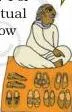
The cartoon on page 39 shows why barter fails: one man offers shoes for wheat, but the person he meets wants clothes, not shoes, and the man who wants shoes has no wheat. No trade can happen.
Money removes the need for this match. Once the shoe manufacturer sells his shoes for money, he can buy wheat or anything else from anyone, because everyone accepts money. Since money acts as an intermediate in the exchange, it is called a medium of exchange (NCERT, p. 39).
Try the two questions in ‘Let’s Work These Out’ on page 39: how money makes exchange easier, and whether you can name real examples of goods or wages exchanged through barter.
Currency, Deposits and Cheques: Modern Forms of Money
Modern money has no value of its own — a note is just paper, not gold or silver — so why does anyone accept it? The answer is authority: the government stands behind it.
The Reserve Bank of India issues currency notes on behalf of the central government, and Indian law allows no other individual or organisation to issue currency (NCERT, p. 40). The same law makes the rupee legal tender: no person can legally refuse a payment made in rupees, which is why the rupee is widely accepted.
Before coins, Indians used grains and cattle as money; then came metallic coins of gold, silver and copper, a phase that continued into the last century (NCERT, p. 40). Modern currency, by contrast, is without any use of its own.
The other form of money is deposits with banks. People deposit surplus cash in bank accounts, earn interest on it, and can withdraw it whenever they need — because these deposits can be withdrawn on demand, they are called demand deposits (NCERT, p. 40).
A cheque is a paper instructing the bank to pay a specific amount from the person’s account to the person in whose name the cheque is issued (NCERT, p. 41). The book’s example: M.
Salim pays his leather supplier by cheque, the supplier deposits it in his own account, and the money moves between accounts in a couple of days — no cash changes hands.

The illustration on page 41 makes the key point: but for the banks there would be no demand deposits and no cheque payments against them. The modern forms of money — currency and deposits — are closely linked to the working of the modern banking system (NCERT, p. 41).
The discussion questions on page 42 check this. Salim’s cheque to withdraw Rs 20,000 would be drawn in his own name, instructing his bank to pay that amount to him in cash; and after a transfer between Salim and Prem, Salim’s balance decreases while Prem’s increases.
What Banks Do with Deposits
Banks do not store your money in a vault. They keep a small fraction as cash and lend out the rest — that lending is what makes deposits useful to the whole economy.
Banks in India these days keep about 5 per cent of their deposits as cash, enough to pay the depositors who come to withdraw on any given day, because on any one day only some depositors withdraw (NCERT, p. 42).
The major portion of deposits is extended as loans. In this way banks mediate between those with surplus funds — the depositors — and those who need funds — the borrowers (NCERT, p. 42).
Banks charge a higher interest rate on loans than they pay on deposits; that difference is their main source of income (NCERT, p. 42).
The chapter leaves one question open: what if all the depositors asked for their money at the same time? The bank could not pay everyone at once, because it holds only that small cash proportion — which is exactly why the cash reserve matters.
Credit Can Help or Trap: Salim and Swapna
Credit is the same tool with two opposite outcomes, and the outcome depends on risk. The chapter proves this with two contrasting stories.
Credit (loan) is an agreement in which the lender supplies money, goods or services in return for the promise of future payment (NCERT, p. 43).
In rural areas the main demand for credit is crop production: there is a stretch of three to four months between buying inputs and selling the harvest, so farmers borrow at the start of the season and repay after harvest.

Salim’s story shows credit at its best (NCERT, p. 43). With a festival order for 3,000 pairs of shoes due in a month, he borrows — leather on credit from his supplier and cash in advance from the trader — to meet his working capital needs.
He delivers on time, makes a good profit and repays: credit plays a vital and positive role in this situation.
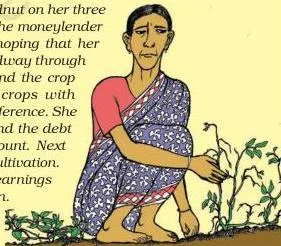
Swapna’s story is the opposite (NCERT, p. 43). She borrows from a moneylender for cultivation, pests destroy her groundnut crop, and even expensive pesticides make little difference.
She cannot repay, so the debt grows over the year into a large amount; next season’s normal crop earnings are still not enough, and eventually she has to sell part of her land to pay off the debt.
| Salim | Swapna | |
|---|---|---|
| Why did they need credit? | Working capital for a festival shoe order — materials and extra workers | Cultivation expenses on three acres of groundnuts |
| What was the risk? | The order might not be completed or sold on time | The crop could fail despite costly pesticides |
| What was the outcome? | Order delivered, profit made, loan repaid — better off | Crop failed, debt grew, land sold — worse off, a debt trap |
When credit helps earnings rise, the borrower is better off; when the crop fails, repayment becomes impossible and credit pushes the borrower into a debt trap from which recovery is very painful (NCERT, p. 44). Whether credit is useful depends on the risks in the situation and on whether there is some support in case of loss (NCERT, p. 44).
The ‘Let’s Work These Out’ block on page 44 asks you to fill this Salim–Swapna table yourself and to discuss why Swapna’s situation is risky — pesticides, the role of moneylenders, climate.
Terms of Credit: Interest, Collateral and Documents
A loan is more than the amount borrowed. Every loan agreement names the interest rate, any collateral, the documents required and the repayment mode — together these are the terms of credit.
Every loan agreement specifies an interest rate the borrower must pay along with repaying the principal (NCERT, p. 44). Lenders may also demand collateral: an asset the borrower owns (land, building, vehicle, livestock, bank deposits) used as a guarantee to the lender until the loan is repaid.
If the borrower fails to repay, the lender can sell the collateral to obtain payment (NCERT, p. 44).
The book’s house-loan case shows the terms in action: Megha borrows Rs 5 lakh from the bank at 12 per cent per annum, repayable over 10 years in monthly instalments. She had to submit documents of her employment record and salary, and the bank kept the papers of the new house as collateral until the entire loan is repaid with interest (NCERT, p. 45).
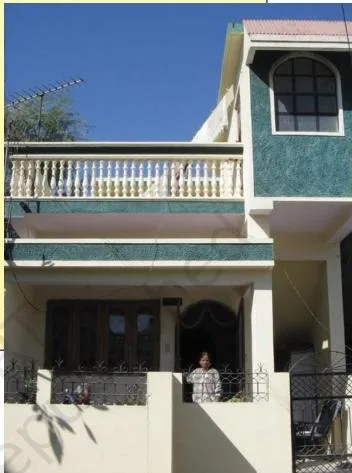
As the page 45 illustration sums up: interest rate, collateral and documentation requirement, and mode of repayment together comprise the terms of credit, and these terms vary substantially from one credit arrangement to another (NCERT, p. 45).
Two discussion points follow (NCERT, p. 45): lenders ask for collateral because it is their security in case the loan is not repaid; and because a large number of people in India are poor, many cannot offer collateral or the required documents — which directly affects their capacity to borrow.
Credit in a Village: The Sonpur Survey
The chapter then stops teaching and sends two students, Rohit and Ranjan, into Sonpur village to record who lends, who borrows, and on what terms (NCERT, p. 46). The variety they find is the point — terms differ sharply across borrowers.
| Borrower | Who lends | Interest rate | Collateral | Risk of falling into debt |
|---|---|---|---|---|
| Shyamal, small farmer (1.5 acres) | Earlier the village moneylender; now an agricultural trader | Trader at 3% per month; the moneylender used to charge 5% per month = 60% per annum | None — the trader takes a promise that the crop will be sold to him | High — must sell the crop at post-harvest low prices |
| Arun, medium farmer (7 acres) | Bank — one of the few in Sonpur to get a bank loan | 8.5% per annum, repayable anytime in three years | Land; a cold-storage receipt can secure a fresh loan | Low — cheap rate and a three-year repayment window |
| Rama, landless labourer | Her employer, a medium landowner | 5% per month, repaid by working for him | None — her labour itself is the repayment | High — fresh loans before old ones clear; she owes Rs 5,000 now (NCERT, p. 47) |
Krishak Cooperative, in a village near Sonpur, shows the cooperative route: 2,300 farmer members pool their deposits, the cooperative uses these deposits as collateral to obtain a large loan from the bank, and then lends the funds to members for implements, cultivation, agricultural trade, fishery and house construction (NCERT, p. 47).
The Sonpur data also answer an important question — can everyone in Sonpur get credit at a cheap rate? No: cheap credit goes to those with collateral or a secure income, like Arun, while Rama and Shyamal pay far more.
Formal and Informal Credit
All loans fall into two baskets. Formal sector loans come from banks and cooperatives and are supervised by the RBI; informal sector loans come from moneylenders, traders, employers, relatives and friends, and nobody supervises them (NCERT, p. 48).
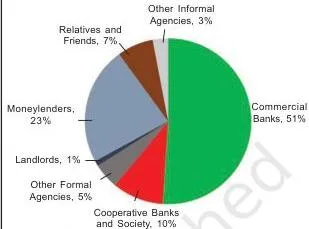
Graph 1 on page 48 shows the sources of credit for rural households in India in 2019. Notice how much comes from informal lenders — the chapter points out that the formal sector still meets only about half of the total credit needs of rural people, the rest being met from informal sources (NCERT, p. 49).
The RBI supervises formal lenders: it monitors that banks maintain a minimum cash balance, that they lend not only to profit-making businesses and traders but also to small cultivators, small-scale industries and small borrowers, and it receives periodic reports on how much banks lend, to whom, and at what interest rate (NCERT, p. 48).
Informal lenders have no such supervision. They can lend at whatever interest rate they choose, and no one stops them from using unfair means to get their money back (NCERT, p. 48).
The urban data make the same point with numbers: 54 per cent of loans taken by poor urban households come from informal sources, against only 17 per cent for rich urban households, who get 83 per cent of their loans from formal sources (NCERT, p. 49). A similar pattern is found in rural areas.
| Aspect | Formal sector | Informal sector |
|---|---|---|
| Who lends | Banks and cooperatives | Moneylenders, traders, employers, relatives and friends |
| Who supervises | The RBI monitors banks — cash balances, lending patterns, periodic reports | No organisation supervises them |
| Interest cost | Lower — Arun’s bank loan at 8.5% per annum | Much higher — monthly rates of 3–5% are common in Sonpur |
| Collateral and documents | Required — Megha had to submit salary records and house papers | Often waived — lenders know the borrower personally |
| Who actually receives the loans | Richer households get formal credit | Poor households depend on informal sources |
The chapter’s conclusion has two parts (NCERT, p. 49): banks and cooperatives must lend more, particularly in rural areas, so that dependence on informal sources of credit reduces; and while formal loans expand, they must also be distributed more equally so that the poor can benefit from cheaper loans.
Here is what that cost difference looks like in rupees. Suppose a borrower takes Rs 12,000 for one year: one option is an informal lender at 4 per cent per month, the other a bank at 10 per cent per annum.
Step 1: Convert the informal monthly rate into a yearly rate: \( 4\% \times 12 = 48\% \) per annum.
\[ \text{Informal interest for one year} = \frac{48}{100} \times 12{,}000 = 5{,}760 \]
Step 2: Total repayment to the informal lender = principal + interest.
\[ 12{,}000 + 5{,}760 = 17{,}760 \]
Step 3: The bank charges 10% per annum, so its interest for one year is:
\[ \frac{10}{100} \times 12{,}000 = 1{,}200 \]
Step 4: Total repayment to the bank.
\[ 12{,}000 + 1{,}200 = 13{,}200 \]
Final answer: the informal loan costs \( 5{,}760 – 1{,}200 = 4{,}560 \) rupees more in interest alone in a single year — a heavy extra burden on exactly the households that can least afford it.
Self-Help Groups and the Grameen Bank
The poor are shut out of bank loans mainly because they lack collateral and documents, and informal lenders — who know borrowers personally — step in with harsh terms. Self-Help Groups (SHGs) are the chapter’s answer to that problem, and the Grameen Bank is the proof it can work.
A typical SHG has 15–20 members from one neighbourhood, usually poor women, who meet regularly and save anything from Rs 25 to Rs 100 or more per member (NCERT, p. 50).
Members can take small loans from the group itself at interest lower than the moneylender charges. After a year or two of regular savings, the group becomes eligible for a bank loan, sanctioned in the group’s name and meant to create self-employment opportunities for the members (NCERT, p. 50).
Two features make banks willing to lend: the group members take the important decisions about savings and loan activities — the purpose, amount, interest and repayment schedule — and the group itself is responsible for repayment, with any case of non-repayment followed up seriously by other members (NCERT, p. 51).
This is why banks lend to poor women organised in SHGs even though they have no collateral.
SHGs do more than provide credit: they help women become financially self-reliant, and their regular meetings become a platform to discuss and act on social issues such as health, nutrition and domestic violence (NCERT, p. 51).
The global example is the Grameen Bank of Bangladesh — started in the 1970s as a small project, it had over 9 million members in about 81,600 villages by 2018, almost all of them poor women (NCERT, p. 52).
Founder Muhammad Yunus put the argument simply: “If credit can be made available to the poor people on terms and conditions that are appropriate and reasonable these millions of small people with their millions of small pursuits can add up to create the biggest development wonder.”
Reading the Chapter’s Figures
NCERT carries part of its argument in pictures rather than text. Here is how to read each picture-based figure.
The Coin Strip: A History of Money in Five Coins
The strip of coins on page 40 runs from early punch-marked coins (may be 2,500 years old), through Gupta coins and a Tughlaq coin, to the Gold Mohar from Akbar’s reign and a modern coin. Read it as a timeline of money itself.


The story the strip tells: first came grains and cattle as money, then metallic coins of gold, silver and copper — a phase that continued well into the last century — and finally modern currency, which has no use of its own (NCERT, p. 40).
The Village Survey in Pictures
Rohit and Ranjan are the chapter’s way of telling you to observe credit in real life, not just read about it.

Rohit and Ranjan had finished reading about the terms of credit in class and were eager to know who provides credit in their area, who borrows and on what terms. Their field records become the Sonpur accounts you studied above (NCERT, p. 46).

Rama in the field captures the position of the landless: her only source of credit is the landowner-employer, and her debt rolls over because she must take a fresh loan before the previous one is repaid (NCERT, p. 46).
Loans from Cooperatives in Pictures
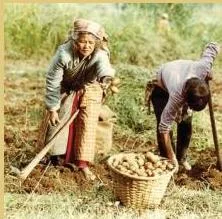
The Krishak Cooperative photograph on page 47 shows how a cooperative turns members’ savings into loans: deposits pooled as collateral obtain a large bank loan, which is then lent out to members — a major source of cheap credit in rural areas besides banks.
Key Terms and Definitions
The chapter builds on about a dozen terms. Here they are in plain words with the NCERT page where each appears — scan this table the night before an exam.
| Term | Plain meaning | NCERT page |
|---|---|---|
| Medium of exchange | Anything used as an intermediate step in buying and selling — you sell for it, then buy with it | p. 39 |
| Double coincidence of wants | A situation where what one person desires to sell is exactly what another wishes to buy | p. 39 |
| Barter | Direct exchange of goods without the use of money | p. 39 |
| Currency | Paper notes and coins, authorised by the government and accepted as a medium of payment | p. 40 |
| Demand deposits | Money held in bank accounts that can be withdrawn on demand and earns interest | p. 40 |
| Cheque | A paper instructing the bank to pay a specific amount from an account to the person named | p. 41 |
| Credit (loan) | An agreement where the lender supplies money, goods or services now for a promise of future payment | p. 43 |
| Collateral | An asset the borrower owns, used as a guarantee to the lender until the loan is repaid | p. 44 |
| Debt trap | A situation where debt grows faster than the ability to repay, forcing recovery that is very painful | p. 44 |
| Terms of credit | Interest rate, collateral, documentation requirement and mode of repayment taken together | p. 45 |
| Formal sector loans | Loans from banks and cooperatives, supervised by the RBI | p. 48 |
| Informal sector loans | Loans from moneylenders, traders, employers, relatives and friends, with no supervisor | p. 48 |
| Self-Help Group | A group of 15–20 rural poor, mainly women, who save regularly and lend among themselves | p. 50 |
Common Mistakes Students Make
Six ideas in this chapter get misread in predictable ways. Name each mistake before you make it.
| Mistake | Correct rule | How to check your answer |
|---|---|---|
| “Money means only currency.” | In the modern economy, money is currency plus demand deposits (NCERT, pp. 41–42). | Ask: can a cheque settle a payment without cash? Then deposits are money too. |
| Comparing monthly and yearly interest rates in the same breath. | Shyamal’s old rate of 5% per month equals 60% per annum; compare it with Arun’s 8.5% per annum in the same unit (NCERT, p. 46). | Convert every rate to per annum before comparing. |
| “Credit is always good” (or always bad). | Credit raises earnings when risk is low (Salim); it creates a debt trap when risk is high (Swapna) — the outcome depends on risk (NCERT, pp. 43–44). | Ask what could go wrong; the risk decides the result. |
| “All plastic cards are money.” | Different plastic cards replace cash transactions, but not all of them are money per se (teacher’s note, p. 37). | Distinguish the card from the bank account it draws on. |
| “The RBI issues notes for itself and supervises everyone.” | The RBI issues on behalf of the central government and supervises banks; informal lenders have no supervisor at all (NCERT, pp. 40, 48). | Name the supervisor, if any, for each lender. |
| “SHGs are government or bank-run schemes.” | Members take the decisions and the group guarantees repayment; banks lend because of that guarantee (NCERT, pp. 50–51). | Check who decides the loans — members, not the bank. |
The Exercises and What Each One Tests
The closing Exercises section (pp. 52–53) checks whether you can use the chapter’s ideas, not memorise them. This map links each of the 13 numbered exercises to the idea it tests and the page where the answer is explained.
| Exercise | The idea it tests | Where the chapter explains it |
|---|---|---|
| Q1 — In high-risk situations credit might create further problems | Risk decides the outcome; Swapna’s debt trap | p. 43 |
| Q2 — Money solves double coincidence of wants, with your own example | The medium of exchange idea and the shoe manufacturer’s chain | p. 39 |
| Q3 — How banks mediate between surplus and need | The deposit-and-lending mechanism | p. 42 |
| Q4 — What is written on a ten-rupee note | RBI issues currency on behalf of the central government; the rupee is legal tender that cannot be refused | p. 40 |
| Q5 — Why formal sources of credit must expand | Informal loans cost more and do little to raise income | pp. 48–49 |
| Q6 — The basic idea behind SHGs | Pooling savings; a bank loan in the group’s name | pp. 50–51 |
| Q7 — Why banks refuse some borrowers | Absence of collateral and proper documents | p. 50 |
| Q8 — How the RBI supervises banks and why | Minimum cash balance, loans to small borrowers, periodic reports | p. 48 |
| Q9 — The role of credit for development | Cheap and affordable credit is crucial for the country’s development | p. 49 |
| Q10 — Manav’s decision: bank or moneylender | Compare the terms of credit — interest, collateral, documents, repayment | pp. 44–45 |
| Q11 — Small farmers’ credit needs in four parts (a)–(d) | Sonpur’s evidence: unfavourable terms, informal sources, ways to get cheap credit | pp. 46–48 |
| Q12 — Fill in the blanks | The chapter’s key terms and institutions | pp. 40–49 |
| Q13 — Choose the most appropriate answer | SHG decisions; formal vs informal sources | pp. 48–51 |
The five blanks in Q12 check the chapter’s key terms. The answers, each anchored to its page:
- (i) poor households — it is the poor who meet most credit needs from informal sources (p. 49).
- (ii) high costs of borrowing increase the debt-burden (p. 48).
- (iii) The Reserve Bank of India issues currency notes on behalf of the Central Government (p. 40).
- (iv) Banks charge a higher interest rate on loans than on deposits (p. 42).
- (v) Collateral is the asset the borrower owns and uses as a guarantee (p. 44).
In Q13 the answers are (i) members — the group takes the important decisions (p. 51) — and (ii) employers, who are informal lenders and so not a formal source (p. 48).
Use this map as a study map, not a guess list — no one can say which questions will appear in an exam. For reasoning questions such as 1, 5, 6 and 9, a complete answer names the concept, backs it with the chapter’s example (Salim, Swapna or Sonpur), and lands on the chapter’s conclusion.
Summing Up: What the Chapter Concludes
The chapter closes with its own summary (p. 52). Here is that argument in five steps, in our words:
- Modern money — currency and deposits — is closely linked to the banking system, with depositors on one side and borrowers on the other.
- Economic activity needs credit, and credit can either raise earnings (Salim) or push a borrower into a debt trap (Swapna), depending on risk.
- Credit comes from formal and informal sources whose terms differ sharply.
- At present, richer households receive formal credit while the poor depend on the costlier informal sources.
- Development needs both more formal credit overall and a fairer share of it reaching the poor.
Related Resources
This listing is maintained for the 2026-27 academic session using the NCERT textbook information available to us. NCERT remains the authority for confirming the latest edition.
Pursue the ideas of this chapter further with these pages:
- Understanding Economic Development Class 10 Social Science notes — the hub for this textbook’s chapters
- Sectors of the Indian Economy Class 10 notes — the previous chapter
- Agriculture Class 10 notes — another Social Science chapter you may be studying alongside
- Class 10 revision notes for all subjects
- CBSE Class 10 study material index by class and subject
The chapter that follows Money and Credit — Globalisation and the Indian Economy — carries this story forward into how economies open up.
Sources and Data Verification
- Every page reference and explanation on this page describes the NCERT Class 10 textbook Understanding Economic Development (Economics), Chapter 3 ‘Money and Credit’, official edition on ncert.nic.in. You can confirm the current edition on NCERT’s textbook page for Understanding Economic Development.
- The chapter’s credit statistics rest on the NSSO 77th Round All India Debt and Investment Survey 2019, stated at the opening of the chapter (p. 37); details on SHGs draw on NABARD and RBI sources, and on Grameen Bank from newspaper reports and websites, as the book itself notes.
- This page is maintained for the current academic session using the NCERT information available to us.
- NCERT settles the textbook, its editions and PDFs; CBSE settles the curriculum and syllabus. Textbook contents and the examinable syllabus are not always identical — check the current official syllabus.
Reference: NCERT Class 10 Social Science (Understanding Economic Development) textbook, chapter 3, official edition on ncert.nic.in.
Frequently Asked Questions
What is the difference between formal and informal sources of credit?
Formal sources are banks and cooperatives, which the Reserve Bank of India supervises and which charge lower interest. Informal sources are moneylenders, traders, employers, relatives and friends; no organisation supervises them, they charge much higher interest, and no one stops them from using unfair means to recover money (NCERT, p. 48).
Why do banks keep only a small part of their deposits as cash?
Only some depositors withdraw money on any given day, so banks in India keep about 5 per cent of deposits as cash to pay them. The major portion of deposits is extended as loans, on which banks earn interest — that is how banks mediate between depositors and borrowers (NCERT, p. 42).
What is a debt trap? Explain with Swapna’s example.
A debt trap is when debt grows faster than the borrower’s ability to repay.
Swapna borrowed from a moneylender for cultivation, her groundnut crop failed despite expensive pesticides, she could not repay, the debt grew over the year, and the next year’s normal earnings still could not cover the old loan — she had to sell part of her land (NCERT, pp. 43–44).
How do Self-Help Groups help the poor borrow without collateral?
An SHG of 15–20 members saves regularly; after a year or two the group becomes eligible for a bank loan sanctioned in the group’s name. Because the members take the lending decisions and the group itself guarantees repayment, banks are willing to lend even though the women have no collateral (NCERT, pp. 50–51).
What is double coincidence of wants and how does money solve it?
Double coincidence of wants means what one person desires to sell is exactly what another wishes to buy — an essential feature of barter. Money removes the need for this match: the seller exchanges goods for money first, and can then buy anything from anyone, because money is accepted everywhere as a medium of exchange (NCERT, p. 39).
Why does the RBI issue currency notes and why can no one refuse rupees?
The RBI issues currency on behalf of the central government, and Indian law allows no other individual or organisation to issue currency. The law also makes the rupee legal tender — a payment in rupees cannot be refused in settling transactions in India (NCERT, p. 40).
Explore Class 10 Social Science Books
- Previous: Sectors of the Indian Economy
- Next: Agriculture
Class 10 Social Science on LearnCBSE:
Related chapters:
- Resources and Development
- Power-sharing
- The Rise of Nationalism in Europe