
These manufacturing industries class 10 notes cover Chapter 6 of Contemporary India II for the current academic session. If you are revising for a class test or the board exam, this page explains the chapter shorter than the textbook but complete enough to revise from alone — definitions, classification tables, location-factor logic, worked examples, and exam pointers.
Manufacturing turns raw materials into more valuable finished goods. It sits in the secondary sector, linking farms and mines to the services we use daily. Before you start, you may want to revisit the earlier geography chapters on resources and development and minerals and energy resources, because those resources become the raw materials for the industries discussed here.
You can also browse the full Class 10 Geography notes index or the wider Class 10 notes hub on our CBSE notes portal.
What Is Manufacturing and Why It Drives the Economy
Manufacturing is the production of goods in large quantities after processing from raw materials into more valuable products (NCERT, p. 59). Paper comes from wood, sugar from sugarcane, and steel from iron ore. Workers in steel factories, bakeries, and textile mills carry out these secondary activities.
The manufacturing sector is the backbone of economic development. Industrial growth reduces unemployment and poverty, and brings down regional disparities by setting up units in tribal and backward areas. Exporting manufactured goods brings in foreign exchange.
Agriculture and industry move hand in hand. Agro-industries raise farm productivity and supply farmers with irrigation pumps, fertilisers, and tools. In the globalised world, Indian goods must match international quality to compete.
How We Classify Industries: Five Bases at a Glance
Industries are classified on five main bases (NCERT, p. 59). The table below groups them clearly for quick revision.
| Basis | Categories | Examples |
|---|---|---|
| Source of raw material | Agro-based, Mineral-based | Cotton, sugar; Iron and steel, cement |
| Main role | Basic or key industries, Consumer industries | Iron and steel, aluminium smelting; Sugar, toothpaste |
| Capital investment | Small-scale (max Rs 1 crore), Large-scale | Defined by maximum investment allowed on assets |
| Ownership | Public, Private, Joint, Cooperative | BHEL, SAIL; TISCO, Bajaj Auto; Oil India Ltd.; Sugar industry in Maharashtra |
| Bulk and weight | Heavy industries, Light industries | Iron and steel; Electrical goods |
Agro-Based Industries: From Cotton to Sugar
Agro-industries act like a food processing assembly line — they take raw farm output and pass it through the secondary sector to create finished goods.
Cotton Textiles
The textile industry is self-reliant and complete in the value chain, from raw material to the highest value-added products. It contributes significantly to industrial production, employment, and foreign exchange (NCERT, p. 59). The first successful textile mill was established in Mumbai in 1854.

As the figure above shows, the value chain moves from raw cotton to yarn, then to fabric, and finally to finished garments. The industry was initially concentrated in Maharashtra and Gujarat due to the availability of raw cotton, moist climate, labour, market, and accessible port facilities.
Our traditional handlooms suffered a setback during the colonial period because they could not compete with mill-made cloth from England. Today, spinning is centralised in Maharashtra, Gujarat, and Tamil Nadu, while weaving is highly decentralised to incorporate traditional skills.
Jute Textiles
India is the largest producer of raw jute and jute goods, and stands second as an exporter after Bangladesh. Most mills are in West Bengal along the Hugli river in a narrow belt.

The first jute mill was set up near Kolkata at Rishra in 1855, as shown above. The Hugli basin offers proximity to jute-producing areas, inexpensive water transport, a good network of railways and roadways, abundant water for processing raw jute, and cheap labour from West Bengal and adjoining states. Kolkata provides banking, insurance, and port facilities for export.
Sugar Industry
India stands second in world sugar production but first in producing gur and khandsari. The raw material is bulky, and its sucrose content reduces during haulage. Sixty per cent of mills are in Uttar Pradesh and Bihar (NCERT, p. 64). Because the industry is seasonal, it is ideally suited to the cooperative sector.
Why are sugar mills shifting south? Mills are moving to Maharashtra and southern states because the cane has a higher sucrose content, the cooler climate ensures a longer crushing season, and cooperatives are more successful there. This is an important point for your manufacturing industries class 10 notes.
Mineral-Based Industries: Iron, Steel, Aluminium and Beyond
Industries using minerals and metals as raw materials are mineral-based industries (NCERT, p. 62).
Iron and Steel Industry
The iron and steel industry is the basic industry since heavy, medium, and light industries depend on it for machinery. Steel is needed for engineering goods, construction material, defence, medical, and consumer goods.
Iron ore, coking coal, and limestone are required in the ratio of 4 : 2 : 1 (NCERT, p. 62). Some manganese is also required to harden steel.
Real-life application of the 4:2:1 ratio: Because you need four tonnes of ore, two tonnes of coal, and one tonne of limestone to make one tonne of steel, the logistics cost of moving these heavy raw materials is very high.
This is exactly why steel plants cluster near raw material sources rather than near markets — transporting ore is far costlier than transporting the finished steel.
The Chhotanagpur plateau region has the maximum concentration of iron and steel industries. The advantages include low-cost iron ore, high-grade raw materials in proximity, cheap labour, and vast growth potential in the home market.
Aluminium Smelting
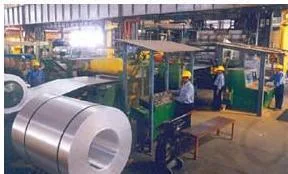
Aluminium smelting is the second most important metallurgical industry in India. It is light, resistant to corrosion, a good conductor of heat, malleable, and becomes strong when mixed with other metals. The conversion ratio is 4 to 6 tonnes of bauxite yields 2 tonnes of alumina, which produces 1 tonne of aluminium (NCERT, p. 64).
The two prime factors for locating an aluminium smelting plant are a regular supply of electricity and an assured source of raw material at minimum cost. Plants are located in Odisha, West Bengal, Kerala, Uttar Pradesh, Chhattisgarh, Maharashtra, and Tamil Nadu.
Chemical, Fertilizer, Cement, Automobile, and IT Industries
- Chemical industries: Comprise both inorganic (sulphuric acid, soda ash) and organic (petrochemicals) sectors. Organic plants are located near oil refineries or petrochemical plants.
- Fertilizer industry: Produces nitrogenous (urea), phosphatic, and complex fertilizers. Potash is entirely imported as India has no commercially usable reserves.
- Cement industry: Requires bulky raw materials like limestone, silica, and gypsum. The first plant was set up in Chennai in 1904.
- Automobile industry: Located around Delhi, Gurugram, Mumbai, Pune, Chennai, and other major centres. Liberalisation stimulated healthy growth.
- IT and electronics industry: Bengaluru is the electronic capital of India. For a broader look at how goods connect to markets, see our notes on lifelines of national economy.
Industrial Location Factors: An Original Mapping Exercise
Examiners often ask why a specific industry is located at a specific place. To recall location factors easily, use the POWER mnemonic:
| Letter | Stands for |
|---|---|
| P | Proximity of raw materials |
| O | Ownership type (cooperative, public, private) |
| W | Water supply |
| E | Electricity |
| R | Road/rail transport |
Use the table below to map specific industries to their core locations and the key factor that determines them.
| Industry | Core Location | Key Determining Factor |
|---|---|---|
| Cotton textile | Maharashtra, Gujarat, Tamil Nadu | Proximity of raw cotton, moist climate, port facilities |
| Jute | West Bengal (Hugli river belt) | Proximity of jute areas, inexpensive water transport, abundant water |
| Iron and steel | Chhotanagpur plateau region | Low-cost iron ore, high-grade raw materials in proximity, cheap labour |
| Aluminium smelting | Odisha, West Bengal, Chhattisgarh | Regular supply of electricity, assured source of bauxite at minimum cost |
| Software / IT | Bengaluru, Noida, Chennai, Hyderabad, Pune | Skilled workforce, infrastructure, connectivity |
Worked Example: Deciding a Factory Location
Let us apply the principles of location to a fresh problem, mimicking board exam case-study questions.
Problem: A company wants to set up a sugar mill in a northern state. Outline three numbered steps to decide the location.
- Step 1: Check sucrose content and crushing season length. The company should compare the sucrose content of cane in the northern state with that of Maharashtra and southern states. A cooler climate ensures a longer crushing season, which improves profitability.
- Step 2: Assess transport cost and cooperative sector alignment. Since the raw material is bulky and sucrose content reduces during haulage, the mill must be near the cane fields. The company should check if a successful cooperative sector exists in the target state, as the seasonal nature of the industry suits cooperatives well.
- Step 3: Apply the POWER mnemonic. Ensure Proximity of raw materials (cane fields), Ownership type (cooperative), Water supply for processing, Electricity for machinery, and Road/rail transport to move sugar to markets.
Final answer: The mill should be placed near cane fields with high sucrose content in a state with a strong cooperative sector and efficient transport, ensuring all POWER factors are met.
Industrial Pollution and Environmental Degradation
Industries cause four types of pollution: air, water, land, and noise. Thermal power plants are also polluting industries (NCERT, p. 66).
- Air pollution: Caused by gases like sulphur dioxide and carbon monoxide. Particulate materials include dust, sprays, mist, and smoke emitted by chemical and paper factories, brick kilns, refineries, and smelting plants.
- Water pollution: Caused by organic and inorganic industrial wastes and effluents discharged into rivers. Paper, pulp, chemical, textile, dyeing, petroleum refineries, and tanneries let out dyes, acids, salts, and heavy metals like lead and mercury.
- Land pollution: Dumping of glass, harmful chemicals, industrial effluents, packaging, salts, and garbage renders the soil useless. Rainwater carries pollutants to groundwater.
- Noise pollution: Industrial and construction activities, machinery, factory equipment, generators, saws, and pneumatic and electric drills cause hearing impairment and increased blood pressure.
Misconception Autopsy: What Is Thermal Pollution?
Students often confuse thermal pollution with heat waves. This is incorrect. Thermal pollution specifically occurs when hot water from factories and thermal plants is drained into rivers and ponds before cooling. This sudden rise in water temperature harms aquatic life. It is a water pollution issue, not an atmospheric weather event.

As the figure above shows, over-drawing groundwater reserves by industry threatens water resources. The chapter notes that every litre of wastewater discharged by industry pollutes eight times the quantity of freshwater. This makes pollution control a critical part of your manufacturing industries class 10 notes.
Control of Environmental Degradation and NTPC Model
Pollution control involves reducing water, air, and noise pollution (NCERT, p. 66).
- Water: Minimise use by reusing and recycling, harvest rainwater, and treat hot water and effluents before releasing them. Effluent treatment happens in three phases: Primary (mechanical means like screening and sedimentation), Secondary (biological process), and Tertiary (biological, chemical, and physical processes to recycle wastewater).
- Air: Fit smoke stacks with electrostatic precipitators, fabric filters, scrubbers, and inertial separators. Use oil or gas instead of coal to reduce smoke.
- Noise: Fit machinery and generators with silencers, redesign equipment to increase energy efficiency, and use noise-absorbing material alongside earplugs.
NTPC Shows the Way
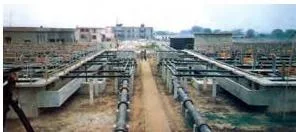
The figure above highlights the core idea of sustainable development. NTPC is a major power providing corporation with ISO certification for EMS (Environment Management System) 14001 (NCERT, p. 67). Its proactive steps include:
- Optimum utilisation of equipment with latest techniques
- Minimising waste generation by maximising ash utilisation
- Providing green belts for ecological balance
- Reducing pollution through ash pond management and liquid waste management
- Ecological monitoring and online database management for all stations
For the authoritative source text, you can refer to the official NCERT Class 10 Geography Chapter 6 page.
Common Mistakes Students Make in This Chapter
| Mistake | Correct rule | How to check your answer |
|---|---|---|
| Mixing up basic and consumer industries | Basic industries supply raw materials to make other goods (iron and steel); consumer industries produce goods for direct use (sugar, toothpaste) | Ask: Does this product feed another factory, or does it reach a final buyer? |
| Forgetting the exact 4:2:1 ratio for steel | Iron ore, coking coal, and limestone are needed in the ratio 4:2:1 | Write the heaviest material first: 4 parts ore, 2 parts coal, 1 part limestone |
| Confusing the first cotton mill with the first jute mill | First cotton mill: Mumbai, 1854. First jute mill: Rishra near Kolkata, 1855 | Link cotton to Mumbai (1854) and jute to Kolkata (1855) — one year apart |
| Stating potash is produced in India | Potash is entirely imported because India has no commercially usable reserves | Remember: nitrogen and phosphate are domestic, potash is imported |
Exam Notes: What Examiners Look For
Based on patterns in the NCERT exercises, here is what a full-marks answer must include:
- 30-word answers (2 marks): Questions like “What is manufacturing?” or “What are basic industries?” need a tight definition and one example. Do not exceed the word limit.
- 120-word answers (5 marks): Questions on industrial pollution or steps to minimise degradation require a structured list. Name each pollution type and give its specific cause (e.g., sulphur dioxide for air pollution, hot water for thermal pollution).
- Map work: Map points are heavily tested. You must be able to locate cotton, iron/steel, and software parks precisely. Citing specific state names and locations earns marks in location-factor answers.
- Location factor answers: Always state the factor and the specific location it applies to. Do not write generic statements; use the POWER mnemonic to structure your answer.
Revision Summary and Quick Recap
- Manufacturing: Processing raw materials into valuable goods in the secondary sector.
- Classification: 5 bases — raw material source, main role, capital investment, ownership, bulk/weight.
- Agro vs mineral: Agro includes cotton, jute, sugar; mineral includes iron, steel, aluminium.
- Textile industry: Self-reliant, complete value chain; first mill in Mumbai (1854).
- Jute: Hugli river belt, West Bengal; first mill in Rishra (1855).
- Sugar: Shifting south due to higher sucrose, longer crushing season, cooperatives.
- Iron and steel: Basic, heavy industry; ratio 4:2:1; concentrated on the Chhotanagpur plateau.
- Aluminium: Ratio 4-6-2-1 (bauxite to alumina to aluminium); needs electricity and raw material.
- Pollution: Air, water, land, noise; thermal pollution is hot water from plants.
- NTPC: ISO 14001 certified; ash utilisation, green belts, liquid waste management.
Reference: NCERT Class 10 Geography textbook, chapter Manufacturing Industries.
FAQs: Manufacturing Industries Class 10 Notes
Why does the NCERT chapter call the textile industry self-reliant and complete in the value chain?
Because the textile industry in India handles every stage in-house — from raw material (cotton) to yarn, fabric, and the highest value-added products like garments. It does not depend on another industry for its core inputs, making it self-reliant.
What makes iron and steel a heavy industry and what raw material ratio does it need?
It is a heavy industry because all raw materials and finished goods are heavy and bulky, which entails high transportation costs. Iron ore, coking coal, and limestone are required in the ratio of 4:2:1, with some manganese to harden the steel.
Why are sugar mills shifting from Uttar Pradesh to Maharashtra and southern states?
The cane in Maharashtra and southern states has a higher sucrose content, the cooler climate ensures a longer crushing season, and the cooperatives are more successful in these regions. This combination makes southern mills more profitable.
What are the two prime factors for locating an aluminium smelting plant?
Regular supply of electricity and an assured source of raw material (bauxite) at minimum cost. These two factors dictate the location because smelting is highly energy-intensive and bauxite is bulky to transport.
How is thermal pollution different from general industrial water pollution?
Thermal pollution is a specific type of water pollution where hot water from factories and thermal plants is drained into rivers and ponds before cooling, harming aquatic life. General industrial water pollution involves chemical, organic, and heavy metal waste discharge.
Explore Class 10 Geography Notes
Class 10 Geography on LearnCBSE:
Related chapters: