
These agriculture class 10 notes cover the complete chapter for the 2026-27 academic session, organised so you can revise farming types, cropping seasons, crop conditions, and institutional reforms quickly before a test or the board exam.
Agriculture feeds two-thirds of India’s population and supplies raw material to industries, making it the backbone of livelihoods even today.
Before diving in, you may want to browse our broader Class 10 Geography notes or the full Class 10 notes hub — this chapter builds directly on the land-use concepts from Resources and Development, links with Water Resources in its irrigation needs, and precedes Minerals and Energy Resources. The complete CBSE notes index is also available.
Chapter Overview: Map of the Agriculture Chapter
The chapter moves from how farming is done, to when crops are grown, to what conditions each crop needs, and finally to how the government has tried to improve agriculture. Use this overview table to navigate the revision (NCERT, pp. 1-10).
| Theme | Topics Covered | Why It Matters |
|---|---|---|
| Types of Farming | Primitive subsistence, intensive subsistence, commercial (incl. plantation) | Explains why the same crop (e.g., rice) is grown differently across states |
| Cropping Pattern | Rabi, Kharif, Zaid seasons — sowing and harvesting months | Most 1-mark MCQs test which crop belongs to which season |
| Major Crops | Food crops, non-food crops, fibre crops — temperature, rainfall, soil, top states | Core of 3-mark questions asking geographical conditions for one crop |
| Reforms | Institutional (land reforms, Bhoodan-Gramdan) and technological (revolutions, KCC, MSP) | 5-mark questions ask you to list specific schemes with examples |
Three Types of Farming in India
India has three broad farming systems, each shaped by population pressure, tools, and whether the produce goes to the family or the market (NCERT, pp. 1-2).
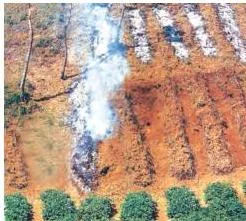
Primitive Subsistence Farming uses basic tools — hoe, dao, digging sticks — on small patches with family or community labour. It depends on monsoon rain and natural soil fertility, not modern inputs. Farmers clear a patch, grow cereals for a season or two, then shift to fresh land when fertility drops.
This slash-and-burn method lets nature rebuild soil over time, but yields stay low because no fertilisers or modern seeds are used.
The same practice goes by local names across India and the world:
| Region | Local Name for Slash-and-Burn |
|---|---|
| NE India (Assam, Meghalaya, Mizoram, Nagaland) | Jhumming |
| Madhya Pradesh | Bewar / Dahiya |
| Andhra Pradesh | Podu / Penda |
| Odisha | Pama Dabi / Koman / Bringa |
| Western Ghats | Kumari |
| SE Rajasthan | Valre / Waltre |
| Himalayan belt | Khil |
| Jharkhand | Kuruwa |
| Mexico / Central America | Milpa |
| Brazil | Roca |
| Indonesia | Ladang |
| Vietnam | Ray |
Intensive Subsistence Farming appears where population pressure on land is high. Farmers apply heavy doses of biochemical inputs (fertilisers, pesticides) and irrigation to squeeze the maximum output from small, fragmented holdings. The right of inheritance keeps dividing land across generations, making plots too small to be economical — yet families have no alternative livelihood, so the pressure to intensify continues.
Commercial Farming uses higher doses of modern inputs — HYV seeds, chemical fertilisers, insecticides, pesticides — to produce for the market, not just for family consumption. Commercialisation varies by region: rice is a commercial crop in Punjab and Haryana but a subsistence crop in Odisha.
Plantation farming is a subtype where a single crop is grown on a large area with capital-intensive inputs and migrant labour, linking agriculture directly to processing industries. Tea in Assam, coffee in Karnataka, and banana in southern India are examples (NCERT, p. 2).
The comparison table below clarifies why the same crop can be commercial in one state and subsistence in another:
| Type | Tools / Inputs | Produce Purpose | Example Region |
|---|---|---|---|
| Primitive Subsistence | Hoe, dao, digging sticks; no modern inputs | Family survival only | Jhumming in NE India |
| Intensive Subsistence | High biochemical inputs + irrigation on small plots | Family survival; surplus sold if possible | West Bengal, Bihar, eastern UP |
| Commercial (incl. Plantation) | HYV seeds, fertilisers, pesticides, machinery; large area | Market sale; link to processing industry | Rice in Punjab (commercial); tea estates in Assam |
Analogy: Think of primitive subsistence as a family cooking only for itself from a tiny kitchen garden, intensive subsistence as the same family maximising every inch of that garden with fertiliser and water, and commercial farming as a bakery producing for the whole town with industrial ovens.
Cropping Seasons: Rabi, Kharif, and Zaid
India has three cropping seasons based on the monsoon cycle and temperature (NCERT, p. 3).
| Season | Sowing / Harvesting Months | Key Crops |
|---|---|---|
| Rabi (winter) | Sown Oct-Dec; harvested Apr-Jun | Wheat, barley, peas, gram, mustard |
| Kharif (monsoon) | Sown with monsoon onset (Jun-Jul); harvested Sep-Oct | Paddy, maize, jowar, bajra, tur (arhar), moong, urad, cotton, jute, groundnut, soyabean |
| Zaid (short summer) | In between rabi and kharif, summer months | Watermelon, muskmelon, cucumber, vegetables, fodder crops |
Rabi crops depend on winter precipitation brought by western temperate cyclones (also called western disturbances), not the monsoon. They thrive in northern and north-western states — Punjab, Haryana, Himachal Pradesh, Jammu and Kashmir, Uttarakhand, and Uttar Pradesh. The Green Revolution boosted rabi output in Punjab, Haryana, western UP, and parts of Rajasthan.
Kharif crops sown with the monsoon’s arrival. Key rice-growing regions include Assam, West Bengal, coastal Odisha, Andhra Pradesh, Telangana, Tamil Nadu, Kerala, and the Konkan coast of Maharashtra, plus UP and Bihar. In Assam, West Bengal, and Odisha, three paddy crops grow in a year: Aus, Aman, and Boro.
Zaid is the short summer season between rabi and kharif. Watermelon, muskmelon, and cucumber are the classic zaid crops.
Memory device — Rabi vs Kharif: Think RAbi = Roasted in Winter (Wheat, Gram, Mustard, Peas, Barley — all sown when the Winter begins). For Kharif, remember Karif = Kharif starts with K which sounds like “kamant” (monsoon): Rice, Maize, Cotton, Jute, Bajra, Jowar, Groundnut — all sown when the KMonsoon arrives.
Or simply: Mustard fields in March, Wheat fields in Winter; Rice harvest in Rains.
Major Crops of India: Conditions and Producing States
This is the most important section for exams. Most 3-mark questions ask you to state the temperature, rainfall, and soil requirements of one crop. The comprehensive table below covers all major crops from the chapter (NCERT, pp. 3-9).
| Crop | Temp | Rainfall | Soil | Season | Top Producing States |
|---|---|---|---|---|---|
| Rice (staple food; India 2nd after China) | Above 25°C, high humidity | Above 100 cm annually | Alluvial (plains, deltas) | Kharif | WB, UP, Andhra Pradesh, Punjab, Haryana |
| Wheat (2nd most important cereal) | Cool growing season; bright sunshine at ripening | 50-75 cm, evenly distributed | Alluvial in NW; black soil in Deccan | Rabi | Punjab, Haryana, UP, MP, Bihar, Rajasthan |
| Jowar (3rd by area) | Moist areas, rain-fed | Low; hardly needs irrigation | Moist soils | Kharif (mainly) | Maharashtra, Karnataka, Andhra Pradesh, MP |
| Bajra | Dry regions | Low | Sandy and shallow black soil | Kharif | Rajasthan, UP, Maharashtra, Gujarat, Haryana |
| Ragi (rich in iron, calcium) | Dry regions | Low | Red, black, sandy, loamy, shallow black | Kharif | Karnataka, Tamil Nadu, HP, Uttarakhand, Sikkim, Jharkhand, Arunachal Pradesh |
| Maize (food and fodder) | 21°C to 27°C | Moderate; irrigation in dry areas | Old alluvial | Kharif (rabi in Bihar) | Karnataka, MP, UP, Bihar, Andhra Pradesh, Telangana |
| Pulses (tur/arhar, urad, moong, masur, peas, gram) | Less moisture; survive dry conditions | Low | Various | Both rabi and kharif | MP, Rajasthan, Maharashtra, UP, Karnataka |
| Sugarcane (India 2nd after Brazil) | 21°C to 27°C, hot and humid | 75-100 cm | Variety of soils | Whole year (10-12 months) | UP, Maharashtra, Karnataka, Tamil Nadu, Andhra Pradesh, Telangana, Bihar, Punjab, Haryana |
| Oilseeds (groundnut, mustard, coconut, sesamum, soyabean, castor, linseed, sunflower) | Varies by crop | Varies by crop | Varies by crop | Groundnut = Kharif; mustard/linseed = Rabi; sesamum = Kharif (N) / Rabi (S) | Gujarat (groundnut), Rajasthan, Tamil Nadu |
| Tea (beverage; plantation crop) | Warm, moist, frost-free all year | Frequent showers evenly distributed | Deep, fertile, well-drained, rich in humus | Perennial | Assam, Darjeeling & Jalpaiguri (WB), Tamil Nadu, Kerala |
| Coffee (Arabica variety from Yemen) | Tropical/subtropical hills | Moderate | Well-drained hill soils | Perennial | Nilgiri (Karnataka), Kerala, Tamil Nadu |
| Rubber (equatorial crop; industrial raw material) | Above 25°C, moist and humid | Above 200 cm | Well-drained | Perennial | Kerala, Tamil Nadu, Karnataka, A&N Islands, Garo hills (Meghalaya) |
| Cotton (India 2nd after China; needs 210 frost-free days) | High temperature | Light rainfall or irrigation | Black cotton soil of Deccan plateau | Kharif (6-8 months) | Maharashtra, Gujarat, MP, Karnataka, Andhra Pradesh, Telangana, Tamil Nadu, Punjab, Haryana, UP |
| Jute (golden fibre) | High temperature during growth | High | Well-drained fertile soils in flood plains | Kharif | West Bengal, Bihar, Assam, Odisha, Meghalaya |
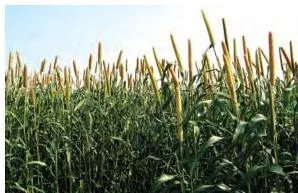
Pulses and nitrogen fixation — a key exam point. India is the largest producer and consumer of pulses worldwide. Pulses are the major protein source in a vegetarian diet. Being leguminous crops, all pulses except arhar (tur) help restore soil fertility by fixing nitrogen from the air.
This is exactly why farmers grow pulses in rotation with other crops — the nitrogen-fixing leaves the soil richer for the next crop (NCERT, p. 6).
Misconception autopsy: Many students assume pulses drain soil nutrients like other crops. The opposite is true. Leguminous pulses fix atmospheric nitrogen through root nodules, enriching the soil — they are nature’s fertiliser factories. The sole exception is arhar (tur), which does not fix nitrogen. This is why pulses appear in crop rotations across India.
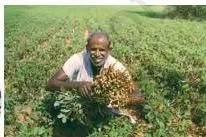
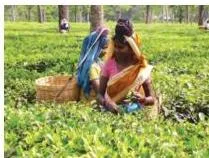
Tea needs a warm, moist, frost-free climate year-round with frequent, evenly distributed showers for continuous tender-leaf growth. The soil must be deep, fertile, well-drained, and rich in humus. Tea is labour-intensive — it needs abundant, cheap, skilled labour, and is processed within the garden itself to preserve freshness (NCERT, p. 7).
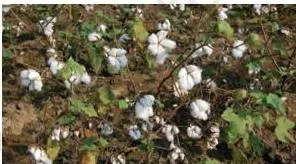
Cotton grows in the drier parts of the black cotton soil region of the Deccan plateau. It needs high temperature, light rainfall (or irrigation), 210 frost-free days, and bright sunshine. It is a kharif crop taking 6 to 8 months to mature. India is the second largest producer after China (NCERT, p. 9).
Jute is known as the golden fibre. It grows on well-drained fertile soils in flood plains where soils renew every year, and needs high temperature during growth. The major jute-producing states are West Bengal, Bihar, Assam, Odisha, and Meghalaya. Jute is used for gunny bags, mats, ropes, yarn, and carpets (NCERT, p. 9).
Sericulture is the rearing of silkworms for silk production. Silk is obtained from cocoons of silkworms fed on green mulberry leaves. Along with cotton, jute, and hemp, silk is one of India’s four major fibre crops (NCERT, p. 9).
Key Terms and Definitions
Memorise these exam-critical terms — every one has appeared in board MCQs and short-answer questions (NCERT, pp. 1-10).
| Term | Meaning | Example / Note |
|---|---|---|
| Agriculture | Primary activity producing food and raw material for industries | Two-thirds of India’s population depends on it |
| Slash and Burn | Shifting agriculture — clear a patch, cultivate, then shift when fertility drops | Jhumming (NE India), Bewar (MP), Milpa (Mexico) |
| Plantation | Single crop on large area for market; interface of agriculture and industry | Tea in Assam, coffee in Karnataka |
| Sericulture | Rearing of silkworms for silk fibre production | Silkworms fed on mulberry leaves |
| Green Revolution | Package technology (HYV seeds, fertilisers, irrigation) introduced in 1960s-70s | Most effective in Punjab, Haryana, western UP |
| White Revolution | Operation Flood — strategy to boost milk production | Initiated alongside Green Revolution |
| Minimum Support Price (MSP) | Government-announced procurement price to protect farmers from speculators and middlemen | Announced for important crops |
| Bhoodan | Land donation movement — by Vinoba Bhave | 80 acres donated for 80 landless villagers at Pochampally |
| Gramdan | Village donation — zamindars offered to distribute entire villages among landless | Extension of Bhoodan |
Technological and Institutional Reforms in Agriculture
After Independence, the government pursued both institutional and technological reforms to raise agricultural productivity and support farmers (NCERT, pp. 9-10).
Institutional Reforms
- First Five Year Plan priority: Land reform, including abolition of zamindari, collectivisation, consolidation of holdings, and cooperation
- Consolidation of holdings: The right of inheritance had fragmented land; consolidation was needed to make plots workable
- Grameen banks and cooperative societies: Provided loan facilities to farmers at lower interest rates
- Crop insurance: Against drought, flood, cyclone, fire, and disease
- Bhoodan-Gramdan movement: Voluntary land redistribution (detailed below)
Technological Reforms
- Green Revolution (1960s-70s): Package technology — HYV seeds, chemical fertilisers, pesticides, irrigation
- White Revolution (Operation Flood): Strategy to improve milk production
- Kisan Credit Card (KCC): Credit facility for farmers
- Personal Accident Insurance Scheme (PAIS): Accident cover for farmers
- Weather bulletins and agricultural programmes: Broadcast on radio and TV for farmers
- Minimum Support Price (MSP), remunerative and procurement prices: Announced for important crops to prevent exploitation by speculators and middlemen
Limitation: The Green and White Revolutions concentrated development in a few selected areas, so the 1980s and 1990s saw a comprehensive land development programme that combined both institutional and technical reforms for wider reach (NCERT, pp. 9-10).
You can explore specific government schemes on the official Farmers’ Portal, which the NCERT textbook itself recommends as an activity.
The Bhoodan-Gramdan Movement (Blood-less Revolution)
Vinoba Bhave, declared by Mahatma Gandhi as his spiritual heir, was a key satyagrahi and a votary of Gandhi’s concept of gram swarajya. After Gandhi’s martyrdom, Vinoba Bhave undertook a padyatra across almost the entire country to spread Gandhi’s message (NCERT, p. 10).
At Pochampally in Telangana, while delivering a lecture, some poor landless villagers demanded land for their economic well-being. Vinoba Bhave could not promise it immediately but assured them he would talk to the Government of India if they agreed to cooperative farming.
Then Shri Ram Chandra Reddy stood up and offered 80 acres of land to be distributed among 80 landless villagers. This act became known as Bhoodan — land donation. Later, some zamindars and village owners offered to distribute entire villages among the landless, which became known as Gramdan — village donation.
Some land-owners also parted with portions of their land partly due to fear of the land ceiling act.
This Bhoodan-Gramdan movement initiated by Vinoba Bhave is also called the Blood-less Revolution, because it achieved land redistribution through voluntary donation rather than violent conflict.
Worked Example: Designing a Crop Plan
Question: A farmer in central Maharashtra has black soil, 75 cm annual rainfall, and a 6-month frost-free sunny period. Should the farmer plant Rice or Cotton? Provide reasons.
Step 1: Check Rice requirements.
Rice needs above 25°C temperature and high humidity with annual rainfall above 100 cm, and prefers alluvial soil in plains and deltaic regions.
The farmer has only 75 cm rain (below the 100 cm threshold) and black soil (not alluvial), so rice would need heavy irrigation and soil amendment.
Step 2: Check Cotton requirements.
Cotton needs high temperature, light rainfall or irrigation (75 cm qualifies), black cotton soil of the Deccan plateau (exactly what the farmer has), 210 frost-free days, and bright sunshine.
A 6-month frost-free window is about 180 days — slightly below the ideal 210, but with adequate sunshine and the right soil, cotton remains the better match.
Step 3: Match conditions and conclude.
The farmer’s black soil and low-to-moderate rainfall align far better with cotton than with rice.
The farmer should plant Cotton.
The slight shortfall in frost-free days (180 vs 210) can be managed by selecting an early-maturing cotton variety and ensuring irrigation.
Final answer: Cotton is the better-suited crop for this farmer because black cotton soil, 75 cm rainfall, and bright sunshine match cotton’s requirements. Rice would need over 100 cm water and alluvial soil, neither of which the farmer has.
Common Mistakes Students Make in Agriculture
Below are chapter-specific traps students fall into, with the correct rule and a way to verify your answer. Reviewing this table is the fastest way to avoid losing marks (NCERT, pp. 1-9).
| Mistake | Correct Rule | How to Check Your Answer |
|---|---|---|
| “All millets are coarse and low value” | Ragi is rich in iron, calcium, and micro-nutrients. Jowar is the third most important food crop by area. | If a question says millets have no nutrition, that is wrong — always mention ragi’s iron and calcium. |
| “Tea and coffee are food crops” | Tea and coffee are beverage crops and plantation crops, not food crops. | Check the crop’s use — tea leaves are brewed, not eaten. They are classified as beverages. |
| “Zaid is a winter season” | Zaid is the short summer season between rabi and kharif, growing watermelon, cucumber, muskmelon. | Ask: does the crop need summer heat? Watermelon does — therefore it is zaid, not rabi. |
| “Pulses deplete soil nitrogen” | Leguminous pulses fix nitrogen from the air and restore soil fertility (except arhar/tur). | If a question says pulses reduce soil fertility, the answer is wrong. Pulses are grown in rotation precisely to enrich soil. |
| “Rice is always a subsistence crop” | Rice is commercial in Punjab and Haryana but subsistence in Odisha. The same crop changes type by region. | Check whether the region uses HYV seeds and market links — if yes, it is commercial there. |
Exam Notes: How Board Questions are Framed
This section maps observed question patterns to marking schemes based on the chapter’s exercise structure (NCERT, pp. 10-12).
| Marks | Question Type | What Scores Full Marks |
|---|---|---|
| 1 mark (MCQ) | Identify cropping season of a given crop (e.g., gram = rabi), or identify the regional name of shifting agriculture | One correct option. Know that gram, wheat, peas, mustard, barley are rabi; rice, maize, cotton, jute, groundnut are kharif. |
| 3 marks (short answer) | Geographical conditions for one crop (e.g., tea, sugarcane, rubber, rice) | One mark each for temperature, rainfall, and soil. State all three separately and add the top producing states. |
| 5 marks (long answer) | Institutional and technological reforms, or conditions for multiple crops | Bullet points with specific examples — KCC, PAIS, MSP, crop insurance, Grameen banks, Green and White Revolutions. Name each scheme explicitly. |
The chapter’s exercise MCQs confirm the pattern: Q1(ii) asks which of rice, gram, millets, cotton is a rabi crop (answer: gram). Q1(iii) asks which is a leguminous crop (answer: pulses). For 30-word answers, prepare a beverage crop with its conditions (tea) and a staple crop with its regions (rice).
For 120-word answers, prepare the list of government initiatives and rice’s geographical conditions in full.
Revision Summary: One-Glance Recap
Read these ten bullets on the night before your exam — they cover every essential point in the chapter.
- Farming types: Primitive subsistence (slash and burn, e.g., Jhumming), intensive subsistence (high inputs, small plots), commercial (HYV seeds, market-oriented) including plantation.
- Three seasons: Rabi (Oct-Dec sowing, wheat/gram/mustard), Kharif (monsoon sowing, rice/cotton/jute), Zaid (summer, watermelon/cucumber).
- Rice: Kharif, above 25°C, above 100 cm rain, alluvial soil; India is 2nd largest after China; 3 paddy crops in Assam/Bengal/Odisha (Aus, Aman, Boro).
- Wheat: Rabi, cool growing season, 50-75 cm rain, bright sunshine at ripening; top states Punjab, Haryana, UP.
- Millets: Ragi is rich in iron and calcium; jowar is 3rd by area; bajra grows on sandy soil.
- Pulses: Leguminous crops fix nitrogen and restore fertility (except arhar) — grown in rotation; India is largest producer and consumer.
- Plantation crops: Tea (Assam), coffee (Karnataka), rubber (Kerala) — single crop, large area, market-linked.
- Fibre crops: Cotton needs 210 frost-free days and black soil; jute = golden fibre (West Bengal).
- Green Revolution (1960s-70s) and White Revolution (Operation Flood): Package technology for higher yields; KCC, PAIS, MSP, crop insurance are farmer schemes.
- Bhoodan-Gramdan: Initiated by Vinoba Bhave, Gandhi’s spiritual heir; Pochampally, Telangana; Shri Ram Chandra Reddy gave 80 acres for 80 landless villagers; called Blood-less Revolution.
Mnemonic: Really Kharif crops Zero in on Rainy season (Rice, Kharif, Zaid) — Wheat Wins Winter Mustard (Winter Rabi). For farmer schemes: Keep Paying Minimal Interest (KCC, PAIS, MSP, Insurance).
Frequently Asked Questions (Agriculture)
What is the difference between rabi and kharif cropping seasons?
Rabi crops are sown in winter (October to December) and harvested in summer (April to June). They depend on winter rain from western temperate cyclones. Key rabi crops: wheat, barley, gram, peas, mustard. Kharif crops are sown with the onset of the monsoon (June-July) and harvested in September-October. They depend on the southwest monsoon.
Key kharif crops: rice, maize, cotton, jute, groundnut, bajra, tur.
Why are pulses mostly grown in rotation with other crops?
Pulses are leguminous crops that fix nitrogen from the air and restore soil fertility — except arhar (tur). When grown in rotation, they enrich the soil for the next crop, reducing the need for chemical fertilisers. This is why pulses are rotated with cereals like wheat and rice across India.
Name one crop that is commercial in one Indian state and subsistence in another.
Rice is a commercial crop in Punjab and Haryana (where HYV seeds, irrigation, and market links make it profitable) but a subsistence crop in Odisha (where farmers grow it mainly for family consumption with fewer modern inputs).
What was the Bhoodan-Gramdan movement and who initiated it?
The Bhoodan-Gramdan movement was a voluntary land redistribution movement initiated by Vinoba Bhave, Mahatma Gandhi’s spiritual heir. At Pochampally in Telangana, Shri Ram Chandra Reddy offered 80 acres for 80 landless villagers — this was Bhoodan (land donation). When zamindars offered whole villages, it became Gramdan (village donation). It is called the Blood-less Revolution because it achieved redistribution without violence.
What geographical conditions are required for the growth of rubber?
Rubber is an equatorial crop also grown in tropical and sub-tropical areas under special conditions. It needs a moist and humid climate with rainfall above 200 cm and temperature above 25°C. It is grown in Kerala, Tamil Nadu, Karnataka, the Andaman and Nicobar Islands, and the Garo hills of Meghalaya.
Reference: NCERT Class 10 Geography (Contemporary India II) textbook, chapter 4, Agriculture.
Explore Class 10 Geography Notes
Class 10 Geography on LearnCBSE:
Related chapters:
Official source: download the NCERT textbook free from ncert.nic.in.