
These minerals and energy resources class 10 notes cover Chapter 5 of Contemporary India II for the current session. Use them for quick revision before a test or the board exam.
What Exactly Is a Mineral and Where Do Ores Come From
A mineral is a homogenous, naturally occurring substance with a definable internal structure (NCERT, p. 1). It forms a part of the rocks that make up the earth’s crust. Minerals vary widely, from the hardest diamond to the softest talc, depending on the physical and chemical conditions under which they form.
An ore is an accumulation of a mineral mixed with other elements. The mineral content must be high enough to make extraction commercially viable. When extraction becomes profitable, a deposit turns into a mine (NCERT, p. 3).
Geographers study where minerals occur and the economic activities linked to them. Geologists study how minerals form, their age, and their physical and chemical composition (NCERT, p. 2). You can find more chapters in our Class 10 Geography notes collection.
| Mode of Occurrence | Rock Type | Key Minerals |
|---|---|---|
| Veins and lodes | Cracks in igneous and metamorphic rocks | Tin, copper, zinc, lead |
| Beds or layers | Sedimentary rocks | Coal, iron ore, gypsum, potash salt |
| Residual mass | Decomposed surface rocks | Bauxite |
| Alluvial placer deposits | Sands of valley floors | Gold, silver, tin, platinum |
| Ocean waters and beds | Marine environment | Common salt, magnesium, bromine, manganese nodules |
Ferrous Minerals: Iron Ore and Manganese
Ferrous minerals account for about three-fourths of the total value of metallic mineral production in India. They provide the base for metallurgical industries (NCERT, p. 3).
Iron Ore: Magnetite vs Hematite
| Property | Magnetite | Hematite |
|---|---|---|
| Iron content | Up to 70 per cent | 50-60 per cent |
| Quality | Finest iron ore | Most important by quantity used |
| Special feature | Excellent magnetic qualities | Most abundant for commercial use |
Four Iron Ore Belts
Memory device: Use the mnemonic Only Brave Kings March to recall the four belts in order (Odisha-Jharkhand, Bastar-Chandrapur, Kudremukh-Karnataka, Maharashtra-Goa).
- Odisha-Jharkhand belt: Badampahar mines in Mayurbhanj and Kendujhar (Odisha); Gua and Noamundi in Singbhum (Jharkhand).
- Durg-Bastar-Chandrapur belt: Bailadila range in Bastar district, Chhattisgarh. Has 14 deposits of super high-grade hematite. Exported to Japan and South Korea via Vishakhapatnam port.
- Ballari-Chitradurga-Chikkamagaluru-Tumakuru belt: Kudremukh mines in Karnataka. A 100 per cent export unit. Ore transported as slurry through a pipeline to Mangaluru port.
- Maharashtra-Goa belt: Ratnagiri district (Maharashtra) and Goa. Exported via Marmagao port.

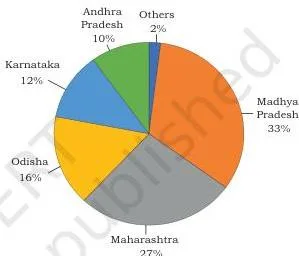
Manganese is mainly used in manufacturing steel and ferro-manganese alloy. Nearly 10 kg of manganese is required to manufacture one tonne of steel. It is also used in bleaching powder, insecticides, and paints (NCERT, p. 4).
Non-Ferrous Minerals: Copper and Bauxite
India’s reserves of non-ferrous minerals like copper, bauxite, lead, zinc, and gold are not satisfactory, but these are vital for metallurgical, engineering, and electrical industries (NCERT, p. 4).
Copper
Copper is malleable, ductile, and a good conductor. It is used in electrical cables, electronics, and chemical industries. Leading producers: Balaghat mines (Madhya Pradesh), Khetri mines (Rajasthan), and Singhbhum district (Jharkhand) (NCERT, p. 6).
Bauxite
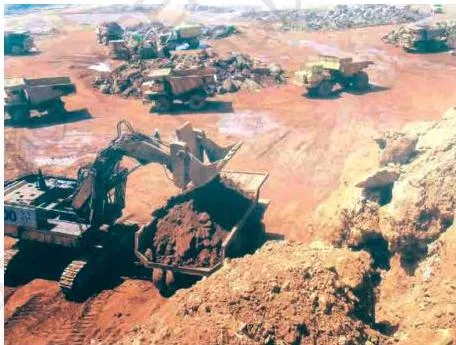
Bauxite is a clay-like substance from which alumina and then aluminium is obtained. It forms by the decomposition of rocks rich in aluminium silicates (NCERT, p. 6).
Real-life application: Bauxite is called ‘clay-like’ but is actually a rock. It forms lateritic soil profiles in tropical weathering, where heavy rainfall leaches away soluble elements and leaves a residual mass rich in aluminium. This links bauxite directly to the ‘residual mass’ mode of occurrence from the first section.
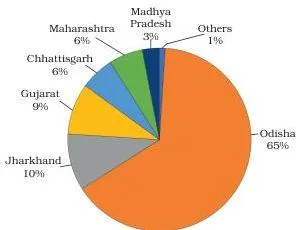
Aluminium combines the strength of iron with extreme lightness, good conductivity, and great malleability. Deposits are found in the Amarkantak plateau, Maikal hills, and the Bilaspur-Katni plateau. Odisha was the largest bauxite producing state in 2026-27; the Panchpatmali deposits in Koraput district are the most important (NCERT, p. 6).
Non-Metallic Minerals: Mica and Limestone
Mica is made up of a series of plates or leaves. It splits into thin sheets. It has excellent di-electric strength, low power loss factor, insulating properties, and resistance to high voltage. This makes it indispensable for the electric and electronic industries (NCERT, p. 7).
Misconception autopsy: Students often confuse ‘non-metallic’ with ‘non-useful.’ Mica is non-metallic but is critical for the electrical industry. Its insulating properties make it indispensable for electronics. This distinction matters in short-answer questions.
Mica deposits are found on the northern edge of the Chota Nagpur plateau. The Koderma-Gaya-Hazaribagh belt in Jharkhand is the leading producer. In Rajasthan, the major area is around Ajmer. The Nellore mica belt in Andhra Pradesh is also important (NCERT, p. 7).
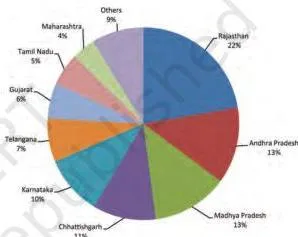
Limestone is found with calcium carbonate or calcium and magnesium carbonate rocks in sedimentary formations. It is the basic raw material for the cement industry and is essential for smelting iron ore in a blast furnace (NCERT, p. 7).
Mining Hazards and Rat-Hole Mining
Mining poses serious risks. Dust and noxious fumes cause pulmonary diseases. Collapsing roofs, inundation, and fires are constant threats. Water sources get contaminated. Dumping of waste and slurry degrades land and pollutes streams (NCERT, p. 7).

Rat-hole mining: In Meghalaya, coal, iron ore, limestone, and dolomite are owned by individuals or communities. Family members dig long, narrow tunnels to extract coal. The National Green Tribunal declared this illegal because of safety hazards and environmental damage (NCERT, p. 3).
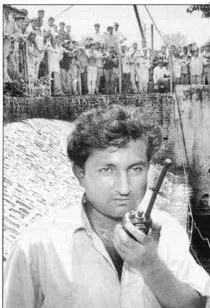
Jharia coal fire: The government decided to relocate the entire Jharia township because of uncontrollable underground fires burning for years. Rs 14 crore was sanctioned for the first phase (NCERT, p. 8).
| Type | Description | Use |
|---|---|---|
| Open pit mine | Surface excavation for shallow deposits | Large-scale mineral extraction near surface |
| Quarry | Similar to open pit, generally for building stone | Limestone, marble, sandstone extraction |
| Underground mine with shafts | Vertical tunnels access deep deposits | Deep coal, gold, and metal mining |
Why Conservation of Minerals Is Non-Negotiable
Workable mineral deposits form only one per cent of the earth’s crust. Minerals took millions of years to form, so the rate of replenishment is infinitely small compared to consumption. They are finite and non-renewable (NCERT, p. 8).
Continued extraction means deeper mining, increasing costs, and decreasing quality. Conservation methods include:
- Improved technologies to use low-grade ores at low costs.
- Recycling of metals.
- Using scrap metals and substitutes.
- Planned and sustainable use of mineral resources.
Real-life application: Mobile phone recycling recovers gold, silver, and copper from circuit boards. A single phone contains small amounts of these metals, and recycling thousands of phones recovers enough metal to make conservation a practical, daily habit rather than an abstract idea.
Conventional Energy: Coal, Petroleum, Natural Gas and Electricity
Conventional energy sources include firewood, cattle dung cake, coal, petroleum, natural gas, and electricity. Over 70 per cent of rural energy comes from firewood and dung cakes, which leads to declining forests and loss of agricultural manure (NCERT, p. 9).
Fresh analogy: Think of energy like money. Conventional sources are like withdrawing from a fixed deposit that never replenishes. Non-conventional sources are like earning daily interest that resets every morning. This makes the renewable vs non-renewable distinction clear.
Coal
Coal is the most abundant fossil fuel in India. It forms from compressed plant material over millions of years.
| Type | Carbon/Moisture | Location/Use |
|---|---|---|
| Peat | Low carbon, high moisture | Low heating capacity |
| Lignite | Low grade, brown, soft | Neyveli (Tamil Nadu) for electricity |
| Bituminous | Deep burial, high carbon | Most popular; metallurgical coal for blast furnaces |
| Anthracite | Highest carbon | Highest quality hard coal |
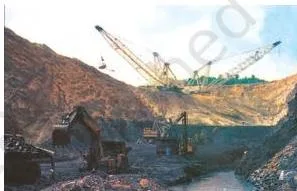
Gondwana coal (200+ million years) is found in the Damodar valley (Jharia, Raniganj, Bokaro) and Godavari, Mahanadi, Son, and Wardha valleys. Tertiary coal (55 million years) occurs in Meghalaya, Assam, Arunachal Pradesh, and Nagaland (NCERT, p. 9-10). Coal is bulky and loses weight as ash, so heavy industries are located near coalfields.
Petroleum
Petroleum is the next major energy source after coal. Refineries act as a nodal industry for synthetic textile, fertiliser, and chemical industries. Petroleum occurs in anticlines and fault traps in tertiary age rocks. Oil is trapped in the crest of an upfold; gas sits above oil. Major areas: Mumbai High, Gujarat (Ankeleshwar), and Assam (oldest: Digboi, Naharkatiya, Moran-Hugrijan) (NCERT, p. 11).
Petroleum links to industrial development covered in our Manufacturing Industries notes.
Natural Gas
Natural gas is found with petroleum. It is used as domestic and industrial fuel, power generation, and transport fuel (CNG, PNG). The HVJ pipeline (Hazira-Vijaipur-Jagdishpur), built by GAIL, is 1,700 km long. India’s gas grid has expanded from 1,700 km to 18,500 km and is expected to reach 34,000 km (NCERT, p. 11).
Electricity
Per capita consumption of electricity is an index of development. Hydro electricity uses fast-flowing water (renewable): Bhakra Nangal, Damodar Valley Corporation, Kopili Hydel Project. Thermal electricity uses coal, petroleum, and natural gas (non-renewable) (NCERT, p. 11-12).

| Source | Renewable? | Environmental Impact | Example |
|---|---|---|---|
| Coal, petroleum, natural gas | No | High pollution, greenhouse gases | Thermal power stations |
| Firewood, dung cake | Partly | Deforestation, loss of manure | Rural household fuel |
| Solar, wind, tidal | Yes | Clean, minimal pollution | Solar panels, wind mills |
Non-Conventional Energy: Solar, Wind, Biogas, Tidal, Geothermal and Nuclear
Rising fossil fuel prices, potential shortages, and environmental problems drive the shift to renewable sources. India has abundance of sunlight, water, wind, and biomass (NCERT, p. 13).
- Nuclear/Atomic Energy: Altering atom structure releases heat to generate electricity. Uranium and Thorium from Jharkhand and Aravalli ranges (Rajasthan). Monazite sands of Kerala are rich in Thorium.
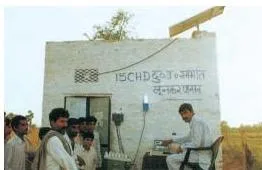
- Solar Energy: India is tropical with enormous potential. Photovoltaic technology converts sunlight to electricity. Popular in rural areas; reduces dependence on firewood and dung cakes.
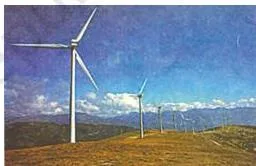
- Wind Power: Largest wind farm cluster from Nagarcoil to Madurai in Tamil Nadu. Also AP, Karnataka, Gujarat, Kerala, Maharashtra, Lakshadweep. Nagarcoil and Jaisalmer are well known.
- Biogas: Shrubs, farm waste, animal and human waste produce gas via decomposition. Higher thermal efficiency than kerosene, dung cake, charcoal. ‘Gobar gas plants’ provide energy and improved manure quality.
- Tidal Energy: Floodgate dams trap high tide water, which flows back to sea via a turbine. Gulf of Khambhat, Gulf of Kuchchh (Gujarat), and Gangetic delta/Sunderban (West Bengal).
- Geothermal Energy: Heat from Earth’s interior turns groundwater to steam to drive turbines. Parvati valley near Manikaran (HP) and Puga Valley (Ladakh).

Conservation of Energy: ‘Energy Saved Is Energy Produced’
Energy is a basic requirement for economic development. India is one of the least energy-efficient countries. The twin planks of sustainable energy are: (1) promotion of energy conservation, and (2) increased use of renewable sources (NCERT, p. 14).
Citizen actions include: using public transport, switching off electricity when not in use, using power-saving devices, and using non-conventional sources. As the chapter states: “energy saved is energy produced”.
Practical application for exam: The board exam includes map work. You should be able to mark coalfields (Jharia, Raniganj, Bokaro), petroleum fields (Mumbai High, Digboi), and one non-conventional site (Nagarcoil wind, Manikaran geothermal) on an outline map. Practising these locations is a 5-mark skill. For related topics, see our Agriculture notes.
Common Mistakes Students Make in This Chapter
| Mistake | Correct Rule | How to Check |
|---|---|---|
| Writing ‘magnetite is most used’ | Magnetite is the finest (70% iron); hematite is most used by quantity (50-60%) | Remember: finest ≠ most used |
| Writing ‘Bailadila is in Karnataka’ | Bailadila is in Bastar district, Chhattisgarh; Kudremukh is in Karnataka | Match the mine to the correct state |
| Listing Gondwana coal as 55 million years | Gondwana is 200+ million years; Tertiary is 55 million years | Check the geological age twice |
| Confusing placer deposits with veins/lodes | Placer = alluvial deposits in valley floors; veins/lodes = cracks in igneous and metamorphic rocks | Identify the rock type first |
| Writing Balaghat mines produce bauxite | Balaghat produces copper; bauxite is in Amarkantak/Maikal/Bilaspur-Katni | Match the mineral to its correct mine |
| Listing Digboi in Rajasthan | Digboi is in Assam, the oldest oil-producing state | Recall that Assam = oldest oil state |
Exam Notes: What the Examiner Looks For
The chapter exercise (NCERT, p. 14-15) includes 4 MCQs, 30-word answers, and 120-word answers. Here are observed patterns:
- Distinction questions (ferrous vs non-ferrous, conventional vs non-conventional) are standard 30-word format. Earning marks requires naming 2 examples for each side.
- Coal distribution in 120 words expects Gondwana vs Tertiary ages with specific coalfield names (Jharia, Raniganj, Bokaro, Neyveli).
- Map work requires marking iron ore belts, coalfields, petroleum fields, and nuclear power stations. State-mine pairing accuracy earns the mark.
- Solar energy answer in 120 words expects: tropical location, photovoltaic technology, rural application, and environmental benefit.
- Name the location with the mineral earns the mark — listing the mineral alone does not.
Chapter Revision Recap: One-Page Summary
- Mineral definition: Homogenous, naturally occurring, definable internal structure.
- Five modes of occurrence: Veins/lodes, beds/layers, residual mass, placer deposits, ocean waters.
- Iron ore types: Magnetite (70% iron), Hematite (50-60% iron).
- Four iron ore belts: Odisha-Jharkhand, Durg-Bastar-Chandrapur, Ballari-Chitradurga-Chikkamagaluru-Tumakuru, Maharashtra-Goa.
- Manganese use: 10 kg per tonne of steel.
- Copper locations: Balaghat (MP), Khetri (Rajasthan), Singhbhum (Jharkhand).
- Bauxite locations: Amarkantak, Maikal, Bilaspur-Katni; Odisha largest in 2026-27.
- Mica belt: Koderma-Gaya-Hazaribagh, Ajmer, Nellore.
- Coal types: Peat, lignite, bituminous, anthracite.
- Coal ages: Gondwana (200M yrs), Tertiary (55M yrs).
- Petroleum areas: Mumbai High, Gujarat (Ankeleshwar), Assam (Digboi).
- HVJ pipeline: Hazira-Vijaipur-Jagdishpur, 1,700 km.
- Non-conventional: Solar (photovoltaic), wind (Nagarcoil), biogas (gobar gas), tidal (Khambhat/Kuchchh/Sunderban), geothermal (Manikaran/Puga), nuclear (Uranium/Thorium).
- Conservation quote: “Energy saved is energy produced.”
For the full original chapter, you can cross-reference the official NCERT textbook PDF for Contemporary India II.
Frequently Asked Questions on This Chapter
What is the difference between ferrous and non-ferrous minerals?
Ferrous minerals contain iron — iron ore and manganese — and account for three-fourths of metallic mineral value. Non-ferrous minerals do not contain iron — copper, bauxite, lead, zinc, gold — and India is deficient in these.
Why is magnetite called the finest iron ore but hematite is the most used?
Magnetite has up to 70 per cent iron and excellent magnetic qualities, making it the finest quality. Hematite has 50-60 per cent iron but is most used because it is more abundant and cheaper to extract.
Why are heavy industries and thermal power stations located near coalfields?
Coal is bulky and loses weight on use as it reduces to ash. Transporting coal long distances is expensive, so plants are built near coalfields to reduce transport cost.
What is rat-hole mining and why was it banned?
In Meghalaya, minerals are owned by individuals or communities. Families dig long, narrow tunnels to extract coal. The National Green Tribunal declared it illegal because of safety hazards and environmental damage.
What is the difference between Gondwana and Tertiary coal?
Gondwana coal is 200+ million years old, metallurgical grade, located in the Damodar valley (Jharia, Raniganj, Bokaro). Tertiary coal is 55 million years old, found in NE states (Meghalaya, Assam, Arunachal Pradesh, Nagaland).
Reference: NCERT Class 10 Geography textbook, chapter Minerals and Energy Resources.
Explore Class 10 Geography Notes
Class 10 Geography on LearnCBSE:
Related chapters: