
This page is about the Globalisation Class 12 chapter — Chapter 7 of NCERT’s Political Science textbook Contemporary World Politics. The official NCERT file runs about 16 pages, and the PDF is right here for download. Use the section map below to find the part you need, then read the explainers to make sense of it.
Download the Globalisation Class 12 PDF from NCERT
NCERT publishes this chapter as a standalone PDF (file name leps107.pdf) on its official portal. The original file is worth downloading because the printed chapter carries margin questions, cartoons and image panels beside the text, and that layout is part of how the argument works.
Download the official Globalisation Class 12 chapter PDF from NCERT’s portal to read the chapter exactly as printed, with its margin questions and images intact. Keep the file open while you work through this page — NCERT page numbers are given in brackets throughout.
| What the chapter holds | Count | Where it is used |
|---|---|---|
| Printed pages | 16 | |
| Figures with NCERT captions | 8 | |
| Exercise questions | 9 | answered in our NCERT Solutions |
| Official NCERT PDF | Download the chapter PDF | the chapter exactly as NCERT publishes it |
Chapter 7 Globalisation at a Glance
The table lists how much this chapter holds in the official NCERT file — its sections, images and exercise questions. The chapter itself is a single continuous argument: each of its sections builds on the one before it, and the exercises at the end test the whole chain.
What This Chapter Covers
This chapter moves in one direction: define globalisation, explain its causes, trace its political, economic and cultural consequences, then apply all of that to India and to the movements that resist it. Use this map to jump straight to the part you need.
| Chapter section | What it does | NCERT pages |
|---|---|---|
| World Social Forum: AN OPEN SPACE! (opening feature) | Quotes activists who gathered against neo-liberal globalisation; poses the raw question of whether globalisation is good or bad before the chapter argues it | p. 99 |
| Concept of globalisation | Defines globalisation as flows of ideas, capital, commodities and people that create worldwide interconnectedness | pp. 100-102 |
| Causes of globalisation | Explains why contemporary flows are new in scale and speed, and why technology alone is not enough | pp. 102-103 |
| Political consequences | Asks what happens to state sovereignty and state capacity | pp. 103-104 |
| Economic consequences | Examines who gains and who loses from economic flows; sets out advocates, critics and moderates | pp. 104-106 |
| Cultural consequences | Explains homogenisation and heterogenisation happening at the same time | pp. 106-108 |
| India and globalisation | Traces India’s route from colonial trade to protectionism to the 1991 reforms | pp. 108-109 |
| Resistance to globalisation | The Seattle protests, the World Social Forum, and why many critics oppose a programme rather than the idea | pp. 109-111 |
| India and resistance | Indian protests from the left and the right, including the Neem patenting opposition | pp. 111-112 |
| Exercises | Statement-based questions, short answers and long answers testing definitions, causes, consequences and the India story | pp. 112-113 |
| Sustainable Development Goals poster | A closing poster listing the 17 SDGs, linking the chapter to global development goals | closing page of the chapter |
Key Concepts in Globalisation Explained
Globalisation in this chapter is a precise analytical idea, not a slogan. The book opens with three lives — a call-centre worker serving clients thousands of miles away, a father buying a cycle made in China, a woman taking up a career her family had never imagined — to show that globalisation touches services, commodities and values at once.
Everything the exercises ask about hangs on this first section.
The Four Flows That Define Globalisation
The book’s definition is deliberately simple: globalisation fundamentally deals with flows — ideas, capital, commodities and people — and the crucial element is the worldwide interconnectedness that those constant flows create and sustain (NCERT, pp. 100-101). Learn the four flows so well that you can reproduce them from memory.
| Flow | What moves | Everyday example |
|---|---|---|
| Ideas | Ways of thinking, styles, methods | A fitness trend or a study technique going viral across countries |
| Capital | Money for investment | An Indian mutual fund buying shares in European companies |
| Commodities | Goods traded across borders | A phone designed in one country, assembled in another, sold in a third |
| People | People moving in search of better livelihoods | A nurse from India working in a Gulf hospital |
Remember the four flows as I C C P — Ideas, Capital, Commodities, People. Say the letters aloud before you write any answer on globalisation; the chapter’s own margin question — “So many Nepalese workers come to India to work. Is that globalisation?” — has the answer hidden in that P.
The chapter immediately adds two warnings. Globalisation is multi-dimensional, with political, economic and cultural manifestations, so it is wrong to treat it as purely economic or purely cultural (NCERT, p. 102). And its impact is vastly uneven — it affects some societies more than others — which is why the book keeps warning against general conclusions without specific contexts.
The direction of influence is not always from rich to poor countries. The chapter’s own examples include an Indian company buying a major European rival and a Mumbai film producer accused of lifting a Hollywood story — influence moves both ways.
Technology and the Causes of Globalisation
The short answer to “what causes globalisation”: flows have moved through much of human history, but contemporary globalisation is new in the scale and speed of those flows (NCERT, p. 102). That distinction matters in exercises — the phenomenon is old; the intensity is new.
Technology is a critical cause. The telegraph, telephone and microchip — and today the internet — revolutionised communication between different parts of the world. The book reminds us that printing once laid the basis for nationalism, so technology changes both our personal and collective lives (NCERT, p. 102).
But technology alone is not enough. Globalisation does not emerge merely from better communication — people in different parts of the world must recognise their interconnections. A bird flu outbreak or a tsunami does not respect national boundaries, and neither do major economic events (NCERT, p. 103). That two-part answer — technology plus awareness of interconnection — is exactly what exercise Q7 asks for.
One more nuance: the pace of flows differs. Capital and commodities move quicker and wider across the world than people do.
Political Consequences: What Happens to the State
The chapter’s political question is precise: does globalisation erode state sovereignty? Its answer is a paradox — globalisation can weaken the state in one way and strengthen it in another.
On the weakening side, globalisation results in an erosion of state capacity, the ability of government to do what it does.
The old welfare state gives way to a minimalist state that keeps core functions like law and order and the security of citizens, but withdraws from welfare functions; the market becomes the prime determinant of economic and social priorities, and the entry of multinational companies reduces governments’ room to decide on their own (NCERT, pp. 103-104).
On the strengthening side, the state remains the unchallenged basis of political community. It consciously withdraws from domains it wishes to leave, and new technology lets it collect more information about citizens and rule more effectively — states can become more powerful, not less (NCERT, p. 104).
A complete answer on the state always gives both directions: capacity erodes in welfare functions, yet the state stays primary and is often technically stronger.
Economic Consequences: Winners, Losers and Safety Nets
The economic dimension shapes most of the public debate, so the chapter spends the most care on it. Economic globalisation means greater economic flows among countries — more trade, fewer import restrictions, fewer restrictions on the movement of capital, and ideas moving through the internet.
Some of these flows are voluntary; some are forced by international institutions and powerful countries (NCERT, p. 104).
Notice the one flow that did not rise: the movement of people. Developed countries have guarded their borders with visa policies so that citizens of other countries cannot take away their citizens’ jobs (NCERT, p. 105).
The chapter then reframes the whole debate: the real question is distribution — who gets the most, who gets less, who loses (NCERT, p. 104). The same set of policies does not produce the same results everywhere, so specific contexts matter more than slogans (NCERT, p. 105).
| Position | What they argue |
|---|---|
| Advocates | De-regulation generates greater economic growth and well-being; greater trade lets each economy do what it does best; globalisation is inevitable, so resisting it means resisting the march of history (NCERT, p. 106) |
| Critics | It benefits only a small section while impoverishing those dependent on government for jobs and welfare; state withdrawal goes too far; some call economic globalisation the re-colonisation of the world and demand a halt to forced globalisation (NCERT, p. 106) |
| Moderate supporters | Globalisation is a challenge that can be responded to intelligently, without accepting it uncritically (NCERT, p. 106) |
Between these positions sits the idea of social safety nets — institutional safeguards meant to minimise the negative effects of globalisation on those who are economically weak (NCERT, p. 106).
Cultural Consequences: Homogenisation and Heterogenisation
The cultural section moves from the home outward: globalisation affects what we eat, drink, wear and think. The fear it analyses is that this process threatens local cultures.
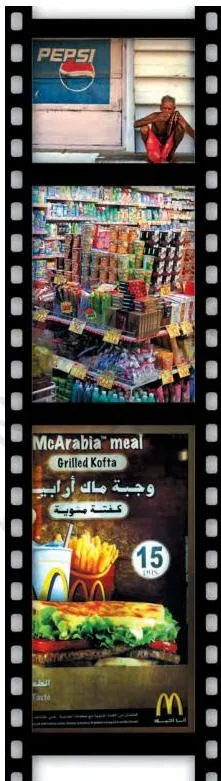
That fear is cultural homogenisation, the rise of a uniform culture. But the book is sharp here: a uniform culture is not a global culture — what is imposed in its name is Western culture, known as the soft power of US hegemony and often called the ‘McDonaldisation’ of the world (NCERT, pp. 106-107).
Those who make this argument see it as dangerous for the whole of humanity because it shrinks the globe’s rich cultural heritage.
Yet it would be a mistake to assume the cultural consequences are only negative. Cultures are not static; all cultures accept outside influences all the time. Some influences reduce our choices, but some enlarge them, and some modify a culture without overwhelming the traditional — the burger is simply added to the masala dosa, not a substitute for it (NCERT, p. 107).
The chapter’s favourite proof is clothing: a khadi kurta worn over blue jeans is a new combination, unique to India, and it has been exported back to the US, where young Americans wear the kurta with jeans (NCERT, pp. 107-108).
At the same time, the same process generates the opposite effect: cultural heterogenisation — each culture becoming more different and distinctive. Cultural exchange is rarely one way (NCERT, p. 108). Exercise Q10 tests exactly this pairing.
India and Globalisation: From Protectionism to 1991
India’s story in the chapter has three phases, and each one explains the next.
- Colonial period: as a consequence of Britain’s imperial ambitions, India became an exporter of primary goods and raw materials and a consumer of finished goods (NCERT, p. 108).
- Post-independence protectionism: India chose to make things itself and to restrict imports; growth stayed sluggish, and critical sectors like health, housing and primary education did not receive the attention they deserved (NCERT, pp. 108-109).
- 1991 reforms: responding to a financial crisis and the desire for higher growth, India began to de-regulate trade and foreign investment (NCERT, p. 109).
The chapter’s test of these reforms is blunt: the ultimate test is not high growth rates but whether the benefits of growth are shared, so that everyone is better off (NCERT, p. 109). Keep that test in mind — it is the judgement an examiner expects from you.
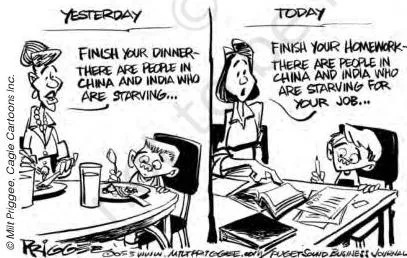
The chapter also carries an insider’s account of call-centre work, quoted from The Hindu, to make the service economy human: workers take calls routed from the US all night, and absorb the resentment of customers who wanted an American on the line (NCERT, p. 109).
Resistance: Left, Right and the World Social Forum
Resistance is not a single movement. The book separates the left critique from the right critique, adds the World Social Forum, and then looks at India’s own protests.
Critics on the left argue that contemporary globalisation is a phase of global capitalism that makes the rich richer (and fewer) and the poor poorer, and that a weakened state is less able to protect the poor.
Critics on the right fear the political weakening of the state, want a return to self-reliance and protectionism in at least some areas of the economy, and worry that traditional culture, age-old values and ways of life will be harmed (NCERT, p. 110).
The key nuance: many anti-globalisation movements are not opposed to the idea of globalisation itself but to a specific programme of it — the neo-liberal programme they see as a form of imperialism — and they organise through global networks of their own (NCERT, p. 110).
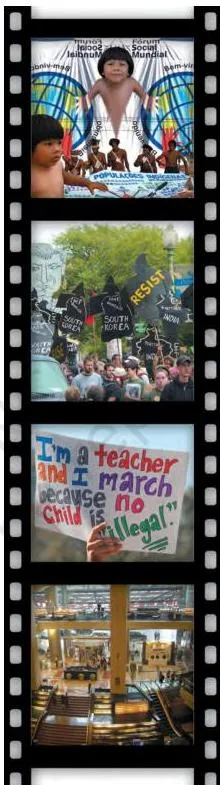
The landmark moment is the 1999 WTO Ministerial Meeting in Seattle, where widespread protests alleged unfair trading practices by economically powerful states (NCERT, pp. 109-110). The World Social Forum is the ongoing platform of that coalition — human rights activists, environmentalists, labour, youth and women activists opposed to neo-liberal globalisation.
Its first meeting was in Porto Alegre, Brazil, in 2001, its fourth in Mumbai in 2004, and the book records its latest in Nepal in February 2024 (NCERT, pp. 110-111).
This is where the opening pages connect: the chapter starts with a collage of World Social Forum voices — “Excuse me, may I know who’s in charge here?”, “neoliberalism… is old wine in a new bottle” — and the resistance section supplies the factual answer to those voices. The opening poses the question; the section gives it a name and a history.
India’s resistance has come from both sides. From the left: protests against economic liberalisation through political parties and forums like the Indian Social Forum, and protests by trade unions and farmer organisations against the entry of multinationals. The patenting of plants like Neem by American and European firms also generated considerable opposition.
From the right: objections to foreign TV channels on cable networks, the celebration of Valentine’s Day, and the westernisation of the dress tastes of girl students (NCERT, pp. 111-112).
Figures in This Chapter, Explained
The chapter argues partly through cartoons and image panels, and NCERT places a sentence beside each one. Read the image and its sentence together — the sentence carries the argument, the picture carries the emotional weight. Each panel below is paired with the exact line NCERT prints beside it.
The chapter admits that the word ‘globalisation’ is used loosely for very different things — from a film producer’s script to a farmer’s failed crop — and that is why it stops to define it (NCERT, p. 101). The definition that follows, flows plus worldwide interconnectedness, is the tool you need for the statement-based exercises.
This panel announces the book’s method: political, economic and cultural aspects, shown through images from different parts of the world. The word to notice is different — globalisation is not one nation’s story, which is why the chapter insists it is multi-dimensional (NCERT, p. 101).

This image sits inside the political consequences section, and its one-line caption is the counter-argument: globalisation does not always shrink the state. When you answer Q8, let this caption remind you to include the boosting side — new technology that lets the state collect more information about its citizens (NCERT, pp. 103-104).
This caption is the chapter’s working definition of economic globalisation. Pair it with the asymmetry the book stresses: commodity, capital and idea flows rose, but the movement of people did not, because visa policies guard rich-country borders (NCERT, pp. 104-105).
The caption warns you not to expect one verdict. The debate splits into advocates, critics and moderate supporters, and the comparison table in the economic consequences section is your condensed version of it (NCERT, pp. 105-106).
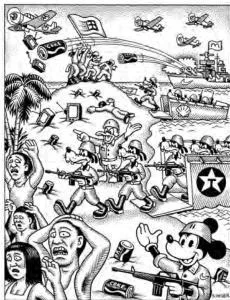
This image is the bridge from economics to culture: globalisation reaches the home — what we eat, drink, wear and think (NCERT, p. 106). Any answer that treats globalisation as only trade and institutions is missing half the chapter.
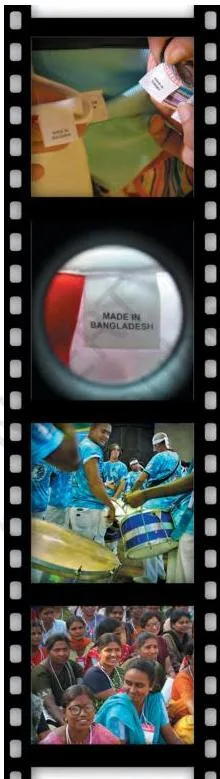
The caption is the chapter correcting its own reader: cultures absorb outside influences, and some of those influences enlarge choice instead of destroying it. The khadi kurta over jeans is the book’s proof that cultural exchange is rarely one way (NCERT, pp. 107-108).
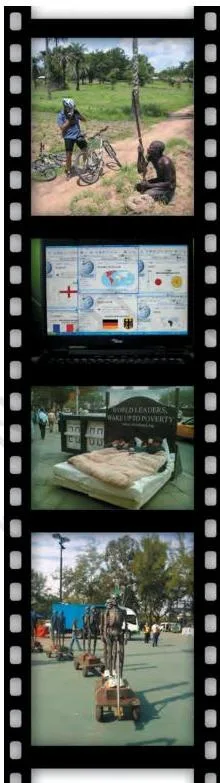
The printed caption is cut off in the layout, but the text beside it completes the thought: in 1999, at the WTO Ministerial Meeting in Seattle, there were widespread protests alleging unfair trading practices by the economically powerful states (NCERT, pp. 109-110). This is the chapter’s pivot from analysis to street-level resistance.
Definitions You Need from This Chapter
These are the terms the exercises expect you to use precisely. Several of the true/false statements turn on getting exactly one definition right — read each entry with its NCERT page.
| Term | Plain meaning |
|---|---|
| Globalisation | Flows of ideas, capital, commodities and people that create and sustain worldwide interconnectedness (NCERT, pp. 100-101) |
| State capacity | The ability of government to do what it does (NCERT, p. 103) |
| Minimalist state | A state that keeps core functions — law and order, security of citizens — but withdraws from welfare functions; the market then sets economic and social priorities (NCERT, p. 103) |
| Cultural homogenisation | The rise of a uniform culture; in practice the imposition of Western culture rather than a shared global culture (NCERT, pp. 106-107) |
| Soft power of US hegemony | Cultural influence that makes the world begin to look the way the dominant power wishes it to be (NCERT, p. 107) |
| Cultural heterogenisation | The opposite effect of the same process: each culture becoming more different and distinctive (NCERT, p. 108) |
| Social safety nets | Institutional safeguards designed to minimise the negative effects of globalisation on the economically weak (NCERT, p. 106) |
| Neo-liberal globalisation | The specific market-led programme of globalisation that the World Social Forum opposes (NCERT, p. 110) |
Common Mistakes Students Make in This Chapter
This chapter plants questions in the margins, and those margin questions are exactly where students go wrong. The book asks, for instance, whether a ‘safety net’ means we expect people to fall, and why we fear Western culture if we are confident in our own — each mistake below comes with the correction the chapter implies.
| Mistake | Correct rule | How to check your answer |
|---|---|---|
| Globalisation is purely an economic phenomenon | It is multi-dimensional — it has political, economic and cultural manifestations, including flows of ideas and values (NCERT, p. 102) | Does your answer mention culture or politics anywhere at all? A one-dimensional answer is the giveaway |
| Globalisation began in 1991 | These flows have a strong historical basis going back centuries; 1991 is when India’s reform programme began | Ask whether the question is about the phenomenon or about India — only the second points to 1991 |
| Globalisation always weakens the state | It can erode state capacity, but it can also boost it through technology; the state remains the primary basis of political community (NCERT, pp. 103-104) | Have you written both directions? A one-sided answer to Q8 is incomplete |
| Homogenisation means the rise of a genuine global culture | A uniform culture is not a global culture — it is the imposition of Western culture, the soft power of US hegemony (NCERT, pp. 106-107) | Check the exact statement: ‘uniform culture’ and ‘global culture’ are different claims |
| The ‘safety net’ margin question proves some people are expected to fall | Safety nets are institutional safeguards against harm to the economically weak; the margin question exists to make you question the assumption, not confirm it (NCERT, pp. 105-106) | Write ‘safeguard’ into your own definition and the misunderstanding disappears |
| Globalisation equals westernisation | Cultural exchange is rarely one way — the khadi kurta over jeans was exported back to the US (NCERT, pp. 107-108) | If a statement says ‘globalisation = westernisation’, mark it false and move on |
Activities the Chapter Asks You to Do
Three LET’S DO IT boxes and one classroom project make the chapter’s flows visible in a student’s own home. They are not scored exercises, but they are the fastest way to collect real-life examples for long answers.
- Newspaper watch (p. 101): collect clippings on anything related to globalisation for a week. It shows how loosely the word is used — and why the chapter bothers to define it.
- MNC products (p. 106): list the products of multinational companies used by you or your family. This is the commodity flow you can actually touch.
- Dialects (pp. 107-108): list all the known dialects of your language, then check with your grandparents’ generation how many are still spoken today. This is cultural homogenisation measured inside one family.
- LET’S DO IT TOGETHER (pp. 110-111): with your class, list familiar products and favourite TV programmes, find who makes or sponsors them, and classify the manufacturers into exclusive foreign companies, exclusive Indian companies, and companies working in collaboration. The teacher then debriefs the class: how globalisation impacts daily life, how small-scale industries lose customers as foreign goods spread, and the ongoing debate about globalisation’s effect on developing and developed countries.
How to Use This Chapter for Exams
The exercises at the end of the chapter (pp. 112-113) split into three skills: judging true/false statements against the chapter’s exact definitions, explaining a concept in your own words, and building a long analytical answer. The table below maps each question to the part of the chapter that answers it.
| Question | What it tests | Where the chapter answers it |
|---|---|---|
| Q1, Q2, Q4 | True statements about the nature, impact and meaning of globalisation | Concept and multi-dimensional nature (pp. 100-102) |
| Q3 | True statements about the causes of globalisation | Technology and historical basis (pp. 102-103) |
| Q5 | False statements about globalisation | Advocates versus critics debate (p. 106) |
| Q6 | Define worldwide interconnectedness and its components | Concept section (pp. 100-101) |
| Q7 | How technology contributed to globalisation | Causes section (pp. 102-103) |
| Q8 | Critically evaluate the changing role of the state | Political consequences (pp. 103-104) |
| Q9 | Economic implications, and the impact on India | Economic consequences and India (pp. 104-106, 108-109) |
| Q10 | Does globalisation lead to cultural heterogeneity? | Cultural consequences (pp. 106-108) |
| Q11 | How globalisation impacted India, and India’s impact on it | India section (pp. 108-109) |
A complete long answer has three parts: a definition, both sides of the argument, and a conclusion that applies the chapter’s own test. The two plans below use fresh examples, so you practise finding your own evidence; in an exam you may equally cite the book’s Janardhan, Ramdhari and Sarika.
Answer plan for Q8 — the changing role of the state in developing countries.
- Open by defining state capacity — the ability of government to do what it does (NCERT, p. 103).
- Give the erosion side: the welfare state gives way to a minimalist state, the market sets economic and social priorities, and MNC entry narrows government choice — in a developing country, visible as cuts in food or health subsidies.
- Give the counter-side: the state remains primary, withdraws only from domains it wishes to, and new technology strengthens it — the same government can use a digital ID system to target benefits directly.
- Conclude critically: the change is real but two-way, and its effects vary with context.
Answer plan for Q11 — India as receiver and shaper of globalisation.
- Receiver: since the 1991 reforms de-regulated trade and foreign investment, foreign products and services reached Indian homes — a student taking an online class from a teacher abroad is one everyday example.
- Shaper: Indian companies have bought foreign rivals, an Indian snack brand sells overseas, and the khadi kurta over jeans was exported back to the US.
- Judge by the chapter’s test: growth alone is not success — the benefits of growth must be shared so everyone is better off (NCERT, p. 109).
For the true/false questions, a full answer states the corrected claim rather than just ‘true’ or ‘false’, because the chapter’s definitions are precise and the reasoning is what scores. One caution: textbook contents and the examinable syllabus are not always identical — check the current official syllabus to confirm what is examinable.
Quick Revision Summary
One screen for the night before the exam, following the chapter’s own arc:
- Definition: globalisation means flows of ideas, capital, commodities and people that create and sustain worldwide interconnectedness (I C C P).
- Causes: not new in kind, but new in scale and speed; technology is critical, yet people must also recognise their interconnections — bird flu and tsunami cross borders (pp. 102-103).
- Political: state capacity can erode (welfare state to minimalist state), but the state remains primary and technology can make it stronger (pp. 103-104).
- Economic: more trade, capital and ideas, but not more people — visas guard rich-country borders; gains are uneven; advocates, critics and moderates disagree; safety nets protect the weak (pp. 104-106).
- Cultural: homogenisation (imposition of Western culture, soft power, McDonaldisation) and heterogenisation (cultures more distinct) happen at once; exchange is rarely one way (pp. 106-108).
- India: colonial exporter of raw materials to protectionism to the 1991 reforms; the test is whether benefits of growth are shared (pp. 108-109).
- Resistance: left and right critiques; Seattle WTO protests 1999; World Social Forum — Porto Alegre 2001, Mumbai 2004, Nepal February 2024; in India, parties, unions, farmers, the Neem patenting opposition, and right-wing cultural objections (pp. 109-112).
Finish on the mnemonic: I C C P — Ideas, Capital, Commodities, People. Hold those four flows and the whole chapter hangs on them.
Related Resources
This listing is maintained for the 2026-27 academic session using the NCERT textbook information available to us. NCERT remains the authority for confirming the latest edition.
Move on without another search:
- Environment and Natural Resources — the chapter that precedes globalisation in Contemporary World Politics.
- Class 12 Political Science notes — the hub for both NCERT Political Science books.
- Class 12 NCERT books hub and the main CBSE notes index for the rest of your subjects.
- Other Political Science chapter notes, such as Recent Developments in Indian Politics.
Sources and Data Verification
Where the information on this page comes from, stated plainly:
- The page numbers, quotes and figure descriptions on this page describe the NCERT Class 12 Political Science textbook Contemporary World Politics, Chapter 7 Globalisation, in its official NCERT edition, published on ncert.nic.in.
- This page covers this one chapter of this one book. It does not describe the full CBSE scheme of studies.
- The listing is maintained for the current academic session using the NCERT information available to us.
- NCERT settles textbooks, editions and official PDFs. CBSE settles curriculum, syllabus and examinations. For a textbook edition, consult NCERT; for what is examinable, check the current official CBSE syllabus.
Frequently Asked Questions on Globalisation
What is globalisation for Class 12 Political Science?
In this chapter, globalisation is defined as flows — ideas, capital, commodities and people moving across borders — and the worldwide interconnectedness that these constant flows create and sustain (NCERT, pp. 100-101). It is multi-dimensional, with political, economic and cultural manifestations, so the book warns against treating it as purely economic (NCERT, p. 102).
Is globalisation purely an economic phenomenon?
No. The chapter says it is wrong to assume globalisation has purely economic dimensions, just as it is wrong to see it as purely cultural (NCERT, p. 102).
The proof sits in daily life: a conflict of values over new careers for women, cultural borrowing in dress and music, and political change in the role of the state are all parts of the same process.
How has technology contributed to globalisation?
Technology is a critical cause, but not the whole cause. The telegraph, telephone and microchip — and today the internet — made it possible for ideas, capital, commodities and people to move more easily, at the scale and speed that define contemporary globalisation (NCERT, pp. 102-103).
The chapter adds that improved communication alone is not enough: people must also recognise their interconnections with the rest of the world, as a bird flu outbreak shows (NCERT, p. 103).
What is the difference between cultural homogenisation and heterogenisation?
Cultural homogenisation is the rise of a uniform culture — which the chapter says is really the imposition of Western culture, the soft power of US hegemony, often called the ‘McDonaldisation’ of the world (NCERT, pp. 106-107). Cultural heterogenisation is the opposite effect of the same process: each culture becomes more different and distinctive (NCERT, p. 108).
They happen at the same time, and cultural exchange is rarely one way.
What is the World Social Forum and why does the chapter open with it?
The World Social Forum is a global platform that brings together human rights activists, environmentalists, labour, youth and women activists opposed to neo-liberal globalisation (NCERT, p. 110). The chapter opens with a collage of voices from the forum because those voices pose the question the whole chapter investigates — is globalisation good or bad, and who is in charge?
The first WSF met in Porto Alegre, Brazil, in 2001, the fourth in Mumbai in 2004, and the book records its latest in Nepal in February 2024.
How did globalisation affect India after 1991?
In 1991, responding to a financial crisis and the desire for higher economic growth, India began to de-regulate trade and foreign investment (NCERT, p. 109).
The chapter’s judgement is cautious: it may be too early to say how good this has been, and the ultimate test is not high growth alone but whether the benefits of growth are shared so that everyone is better off (NCERT, p. 109). India is not only a receiver of globalisation — Indian companies, products and cultural combinations also shape it.
Reference: NCERT Class 12 Contemporary World Politics textbook, chapter 7, official edition on ncert.nic.in.
Explore Class 12 Political Science Books
- Previous: Environment and Natural Resources
- Next: Recent Developments in Indian Politics
Related chapters:
- The End of Bipolarity
- Challenges of Nation Building
- Contemporary Social and Economic Centres of Power