
These diversity and classification class 9 notes condense NCERT Chapter 12 (Patterns in Life: Diversity and Classification) into one revision page, mapped to the printed textbook pages 229–252 so you can self-check anything you doubt.
You get biodiversity and hotspots, the seven classification criteria, the five kingdoms, the plant divisions, the animal phyla, the hierarchy and the rules of binomial nomenclature — all in the order a teacher would build them.
Revision works fastest when you can jump straight to the weak spot, so the page is built around tables, decision keys and worked examples rather than long paragraphs. Use the topic list below to go to any section, then finish with the 5-minute recap chain at the end.
Biodiversity First: What We Are Trying to Organise
Biodiversity is the enormous variety of life forms on Earth — from microscopic algae to giant trees — and every organism plays a role in keeping nature stable (NCERT, p. 229).
Microscopic algae release much of the oxygen we breathe; fungi and bacteria decompose fallen leaves into manure and keep soil fertile; birds, bees and bats pollinate flowers; plants capture sunlight to make food that supports nearly all life.
For centuries farmers conserved diverse crop varieties because of useful traits like drought tolerance and pest resistance. Diversity reduces the risk of crop failure and strengthens food security (NCERT, p. 229).
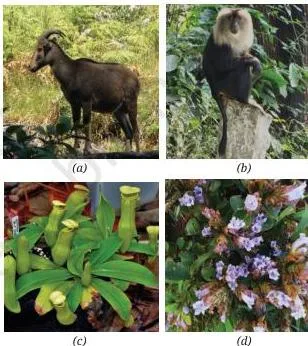
Endemic species are found naturally only in one region of the world. India’s examples include the Nilgiri tahr, lion-tailed macaque, the pitcher plant Nepenthes khasiana and Neelakurinji (NCERT, p. 230).
Biodiversity hotspots are regions that support a large number of endemic species and have undergone significant habitat loss. India’s four global hotspots are the Western Ghats, Indo-Burma (including North East India), the Himalayas, and Sundaland (including the Nicobar Islands) (NCERT, p. 230).
Why Scientists Classify: Library Books and Pakke’s Hornbills
Imagine a library where thousands of books lie scattered on the floor and you want to find On the Origin of Species. Without arrangement by subject and author, the search is hopeless. Documents work the same way (NCERT, p. 232): biological classification is the scientific grouping of organisms by their shared characteristics and differences.
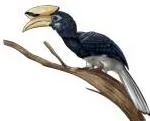
The Pakke Tiger Reserve in Arunachal Pradesh makes the point concrete: scientists have recorded nearly 300 bird species there, including four hornbills — the Rufous-necked, Oriental Pied, Great and Wreathed. These birds nest only in large, old trees with suitable cavities and eat specific fruits, so different hornbills appear in different parts of the forest (NCERT, p. 232).
Classification lets scientists ask precise questions about distribution and species links.
Biological classification helps in six ways (NCERT, pp. 232–233):
- makes the study of organisms more organised and systematic
- reveals similarities and differences among living beings
- shows how organisms are related and how they interact
- helps identify and name newly discovered organisms
- supports conservation by flagging species under threat of extinction
- gives scientists worldwide one common system of discussion
The Criteria Scientists Use to Group Organisms
Scientists look at broad, easily visible features first, then move to detailed ones (NCERT, p. 231). The seven criteria are:
- External features — shape, size and body organisation
- Mode of nutrition — autotrophic or heterotrophic
- Internal structures — skeletal patterns, organs and tissues
- Cell structure — unicellular or multicellular; eukaryote or prokaryote; presence of a cell wall
- Ecological role — producer, consumer or decomposer
- Reproduction — asexual and/or sexual methods
- Genetic similarity — inherited features, studied in detail using DNA
Why this order? If you started with cells before bodies, an elephant and a bacterium would both be “cells” — you would never separate them. Broad visible traits divide life into big groups first; cell structure and DNA then refine the divisions. The inference rule that powers the whole chapter: shared features suggest a common ancestor (NCERT, p. 231).
Cell structure and DNA are treated in depth in the Class 9 Science chapter notes.
From Aristotle to Whittaker: How the Five Kingdoms Emerged
Classification systems changed as tools improved — each new kingdom solved a specific problem (NCERT, pp. 233–234):
| System | What it grouped | The problem it solved / left |
|---|---|---|
| Aristotle (4th century BCE) | Animals by habitat — land, water, air | Relied on external appearance, so it was limited |
| Two kingdoms | Plantae and Animalia | Confusion: where do Amoeba, Paramecium and bacteria go? |
| Three kingdoms | Protista added | Placed unicellular microscopic organisms |
| Four kingdoms | Monera added | Microscopes revealed bacteria have no true nucleus, unlike Amoeba |
| Five kingdoms | Fungi separated | Mushrooms are heterotrophic and absorb from dead matter, unlike plants |
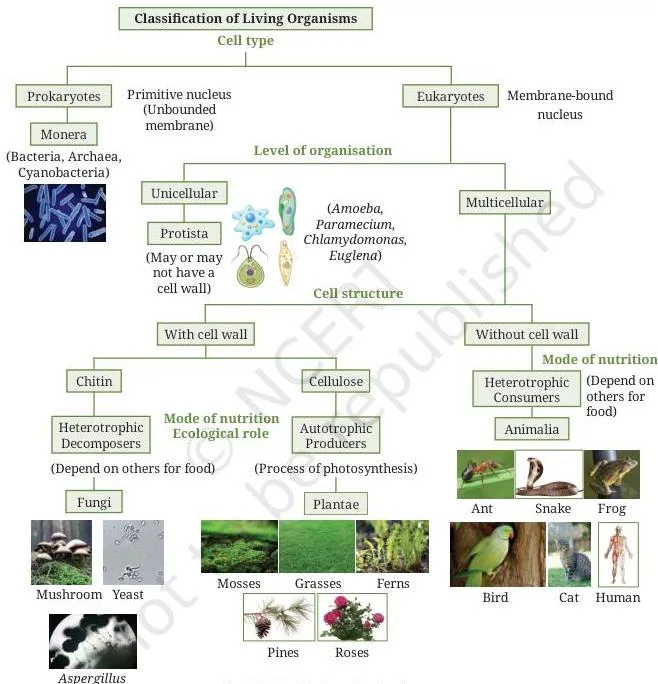
Ancient Indian texts like the Rigveda and Brihat Samhita also classified animals by habitat, behaviour and ecological role (NCERT, p. 233). The concept map below (Fig. 12.5) shows the four criteria behind the five kingdom system: cell type, cell wall, level of organisation and mode of nutrition (NCERT, p. 234).
The Five Kingdoms at a Glance: One Table and One Decision Key
This comparison table is the chapter’s “formula” — learn the four columns and you can place any organism (NCERT, pp. 233–240).
| Kingdom | Cell type | Cell wall | Nutrition | Body organisation | Example |
|---|---|---|---|---|---|
| Monera | Prokaryote (no true nucleus) | Rigid cell covering | Auto- or heterotrophic | Unicellular | Bacteria, cyanobacteria |
| Protista | Eukaryote | None, or cellulose | Auto-, hetero- or both | Unicellular | Amoeba, Paramecium, Euglena |
| Fungi | Eukaryote | Chitin | Heterotrophic (absorbs) | Mostly multicellular | Yeast, Aspergillus, mushrooms |
| Plantae | Eukaryote | Cellulose | Autotrophic (photosynthesis) | Multicellular | Spirogyra, ferns, pines, Gulmohar |
| Animalia | Eukaryote | Absent | Heterotrophic | Multicellular | Sponges to mammals |
Decision key — run an unknown organism through these if-then steps:
- no true nucleus → Monera
- single-celled with a true nucleus → Protista
- multicellular, chitin cell wall, absorbs food → Fungi
- multicellular, cellulose cell wall, makes food → Plantae
- multicellular, no cell wall, eats food → Animalia
Misconception autopsy: three organisms that fool students
- Mushrooms are not plants. They never move, but they also never photosynthesise — no chlorophyll. They are heterotrophic, absorb from dead matter, and have a chitin cell wall, so they fit Fungi, not Plantae (NCERT, p. 236).
- An amoeba is not an animal. It moves and is heterotrophic, but it is a single cell — a unicellular eukaryote. A single cell carries out all the life processes that multicellular animals manage with billions of cells, which is why it sits in Protista (NCERT, p. 235).
- Viruses fit in no kingdom. They contain genetic material like living organisms but lack cellular organisation, and remain inactive outside a host cell — so no kingdom based on cell structure can hold them (NCERT, p. 250).
The chapter flags three boundary cases — yeast (unicellular but Fungi), cyanobacteria (photosynthetic but Monera) and Euglena-like forms (both autotrophic and heterotrophic) — each resolved in its own section below.
Kingdom Monera: The Prokaryotes
Bacteria are single-celled prokaryotes found everywhere — soil, water, air, hot springs and even inside the human body. They live in the gut of ruminants and produce biogas from dung. Some bacteria are pathogens that cause disease, but many are useful, like Lactobacillus and Rhizobium (NCERT, p. 234). Cyanobacteria are autotrophs and decomposers.
About 2.5 billion years ago cyanobacteria were among the first organisms to produce oxygen through photosynthesis, making Earth suitable for other life. Their fossils, called stromatolites, are found in Rajasthan and Madhya Pradesh (NCERT, p. 235).
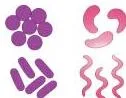
The classification lesson to remember: cyanobacteria are green and photosynthesise, yet they belong to Monera because they are prokaryotic. Cell type beats colour. Ram Bux Singh, the “Father of Modern Biogas”, built India’s first scientifically designed biogas plant in 1957 at Sitapur, Uttar Pradesh (NCERT, p. 235).
For the full picture of cell structure, see the cell-structure chapter in the Class 9 Science notes.
Kingdom Protista: Unicellular Eukaryotes
Protista groups all single-celled eukaryotes — those with no cell wall or a cellulose cell wall. They live in water or moist places; some are autotrophic, some heterotrophic, and some like Euglena do both (NCERT, pp. 235–236).
Ecologically, protists are an important link in aquatic food chains: they produce oxygen, serve as food for small animals, and some act as decomposers that cycle nutrients.
In Activity 12.5 you make a hay infusion — soak grass or straw in pond water for a week, then put a drop under a microscope to spot moving protists. Always wear a lab coat, mask and gloves, and autoclave the culture before disposal (NCERT, p. 236).
Kingdom Fungi: Decomposers with a Chitin Cell Wall
Fungi are mostly multicellular eukaryotes whose cell walls are made of chitin. They do not make their own food; instead they absorb nutrients from dead or decaying matter through fine filaments that form a network called the mycelium (NCERT, p. 236). Most fungi are saprophytes and act as decomposers, breaking complex matter into simpler substances and returning minerals to the soil.
Without them, decay would slow and soil fertility would drop.
Some fungi form mutualistic (symbiotic) relationships; others are parasites that cause disease. They reproduce sexually and asexually, often by spores, and grow best in warm, moist conditions. Useful fungi include Penicillium and Aspergillus, used to make enzymes and antibiotics. Wild edible mushrooms are a valued forest resource, and mushroom farming takes only 30–45 days per cycle (NCERT, pp. 236–237).
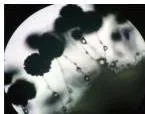
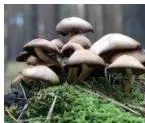
Classification logic: yeast is unicellular, so students guess Protista — but its cell wall is chitin, so it is Fungi. Cell wall material is one of the criteria that decides the kingdom.
Kingdom Plantae: Five Divisions on the Road to Land
Plants are multicellular, autotrophic eukaryotes with a rigid cellulose cell wall; they form the base of most food chains and release oxygen (NCERT, p. 237). The five divisions are best read as five steps in conquering land, each solving one problem while inheriting another.
Thallophyta — primitive plants
Simplest plant forms, mostly aquatic. Their body is a thallus — an undifferentiated body that allows direct exchange of gases, nutrients and water. Example: Spirogyra (NCERT, p. 237).
Bryophyta — first steps on land, still need water
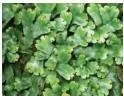
Mosses and liverworts show a more differentiated body with root-like structures called rhizoids — not true roots — and stem-like and leaf-like structures. They lack vascular tissue and need water for reproduction, so they are called the “amphibians of the plant kingdom” (NCERT, p. 237). Examples: Marchantia and moss.
Pteridophyta — true transport system, no seeds
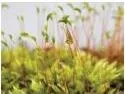
Ferns possess true roots, stems and leaves, and a stem cross-section shows vascular tissue (xylem and phloem) that transports water and food throughout the plant (NCERT, p. 238). They still need aquatic conditions for reproduction and do not produce seeds.
Gymnosperms — reproduction without water
Pines and cycads have needle-like or scale-like leaves that reduce water loss. They produce seeds but do not need water for fertilisation; their seeds are naked, exposed on cones rather than enclosed in fruits (NCERT, p. 238).
Angiosperms — flowers, fruits and maximum diversity
Flowering plants have the most complex body organisation. Flowers attract pollinators, fruits help disperse seeds, and seeds are enclosed — together these let angiosperms occupy the widest range of environments, making them the most diverse plant group on Earth (NCERT, p. 239). Example: Gulmohar.

Activity 12.7 asks you to compare a fern stem cross-section with a sunflower stem (Chapter 3) — both show vascular tissue, the key difference between pteridophytes and the plants below them (NCERT, p. 238). The transport of water and food by xylem and phloem is treated further in the tissues notes in Class 9 Science.
Table 12.3 completed — NCERT leaves the advantage and challenge cells blank for you to fill; here they are as a revision gift (NCERT, pp. 238–239):
| Plant group | Advantages for survival | Exceptions / challenges |
|---|---|---|
| Thallophyta | Simple plant body helps survival and dispersal in water | Cannot live on land |
| Bryophyta | Amphibians of the plant kingdom; adapted to moist land | Always need moisture |
| Pteridophyta | Live on land; transport water and food to all parts | Reproduction fails without water |
| Gymnosperms | Leaves adapted for dry conditions; no water needed to reproduce; form seeds | Seeds not enclosed in fruits |
| Angiosperms | Flowers, fruits and seeds; seeds covered; well-developed reproduction | Reproduction depends on pollination agents; complex tissue systems |
The reproductive advantage of flowers links directly to the Reproduction: How Life Continues notes.
Kingdom Animalia: From Pore-Bearers to Vertebrates
Animals are multicellular and heterotrophic, with locomotion, rapid response to stimuli and coordinated behaviour (NCERT, p. 240). The master criterion is the notochord — a flexible rod-shaped structure. Its presence or absence splits animals into non-chordata (invertebrates) and chordata (NCERT, p. 240).
The eight invertebrate phyla form a ladder of increasing body complexity (NCERT, pp. 241–243):
| Phylum | Level of organisation | Key feature | Habitat | Example |
|---|---|---|---|---|
| Porifera | Cellular | Pores; fixed in one place | Water | Sponges |
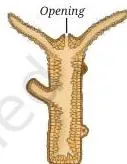
| Cnidaria | Tissue | Tentacles catch prey; one opening | Fresh & marine water | Hydra, jellyfish, corals |
| Platyhelminthes | Organ | Bilateral symmetry; one opening | Water / inside host | Flatworms |
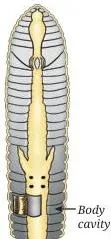
| Nematoda | Organ system | Two openings; cylindrical body | Soil / water / host | Roundworms |
| Annelida | Organ system | Segmented body; body cavity | Moist soil / water | Earthworm |
| Arthropoda | Organ system | Jointed appendages; hard external skeleton | Land / water | Insects, crabs, spiders |
| Mollusca | Organ system | Soft body, often a shell; muscular foot | Water / moist land | Snails, squids, octopuses |
| Echinodermata | Organ system | Spiny skin; internal calcium carbonate skeleton | Marine | Starfish, sea urchins |
Memory device — invertebrate phyla in order: “Police Caught People Never Asking About More Evidence” → Porifera, Cnidaria, Platyhelminthes, Nematoda, Annelida, Arthropoda, Mollusca, Echinodermata.
One kilogram of sponge can filter up to 24,000 litres of seawater a day (NCERT, p. 242).
Protochordates like Amphioxus possess a notochord at least once during their life. This structure gives internal support without restricting movement, and protochordates help us understand how notochord-bearing animals arose from simpler forms — the bridge to vertebrates (NCERT, p. 243).
Vertebrates possess a vertebral column (backbone) that supports the body and protects the brain and spinal cord, allowing larger body size and complex organs. They are classified into five groups — fish, amphibians, reptiles, birds and mammals — based on habitat, body covering and reproduction (NCERT, p. 244).
Structural adaptations follow: fins and gills for fish; feathers and hollow bones for flight in birds; fat storage in camels and thick fur in polar bears; mammary glands in mammals (NCERT, p. 244).
The Classification Hierarchy: An Address for Every Organism
The hierarchy runs in a fixed order (NCERT, p. 244):
Kingdom → Phylum → Class → Order → Family → Genus → Species It works like an address. A house address narrows from country to house number; each classification level narrows the organism until the species is exact. At each lower level, organisms share more common features, and every lower group is part of the group above it (NCERT, p. 244).
Memory device: “Kids Prefer Chocolate Over Fruity Green Sweets” → Kingdom, Phylum, Class, Order, Family, Genus, Species.
The tiger runs Kingdom Animalia → Phylum Chordata → Sub-phylum Vertebrata → Class Mammalia → Order Carnivora → Family Felidae → Genus Panthera → Species P. tigris. The pea runs Plantae → Magnoliophyta → Magnoliopsida → Fabales → Fabaceae → Pisum → P. sativum (NCERT, p. 245).
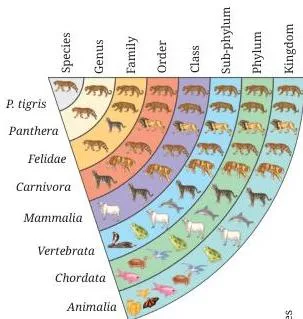
Exam fact: Species has the fewest members but the most shared features; Kingdom the reverse.
Binomial Nomenclature: Rules for Writing Scientific Names
The same animal is bagh in Hindi, puli in Tamil, tiger in English and tigre in French — so regional names cause confusion. Stellar naturalist Carolus Linnaeus (18th century) introduced binomial nomenclature: every organism gets one scientific name with two parts, written in Latin or Latinised form (NCERT, p. 246).
The first word is the genus — a group of closely related species that share features (tiger and lion both in Panthera, the roaring cats). The second is the species — similar individuals capable of interbreeding and producing offspring (NCERT, p. 246).
Three writing rules you are marked on (NCERT, p. 246):
- The name has two parts — genus and species
- Genus first, starting with a capital letter; species second, in lower case
- Italicised when printed, underlined when handwritten
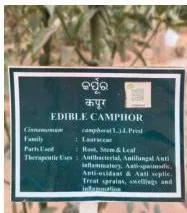
Worked examples: Panthera tigris (tiger), Mangifera indica (mango). A species name can honour a place: the purple frog Nasikabatrachus sahyadrensis from Kerala is named after the Sahyadri Hills (NCERT, p. 247).
Worked Examples: Classifying an Unknown Organism
Example 1 — Method: five kingdom decision key
A student finds a single-celled organism in pond water with a distinct membrane-bound nucleus and green chloroplasts.
- Single-celled → rules out Plantae, Animalia and most Fungi (all multicellular)
- True nucleus → rules out Monera, which is prokaryotic
- Chloroplasts allow autotrophy, which Protista permits
Conclusion: Protista. Contrast: if the cell had no true nucleus, it would be Monera.
Example 2 — Method: plant division checklist
An unfamiliar plant has true roots, stems and leaves, vascular tissue in a stem cross-section, reproduces by spores, and never produces flowers or seeds.
- No flowers or seeds → rules out gymnosperms and angiosperms
- True roots and vascular tissue → rules out thallophytes and bryophytes
- Both features point to ferns
Conclusion: Pteridophyta.
Example 3 — Method: rules of binomial nomenclature
Write the scientific name of the Indian peacock correctly.
- Genus is Pavo, species is cristatus — two parts only
- Capitalise only the genus: Pavo not pavo
- Keep the species in lower case: cristatus
- Italicise when printed, underline when handwritten
Conclusion: Pavo cristatus. The same rules turn the purple frog into Nasikabatrachus sahyadrensis.
Example 4 — Method: hierarchy placement
Place a lion at all seven levels using the tiger template.
- Kingdom Animalia → Phylum Chordata
- Class Mammalia → Order Carnivora → Family Felidae
- Genus Panthera → Species leo
Conclusion: Lion is Panthera leo; sharing the genus Panthera with Panthera tigris shows the two roaring cats are closely related.
Definitions You Must Know, With Examples
Learn each term in one line, always with a chapter example.
| Term | Meaning | Example from this chapter |
|---|---|---|
| Biodiversity | The enormous variety of life forms on Earth | Algae, fungi, birds, plants sharing one ecosystem |
| Endemic species | Found naturally only in one region of the world | Nilgiri tahr, Nepenthes khasiana |
| Biodiversity hotspot | Region rich in endemic species with significant habitat loss | Western Ghats, Himalayas |
| Biological classification | Scientific grouping of organisms by shared characters | The five kingdom system |
| Autotroph | Makes its own food through photosynthesis | Cyanobacteria, plants |
| Heterotroph | Depends on other organisms for food | Animals, most fungi |
| Prokaryote | Cell without a true nucleus | Bacteria, cyanobacteria |
| Eukaryote | Cell with a membrane-bound nucleus | Amoeba, plants, animals |
| Saprophyte | Absorbs nutrients from dead or decaying matter | Most fungi |
| Mycelium | Network of fine filaments that absorb food | Fungal body |
| Rhizoid | Root-like structure for anchorage | Mosses, Marchantia |
| Vascular tissue | Xylem and phloem that transport water and food | Ferns, sunflower |
| Notochord | Flexible rod-shaped supportive structure | Amphioxus, vertebrates |
| Bilateral symmetry | Body split into two halves along one plane | Flatworms |
| Binomial nomenclature | Universal two-part naming system | Panthera tigris |
| Genus | Group of closely related species | Panthera |
| Species | Similar individuals able to interbreed and produce offspring | P. tigris |
| Fossil | Preserved remains found in layers of rock, sand and mud | Stromatolites, dinosaurs |
Common Mistakes and How to Fix Them
| Error | Correct rule | Why |
|---|---|---|
| Writing Panthera Tigris with both capitals | Panthera tigris — genus capitalised, species lower case | Only the genus name takes a capital (NCERT, p. 246) |
| Calling cyanobacteria “blue-green algae” and placing them in Plantae | Monera | They are prokaryotic even though they photosynthesise (NCERT, p. 235) |
| Placing yeast in Protista because it is unicellular | Fungi | Its cell wall is chitin, and cell wall material is a classification criterion (NCERT, p. 236) |
| Saying bryophytes have roots | Rhizoids — root-like structures, not true roots | Bryophytes lack vascular tissue, so cannot form true roots (NCERT, p. 237) |
| Saying all bacteria are harmful | Many are useful: Lactobacillus, Rhizobium, biogas producers | Only some bacteria are pathogens that cause disease (NCERT, p. 235) |
| Writing the hierarchy from species upward | Always start at Kingdom | Each lower level shares more features, so the direction matters (NCERT, p. 244) |
| Using one feature alone to classify | Combine cell type, nutrition and body organisation | A mushroom is plant-like in not moving but animal-like in being heterotrophic — only the full criterion set reaches Fungi (NCERT, pp. 233–236) |
Exam Notes: How This Chapter Tests You
Observed patterns from the chapter’s own exercise (pp. 249–251), written with an examiner’s mindset. The exercise questions are solved in the Class 9 solutions page; here is what the questions keep asking.
- Choose-the-group: features are given and you pick the kingdom or phylum — for example, an insect is confirmed by jointed legs (Arthropoda); a sponge cell with a cell membrane, not a cell wall, supports the animal kingdom (NCERT, p. 249).
- Justification: explain why a feature supports placement — why cellular organisation is more fundamental than the presence of xylem and phloem; why bryophytes and pteridophytes sit in different groups though both lack flowers and seeds (NCERT, p. 250).
- Hierarchy reasoning: which group, class or genus, has fewer members but more features in common — genus (NCERT, p. 250).
- Viruses and the limits of classification: viruses contain genetic material but lack cellular organisation, so no five kingdom can hold them (NCERT, p. 250).
- Case study table: organisms P to T are described by structural, cellular and nutritional features only, and you must sort them into kingdoms and justify each placement (NCERT, p. 250).
The step that earns the mark: name BOTH the observed feature AND the group it rules in or out. “Membrane-bound nucleus → eukaryote, so it cannot be Monera” is a complete answer; “it is a protist” alone is not. Recall three figures by structure: Fig. 12.5 concept map, Fig. 12.16 animal table and Fig. 12.17 hierarchy pyramid.
Beyond Five Kingdoms: DNA, Three Domains, Fossils and Threats
Why classification keeps changing
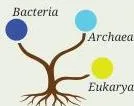
Better tools reveal new evidence, so classification is an ongoing process of reasoning, not a finished list (NCERT, p. 247). In 1977 Carl Woese compared DNA and proposed three domains — Bacteria, Archaea and Eukarya — showing that microscopic life is far more diverse than previously believed (NCERT, p. 246).
Fossils as evidence
Fossils are preserved remains of plants and animals in layers of rock, sand and mud. Older layers generally hold simpler organisms, newer layers more complex forms. India has important fossils — dinosaurs, early humans, ancient plants — and Birbal Sahni founded the Birbal Sahni Institute of Palaeosciences in Lucknow (NCERT, pp. 247–248).
Biodiversity under threat
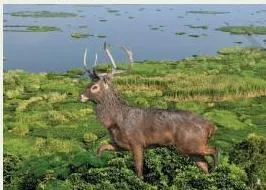
Pollution, deforestation, overuse of resources and climate change all reduce biodiversity. When one species disappears, species that depend on it decline too (NCERT, p. 248). The phumdis — floating grasslands on Loktak Lake in Manipur’s Keibul Lamjo National Park — are home to the endangered Sangai (dancing deer), endemic to Manipur.
Declared extinct in 1951 and rediscovered in 1953, it is now on the IUCN Red Data list as the phumdis degenerate (NCERT, p. 248). Climate’s role in this connects to the Earth as a System: Energy, Matter and Life notes.
The Activities That Teach the Concepts
- 12.1: the same organism fits different groups depending on the criterion — so scientists choose features carefully
- 12.2: the Pakke case shows classification lets scientists track species and ask precise questions
- 12.3: study the concept map to list the four criteria of the five kingdom system
- 12.4: permanent slides of bacteria and cyanobacteria — both Monera
- 12.5: hay infusion to observe protists; wear mask and gloves, autoclave the culture
- 12.6: bryophytes under a hand lens and dissecting microscope — no true leaves
- 12.7: compare a fern stem cross-section with a sunflower stem to see vascular tissue
- 12.8: sort leaves by shape and venation into monocots and dicots
- 12.9: complete the advantages and challenges table for the five plant divisions (filled in above)
Diversity and Classification Class 9 Notes: 5-Minute Recap
| Concept | One-line takeaway |
|---|---|
| Biodiversity | The variety of life forms and the roles each plays |
| Endemic species & hotspots | Found only in one region; need protection |
| Seven criteria | Broad features first, then cell structure, nutrition, DNA |
| Five kingdoms | Monera, Protista, Fungi, Plantae, Animalia — in order of complexity |
| Plant divisions | Thallophyta → Bryophyta → Pteridophyta → Gymnosperms → Angiosperms — each a step onto land |
| Animal split | Notochord present (chordata) or absent (non-chordata) |
| Eight invertebrate phyla | Porifera to Echinodermata, rising in body organisation |
| Hierarchy | Kingdom to Species; lower levels share more features |
| Naming | Genus + species, italicised or underlined |
| Modern update | DNA evidence gave three domains; fossils record change; biodiversity is under threat |
Moral of the chapter: classification is a tool for understanding relationships — not just a list of names. Browse the full CBSE notes index for every chapter in one place.
FAQs on Diversity and Classification
Why is yeast classified as a fungus even though it is unicellular?
Because its cell wall is made of chitin, and the material of the cell wall is one of the criteria used for classification (NCERT, p. 236). A mushroom and a yeast share this chitin wall even though yeast is unicellular, so both sit in Fungi.
Why are viruses not placed in any of the five kingdoms?
Viruses contain genetic material like living organisms but lack cellular organisation, and they remain inactive outside a host cell (NCERT, p. 250). The five kingdom system is built on cell structure, so it has no place for an organism without cells — a real limitation of the system.
What is the difference between bryophytes and pteridophytes?
Bryophytes have rhizoids (not true roots), lack vascular tissue and need water for reproduction. Pteridophytes have true roots, stems and leaves with vascular tissue (xylem and phloem), but they still need water for reproduction and produce no seeds (NCERT, pp. 237–238).
Both lack flowers and seeds, which is why they are grouped together in exam questions — the presence of vascular tissue is what separates them.
What is the difference between Monera and Protista?
Monera are prokaryotes — single-celled organisms with no true nucleus, like bacteria and cyanobacteria. Protista are single-celled eukaryotes — they have a true nucleus, like Amoeba, Paramecium and Euglena (NCERT, pp. 234–236). The membrane-bound nucleus is the deciding feature.
How do you write a scientific name correctly?
Two parts only: the genus first with a capital letter, then the species in lower case. Italicise when printed, underline when handwritten (NCERT, p. 246). Example: Panthera tigris.
Why did Carl Woese propose the three domain system?
In 1977 Woese compared organisms at the DNA level and found microscopic life far more diverse than the five kingdom system suggested. He proposed three domains — Bacteria, Archaea and Eukarya — showing that classification keeps changing as evidence improves (NCERT, p. 246).
For practice, the official NCERT Class 9 Science Chapter 12 textbook page holds the full rationalised text if you need to verify a passage, and the NCERT portal hosts all official Class 9 resources.
Reference: NCERT Class 9 Science textbook, chapter Patterns in Life: Diversity and Classification.
Explore Class 9 Science Notes
Class 9 Science on LearnCBSE:
Related chapters: