
These print culture and the modern world class 10 notes trace how information moved from hand-copied manuscripts to mass-produced books. For Class 10 students of the 2026-27 session, this chapter (India and the Contemporary World II, Chapter 5) explains how print technology shaped modern society in East Asia, Europe, and India — and how it sparked debates, reforms, and censorship along the way.
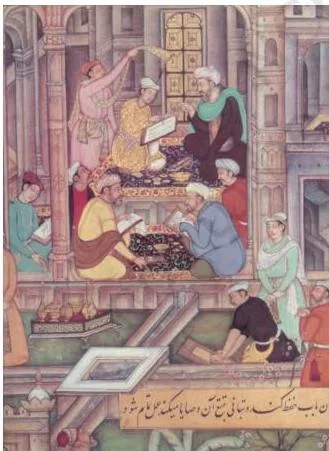
As shown in Fig. 1, a royal workshop in the sixteenth century relied on hand dictation, writing, and illustration. The chapter follows a geographical flow: East Asia first, then Europe, then India.
Chapter Contents
Hand Printing in East Asia: China, Japan, and Korea
From AD 594, books in China were printed by rubbing paper against the inked surface of woodblocks (NCERT, p. 4). Only one side of the thin sheet could be printed, so the traditional accordion book was folded and stitched at the side.
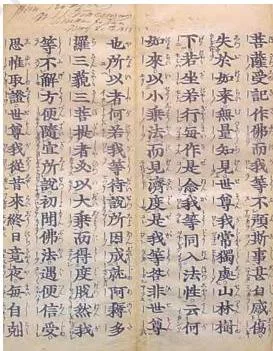
The imperial state in China was the major producer of printed material. Textbooks for civil service examinations were printed in vast numbers. By the seventeenth century, urban culture bloomed: merchants used print for trade information, reading became a leisure activity, and rich women began publishing poetry and plays.
Buddhist missionaries introduced hand-printing to Japan around AD 768-770. The oldest Chinese book printed this way is the Buddhist Diamond Sutra (AD 868). In medieval Japan, books were cheap and abundant.
Kitagawa Utamaro and Ukiyo Prints
Kitagawa Utamaro (born in Edo, 1753) was known for ukiyo — “pictures of the floating world” — depicting ordinary urban experiences (NCERT, p. 5). These prints travelled to Europe and the US, influencing artists like Manet, Monet, and Van Gogh.
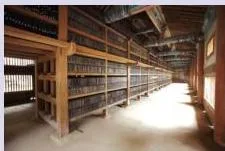
The Tripitaka Koreana belongs to the mid-13th century: about 80,000 woodblocks engraved with Buddhist scriptures (NCERT, p. 4). It was inscribed on the UNESCO Memory of the World Register in 2007.
Print Reaches Europe and the Gutenberg Revolution
Chinese paper reached Europe via the Silk Route in the eleventh century. In 1295, Marco Polo returned to Italy with knowledge of woodblock printing (NCERT, p. 6). Italians began producing books with woodblocks, and soon the technology spread across Europe.
Luxury editions were still handwritten on vellum (parchment from animal skin) for aristocratic circles. Merchants and students bought the cheaper printed copies. As demand grew, handwritten manuscripts could not keep up — copying was expensive, laborious, and slow.
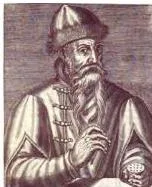
Gutenberg’s Press (1430s-1448)
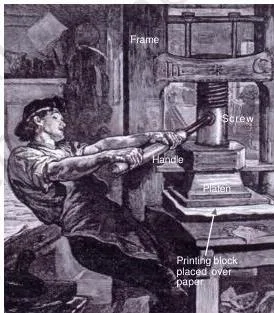
Johann Gutenberg developed the first-known printing press in Strasbourg, Germany, in the 1430s (NCERT, p. 7). He adapted the olive press model and used lead moulds to create moveable metal type for the 26 characters of the Roman alphabet.
The Gutenberg press could print 250 sheets on one side per hour. The first book printed was the Bible: about 180 copies in three years (1448). By 1550, 20 million printed books flooded European markets; the number rose to about 200 million in the sixteenth century.
The Print Revolution: A New Reading Public and Religious Debates
The print revolution was not just a new way of producing books. It transformed people’s relationship to information and authority, creating a new reading public (NCERT, p. 9).
Earlier, common people lived in an oral culture — they heard sacred texts read out, ballads recited, and folk tales narrated. Print blurred the line between oral and reading cultures. Printers published profusely illustrated ballads and folk tales, sung and recited at village gatherings and taverns in towns.
Martin Luther and the Protestant Reformation
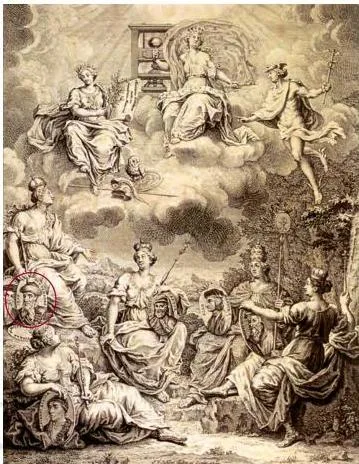
In 1517, Martin Luther wrote Ninety Five Theses criticising the Roman Catholic Church’s practices (NCERT, p. 10). His writings were reproduced in vast numbers. Luther’s translation of the New Testament sold 5,000 copies in a few weeks. He said: “Printing is the ultimate gift of God and the greatest one.”
Not everyone welcomed print. Menocchio, an Italian miller, reinterpreted the Bible and was executed by the Roman Catholic Church’s Inquisition (NCERT, p. 11). From 1558, the Church maintained an Index of Prohibited Books. The scholar Erasmus feared an overabundance of books, writing in Adages (1508) that the “multitude of them is hurtful to scholarship.”
The Reading Mania and Print Culture’s Role in the French Revolution
By the late eighteenth century, literacy rates in parts of Europe reached 60-80 per cent (NCERT, p. 12). Churches set up schools in villages. Popular literature exploded:
- Chapbooks in England — penny pocket-size books sold by pedlars called chapmen.
- Biliotheque Bleue in France — low-priced small books on poor paper with cheap blue covers.
- Almanacs — ritual calendars with astronomical data and tide timings.
Three Arguments Linking Print to the French Revolution
| Argument | What Print Did |
|---|---|
| 1. Spread of Enlightenment ideas | Writings of Voltaire and Rousseau attacked tradition, superstition, and despotism; readers saw the world through questioning eyes. |
| 2. Culture of dialogue and debate | All values, norms, and institutions were re-evaluated by a public aware of reason’s power. |
| 3. Mocking the monarchy | By the 1780s, cartoons and caricatures suggested the monarchy enjoyed sensual pleasures while common people suffered. |
The French novelist Louise-Sebastien Mercier declared: “The printing press is the most powerful engine of progress.” However, print did not directly shape minds — it opened the possibility of thinking differently (NCERT, p. 13).
Nineteenth-Century Innovations
| Innovation | Detail |
|---|---|
| Children’s press | Set up in France in 1857; the Grimm Brothers compiled folk tales published in 1812. |
| Women as readers and writers | Penny magazines for women; novelists like Jane Austen and the Bronte sisters defined a new type of woman. |
| Lending libraries | Educated white-collar workers, artisans, and lower-middle-class people from the 17th century onwards. |
| Power-driven cylindrical press | Perfected by Richard M. Hoe of New York; printed 8,000 sheets per hour — useful for newspapers. |
The offset press was developed in the late nineteenth century, printing up to six colours at a time. From the twentieth century, electrically operated presses accelerated printing further.
Print Culture in India: From Manuscripts to Colonial Presses
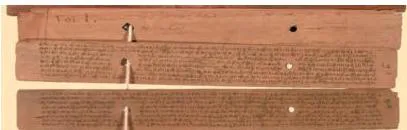
India had a rich tradition of handwritten manuscripts in Sanskrit, Arabic, Persian, and vernacular languages, copied on palm leaves or handmade paper (NCERT, p. 17).
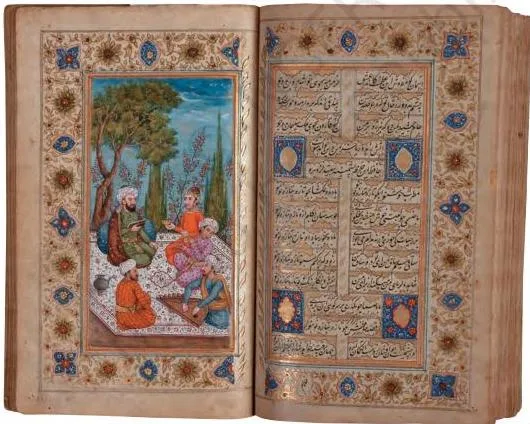
Manuscripts were expensive, fragile, and hard to read because scripts were written in different styles. In pre-colonial Bengal, students often learned to write without reading texts — teachers dictated from memory.
Arrival of the Printing Press in India
| Year | Milestone |
|---|---|
| Mid-16th century | Portuguese missionaries brought the press to Goa; Jesuit priests printed Konkani tracts. |
| 1579 | Catholic priests printed the first Tamil book at Cochin. |
| 1710 | Dutch Protestant missionaries had printed 32 Tamil texts. |
| 1713 | First Malayalam book printed. |
| 1780 | James Augustus Hickey began the Bengal Gazette (English weekly). |
Hickey’s Bengal Gazette described itself as “a commercial paper open to all, but influenced by none.” Governor-General Warren Hastings persecuted Hickey for publishing gossip about Company officials. Gangadhar Bhattacharya’s Bengali Bengal Gazette was the first Indian-published newspaper (NCERT, p. 18).
Religious Reform Debates and New Forms of Publication in India
From the early nineteenth century, print fueled intense religious reform debates in India (NCERT, pp. 19-24).
Reform Tracts and Newspapers
- Rammohun Roy published Sambad Kaumudi from 1821; the Hindu orthodoxy commissioned Samachar Chandrika to counter it.
- The ulama used cheap lithographic presses; the Deoband Seminary (founded 1867) published thousands of fatwas guiding everyday conduct.
- The first printed edition of the Ramcharitmanas of Tulsidas came from Calcutta in 1810.
- From the 1880s, the Naval Kishore Press at Lucknow and the Shri Venkateshwar Press in Bombay published religious texts in vernaculars.
New Forms of Publication
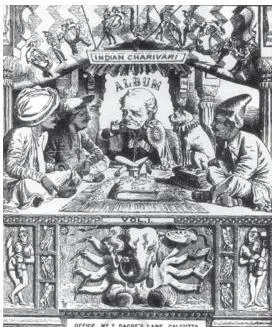
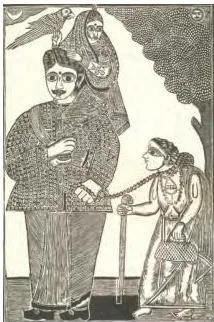
Print created an appetite for new writing forms that reflected people’s own lives. The novel, short stories, and essays about social and political matters entered the reading world (NCERT, p. 22). By the 1870s, caricatures and cartoons were published in journals, commenting on social and political issues.
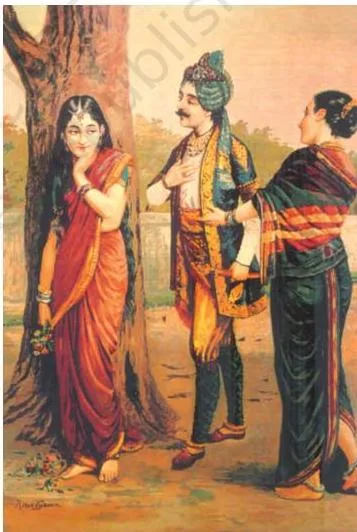
Raja Ravi Varma produced innumerable mythological paintings for mass circulation. Cheap prints and calendars shaped popular ideas about modernity, tradition, religion, and politics.
Women and Print
- Liberal families educated women at home; journals carried syllabi and reading matter for home-based schooling.
- Conservative Hindus feared literate girls would be widowed; Muslims feared corruption from Urdu romances.
- Rashsundari Debi secretly learned to read in her kitchen and wrote Amar Jiban (1876), the first full-length Bengali autobiography.
- Kailashbashini Debi, Tarabai Shinde, and Pandita Ramabai wrote about the unjust treatment and miserable lives of widows.
- Begum Rokeya Sakhawat Hossein (1926) condemned men for withholding education from women in the name of religion.
Print and the Poor
- Very cheap small books were sold at crossroads in Madras towns for poor people.
- Jyotiba Phule wrote about caste injustices in Gulangiri (1871).
- B.R. Ambedkar in Maharashtra and E.V. Ramaswamy Naicker (Periyar) in Madras wrote on caste, read across India.
- Kashibaba, a Kanpur millworker, published Chhote Aur Bade Ka Sawal in 1938, linking caste and class exploitation.
Print connected communities across India and created pan-Indian identities. You can read more about related themes in our Class 10 History notes and specifically the preceding chapter on The Age of Industrialisation.
Print and Censorship in Colonial India
Before 1798, the East India Company was not too concerned with censorship. Early controls targeted Englishmen critical of Company misrule (NCERT, p. 25). The Company feared criticism might be used in England to attack its trade monopoly.
| Year | Censorship Measure |
|---|---|
| 1820s | Calcutta Supreme Court passed regulations to control press freedom. |
| 1835 | Governor-General Bentinck revised press laws; Thomas Macaulay formulated new rules restoring earlier freedoms. |
| 1878 | Vernacular Press Act passed, modelled on Irish Press Laws. |
The Vernacular Press Act of 1878 gave the government extensive rights to censor reports and editorials in the vernacular press. Seditious reports earned warnings; ignoring them meant seizure of the press and confiscation of printing machinery.
Despite repression, nationalist newspapers grew. Balgangadhar Tilak wrote sympathetically about Punjab revolutionaries deported in 1907 in his Kesari, leading to his imprisonment in 1908 and widespread protests.
| Period | Wartime Controls on the Press |
|---|---|
| WWI — Defence of India Rules | 22 newspapers had to furnish securities; 18 shut down rather than comply. |
| 1919 — Rowlatt Act | Sedition Committee Report strengthened controls; penalties imposed on newspapers. |
| WWII — Defence of India Act | Allowed censoring of war-related reports; in August 1942, about 90 newspapers were suppressed. |
Gandhi said in 1922: “Liberty of speech … liberty of the press … freedom of association. The Government of India is now seeking to crush the three powerful vehicles of expressing and cultivating public opinion.”
Key Terms and Definitions
| Term | Meaning | Example / Context |
|---|---|---|
| Calligraphy | The art of beautiful and stylised writing | Duplicated by Chinese woodblock craftsmen (p. 4) |
| Vellum | A parchment made from animal skin | Luxury manuscripts for aristocratic circles in Europe (p. 6) |
| Platen | A board pressed onto paper to get the impression from metal type | Used in letterpress printing; later made of steel (p. 7) |
| Compositor | The person who composes the text for printing | Seen in sixteenth-century printer workshops (p. 8) |
| Galley | A metal frame in which types are laid and text composed | Part of Gutenberg-era printing (p. 8) |
| Ballad | A historical account or folk tale in verse, usually sung or recited | Published and sung at village gatherings (p. 9) |
| Taverns | Places where people gathered to drink, eat, and exchange news | Sites where printed ballads were recited (p. 9) |
| Protestant Reformation | A 16th-century movement to reform the Catholic Church | Martin Luther’s Ninety Five Theses (1517) triggered it (p. 10) |
| Inquisition | A Roman Catholic court for identifying and punishing heretics | Menocchio was hauled up and executed (p. 11) |
| Heretical | Beliefs that do not follow accepted Church teachings | Severely punished in medieval times (p. 11) |
| Seditious | Action or writing seen as opposing the government | Vernacular newspapers were warned for seditious reports (p. 11) |
| Denominations | Sub-groups within a religion | Churches set up village schools in Europe (p. 12) |
| Almanac | An annual publication with astronomical and tidal data | Sold by pedlars across Europe (p. 12) |
| Chapbook | Pocket-size books sold by travelling pedlars (chapmen) | Sold for a penny in England (p. 12) |
| Despotism | A system where absolute power is exercised unregulated | Print was seen as a weapon against despotism (p. 13) |
| Ulama | Legal scholars of Islam and the sharia | Used cheap lithographic presses in north India (p. 19) |
| Fatwa | A legal pronouncement on Islamic law by a mufti | Published by the Deoband Seminary (p. 19) |
Timeline of Print Technology: A Comparison Table
This original comparison maps print technology across regions and centuries, synthesising facts the textbook presents separately.
| Period | Region | Technology | Social Impact |
|---|---|---|---|
| AD 594 | China | Woodblock rubbing on paper; accordion books | State printed civil service exam textbooks in vast numbers |
| AD 768-770 | Japan | Hand-printing introduced by Buddhist missionaries | Books became cheap and abundant; poets published regularly |
| AD 868 | Japan/China | Diamond Sutra printed — six sheets with woodcut illustrations | Oldest surviving dated printed book |
| Mid-13th c. | Korea | Tripitaka Koreana — 80,000 woodblocks | Massive state Buddhist scripture preservation |
| 1295 | Europe (Italy) | Marco Polo brings woodblock knowledge | Luxury vellum for elites; cheap printed copies for merchants and students |
| 1430s-1448 | Germany | Gutenberg’s moveable metal type press; 250 sheets/hour | Print revolution: 180 Bibles in 3 years; 20 million books by 1550 |
| 1579 | India (Cochin) | Catholic priests print first Tamil book | Missionary reach into Indian languages begins |
| 1780 | India (Calcutta) | James Augustus Hickey’s Bengal Gazette (English weekly) | Private English enterprise; defied colonial control |
| 1857 onward | France / USA | Children’s press (1857); power-driven cylindrical press by Richard M. Hoe (8,000 sheets/hour) | Mass literacy among children, women, and workers |
You can find more chapter summaries in our broader CBSE notes collection and our Class 10 notes hub.
Original Worked Example: Print’s Social Impact on Indian Women
Here is a stepwise model answer to a common 5-mark descriptive question, showing how to structure points to earn marks.
Question: How did print culture impact the lives of women in 19th-century India?
Step 1 — Method/Context: Structure your answer by category: access, restriction, rebellion, and expression.
This framework covers the full impact.
Step 2 — Access: Liberal husbands and fathers educated women at home.
After the mid-19th century, women’s schools were set up in cities and towns.
Journals began carrying writings by women, syllabi, and reading matter for home-based schooling.
Step 3 — Restriction: Conservative Hindus believed a literate girl would be widowed.
Muslims feared that reading Urdu romances would corrupt women.
Not all families were liberal.
Step 4 — Rebellion: Rashsundari Debi, in a very orthodox household in East Bengal, secretly learned to read in the secrecy of her kitchen.
She wrote Amar Jiban (1876), the first full-length autobiography published in Bengali.
Step 5 — Expression: From the 1860s, Kailashbashini Debi wrote about women imprisoned at home and treated unjustly.
In the 1880s, Tarabai Shinde and Pandita Ramabai in Maharashtra wrote with passionate anger about the miserable lives of upper-caste Hindu widows.
Begum Rokeya Sakhawat Hossein (1926) condemned men for withholding education from women in the name of religion.
Final answer: Print culture impacted women through access (journals and schooling), restriction (conservative fears), rebellion (learning in secret), and expression (writing autobiographies and critiques). These four categories earn full marks in a 5-mark question.
Common Mistakes Students Make in This Chapter
| Mistake | Correct rule | How to check your answer |
|---|---|---|
| Students write that Gutenberg invented printing. | Correct: Gutenberg invented the first known printing press in Europe in the 1430s. Woodblock printing already existed in East Asia centuries earlier (AD 594 in China). | Ask: “Did print exist before Gutenberg?” Yes — in China from AD 594. |
| Students confuse the two Bengal Gazettes. | Correct: James Augustus Hickey’s Bengal Gazette (1780, English weekly) was private English enterprise. Gangadhar Bhattacharya’s Bengali Bengal Gazette was the first Indian-published newspaper. | Name the founder and the language: Hickey = English (1780); Bhattacharya = Bengali. |
| Students write that the Vernacular Press Act of 1878 censored all newspapers. | Correct: It specifically targeted vernacular newspapers, not English-language ones. It was modelled on Irish Press Laws. | Ask: “Which language papers did it cover?” Only vernacular, not English. |
| Students credit print with directly causing the French Revolution. | Correct: Print created conditions for debate and spread Enlightenment ideas, but it did not directly cause the Revolution. People interpreted ideas their own way. | Use the textbook’s phrasing: print “opened up the possibility of thinking differently.” |
| Students write that the offset press was a 19th-century invention. | Correct: The offset press was developed in the late 19th century and could print up to six colours at a time. | Check: the power-driven cylindrical press (Richard M. Hoe) is different from the offset press. |
Exam Notes: Observed Patterns and How to Answer
Questions from this chapter follow patterns drawn from the textbook’s own “Write in brief” and “Discuss” sections (NCERT, p. 26).
- Reason-based questions (Give reasons): These often ask why woodblock print came to Europe only after 1295 (answer: Marco Polo brought the knowledge from China) and why Martin Luther praised print (answer: it spread Reformation ideas, and his New Testament translation sold 5,000 copies in weeks).
- Short-note questions: Focus on the Gutenberg Press, Erasmus’s idea of the printed book, and the Vernacular Press Act. State the mechanism, the date, and the key fact for each.
- Effect-based questions (What did print mean to…): These ask about women, the poor, and reformers. Each answer needs three separate, distinct points per group. For women, name Rashsundari Debi, Tarabai Shinde, and Pandita Ramabai; for the poor, name Jyotiba Phule, Kashibaba, and B.R. Ambedkar; for reformers, name Rammohun Roy and the Deoband Seminary.
- 5-mark nationalism questions: Citing Tilak’s Kesari reporting colonial misrule, his 1908 imprisonment, and the vernacular press’s role in creating pan-Indian identities earns specific marks.
- Quoting short phrases strengthens answers: For example, Gandhi’s “liberty of the press” or Luther’s “Printing is the ultimate gift of God” add examiner-recognised detail.
Revision Summary: Key Takeaways
- East Asia: AD 594 China woodblocks; Diamond Sutra (AD 868, Japan); Tripitaka Koreana (80,000 woodblocks, Korea).
- Europe: Marco Polo (1295) brought woodblock knowledge; Gutenberg’s press (1430s-1448) used moveable type; 180 Bibles printed in 3 years.
- Print Revolution: Shift from hearing public to reading public; Luther’s Ninety Five Theses (1517) sparked the Reformation; Church’s Index of Prohibited Books (1558).
- Reading Mania & French Revolution: Chapbooks, Biliotheque Bleue, Enlightenment ideas; three arguments linking print to the Revolution; print did not directly cause it but opened possibilities.
- 19th-century innovations: Children’s press (1857), women as readers and writers, power-driven cylindrical press (8,000 sheets/hour by Richard M. Hoe).
- India — Manuscripts: Sanskrit, Arabic, Persian, vernacular texts on palm leaves and handmade paper; expensive, fragile, limited circulation.
- India — Print arrives: Portuguese missionaries in Goa (mid-16th c.); first Tamil book (1579); Hickey’s Bengal Gazette (1780); Gangadhar Bhattacharya’s Bengali Bengal Gazette (first Indian-published).
- India — Reform debates: Rammohun Roy’s Sambad Kaumudi (1821); Deoband Seminary fatwas; Raja Ravi Varma’s mythological prints; Rashsundari Debi’s Amar Jiban (1876); Jyotiba Phule’s Gulangiri (1871); Kashibaba’s Chhote Aur Bade Ka Sawal (1938).
- Censorship: Vernacular Press Act (1878); Tilak’s Kesari and imprisonment (1908); wartime controls (Defence of India Rules WWI — 18 shut down; Rowlatt Act 1919; Defence of India Act WWII — 90 suppressed in August 1942).
Print opened the possibility of thinking differently — the central message of this chapter.
Frequently Asked Questions
When and where did hand printing technology start?
Hand printing started in China from AD 594. Books were printed by rubbing paper against the inked surface of woodblocks. The imperial state was the major producer, printing civil service examination textbooks in vast numbers.
How did Gutenberg’s printing press work technically?
Gutenberg adapted the olive press model. He used lead moulds to create moveable metal type for the 26 characters of the Roman alphabet. A platen (a board, later steel) pressed paper onto the inked type. The press printed 250 sheets per hour on one side.
Why did the Roman Catholic Church fear the spread of printed books?
The Church feared the wide circulation of dissenting and heretical ideas. Menocchio, an Italian miller, reinterpreted the Bible and was executed by the Inquisition. From 1558, the Church maintained an Index of Prohibited Books to control what was published and read.
Which was the first newspaper published in India and who started it?
James Augustus Hicky started the Bengal Gazette in 1780 — a private English weekly magazine. However, Gangadhar Bhattacharya’s Bengali Bengal Gazette was the first Indian-published newspaper. Hicky was persecuted by Governor-General Warren Hastings for publishing gossip about Company officials.
What was the Vernacular Press Act of 1878 and who did it target?
The Vernacular Press Act of 1878 was modelled on Irish Press Laws. It gave the government extensive rights to censor vernacular newspapers — not English-language ones. Seditious reports earned warnings, and if ignored, the government could seize the press and confiscate printing machinery. It targeted assertively nationalist vernacular papers after the Revolt of 1857.
You can read the full source material on the official NCERT textbook page for this chapter.
Reference: NCERT Class 10 India and the Contemporary World II textbook, chapter Print Culture and the Modern World.
Explore Class 10 History Notes
Class 10 History on LearnCBSE:
Related chapters: