
Introduction to The Age of Industrialisation
These The Age of Industrialisation Class 10 notes cover the complete chapter for board exam revision (session 2026-27). The chapter challenges the popular image that factories and machines rapidly replaced all handwork. Instead, you learn how industrialisation was a slow, uneven process in both Britain and colonial India, where small-scale producers and hand technology survived alongside new mills.
For a broader set of social science revision materials, see our Class 10 History notes or the full Class 10 notes index. You can also revisit Chapter 3: The Making of a Global World for trade-network context or move ahead to Chapter 5: Print Culture and the Modern World. Browse all CBSE notes on the site.
Proto-Industrialisation: Before the Factory Era
Before factories appeared on the English landscape, there was already large-scale production for an international market. This phase is called proto-industrialisation (NCERT, p. 81). Merchants from towns moved into the countryside, supplied money to peasants and artisans, and persuaded them to produce goods for world trade.
Town guilds (associations of craft producers) controlled production, regulated prices, and restricted new entrants. Rulers gave guilds monopoly rights over specific products. Since merchants could not expand within towns, they turned to the countryside. Poor peasants, who had lost access to common lands through enclosure, eagerly accepted advances to supplement shrinking farm income.
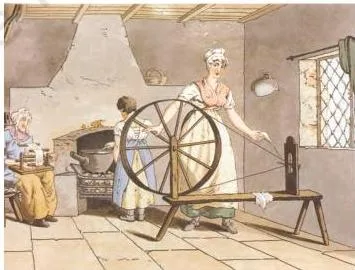
A merchant clothier purchased wool from a wool stapler, carried it to spinners, then passed the yarn through weavers, fullers, and dyers. London served as a finishing centre. At each stage, 20-25 workers were employed per merchant, meaning each clothier controlled hundreds of workers (NCERT, p. 82). This was a commercial network controlled by merchants but produced by family units, not factories.
The Rise of the Factory and the Pace of Industrial Change
The earliest factories in England appeared in the 1730s, though their number multiplied only in the late eighteenth century. Cotton was the first symbol of the new era. Raw cotton imports to Britain rose from 2.5 million pounds in 1760 to 22 million pounds by 1787 (NCERT, p. 82).
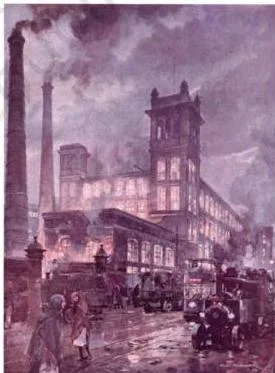
Richard Arkwright created the cotton mill, bringing all production stages under one roof and one management. This allowed careful supervision, quality control, and labour regulation — things difficult when production was scattered across the countryside.
Why Industrialisation Was Slow: Four Key Facts
The pace of change was gradual, not a rapid takeover (NCERT, p. 83–84):
| Point | Detail | Evidence |
|---|---|---|
| Limited modern sector | Traditional industries were not displaced quickly | Less than 20% of the workforce in advanced sectors by the late 19th century |
| Small innovations mattered | Ordinary changes drove growth in food processing, building, pottery, glass work | Non-mechanised sectors grew steadily |
| Machines were expensive | New technology broke down and was costly to repair | Industrialists were cautious about adopting it |
| Steam power limited | Steam engines were not used in most industries till much later | Only 321 steam engines in all of England at the start of the 19th century; 80 in cotton, 9 in wool |
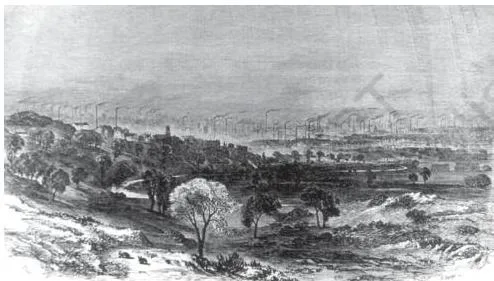
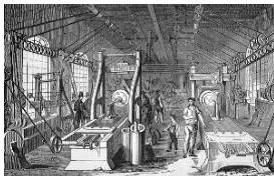
Historians now recognise that the typical mid-nineteenth-century worker was not a machine operator but a traditional craftsperson and labourer (NCERT, p. 84).
Hand Labour and Steam Power in Victorian Britain
Why Industrialists Preferred Human Labour
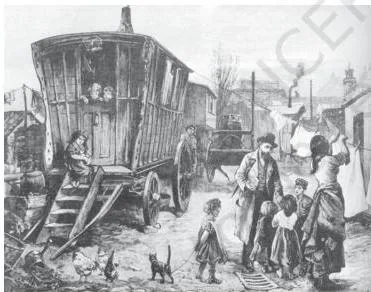
In Victorian Britain, there was no shortage of human labour. Poor peasants and vagrants moved to cities in large numbers, keeping wages low. Industrialists had no reason to invest in machines that eliminated jobs and required large capital.
Several factors kept hand labour alive (NCERT, p. 85–86):
- Seasonal demand: Gas works and breweries were busy in cold months; book-binders and printers needed extra hands before Christmas; ships were repaired at waterfronts in winter.
- Intricate designs: Machines produced standardised goods for mass markets, but demand existed for specific shapes. In mid-nineteenth-century Britain, 500 varieties of hammers and 45 kinds of axes were produced — all requiring human skill.
- Upper-class preference: Aristocrats and the bourgeoisie preferred handmade products, which symbolised refinement. Machine-made goods were for export to the colonies.
Life of the Workers
Getting a job depended on networks of friendship and kin relations. If you had a relative in a factory, you were more likely to secure work quickly. Those without social connections waited weeks, sleeping under bridges or in night shelters and Casual Wards (NCERT, p. 87).
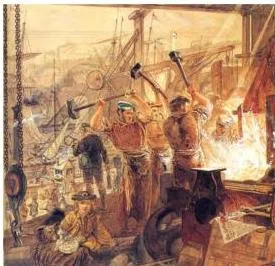
Seasonality meant prolonged unemployment after the busy season. During economic slumps like the 1830s, the proportion of unemployed ranged between 35 and 75 per cent in different regions. Wages rose somewhat in the early nineteenth century, but average figures hide variations between trades and year-to-year fluctuations.
Resistance to Technology: The Spinning Jenny
The Spinning Jenny, devised by James Hargreaves in 1764, speeded up spinning and reduced labour demand. When it was introduced in the woollen industry, women who survived on hand spinning attacked the machines, fearing unemployment (NCERT, p. 87).
After the 1840s, a building boom opened up employment. Roads were widened, railway stations built, tunnels dug, and sewers laid. The number of workers in transport doubled in the 1840s and doubled again in the next 30 years (NCERT, p. 88).
Indian Textiles Before and After Colonial Rule
The Pre-Colonial Textile Trade
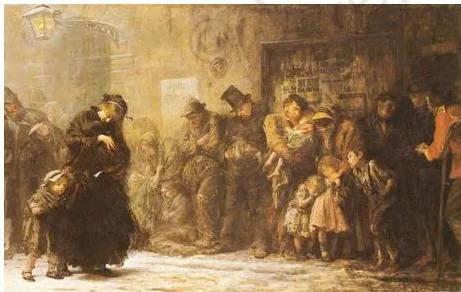
Before machine industries, silk and cotton goods from India dominated international markets. Finer varieties came almost exclusively from India. Armenian and Persian merchants carried goods from Punjab to Afghanistan, eastern Persia, and Central Asia (NCERT, p. 89).
Key pre-colonial ports included:
- Surat (Gujarat coast) — connected India to the Gulf and Red Sea ports.
- Masulipatam (Coromandel coast) — trade with Southeast Asian ports.
- Hoogly (Bengal) — trade with Southeast Asia.
Supply merchants gave advances to weavers, procured woven cloth, and carried it to ports where big shippers and export merchants had brokers who negotiated prices. The gross value of trade through Surat was Rs 16 million in the late seventeenth century; by the 1740s it slumped to Rs 3 million (NCERT, p. 89).
As European companies gained power, the old ports of Surat and Hoogly decayed while Bombay and Calcutta grew — a shift marking the growth of colonial power. Local bankers went bankrupt and old trading houses collapsed.
The Gomastha System vs the Old Supply Merchant System
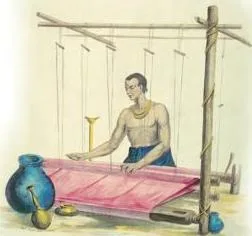
The East India Company established a monopoly over trade after the 1760s. It appointed a paid servant called the gomastha to supervise weavers, collect supplies, and examine cloth quality. The Company also gave loans/advances to weavers; those who accepted had to hand over their cloth to the gomastha and could not sell to any other buyer (NCERT, p. 90–91).
Comparison table: old supply merchant vs the new gomastha system
| Aspect | Old Supply Merchant System | New Gomastha System |
|---|---|---|
| Relationship with weavers | Lived in weaving villages; close social links; helped in crises | Outsiders with no long-term village ties; marched in with sepoys and peons |
| Bargaining power | Weavers could negotiate and sell to the best buyer | Weavers lost bargaining space; prices were fixed and miserably low |
| Loans and control | Advances were a normal part of trade; weavers had flexibility | Loans tied weavers exclusively to the Company; no alternate buyer allowed |
| Behaviour | Looked after weaver needs | Arrogant, punished weavers for delays; often beat and flogged them |
Weavers responded by deserting villages, migrating to places with family connections, revolting alongside village traders, or refusing loans and taking up agricultural labour (NCERT, p. 91).
Manchester Comes to India and the Weavers’ Decline
By the early nineteenth century, Indian textile exports began a long decline. Piece-goods accounted for 33 per cent of India’s exports in 1811–12; by 1850–51, this fell to 3 per cent (NCERT, p. 92). Meanwhile, British cotton piece-goods imports to India rose from virtually nothing to over 31 per cent of import value by 1850, and over 50 per cent by the 1870s.
Weavers faced a dual crisis: the export market collapsed, and the local market shrank as cheap Manchester imports flooded in. Machine-produced goods cost so little that handloom weavers could not compete.
The Raw Cotton Crisis (1860s)
During the American Civil War, cotton supplies from America to Britain were cut off. Britain turned to India for raw cotton. As exports of raw cotton increased, prices shot up, and Indian weavers were starved of supplies and forced to buy raw cotton at exorbitant rates. Weaving could no longer pay (NCERT, p. 93).
Memory Device: P-G-M-C-M
Remember the chronological decline of Indian weavers with this chain:
- P — Port decline (Surat and Hoogly decay as Bombay and Calcutta rise)
- G — Gomastha control (Company monopolises weaver supply)
- M — Manchester imports (local and export markets collapse)
- C — Civil War cotton crisis (raw cotton prices spike during American Civil War)
- M — Indian Mill competition (factories flood the market with machine-goods)
Factories Come Up: Early Entrepreneurs and Mill Workers
The First Mills in India
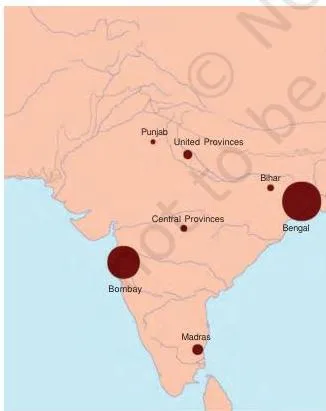
| Year | Mill | Location |
|---|---|---|
| 1854 | First cotton mill (production from 1856) | Bombay |
| 1855 | First jute mill | Bengal |
| 1860s | Elgin Mill | Kanpur (north India) |
| 1861 | First cotton mill | Ahmedabad |
| 1874 | First spinning and weaving mill | Madras |
By 1862, four Bombay mills were at work with 94,000 spindles and 2,150 looms (NCERT, p. 94).
Early Entrepreneurs and Their Capital
Capital came from various trade networks (NCERT, p. 94–95):
| Entrepreneur | Trade Origin | Enterprise |
|---|---|---|
| Dwarkanath Tagore | China trade (opium/tea) | Set up six joint-stock companies in Bengal (1830s–1840s) |
| Dinshaw Petit and J.N. Tata | China exports + raw cotton shipments to England | Huge industrial empires in Bombay |
| Seth Hukumchand | Trade with China | First Indian jute mill in Calcutta (1917) |
| G.D. Birla’s family | Trade with China | Later industrial enterprises |
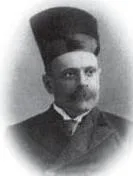
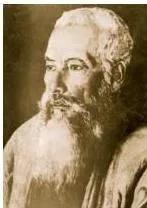
European Managing Agencies (such as Bird Heiglers & Co., Andrew Yule, and Jardine Skinner & Co.) controlled a large sector of Indian industries till the First World War. Indian financiers provided the capital but European agencies made all investment decisions. Indian businessmen were barred from European chambers of commerce.
The Jobber System: Recruitment and Exploitation
In 1901, there were 584,000 factory workers in India; by 1946 the number exceeded 2,436,000 (NCERT, p. 95). Workers came mainly from nearby districts — over 50% of Bombay cotton mill workers in 1911 came from Ratnagiri. Workers travelled great distances as news of jobs spread.
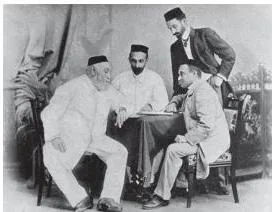
Industrialists employed a jobber — an old, trusted worker — to recruit new hands. The jobber brought people from his own village, ensured them jobs, helped them settle, and provided money in crises. Over time, the jobber became powerful, demanding money and gifts for favours and controlling workers’ lives (NCERT, p. 96).
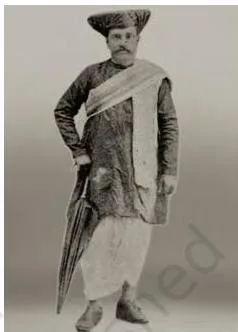
Real-life application: The jobber’s role mirrors modern informal labour recruitment networks. In today’s unorganised sectors — construction, brick kilns, and textile subcontracting — a contractor or middleman brings workers from his home village, arranges their employment, and then extorts commissions or favours. The dependency chain, from worker to middleman to employer, echoes the colonial mill jobber’s grip over recruited labour.
Peculiarities of Industrial Growth and Small-Scale Survival
The Shift from Yarn to Cloth
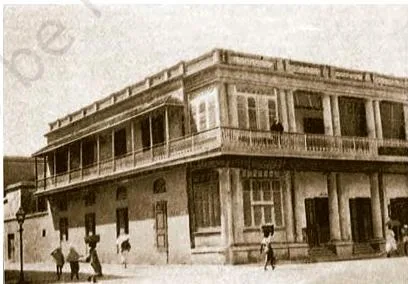
European Managing Agencies invested in tea, coffee plantations, mining, indigo, and jute — products mainly for export, not for Indian sale (NCERT, p. 97). When Indian businessmen set up industries, they avoided competing with Manchester in the cloth market. The early cotton mills produced coarse cotton yarn rather than fabric, which handloom weavers in India used or was exported to China.
From 1906, Indian yarn exports to China declined as Chinese and Japanese mills flooded that market. Indian industrialists then shifted from yarn to cloth. Cotton piece-goods production in India doubled between 1900 and 1912. The Swadeshi movement (from 1905) mobilised people to boycott foreign cloth and pressurised the government for tariff protection.
The First World War Boom
The war created a new situation. British mills were busy with war production; Manchester imports to India declined. Indian factories supplied jute bags, army uniform cloth, tents, leather boots, and saddles. Production boomed; new factories were set up and old ones ran multiple shifts (NCERT, p. 97). After the war, Manchester could never recapture its old position.
Small-Scale Industries Predominate: Why Handloom Survived
Misconception autopsy: Many students believe factories wiped out hand production. The evidence shows otherwise — only 5 per cent of the total industrial labour force worked in registered factories in 1911; even by 1931, this was just 10 per cent (NCERT, p. 98). The rest worked in small workshops and household units. Handloom cloth production almost trebled between 1900 and 1940.
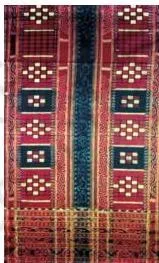
Weavers adopted new technology that improved production without raising costs excessively. The most important innovation was the fly shuttle, a mechanical device using ropes and pulleys to place the horizontal weft threads into vertical warp threads. By 1941, over 35 per cent of handlooms in India were fitted with fly shuttles.
In regions like Travancore, Madras, Mysore, Cochin, and Bengal the proportion was 70 to 80 per cent (NCERT, p. 98).
Certain weaves survived because mills could not imitate them. Saris with woven borders, Banarasi and Baluchari saris, and the famous lungis and handkerchiefs of Madras could not be easily displaced.
Creating a Market for Goods: Labels, Calendars, and Ads
Advertisements have been used since the beginning of the industrial age to expand markets and shape consumer culture (NCERT, p. 100).
| Tool | Purpose | Key Feature |
|---|---|---|
| Labels | Mark of quality; familiarised buyers with the manufacturer’s name | ‘MADE IN MANCHESTER’ written in bold; carried images of Indian gods and historic figures |
| Calendars | Popularised products even among illiterate people | Hung in tea shops and poor people’s homes; users saw the advertisement day after day all year |
| Advertisements | Made products appear desirable and necessary | Used images of gods, emperors, and nawabs to give products divine or royal approval |
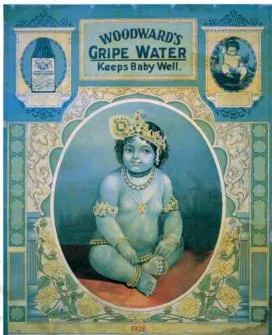
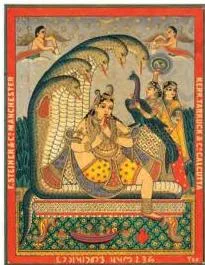
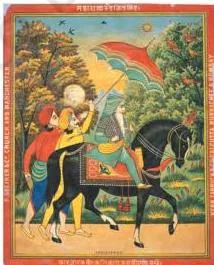
When Indian manufacturers began advertising, the nationalist message was clear: if you care for the nation, buy products Indians produce. Advertisements became a vehicle of the Swadeshi message (NCERT, p. 101).
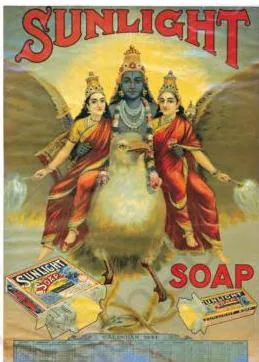
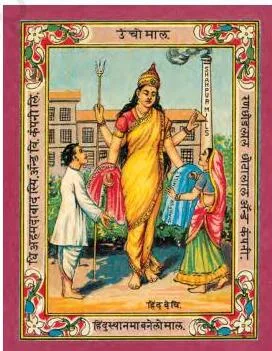
Key Definitions and Concepts Table
| Term | Meaning | Application / Example |
|---|---|---|
| Orient | Countries east of the Mediterranean; a western viewpoint term for Asia as pre-modern and mysterious | The Aladdin image in Fig. 2 represents the Orient and the past |
| Proto-industrialisation | Large-scale production for international markets before factories existed | Merchants supplying peasants in the 17th-18th century countryside |
| Stapler | A person who sorts wool according to its fibre | The wool stapler sold wool to the merchant clothier |
| Fuller | A person who gathers cloth by pleating | One stage in the proto-industrial production chain |
| Carding | The process of preparing cotton or wool fibres prior to spinning | A step depicted in the Lancashire cotton mill image |
| Spinning Jenny | Devised by James Hargreaves in 1764; sped up spinning and reduced labour demand | Women attacked the machine fearing job loss in the woollen industry |
| Sepoy | British pronunciation of sipahi, an Indian soldier in British service | Gomasthas marched into weaving villages with sepoys and peons |
| Gomastha | A paid Company servant who supervised weavers and collected supplies | The East India Company used gomasthas to monopolise the cloth trade |
| Fly shuttle | A mechanical device using ropes and pulleys to place weft threads into warp threads | By 1941, over 35% of Indian handlooms used it; 70-80% in Travancore/Madras |
Common Mistakes to Avoid in History Exams
| Mistake | Correct rule | How to check your answer |
|---|---|---|
| Writing that factories ended all hand production | Hand production survived and even expanded — the fly shuttle and 1931 stats prove small-scale dominance | Mention that only 10% of the workforce was in registered factories by 1931 |
| Writing that British rule helped Indian weavers | British rule collapsed exports and local markets via Manchester imports and the gomastha system | Cite the piece-goods export drop from 33% to 3% |
| Confusing the jobber with a paid Company servant | The gomastha was the Company servant; the jobber was a mill recruiter who often exploited workers | Use ‘Company servant’ for gomastha and ‘old trusted worker’ for jobber |
| Assuming steam power was instantly adopted | Adoption was slow due to high cost and abundant cheap labour | Quote that there were only 321 steam engines in all of England at the start of the 19th century |
Exam Notes: How to Frame Your Answers
- 5-mark answers on Indian weavers should follow the chronology: pre-colonial prosperity $ ightarrow$ gomastha control $ ightarrow$ Manchester imports $ ightarrow$ WWI changes. Writing events in this sequence shows the examiner you understand cause and effect, not just isolated facts.
- Anchor your arguments with specific dates and figures. Citing 1854 (first Bombay mill), 1900 (start of the Swadeshi period), 1811-12 to 1850-51 (33% to 3% export drop), or 1911 (5% factory workforce) earns full marks because it proves you read the chapter carefully.
- Questions on ‘Why hand labour was preferred’ require four distinct points: (i) abundant cheap labour, (ii) seasonal demand in many industries, (iii) intricate designs needing human skill, and (iv) upper-class preference for handmade goods. Missing any of these four points costs a mark.
- Questions on the gomastha system must include: the role (supervisor and collector), the advance/loan system, the loss of weaver bargaining power, and the clashes or desertions that followed. Simply writing “the Company controlled weavers” is too vague for a 5-mark question.
- Distinguish between the concepts of ‘industrialisation’ and ‘factory production’. Examiners reward answers that note how the chapter demonstrates production outside factories — proto-industrialisation and small-scale workshops — as integral parts of the industrial story.
Quick Revision Recap
- Proto-industrialisation: Merchants used rural peasant and artisan labour for international markets before factories existed; guilds restricted town expansion.
- Slow factory growth in Britain: Less than 20% workforce in advanced sectors; only 321 steam engines at the start of the 19th century; small innovations drove many sectors.
- Hand labour preferred over machines: Cheap labour, seasonal demand, intricate designs (500 hammers, 45 axes), and upper-class preference kept hand production alive.
- Indian textile decline: Surat and Hoogly decayed; Bombay and Calcutta grew; the gomastha system and advances tied weavers to the Company.
- Manchester imports: Piece-goods exports fell from 33% to 3%; imports rose from nil to over 50%; American Civil War caused raw cotton price spikes.
- First Indian mills: Bombay cotton (1854), Bengal jute (1855), Ahmedabad (1861), Madras (1874); entrepreneurs like Dwarkanath Tagore, Dinshaw Petit, J.N. Tata, Seth Hukumchand.
- Jobber system: Old trusted workers recruited from their villages; later demanded money and gifts and controlled workers’ lives.
- Swadeshi and WWI: Indian mills shifted from yarn to cloth; war boom gave Indian factories a vast home market; Manchester never recovered its old position.
- Small-scale survival: Only 5% in factories (1911), 10% (1931); fly shuttle used on 35% of handlooms by 1941; handloom production trebled between 1900 and 1940.
- Advertisements: Labels assured quality; calendars reached illiterate people; Indian ads became vehicles for Swadeshi nationalism.
Frequently Asked Questions
Why did women attack the Spinning Jenny if it made work faster?
The Spinning Jenny, devised by James Hargreaves in 1764, speeded up the spinning process but dramatically reduced the demand for labour. Women who survived on hand spinning feared unemployment. When the machine was introduced in the woollen industry, they attacked it because it threatened their livelihood — faster production was not beneficial to them if it meant losing their source of income.
How did the gomastha system differ from the old supply merchant system?
Old supply merchants lived within weaving villages, had close social ties with weavers, helped them in crises, and allowed weavers to bargain and sell to different buyers. The gomastha was an outsider appointed by the Company, marched into villages with sepoys, offered loans that tied weavers exclusively to the Company, fixed low prices, and punished weavers for delays.
The fundamental shift was from a relationship-based system to a coercive, monopoly-controlled one.
Why didn’t Indian handloom weavers disappear in the 20th century?
Weavers survived because they adopted new technology like the fly shuttle (used on 35% of handlooms by 1941), produced intricate designs that mills could not imitate (saris with woven borders, Banarasi and Baluchari saris, Madras lungis and handkerchiefs), and catered to demand for fine varieties bought by the well-to-do, which remained stable even during famines. Handloom cloth production almost trebled between 1900 and 1940.
What was the role of the jobber in Indian factories?
The jobber was an old and trusted worker employed by industrialists to recruit new workers. He brought people from his own village, ensured them jobs, helped them settle in the city, and provided money in times of crisis.
Over time, the jobber used his position of power to demand money and gifts for his favours and to control the lives of workers — a role that mirrors modern informal labour recruitment and contractor exploitation in unorganised sectors.
Reference: NCERT Class 10 History textbook, chapter The Age of Industrialisation. Students can access the official online NCERT textbook for verification and further reading at ncert.nic.in.
Explore Class 10 History Notes
Class 10 History on LearnCBSE:
Related chapters: