
These nationalism in india class 10 notes help you revise the full chapter for the 2026-27 board exam. A shared struggle against colonialism united diverse groups across India — but each group interpreted freedom differently, and the unity repeatedly broke down under that weight.
The Congress under Mahatma Gandhi tried to forge peasants, workers, tribals, business classes, and professionals into one national movement. Each class felt colonial oppression in its own way, so swaraj meant different things to different people. Understanding those differing meanings is the key to scoring well in this chapter.
Chapter Overview: Movements, Groups, and Limits
The story picks up from the 1920s — after the First World War had deepened anger against British rule. Three major threads run through the chapter, and each one builds on the last.
| Movement / Theme | Years | Core idea |
|---|---|---|
| Non-Cooperation–Khilafat | 1921–1922 | Withdraw cooperation from British institutions; linked with the Khilafat issue to unite Hindus and Muslims |
| Civil Disobedience | 1930–1934 | Not just refuse cooperation — actively break colonial laws (starting with the salt law) |
| Sense of Collective Belonging | 1870s–1930s | Cultural symbols (Bharat Mata, Vande Mataram, flags, folklore, history) built a shared national identity |
| Quit India | 1942 | Final mass struggle demanding immediate British withdrawal; Gandhi’s “Do or Die” call |
For a broader view of the subject, our Class 10 History notes page collects every chapter. If you want to trace how nationalism arrived in Europe first, see the Rise of Nationalism in Europe notes. The global economic forces behind these decades are covered in the Making of a Global World notes.
You can also return to the Class 10 notes hub or the main CBSE notes index.
The First World War and the Khilafat–Non-Cooperation Link
The war years created widespread economic misery. Defence expenditure jumped sharply, financed by war loans and higher taxes. Customs duties rose and income tax was introduced. Prices nearly doubled between 1913 and 1918, pushing common people into hardship (NCERT, p. 2).
Villages bore an extra burden: forced recruitment into the army caused deep anger in rural India. Two successive crop failures (1918-19 and 1920-21) brought food shortages. The influenza epidemic followed. According to the 1921 census, 12 to 13 million people died from famines and the epidemic combined.
How Gandhi linked Khilafat with Non-Cooperation
The First World War ended with the defeat of Ottoman Turkey. Rumours spread that a harsh treaty would strip the Ottoman emperor — the Khalifa (spiritual head of the Islamic world) — of his temporal powers.
- March 1919: A Khilafat Committee was formed in Bombay to defend the Khalifa’s powers.
- The Ali brothers — Muhammad Ali and Shaukat Ali — discussed united mass action with Gandhi.
- Gandhi saw the Khilafat issue as an opportunity to bring Muslims into a unified national movement (NCERT, p. 3).
- September 1920: At the Calcutta Congress session, Gandhi convinced leaders to start non-cooperation in support of Khilafat and for swaraj.
- December 1920: The Nagpur Congress session formally adopted the Non-Cooperation programme.
In Hind Swaraj (1909), Gandhi argued that British rule survived only because Indians cooperated with it. If Indians refused to cooperate, the system would collapse — and swaraj would come.
The Idea of Satyagraha and the Rowlatt Act Outrage
Gandhi returned to India from South Africa in January 1915. In South Africa, he had developed a method of mass agitation he called satyagraha — literally, holding firmly to truth (NCERT, p. 2). The core idea: if the cause is just and the struggle is against injustice, physical force is unnecessary.
A satyagrahi wins by appealing to the oppressor’s conscience, not by inflicting pain.
Gandhi’s early satyagraha movements in India
- 1917 — Champaran (Bihar): peasants struggle against the oppressive indigo plantation system.
- 1918 — Ahmedabad (Gujarat): satyagraha among cotton mill workers.
- 1918 — Kheda (Gujarat): peasants affected by crop failure and plague demanded relaxation of revenue collection.
The Rowlatt Act and Jallianwala Bagh
In 1919, Gandhi launched a nationwide satyagraha against the proposed Rowlatt Act (1919). Passed hurriedly through the Imperial Legislative Council against the united opposition of Indian members, the Act allowed the government to detain political prisoners without trial for two years (NCERT, p. 3).
The hartal was fixed for 6 April 1919. Rallies were organised, workers struck, and shops closed. The British administration responded by clamping down — local leaders were arrested in Amritsar, and Gandhi was barred from entering Delhi.
10 April 1919: Police fired on a peaceful procession in Amritsar. The crowd attacked banks, post offices, and railway stations. Martial law was imposed, and General Dyer took command.
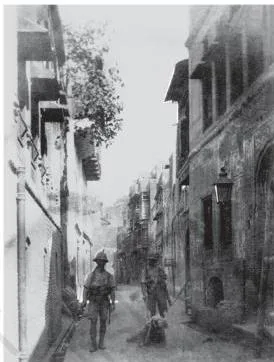
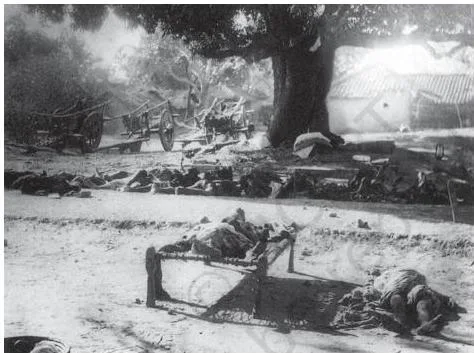
13 April 1919: The Jallianwala Bagh massacre. A large crowd — some protesting, others attending the annual Baisakhi fair — gathered in the enclosed ground. Many villagers from outside the city did not know martial law had been declared. Dyer blocked the exit points and opened fire, killing hundreds.
His stated object: to produce a moral effect — to create a feeling of terror and awe in satyagrahis’ minds (NCERT, p. 3).
As news spread, crowds clashed with police across north Indian towns. The government responded with brutal repression — satyagrahis were forced to rub noses on the ground, crawl on streets, and salute sahibs; people were flogged; villages around Gujranwala were bombed. Seeing the violence spread, Gandhi called off the movement.
Key Definitions from the National Movement
These terms recur throughout the chapter. Learn the meaning, not just the word — exam questions often frame the definition indirectly.
| Term | Meaning | Context in the chapter |
|---|---|---|
| Forced recruitment | The colonial state forcing people to join the army | Caused widespread anger in villages during World War I (p. 2) |
| Satyagraha | A non-violent method of mass agitation; winning the oppressor over by truth and conscience, not force | Gandhi’s core method, first used in South Africa, then at Champaran, Kheda, Ahmedabad |
| Boycott | Refusal to deal with people, participate in activities, or buy and use things, as a form of protest | Used for foreign goods, British schools, courts, councils |
| Picket | A form of demonstration where people block the entrance to a shop, factory, or office | Liquor shops and foreign cloth shops were picketed during Non-Cooperation |
| Begar | Labour that villagers were forced to contribute without any payment | Awadh peasants demanded its abolition; Gudem hill people revolted against begar for road building |
| Purna Swaraj | Complete independence for India | Formally demanded at the Lahore Congress, December 1929; 26 January 1930 declared Independence Day |
Differing Strands: How Different Groups Saw Swaraj
The Non-Cooperation–Khilafat Movement began in January 1921. Each social group that joined had its own aspiration — all responded to the call of swaraj, but swaraj meant different things to different people (NCERT, p. 6). This comparison is the central exam question of the chapter.
What swaraj meant to four groups
| Group | What they wanted | Why they joined | Why the movement slowed or failed for them |
|---|---|---|---|
| Towns — middle class (students, lawyers, teachers) | Boycott of British schools, courts, councils, and foreign goods | Resented colonial economic and cultural domination | Khadi was too expensive for the poor; alternative Indian institutions were slow to come up; people trickled back to British schools and courts (p. 6) |
| Awadh — peasants (led by Baba Ramchandra) | Reduction of revenue, abolition of begar, social boycott of oppressive landlords | Talukdars and landlords charged exorbitant rents and cesses; peasants had no security of tenure | The movement turned violent — houses of talukdars were attacked, bazaars looted, grain hoards seized. Congress leadership was unhappy with these forms (p. 6–7) |
| Gudem Hills — tribals (led by Alluri Sitaram Raju) | Access to forests for grazing, fuelwood, and fruits; end of begar for road building; swaraj through force | Colonial government closed forest areas, denying traditional rights; livelihoods were affected | Raju believed force, not non-violence, would liberate India. He led guerrilla warfare, attacked police stations. Captured and executed in 1924 (p. 8–9) |
| Assam — plantation workers | Right to move freely in and out of the tea gardens; to retain a link with their home villages; to get land under “Gandhi Raj” | Under the Inland Emigration Act of 1859, they could rarely leave the plantations | Thousands defied authorities and headed home, believing Gandhi Raj would give them land. Stranded by a railway and steamer strike, caught by police and beaten (p. 8) |
Despite these divergent visions, when tribals chanted Gandhi’s name or raised slogans of Swatantra Bharat, they were relating emotionally to an all-India agitation.
Chauri Chaura: why Gandhi called off the movement
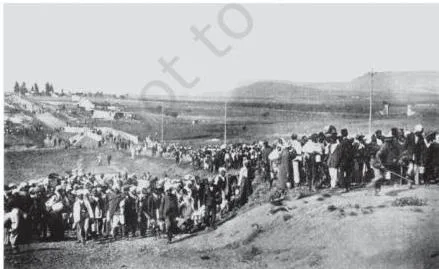
At Chauri Chaura in Gorakhpur (February 1922), a peaceful demonstration in a bazaar turned into a violent clash with the police. Hearing of the incident, Gandhi called a halt to the Non-Cooperation Movement. He felt the movement was turning violent and satyagrahis needed proper training before mass struggles (NCERT, p. 9–10).
Towards Civil Disobedience: Simon Commission to Salt March
After Non-Cooperation was withdrawn in February 1922, the Congress split over how to proceed.
| Faction | Leaders | Approach |
|---|---|---|
| Swaraj Party | C. R. Das, Motilal Nehru | Return to council politics — oppose British policies from within the provincial councils |
| Radicals | Jawaharlal Nehru, Subhas Chandra Bose | Press for more radical mass agitation and full independence |
The Simon Commission and the Lahore Congress
1928 — Simon Commission: The British government set up a Statutory Commission under Sir John Simon to review the constitutional system and suggest changes. The problem: not a single Indian member (NCERT, p. 10). When it arrived, it was greeted with the slogan “Go back Simon” — all parties, including Congress and the Muslim League, demonstrated.
December 1929 — Lahore Congress: Under Jawaharlal Nehru’s presidency, the Congress formalised the demand of Purna Swaraj — complete independence. 26 January 1930 was declared Independence Day, when people were to pledge to struggle for complete independence. The celebrations attracted little attention, so Gandhi needed a way to connect the abstract idea of freedom to concrete everyday issues.
The Salt March (1930)
Gandhi found in salt a powerful symbol that could unite the nation. On 31 January 1930, he sent a letter to Viceroy Irwin listing eleven demands (NCERT, p. 11). The demands were wide-ranging so that all classes could identify with them. The most stirring: abolish the salt tax.
Salt was consumed by rich and poor alike, and the government monopoly over its production revealed the most oppressive face of British rule.
If the demands were not met by 11 March, the letter stated, the Congress would launch civil disobedience. Irwin would not negotiate.
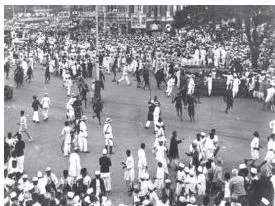
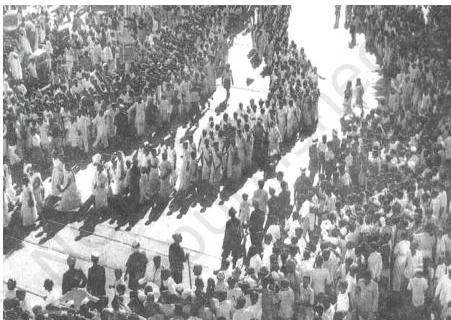
- 12 March 1930: Gandhi began the march from Sabarmati ashram to the coastal town of Dandi in Gujarat.
- 78 volunteers accompanied him; thousands joined on the way.
- Distance: 240 miles; duration: 24 days (about 10 miles a day).
- 6 April 1930: Gandhi reached Dandi and ceremonially violated the law by manufacturing salt from sea water.
This marked the beginning of the Civil Disobedience Movement. Unlike Non-Cooperation, people were now asked not just to refuse cooperation but also to actively break colonial laws — salt law, forest laws, revenue payment, and chaukidari taxes (NCERT, p. 11–12).
Gandhi-Irwin Pact and the Second Round Table
The government arrested Congress leaders one by one. Abdul Ghaffar Khan’s arrest in April 1930 led to violent crowds in Peshawar. Gandhi’s own arrest sparked industrial workers’ attacks in Sholapur on police posts, courts, and railway stations. About 100,000 people were arrested (NCERT, p. 12).
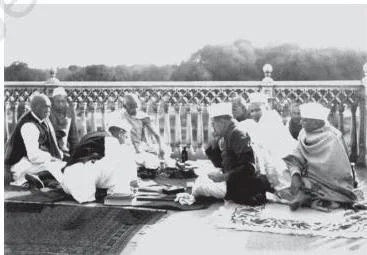
5 March 1931 — Gandhi-Irwin Pact: Gandhi called off the movement and agreed to attend the Second Round Table Conference in London; the government agreed to release political prisoners.
December 1931: Gandhi went to London, but the negotiations broke down. He returned to find a new cycle of repression — Ghaffar Khan and Nehru were in jail, the Congress declared illegal. Gandhi relaunched the Civil Disobedience Movement, which continued for over a year but lost momentum by 1934.
Civil Disobedience: Who Joined, Who Stayed Away
Who joined the movement
| Group | What they wanted | Why they participated or withdrew |
|---|---|---|
| Rich peasants (Patidars of Gujarat, Jats of UP) | Reduction of revenue demand | Hard hit by trade depression and falling prices; cash income disappeared. Disappointed when the movement was called off without revenue revision; many refused to rejoin in 1932 (p. 13) |
| Business class | Protection against imports; favourable rupee-sterling ratio; end of colonial restrictions on trade | Formed FICCI (1927); leaders like G. D. Birla and Purshottamdas Thakurdas financed the movement. Withdrew after the Round Table failure, fearing prolonged disruption and socialism’s influence (p. 14) |
| Women | To serve the nation as a sacred duty | Participated on a large scale — marched, manufactured salt, picketed shops, went to jail. But the Congress was reluctant to give women authority within the organisation; it wanted only their symbolic presence (p. 14–15) |
Memory device: think of the business class as investors in the movement — they gave money when trade restrictions hurt them and pulled back when they feared loss. Rich peasants were weather-hit farmers — they wanted revenue cuts, and when the cuts did not come, they left. Women were visible but voiceless — present in the crowd but absent from decision-making.
Who stayed away: dalits and Muslims
| Group | Key figures and events | Why they stayed away |
|---|---|---|
| Dalits | Dr. B. R. Ambedkar formed the Depressed Classes Association (1930); demanded separate electorates at the Second Round Table Conference. Poona Pact (September 1932) — Ambedkar accepted reserved seats voted in by the general electorate, not separate electorates (p. 15–16) | Congress had long ignored dalits for fear of offending sanatanis (conservative high-caste Hindus). Gandhi called untouchables harijan and cleaned toilets, but Ambedkar wanted political empowerment through reserved seats, believing that would solve social disabilities |
| Muslims | After Khilafat declined, Muslims felt alienated from Congress. From the mid-1920s, Congress appeared linked with Hindu Mahasabha. Muhammad Ali Jinnah was willing to give up separate electorates if Muslims got reserved seats in the Central Assembly and proportionate representation in Muslim-dominated provinces — but M. R. Jayakar of the Hindu Mahasabha opposed compromise at the 1928 All Parties Conference (p. 16–17) | Atmosphere of suspicion and distrust between communities. Muslim leaders feared the culture and identity of minorities would be submerged under Hindu majority domination |
The official textbook PDF is available for reference on the NCERT India and the Contemporary World–II Chapter 2 page.
The Sense of Collective Belonging: Symbols and Images of the Nation
Nationalism spreads when people believe they belong to the same nation. Alongside the experience of united struggles, cultural processes built this sense of collective belonging (NCERT, p. 18).
Visualising the nation: Bharat Mata and Vande Mataram
- 1870s: Bankim Chandra Chattopadhyay wrote Vande Mataram as a hymn to the motherland.
- It was later included in his novel Anandamath and widely sung during the Swadeshi movement in Bengal.
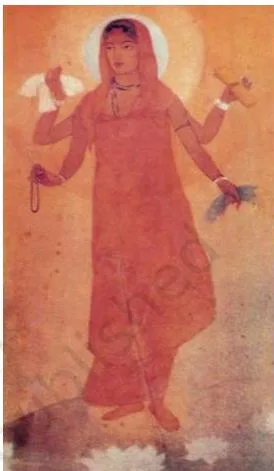
- 1905: Abanindranath Tagore painted his famous Bharat Mata as an ascetic, calm, divine figure dispensing learning, food, and clothing (p. 19).
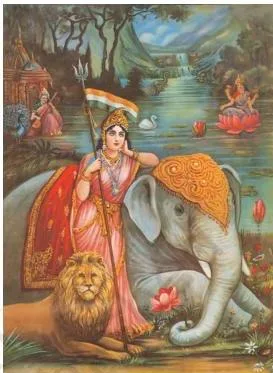
- Subsequent artists gave her different forms — one version showed her with a trishul, standing beside a lion and an elephant, symbols of power and authority (p. 20).
- Devotion to the mother figure came to be seen as evidence of nationalism.
Reviving folklore
Nationalists toured villages collecting folk tales, ballads, and myths, believing these captured the true culture damaged by outside forces.
- Rabindranath Tagore collected ballads, nursery rhymes, and myths in Bengal, leading the folk revival movement.
- Natesa Sastri published a four-volume collection, The Folklore of Southern India, in Madras, describing folklore as “the most trustworthy manifestation of people’s real thoughts and characteristics” (p. 19).
Flags as symbols of defiance
| Flag | Year | Description |
|---|---|---|
| Swadeshi flag | Swadeshi movement in Bengal | Tricolour (red, green, yellow); eight lotuses for eight British-Indian provinces; crescent moon representing Hindus and Muslims |
| Gandhi’s Swaraj flag | 1921 | Tricolour (red, green, white) with a spinning wheel in the centre — representing the Gandhian ideal of self-help |
Carrying the flag aloft during marches became a symbol of defiance.
Reinterpreting history
By the late nineteenth century, Indians began looking to a glorious past — ancient achievements in art, science, mathematics, religion, philosophy, crafts, and trade — followed by decline under colonisation. These histories aimed to instil pride and urge struggle against British rule.
But when the glorified past was Hindu and the images were drawn from Hindu iconography, people of other communities felt left out (p. 20).
The limitation of cultural nationalism
The very symbols that unified people — Bharat Mata painted as a Hindu goddess, Vande Mataram as a hymn, a glorified Hindu past — also created distance. Muslim and dalit communities felt excluded from a nationalism that used Hindu imagery. This is why cultural nationalism, no matter how inspiring, could not fully unite all communities.
Quit India Movement: The Final Mass Struggle
The failure of the Cripps Mission and the hardships of World War II created widespread discontentment. Gandhi launched a movement calling for the immediate and complete withdrawal of the British from India (NCERT, p. 21).
| Date | Event |
|---|---|
| 14 July 1942 | Congress Working Committee meeting in Wardha passed the historic Quit India resolution, demanding immediate transfer of power to Indians |
| 8 August 1942 | All India Congress Committee in Bombay endorsed the resolution; Gandhi delivered the famous “Do or Die” speech |
The call almost brought state machinery to a standstill across large parts of the country. People observed hartals, demonstrations, and processions with national songs and slogans. The movement saw active participation of:
- Leaders: Jayprakash Narayan, Aruna Asaf Ali, Ram Manohar Lohia.
- Women: Matangini Hazra (Bengal), Kanaklata Barua (Assam), Rama Devi (Odisha).
- Ordinary people: thousands of students, workers, and peasants joined.
The British responded with force, yet it took more than a year to suppress the movement.
Movement Timeline: Key Dates That Recur in Exams
This timeline combines the chapter’s date box with other key dates. Memorise it for quick recall in the exam.
| Date / Year | Event |
|---|---|
| 1915 | Gandhi returns to India from South Africa |
| 1917 | Champaran satyagraha (Bihar peasants) |
| 1918 | Ahmedabad mill workers satyagraha; Kheda peasants satyagraha |
| 1918-19 | Distressed Awadh peasants organised by Baba Ramchandra |
| April 1919 | Rowlatt Act hartal (6 April); Jallianwala Bagh massacre (13 April) |
| March 1919 | Khilafat Committee formed in Bombay |
| September 1920 | Calcutta Congress session — Gandhi proposes Non-Cooperation |
| January 1921 | Non-Cooperation and Khilafat movement launched |
| December 1920 | Nagpur Congress adopts Non-Cooperation programme |
| February 1922 | Chauri Chaura incident — Gandhi withdraws Non-Cooperation |
| May 1924 | Alluri Sitaram Raju arrested (executed), ending the two-year Gudem Hills armed struggle |
| 1928 | Simon Commission arrives — “Go back Simon” |
| December 1929 | Lahore Congress — Purna Swaraj demand adopted; 26 January 1930 declared Independence Day |
| 31 January 1930 | Gandhi sends eleven demands to Viceroy Irwin (ultimatum letter) |
| 12 March – 6 April 1930 | Salt March from Sabarmati to Dandi; Civil Disobedience begins |
| 1930 | Ambedkar establishes Depressed Classes Association |
| 5 March 1931 | Gandhi-Irwin Pact — Civil Disobedience called off |
| December 1931 | Second Round Table Conference in London (breaks down) |
| September 1932 | Poona Pact — reserved seats for Depressed Classes, voted by general electorate |
| 1932 | Civil Disobedience re-launched (loses momentum by 1934) |
| 14 July 1942 | Congress Working Committee at Wardha passes Quit India resolution |
| 8 August 1942 | AICC Bombay endorses Quit India; Gandhi’s “Do or Die” speech |
Common Mistakes Students Make in This Chapter
| Mistake | Correct rule | How to check your answer |
|---|---|---|
| Writing the Salt March was part of Non-Cooperation | Salt March (March–April 1930) launched Civil Disobedience. Non-Cooperation was 1921–22. | Check the year: Non-Cooperation = 1921; Civil Disobedience = 1930. Never the same. |
| Saying all Muslims supported Civil Disobedience | Large sections of Muslims were alienated from Congress after Khilafat declined, especially as Congress appeared linked with the Hindu Mahasabha. | Always mention the “stayed away” side in any answer about who participated. |
| Confusing the Swaraj Party with the Swaraj flag | The Swaraj Party was formed by C. R. Das and Motilal Nehru to enter councils. The Swaraj flag was designed by Gandhi in 1921 (red, green, white; spinning wheel). | Ask: is the answer about a political group or a symbol? One is a party, the other is a flag. |
| Writing the Poona Pact gave separate electorates | The Poona Pact (September 1932) gave reserved seats for Depressed Classes voted in by the general electorate — NOT separate electorates. Ambedkar had demanded separate electorates but conceded to Gandhi’s fast. | If your answer says “separate electorate” for the Poona Pact, change it to “reserved seats”. |
| Mixing up Jallianwala Bagh (1919) with Chauri Chaura (1922) | Jallianwala Bagh was British firing on a civilian crowd (13 April 1919). Chauri Chaura was an Indian crowd clashing with police (February 1922) — after which Gandhi withdrew Non-Cooperation. | 1919 = British violence against Indians; 1922 = Indian violence against British — and Gandhi withdrew because of the latter. |
| Writing that women got leadership roles in Congress | Women participated on a large scale, but the Congress kept them to symbolic presence — it was reluctant to allow women positions of authority in the organisation. | Use the exact phrase “symbolic presence”. |
Exam Notes: How Questions Are Usually Framed
Examiner mindset: this chapter tests whether you can connect a movement to the specific motivation of each social group. Naming the group is worth half a mark; naming their specific demand earns the rest.
Observed question patterns
- “Why did different social groups join…?” — this question recurs for both Non-Cooperation and Civil Disobedience. Always name the group + their specific demand. For Non-Cooperation: townspeople (boycott foreign goods), Awadh peasants (revenue reduction, end of begar), Gudem tribals (forest rights), Assam plantation workers (freedom of movement). For Civil Disobedience: rich peasants (revenue reduction), business class (protection against imports), women (duty to nation).
- Salt March “effective symbol” — a standard 5-marker. Mention: salt consumed by rich and poor alike; government monopoly over production; breaking the salt law was a visible act of defiance that everyone could understand. Cite the eleven demands and the 241-mile march from Sabarmati to Dandi.
- “Limits of Civil Disobedience” — almost always asks about dalits and Muslims. Mention Ambedkar, Depressed Classes Association (1930), Poona Pact (September 1932), Jinnah, Hindu Mahasabha, and the fear of Hindu majority domination. Use the word “alienated”.
- Source-based questions — Gandhi’s satyagraha quote (p. 3) or the Independence Day Pledge (p. 11) appear as source passages. Read the passage first, then link it to the movement it belongs to.
- “Why growth of nationalism is linked to anti-colonial movement” — a common 3-marker (Q1a, p. 22). Answer: a shared opposition to colonialism provided a bond; different groups found unity in the struggle itself.
- “Why did Gandhi withdraw Non-Cooperation after Chauri Chaura?” — a common 3-marker. State that the movement turned violent and satyagrahis needed proper training before mass struggles.
Revision Recap: What to Remember the Night Before
- Non-Cooperation (1921–22): WWI anger → Rowlatt Act (1919) → Jallianwala Bagh (13 April 1919) → Khilafat link to unite Hindus and Muslims → Calcutta session (Sept 1920) and Nagpur adoption (Dec 1920) → different groups joined with different swaraj meanings → Chauri Chaura (Feb 1922) → Gandhi called off the movement.
- Civil Disobedience (1930–34): Simon Commission (1928, no Indian member) → Lahore Congress Purna Swaraj (Dec 1929) → 26 January 1930 Independence Day → Salt March (12 March–6 April 1930) → rich peasants, business class, and women joined → dalits and Muslims largely stayed away → Gandhi-Irwin Pact (5 March 1931) → relaunched in 1932 → lost momentum by 1934.
- Limits: Dalits — Ambedkar’s Depressed Classes Association (1930), separate electorates demanded, Poona Pact (Sept 1932) gave reserved seats voted by general electorate. Muslims — alienated after Khilafat, Hindu Mahasabha link, Jinnah’s demands rejected at 1928 conference.
- Collective belonging: Bharat Mata (Bankim Chandra, Abanindranath Tagore 1905), Vande Mataram (1870s), folklore revival (Rabindranath Tagore in Bengal, Natesa Sastri in Madras), Swadeshi flag (8 lotuses, crescent), Gandhi’s Swaraj flag (1921, spinning wheel), history reinterpretation. Limitation: Hindu imagery excluded other communities.
- Quit India (1942): Cripps Mission failure → Wardha resolution (14 July 1942) → AICC Bombay “Do or Die” (8 August 1942) → mass participation (Jayprakash Narayan, Aruna Asaf Ali, Ram Manohar Lohia, Matangini Hazra, Kanaklata Barua, Rama Devi) → British suppressed it in over a year.
Frequently Asked Questions on Nationalism in India
Why is the growth of nationalism in India linked to the anti-colonial movement?
People discovered their unity through the struggle against colonialism itself. The shared experience of oppression provided a bond that tied diverse groups together, even though each felt colonialism differently. The anti-colonial movement was the space where this bond became visible and organised (NCERT, p. 1).
Why did Gandhi call off the Non-Cooperation Movement after the Chauri Chaura incident?
At Chauri Chaura (February 1922), a peaceful demonstration turned violent and clashed with the police. Gandhi felt the movement was turning violent in many places and that satyagrahis needed proper training before they could participate in mass struggles. He withdrew the movement because non-violence was the very foundation of satyagraha (NCERT, p. 9-10).
Why was salt chosen as the symbol of resistance in the Civil Disobedience Movement?
Salt was consumed by rich and poor alike — it was one of the most essential food items. The government monopoly over its production and the tax on it revealed the most oppressive face of British rule.
Breaking the salt law was a visible act everyone could understand and participate in, making it a powerful symbol to unite the nation across class and region (NCERT, p. 11).
How did different social groups interpret the idea of swaraj differently?
For the middle class in towns, swaraj meant boycott of British institutions. For Awadh peasants, it meant reduction of revenue and abolition of begar. For Gudem tribals, it meant access to forests and liberation by force.
For Assam plantation workers, it meant the right to move freely and return to their villages, because the Inland Emigration Act (1859) restricted them to the tea gardens (NCERT, p. 6-8).
Why did the dalits and Muslims largely stay away from the Civil Disobedience Movement?
Dalits wanted political empowerment through reserved seats and separate electorates. Ambedkar formed the Depressed Classes Association in 1930 and clashed with Gandhi at the Second Round Table. The Poona Pact (September 1932) gave reserved seats but not separate electorates, and dalits remained suspicious of Congress.
Muslims were alienated after the Khilafat decline, Congress’s perceived closeness to the Hindu Mahasabha, and the fear that their identity would be submerged under a Hindu majority (NCERT, p. 15-17).
What was the significance of the Poona Pact of 1932?
The Poona Pact (September 1932) came after Gandhi began a fast unto death against separate electorates for dalits. Ambedkar accepted Gandhi’s position. The pact gave the Depressed Classes (later Scheduled Castes) reserved seats in provincial and central legislative councils, but they were to be voted in by the general electorate — not a separate dalit electorate.
It was a compromise, but the dalit movement remained wary of the Congress-led national movement (NCERT, p. 15-16).
Reference: NCERT Class 10 India and the Contemporary World–II textbook, chapter Nationalism in India.
Explore Class 10 History Notes
Class 10 History on LearnCBSE:
Related chapters: