
These Consumer Rights class 10 notes simplify Chapter 5 of your Economics textbook for the 2026-27 board session. A student revising the night before an exam needs the six rights, the COPRA tiers, and the standardisation logos in one scannable place. This page gives you the teach-me version of the chapter — shorter than the textbook, complete enough to revise from alone.
Why Consumers Need Protection in the Marketplace
Rules exist because markets are naturally uneven. Individual buyers purchase in small amounts and are scattered, while large companies produce goods in bulk with huge wealth and reach (NCERT, p. 79). This imbalance lets powerful sellers manipulate the market, pass on false information, or shift all blame onto the buyer once a sale is done.
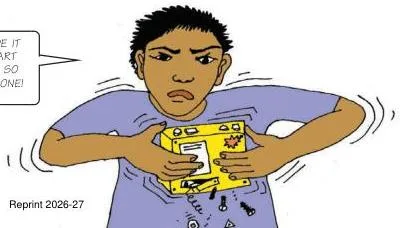
Think of it like this: a lone auto-rickshaw passenger has almost no power to negotiate against a monopolist railway company setting ticket prices. The passenger takes what is offered or walks. The consumer movement works to fix this imbalance. As you read in the chapter on Globalisation and the Indian Economy, large multinational companies can easily influence small markets.
Government rules and regulations step in to protect the weaker side.
How the Consumer Movement Evolved in India
The movement did not start with a single law but grew from public anger at market abuse. Rampant food shortages, hoarding, black marketing, and adulteration of edible oil in the 1960s forced people to organise (NCERT, p. 77). Early consumer groups wrote articles and held exhibitions to expose malpractices.
A major international shift happened in 1985 when the United Nations adopted the UN Guidelines for Consumer Protection.

Today, Consumers International acts as an umbrella body for over 200 member organisations from over 100 countries. In India, the government enacted the Consumer Protection Act (COPRA) in 1986. Because the Indian Parliament enacted COPRA on 24 December, India observes this date as National Consumers’ Day (NCERT, p. 86). The Act was later amended in 2019 to handle modern market challenges.
| Year | Event |
|---|---|
| 1960s | Consumer movement born in India due to hoarding and food shortages |
| 1985 | UN adopted Guidelines for Consumer Protection; Consumers International grew |
| 1986 | Enactment of COPRA (Consumer Protection Act) in India |
| 2005 | Right to Information (RTI) Act enacted |
| 2019 | COPRA amended to include e-commerce and mediation |
The Six Consumer Rights You Must Know
COPRA guarantees six specific rights. To remember them in order for your exam, use the mnemonic SICRRE: Safety, Information, Choice, Redressal, Representation, Education. These rights cover you from the moment you consider buying a product to the moment you need help after a faulty sale.
| Right | Plain Meaning | Example |
|---|---|---|
| Right to Safety | Protection from goods and services hazardous to life and property. | Reji Mathew suffered brain damage due to improper anaesthesia during a tonsillectomy (p. 79). |
| Right to Information | Access to details about ingredients, price, batch number, expiry date, and MRP. | Amritha used the RTI Act 2005 to force a government department to release her job interview results (p. 80). |
| Right to Choose | Freedom to buy what you want; no forced bundle selling. | Abirami got a refund from a coaching institute for the year she did not attend (p. 81). |
| Right to Seek Redressal | Right to claim compensation for unfair trade practices or damage. | Prakash filed a case in the District Commission when his money-order failed to reach his daughter (p. 82). |
| Right to Represent | Right to be heard in consumer forums and councils. | Consumers can file cases physically or through video conferencing at the commissions. |
| Right to Consumer Education | Right to acquire knowledge and skills to make informed choices. | Government spreads awareness through TV ads and the Consumer Hotline. |

COPRA and the Three-Tier Redressal Machinery
Having rights is useless if you have no place to enforce them. COPRA set up a three-tier quasi-judicial machinery for redressal. A frequent point of confusion is the difference between councils and commissions. Consumer Protection Councils are voluntary groups that guide consumers, create awareness, and represent them.
Consumer Disputes Redressal Commissions are the actual courts that hear cases and deliver judgments.
| Feature | Consumer Protection Council | Consumer Disputes Redressal Commission |
|---|---|---|
| Nature | Voluntary organisations / forums | Quasi-judicial bodies set up under COPRA |
| Purpose | Create awareness, guide consumers on filing cases | Hear disputes, pass verdicts, award compensation |
| Tiers | Local, district, state, national levels | District, State, and National Commissions |
Worked Example: Which Commission to Approach?
Scenario A: Ravi bought a laptop that caught fire due to a manufacturing defect, destroying his desk.
He claims \( 35{,}000 \) in damages.
- Step 1: Identify the claim amount: \( 35{,}000 \).
- Step 2: Compare with the District Commission limit (claims up to \( 1 \) crore).
- Step 3: Since \( 35{,}000 \lt 1 \) crore, Ravi approaches the District Consumer Disputes Redressal Commission.
Scenario B: A housing society filed a case against a builder for structural failure, claiming \( 2.5 \) crores in damages.
- Step 1: Identify the claim amount: \( 2.5 \) crores.
- Step 2: Compare with the State Commission limit (claims between \( 1 \) crore and \( 10 \) crores).
- Step 3: Since \( 1 \) crore \( \lt 2.5 \) crores \( \lt 10 \) crores, the society approaches the State Consumer Disputes Redressal Commission.
If a case is dismissed at the District level, the consumer can appeal to the State Commission, and then finally to the National Commission for claims exceeding 10 crores (NCERT, p. 83).
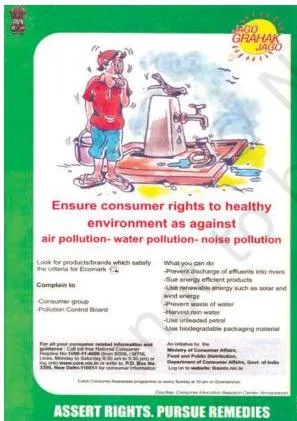
The 2019 COPRA Amendment
Most revision notes skip the 2019 changes, but examiners know it is the current law. The 2019 amendment strengthened consumer protection in two specific ways for online shoppers: it explicitly included e-commerce purchases, meaning manufacturers and online service providers can now be penalised or even imprisoned for defective products.
It also introduced mediation as a way to settle disputes outside the commission using a neutral intermediary called a mediator (p. 86).
Quality Certification: ISI, Agmark, Hallmark and FSSAI
Standardisation logos assure you that a product meets specific quality benchmarks. The Bureau of Indian Standards (BIS) and other bodies allow producers to display these logos only if they follow set quality standards.

| Logo / Mark | Product Category | Issuing Body | Voluntary or Mandatory |
|---|---|---|---|
| ISI | Industrial goods (e.g., electrical appliances) | Bureau of Indian Standards (BIS) | Voluntary for most; Mandatory for LPG cylinders, cement |
| Agmark | Agricultural produce (e.g., edible oil, cereals) | Directorate of Marketing and Inspection | Voluntary for most; Mandatory for food colours |
| Hallmark | Jewellery (gold and silver) | Bureau of Indian Standards (BIS) | Mandatory |
| FSSAI (+F) | Food products and packaged drinking water | Food Safety and Standards Authority of India | Mandatory |
A critical edge case: certification is generally voluntary, but for products affecting health and safety like LPG cylinders, food colours and additives, cement, and packaged drinking water, it is absolutely mandatory for producers to get certified (NCERT, p. 85).
Challenges and the Road Ahead for Consumer Movement
Despite having laws, the consumer redressal process in India is becoming cumbersome, expensive, and time-consuming. Many times, consumers must engage lawyers. Gathering evidence is hard because cash memos are not issued for most small retail purchases. Of the more than 2000 consumer groups in India, only about 50-60 are well-organised and recognised for their work (NCERT, p. 86).
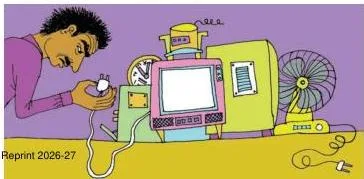
Your duty as a consumer is to insist on a bill, check the expiry date, and compare prices. The chapter quotes Mahatma Gandhi on the customer’s importance: “A customer is the most important visitor on our premises. He is not dependant on us. We are dependant on him.” (p. 84). The movement only succeeds with your active involvement.
You can read more about financial rules in our notes on Money and Credit.
Common Mistakes Students Make
| Mistake | Correct Rule | How to Check Your Answer |
|---|---|---|
| Confusing Consumer Protection Council with Consumer Disputes Redressal Commission. | Councils are voluntary awareness groups; Commissions are quasi-judical courts that give verdicts. | If the question says ‘file a case’ or ‘compensation’, the answer must be a Commission. |
| Using old claim limits (e.g., Rs 20 lakh for District). | District handles up to Rs 1 crore; State handles Rs 1 crore to Rs 10 crore. | Write the 1 crore and 10 crore limits explicitly whenever discussing jurisdictions. |
| Treating all ISI/Agmark certification as mandatory. | It is voluntary for most goods, mandatory for health/safety items like LPG cylinders and food colours. | List the mandatory items separately to show the examiner you know the distinction. |
| Listing only 5 consumer rights. | COPRA lists 6 rights (Safety, Information, Choice, Redressal, Representation, Consumer Education). | Use the SICRRE link to count them on your fingers before finishing the answer. |
| Confusing RTI Act 2005 with COPRA. | The RTI Act empowers citizens to question government departments; COPRA covers marketplace disputes. | Only use RTI when the question involves government services or officials. |
Exam Pointers: What Examiners Look For
Questions from the textbook exercises (p. 87-89) usually fall into three categories. Knowing these patterns helps you structure your answers for full marks.
- 5-mark questions: ‘Trace the evolution of the consumer movement’ or ‘Critically examine the progress’. A full-marks answer needs chronological milestones (1960s, 1985, 1986, 2019) and a balanced judgment noting both the legal progress and the cumbersome reality.
- 3-mark questions: ‘What factors gave birth to the consumer movement?’ Mention specific triggers like rampant food shortages, hoarding, black marketing, and adulteration. ‘Which logo to look for?’ requires naming the correct logo (e.g., Agmark for honey) and stating why it assures quality.
- True/False (1-mark): Statements like ‘COPRA applies only to goods’ (False – it covers services too) or ‘The consumer redressal process is very simple and quick’ (False – it is cumbersome). State the correct reason to secure the mark.
Examiner tip: Always cite a specific right, the specific section or Act (like COPRA 2019), or a specific case study from the chapter. Vague answers lose marks. You can verify the full list of chapter exercises on the official NCERT textbook page for Consumer Rights.
You can also find more broader Class 10 notes or Class 10 Economics notes through our CBSE notes hub.
Revision Recap: Quick Glance Before the Exam
- WHY rules: Markets are uneven; individual buyers are weak and scattered, large sellers are powerful.
- Six Rights (SICRRE): Safety, Information, Choice, Redressal, Representation, Education.
- COPRA: Enacted 1986, amended 2019 (added e-commerce and mediation).
- 3 Tiers: District (up to Rs 1 crore), State (Rs 1 crore to Rs 10 crore), National (above Rs 10 crore).
- 4 Logos: ISI (industrial), Agmark (agricultural), Hallmark (jewellery), FSSAI (+F, food).
- 1 Challenge: The process is cumbersome, expensive, time-consuming, and evidence is hard to gather without cash memos.
Frequently Asked Questions
What is the difference between a Consumer Protection Council and a Consumer Disputes Redressal Commission?
A Consumer Protection Council is a voluntary organisation that creates awareness, guides consumers, and sometimes represents them. A Consumer Disputes Redressal Commission is a quasi-judicial body set up under COPRA that actually hears cases and passes legally binding verdicts.
What are the claim limits for the District, State, and National Consumer Commissions under COPRA?
The District Commission handles claims up to Rs 1 crore. The State Commission handles claims between Rs 1 crore and Rs 10 crore. The National Commission handles claims exceeding Rs 10 crore.
Why is the consumer redressal process in India considered cumbersome and time-consuming?
The process is cumbersome because gathering evidence is difficult when shopkeepers do not issue cash memos for small retail purchases. Consumers often need to engage lawyers, and attending multiple commission proceedings takes time and money.
How did the 2019 amendment to COPRA change consumer protection for online shoppers?
The 2019 amendment explicitly brought e-commerce transactions under its scope, making online service providers and manufacturers liable for defective products. It also encouraged mediation at all three tiers to settle disputes faster outside the court.
Reference: NCERT Class 10 Economics textbook, chapter Consumer Rights.
Explore Class 10 Economics Notes
Class 10 Economics on LearnCBSE:
Related chapters: