
These globalisation and the indian economy class 10 notes cover the entire Chapter 4 of your Economics textbook in a revision-ready format. For the 2026-27 board session, this page walks you through MNCs, foreign trade, liberalisation, the WTO, and the uneven impact of globalisation on India — explained in plain language with worked examples, comparison tables, and exam pointers.
Use it as a night-before revision resource that is shorter than the NCERT chapter yet complete enough to revise from alone.
What Globalisation Means for the Indian Economy
Open the textbook and you notice Indian markets carry global brands —Samsung phones, Honda cars, Coca-Cola, Nike shoes — that were absent two decades ago (NCERT, p. 55). The chapter explains this shift through one word: globalisation.
NCERT defines globalisation in a deliberately limited sense: the integration of countries through foreign trade and foreign investments by multinational corporations (MNCs) (NCERT, p. 54). The wider cultural and political dimensions are set aside — only the economic side matters here.
Two forces drive this integration: foreign trade (goods crossing borders) and foreign investment (MNC money buying assets in another country). MNCs are the engine connecting distant regions, turning local markets into interconnected global ones (NCERT, p. 61).
If you are revising the whole syllabus in sequence, our Class 10 Economics notes list every chapter,and the broader Class 10 notes hub covers Social Science as a whole.
How MNCs Spread Production Across Countries
A multinational corporation (MNC) is a company that owns or controls production in more than one nation (NCERT, p. 56). Unlike an exporter that ships finished goods, an MNC deliberately splits production across countries — designing in one, manufacturing in another, assembling elsewhere — to cut cost and raise profit.
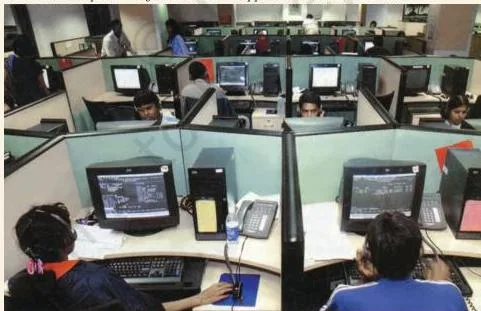
Why split production? MNCs hunt for places that offer cheap labour, skilled engineers, or closeness to big markets. The resulting cost saving can be 50–60 per cent (NCERT, p. 56). For India, the advantage is a large pool of skilled, English-speaking youth who can run call centres and IT services, as the Bengaluru call centre photo below shows.
Three Ways MNCs Interlink Production
Once an MNC enters a country, it links its global chain to local firms through three distinct routes (NCERT, p. 57–58). Each route gives the MNC a different level of control:
- Joint production with local companies: the MNC brings money and latest technology; the local partner brings market knowledge. Example: Ford set up its Chennai plant in collaboration with Mahindra and Mahindra (NCERT, p. 58).
- Buying up local companies: the most common route. A wealthy MNC acquires an established local firm to get instant factories, brand, and distribution. Example: Cargill Foods bought Parakh Foods and became India’s largest edible-oil producer (NCERT, p. 57).
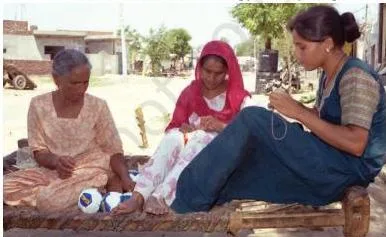
- Placing orders with small producers: the lightest-control route. MNCs order garments, footwear, or sports goods from tiny workshops and sell them under the MNC brand. The women making footballs in Ludhiana (below) work for large MNCs without being their employees.
The key takeaway: production in these dispersed locations gets interlinked (NCERT, p. 58). The MNC decides the price, quality, delivery schedule, and labour conditions — even for distant producers it does not formally employ.
Foreign Trade and the Integration of Markets
Foreign trade is the oldest link between countries. NCERT states its basic function clearly: it lets producers reach beyond domestic markets and lets buyers expand choice beyond what is locally made (NCERT, p. 59).
When trade opens, goods flow between markets. The textbook’s Chinese-toys example shows the mechanism: cheaper, better-designed Chinese toys enter India, buyers get more choice at lower prices, but Indian toy-makers face losses (NCERT, p. 60).
The result is integration of markets — prices of similar goods in both countries tend to equalise, and producers separated by thousands of miles now compete directly (NCERT, p. 60).

A common confusion is mixing up foreign trade with foreign investment. The table makes the distinction sharp.
| Term | Meaning | Example |
|---|---|---|
| Foreign trade | Goods and services cross national borders — exports and imports. | Vietnamese bicycle parts sold in Indian shops. |
| Foreign investment | An MNC spends money to buy assets (land, factory, machines) in another country. | Samsung building a phone factory in Noida. |
Both work together in real life: the Ford plant in India is foreign investment, while the cars Ford exports from that plant are foreign trade. MNCs often combine the two (NCERT, p. 61).
Three Factors That Enabled Globalisation
Globalisation did not just happen. Three facilitators combined to make it possible (NCERT, p. 61–64). Remember them with the T-L-W memory device: Technology, Liberalisation, WTO.
| Factor (T-L-W) | Concrete mechanism | What it enabled |
|---|---|---|
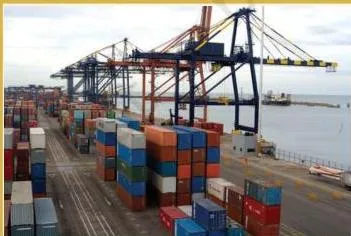
| Technology — transport | Containers; cheaper air freight. | Faster, cheaper delivery of goods over long distances. |
| Technology — IT | Internet, telecom, satellite links, e-banking. | Spread of service production across countries (London magazine designed in Delhi). |
| Liberalisation | Removal of trade and investment barriers after 1991. | Free import/export and free MNC entry. |
| WTO pressure | International rules pushing free trade. | Developing countries forced to open markets. |
IT matters specially for services. A magazine for London readers can be designed in Delhi, the text sent over the internet, payment done by e-banking, and the printed copies flown back — a service-production chain split across continents (NCERT, p. 63). Without IT expansion, globalisation as we see it would not have been possible.
Liberalisation, Trade Barriers and the WTO
A trade barrier is any government restriction on foreign trade. Two types matter for this chapter (NCERT, p. 64):
- Tax on imports (tariff): makes imported goods costlier, so buyers switch to domestic products.
- Quota: a quantitative limit on how many units of a good can be imported.
After Independence, India placed heavy barriers to protect infant industries from foreign competition. Starting around 1991, the government reversed course and removed most barriers, believing competition would force Indian producers to improve quality (NCERT, p. 64). This removal of barriers is liberalisation.
| Pre-1991: Protection era | Post-1991: Liberalisation era |
|---|---|
| High tariffs and quotas on imports. | Most barriers removed; goods move freely. |
| Foreign companies could not easily set up factories. | MNCs can now open factories and offices in India. |
| Indian producers shielded from competition. | Indian producers compete with global firms. |
| Choice limited to domestic brands (Ambassador, Fiat cars). | Wide choice of global brands in the market. |
| State-managed trade policy. | Businesses decide freely what to import or export. |
The World Trade Organisation (WTO) is the international body that sets rules for global trade and pushes free trade for all. It has about 160 member countries and was started at the initiative of developed nations (NCERT, p. 65). The WTO website at www.wto.org gives access to its trade agreements.
But here is the catch: WTO rules are not applied equally (NCERT, p. 65). Developed countries pressure developing nations to cut barriers, yet they keep paying massive subsidies to their own farmers — especially in agriculture.
In the US, just 0.5% of the workforce is in farming, yet farmers get huge government payments that let them sell abroad at abnormally low prices, hurting farmers in countries like India.
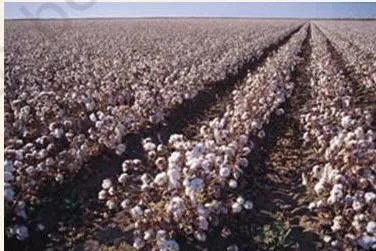
The fair-trade question is stark: developing countries ask whether it is fair that they must open their markets while developed countries subsidise their own producers. This double standard is a key debate the chapter raises.
Impact of Globalisation in India: Winners and Losers
NCERT states plainly: among producers and workers, the impact of globalisation has not been uniform (NCERT, p. 67). Some groups gained, others lost ground.
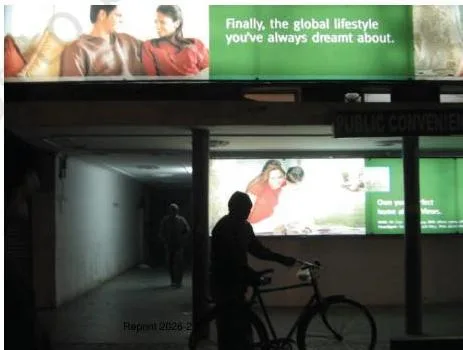
Government Steps to Attract Foreign Investment
- Special Economic Zones (SEZs): industrial zones with world-class facilities where companies pay no tax for the first five years (NCERT, p. 67).
- Flexible labour laws: employers can hire workers on short-term contracts to cut labour cost, instead of permanent employment with full benefits.
Winners vs Losers: Impact Comparison
| Who gained | How | Named example |
|---|---|---|
| Well-off urban consumers | Greater choice, better quality, lower prices for many products. | — |
| Top Indian companies | Invested in new technology; some became MNCs themselves. | Tata Motors, Infosys, Ranbaxy, Asian Paints (NCERT, p. 67). |
| Workers in MNC-linked sectors | New jobs in cell phones, automobiles, IT, call centres, banking. | — |
| Small manufacturers | Cheap imports undercut them; many units shut down. | Ravi — capacitor maker in Hosur, output fell by half after 2001 import liberalisation (NCERT, p. 68). |
| Garment and temporary workers | Jobs insecure; wages cut; no benefits; long hours; no overtime. | Sushila — Delhi garment worker, now a temporary worker earning under half her earlier wage (NCERT, p. 69). |
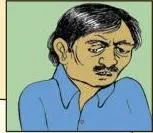
Misconception Autopsy: “Globalisation helped everyone”
The statement is false. Ravi’s story disproves it: a small capacitor producer from Hosur who expanded steadily after starting in 1992 was hit hard when the government removed import restrictions in 2001 under WTO pressure. By 2017, imported capacitors cost half what he charged. His output and workforce shrank by more than half (NCERT, p. 68).
Sushila’s story shows the worker side: once a permanent garment worker with health insurance and provident fund, her factory closed, and she ended up as a temporary worker earning under half her earlier wage with zero benefits (NCERT, p. 69). Both cases prove globalisation’s gains were deeply uneven — people with education, skill, and wealth gained; small producers and unorganised workers lost.
This uneven impact directly connects to earlier chapters — see our Development notes for the “what is a fair development goal” framing the chapter builds on, and the Money and Credit notes for the credit angle that hits small producers hardest.
Key Definitions from Chapter 4
| Term | Meaning | Example |
|---|---|---|
| MNC | A company that owns or controls production in more than one nation. | Ford, Samsung, Coca-Cola. |
| Investment | Money spent to buy assets like land, building, machines, equipment. | A company buying new machines. |
| Foreign investment | Investment made by an MNC in another country. | Samsung building a factory in India. |
| Trade barrier | A government restriction on foreign trade — tax or quota. | Import tax on toys. |
| Liberalisation | Removing barriers or restrictions set by the government on trade and investment. | India removing tariffs post-1991. |
| WTO | World Trade Organisation — sets rules for international trade; aims to liberalise trade. | About 160 member countries. |
| SEZ | Special Economic Zone — industrial zone with world-class facilities and tax holidays to attract investment. | Companies get a five-year tax break. |
| Flexible labour laws | Rules allowing companies to hire workers on short-term contracts instead of permanent jobs. | Garment exporters hire temporary workers in peak season. |
Solved Examples: Applying the Concepts
Example 1: MNC Cost-Saving from Spreading Production (Headphones)
- Step 1: Suppose an MNC makes wireless headphones. Designing the product at its R&D centre in Germany costs ₹40,00,000 per batch. Making the components in Vietnam costs ₹60,00,000. Assembling them in Vietnam and shipping worldwide costs ₹20,00,000. Customer-care calls handled by a Pune call centre cost ₹5,00,000 per batch.
- Step 2: Add up these actual costs to get the total spent per batch.
[ \text{Total cost} = \text{₹}40{,}00{,}000 + \text{₹}60{,}00{,}000 + \text{₹}20{,}00{,}000 + \text{₹}5{,}00{,}000 = \text{₹}1{,}25{,}00{,}000 ]
- Step 1: If the MNC had designed, manufactured, assembled, and supported the same batch entirely in Germany, the estimated cost would have been ₹2,78,00,000 per batch (higher German labour and overheads).
- Step 2: Calculate the cost saving.
[ \text{Saving} = \text{₹}2{,}78{,}00{,}000 – \text{₹}1{,}25{,}00{,}000 = \text{₹}1{,}53{,}00{,}000 ] Step 5: Express the saving as a percentage of the all-Germany cost.
[ \text{Saving (\%)} = \frac{1{,}53{,}00{,}000}{2{,}78{,}00{,}000} \times 100 \approx 55\% ] Final answer: Spreading production across Germany, Vietnam, and India saves the MNC about 55% compared to producing entirely in Germany — consistent with NCERT’s 50–60% range, and shown stepwise with the signs.
Example 2: Effect of Import Tax on Toy Pricing
- Step 1: A Vietnamese company exports plastic toy sets to India at a base price of ₹200 per set. The Indian government imposes a 25% import tax (trade barrier) on these toys.
- Step 2: Calculate the tax payable at the border.
[ \text{Import tax} = 25\% \times ₹200 = \frac{25}{100} \times 200 = ₹50 ] Step 3: Add the tax to the base price to get the landed price for the Indian buyer.
[ \text{Landed price} = ₹200 + ₹50 = ₹250 ] Step 4: State the economic effect.
The tax raises the Vietnamese toy’s price by 25%, making it less cheap in Indian markets and pushing buyers toward local Indian-made toys.
Final answer: After a 25% import tax, the Vietnamese toy’s landed price becomes ₹250. The trade barrier protects Indian toy-makers by raising the price of imported toys.
Common Mistakes Students Make in This Chapter
| Mistake (students write…) | Correct rule | How to check your answer |
|---|---|---|
| Confuse foreign trade with foreign investment. | Foreign trade = goods crossing borders; foreign investment = MNC money buying assets abroad. | Look for keywords: “export/import” = trade, “factory/land/buying company” = investment. |
| Assume WTO rules are equally fair to all. | Developed countries retain farm subsidies while forcing developing nations to open markets — a double standard (NCERT, p. 65). | Cite the US cotton subsidy example to show the unfairness. |
| Claim globalisation benefited all workers equally. | Impact was uneven — Ravi lost out, Sushila lost job security; only skilled/educated workers in MNC-linked sectors gained (NCERT, p. 68–69). | Name both Ravi and Sushila in the answer and state their outcomes. |
| Confuse liberalisation with privatisation. | Liberalisation = removal of trade/investment barriers; privatisation = transfer of public-sector ownership to private hands. They are separate policies. | Check the verb — “removed barriers” → liberalisation; “sold a PSU” → privatisation. |
| Write that MNCs set up factories only to sell locally. | MNCs also use a country as an export base — Ford made cars in India to sell in South Africa, Mexico, Brazil, and the USA too (NCERT, p. 58). | Check if the example mentions exports — both local sale and export matter for MNCs. |
| Assume Chinese toys wiped out all Indian toy makers overnight. | NCERT notes 70–80% of toy shops replaced Indian toys with Chinese ones within a year — not 100% (NCERT, p. 60). | Quote the 70–80% figure, not absolute language. |
Exam Notes: What Examiners Look For
Examiners reward specific, named evidence over generic statements. These observations come from the chapter’s exercise structure and typical marking patterns for the globalisation chapter.
- Definition of globalisation (2 marks): the mark is for “integration of countries through foreign trade and foreign investments by MNCs” — name both channels. A one-channel answer loses a mark.
- 1991 liberalisation (3–5 marks): a full-marks answer explains why barriers were first put up (protect infant industries in the 1950s–60s) and why they were removed around 1991 (competition would improve quality) (NCERT, p. 64). Both halves of the story matter.
- “Impact of globalisation has not been uniform” (5 marks): the answer must name evidence from both sides — the winners (well-off consumers, top Indian firms, MNC-backed sectors) AND the losers. Citing Ravi (small producer) and Sushila (temporary worker) as named evidence earns the content marks (NCERT, p. 68–69). A general statement like “some gained, some lost” without named cases does not earn the full score.
- Exercise Q4 (ways MNCs set up/produce in other countries): list three routes — joint ventures, buying local companies, placing orders with small producers — each with one example from the chapter (NCERT, p. 57–58).
- Exercise Q6 (5 marks, impact not uniform): this is the most-asked long-answer question. Mention specific industries — batteries, capacitors, plastics, toys, tyres, dairy, vegetable oil — where small manufacturers were hit (NCERT, p. 68).
Figure Walkthrough: Reading the MNC Production Chain
The three figures below show how MNCs split production, services, and agriculture across the globe.
1. Bengaluru call centre. Rows of service agents at computer terminals handle customer support for clients abroad. The concept: India’s English-speaking, IT-skilled workforce enables MNCs to base service production in India even when goods are made elsewhere (NCERT, p. 56).
2. Ludhiana women making footballs. The photo shows women stitching footballs at home for large MNCs. The concept: MNCs use the third route — placing orders with small, informal producers — to source cheap goods sold worldwide under MNC brand names (NCERT, p. 58).
3. US cotton farm. Thousands of acres owned by a corporation. The concept: developed-country agriculture is corporatised and heavily subsidised, letting US cotton sell abroad at artificially low prices and hurt farmers in developing countries — the unfairness at the heart of the WTO debate (NCERT, p. 66).
Together, these figures cover all three production forms: service production (call centre), small-producer manufacturing (footballs), and agriculture (cotton). When a question asks “how are production and markets interlinked,” describe how each figure connects a distant location to a global chain.
Steps Toward a Fair Globalisation
NCERT does not end the chapter on a neutral note. The final section argues that fair globalisation must create opportunities for all and share benefits better (NCERT, p. 70). The same “winners and losers” framework from the impact section defines the problem this section addresses.
The government has a central role. Possible steps include:
- Enforcing labour laws properly so workers get their legal rights.
- Supporting small producers until they can compete — better roads, power, credit, technology.
- Using trade and investment barriers if necessary to protect vulnerable sectors.
- Negotiating at the WTO for fairer rules and aligning with other developing countries to counter developed-country dominance.
People also matter. NCERT notes that massive campaigns by people’s organisations have influenced WTO decisions — citizens are not passive in this struggle (NCERT, p. 70). For the consumer-rights angle on holding MNCs accountable, see the Consumer Rights notes.
Rapid Revision Recap
Ten bullets to lock in the whole chapter before you walk into the exam hall. Keep these notes handy for a last-minute scan.
- Globalisation = integration of countries through foreign trade + foreign investment by MNCs.
- MNC = a company that owns or controls production in more than one nation; its goal is lower cost, higher profit.
- MNCs interlink production three ways: joint ventures, buying local companies, placing orders with small producers.
- Foreign trade connects markets and equalises prices of similar goods across countries.
- Three enablers (T-L-W): Technology, Liberalisation, WTO pressure.
- Liberalisation = removal of trade and investment barriers, started around 1991 in India.
- WTO sets global trade rules but has double standards — developed countries keep farm subsidies.
- Impact is uneven: well-off consumers, top Indian firms, skilled workers gained; small producers and temporary workers lost.
- SEZs and flexible labour laws are government steps to attract foreign investment.
- Fair globalisation needs government action — enforce labour laws, support small producers, negotiate at WTO — and people’s campaigns.
Frequently Asked Questions on Globalisation
How is an MNC different from a regular domestic company?
An MNC owns or controls production in more than one nation, whereas a domestic company operates within a single country. MNCs split production globally to cut costs; domestic companies do not. MNCs also have far greater wealth — some top MNCs have budgets exceeding those of developing-country governments (NCERT, p. 57).
Why did India remove trade barriers in 1991 after protecting industries for decades?
Post-Independence, barriers protected infant industries that could not have survived foreign competition in the 1950s and 1960s (NCERT, p. 64). By 1991, the government felt Indian producers were ready to compete and that competition would push them to improve quality. International organisations also supported this change. Liberalisation removed most of these barriers at once.
Is the WTO fair to developing countries like India?
In theory, the WTO promotes free trade for all; in practice, it has double standards. Developed countries retain massive agricultural subsidies that let their farmers sell abroad at low prices, while WTO rules force developing countries to remove their own barriers (NCERT, p. 65).
The US cotton subsidy example shows how developing-country farmers are hurt — the chapter frames this as an open fair-trade question, not a settled fact.
How do Special Economic Zones help attract foreign investment?
SEZs offer world-class infrastructure — electricity, water, roads, transport, storage, recreational and educational facilities — and a five-year tax holiday to companies that set up production units inside them (NCERT, p. 67). These incentives lower the cost and risk for MNCs, making India an attractive investment destination.
What does an examiner expect in a 5-mark answer on “the impact of globalisation has not been uniform”?
The answer must balance winners and losers with named evidence. State that well-off urban consumers gained through wider choice and lower prices, and that top Indian companies like Tata Motors, Infosys, and Ranbaxy became MNCs themselves.
Then cite Ravi (Hosur capacitor producer whose output fell by more than half after 2001) and Sushila (Delhi garment worker pushed from a permanent job into temporary work at under half her earlier wage) to show the losses small producers and workers faced (NCERT, p. 68–69). A balanced answer with specific named cases earns the full marks.
Reference: NCERT Class 10 Economics textbook, chapter Globalisation and the Indian Economy.
Explore Class 10 Economics Notes
Class 10 Economics on LearnCBSE:
Related chapters:
Official source: download the NCERT textbook free from ncert.nic.in.