
Author: LearnCBSE Editorial Team These power sharing class 10 notes cover Chapter 1 of Democratic Politics – II for the current academic session, 2026-27. You will find the Belgium and Sri Lanka case studies, reasons for power sharing, its four forms, and the definitions needed for a full-marks answer.
Why Power Sharing Matters in a Democracy
Democracy does not allow all power to rest with any single organ. The textbook states that an intelligent sharing of power among legislature, executive and judiciary is central to democratic design (NCERT, p. 1). Concentrating authority in one group risks tyranny and ignores minority voices.
Power sharing is the distribution of political authority among different organs, levels, or groups so that no single entity can take unilateral decisions. You can find broader Civics notes across all chapters or our Class 10 notes hub for related study material.
Two Case Studies: Belgium and Sri Lanka
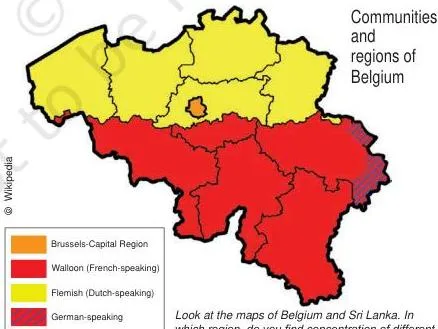
Both nations are democracies with diverse populations, but each chose a different path. Belgium picked accommodation. Sri Lanka chose majoritarianism. (NCERT, p. 2) Belgium’s Demographics (p. 2): Dutch-speaking: 59% (Flemish region). French-speaking: 40% (Wallonia region). German-speaking: 1%. In Brussels, the ratios reverse: 80% French and 20% Dutch.
Sri Lanka’s Demographics (p. 2): Sinhala speakers: 74%. Tamil speakers: 18% (sub-divided into 13% Sri Lankan Tamils and the rest Indian Tamils). 7% Christians belong to both groups.
Majoritarianism in Sri Lanka: How the Majority Ruled
Sri Lanka became independent in 1948. The Sinhala majority adopted policies to secure dominance over the government (p. 3). The textbook defines majoritarianism as the belief that the majority community should rule in whichever way it wants, by disregarding the wishes and needs of the minority.
- 1956 Act: Sinhala was recognised as the only official language, disregarding Tamil.
- Preferential policies: Favouring Sinhala applicants for university positions and government jobs.
- New constitution: The state was mandated to protect and foster Buddhism.
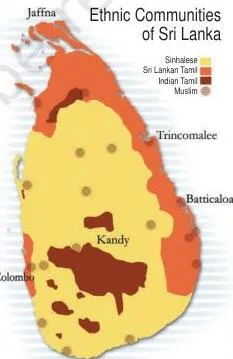
Alienated by these measures, Tamils demanded recognition of their language, regional autonomy, and equal opportunity. By the 1980s, groups demanded an independent Tamil Eelam. This escalated into a civil war, a violent internal conflict resembling a war, which lasted until 2009.
Accommodation in Belgium: Four Constitutional Amendments
Belgium amended its constitution four times between 1970 and 1993 to manage regional differences (p. 4). The Belgian model has four key elements:
- Equal ministers: The central government has an equal number of Dutch and French-speaking ministers. No single community can make unilateral decisions.
- State powers: State governments hold many central powers and are not subordinate to the central government.
- Brussels government: A separate government where both communities have equal representation.
- Community government: Elected by language groups (Dutch, French, German) to handle cultural, educational, and language-related issues.
Belgium vs Sri Lanka: A Comparison Table
This table provides a single-glance comparison answering the frequently asked 5-mark question on why the two democracies had different outcomes. (NCERT, pp. 3-5)
| Feature | Belgium (Accommodative) | Sri Lanka (Majoritarian) |
|---|---|---|
| Approach | Shared power among communities | Imposed Sinhala dominance |
| Majority community | Dutch (59%) | Sinhala (74%) |
| Minority treatment | Given equal representation | Discriminated in jobs/language |
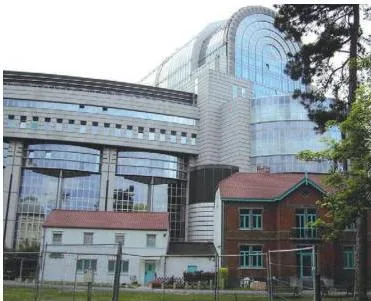
| Outcome | Avoided division; Brussels hosts EU HQ | Devastating Civil War ending in 2009 |
| Lesson | Respecting diversity maintains unity | Refusing to share power undermines unity |
Why Power Sharing Is Desirable: Prudential vs Moral Reasons
NCERT outlines two sets of reasons for sharing power (p. 6). Prudential reasons stress better outcomes, like reducing conflict and maintaining stability. Moral reasons emphasise that power sharing is the very spirit of democracy, giving citizens a right to be consulted.
Original Analogy: Imagine four students sharing one notebook. If they fight over who keeps it, the teacher takes it away. Sharing the notebook to avoid a fight and keep the notebook safe is a prudential reason. Sharing the notebook because sharing is simply the fair and right thing to do is a moral reason.
Lebanon’s Power Sharing Pact: Khalil’s Dilemma
The textbook presents a case study from Beirut, Lebanon (p. 7). To end a civil war, Lebanon’s leaders agreed to a fixed sectarian pact: the President must be a Maronite Christian, the Prime Minister a Sunni Muslim, the Deputy PM an Orthodox Christian, and the Speaker a Shi’a Muslim.
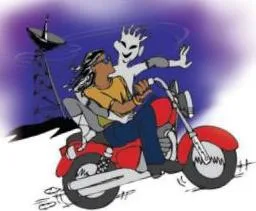
Misconception Autopsy: Unlike Belgium’s model, which ties governance to linguistic regions to foster an overarching national identity, Lebanon’s system fixes political posts by religious sect. This structure can conflict with the idea of a single national identity, as citizens like Khalil must identify with a religion to achieve top political office, undermining a purely democratic vote.
Four Forms of Power Sharing in Modern Democracies
Modern democracies share power across four arrangements (NCERT, p. 8-9). Understanding these is crucial for answering 3-5 mark questions. You will explore the second form in depth in our Class 10 Federalism notes.

- Horizontal distribution: Power shared among the legislature, executive, and judiciary at the same level. This creates a system of checks and balances.
- Vertical division (Federal): Power shared among governments at different levels, like the Union Government and State Governments. This extends to municipalities and panchayats.
- Social group sharing: Power shared among religious and linguistic groups, like Belgium’s community government. Reserved constituencies in India serve a similar purpose.
- Political parties/interest groups: Power shared by different parties forming coalition governments, or pressure groups (farmers, traders, industrialists) influencing decision-making.
Memory Mnemonic: Remember the four forms with “H-V-S-P” for Horizontal, Vertical, Social groups, Political parties. Mnemonic: High Value Strategy Pays.
Key Definitions from Chapter 1
Use this table for quick revision of NCERT glossary terms (pp. 2, 3, 6).
| Term | Simple Meaning | Example / Significance |
|---|---|---|
| Ethnic | A social division based on shared culture or common descent. | People of the same ethnicity need not share religion. |
| Majoritarianism | The majority community ruling in whichever way it wants, disregarding minorities. | Sri Lanka’s 1956 Sinhala-Only Act. |
| Civil War | A violent conflict between opposing groups within a country that appears like a war. | The Sri Lankan conflict lasting until 2009. |
| Prudential | Based on prudence, or careful calculation of gains and losses. | Sharing power to reduce conflict and ensure stability. |
Common Mistakes in Power Sharing Answers
| Mistake | Correct rule | How to check |
|---|---|---|
| Writing Belgium has three levels of government. | Belgium has three types of government, not hierarchical levels. | Check if you named Central, State, and Community governments. |
| Writing federal division is only Centre-State sharing. | Vertical division extends to panchayats and municipalities. | Verify if you included local governments. |
| Writing majoritarianism is just majority rule. | It is majority rule disregarding the needs of the minority. | Ensure the phrase ‘disregarding the minority’ appears. |
| Confusing prudential with moral reasons. | Prudential = better outcomes; Moral = democratic spirit. | Check if your reason cites stability (prudential) or rights (moral). |
Exam Notes: What the Board Expects
Based on the chapter exercises (NCERT, pp. 10-12), questions follow a mixed pattern: multiple-choice, matching, and descriptive answers. You can verify the full question set on the official NCERT Democratic Politics II textbook page for chapter 1.

- 5-mark question: The Belgium vs Sri Lanka comparison is frequently asked. A full-mark answer must name the specific elements of the Belgian model (equal ministers, community government) and the Sri Lankan policies (1956 Act, Buddhism).
- 3-mark question: Listing the four forms of power sharing with a concrete example for each.
- Name specific mechanisms: Vague answers like ‘they shared power’ earn partial marks; name the 1970-1993 constitutional amendments.
Real-life Application: Where You See Power Sharing
To make the four forms concrete, map them to Indian civic life:
- Horizontal: The High Court ordering a state government to act (judiciary checking the executive).
- Vertical: Panchayati Raj sharing power with the State and Union governments. (As Q5 on p. 10 notes, giving power to panchayats is a prudential reason that reduces corruption).
- Social groups: Reserved constituencies for SC/ST ensuring diverse groups have a voice.
- Political parties: UPA or NDA coalitions where multiple parties share power.
Chapter Revision Recap
- Power sharing prevents conflict and is the spirit of democracy.
- Belgium = accommodation (avoided civil war); Sri Lanka = majoritarianism (civil war ending in 2009).
- Two reasons for power sharing: prudential (stability) and moral (democracy).
- Four forms: Horizontal, Vertical (federal), Social groups, Political parties/interest groups.
- In the textbook’s spirit: sharing power is not dividing power, it is making the country more powerful.
For more revision material, visit our main CBSE notes section.
Frequently Asked Questions on Power Sharing
What is the difference between horizontal and vertical power sharing with examples?
Horizontal power sharing distributes power among organs at the same level (legislature, executive, judiciary), creating checks and balances. Vertical power sharing distributes power among different levels of government (Union, State, local panchayats), known as federal division.
Why did Belgium’s accommodation succeed but Sri Lanka’s majoritarianism fail?
Belgium succeeded by giving equal representation to its Dutch and French communities through constitutional amendments. Sri Lanka failed because the Sinhala majority imposed its will via the 1956 Sinhala-Only Act and job preferences, alienating Tamils and triggering a 26-year civil war.
What is the key difference between prudential and moral reasons for power sharing?
Prudential reasons are based on careful calculation of gains and losses, stressing that power sharing reduces conflict and ensures stability. Moral reasons emphasise that power sharing is the spirit of democracy and citizens have a right to be consulted.
What is a community government and which country uses it?
A community government is elected by people belonging to one language community to handle cultural, educational, and language-related issues. Belgium uses this model for its Dutch, French, and German-speaking populations.
How is the Lebanese system of power sharing different from the Belgian model?
The Lebanese system fixes top political posts by religious sect (President must be a Maronite Christian, PM a Sunni Muslim). Belgium ties its governance to linguistic regions. Lebanon’s model can conflict with a single national identity because it forces citizens to identify by religion for political representation.
Reference: NCERT Class 10 Democratic Politics textbook, chapter Power Sharing.
Explore Class 10 Civics Notes
Class 10 Civics on LearnCBSE:
Related chapters: