
Rights in the Indian Constitution Class 11 is Chapter 2 of the NCERT Political Science textbook Indian Constitution at Work, printed on pages 26 to 50 of the book. Political Science has two Class 11 textbooks, and this chapter sits in Indian Constitution at Work — not in Political Theory.
The official chapter PDF is right below, followed by what the chapter contains, its key ideas and its figures.
| What the chapter holds | Count | Where it is used |
|---|---|---|
| Printed pages | 25 | |
| Figures with NCERT captions | 7 | |
| Exercise questions | 10 | answered in our NCERT Solutions |
| Activities | 1 | |
| Official NCERT PDF | Download the chapter PDF | the chapter exactly as NCERT publishes it |
Get the Rights in the Indian Constitution Class 11 PDF
The file offered here is the chapter exactly as NCERT prints it — the same page numbering, figures and exercises — so you can read it on any device or print it for offline study.
The official file is hosted by NCERT, the only authority for the textbook’s text and pagination. Download the NCERT Class 11 Political Science Chapter 2 Rights in the Indian Constitution PDF and keep it with your other textbook chapters.
The Chapter at a Glance: Sections, Figures and Exercises

The table below lists what the NCERT file contains — its sections, its exercise questions and its illustrations — so you can see the size of the chapter before opening it.
Section by section, the chapter runs like this:
| Section | NCERT pages |
|---|---|
| Introduction | p. 26 |
| The Importance of Rights | p. 27 |
| Bill of Rights | p. 28 |
| Fundamental Rights in the Indian Constitution | p. 28 |
| Bill of Rights in the South African Constitution | p. 29 |
| Right to Equality (including “You Are the Judge”) | pp. 30–33 |
| Right to Freedom | pp. 33–36 |
| Right against Exploitation | p. 37 |
| Right to Freedom of Religion (including the Activity) | pp. 37–39 |
| Cultural and Educational Rights | pp. 39–40 |
| Right to Constitutional Remedies | pp. 40–42 |
| National Human Rights Commission (NHRC) | pp. 42–43 |
| Directive Principles of State Policy | pp. 43–44 |
| Relationship between Fundamental Rights and Directive Principles | pp. 45–47 |
| Conclusion | p. 48 |
| Exercises | pp. 49–50 |
What This Chapter Covers: From Two Real Cases to the Right to Property
The chapter moves from two real cases of denied rights to the machinery the Constitution builds to protect them. It opens with violations, names the rights, and closes with the classic conflict between individual rights and social goals.
The arc runs like this:
- 1982 Asian Games workers: contractors building flyovers and stadiums paid poor workers less than the minimum wage. A team of social scientists petitioned the Supreme Court, arguing this amounted to begar, or forced labour — a violation of the right against exploitation. The court accepted the plea and directed that thousands of workers be paid their prescribed wages (p. 27).
- Machal Lalung: arrested at 23 in Assam and found too unstable to stand trial, he remained in custody for 54 years while his case never came up for hearing. He was released in July 2005 at the age of 77, after a team appointed by the National Human Rights Commission intervened. His case shows what happens when the right to life and liberty is not backed by a fair and speedy trial (p. 27).
- The bill of rights idea: the freedom movement’s demand that British rulers respect rights, and the Motilal Nehru committee’s demand for a bill of rights as early as 1928 (p. 28).
- The six Fundamental Rights: equality, freedom, against exploitation, freedom of religion, cultural and educational rights, and constitutional remedies (pp. 30–43).
- Directive Principles and Fundamental Duties: the non-justiciable goals the state should pursue, and the ten duties added in 1976 (pp. 43–44).
- The conflict settled: the clash between rights and directive principles, worked out through the right to property and the Kesavananda Bharati case (pp. 45–47).
- Conclusion: rights enforce limits on the functioning of government and ensure democratic governance (p. 48).
Key Concepts: The Six Fundamental Rights and How They Work
Fundamental Rights are the working core of the chapter. The Constitution protects and guarantees them, they can be changed only by amending the Constitution, and the judiciary is responsible for defending them — but they are not absolute, and the government can impose reasonable restrictions on their exercise (NCERT, pp. 28–29).
Right to Equality: From Untouchability to Reservations
This right attacks discrimination in every form the Constitution knows. It gives every person equality before the law and equal protection of the laws, prohibits discrimination on grounds of religion, race, caste, sex or place of birth, and guarantees equal access to public places such as shops, hotels, wells, bathing ghats and roads (NCERT, pp. 30–31).
It also abolishes untouchability — the chapter calls it the crudest form of inequality the society practised — and abolishes titles, except for excellence in military or academic fields (p. 31).
Reservation is where students usually get stuck. Article 16(4) says the state may reserve appointments for any backward class that, in its opinion, is not adequately represented in public services. Far from violating equality, the Constitution sees this as fulfilling equality of opportunity in a society that already has inequalities built in (NCERT, pp. 32–33).
You Are the Judge (p. 33) is the chapter’s way of making you apply this. In Puri, Odisha, men of a Dalit community refused to wash the feet of the groom and guests at “upper caste” weddings; in revenge, four women of the community were beaten and another paraded naked.
You have to decide whether Fundamental Rights were violated and what you would order the government to do.
Right to Freedom: Article 21, Preventive Detention and the Accused
Liberty, the chapter explains, is freedom of thought, expression and action — but not freedom to do anything one likes, because that would destroy everyone else’s freedom (NCERT, p. 33).
The right therefore lists six freedoms, each open to restrictions: speech and expression; peaceful assembly; forming associations and unions; moving freely across India; residing in any part of India; and practising any profession or trade (pp. 34–35). Speech, for instance, is subject to public order, peace and morality.
Article 21 protects life and personal liberty: no person may be deprived of either except by procedure established by law. Supreme Court judgments have stretched this far beyond the literal text — the right to life now includes living with human dignity, free from exploitation, and includes shelter and livelihood (NCERT, pp. 34–35).
Anyone arrested must be told the grounds, may defend themselves through a lawyer of their choice, and must be taken to a magistrate within 24 hours.
Preventive detention is the chapter’s hardest point. It allows the government to detain a person on the mere apprehension that they may engage in unlawful activity — no offence need have been committed. The detention can run only three months before an advisory board reviews it, yet the provision has been misused and sits in clear tension with Article 21 (NCERT, p. 35).
People accused of offences are protected too: no one can be punished twice for the same offence, no law can criminalise an action from a backdate, and no one can be forced to give evidence against themselves (NCERT, p. 36).
Right against Exploitation: Begar and Child Labour
This right protects the most vulnerable from being used by others. It prohibits traffic in human beings — buying and selling people as slaves — and forbids begar, forced labour without payment. Bonded labour still exists in places like brick kilns, and the Constitution declares it a punishable crime (NCERT, p. 37).
The right also bans employing children below 14 in dangerous jobs such as factories and mines. With child labour illegal and education a fundamental right, the chapter argues this right has become more meaningful (p. 37). Remember the opening case: the 1982 workers’ claim was argued as a violation of this same right (p. 27).
Right to Freedom of Religion: Faith, Conversion and Secularism
Everyone may follow the religion of their choice, or none — freedom of conscience is included. The right covers professing, practising and propagating a religion, but it is limited by public order, morality and health, which is how the state could ban practices like sati, bigamy and human sacrifice (NCERT, p. 38).
Propagation is the sensitive word. The Constitution does not allow forcible conversion; it only allows spreading information about one’s religion to attract others to it (pp. 38–39).
India has no official religion, no religious qualification for public office, and state-run institutions do not preach any religion or give religious education. The purpose of these provisions is to sustain and nurture secularism (NCERT, p. 39).
Cultural and Educational Rights: Protecting Minorities
In a society as diverse as India, a minority group must not be forced to adopt the majority’s culture. Religious, linguistic and cultural minorities may conserve their language, script and culture, and they may establish and run their own educational institutions — the state cannot discriminate against such institutions when granting aid (NCERT, pp. 39–40).
The chapter uses Sardar Hukam Singh’s warning that minority fears about language, script and government services are genuine, and that for minorities the only real safety lies in a secular state (NCERT, p. 40).
Right to Constitutional Remedies: The Five Writs and the NHRC
Dr. Ambedkar called this right the “heart and soul of the constitution” (NCERT, p. 40) because a list of rights is useless without a way to enforce it. It gives a citizen the right to approach a High Court or the Supreme Court to get a violated Fundamental Right restored. The courts enforce rights through special orders called writs:
- Habeas corpus — the court orders the arrested person to be brought before it, and may set the person free if the manner or grounds of arrest are unlawful or unsatisfactory (p. 41).
- Mandamus — orders an office-holder who is not doing a legal duty to perform it.
- Prohibition — a higher court stops a lower court from hearing a case beyond its jurisdiction.
- Quo warranto — removes a person holding an office they are not entitled to hold.
- Certiorari — transfers a pending case from a lower court or authority to a higher one.
Beyond the courts, the National Human Rights Commission was established by law in 1993. It comprises a former Chief Justice of India, a former Supreme Court judge, a former High Court Chief Justice and two members with experience in human rights.
It inquires into complaints of violations, visits jails to study inmates’ conditions, and promotes research — but it has no power of prosecution and can only recommend action to the government (NCERT, p. 42).
Directive Principles and Fundamental Duties: What the State Should Do
The Constitution also contains guidelines the government is expected to follow — but that a citizen cannot enforce. These Directive Principles of State Policy are non-justiciable: if a government ignores one, no court can be asked to order implementation (NCERT, p. 43). The makers of the Constitution trusted their moral force instead.
They contain three kinds of things: goals and objectives for society, certain rights beyond the Fundamental Rights, and policies the government should adopt (p. 43).
Governments have tried to give effect to them through zamindari abolition, bank nationalisation, factory laws, minimum wages, panchayati raj institutions, the right to education, an employment guarantee and the mid-day meal scheme (pp. 43–44).
Fundamental Duties came later, added by the 42nd Amendment in 1976 — ten duties including abiding by the Constitution and defending the country. They are not enforceable, and the Constitution does not make the enjoyment of rights conditional on fulfilling duties (NCERT, p. 44).
Fundamental Rights vs Directive Principles: The Conflict and How It Was Settled
The two halves of the Constitution are supposed to complement each other: Fundamental Rights restrain the government from doing certain things, while Directive Principles urge the government to do certain things (NCERT, p. 45). But they collided when the state tried to abolish the zamindari system and property owners challenged the laws as a violation of the right to property.
The dispute was settled in stages:
| When | What happened |
|---|---|
| 1950 | The right to “acquire, possess and maintain” property begins as a Fundamental Right (p. 46). |
| 1973 | The Supreme Court rules that the right to property is not part of the Constitution’s basic structure, so Parliament may abridge it by a constitutional amendment (p. 46). |
| 1978 | The 44th Amendment removes the right to property from the list of Fundamental Rights and makes it a simple legal right under Article 300A (p. 46). |
| Kesavananda Bharati case | The Supreme Court settles the wider debate: Parliament cannot amend the basic features of the Constitution. The chapter takes this up in detail in Chapter 9, “Constitution as a Living Document” (p. 47). |
The Chapter’s Activity: Religious Freedom in Your Neighbourhood
On p. 39 the chapter asks you to apply the right to religious freedom to your own surroundings — the kind of task that makes an abstract right concrete.
- List the public religious activities that take place in your village or city.
- Decide which of these involve an exercise of the right to religious freedom.
- Discuss what could have happened if this right were not available to people in your locality.
A useful prompt: for each activity on your list, ask whether it falls under freedom of conscience, practice or propagation, and whether it runs into any of the reasonable restrictions — public order, morality or health (NCERT, p. 38).
Figures in This Chapter and What They Teach
The chapter uses photographs to remind you that rights are about real people, not just legal text. These are the images the book places beside its key arguments, and each one carries a point worth reading.

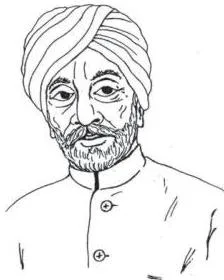
This image sits at the point where the chapter explains why the Constitution has a bill of rights at all (p. 28).
The freedom struggle, it reminds you, was partly a demand that rulers respect rights — the Motilal Nehru committee asked for a bill of rights as early as 1928, so when the Constitution was being drafted there was no debate about including rights.

The caption is the argument: Article 21 (p. 34) protects far more than a heartbeat. The Supreme Court judgments discussed on this page extend it to human dignity, freedom from exploitation, shelter and livelihood (p. 35) — the image marks the moment where the right to life widens.
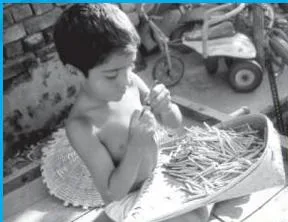
The book sets this image as a test: it asks you to name the Fundamental Right whose violation the photograph depicts (p. 37). The clue is the passage it accompanies — begar, forced labour and bonded labour in brick kilns, all prohibited under the right against exploitation.

This belongs to the point that India has no official religion (p. 39). No religious test applies to public office, state institutions do not preach any religion, and the aim of these rules is to sustain secularism.
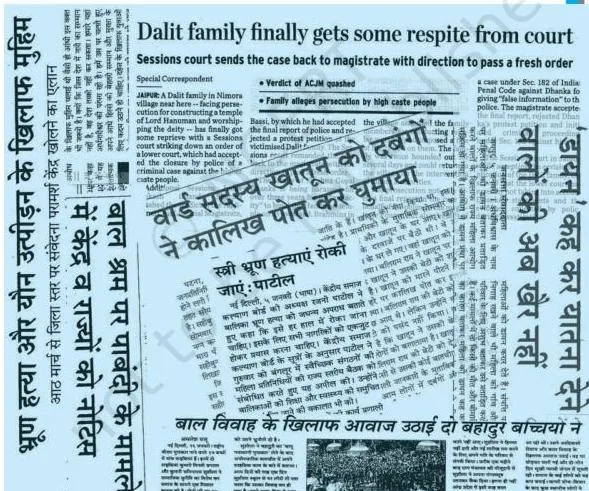
The “debate” is the second round of the property story (p. 47): after the 44th Amendment, the question shifted to whether Parliament can amend any part of the Constitution at all. The image marks the move to the Kesavananda Bharati ruling, which protected the Constitution’s basic features from amendment.
Key Terms and Definitions: Writs, Begar, Preventive Detention
The chapter expects you to define these terms precisely; the table collects them in plain language with the page where each appears.
| Term | Plain-language meaning | NCERT page |
|---|---|---|
| Bill of rights | A list of rights mentioned and protected by the constitution; it prohibits the government from acting against them and ensures a remedy if they are violated | p. 28 |
| Fundamental Rights | Rights protected and guaranteed by the Constitution itself; they can be changed only by amending the Constitution and are defended by the judiciary | p. 28 |
| Reasonable restrictions | Limits the government may place on the exercise of Fundamental Rights — the rights are not absolute | p. 29 |
| Preventive detention | Detaining a person on the apprehension that they may engage in unlawful activity, without an offence having been committed; reviewable by an advisory board after three months | p. 35 |
| Begar | Forced labour without payment | p. 37 |
| Writs | Special orders issued by courts to enforce rights; the five writs are habeas corpus, mandamus, prohibition, quo warranto and certiorari | p. 41 |
| National Human Rights Commission (NHRC) | Body established by law in 1993 to protect fundamental and other rights; it inquires into complaints, visits jails and recommends action, but cannot prosecute | p. 42 |
| Directive Principles of State Policy | Guidelines that the government is morally expected to follow but that citizens cannot enforce in court | p. 43 |
| Non-justiciable | Parts of the Constitution that cannot be enforced by the judiciary | p. 43 |
| Fundamental Duties | Ten duties of citizens inserted by the 42nd Amendment (1976); they are not enforceable | p. 44 |
Common Mistakes Students Make with Fundamental Rights
These are the points where the chapter itself warns that readers go wrong — each mistake is named before you make it.
| Mistake | Correct rule | How to check your answer |
|---|---|---|
| Thinking Fundamental Rights are absolute | Every right carries reasonable restrictions; the government can limit the exercise of rights | For each right, ask: what restriction does the chapter allow alongside it? (p. 29) |
| Confusing the five writs | Attach one trigger to each: habeas corpus — produce the arrested person; mandamus — force a legal duty; prohibition — stop excess jurisdiction; quo warranto — remove an unlawful office-holder; certiorari — transfer a case | Match the situation to the writ before naming it (p. 41) |
| Believing the right to property is still a Fundamental Right | The 44th Amendment (1978) removed it; property is now a legal right under Article 300A | If a question mentions property rights, answer “legal right, not fundamental” (p. 46) |
| Thinking rights are conditional on duties | Fundamental Duties are not enforceable, and the Constitution does not make enjoying rights depend on fulfilling duties | Check your sentence for any “only if” — it is wrong (p. 44) |
| Treating preventive detention like an ordinary arrest | Ordinary arrest follows an offence; preventive detention follows mere apprehension, needs no offence, and runs at most three months before advisory-board review | Ask: was the person detained for something done, or for something feared? (p. 35) |
| Mixing up Fundamental Rights with Directive Principles | Fundamental Rights are enforceable in court; Directive Principles are non-justiciable guidelines | Ask: can a citizen go to court to enforce this? (p. 43) |
How This Chapter Is Tested: Applying Rights to Situations
The chapter’s own exercises show the pattern: most questions give a situation and ask which Fundamental Right is used or violated, and several ask for a judgement with reasons.
- Direct concept questions: Q1 (true/false on the bill of rights) and Q2 (best description of Fundamental Rights).
- Application questions — identify the right used or violated in a given situation: Q3, Q5 and Q7.
- Interpretation question: Q4 on Cultural and Educational Rights.
- Argument questions needing a clear position with reasons: Q6, Q8, Q9 and Q10.
The in-text “Check your progress” boxes — on pages 30, 37, 44 and 48 — practise exactly the same situational skill, so working through them is a rehearsal for the exercises.
A full-marks answer to a situational question names the right and, where possible, the article, says how the situation uses or violates it, and links it to the chapter’s point — for example, reservation under Article 16(4), or a restriction allowed in the interests of public order.
Argument answers need the position stated first, then at least two reasons drawn from the chapter.
Three things are worth memorising: the five writs with their trigger situations (p. 41), the two opening cases of the Asian Games workers and Machal Lalung as ready illustrations (p. 27), and the right-to-property timeline that settles the Fundamental Rights versus Directive Principles debate (pp. 45–47).
One caution: textbook contents and the examinable syllabus are not always identical — check the current official syllabus.
Revising This Chapter: The Key Points in One Place
This recap follows the chapter’s own conclusion and structure, one idea per line.
- Rights enforce limitations on the functioning of the government and ensure democratic governance (p. 48).
- A bill of rights lists citizens’ rights in the constitution and guarantees a remedy when they are violated (p. 28).
- Fundamental Rights are protected by the Constitution, changeable only by amendment, enforceable by the judiciary — yet subject to reasonable restrictions (pp. 28–29).
- The six Fundamental Rights: equality, freedom, against exploitation, freedom of religion, cultural and educational rights, and constitutional remedies (pp. 30–43).
- Enforcement runs through the High Courts and the Supreme Court using the five writs (p. 41), with bodies like the NHRC assisting (p. 42).
- Directive Principles are non-justiciable guidelines urging the state to act for society’s well-being (p. 43).
- The conflict between rights and directive principles was settled through the right-to-property story and the basic structure doctrine (pp. 45–47).
Related NCERT Chapters for Class 11 Political Science
Rights in the Indian Constitution is Chapter 2 of Indian Constitution at Work, one of the two NCERT Class 11 Political Science books; the other is Political Theory. The notes for the whole class sit on the Class 11 hub.
- Class 11 Political Science notes — covering both textbooks.
- Political Theory: An Introduction — the opening chapter of the other Class 11 book.
- Election and Representation — the chapter that follows this one in Indian Constitution at Work.
- Class 11 notes — all subjects.
- CBSE notes index — across all classes.
Sources and Data Verification
This listing is maintained for the 2026-27 academic session using the NCERT textbook information available to us. NCERT remains the authority for confirming the latest edition.
This page describes the NCERT Class 11 Political Science textbook Indian Constitution at Work, Chapter 2, “Rights in the Indian Constitution”, printed on pages 26 to 50 of the book. It covers this single chapter, not the rest of that book or the Political Theory textbook.
NCERT settles textbook titles, editions and the official PDFs on its website; CBSE settles the curriculum, syllabus and examinations. This page is maintained for the current academic session using the NCERT information available to us.
For the official textbook files, see the NCERT website — the authority for the book’s text and pagination.
Frequently Asked Questions About the Rights in the Indian Constitution
Is the right to property a Fundamental Right in India?
No. The 44th Amendment of 1978 removed the right to property from the list of Fundamental Rights and converted it into a simple legal right under Article 300A. It had been a Fundamental Right since 1950, but in 1973 the Supreme Court held that Parliament could abridge it by amendment because it was not part of the Constitution’s basic structure (NCERT, p. 46).
What is the difference between Fundamental Rights and Directive Principles of State Policy?
Fundamental Rights are enforceable in court; Directive Principles are non-justiciable guidelines that a citizen cannot ask a court to enforce (NCERT, p. 43). The two also work differently: Fundamental Rights restrain the government from doing certain things, while Directive Principles urge the government to do certain things (p. 45).
Why is the Right to Constitutional Remedies called the heart and soul of the Constitution?
Because a list of rights is useless without a way to enforce it. This right lets a citizen approach a High Court or the Supreme Court to have a violated Fundamental Right restored, and the courts can issue writs against the government to enforce rights (NCERT, p. 40).
What are the six Fundamental Rights in the Indian Constitution?
The six are: Right to Equality, Right to Freedom, Right against Exploitation, Right to Freedom of Religion, Cultural and Educational Rights, and Right to Constitutional Remedies (NCERT, pp. 30–43).
Can Fundamental Rights be restricted by the government?
Yes. Fundamental Rights are not absolute or unlimited — the government can put reasonable restrictions on their exercise (NCERT, p. 29). For example, free speech is subject to public order, peace and morality (p. 35), and religious practice is subject to public order, morality and health, which lets the state ban practices like sati and bigamy (p. 38).
What is preventive detention and how is it different from ordinary arrest?
Ordinary arrest happens after a person has reportedly committed an offence and follows a procedure — grounds of arrest, a lawyer of one’s choice, and a magistrate within 24 hours.
Preventive detention is arrest on the mere apprehension that the person is likely to engage in unlawful activity; no offence has to be committed, the detention can be extended only for three months before an advisory board reviews it, and the provision sits in tension with the right to life and personal liberty (NCERT, p. 35).
Reference: NCERT Class 11 Political Science textbook, chapter 2, official edition on ncert.nic.in.
Explore Class 11 Political Science Books
- Next: Elections and Democracy
Related chapters:
- Constitution
- Freedom Overview
- Equality