
…
Freedom Overview Class 11 is chapter 2 of the NCERT Political Theory textbook for Class 11 Political Science — a 14-page chapter that runs from the ideal of freedom to negative and positive liberty, with the harm principle in between.
The official NCERT PDF of the chapter is on this page, and below it this page walks through every section so the chapter makes sense in one sitting. It is maintained for the 2026-27 academic session and follows the official NCERT edition on ncert.nic.in.
| What the chapter holds | Count | Where it is used |
|---|---|---|
| Printed pages | 14 | |
| Sections in the chapter | 5 | |
| Figures with NCERT captions | 3 | |
| Exercise questions | 5 | answered in our NCERT Solutions |
| Official NCERT PDF | Download the chapter PDF | the chapter exactly as NCERT publishes it |
Freedom Overview Class 11 Chapter PDF
The file below is the exact chapter as published by NCERT — same text, same images, same exercises — from the official NCERT website, so you can read, search and cite it without hunting through the full book.
Open the official Freedom Overview Class 11 PDF (NCERT Political Theory Chapter 2) directly from ncert.nic.in, where NCERT hosts every textbook chapter of the current edition.
Chapter 2 Freedom Overview at a Glance
The table below lists what the chapter holds — its sections, figures and exercise questions — so you can gauge the size of the task before you start reading. The five numbered sections build one continuous argument:
- 2.1 The Ideal of Freedom (p. 18) opens with Nelson Mandela and Aung San Suu Kyi to show why people struggle for freedom.
- 2.2 What Is Freedom? (p. 19) defines freedom as the absence of constraints, then adds the second dimension of developing your potential.
- 2.3 Why Do We Need Constraints? (p. 22) asks why a free society still needs rules.
- 2.4 Harm Principle (p. 23) introduces J. S. Mill’s test for when a restriction is justified.
- 2.5 Negative and Positive Liberty (p. 26) contrasts freedom from with freedom to. The chapter closes with 5 exercises on p. 30.
What This Chapter Covers
This chapter is a debate about when society may limit a person’s freedom — and it is built with one idea flowing into the next. Use the guide below as a road map: each section answers the question the previous one left open.
2.1 The Ideal of Freedom (p. 18-19) starts with two opening narratives — Mandela’s autobiography Long Walk to Freedom and Aung San Suu Kyi’s Freedom from Fear — to show that freedom is not an abstract luxury. People have given up youth, family and years of prison for it, and Suu Kyi’s argument is that real freedom means freedom from fear.
This fixes the emotional weight of the ideal before the book defines it.
2.2 What Is Freedom? (p. 19-21) gives the working definition — absence of external constraints — then immediately widens it with the positive dimension: freedom is also the conditions that let people express themselves and develop their creativity and capabilities. It places Swaraj beside this as the Indian idea of freedom as self-rule.
Two activity boxes, LET’S DO IT (p. 19) and LET’S DEBATE (p. 21), turn these into discussion tasks a teacher may set.
2.3 Why Do We Need Constraints? (p. 22) answers why a world without rules collapses into chaos: conflicting ambitions, competition over scarce resources, disputes from road rage to housing.
2.4 Harm Principle (p. 23-25) gives the chapter’s central test — Mill’s rule that only self-protection justifies interference — and closes with reasonable restrictions as the Indian constitutional phrasing of the same idea.
2.5 Negative and Positive Liberty (p. 26-29) contains the book’s key distinction — freedom from versus freedom to — and gives freedom of expression the longest treatment, ending with the responsibility that comes with choice.
Key Concepts in the Freedom Chapter
The chapter builds six connected ideas, each depending on the last. Every part below explains one in plain language, with the NCERT page number to follow along in your own book.
The Two Dimensions of Freedom
This is how the chapter answers the question what is freedom, and it is a two-part definition that most exam answers build on. Freedom exists when external constraints on the individual are absent: no external controls or coercion, and the ability to make independent decisions and act autonomously (NCERT, p. 19).
But absence of constraints is only one dimension. Freedom is also about expanding people’s ability to express themselves and develop their potential — their creativity and capabilities in sports, science, art, music or exploration (NCERT, p. 19-20). A free society, the chapter says, is one that enables all members to develop their potential with the minimum of social constraints (NCERT, p. 20).
This is why the chapter must then examine the relationship between the individual and society: nobody in any society can enjoy a total absence of constraints, so we have to work out which constraints are justified and which should be removed (NCERT, p. 20).
Swaraj: Freedom in Indian Political Thought
This subsection is the Indian counterpart to the Western definition — a term you may be asked to explain directly. Swaraj joins two words: Swa (Self) and Raj (Rule), and it means both the rule of the self and rule over self (NCERT, p. 20).
The chapter gives Swaraj two senses. In the freedom struggle it was a constitutional and political demand, the rallying cry behind Tilak’s statement: Swaraj is my birth right and I shall have it. In Gandhi’s Hind Swaraj (1909) it became self-rule — it is Swaraj when we learn to rule ourselves.
In its full sense Swaraj reaches beyond freedom, redeeming a person’s self-respect, self-responsibility and capacity for self-realisation from dehumanising institutions (NCERT, p. 20).
Where Constraints Come From and Why a Free Society Still Needs Them
This subsection answers two questions at once: where do constraints come from, and why does a free society still need them?
Restrictions on freedom can come from three sources the chapter names — domination and external force, government laws backed by force, as under colonial rule and apartheid, and social inequality of the kind built into the caste system or extreme economic inequality (NCERT, p. 21).
The chapter uses Subhas Chandra Bose’s 1929 Lahore address to make this concrete: freedom, for Bose, meant not just emancipation from political bondage but also equal distribution of wealth, abolition of caste barriers and the end of religious intolerance (NCERT, p. 21).
That is why democratic government matters — if the state is democratic, citizens retain some control over their rulers, so democracy becomes a means of protecting freedom (NCERT, p. 21).
Now the second half. Constraints exist because people have conflicting ambitions, compete for scarce resources, and fight over everything from parking spaces to land (NCERT, p. 22). Every society therefore needs mechanisms to control violence and settle disputes, and legal restraints so that no group can coercively impose its views on another (NCERT, p. 22-23).
The Harm Principle: When a Constraint Is Justified
This is the chapter’s answer to the question of which constraints are justified — one test that separates necessary rules from tyranny.
John Stuart Mill stated it in his essay On Liberty: the only legitimate ground for interfering with anyone’s liberty is self-protection, preventing harm to others (NCERT, p. 23). Mill’s test turns on the kind of action. A self-regarding action has consequences only for the actor and nobody else, so the state has no business interfering. An other-regarding action has consequences for others, so interference may be justified (NCERT, p. 24). Then comes the refinement that students often miss: only serious harm to definite individuals justifies the force of law. Minor harm draws only social disapproval. The chapter’s example is loud music in an apartment building — neighbours may refuse to greet the offender or show their annoyance, but they do not call the police (NCERT, p. 24-25). Where does tolerance stop? Hate campaigns cause serious harm to the freedom of others, so constraints may be imposed — but the constraint must not be so severe that it destroys freedom itself. The chapter’s own example: restrict a hate campaigner’s public meetings or movement rather than seek life imprisonment (NCERT, p. 25). In Indian constitutional discussions the same idea is called reasonable restrictions: restrictions are allowed, so long as they are defensible by reason, not excessive and not out of proportion to the action being restricted (NCERT, p. 25).
The Issue of Dress Code: A Worked Test Case
Choosing what to wear is the chapter’s own worked test of the harm principle — a test you can transfer to any restriction question. The book presents four dress restrictions and three questions to put to each: is the restriction justified, who has the authority to impose it, and is the imposition excessive (NCERT, p. 25)?
| Case from the chapter | Who imposes it | The chapter’s test | Where it lands |
|---|---|---|---|
| School uniforms | A school, for its own students | Does it diminish the many ways people have of expressing themselves? | Proportionate in an institutional setting, so the debate is how much it restricts each person. |
| Mao suits in Mao’s China | The state, claiming equality | Will society become equal if everyone dresses the same way? | Questionable — sameness of dress does not by itself create equality, and the restriction is imposed on everyone without their choice. |
| Cricket whites in a Test match | The game’s own rules | Will the game be affected if cricketers wear coloured clothes? | Players enter the game, so they accept the rule willingly — a restriction accepted in pursuit of a goal, not a curtailment of freedom (NCERT, p. 29). |
| Fatwa against Sania Mirza’s dress | A religious authority | Should religious leaders be given the authority to issue decrees on dress? | The person affected never agreed to the authority, and the concern is women’s participation in sport — the imposition is imposed, not accepted. |
The chapter also asks the deeper question the test is meant to reveal: is the imposition excessive, and what are the consequences of accepting it (NCERT, p. 25)? Tolerating different ways of life is the price of freedom, but tolerance need not extend to views that put people in danger or foment hatred against them (NCERT, p. 25).
Negative Liberty and Positive Liberty
This distinction is where students lose marks, because the two ideas sound like the same thing. Keep the two questions apart and the whole chapter falls into place: negative liberty answers the question, Over what area am I the master? Positive liberty answers the question, Who governs me? (NCERT, p. 26-27).
Negative liberty defends an inviolable minimum area of non-interference in which the individual can do, be or become whatever they wish, free of external authority (NCERT, p. 26). It is about freedom from.
How large this area should be is a matter of debate — the bigger the area, the more the freedom — but if it is too small, human dignity gets compromised (NCERT, p. 26).
Positive liberty is about freedom to. It looks at the conditions that let the individual develop — material resources, a voice in decision-making, access to education — and the ideal answer to who governs me is I govern myself (NCERT, p. 27).
The chapter’s image: the individual is like a flower that blossoms when the soil is fertile, the sun gentle, the water adequate and the care regular (NCERT, p. 27).
| Question it answers | Negative liberty | Positive liberty |
|---|---|---|
| What freedom it describes | The protected area: Over what area am I the master? | The governing of the self: Who governs me? — the ideal answer is I govern myself. |
| Kind of freedom | Freedom from interference | Freedom to develop and to develop one’s potential. |
| Core concern | An inviolable, minimum area of non-interference in which the individual can do, be or become what they wish (NCERT, p. 26). | Enabling conditions in material, political and social domains, since one can be free only in society (NCERT, p. 27). |
| Thinkers named by the chapter | The tradition defending the minimum area of non-interference | A long tradition traced to Rousseau, Hegel, Marx, Gandhi and Aurobindo (NCERT, p. 27). |
| Warning the chapter adds | The bigger the area of non-interference, the more the freedom (NCERT, p. 26). | Generally the two go together and support each other, but tyrants can justify their rule by invoking positive liberty (NCERT, p. 27). |
The two traditions usually support each other, and the chapter says so plainly: generally negative and positive liberty go together and support each other (NCERT, p. 27). The warning to keep in your answer — tyrants can justify their rule by invoking positive liberty, because claims made in the name of freedom still need the same test of reasonableness (NCERT, p. 27).
Two Questions the Chapter Asks You to Answer
These margin questions are the chapter’s way of making you criticise the text rather than repeat it — the kind of point that lifts an answer.
Why does Mill speak of mankind? What about women? Mill wrote in nineteenth-century Britain, and the chapter uses his dated wording to make you notice whose liberty his formula included.
A sharp answer observes that the word mankind hides the fact that the liberty Mill defended long excluded women, and asks whether the protected area applied to everyone in practice (NCERT, p. 24 margin).
Do we have the freedom to destroy our environment? Destroying the environment harms definite others — people breathing the air today and the generations after them — so it is not a self-regarding action. It falls outside the protected area of non-interference and is open to constraint, which is precisely what makes it other-regarding (NCERT, p. 27 margin).
Freedom of Expression
Of all the choices that belong to the minimum area of non-interference, the chapter gives the most attention to freedom of expression (NCERT, p. 28). Mill offered four reasons for protecting expression even of ideas that look false or misleading today (NCERT, p. 29):
- No idea is completely false — even what looks false contains an element of truth.
- Truth does not emerge by itself; it emerges only through a conflict of opposing views.
- That conflict has continuing value, because truth left unexamined becomes an unthinking cliché.
- We cannot be certain today’s truth is really true, for ideas the whole society once suppressed later turned out to be right.
The chapter then shows how banning works in practice: Deepa Mehta’s film on Varanasi widows was blocked in Varanasi, The Satanic Verses and Ramayana Retold were banned after protests, as were The Last Temptation of Christ and the play Me Nathuram Boltey (NCERT, p. 28).
It then raises the harder question of whether film censorship is a form of banning, and closes the warning: banning is an easy short-term solution, but once a society begins to ban it develops a habit of banning, and that habit is detrimental to freedom in the long run (NCERT, p. 28).
Constraints also differ in kind: when restrictions are backed by organised authority — religious, cultural or the might of the state — they restrict freedom in ways that are difficult to fight, while restrictions we accept willingly in pursuit of goals do not similarly limit freedom (NCERT, p. 29).
Chapter Figures: What Each Image Shows
The chapter’s three illustrations each carry the argument of the text around them — each one reprises a line you should connect to the argument it belongs to.
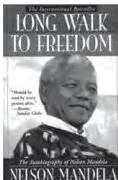
This first image belongs to the chapter’s opening line — before defining freedom, the book makes you stop and look at a life spent pursuing it. Mandela’s autobiography is the evidence of what freedom can cost: apartheid restricted easy movement about the country, denied a free choice of whom to marry, and bundled people into townships (NCERT, p. 18).
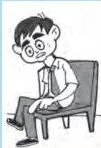
The second image sits under that exact sentence and carries its weight (NCERT, p. 18): the chapter asks you to imagine giving up talking with friends, playing a favourite game, wearing favourite clothes, listening to favourite music — the ordinary pleasures — to be locked alone in a cell for an ideal.
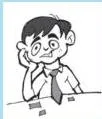
The flower is the chapter’s image of positive liberty: the individual blossoms only when the soil is fertile, the sun gentle, the water adequate and the care regular (NCERT, p. 27). Read the image as a list of enabling conditions — material resources, participation in decision-making, education (NCERT, p. 27).
The point of positive liberty is that you cannot flourish alone; society provides the soil.
Freedom Chapter: Definitions to Remember
The table below gathers the terms the chapter actually defines. Each is restated in simple words, with the page for the original.
| Term | What it means (in the chapter’s sense) | NCERT page |
|---|---|---|
| Freedom | Absence of external constraints — no coercion, independent decisions, autonomous action; plus the conditions to develop potential. | p. 19-20 |
| Constraints | External limits on freedom; rules of social living that may also free us from insecurity. | p. 19-20 (p. 17) |
| Swaraj | Swa (Self) + Raj (Rule): rule of the self and rule over self; liberation of self-respect, self-responsibility and self-realisation. | p. 20 |
| Self-regarding action | An action with consequences only for the actor; the state has no business interfering. | p. 24 |
| Other-regarding action | An action with consequences for others; interference may be justified. | p. 24 |
| Harm principle | Mill’s rule from On Liberty: the only legitimate ground for interference is self-protection, preventing harm to others. | p. 23 |
| Negative liberty | The inviolable, minimum area of non-interference; freedom from interference. | p. 26 |
| Positive liberty | The conditions that allow the individual to develop; freedom to develop; I govern myself. | p. 27 |
| Reasonable restrictions | The Indian constitutional term for justifiable constraints: defensible by reason, not excessive, not out of proportion. | p. 25 |
| Liberalism | An ideology built on tolerance but distinctive for its focus on the individual; it prioritises individual liberty and is suspicious of political authority. | p. 23 |
Common Mistakes Students Make in the Freedom Chapter
Answers to this chapter fail in predictable ways, and the textbook plants the warnings itself. The table names each mistake before you can make it.
| Mistake | Correct rule | How to check your answer |
|---|---|---|
| Freedom means doing anything you like. | No individual in society can enjoy a total absence of constraints, and such constraints can also free us from insecurity (NCERT, p. 20, 17). | Ask which constraint this freedom is exercised against — society always requires some rules (NCERT, p. 22). |
| All restrictions, especially state restrictions, are bad. | Some constraints prevent chaos and protect the conditions of freedom; a democratic state is a means of protecting freedom (NCERT, p. 21-22). | Ask who benefits from the constraint and what happens without it a society descending into chaos. |
| Negative liberty means no government at all. | Negative liberty means an inviolable minimum area of non-interference, not the absence of every rule (NCERT, p. 26). | Reframe it: answer the question, Over what area am I the master? Not, Should the state exist? |
| Positive liberty lets the state do anything in the name of freedom. | The chapter warns that tyrants can justify their rule by invoking positive liberty; the ideal answer is I govern myself (NCERT, p. 27). | Check who answers who governs me in your essay — it must be the individual, not the ruler. |
| It is a mistake to say banning is justified for anything harmful. | Text: only serious harm to definite individuals justifies the force of law; minor harm draws only social disapproval, as with loud music (NCERT, p. 24-25). | Test it on the loud music example: would the chapter call the police? It would not. |
How to Use the Freedom Chapter for Exams
The chapter’s five exercises are the best practice set you have, because each targets a specific section. Use the table to plan an answer that includes what each question is looking for.
| Question | What it asks | Section that answers it | Key points to include |
|---|---|---|---|
| Q1 | Meaning of freedom and the link between individual and nation. | 2.1 and 2.2 (p. 18-20) | Mandela’s struggle for all South Africans; Suu Kyi’s freedom from fear; Bose’s all-round freedom. |
| Q2 | Difference between negative and positive liberty. | 2.5 (p. 26-27) | Define both; Over what area am I the master? vs who governs me?; freedom from vs freedom to. |
| Q3 | Meaning of social constraints and whether any are necessary. | 2.2 and 2.3 (p. 20-22) | No total absence of constraints; chaos without rules; mechanisms to control violence; constraints protecting debate. |
| Q4 | Role of the state in upholding freedom. | 2.3 and 2.4 (p. 21-25) | Democratic state protecting freedom; the harm principle limiting state power; reasonable restrictions. |
| Q5 | Freedom of expression and one reasonable restriction, with examples. | Freedom of expression (p. 28-29) plus reasonable restrictions (p. 25) | Mill’s four reasons; serious harm test; the ban on banning; one reasoned restriction of your own. |
Structure for the negative and positive liberty answer (Exercise 2): define each concept first, then quote the question each answers — over what area am I the master versus who governs me (NCERT, p. 26-27) — contrast freedom from with freedom to, give one chapter example for each, state the relationship (they usually support each other), and finish with the tyrant warning (NCERT, p. 27).
That structure covers everything a full answer needs.
Use the two activity boxes — LET’S DO IT (p. 19) and LET’S DEBATE (p. 21) — as discussion practice for the same skills. And one honest note: textbook contents and the examinable syllabus are not always identical — check the current official CBSE syllabus to see exactly what is examinable in your session.
The Freedom Chapter: One Connected Argument
This is the chapter’s argument as a single chain — useful for revising the night before. Each link depends on the one before it.
The chain starts with the human desire for self-control: Mandela and Suu Kyi gave up decades of life because freedom is the condition of a dignified human life (NCERT, p. 18-19). Freedom then gets its definition — the absence of constraints plus the conditions to develop potential (NCERT, p. 19-20) — and Swaraj supplies the Indian version of the same ideal (NCERT, p. 20).
Constraints enter because domination and inequality limit people’s choices, yet society needs some constraints to avoid chaos and protect debate (NCERT, p. 21-23). The harm principle tests which constraints are justified, and reasonable restrictions is the Indian constitutional phrase for the same test (NCERT, p. 23-25).
The negative and positive liberty distinction then organises everything: freedom from interference versus freedom to develop (NCERT, p. 26-27). Freedom of expression gets Mill’s strongest defence because truth depends on the conflict of opposing views (NCERT, p. 28-29).
The chapter ends where it began: freedom is making choices, and with choice comes responsibility — which is why children stay in the care of parents until education and judgement mature (NCERT, p. 29).
Related NCERT Resources
Continue with the rest of the book from the chapter that sets up its questions: Political Theory: An Introduction, the previous chapter, explains what political theory is and why it studies ideas like freedom.
The Class 11 Political Science notes hub collects the chapters of both Class 11 Political Science books, and the Elections and Democracy notes page sits in the same hub as a related topic.
For the wider picture, browse Class 11 notes across subjects, or start from the site-wide CBSE notes index. The authoritative source for all NCERT textbooks, editions and PDFs is ncert.nic.in, where the official PDF of every chapter is published.
Reference: NCERT Class 11 Political Theory textbook, chapter 2, official edition on ncert.nic.in.
Sources and Data Verification
- Which edition: this page describes chapter 2 (Freedom Overview of the chapter) of the NCERT Class 11 textbook Political Theory, official edition on ncert.nic.in — the same file linked at the top of this page.
- What this page covers: chapter 2 of Political Theory only. It does not describe the other Class 11 Political Science book, Indian Constitution at Work, or any other chapter of either book.
- Academic session: this listing is maintained for the 2026-27 session.
- Authority split: NCERT settles textbooks, editions and PDFs; CBSE settles curriculum, syllabus and examinations.
Frequently Asked Questions About Freedom Overview
What is freedom according to Class 11 Political Theory?
Freedom is the absence of external constraints — no external controls or coercion, and the ability to make independent decisions and act autonomously (NCERT, p. 19).
The chapter immediately adds a second dimension: freedom is also the conditions that let people express themselves and develop their potential, so a free society enables all members to develop with the minimum of social constraints (NCERT, p. 20).
What is the harm principle of J.S. Mill?
Mill’s harm principle, from On Liberty, states that the only legitimate ground for interfering with a person’s liberty is self-protection — preventing harm to others (NCERT, p. 23). The chapter applies it strictly: only serious harm to definite individuals justifies the force of law, while minor harm earns only social disapproval, as with loud music in an apartment building (NCERT, p. 24-25).
What is the difference between negative and positive liberty?
Negative liberty is freedom from — an inviolable minimum area of non-interference in which you can do, be or become what you wish, and it answers the question, Over what area am I the master? (NCERT, p. 26).
Positive liberty is freedom to — the conditions that let you develop, answered by who governs me with the ideal answer, I govern myself (NCERT, p. 27).
What does Swaraj mean in the freedom chapter?
Swaraj means Swa (Self) plus Raj (Rule): both the rule of the self and rule over self (NCERT, p. 20). In the freedom struggle it was a constitutional and political demand behind Tilak’s slogan, and in Gandhi’s Hind Swaraj (1909) it became self-rule — it is Swaraj when we learn to rule ourselves. It reaches beyond freedom to self-respect, self-responsibility and self-realisation.
Why does the chapter say constraints are necessary for freedom?
Because no individual in society can enjoy a total absence of constraints (NCERT, p. 20). Without rules, society would descend into chaos — people have conflicting ambitions, compete for scarce resources and fight over everything from parking spaces to land, so every society needs mechanisms to control violence and settle disputes (NCERT, p. 22).
The task is therefore to separate socially necessary constraints from unjustified restrictions.
What are reasonable restrictions on freedom in India?
Reasonable restrictions is the Indian constitutional term for justifiable constraints: restrictions may be imposed, but they must be defensible by reason, not excessive, and not out of proportion to the action being restricted (NCERT, p. 25). The chapter’s warning is that a habit of imposing restrictions is itself detrimental to freedom.
Explore Class 11 Political Science Books
- Previous: Political Theory: An Introduction
- Next: Equality
Related chapters:
- Constitution
- Rights in the Indian Constitution
- Equality