
Looking for the World Climate and Climate Change Class 11 chapter? It is Chapter 11 of the NCERT Class 11 Geography book Fundamentals of Physical Geography (NCERT, p. 90).
The chapter does two jobs: it classifies the world’s climates using Koeppen’s letter scheme, and it explains climate change, global warming and greenhouse gases. The official chapter PDF is right below; the rest of this page guides you through everything the chapter teaches.
Get the official NCERT Class 11 Geography Chapter 11 World Climate and Climate Change PDF from NCERT’s own website — it is the exact chapter file from the official edition of Fundamentals of Physical Geography, ready to read, print or revise from. If a direct link ever changes, the official NCERT textbooks portal (ncert.nic.in) carries every Class 11 Geography book.
| What the chapter holds | Count | Where it is used |
|---|---|---|
| Printed pages | 8 | |
| Figures with NCERT captions | 2 | |
| Tables | 2 | |
| Exercise questions | 3 | answered in our NCERT Solutions |
| Official NCERT PDF | Download the chapter PDF | the chapter exactly as NCERT publishes it |
Chapter at a Glance
The chapter works in two clear halves — first classifying the world’s climates, then explaining climate change — and it carries two reference tables: Table 11.1: Climatic Groups According to Koeppen and Table 11.2: Climatic Types According to Koeppen, plus a closing exercise set and a project on the Kyoto declaration. Its sections, figures and exercises are counted in the table below.
What This Chapter Covers: From Climate Codes to Climate Change
Here is the chapter in reading order, with textbook page numbers, so you can jump straight to the part you need for tonight’s revision.
- Page 90 — why classify climate at all. The chapter opens by organising climate data into smaller units and lists the three approaches: empirical, genetic and applied.
- Pages 90-91 — Koeppen’s scheme and the letter system. The most widely used classification, built on mean annual and mean monthly temperature and precipitation, with capital letters for groups and small letters for types.
- Pages 91-92 — Group A: tropical humid climates. Its three types — tropical wet (Af), tropical monsoon (Am) and tropical wet and dry (Aw) — with the Amazon, equatorial Africa and the Indian sub-continent as examples.
- Pages 92-93 — dry B climates. Why dryness covers such huge latitudes, and the four B types: BSh, BWh, BSk and BWk.
- Pages 93-94 — warm temperate C climates. Humid subtropical (Cwa), Mediterranean (Cs), humid subtropical (Cfa) and marine west coast (Cfb) climates on the eastern and western margins of continents.
- Pages 94-95 — cold snow forest D and polar E climates. The severe northern interiors (Df, Dw) and the tundra and ice cap worlds (ET, EF).
- Pages 95-96 — climate change: evidence and causes. Glacial cycles, tree rings, lake sediments, historical records, then astronomical causes (sunspots, Milankovitch oscillations) and terrestrial causes (volcanism, aerosols).
- Pages 96-97 — global warming and greenhouse gases. The greenhouse mechanism, the main GHGs, the CO2 facts, ozone depletion and the Kyoto Protocol, ending with the 1998 warmest-year record on page 97.
- Page 97 — the two newspaper clippings. Reproduced news reports the chapter prints in full, on the North Atlantic chill and on greenhouse gases taking the lead.
- Page 98 — exercises and project work. Three question sets plus a project on the Kyoto declaration, with the final pages also carrying clippings on air pollution and the Gangotri glacier.
Key Concept: How to Read a Koeppen Climate Code
A code such as BWh or Cwa is not an abbreviation; it is a whole climate description compressed into a few letters. Once you know what each letter means, you can decode any Koeppen type without looking it up.
Koeppen selected temperature and precipitation values that match how vegetation behaves, and used those values to define climate groups (NCERT, p. 90). Three rules carry all the meaning:
- Capital letters mark wet or dry first. A, C, D and E delineate humid climates; B delineates dry climates (NCERT, p. 91).
- Small letters f, m, m, w, s give the dryness pattern. f = no dry season; m = monsoon, short dry season; w = winter dry season; s = summer dry season (NCERT, p. 91).
- Small letters a, b, c, d grade temperature severity from mild to very severe, and the B group is split by capital S for steppe and W for desert (NCERT, p. 91).
Keep the four dryness letters straight with this hook:
| Small letter | What it means | Memory hook | Example code |
|---|---|---|---|
| f | No dry season | f = fully wet all year | Af (tropical wet) |
| m | Monsoon, short dry season | m = monsoon pause in the rain | Am (India) |
| w | Winter dry season | w = winter is the dry season | Aw, Cwa |
| s | Summer dry season | s = summer is when rain stops | Cs (Mediterranean) |
For the temperature letters, think of a, b, c, d as grades running from mild to severe, like exam grades — a is the warmest, d the most extreme cold. In the dry group, S = semi-arid steppe, W = full desert, with h marking hot low-latitude types and k marking cooler mid-latitude ones.
Try it on BWh: B puts it in the dry group, W makes it a desert rather than a steppe, and h marks the hot low-latitude type — BWh is the subtropical desert climate. Now Cwa: C gives a mild winter, w a winter dry season, and a a hot summer — the humid subtropical climate of the North Indian plains.
Two codes, no lookup needed.
The Five Koeppen Groups (A to E): What Each Climate Is Like
Koeppen’s five groups are the skeleton of this chapter — every climate type that follows belongs to one of them. The table below condenses Table 11.1 (NCERT, p. 91) into the defining threshold and where each group dominates.
| Group | Letter | Defining threshold | Where it dominates | ||||||||||||||||||||||||||||||||||||||||||||||||||||||||||||||||||||||||||||||||||||||||||||||||
|---|---|---|---|---|---|---|---|---|---|---|---|---|---|---|---|---|---|---|---|---|---|---|---|---|---|---|---|---|---|---|---|---|---|---|---|---|---|---|---|---|---|---|---|---|---|---|---|---|---|---|---|---|---|---|---|---|---|---|---|---|---|---|---|---|---|---|---|---|---|---|---|---|---|---|---|---|---|---|---|---|---|---|---|---|---|---|---|---|---|---|---|---|---|---|---|---|---|---|---|
| Tropical | A | Coldest month averages \(18^\circ\text{C}\) or higher | Between the tropics | ||||||||||||||||||||||||||||||||||||||||||||||||||||||||||||||||||||||||||||||||||||||||||||||||
| Dry | B | Potential evaporation exceeds precipitation | \(15^\circ\)-\(60^\circ\) latitude belts | ||||||||||||||||||||||||||||||||||||||||||||||||||||||||||||||||||||||||||||||||||||||||||||||||
| Warm temperate | C | Coldest month above \(-3^\circ\text{C}\) but below \(18^\circ\text{C}\) | \(30^\circ\)-\(50^\circ\), mainly on continent margins | ||||||||||||||||||||||||||||||||||||||||||||||||||||||||||||||||||||||||||||||||||||||||||||||||
| Cold snow forest | D | Coldest month \(-3^\circ\text{C}\) or below | \(40^\circ\)-\(70^\circ\text{N}\) continental interiors | ||||||||||||||||||||||||||||||||||||||||||||||||||||||||||||||||||||||||||||||||||||||||||||||||
| Cold (polar) | E | Every month below \(10^\circ\text{C}\) | Poleward of \(70^\circ, Greenland, Antarctica\lt /td\gt \lt /tr\gt \lt /tbody\gt \lt /table\gt \lt h3\gt Group A: Tropical Humid Climates (NCERT, pp. 91-92)\lt /h3\gt \lt p\gt Between the tropics, the sun overhead and the Inter Tropical Convergence Zone make the climate hot and humid, with low annual temperature range and high rain (NCERT, p. 91). \lt /p\gt \lt ul\gt \lt li\gt \lt strong\gt Af — tropical wet:\lt /strong\gt near the equator, in the Amazon Basin, western equatorial Africa and the East Indies. Rain in every month, afternoon thunder showers, uniform heat, negligible annual range of temperature, dense tropical evergreen forests (NCERT, p. 92).\lt /li\gt \lt li\gt \lt strong\gt Am — tropical monsoon:\lt /strong\gt the Indian sub-continent, north-eastern South America and northern Australia; heavy summer rain and a dry winter (NCERT, p. 92).\lt /li\gt \lt li\gt \lt strong\gt Aw — tropical wet and dry:\lt /strong\gt north and south of the Af belts — Brazil, Bolivia, Paraguay, Sudan, southern Central Africa. Less rain than Af and Am, a shorter wet season, longer dry season, and the greatest diurnal ranges of temperature in the dry season; deciduous forest and grassland cover (NCERT, p. 92).\lt /li\gt \lt /ul\gt \lt h3\gt Group B: Dry Climates (NCERT, pp. 92-93)\lt /h3\gt \lt p\gt B climates cover enormous latitudes from \(15^\circ\) to \(60^\circ\). At \(15^\circ\)-\(30^\circ\), subtropical high pressure with subsidence and temperature inversion stop rain; on western coasts bordering cold currents fog forms; and in the \(35^\circ\)-\(60^\circ\) interiors, maritime winds never reach (NCERT, p. 92).
Group C: Warm Temperate Climates (NCERT, pp. 93-94)C climates lie at \(30^\circ\)-\(50^\circ\), mainly on the eastern and western margins of continents, with warm summers and mild winters. Four types:
Group D: Cold Snow Forest Climates (NCERT, p. 94)D climates fill the great continental interiors at \(40^\circ\)-\(70^\circ\)N in Europe, Asia and North America, with cold snowy winters and short frost-free seasons (NCERT, p. 94).
Group E: Polar Climates (NCERT, pp. 94-95)Poleward of \(70^\circ\), the sun’s heat is too weak for any true summer.
India in Koeppen’s ClassificationThis chapter is global in scope, but three of its examples are Indian — and one exercise question asks about the Indian Peninsula directly, so it pays to localise the codes.
The practical payoff: learn Am and Cwa as “India’s two codes” before attempting the exercise question on the Indian Peninsula — Am is the answer, not Af. Climate Change: Evidence, Causes and the Recent PastThe second half of the chapter opens with a point students often find surprising: climate change is a natural and continuous process, not a modern invention (NCERT, p. 95). Nature keeps its own records, and the chapter lists them:
The chapter’s timeline of the Earth’s recent climatic past:
The causes split into two families, astronomical and terrestrial (NCERT, pp. 95-96):
Global Warming and Greenhouse Gases: The MechanismThe greenhouse effect is an analogy, not a physical building — the atmosphere behaves like the glass of a greenhouse, and the book even gives the parked-car example: a closed car in summer is hotter inside than outside (NCERT, p. 96). The sequence of the mechanism:
Glass does the same: transparent to the shortwave coming in, opaque to the longwave going out, so the air inside a greenhouse or a closed vehicle warms. The primary greenhouse gases today are carbon dioxide, CFCs, methane, nitrous oxide and ozone (NCERT, p. 96).
The ozone story: stratospheric ozone forms when ultraviolet rays convert oxygen to ozone, and that ozone screens out the ultraviolet. CFCs drifting into the stratosphere destroy the ozone, and the large depletion over Antarctica is called the ozone hole — it lets ultraviolet pass down through the troposphere (NCERT, p. 96). The international response: the Kyoto Protocol, proclaimed in 1997 and in effect from 2005, was ratified by 141 nations and bound 35 industrialised countries to cut emissions to 5 per cent below 1990 levels by 2012 (NCERT, p. 96). The chapter closes this part with the temperature record (NCERT, p. 97): the annual average near-surface air temperature of the world is about \(14^\circ\text{C}\); the greatest warming of the 20th century came in 1901-1944 and 1977-1999, about \(0.4^\circ\text{C}\) in each; at the end of the 20th century the mean was about \(0.6^\circ\text{C}\) above the end of the 19th; the seven warmest years of 1856-2000 all fell in the last decade, and 1998 was the warmest year of the whole millennium, probably. The Chapter’s Newspaper Clippings on Page 97Page 97 reproduces real newspaper reports as figures. They look like filler, but both carry examinable ideas, and the second one is quoted directly in the book. 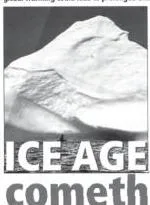 The first clipping reports scientific concern that global warming could lead to a prolonged chill in the North Atlantic. Its message for the chapter’s argument: climate can shift abruptly, not only gradually — a region can cool sharply even while the planet as a whole warms (NCERT, p. 97). 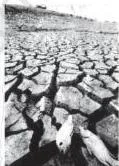 default The second clipping quotes James White, a geology professor at the University of Colorado: although ice-age evidence shows carbon dioxide and the other greenhouse gases rose and fell in response to warming and cooling, “the gases could clearly take the lead as well.” That is the chapter’s key point — greenhouse gases are not passive passengers hitched to climate change; they can drive it (NCERT, p. 97). On the same final pages the book carries unfigd clippings on air pollution and on the Himalayan glaciers: the Gangotri glacier is receding at about 23 metres a year on average, the book reports on page 98, with the retreating glaciers threatening water shortages for hundreds of millions of people. Key Terms DefinedThe chapter loads the reader with technical vocabulary. Here is the plain meaning of each term and the page where it appears, so you can build a one-page vocabulary sheet.
Common Mistakes and ConfusionsAlmost every mark lost on this chapter comes from either misreading a letter code or reversing one counterintuitive cause. Name the mistake before you make it:
Exam Notes: Working the Exercise QuestionsThe chapter closes with three question sets on page 98 — multiple choice, short answers of about 30 words, and long answers of about 150 words — plus a project on the Kyoto declaration. Every question maps to a page in this chapter, so the exercise set is fully answerable from the text you have just read.
Structure advice without any mark promises: a 30-word answer should state the answer in its first sentence and then justify it; a 150-word comparison should give one paragraph to each climate group, then a sentence of contrast. And remember the textbook-versus-syllabus caveat — textbook contents and the examinable syllabus are not always identical, so check the current official syllabus. Revision Recap: Recall the Chapter in Ten PointsTen lines to revise the night before, each drawn from a cited page:
The chapter’s two halves in one line: classify the world’s climates, then explain the change. Related Resources: Class 11 Geography ChaptersThis listing is maintained for the 2026-27 academic session using the NCERT textbook information available to us. NCERT remains the authority for confirming the latest edition. This chapter sits inside Fundamentals of Physical Geography, the first of the two Class 11 Geography NCERT books — see the Class 11 Geography chapters hub, the Class 11 study notes hub, and the wider CBSE notes collection on this site for the surrounding material. The previous chapter, Atmospheric Circulation and Weather Systems, builds the circulation and weather machinery this chapter assumes, while the next chapter, on Water Oceans, moves the book on from air to sea. Reference: NCERT Class 11 Geography textbook, chapter 11, official edition on ncert.nic.in. Sources and Data Verification
FAQs: World Climate and Climate Change Class 11Which two climatic variables does Koeppen use to classify climates?Temperature and precipitation — Koeppen’s scheme uses mean annual and mean monthly values of both, relating them to the distribution of vegetation (NCERT, p. 90). What do the letters f, m, w and s mean in Koeppen’s scheme?f means no dry season; m means monsoon climate with a short dry season; w means a winter dry season; and s means a summer dry season (NCERT, p. 91). Why is most of the Indian Peninsula placed under Am and not Af?Am is the tropical monsoon type found over the Indian sub-continent, with heavy summer rain and a dry winter. Af is the equatorial type with rain in every month, typical of the Amazon Basin and the East Indies — conditions India does not match (NCERT, pp. 91-92). How do sunspots and volcanism change the climate?According to the view the chapter reports, more sunspots may bring cooler, wetter weather and greater storminess — though the findings are not statistically significant. Volcanic aerosols linger for years and reduce the sun’s radiation reaching the Earth’s surface, slightly cooling it (NCERT, pp. 95-96). What are the main greenhouse gases and which is the most concentrated?The primary greenhouse gases are carbon dioxide, CFCs, methane, nitrous oxide and ozone. CO2 has the largest concentration, rising about 0.5 per cent a year from fossil fuel combustion and deforestation, with forests and oceans as its sinks (NCERT, p. 96). What did the Kyoto Protocol require of countries?Proclaimed in 1997 and in effect from 2005, it was ratified by 141 nations and bound 35 industrialised countries to reduce their emissions to 5 per cent below 1990 levels by 2012 (NCERT, p. 96). Explore Class 11 Geography Books
Class 11 Geography on LearnCBSE: Related chapters:
Related More from this sectionTopographical Maps Class 11 PDF: NCERT Geography Chapter 5Topographical maps class 11 NCERT PDF with the chapter's contours, slopes, cross-sections and the Survey of India sheets — explained with the…
6 min read
Introduction to Remote Sensing Class 11 Geography (NCERT Chapter 6)Introduction to remote sensing class 11 NCERT chapter 6: download the official PDF, explore the stages, sensors, resolutions and image interpretation elements.
24 min read
|