
These are the civil disobedience and beyond class 12 notes — revision notes for the chapter “Mahatma Gandhi and the Nationalist Movement: Civil Disobedience and Beyond” from the NCERT Class 12 History textbook (Themes in Indian History, Part III).
They compress the 1915-1948 arc — the making of a mass leader, the three all-India mass movements, the key sources historians use, and the complete timeline — into a format you can revise from alone. These notes follow the 2026-27 session (rationalised NCERT edition).
The chapter has two halves: a chronological narrative and a sources section. These notes mirror that structure — movement-by-movement explanations first, then “Knowing Gandhi”, then exam pointers and a revision summary. Use the table of contents to jump anywhere; start with the overview if this is your first pass, or go straight to the revision summary for a last-night sweep.
Reference: NCERT Class 12 History textbook (Themes in Indian History, Part III), chapter ‘Mahatma Gandhi and the Nationalist Movement: Civil Disobedience and Beyond’. Broaden your revision with other Class 12 History notes.
Chapter Overview: From the BHU Speech to the Assassination (1915-1948)
The chapter opens by calling Gandhi the ‘Father of the nation’ — but immediately clarifies that this characterisation has limits. Like Washington or Ho Chi Minh, Gandhi was shaped and constrained by the society in which he lived: “individuals, even great ones, are made by history even as they make history” (NCERT, p. 286).
Keep this dual view in mind — Gandhi transformed the movement, but the movement and its people also shaped him.
The chapter’s 1915-1948 span breaks into three phases:
- Rise and local struggles (1915-1922): return from South Africa, Champaran, Ahmedabad, Kheda, then the Rowlatt satyagraha and Non-Cooperation.
- Civil disobedience and dialogue (1930-1931): the Dandi March and the Round Table Conferences.
- ‘Beyond’ — Quit India, Partition and 1948 (1942-1948): the third mass movement, the last heroic days, and the assassination.
The title word ‘beyond’ matters: the chapter does not stop at civil disobedience. It runs on into negotiations, Quit India, Partition and the final months. Note that there are no formulas in this History chapter — the memorisable items are dates, movement names and source types.
The chapter also has a special feature: it teaches the historian’s craft through sources, so the second half is devoted to ‘Knowing Gandhi’ (NCERT, pp. 307-314).
The Vocabulary of Protest: Satyagraha, Non-cooperation, Civil Disobedience
Master these nine terms first — the whole chapter is built on them. Each is defined the way the textbook uses it.
| Term | Student-friendly meaning | Where it appears |
|---|---|---|
| Satyagraha | The non-violent protest technique Gandhi first forged in South Africa. | NCERT, p. 287 |
| Swaraj | Self-rule; Gandhi promised it ‘within a year’ if non-cooperation was fully carried out. | NCERT, p. 290 |
| Non-cooperation | Renunciation of all voluntary association with the British government — leaving schools, courts, and refusing taxes. | NCERT, p. 290 |
| Civil disobedience | Open, peaceful breaking of a specific law, such as the salt law. | NCERT, pp. 296-298 |
| Khilafat Movement | Indian Muslim movement, led by Muhammad Ali and Shaukat Ali, to restore the Turkish Khalifa’s control over Muslim sacred places. | NCERT, p. 290 |
| Purna Swaraj | Complete independence, proclaimed at the Lahore Congress of December 1929. | NCERT, p. 295 |
| Separate electorates | Reserved seats for a community — opposed by Gandhi, supported by Ambedkar. | NCERT, pp. 300-301 |
| Charkha / khadi | Spinning wheel and homespun cloth, symbols of self-reliance and anti-machine protest. | NCERT, pp. 292-295 |
| Prati sarkar | A parallel government run by kunbi peasants in Satara in 1943, with seba dals and tufan dals. | NCERT, p. 303 |
Gandhi’s First Struggles: BHU Speech, Champaran, Ahmedabad and Kheda (1915-1918)
Gandhi returned from South Africa in January 1915, where he had forged satyagraha, promoted inter-religious harmony, and questioned upper-caste attitudes to low castes and women. Historian Chandran Devanesan’s verdict: South Africa was “the making of the Mahatma” (NCERT, p. 287).
The India he returned to was politically alive: the Congress had branches in most cities, the Swadeshi movement had broadened the middle-class appeal, and leaders were split between militants like ‘Lal, Bal and Pal’ and the Moderates, whose ranks included Gokhale, Gandhi’s political mentor.
- BHU speech (February 1916): At the opening of the Banaras Hindu University, Gandhi charged the Indian elite with ignoring the labouring poor. His warning to the “richly bedecked noblemen” — “there is no salvation for India unless you strip yourself of this jewellery” — was a direct attack on elite nationalism (NCERT, p. 288).
- Champaran (1917): Gandhi spent much of the year seeking security of tenure and freedom for indigo peasants to choose their crops (NCERT, p. 289).
- Ahmedabad (1918): He intervened in a labour dispute demanding better working conditions for textile mill workers (NCERT, p. 289).
- Kheda (1918): He joined peasants asking the state for remission of taxes after a harvest failure (NCERT, p. 289).
The takeaway: these were localised struggles, but they marked Gandhi as a nationalist with deep sympathy for the poor (NCERT, p. 289).
Non-Cooperation and Khilafat: Rise, Reach and Withdrawal (1919-1922)
In 1919, the British handed Gandhi an all-India issue. The Rowlatt Act continued wartime press censorship and detention without trial, triggering a countrywide bandh and, in April 1919, the Jallianwala Bagh massacre in which more than four hundred were killed (NCERT, p. 289).
The non-cooperation call
Gandhi now asked Indians to stop attending schools, colleges and law courts, and to refuse taxes — a “renunciation of (all) voluntary association with the (British) Government”. He promised swaraj within a year (NCERT, p. 290).
To broaden the struggle he joined hands with the Khilafat Movement led by Muhammad Ali and Shaukat Ali, which demanded that the Turkish Khalifa retain control over Muslim sacred places and the jazirat-ul-Arab (NCERT, p. 290).
Evidence of a popular movement
- Students left government schools and colleges; lawyers refused to attend court.
- 396 strikes in 1921, involving 600,000 workers and a loss of seven million workdays.
- Hill tribes in northern Andhra broke the forest laws; farmers in Awadh refused taxes; peasants in Kumaun refused to carry officials’ loads.
These groups often acted on their own interpretation of non-cooperation, sometimes defying the local nationalist leadership (NCERT, p. 290).
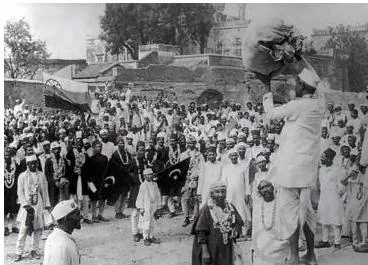
Fig 11.4 shows why the movement was so visible on the streets: the boycott of foreign cloth was something ordinary households did themselves, gathering cloth for bonfires in public. The boycott was both a political statement and a daily act of self-discipline.
Withdrawal and trial
- Chauri Chaura (February 1922): a group of peasants attacked and torched a police station, killing several constables. Gandhi called off the entire movement: “No provocation … can possibly justify (the) brutal murder of men who had been rendered defenceless” (NCERT, p. 291).
- Trial (March 1922): Gandhi was arrested and charged with sedition. Justice C.N. Broomfield praised him as a great patriot and a leader, then sentenced him to six years; he was released in February 1924 (NCERT, p. 291).
A People’s Leader: Dhoti, Charkha and the Rumour Mill
By 1922, Gandhi had redeemed his BHU promise: the movement was no longer just professionals and intellectuals — hundreds of thousands of peasants, workers and artisans participated. They called him ‘Mahatma’, and they trusted him because “he dressed like them, lived like them, and spoke their language” (NCERT, p. 292).
His dress was a deliberate break: while other leaders wore Western suits or the Indian bandgala, Gandhi wore a simple loincloth, adopted during his 1921 South India tour. It symbolised identification with the poor and ascetic protest against consumerist culture (NCERT, p. 292).
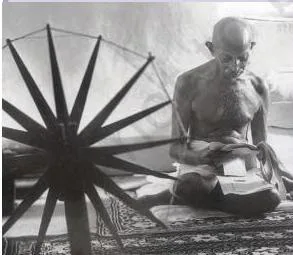
Fig 11.5 is the most abiding image of Indian nationalism. The charkha was not just a tool; it symbolised a society that would not glorify machines. As Gandhi wrote in Young India (1924): “What I object to, is the craze for machinery as such” — he wanted to save labour for all, not for a fraction of mankind.
Spinning also let him break the caste boundary between mental and manual labour (NCERT, p. 292).
Shahid Amin and the rumours
Historian Shahid Amin traced how peasants of eastern Uttar Pradesh saw Gandhi. A Gorakhpur Hindi newspaper reported crowds of 15,000 to 20,000 at railway stations; people wept, and donations ‘rained’ onto a sheet. Then came the rumours:
- Gandhi had been sent by the King to redress farmers’ grievances and could overrule local officials.
- His power was superior to the English monarch’s; colonial rulers would flee at his arrival.
- Villagers who criticised him found their houses falling apart or their crops failing.
- The karah (boiling pan) split in two; wheat turned to sesamum; brickbats stopped when Gandhi’s name was spoken.
The historian’s point (which links to the rumours discussion in the previous chapter, Rebels and the Raj): rumours reveal the beliefs and circumstances of the people who spread them (NCERT, pp. 293-294).
Organisation and reform
Mass appeal alone did not sustain the movement. Gandhi built careful organisation: new Congress branches, ‘Praja Mandals’ in princely states, provincial committees on linguistic lines, and communication in the mother tongue. Business support came from industrialists like G.D. Birla.
Between 1917 and 1922, a talented cohort gathered around him — Desai, Patel, Kripalani, Bose, Azad, Nehru, Naidu, Pant, Rajagopalachari — from different regions and religious traditions (NCERT, p. 294). After release, he turned to social reform: khadi, abolition of untouchability, opposition to child marriage, and Hindu-Muslim harmony (NCERT, p. 295).
The Salt March: Why Salt, and What It Changed (1930-1931)
After several quiet years of social reform, Gandhi re-entered politics in 1928, blessing the all-India campaign against the Simon Commission and a peasant satyagraha in Bardoli. At the Lahore Congress (December 1929), Nehru was elected President and Purna Swaraj — complete independence — was proclaimed (NCERT, p. 295).
On 26 January 1930, Independence Day was observed under Gandhi’s precise instructions: drum-beating, flag hoisting, and constructive work such as spinning or service of ‘untouchables’ (NCERT, pp. 295-296).
Why salt?
Salt was the perfect target because the state held a monopoly over it. In every household salt was indispensable, yet people were forbidden from making it even for domestic use.
Gandhi argued in his salt-tax essay that the tax could at times be fourteen times the value of the salt — over 1,000 per cent — and he called the monopoly a “fourfold curse”:
- It deprived people of a valuable, easy village industry.
- It destroyed what nature produces freely.
- The destruction itself meant more national expenditure.
- A crushing tax was exacted from a starving people.
Because it touched every household, Gandhi hoped the salt tax could mobilise wider discontent (NCERT, p. 297). Gandhi’s writings on salt and the Dandi speech are collected in the Collected Works of Mahatma Gandhi.
The march and its impact
- 12 March 1930: Gandhi left his Sabarmati ashram, walking toward the sea. He arrived three weeks later and made a fistful of salt on 6 April, making himself a criminal under the law (NCERT, p. 297).
- Parallel marches took place across the country; nearly 60,000 Indians were arrested (NCERT, p. 298).
- En route, at the village of Wasna, Gandhi told the upper castes that swaraj required serving untouchables and uniting Hindus, Muslims, Parsis and Sikhs (NCERT, p. 299).
The Salt March was notable for three changes it brought (NCERT, p. 300):
- World attention: The international press covered the march. Time magazine first mocked Gandhi’s “spindly frame”, then saluted him as “Saint” and “Statesman” (NCERT, pp. 299-300).
- Women’s participation: It was the first nationalist activity in which women joined in large numbers. Kamaladevi Chattopadhyay persuaded Gandhi not to restrict the protests to men alone.
- British confidence shaken: The march forced the British to realise their Raj would not last forever and that they would have to devolve power.
Dialogue, Deadlock and War: Round Table Conferences to the Cripps Mission (1931-1942)
After the Salt March, Gandhi signed the Gandhi-Irwin Pact (March 1931): civil disobedience was called off, prisoners were released, and salt manufacture was allowed along the coast. Radical nationalists criticised the pact because Gandhi obtained no commitment to political independence — only an assurance of talks (NCERT, p. 300).
The First Round Table Conference (November 1930) had met without Gandhi and proved an exercise in futility. At the Second Round Table Conference (late 1931), Gandhi represented the Congress (NCERT, p. 300).
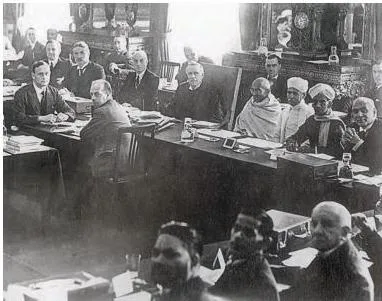
Fig 11.9 shows the setting in which Gandhi’s claim to represent all India came under challenge. Three parties opposed him (NCERT, pp. 300-301):
- The Muslim League — claiming to stand for the interests of the Muslim minority.
- The Princes — claiming the Congress had no stake in their territories.
- B.R. Ambedkar — arguing that the Congress did not really represent the lowest castes.
On the specific question of separate electorates for the Depressed Classes, Gandhi and Ambedkar took opposite positions:
| Gandhi’s argument | Ambedkar’s reply |
|---|---|
| Separate electorates would ensure “bondage in perpetuity” and perpetuate the stigma of untouchability (NCERT, p. 300). | A community so handicapped needs some share of political power to protect itself against organised tyranny (NCERT, p. 301). |
The Conference was inconclusive. Gandhi resumed civil disobedience; the new Viceroy, Lord Willingdon, was privately hostile — in a letter to his sister he dismissed Gandhi as the centre of every political manoeuvre (NCERT, p. 301).
The deadlock dragged on: the Government of India Act (1935), Congress victories in eight of eleven provinces (1937), the outbreak of the Second World War (September 1939), the resignation of Congress ministries (October 1939), individual satyagrahas (1940-41), and the Muslim League’s March 1940 resolution demanding autonomy for Muslim-majority areas.
By now the contest was a three-way struggle — Congress, League and British — not simply Indians versus the British (NCERT, p. 302). The Cripps Mission (spring 1942) failed when the Congress insisted the Viceroy first appoint an Indian as Defence Member of his Executive Council (NCERT, p. 302).
Quit India and the Last Heroic Days (1942-1948)
After the failure of the Cripps Mission, Gandhi launched his third major movement: Quit India began in August 1942. Gandhi was jailed at once, so younger activists — especially socialists like Jayaprakash Narayan — organised strikes and sabotage. In Satara (west) and Medinipur (east), “independent” governments were proclaimed; it took the British more than a year to suppress the rebellion (NCERT, p. 303).
The Satara parallel government, the prati sarkar, ran volunteer corps (seba dals) and village units (tufan dals), held people’s courts and organised constructive work. It was dominated by kunbi peasants and supported by dalits, and it functioned till the 1946 elections (NCERT, p. 303).
The chapter calls Quit India genuinely a mass movement that energised the young. But while Congress leaders were in jail, Jinnah and the Muslim League expanded their influence, especially in Punjab and Sind (NCERT, pp. 303-304).
The road to Partition
- 1944-45: Gandhi released in June 1944; he held a series of meetings with Jinnah. A Labour government in Britain committed to granting independence (NCERT, p. 304).
- 1946 elections: Congress swept the General seats; the League won the Muslim-reserved seats. The polarisation was complete.
- Cabinet Mission (summer 1946): failed to get the Congress and League to agree on a federal system.
- Direct Action Day, 16 August 1946: Jinnah’s call for the League’s demand for Pakistan triggered bloody riots in Calcutta, spreading to Bengal, Bihar, the United Provinces and Punjab (NCERT, p. 304).
- 15 August 1947: India was freed but divided. Gandhi was absent from the celebrations — he marked the day with a 24-hour fast in Calcutta, mourning the division (NCERT, p. 305).
After Partition, the Congress passed a resolution on the rights of minorities, reaffirming India as a democratic secular state and rejecting the two-nation theory. Scholars have called these months Gandhi’s ‘finest hour’ — he worked in hospitals and refugee camps, and moved to Delhi hoping to reach riot-torn Punjab (NCERT, p. 305).
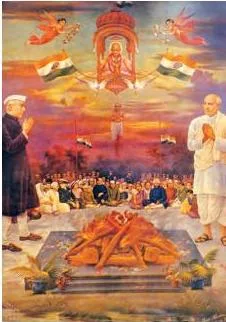
Fig 11.15 is a popular print from the period. It shows how Gandhi was remembered: deified as the unifying force of the national movement. Nehru and Patel stand on two sides of the pyre, representing the socialist and conservative strands of the Congress, while Gandhi blesses them both from a heavenly realm (NCERT, p. 306).
His prayer meetings in Delhi were disrupted by refugees objecting to readings from the Koran. There was an attempt on his life on 20 January 1948, and on 30 January 1948 he was shot dead at his daily prayer meeting by Nathuram Godse. The world mourned: George Orwell and Albert Einstein paid tribute, and Time compared his martyrdom to Abraham Lincoln’s (NCERT, p. 306).
Knowing Gandhi: The Sources Historians Use
The chapter’s distinctive skill content is its sources section, ‘Knowing Gandhi’ (NCERT, pp. 307-314). Historians reconstruct Gandhi’s career from four families of sources, and each has its strengths and its traps.
1. Public voice and private scripts
- What it gives us: Speeches capture the public voice of a leader; private letters capture private thoughts — anger, pain, hope, frustration.
- What to watch out for: The private-public divide often breaks down. Many letters are personal but are also written knowing they may be published. Gandhi regularly published readers’ letters in his journal Harijan, and Nehru edited A Bunch of Old Letters (1958).
Worked example — the 1936 exchange: When Nehru’s socialist rhetoric alarmed the conservatives in the Congress, Rajendra Prasad and Sardar Patel threatened to resign. The three exchanged letters that Nehru later published:
| Letter | What it reveals |
|---|---|
| Prasad to Nehru (Wardha, 1 July 1936) | Prasad withdraws the resignation, but complains Nehru acts as the mouthpiece of a minority, not of the Congress majority (NCERT, p. 308). |
| Nehru to Gandhi (Allahabad, 5 July 1936) | Nehru defends his socialist views as part of himself, but admits he is troubled and grateful for Gandhi’s mediation (NCERT, p. 308). |
| Gandhi to Nehru (Segaon, 15 July 1936) | Gandhi plays the mediator — he tells Nehru his colleagues lack his courage and frankness, but urges him to see the affair “in a lighter vein” and keep the presidency (NCERT, p. 309). |
The letters reveal the socialist-conservative rift inside the Congress, Gandhi’s role as the bridge between the two, and how letters carry emotion and politics tangled together (NCERT, pp. 307-309).
2. Autobiographies
- What they give us: Rich accounts of the past with human detail.
- What to watch out for: They are retrospective accounts written from memory. Writing an autobiography is “framing a picture” of yourself, so read for what the author omits — the wilful or unwitting acts of forgetting (NCERT, p. 310).
3. Through police eyes
- What they give us: The Home Department’s fortnightly reports, based on local police information, let us see how the colonial state tracked its critics.
- What to watch out for: The reports expressed what higher officials saw, or wanted to believe. During the Salt March, the Home Department was unwilling to accept that Gandhi’s actions had evoked any real response — officials dismissed the march as a “drama” or “theatrical” while the ground reality differed (NCERT, pp. 310-312).
4. Newspapers and popular prints
- What they give us: Contemporary newspapers tracked Gandhi’s movements and showed how ordinary Indians perceived him.
- What to watch out for: Newspapers are never unprejudiced. A London paper and an Indian nationalist paper reported the same events very differently (NCERT, p. 313).
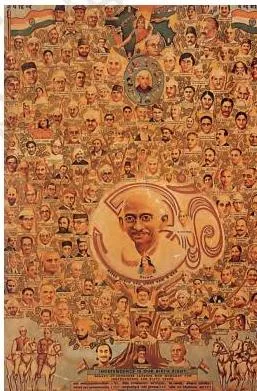
Fig 11.17 shows a popular print of the ‘tree of nationalism’. Gandhi appears as the looming central figure, surrounded by small images of other leaders and sages. To the historian, this print is evidence of how ordinary people perceived Gandhi and represented him in popular culture (NCERT, p. 313).
Four sources, one event: the Salt March
Historians rarely trust a single source. Here is how the Salt March looks through four different lenses:
| Source | What it says | Historian’s caution |
|---|---|---|
| Gandhi’s Dandi speech (5 April 1930) | The power of non-violence carried the march; arrest is not a setback because “when a whole nation is roused and on the march no leader is necessary” (NCERT, p. 298). | It is Gandhi’s own public voice — a statement of faith, written to inspire. |
| Home Department fortnightly reports | The march was a “drama” and “theatrical”; meetings excited little interest (NCERT, pp. 310-311). | Official sources filtered through what higher officials wanted to believe. |
| Time magazine | First mocked Gandhi’s “spindly frame”; within a week saluted him as “Saint” and “Statesman” (NCERT, p. 299). | A foreign press source with its own political worldview. |
| Police spy reports | Reported Gandhi’s village speeches and noted thousands of volunteers flocking; the District Superintendent wrote, “He is gathering more strength as he proceeds” (NCERT, p. 299). | Internal government intelligence — useful for facts, but written from the perspective of a surveilling state. |
The method line: every source must be read for who wrote or spoke it, for whom it was produced, and what it left out. That is exactly what the chapter’s source questions test.
Common Mistakes to Avoid in This Chapter
These are the chronological and source-interpretation slips that cost students in this chapter:
| Students write | Correct is | Why |
|---|---|---|
| ‘Chauri Chaura started the Non-Cooperation Movement.’ | It ended it. | The February 1922 attack on the police station prompted Gandhi to withdraw the movement (NCERT, p. 291). |
| ‘Gandhi attended the First Round Table Conference.’ | He attended the Second (late 1931). | The first meeting (November 1930) was held without him and was an exercise in futility (NCERT, p. 300). |
| ‘The Gandhi-Irwin Pact promised independence.’ | It promised talks, not independence. | Radical nationalists criticised Gandhi for obtaining no commitment to political independence (NCERT, p. 300). |
| ‘Police fortnightly reports prove the Salt March failed.’ | They are a biased official source that dismissed the march as a drama. | Historians cross-check them against other sources (NCERT, pp. 310-312). |
| ‘The salt tax was fourteen times the price of salt.’ | The tax could at times be fourteen times the value of the salt — over 1,000 per cent. | Gandhi called the monopoly a fourfold curse (NCERT, p. 297). |
| ‘Gandhi broke the salt law to make salt for sale.’ | He made a fistful of salt to break the state monopoly. | The act was symbolic and political — it made him a criminal under the law (NCERT, p. 297). |
| ‘Jallianwala Bagh killed exactly four hundred.’ | More than four hundred were killed. | The textbook is deliberately inexact: “more than four hundred” (NCERT, p. 289). |
| ‘Gandhi celebrated Independence Day on 15 August 1947.’ | He marked it with a 24-hour fast in Calcutta. | He was mourning the division of the nation (NCERT, p. 305). |
One more caution: do not treat private letters as pure confession. Even private letters are shaped by the awareness that they may one day be published — the private-public divide is never clean (NCERT, p. 307).
Exam Notes: How to Write the Answers This Chapter Asks For
This chapter’s questions (NCERT, pp. 314-315) fall into four types. Here is a recipe for each — guidance only, not full solutions. You can check the full questions and source materials in the official NCERT textbook PDF for this chapter.
(a) Answer in 100-150 words (Q1-5)
For each short answer, follow the same skeleton: define the term in your first line, give two concrete examples from the chapter, and cite or paraphrase Gandhi where relevant.
For example, Q3 (why the salt laws became an issue) draws on the CWMG source material showing the monopoly’s burden; Q5 (why the charkha was chosen) draws on the Young India quotations and the charkha texts (NCERT, pp. 292, 294).
(b) Write a short essay (250-300 words) (Q6-9)
- Paragraph 1: A thesis that answers the question directly.
- Paragraphs 2-4: Two or three evidence paragraphs built from named events and sources.
- Conclusion: Return to the question and answer it explicitly.
For Q9 (what private letters and autobiographies tell us, and how they differ from official accounts), treat it as a sources question: contrast the inward, retrospective view of letters and autobiographies with the outward, surveillance-driven view of official records (NCERT, pp. 307-310).
(c) Map work (Q10)
Plot the route of the Dandi March from Sabarmati to Dandi on a map of Gujarat. Mark the start, the end point, and the villages named in the chapter text — for example, Wasna, where Gandhi spoke about serving untouchables (NCERT, p. 299).
(d) Source-based ‘Discuss’ questions
The chapter is rich in source boxes — the Discuss items on pp. 289, 294, 295, 297, 298 and 302, plus the longer Source materials. For any of them, use this four-step approach:
- Identify who wrote or spoke, when, and for which audience.
- State what the source claims.
- Check it against a second source from the chapter.
- Say what the source does not tell you — the omission is often the answer.
Try it on the fortnightly reports: identify them as secret Home Department reports, note their claim that the march was “theatrical”, then check that against police spy reports showing crowds of thousands. Finally, note what the reports do not say — they never acknowledge genuine mass support, because the officials writing them wanted to believe the Raj was secure (NCERT, pp. 310-312).
One honest note: this chapter has no formulas. The memorisable items are dates, movement names, and source types with one example each.
Revision Summary: Three Movements at a Glance and the Full Timeline
The fastest way to revise the movements is the comparison table below. It lines up all three mass movements in one view.
| Movement | Years | Trigger | Method | Outcome |
|---|---|---|---|---|
| Non-Cooperation | 1920-22 | Rowlatt Act and the Khilafat cause | Renunciation of voluntary association — leaving schools, courts, taxes, foreign cloth | Withdrawn after Chauri Chaura; Gandhi arrested |
| Civil Disobedience | 1930-31 | The salt monopoly | Open breaking of the salt law and other laws | Gandhi-Irwin Pact, then resumption and repression |
| Quit India | 1942 | Failure of the Cripps Mission | Mass struggle with strikes and sabotage | Leaders jailed, harsh repression, but the British resolve to leave was confirmed |
Memory device: CAK for the 1917-18 local struggles — Champaran, Ahmedabad, Kheda. Then remember one movement per decade: 1920s Non-Cooperation, 1930s Civil Disobedience, 1940s Quit India.
Here is the chapter’s full timeline, rewritten from the NCERT timeline (p. 314) and extended through the last months:
| Year | Event |
|---|---|
| 1915 | Mahatma Gandhi returns from South Africa |
| 1917 | Champaran movement |
| 1918 | Peasant movement in Kheda (Gujarat) and workers’ movement in Ahmedabad |
| 1919 | Rowlatt Satyagraha (March-April); Jallianwala Bagh massacre (April) |
| 1921 | Non-cooperation and Khilafat Movements |
| 1928 | Peasant movement in Bardoli |
| 1929 | ‘Purna Swaraj’ accepted as Congress goal at the Lahore Congress (December) |
| 1930 | Civil Disobedience Movement begins; Dandi March (March-April) |
| 1931 | Gandhi-Irwin Pact (March); Second Round Table Conference (December) |
| 1935 | Government of India Act promises some form of representative government |
| 1939 | Congress ministries resign |
| 1942 | Quit India Movement begins (August) |
| 1946 | Mahatma Gandhi visits Noakhali and other riot-torn areas to stop communal violence |
| 1947 | Partition and 15 August independence |
| 1948 | 30 January assassination of Mahatma Gandhi |
FAQs: Civil Disobedience and Beyond Class 12 Notes Doubts
What is the difference between non-cooperation and civil disobedience in this chapter?
Non-cooperation meant renouncing all voluntary association with the government — Indians were asked to stop attending schools, colleges and law courts, and not pay taxes (NCERT, p. 290). Civil disobedience went further: it meant openly breaking a specific law, such as the salt law, to defy the state’s monopoly (NCERT, pp. 296-298).
Why did Gandhi choose the salt law for civil disobedience?
Because salt was indispensable in every household, yet people were forbidden from making it even for domestic use, forcing them to buy it at a high price. The tax could be fourteen times the value of the salt and over 1,000 per cent, which Gandhi called a “fourfold curse” (NCERT, p. 297).
Why was the Non-Cooperation Movement withdrawn?
After a group of peasants attacked and torched a police station at Chauri Chaura in February 1922, Gandhi insisted that no provocation could justify the brutal murder of defenceless men, and he called off the movement (NCERT, p. 291).
Who challenged Gandhi at the Second Round Table Conference?
Three parties challenged Gandhi’s claim that the Congress represented all India: the Muslim League (interests of the Muslim minority), the Princes (Congress had no stake in their territories), and B.R. Ambedkar (arguing the Congress did not represent the lowest castes) (NCERT, pp. 300-301).
What sources are used to reconstruct Gandhi’s career in this chapter?
Speeches, private letters (including Nehru’s A Bunch of Old Letters), autobiographies, Home Department fortnightly reports, newspapers and popular prints (NCERT, pp. 307-314).
What does ‘beyond’ mean in the title ‘Civil Disobedience and Beyond’?
The title signals that the chapter continues past the civil disobedience years into the Round Table dialogues, Quit India, Partition and Gandhi’s last months (NCERT, pp. 300-307).
Reference: NCERT Class 12 History textbook (Themes in Indian History, Part III), chapter ‘Mahatma Gandhi and the Nationalist Movement: Civil Disobedience and Beyond’. Explore the complete Class 12 notes or browse all CBSE notes for other classes and subjects.
Explore Class 12 History Notes
- Class 12 History Notes
- Class 12 CBSE Notes
- CBSE Notes for Classes 1 to 12
- Previous: Rebels and the Raj
Class 12 History on LearnCBSE:
Related chapters:
- Colonialism and the Countryside notes