
Chapter 12 of the NCERT Class 12 Biotechnology textbook is a tour of modern biotech: the four types of biofuels, GM and CRISPR-edited crops, lab-grown organoids, gold nanoparticles that change colour, and biology built from scratch.
These revision notes compress the chapter (NCERT pp. 289–322) into what you need to revise fast: definitions, comparison tables, every key number, worked examples and the confusions students actually fall into. They follow the 2026-27 session and the rationalised NCERT edition; you can verify any detail against the textbook PDF on the official NCERT portal (ncert.nic.in).
Use this page as your night-before revision: skim the branch map, then drill the tables, the numbers list and the nanogold worked example. It is part of the Class 12 Biotechnology notes collection; the full list of CBSE notes covers every subject.
A Map of Modern Biotechnology
The chapter opens with developmental biologist John Gurdon. In his nuclear transplantation experiment he replaced the nucleus of a fertilised frog egg with a nucleus from a mature intestinal cell of a tadpole, and the egg grew into a normal frog.
The result proved that a mature cell still carries all the genetic information needed to make every cell type, and it laid the foundation for cloning — later achieved in the mammal Dolly. Gurdon shared the 2012 Nobel Prize with Shinya Yamanaka, who discovered induced pluripotent stem cells (NCERT, p. 290).
The chapter’s core claim is that biotechnological innovation of the past decade has benefited agriculture, medical science, environment and energy (NCERT, p. 291). Six branches are surveyed:
| Branch | Pages | What it covers | One fact to remember |
|---|---|---|---|
| Environmental biotechnology | 291–298 | Biofuels, biodegradation, bioplastics, bioremediation | Biogas is mainly methane and CO₂, made anaerobically. |
| Plant biotechnology | 298–303 | GM crops, biofortification, CRISPR-Cas9 | Bt cotton has been grown commercially in India since 2002. |
| Regenerative medicine | 304–308 | Transplants, stem cells, organoids, bioprinting | Organoids come from pluripotent and adult stem cells. |
| Nanobiotechnology | 308–314 | Nanoscale materials in medicine, cosmetics, sensors | Bulk gold is golden; gold below 30 nm is ruby red. |
| Synthetic biology | 315–317 | Building organisms from scratch | The approach was announced at MIT in June 2004. |
| Future prospects | 317–319 | Microbial factories, plant-made drugs, India’s biotech sector | India’s Draft National Biotech Development Strategy covers 2020-24. |
Environmental Biotechnology: The Four Types of Biofuels
Biofuels are fuels produced from biological products — living organisms or waste generated from biological products such as landfills and recycled vegetable oil. When dedicated crops (soybean, jatropha, pongamia, palm oil, algae) are grown for fuel, the product is called a biofuel or agrofuel (NCERT, p. 292). A difference question can test exactly this crop-based subset, so keep the two labels separate.
The four types are compared below. Learn this table and any ‘which biofuel?’ question is settled:
| Type | Source | Production process | Main use | Limitation |
|---|---|---|---|---|
| Biodiesel | Animal fats, vegetable oils, waste cooking oil, oil crops (soybean, rapeseed, jatropha, canola, Pongamia pinnata, algae) | Trans-esterification | Diesel engines; usable pure, with no engine modification | Oil crops compete with food crops for farmland — why algae are explored instead |
| Bioalcohol | Wheat, corn, sugarcane, molasses, sugar beets, potato, fruit waste | Fermentation: release sugars from starch/cellulose → ferment with microbes → distil → dry | Bioethanol blended with petrol | Engine problems: hard starting, sputtering, oxidation of aluminium, rusting of steel |
| Biogas | Dung, manure, night soil, crops, organic industrial waste, wastewater | Anaerobic digestion by bacteria in an anaerobic digester | Cooking gas plus enriched bio-manure for households | Corrodes vehicle engine metal parts; production process still needs simplifying |
| Biomass | Wood, sawdust, grass cuttings, agricultural waste, dried manure, cow dung cakes | Direct burning, often after conversion into pellets | Solid fuel, especially for economically weaker sections | Combustion emits particulates and polycyclic aromatic hydrocarbons (PAHs), harmful to health |
Biodiesel scores on chemistry: it contains more hydrogen and oxygen and less carbon than fossil fuels, which improves combustion and reduces particulate emissions from unburnt carbon (NCERT, pp. 292–293).
Ethanol blending (Box 1). Blending percentages worldwide range from about 2 per cent to almost 30 per cent. In India, oil marketing companies may sell petrol blended with up to 10 per cent ethanol, while BIS (Bureau of Indian Standards) recommends 5 per cent blending nationally. Ethanol is renewable and cuts carbon dioxide and other greenhouse gas emissions.
Its practical problems: reduced engine efficiency, harder starting, sputtering, oxidation of aluminium in carburettors and rusting of steel components — so manufacturers must modify engines (NCERT, p. 293).
Algae as a biofuel source. Micro algae are microscopic photosynthetic forms; macro algae are the large, plant-like seaweeds. Algae are easy to grow and harvest year after year, are renewable, can yield both bioalcohol and biodiesel, and are non-edible — so they do not compete with food crops like corn and sugarcane.
The catch: algal biofuel is not yet cost-effective (NCERT, p. 294).
Biogas in India. Under the National Biogas and Manure Management Programme, the Ministry of New and Renewable Energy installed about 49.3 lakh biogas plants, introducing technologies such as cryogenic separation, in situ upgrading, hydrate separation and biological methods (NCERT, p. 294).
Bioalcohol memory device: the four production steps run R–F–D–D — Release sugars → Ferment → Distil → Dry. Remember: ‘Ripe Fruit Deserves Drying.’ The fermentation logic behind these steps is worked out in practice in the bioprocessing and biomanufacturing notes.
Biodegradation, Bioplastics and Bioremediation
Biodegradation is the natural waste-management and recycling system — it breaks down everything from yard waste to crude oil. Many wastes (plastics, fluorinated carbons) take hundreds of years to decompose, but scientists have identified a strain of bacteria that can literally eat plastics, and they are improving the speed of that activity.
The technology is still developing but is promising for environment-friendly recycling (NCERT, p. 295).
Bioplastics. Instead of styrofoam or plastic in single-use products, plant materials can be used: leaves, bamboo, wood chips, corn starch, seaweeds and natural biopolymers such as polysaccharides, proteins, lignin and natural rubber (NCERT, pp. 295–296). The biodegradable plastic PHB (polyhydroxybutyrate) is produced commercially by fermenting the bacterium Alcaligenes eutrophus.
The three PHB synthesis genes were transferred into Arabidopsis, where they produced PHB globules in chloroplasts without harming growth; large-scale production is possible in populus leaves, but the cost is still high compared with synthetic polymers (NCERT, p. 296).
Paper industry. Biopulping — treating wood chips with lignin-degrading fungi — cuts the energy and chemical demand of pulp making and improves paper quality. Biobleaching uses enzymes such as xylanase to reduce chlorine use.
GM trees that produce less lignin ease pulping further, and non-wood sources (bagasse, bamboo, jute, hemp, esparto, flax, grass, kenaf, reed) are reducing dependence on wood altogether (NCERT, pp. 296–297).
Oil recovery. Enhanced Oil Recovery (EOR) extracts residual oil left after the primary and secondary production phases; suitable microbes and their metabolic products improve its efficiency. Oil-eating microbes also clean up spills, and a genetically engineered Pseudomonas ‘superbug’ has been developed to eat oil spills (NCERT, p. 297).
Bioremediation uses microorganisms to reduce the toxicities caused by chemical pollutants — including heavy metals such as As, Cr, Hg, Cd and Zn in soil or water. Three principles guide the choice of strategy for contaminated waste (NCERT, p. 297):
- The pollutant must allow biological transformation to less toxic products.
- The contaminant must be bioavailable to microorganisms.
- The bio-activity must be efficient.
The textbook flags that detailed bioremediation is covered in Chapter 11; this chapter only summarises it (NCERT, p. 297).
Plant Biotechnology: GM Crops, Biofortified Crops and CRISPR-Cas9
About 29 countries have adopted GM crops; soybean, maize, cotton and canola are the major ones. First-generation GM targeted weed and pest control; the second generation adds tolerance to abiotic stress, improved nutrition, and the ability to overcome sexual incompatibility by introducing genes from unrelated organisms — bacteria, fungi, other plants and viruses (NCERT, p. 298).
Herbicide tolerance. Weeds such as Striga compete with crops for light, water and nutrients. Non-selective herbicides like glyphosate (sold as Roundup) kill the crop along with the weeds. The common biotech strategy is to over-produce the herbicide’s target enzyme (usually in the chloroplast) in the crop, so the crop becomes insensitive to the herbicide.
Roundup Ready canola, soybean, corn and cotton are already commercialised (NCERT, pp. 298–299).
Disease resistance. The chapter organises GM resistance strategies by pathogen class. Learn the pattern, not isolated facts:
| Pathogen class | GM strategy | Example from the chapter |
|---|---|---|
| Viruses | Introduce the viral coat protein gene; the coat protein acts like a vaccine, inducing resistance without the actual virus | Papaya ringspot virus-resistant papaya; yellow crookneck squash; barley yellow dwarf virus in wheat (NCERT, p. 299) |
| Fungi | Defensins (antimicrobial proteins), secondary metabolites, specific resistance genes | Alfalfa defensin in potato against Verticillium dahliae; resveratrol against Botrytis cinerea; Rpi-vnt1.1 from Solanum venturi against late blight; chitinase gene against apple scab (NCERT, pp. 299–300) |
| Bacteria | Lysozyme genes | Potato resistant to blackleg and soft rot caused by Erwinia carotovora; rice with wildfire resistance using genes from E. carotovora and Pseudomonas syringae (NCERT, p. 300) |
| Insects | Bt crystal (Cry) proteins that bind specifically to receptor proteins in the insect gut | Bt cotton in India since 2002; Bt brinjal in Bangladesh since 2014; gene stacking (pyramiding) for fall armyworm; cspB cold-shock protein stacked with Bt for drought tolerance (NCERT, pp. 300–301) |
| Nematodes | Resistance genes plus marker-assisted breeding with domesticated varieties | Transgenic potatoes with up to 70 per cent resistance; a resistant soybean variety bred from a wild strain — these new varieties are not transgenic (NCERT, p. 301) |
Box 2: GM plants and acquired characteristics. These stress-tolerant and improved-product crops are a favourite for one-line questions:
| Crop | Genetic change | Outcome |
|---|---|---|
| Arabidopsis / tobacco | Mannitol | Withstands high salinity; better germination; more biomass |
| Soybean (EcoSoy⁺) / wheat (EcoWheat⁺) | HaHB4 transcription factor from sunflower | Drought + herbicide tolerance; wheat yield up by 20 per cent |
| Arabidopsis | Coenzyme A-ligase | Up to 45 per cent less lignin |
| Eucalyptus | Gene encoding an Arabidopsis thaliana protein | 20 per cent more wood; harvested in 5.5 years instead of 7 |
| Potato | Starch synthesis gene | 60 per cent more starch; takes up less fat when fried |
| Maize / soybean | Two stacked genes | Tolerance to the herbicides glyphosate and 2,4-D-choline |
| Arctic⁺Gala apple | Non-browning gene | Non-browning trait |
(NCERT, p. 302) Biofortified GM crops (Table 12.1). GM technology has also fortified crops with nutrients:
| Crop | Genes transferred | Benefit |
|---|---|---|
| Golden Rice | Phytoene synthase, carotene desaturase, lycopene beta-cyclase → beta-carotene | Efficient source of vitamin A |
| High-oleic soybean | Fatty acid desaturase down-regulated | Higher ratio of oleic to linoleic acid |
| Extended shelf-life tomato | Polygalacturonase in antisense orientation | Increased shelf life |
(NCERT, p. 302) CRISPR-Cas9. You met the tool in Chapter 5, Section 5.4.2: a guide RNA binds the target DNA and Cas9 edits the gene. Scientists at the University of California, San Diego developed the first CRISPR gene-edited plants for drought and disease resistance.
CRISPR breaks from the Mendelian rule of equal inheritance from both parents by transferring traits from a single parent to successive generations. Against traditional breeding, which takes years, CRISPR is rapid, relatively simple, precise and can target multiple genes at once.
Its problems: off-target effects, occasional low efficiency, and regulatory and safety concerns; work on improving on-target efficiency and modifying Cas9 is still preliminary (NCERT, p. 303).
Regenerative Medicine: Grafts, Stem Cells and Organoids
Regenerative medicine is an emerging multidisciplinary specialty whose goal is cell and organ replacement to restore function lost through degeneration, trauma or disease; it can also protect vulnerable diseased cells from death (NCERT, p. 304). The oldest strategy is transplantation, which comes in three types:
| Graft type | Meaning | Example |
|---|---|---|
| Autograft | Transplantation between sites within the same individual | Skin graft |
| Allograft | From a donor to a non-genetically identical individual of the same species — the most common practice | Renal, liver, heart, lungs, pancreas transplants |
| Xenograft | Between two different species | Pig valves used to repair or replace defective human heart valves |
(NCERT, p. 304) Memory device: AUTO = the same person, ALLO = another person of the same species, XENO = a different species. The prefixes literally mean self, other, foreign.
Why stem cells? The liver, kidney and pancreas are mostly differentiated cells with limited capacity to regenerate. After major damage those cells cannot proliferate and replace what is lost, so stem cells — which can proliferate and differentiate — are the answer (NCERT, p. 304).
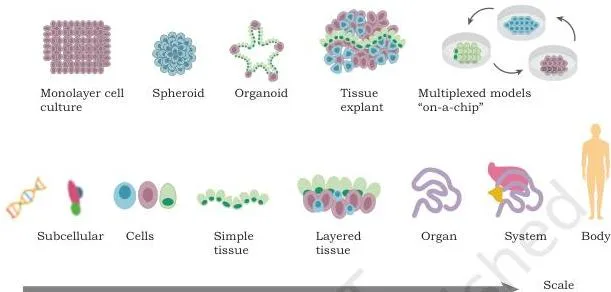
Figure 12.1 maps every model system, from the subcellular level up to the whole body. As scale increases, system complexity grows while the availability of biochemical and quantitative tools falls. Organoid models occupy the sweet spot: moderate complexity while still affording many tools for probing structure and function (NCERT, p. 305).
Organoids are ultra-small, self-assembled three-dimensional tissue cultures derived from stem cells — either pluripotent stem cells (PSCs) or adult stem cells (ASCs) — by simulating the biochemical and physical conditions of tissue development.
A concrete example of how shape drives fate: round mesenchymal stem cells from bone marrow tend toward adipocyte (fat) differentiation, while widely spread cells favour osteoblast (bone) differentiation (NCERT, p. 305). Organoids reiterate spatial organisation of heterogeneous tissue-specific cells, cell-matrix interactions, cell-cell interactions and some physiological functions of the tissue.
Organoids vs spheroids. Organoids show distinct ordered self-assembly and depend on a matrix for their generation. Spheroids are simpler aggregates — tumour spheres are obtained by mechanical dissociation or cutting of tumour tissue and lack that ordered self-assembly. Spheroid formation methods include suspension culture, non-adherent surface methods, hanging drop methods and microfluidic methods (NCERT, p. 306).
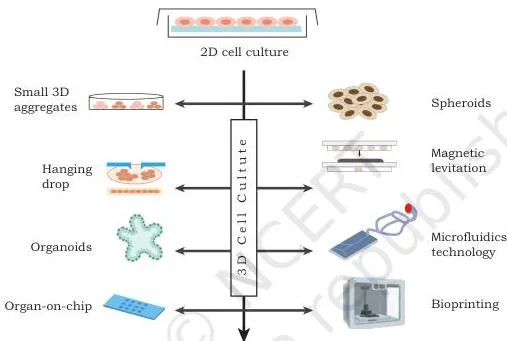
Figure 12.2 contrasts the two culture systems. In a 2D monolayer every cell has unlimited, equal access to nutrients — which is unrealistic, because in the body a cell’s position inside tissue decides its nutrient supply.
3D cultures give more realistic models of how cells assemble into tissues and how drugs act, but they are far more expensive and time-consuming, with few automated or reproducible applications, and they demand careful planning and expert handling (NCERT, pp. 306–307).
Bioprinting (Box 2). CT or MRI imaging gives the organ’s dimensions; a computer-assisted 3D bioprinter then builds a tissue-engineered scaffold of biopolymer embedded with cells and nanoparticles containing growth factors. Several regenerative therapies are already approved in practice:
- Carticel — autologous chondrocytes expanded in vitro and implanted for cartilage injury.
- laViv — autologous fibroblasts injected for cosmetic wrinkle removal.
- Dermagraft — an allogenic fibroblast dermal substitute for diabetic ulcers.
- Autologous platelet (from peripheral blood) for wound healing.
(NCERT, p. 308)
Nanobiotechnology: When Size Changes Everything
Fix the terminology ladder first (NCERT, pp. 308–309):
- Nanoscience — the study of materials in the nanoscale range (nanometre sizes, less than one micron).
- Nanotechnology — the technology of using materials at the nanoscale.
- Nanobiotechnology — the application of nanotechnology in the field of biotechnology.
- Nanomedicine — the use of nanotechnology in medicine for diagnosis and therapy.
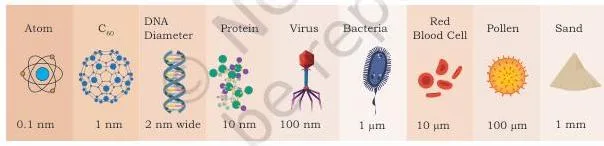
Figure 12.3 fixes the scale of the field: an atom is about 0.1 nm and a small grain of sand is 1 mm. In between sit fullerene C60, a DNA molecule, a protein, a virus, a bacterium, a red blood cell and pollen (NCERT, p. 309).
Why size matters: converting any bulk material to the nanoscale alters its physicochemical, biological, mechanical, optical and electronic properties. These newly acquired novel properties are what nanobiotechnology exploits (NCERT, p. 309).
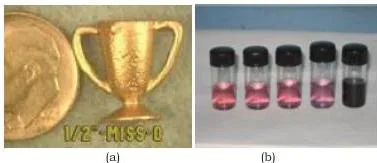
The textbook’s demonstration is gold (Fig. 12.4). Bulk gold is golden. But nanoparticles smaller than 30 nm are ruby red, those up to 100 nm are pink, and larger ones appear darker — a physical change that is size dependent (NCERT, p. 309).
Dividing just 1 mg of gold into particles of 500 nm, 100 nm and 10 nm diameter increases the number of particles exponentially, with an enormous accompanying rise in total surface area. More exposed surface means far higher surface reactivity — the idea behind the worked example below.
Composition of nanoparticles (Table 12.2). Nanoparticles can be made from inorganic or organic materials, and depending on composition they are biodegradable or non-biodegradable. Their properties depend on size, shape, surface charge and composition (NCERT, p. 310):
| Category | Examples |
|---|---|
| Inorganic — metals | Iron oxide, gold, silver, copper, zinc oxide, titanium oxide, cadmium, selenium |
| Inorganic — non-metals | Silicon oxide, calcium phosphate, ceramic |
| Organic — natural polymers | Chitosan (from shell), alginate (from algae), cellulose, lignin |
| Organic — synthetic polymers | PCL, PLA, PLGA |
| Organic — proteins / lipids | Albumin, gelatin / cholesterol, fatty acids, phospholipids, liposomes |
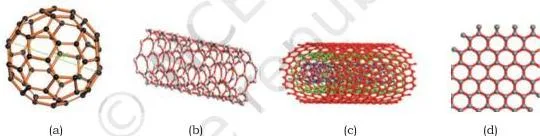
One element, many forms: carbon alone can take the shape of fullerene C60, single-wall or multiwall carbon tubes, and flat graphene sheets (Fig. 12.5, NCERT, p. 310).
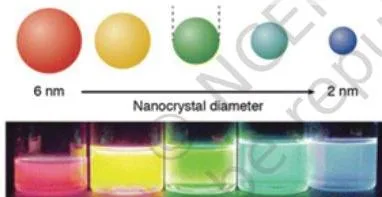
Quantum dots. Cadmium-selenium (CdSe) nanocrystals of different sizes produce different colours of fluorescence that do not quench with light (Fig. 12.6). These fluorescent CdSe nanocrystals are called Quantum Dots (QDs) and can be used in fluorescence-based diagnostic tests (NCERT, p. 311).
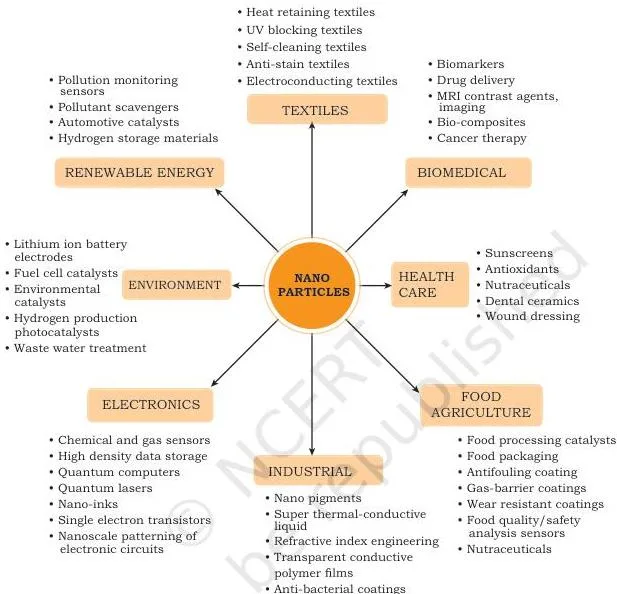
Nanotechnology is an enabling technology relevant to every aspect of life (Fig. 12.7). The applications below are the ones the textbook expects you to match:
| Application area | What nanotechnology does | Example |
|---|---|---|
| Nanomedicine | Drug delivery systems (DDS) raise bioavailability at the diseased site with lower systemic toxicity; the EPR effect targets tumours | Amphotericin B in liposomes (less toxic, more effective); paclitaxel-loaded albumin nanoparticles; liposomal doxorubicin; silver nanoparticles in wound dressings |
| Cosmetics | UV protection and better skin penetration of biomolecules | Zinc oxide and titanium oxide nanoparticles in sunscreen; liposomal preparations and nanoemulsions |
| Agriculture and food packaging | Precision farming, nano-pesticides that need less pesticide, longer food preservation, livestock disinfection | Nano-pesticides; silver and iron nanoparticles |
| Textiles | Stain and water repellence, wrinkle-free features, fire retardancy, electrical conductivity, responsive garments | Conductive fibres that stay comfortable and flexible; garments that sense and respond to stimuli |
| Nanobiosensors | Detection of biological molecules that are disease biomarkers; point-of-care bedside diagnosis; Lab on a Chip | Simultaneous tests using nanotechnology and microfluidics |
(NCERT, pp. 311–314)
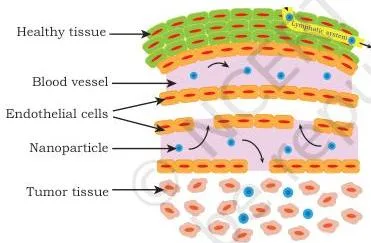
The EPR effect is the chapter’s key nanomedicine mechanism. The endothelial cells lining tumour blood vessels have gaps (fenestrations), making them leaky compared with healthy tissue.
When drug-loaded nanocarriers of about 20 to 30 nm are administered, they pass through these leaky vessels and are retained in the tumour — so the drug concentrates where it is needed with less harm to the rest of the body (Fig. 12.8, NCERT, p. 313).
One caution the textbook keeps repeating: nanotechnology raises fundamental questions about new regulations, and the safety of using nanoparticles in the body and environment is not yet fully understood (NCERT, p. 314).
Synthetic Biology and the Future of Biotechnology
Biologists have traditionally studied organisms in two ways. A third approach announced at MIT in June 2004 changed the game (NCERT, p. 315):
| Approach | Direction | Names |
|---|---|---|
| Reductionist | Whole organism → tissue → organelle → molecular level | Anatomy, histology, molecular biology, biochemistry |
| Integrative | Weave data into databases and computer models of tissues and pathways | Bioinformatics, systems biology |
| Synthetic | Build organisms from the bottom up, like an engineer builds with brick and mortar | Synthetic biology |
Synthetic biology is a rational design approach of constructing biological components leading to certain functions. Like engineering, it needs standards and rules of composition (NCERT, p. 315).
Its applications: biomanufacturing of high-value biomolecules, diagnostics, cheaper drugs, ‘green’ fuels, and targeted therapies against superbugs and cancer (NCERT, p. 316).
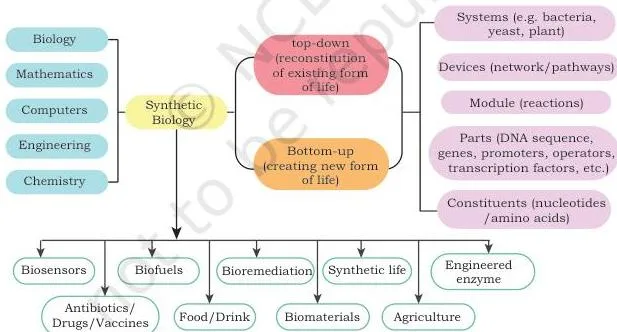
Figure 12.9 summarises the field: synthetic biology sits at the amalgamation of several disciplines, and its applicability ranges across diagnostics, therapeutics, fuels and manufacturing (NCERT, p. 316).
The long DNA synthesis revolution. Instead of assembling plasmids by hand, scientists now edit the plasmid in a computer, save it as a text file of nitrogen bases (ATGC), email the sequence to a company and receive the recombinant vector in about a month — the older process took six months to a year.
The strategy proved so successful that a chemically synthesised, fully functional yeast chromosome was made at Johns Hopkins University (NCERT, pp. 316–317).
Future prospects. The chapter’s forward look has four strands (NCERT, pp. 317–319):
- Microbial factories — bacteria synthesise chemicals, cutting air, soil and water pollution from chemical factories; designer microbes convert harmful chemicals into environment-friendly products; natural plant products have been made in bacteria, saving plants from destruction.
- Four bioremediation treatment technologies for contaminated soils and groundwater: solid-phase biotreatment, slurry-phase treatment, in situ treatment, and combined biological-physical-chemical treatment.
- Molecular pharming — plant-made pharmaceuticals became a realistic focus after 2010; cost-effective local production and needle-free deployment make them valuable for tropical diseases in low-income countries.
- Ethical warning — synthetic biology could create new viruses or bioweapons, so ethical and humane practices and strict regulation are essential.
India’s role. India is a key contributor to the global vaccine market (DPT, BCG, measles), developed low-cost diagnostics and medical interventions, and responded rapidly to COVID-19 with vaccines. The Draft National Biotech Development Strategy 2020-24 aims to build a vibrant start-up, entrepreneurial and industrial base connecting academia with industry — which is why the chapter closes by calling entrepreneurship essential (NCERT, pp. 318–319).
Key Terms and Definitions in This Chapter
A compact lookup table for vocabulary — one line for the meaning, one short example:
| Term | Meaning | Example |
|---|---|---|
| Biofuel | Fuel produced from biological products or biological waste | Fuel from landfills or recycled vegetable oil (p. 292) |
| Agrofuel | Biofuel produced from dedicated crops | Soybean, jatropha, palm oil grown for fuel (p. 292) |
| Trans-esterification | Process that converts oils and fats into biodiesel | Vegetable oil → biodiesel (p. 292) |
| Biopulping | Treating wood chips with lignin-degrading fungi before pulping | Cuts energy and chemical demand in paper making (p. 296) |
| Biobleaching | Using enzymes such as xylanase instead of chlorine to bleach pulp | Reduces chlorine use in the paper industry (p. 296) |
| Enhanced Oil Recovery (EOR) | Extracting residual oil left after primary and secondary phases | Microbes improving recovery efficiency (p. 297) |
| Bioremediation | Using microorganisms to reduce toxicities caused by chemical pollutants | Removing heavy metals As, Cr, Hg, Cd, Zn from soil or water (p. 297) |
| Defensins | Antimicrobial proteins that enhance a plant’s tolerance to pathogens | Alfalfa defensin in potato against Verticillium dahliae (p. 299) |
| Coat-protein resistance | Introducing a viral coat protein gene so the plant resists that virus | Papaya ringspot virus-resistant papaya (p. 299) |
| Autograft / Allograft / Xenograft | Same individual / same species, different individual / different species | Skin graft / kidney transplant / pig heart valve (p. 304) |
| Organoid | Ultra-small, self-assembled 3D tissue culture derived from stem cells | Organoid from PSCs or ASCs (p. 305) |
| Spheroid | Simpler 3D aggregate without ordered self-assembly | Tumour spheres from mechanical dissociation (p. 306) |
| 3D cell culture | Culture system that models cell assembly into tissues, nearer to in vivo | More realistic drug-response prediction (p. 306) |
| Nanomedicine | Nanotechnology applied in medicine for diagnosis and therapy | Liposomal doxorubicin in cancer therapy (p. 313) |
| Quantum dots | Fluorescent CdSe nanocrystals whose colour depends on size | Fluorescence-based diagnostic tests (p. 311) |
| EPR effect | Leaky tumour vessels let 20–30 nm nanocarriers accumulate and be retained | Paclitaxel-loaded albumin nanoparticles (p. 313) |
| Synthetic biology | Rational design approach of constructing biological components for certain functions | Chemically synthesised yeast chromosome (p. 315) |
| Molecular pharming | Making pharmaceuticals in plants | Needle-free, low-cost medicines for tropical diseases (p. 318) |
Formulas and Numbers to Remember
The chapter has essentially one formula — the size range that defines the nanoscale:
\[ \text{Nanoscale range: less than one micron, i.e., } 10^{-9} \text{ m to } 10^{-12} \text{ m} \]
Context anchors: an atom is about 0.1 nm and a sand particle is 1 mm (NCERT, p. 309). The summary restates the range as \(10^{-9}\) to \(10^{-12}\) (NCERT, p. 320).
Every quantitative fact worth memorising, in one table:
| Fact | Number | Page |
|---|---|---|
| Ethanol blending permitted in India | Up to 10 per cent in petrol | p. 293 |
| BIS-recommended national ethanol blend | 5 per cent | p. 293 |
| Worldwide ethanol blend range | About 2 per cent to almost 30 per cent | p. 293 |
| Biodiesel blend common in European countries | 5 per cent | p. 292 |
| Biogas plants under the National Biogas and Manure Management Programme | 49.3 lakh | p. 294 |
| Countries that adopted GM crops | About 29; major: soybean, maize, cotton, canola | p. 298 |
| Bt cotton in India / Bt brinjal in Bangladesh | Commercial cultivation since 2002 / since 2014 | pp. 300–301 |
| Nematode resistance in transgenic potato (field trials) | Up to 70 per cent | p. 301 |
| GM maize CIEA-9 | About 20 per cent less water; withstands higher temperature | p. 301 |
| Less lignin in Arabidopsis | Up to 45 per cent | p. 302 |
| Eucalyptus wood / harvest time | 20 per cent more wood; 5.5 years instead of 7 | p. 302 |
| Potato starch content | 60 per cent more starch | p. 302 |
| Nano gold colour | Below 30 nm ruby red; up to 100 nm pink; larger darker | p. 309 |
| 1 mg gold example | Particles of 500, 100 and 10 nm → particle number and surface area rise enormously | pp. 309–310 |
| EPR nanocarrier size | 20 to 30 nm | p. 313 |
| Scale anchors / nanoscale range | Atom 0.1 nm; sand 1 mm / \(10^{-9}\) to \(10^{-12}\) m | pp. 309, 320 |
Worked Examples: Applying the Ideas
Worked Example 1: Surface area of nanogold (quantitative)
Method: scaling surface area when a bulk material is divided into nanoparticles. The textbook says the surface area ‘increases exponentially’; this calculation makes that concrete with original numbers.
Step 1: Start with a cube of gold of side 1 mm.
Its surface area is \[ A_{\text{original}} = 6 \times (1\ \text{mm})^2 = 6\ \text{mm}^2 \]
Step 2: Convert the side to nanometres.
Since 1 mm = \(10^{-3}\) m and 1 nm = \(10^{-9}\) m, \[ 1\ \text{mm} = 10^6\ \text{nm} \]
Step 3: Find how many 10 nm cubes fit along one edge of the original cube:
\[ \frac{10^6\ \text{nm}}{10\ \text{nm}} = 10^5 \text{ cubes per edge} \]
Step 4: Total number of 10 nm cubes:
\[ (10^5)^3 = 10^{15} \text{ cubes} \]
Step 5: Surface area of one 10 nm cube:
\[ A_{\text{one cube}} = 6 \times (10\ \text{nm})^2 = 600\ \text{nm}^2 \]
Step 6: Total surface area of all cubes:
\[ A_{\text{total}} = 10^{15} \times 600\ \text{nm}^2 = 6 \times 10^{17}\ \text{nm}^2 \]
Step 7: Convert to mm² for comparison.
Since 1 nm = \(10^{-6}\) mm, 1 nm² = \(10^{-12}\) mm²:
\[ 6 \times 10^{17}\ \text{nm}^2 = 6 \times 10^{17} \times 10^{-12}\ \text{mm}^2 = 6 \times 10^5\ \text{mm}^2 \]
Step 8: Compare with the original 6 mm²:
\[ \frac{6 \times 10^5\ \text{mm}^2}{6\ \text{mm}^2} = 10^5 = 100{,}000 \]
Final answer: splitting a 1 mm cube of gold into 10 nm particles multiplies the total surface area 100,000 times (from 6 mm² to 600,000 mm²).
Interpretation: this surface-area explosion is why nanoparticles gain new reactivity — the same phenomenon behind the gold colour change in Fig. 12.4 and behind drug delivery in nanomedicine.
Worked Example 2: Matching a crop problem to the right GM strategy (reasoning)
Method: identify the pathogen class first, then recall the chapter’s strategy for that class. This is exactly how a scenario-based question should be argued:
| Crop problem | Best strategy from the chapter | Reasoning |
|---|---|---|
| Papaya ringspot virus | Introduce the viral coat protein gene | The coat protein acts like a vaccine, inducing resistance without introducing the actual virus (p. 299) |
| Late blight in potato (Phytophthora infestans) | Transfer the Rpi-vnt1.1 gene from Solanum venturi | This gene provides resistance to late blight when transferred to potato (p. 300) |
| Soft rot / blackleg in potato (Erwinia carotovora) | Transfer lysozyme genes | Lysozyme genes give resistance against blackleg and soft rot (p. 300) |
| Insect larvae in cotton | Bt crystal (Cry) proteins | Cry proteins bind specifically to insect gut receptors, destroying cells and killing the insect — the basis of Bt cotton (p. 300) |
| Soybean cyst nematode | Marker-assisted breeding combining resistance genes with domesticated varieties | Wild resistant lines were bred with domesticated varieties using genetic markers; the resulting varieties are not transgenic (p. 301) |
Check the last row carefully: the resistant soybean produced this way is not transgenic — the resistance came from breeding guided by genetic markers, not from inserting a foreign gene (NCERT, p. 301). Statements like that are exactly what a difference-style follow-up tests.
Common Mistakes in This Chapter
| Mistake | Correct rule | How to check your answer |
|---|---|---|
| ‘Biodegradation and bioremediation are the same’ | Biodegradation = microbes break down waste materials (even plastics) for recycling; bioremediation = microbes reduce the toxicity of chemical pollutants | Ask what the target is: the material itself (biodegradation) or the pollutant’s toxicity (bioremediation) |
| ‘Bioremediation is also incineration’ | Incineration is combustion of waste — a thermal process with no biological agent; bioremediation is microbial | Is a microbe or enzyme doing the work? If not, it is incineration |
| ‘A spheroid is just a small organoid’ | Organoids show ordered self-assembly and depend on a matrix; spheroids are simpler aggregates (e.g., tumour spheres from mechanical dissociation) | Was there ordered self-assembly? If not, it is a spheroid |
| ‘Nano gold is red’ | Nano gold colour is size dependent: below 30 nm ruby red, up to 100 nm pink, larger darker | State the particle size whenever you name the colour |
| ‘Nanoscience and nanotechnology are the same’ | Nanoscience is the study of nanoscale materials; nanotechnology is the application of nanoscale materials | Ask: study or use? Study → nanoscience; application → nanotechnology |
| ‘Bt cotton kills all insects’ | Bt Cry proteins bind specifically to receptor proteins in the gut of susceptible insects | Remember specificity: the receptors must match, so not all insects are affected |
| ‘Organoids come from totipotent cells’ | Organoids are derived from pluripotent stem cells (PSCs) and adult stem cells (ASCs) | Recall the exact definition on NCERT p. 305 before choosing |
Decision rule for waste-treatment terms (the distinction behind the chapter’s exercise on waste treatment):
- Is a biological agent (microbe or enzyme) doing the work? If no → incineration (combustion of organic substances).
- If yes, is the target waste material being broken down for recycling? → biodegradation.
- If yes, is the target a toxic pollutant being detoxified? → bioremediation.
Exam Notes: Writing Complete Answers
The exercises at the end of the chapter (NCERT, pp. 321–322) fall into recognisable types. Use this map to structure a complete answer for each type. This is strategy guidance — full written solutions belong on a solutions page, not here.
- Difference questions (e.g., Exercise 2) — use a two-column comparison covering definition, target (waste vs pollutants) and examples, then one closing line that states the relationship between the two terms.
- Explanation questions (Exercises 1, 3, 4, 5) — answer point by point in bullets, and support every point with a concrete chapter example. For biodiesel advantages, for instance, name better combustion, fewer particulate emissions from unburnt carbon, and direct use in unmodified diesel engines (p. 292).
- Definition questions (Exercise 6) — give the size range (nanoscale, less than one micron, \(10^{-9}\) to \(10^{-12}\) m), the property-change idea (bulk → nano alters physicochemical, biological, mechanical, optical and electronic properties), and one example such as gold nanoparticles.
- Opinion / risk questions (Exercise 7) — build a balanced answer: benefits first, then the grounded caution that the safety of nanoparticles in the body and environment is not yet fully defined and new regulations are needed (pp. 314, 318).
- Single-answer multiple-choice questions (Exercises 8–13) — test each option against the chapter’s definitions. The facts that eliminate options: organoids are created from adult stem cells and pluripotent cells, not totipotent or merely multipotent cells (p. 305); nano gold colour is variable, not fixed (p. 309); quantum dots belong to fluorescence-based diagnostics per the chapter (p. 311); ultra-small, self-assembled 3D tissue cultures are organoids (p. 305); incineration is waste combustion (p. 321); for fabrics, eliminate clearly invented choices and check the remaining options against the carbon nanoforms in Fig. 12.5.
- Assertion-reason questions (Exercises 14–15) — use a two-step check: verify the assertion alone, then the reason alone, then test whether the reason actually explains the assertion. A common trap is that both statements are true but the reason is merely a benefit or description rather than an explanation — so test the link between them before choosing.
Quick Revision Summary of Chapter 12
One-screen recap, mirroring the NCERT summary (pp. 319–320) in fresh words:
- Environmental biotechnology = bioremediation + prevention; prevention covers biofuels, biodegradation and biodegradable products.
- Biofuels split into biodiesel, bioalcohol, biogas and biomass.
- Biodegradation enables environment-friendly waste recycling; bioremediation handles heavy metals (As, Cr, Hg, Cd, Zn).
- GM technology produces resistance (herbicide, biotic and abiotic stress) and better nutrition.
- Regenerative medicine = cell and organ replacement; organoids are ultra-small, self-assembled 3D cultures from PSCs and ASCs.
- Nanoscience is the study of sub-micron materials; nanobiotechnology applies it to biotechnology; nanomedicine is its strongest arm — diagnosis, drug/gene delivery and therapy.
- Nanobiosensors enable point-of-care devices and Lab on a Chip.
- Synthetic biology is the rational design approach of constructing biological components for certain functions.
Memory devices recap:
- Grafts: AUTO = same person, ALLO = another person of the same species, XENO = a different species.
- Bioalcohol: R–F–D–D — Release sugars, Ferment, Distil, Dry.
- Bioremediation check: can the pollutant transform to less toxic products? is it bioavailable? is bio-activity efficient?
For the rest of your revision set, see the Class 12 notes hub.
Frequently Asked Questions
What is the difference between biodegradation and bioremediation?
Biodegradation is the breakdown of waste materials by natural systems — microbes have even been found that can eat plastics — so it is nature’s waste-management and recycling system (NCERT, p. 295). Bioremediation uses microorganisms to reduce the toxicities caused by chemical pollutants, such as heavy metals As, Cr, Hg, Cd and Zn in soil or water (NCERT, p. 297).
Quick check: biodegradation targets the material itself; bioremediation targets the toxicity of the pollutant. Burning waste, or incineration, is neither — it is combustion.
How are organoids different from spheroids?
Organoids are ultra-small, self-assembled 3D tissue cultures derived from stem cells, made from pluripotent stem cells (PSCs) and adult stem cells (ASCs). They show distinct ordered self-assembly and depend on a matrix for their generation (NCERT, pp. 305–306). Spheroids are simpler aggregates — tumour spheres come from mechanical dissociation or cutting of tumour tissue and lack that ordered self-assembly.
Spheroid formation methods include suspension culture, non-adherent surface methods, hanging drop methods and microfluidic methods (NCERT, p. 306).
Why do gold nanoparticles change colour, and what colour is nano gold?
The colour is size dependent, so there is no single answer. Bulk gold is golden (Fig. 12.4a); nanoparticles smaller than 30 nm are ruby red, those up to 100 nm are pink, and larger particles appear darker (NCERT, p. 309). The colour change demonstrates how converting a bulk material to nanoscale alters its physical properties.
At the same time, dividing 1 mg of gold into particles of 500, 100 or 10 nm multiplies the number of particles and the total surface area enormously, boosting surface reactivity.
What is the EPR effect and how does it help cancer therapy?
EPR stands for enhanced permeability and retention. Endothelial cells in tumours have gaps (fenestrations), making tumour blood vessels leaky compared with healthy tissue. Drug-loaded nanocarriers of about 20 to 30 nm pass through these leaky vessels and are retained in the tumour, so the drug concentration rises where it is needed while systemic toxicity stays low (NCERT, p. 313).
Examples in the chapter: paclitaxel-loaded albumin nanoparticles and liposomal doxorubicin.
Why is CRISPR-Cas9 considered better than traditional GM techniques, and what are its problems?
CRISPR is rapid when traditional breeding takes years, relatively simple, precise, can target multiple genes, and can transfer specific traits from a single parent to successive generations instead of following equal-parent Mendelian inheritance (NCERT, p. 303).
Its problems are off-target effects, occasional low efficiency, and regulatory and safety concerns; research to improve on-target efficiency and modify the Cas9 enzyme is still in a preliminary stage.
What are the advantages and practical problems of ethanol blending in petrol?
Advantages: ethanol is renewable, reduces fossil-fuel consumption, and cuts carbon dioxide and other greenhouse gas emissions (NCERT, p. 293). India permits up to 10 per cent ethanol in petrol, with BIS recommending 5 per cent nationally; worldwide the blend ranges from about 2 per cent to almost 30 per cent.
Practical problems: engines become harder to start, they sputter, aluminium in carburettors oxidises, and steel components rust — so automobile manufacturers must modify engines.
Reference: NCERT Class 12 Biotechnology textbook, chapter Recent Innovations in Biotechnology.
Explore Class 12 Biotechnology Notes
- Class 12 Biotechnology Notes
- Class 12 CBSE Notes
- CBSE Notes for Classes 1 to 12
- Previous: Bioprocessing and Biomanufacturing
Class 12 Biotechnology on LearnCBSE:
Related chapters:
- Recombinant DNA Technology notes
- Host–Vector System notes
- Gene Cloning notes
Official source: download the NCERT textbook free from ncert.nic.in.