
These host vector system class 12 notes compress Chapter 2 of the NCERT Class 12 Biotechnology textbook into a revision-ready set: the two-component model, every host and vector class, the key numbers, worked calculations, common mistakes and answer-writing guidance for the chapter’s exercises. Reference: NCERT Class 12 Biotechnology textbook, chapter Host–Vector System. Everything on this page follows the 2026-27 session.
The chapter holds no algebraic formulas; what recurs in questions is a set of size rules and exact numbers (4,361 bp, 38–52 kbp, 48,502 bp). This page collects them as one memorisable set and adds three worked calculations that show how they connect. These notes are part of the Class 12 Biotechnology notes collection on this site.
For the step-by-step process of amplifying a gene through a host, see our gene cloning notes; for how two different DNA molecules are first joined, see our recombinant DNA technology notes.
You can verify every figure and number against the official source: NCERT hosts the chapter as lebt102.pdf, the Class 12 Biotechnology textbook chapter on the host–vector system.
The Two-Component System: Why Cloning Needs Both a Host and a Vector
Recombinant DNA technology means joining two different DNA molecules with the aim of isolating, propagating, characterising and manipulating genes (NCERT, p. 9). The entire operation runs on a two-component system: a compatible host and a vector.
Think of the vector as a delivery van and the host as its garage: the van carries the gene package, but it functions only in a garage built to receive it.
\[ \text{insert (target gene)} \rightarrow \text{vector} \rightarrow \text{recombinant DNA (rDNA)} \rightarrow \text{host} \rightarrow \text{gene cloning} \]
Each term in that line has a precise meaning. The insert is the desired DNA fragment — the target gene — isolated from its source. The vector is the convenient carrier DNA molecule into which the insert is placed. Recombinant DNA (rDNA) is the vector carrying the insert.
The host is the organism that receives the rDNA and provides the genetic machinery for its propagation and expression. The whole process is covered by the term gene cloning (NCERT, pp. 9–10).
The division of labour is the idea the chapter hangs on: the vector provides the essential sequences required for its replication in a compatible host, while the host provides the replication functions — the enzymes and proteins (NCERT, p. 10). A vector built for one host fails in another whose machinery does not recognise its sequences.
That compatibility is the reason every host–vector pair in this chapter is discussed together.
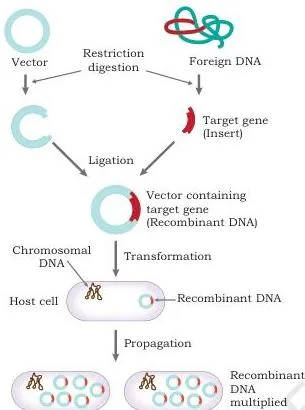
Figure 2.1 draws gene cloning as a schematic: the target insert is joined to a vector to make recombinant DNA, the rDNA enters the host cell, and the host’s machinery propagates the construct so the gene is cloned. Read the figure as the same flow shown above — insert → vector → rDNA → host — visualised for a single cell.
Choosing a Host: E. coli, B. subtilis and Yeast
A good host must do three jobs (NCERT, p. 10):
- allow easy entry of the rDNA into the cell;
- not treat the recombinant DNA as foreign DNA and degrade it;
- supply all the required enzymes and proteins for smooth replication of the vector DNA along with the insert.
These three requirements are what “compatible” actually means. The chapter offers three named host options — one eukaryotic and two prokaryotic.
| Host | What it is | Why it is chosen |
|---|---|---|
| E. coli | Rod-shaped, Gram-negative bacterium commonly found in the lower intestine of warm-blooded organisms | Most extensively used prokaryotic host; grows and reproduces rapidly |
| Bacillus subtilis | Prokaryotic alternative host | Preferred when the aim is secretion of a protein encoded by a cloned gene |
| Yeast | Eukaryotic host | Most widely used eukaryotic host for gene cloning |
E. coli doubles its population about every 20 minutes, and the K12 strain is one of the most commonly used hosts in gene cloning (NCERT, p. 10). The table row for Bacillus subtilis shows the logic of host choice: pick the organism whose natural strengths match the goal — here, secreting a cloned gene’s protein product (NCERT, p. 10).
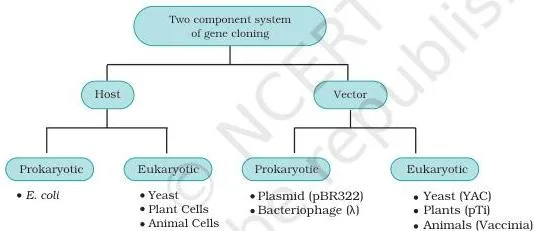
Figure 2.2 shows the menu of hosts and vectors available for the two-component system — eukaryotic and prokaryotic hosts with matching vectors. It is the chapter’s way of saying that for every host there is a compatible vector, and for every vector a compatible host.
The Four Features Every Cloning Vector Must Have
Not every DNA molecule that replicates inside a cell can serve as a vector. For a plasmid to act as a vector it must fulfil four non-negotiable features (NCERT, p. 11), and they act as a checklist for judging every vector in this chapter.
| Feature | What it ensures | Why it matters |
|---|---|---|
| Small size with large insert capacity | Easy incorporation into the host cell | The vector must enter the host easily and still have room for a large insert |
| Origin of replication (ori) | Autonomous replication inside the host | Without ori the vector cannot copy itself, so the insert is never propagated |
| Unique restriction sites | The vector is opened at controlled points | If an enzyme cuts at too many sites, the vector is fragmented into several pieces instead of opening once |
| Selectable marker (at least one) | Screening out transformants | Cells carrying the vector survive a selective medium; examples are \( tet^R \) (tetracycline resistance) and \( amp^R \) (ampicillin resistance) |
Memory device: keep the four features in order with SOS-M — Small size, Origin of replication, unique restriction Sites, selectable Marker.
Why the selectable marker is essential: after transformation, only cells that have genuinely taken up the rDNA are wanted. The marker gene — usually an antibiotic resistance gene — lets those cells survive antibiotic plates while untransformed cells die; that is what “screen out transformants” means (NCERT, p. 11).
This four-point checklist is the answer skeleton for exercise Q2 (characteristics of a vector) and the logic behind the assertion–reason Q13 about selectable markers.
Plasmid Vectors: Natural Types, Copy Number and Replication Control
Plasmids are circular, double-stranded, extra-chromosomal DNAs capable of autonomous replication (NCERT, p. 11). They occur naturally in many bacteria, archaea and even eukaryotes such as yeast, and their sizes range from a few thousand base pairs to more than 100 kbp.
Like the host-cell chromosomal DNA, plasmid DNA is replicated before every cell division, and at least one copy of the plasmid is segregated to each daughter cell — that assures continued propagation of the plasmid through successive generations of the host (NCERT, pp. 11–12). Some plasmids can integrate into chromosomes; such plasmids are called episomes (NCERT, p. 12).
The episome is exactly what exercise Q9 asks you to identify.
Several naturally occurring plasmids carry genes that benefit the host. The three classic families:
| Plasmid family | What it encodes | Benefit to the host cell |
|---|---|---|
| R-plasmids | Enzymes that deactivate antibiotics such as ampicillin, tetracycline and chloramphenicol | Drug resistance — a major category of plasmids used for gene cloning |
| Col plasmids | Toxins called colicins | Kill other bacteria |
| F-plasmids | Transfer genes encoding proteins that form a pilus | A copy of the plasmid can be transferred through the pilus to other host cells of the same or related species |
Plasmids are also classified by copy number — how many copies each cell holds:
- High or multi-copy plasmids: 10–30 copies per cell. Their replication and segregation are free from the control of the replication of bacterial chromosomal DNA, so this mode is called relaxed replication (NCERT, p. 12). High copy number gives higher yields and increased strength of signals during screening of recombinants (NCERT, p. 13).
- Low or single-copy plasmids: one or a few copies per cell. Their replication and segregation are under the same control as replication of the bacterial chromosomal DNA, called stringent replication (NCERT, p. 13).
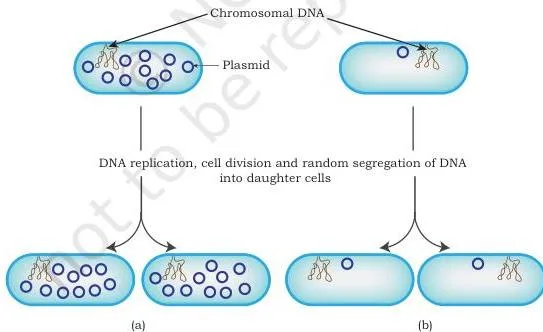
Figure 2.3 contrasts the two classes in cartoon form: the high-copy plasmid appears many times per cell, while the low-copy plasmid is present just once or a few times. Remember the pairing — high copy goes with relaxed replication, low copy with stringent replication — because exercises Q10 and Q11 are built on exactly this contrast.
From pBR313 to pUC19: How Plasmid Vectors Were Engineered
The design story runs in four upgrades (NCERT, pp. 13–14):
- pBR313 already had relaxed replication (high copy number), two selectable markers \( tet^R \) and \( amp^R \) (derived from two other naturally occurring plasmids), and a number of unique restriction (cloning) sites. Its problem was size — 9 kb, and more than half of that DNA was not essential for its role as a vector (NCERT, p. 13).
- pBR322 was built by deleting most of the non-essential sequences of pBR313, reducing the size to 4,361 bp. It became the most widely used gene-cloning vector (NCERT, p. 13).
- Multiple cloning site (MCS), also called polylinker, is a short synthetic DNA fragment containing a large number of unique restriction sites. It allows foreign DNA cleaved at any of these sites to be inserted into that region, so one vector accepts inserts prepared with several different enzymes (NCERT, p. 13).
- Blue/white selection introduced an easy and convenient selection marker using the lacZ gene (beta-galactosidase) of E. coli; the mechanism is studied in detail in Chapter 3, and pUC19 is the common example of such an improved vector (NCERT, p. 14).
How to read the pBR322 vector map
The vector map in Fig. 2.4 is a circle because the plasmid is circular. Learn to locate three things on it:
- the origin of replication (ori) — the sequence that lets the plasmid replicate autonomously inside E. coli;
- the unique cloning sites — single cut sites for PstI, EcoRI, BamHI, SalI and PvuII labelled around the map, where foreign DNA is inserted;
- the selectable marker genes — \( amp^R \) and \( tet^R \), the two antibiotic resistance genes drawn on the map.
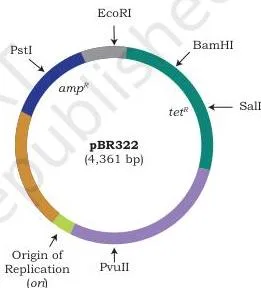
The sensible reading order on the map is: first the origin (why the plasmid can copy itself), then the restriction cut sites (where the insert goes), then the two markers (how transformants are selected). This map-reading skill is the core of exercise Q4 on the strategy used to develop pBR322.
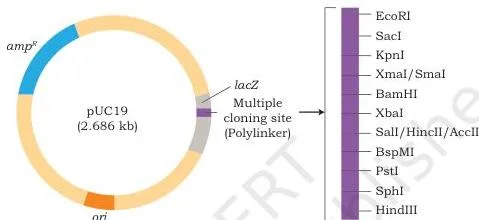
Fig. 2.5 shows the same logic in pUC19, simplified: ori, the ampicillin resistance gene, and part of the lacZ gene. That lacZ fragment is what permits blue/white selection of recombinants — the selection story you will study in Chapter 3.
Lambda Phage Vectors: Genome, Life Cycle and Insertion vs Replacement Vectors
Bacteriophage lambda is a virus that infects E. coli; it is easy to propagate and has long been a model system (NCERT, pp. 14–15).
Bacteriophage vectors are generally more efficient than plasmids for cloning large inserts and for screening large numbers of bacteriophage plaques — patches of lysed cells produced by phage infection — than screening bacterial colonies for a specific insert (NCERT, p. 14).
Structure of the lambda particle
Lambda consists of a head (capsid) and a tail. The head contains the phage genome. The particle binds to the surface of E. coli and inserts its genome via the tail into the cytoplasm of the bacterial cell (NCERT, p. 15).
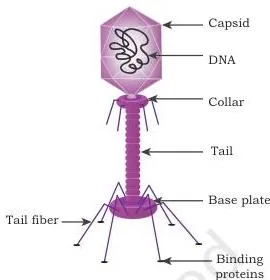
Lytic vs lysogenic life cycle
| Path | What happens | Outcome |
|---|---|---|
| Lytic cycle | The λ DNA is replicated and new phage particles are produced within the cell | Cell lysis releases the newly formed phage particles |
| Lysogenic cycle | The phage DNA integrates into the host cell chromosome | The integrated λ DNA, called a prophage, stays resident without apparent harm to the host |
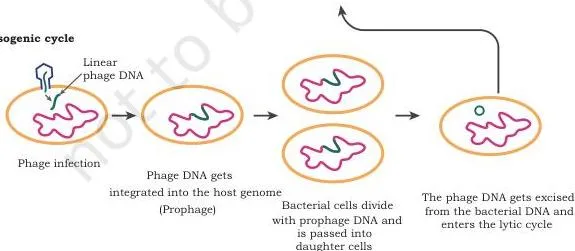
Fig. 2.7 draws both routes side by side: one ends in lysis and release of new particles, the other in quiet integration of the genome into the host chromosome.
The linear-to-circular genome
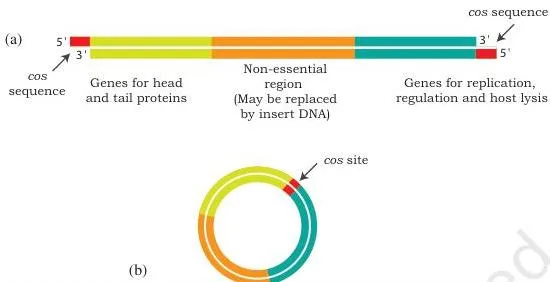
The lambda genome is linear double-stranded DNA of 48,490 base pairs. Each end carries a 12-base single-stranded segment called the cos sequence (cohesive end), and the two cohesive ends are complementary to each other (NCERT, p. 16).
Once inside E. coli, the cos sequences pair up and the cohesive ends are ligated together by a host enzyme, forming the circular version of the lambda genome — 48,502 base pairs. The sealed junction is called the cos site (NCERT, p. 16). In this circular form the genome can integrate into the host chromosome, and it is then called a prophage.
Rolling circle replication and packaging
During multiplication the lambda genome undergoes rolling circle replication:
- A template strand rotates, churning out a chain of many copies of the λ genome.
- The result is a long concatemer — genomes joined end to end and separated by cos sites.
- The concatemer is cleaved at the cos sites to yield one unit of phage DNA.
- A single copy of the genome is packaged into each empty head, the tail is attached, and lysis of the bacterial cell releases the new phage particles (NCERT, p. 16).
The 38–52 kbp packing rule and the two vector classes
About one-third of the lambda genome — the middle region containing genes required for lysogeny — is dispensable for successful lytic infection.
To build a cloning vector, all or part of this middle region is replaced with an insert segment of appropriate length so that the size of the recombinant DNA lies between 38 and 52 kbp for efficient packing into the λ head (NCERT, p. 16).
Lambda-derived vectors fall into two broad classes:
- Insertion vectors have a single restriction enzyme site (cloning site) for insertion of the insert DNA.
- Replacement vectors have a pair of cloning sites flanking a segment of non-essential λ DNA — the central stuffer region — that can be replaced by the insert (NCERT, pp. 16–17).
Three commonly used lambda vectors for E. coli are compared below (NCERT, p. 17):
| Vector | Type | Selection of recombinants | Maximum insert size |
|---|---|---|---|
| \( \lambda \)gt10 | Insertion vector | Lytic (plaque formation) | 6 kbp |
| \( \lambda \)gt11 | Insertion vector | Blue-white | 7.2 kbp |
| \( \lambda \)EMBL3 | Replacement vector | Lytic (plaque formation) | 20 kbp |
The pattern to notice: insertion vectors accept modest inserts (6–7.2 kbp), while the replacement vector λEMBL3 accepts nearly triple the largest insertion-vector insert — the payoff of replacing the stuffer region. Lambda structure, the two life cycles and the insertion/replacement design together supply the material for exercise Q5.
M13 Vectors: A Filamentous Phage That Does Not Kill Its Host
M13 is the counterpoint to lambda: it is a filamentous bacteriophage of E. coli that does not kill the cells it infects. Its genome is a single-stranded circular DNA of about 6.4 kb, packaged in a tube-like capsid (NCERT, p. 17).
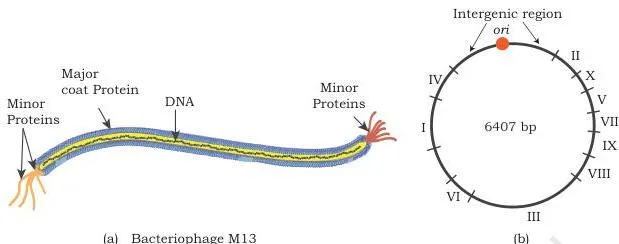
Fig. 2.9 shows the two essentials: the tube-shaped capsid wrapping the single-stranded circular genome (a), and a map of the genome with its genes I–X (b). Nearly the whole genome encodes genes required for coat protein, viral replication and viral assembly, except for a small non-essential region flanking the origin of replication — the intergenic region (NCERT, p. 17).
Why M13 needs the F pilus
M13 infects only E. coli cells harbouring the F plasmid. These cells have a tube-like pilus extending from their membranes, and the pilus is required for attachment and adsorption of the phage to the cell (NCERT, p. 17). This F-pilus dependence is a favourite detail in M13 questions.
The M13 life cycle
- The single-stranded M13 DNA replicates inside the host to generate a double-stranded replicative form (RF).
- The mode of replication then changes to generate single-stranded genomic DNA (+) from the double-stranded replicative form.
- The circular single-stranded genomic DNA (+) is assembled with capsid proteins during its passage through the host cell — without causing cell lysis.
- The host keeps growing while the new phage is extruded into the growth medium (NCERT, pp. 18–19).
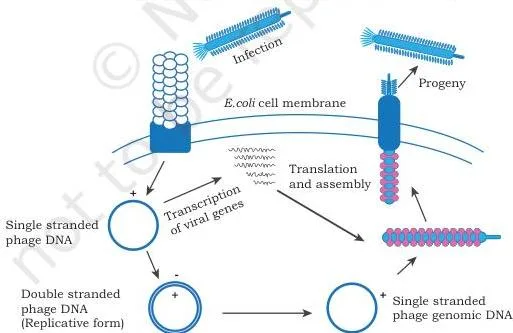
The life-cycle figure shows attachment at the pilus, formation of the double-stranded RF inside the cell, and finally the extrusion of new single-stranded genomes without the cell bursting — the visual proof that M13 is non-lytic.
Building a vector from M13
- The double-stranded RF is used as the vector; it is readily isolated from infected cells, while the single-stranded genome is abundantly available as phage in the growth medium (NCERT, p. 19).
- The insert is placed in the intergenic region so that it does not interfere with M13 replication (NCERT, p. 19).
- M13 can clone large DNA — more than 42 kb (NCERT, p. 19).
- The named example is M13mp18, which facilitates blue/white selection of recombinants (detail in Chapter 3) (NCERT, p. 19).
These four points — structure, F-pilus entry, RF vector construction and applications — are what a complete answer to exercise Q6 should carry.
Cosmids and Phasmids: Two Hybrid Vectors That Are Easy to Confuse
Both classes are hybrids of plasmid and lambda DNA, and students routinely swap their behaviours. The fix is to remember which component does the replicating and which does the packaging.
Cosmids: plasmid replication plus lambda packaging
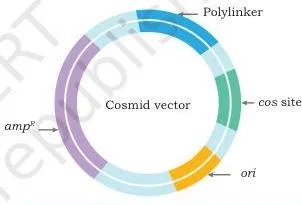
A cosmid replicates like a plasmid but can also be packaged in vitro into lambda phage coats (NCERT, p. 19). A typical cosmid has replication functions, unique restriction endonuclease sites and selective markers contributed by plasmid DNA, combined with a segment of λ DNA that includes the joined cohesive ends (cos sites).
Only as little as 250 bp of λ DNA is sufficient to provide the cos junction, including the sequences required for binding to and cleavage by the enzyme terminase (NCERT, p. 19). The payoff: cosmid vectors accommodate DNA inserts as large as 45 kbp (NCERT, p. 19).
Phasmids: true phage-plasmid hybrids
A phasmid (also called phagemid) is a true combination of phage and plasmid. It is a linear duplex DNA whose ends are lambda phage DNA containing all the genes required for a lytic infection, and whose middle region is a linearised plasmid; both the lambda and the plasmid replication functions remain intact (NCERT, p. 19).
Phasmid recombinants are packaged in vitro before infection. Once inside an E. coli cell, the phasmid replicates like a phage and forms plaques in the normal way — but if the vector contains the gene that encodes the lambda repressor, it replicates as a plasmid rather than as a phage (NCERT, p. 20).
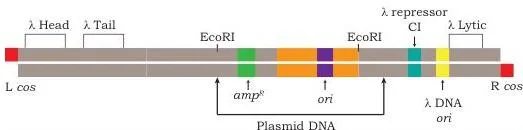
The two figures make the structural difference visible: the cosmid in Fig. 2.11 is a plasmid circle with cos sites added, while the phasmid in Fig. 2.12 is a linear molecule with lambda DNA at both ends and a linearised plasmid in the middle.
The key contrast, in one table — the same rows you can expand into a full answer for exercise Q7 (differentiate cosmids and phagemids):
| Feature | Cosmid | Phasmid |
|---|---|---|
| DNA organisation | Circular plasmid backbone plus a λ cos junction | Linear duplex: λ DNA at both ends, linearised plasmid in the middle |
| Replication functions | Plasmid functions intact | Both phage and plasmid replication functions intact |
| Packaging of recombinants | In vitro into lambda coats via cos sites | In vitro before infection |
| Behaviour inside E. coli | Replicates like a plasmid | Forms plaques like a phage, unless the λ repressor gene is present — then replicates as a plasmid |
| Insert capacity | Up to 45 kbp | Not stated in the textbook |
The same two facts — plasmid properties plus lambda properties — make the cosmid a hybrid vector, which is precisely the logic of assertion–reason exercise Q14.
Cloning Large DNA: YAC, BAC and PAC
The driver of this section is a size problem: eukaryotic genes contain introns that may be hundreds of kilobases in length, and even an intron-free eukaryotic gene can exceed the maximum insert size of a plasmid. That is why artificial chromosomes were developed — to carry huge lengths of eukaryotic DNA (NCERT, p. 20).
The eukaryotic host: Saccharomyces cerevisiae
The most common eukaryotic host is baker’s yeast, Saccharomyces cerevisiae. Its useful traits for cloning (NCERT, p. 20):
- usually multiplies asexually by budding, although sexual reproduction is possible;
- grows as single cells in suspension and produces colonies on solid medium, much like E. coli;
- has a large collection of genetically mapped metabolic, biosynthetic and cell-cycle defective mutants;
- is a GRAS (Generally Recognised As Safe) organism because of its long safe use in the food industry.
S. cerevisiae also harbours a double-stranded circular plasmid called the 2 µm plasmid, which has been used to develop a number of vectors (NCERT, p. 20).
Yeast artificial chromosomes (YACs)
A YAC is designed to clone large DNA inserts of 200–500 kb (NCERT, p. 20). Its essential parts:
- two copies of a yeast telomeric sequence (the sequences at the ends of chromosomes);
- a yeast centromeric sequence;
- a yeast ARS — an autonomously replicating sequence where DNA replication begins;
- appropriate selectable markers (NCERT, pp. 20–21).
A YAC has two forms: a circular form for growing in bacteria — it carries a bacterial origin of replication and an antibiotic resistance gene, so it can be manipulated and grown like any other plasmid — and a linear form for growing in yeast.
The circular form is isolated and linearised so that the yeast telomere sequences are on each end (NCERT, p. 21).
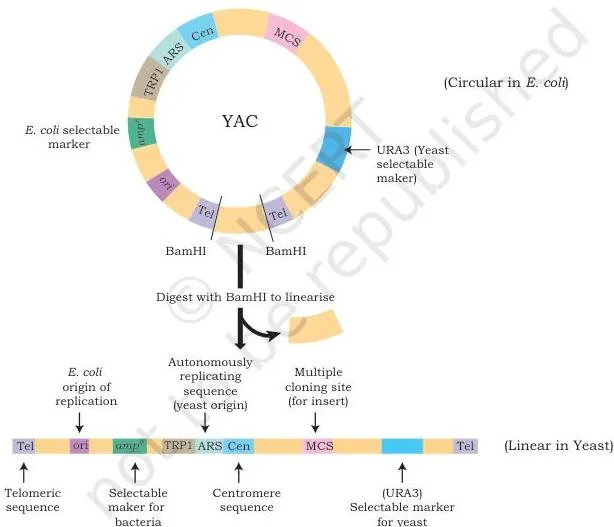
Fig. 2.13 presents the YAC construct with the chromosome elements described above — the two telomere ends, the centromere and the ARS — together with the selectable markers. When you redraw it, label all four parts plus the distinction between the circular bacterial form and the linear yeast form.
BAC and PAC
Two more high-capacity vectors come from bacterial sources: BACs (Bacterial Artificial Chromosomes, derived from a bacterial plasmid; ≤ 300 kb) and PACs (Phage Artificial Chromosomes, derived from a phage; 100–300 kb) (NCERT, p. 22).
The insert-size ladder
The six-row capacity ladder from the textbook, in a single table (NCERT, p. 22):
| Vector | Insert size |
|---|---|
| Plasmid | \( \le 10\ \text{kb} \) |
| Bacteriophage | 8–25 kb |
| Cosmids | 23–40 kb |
| PAC | 100–300 kb |
| BAC | \( \le 300\ \text{kb} \) |
| YAC | 200–500 kb |
Capacity climbs roughly fiftyfold from the plasmid bottom to the YAC top, but adjacent ranges overlap — for a given insert, several vectors may be candidates, and the final choice depends on the host and screening needs.
This ladder is the complete working tool for exercise Q12, which asks how a large eukaryotic gene insert can be cloned: the answer is to move to the upper end of this table, typically a YAC.
Memory device for the ladder: P-B-C-P-B-Y — “Please Bring Cold Pizza, Butter, Yoghurt” — recited in order from plasmid up to YAC.
Expression Vectors and Shuttle Vectors: Cloning Is Only Half the Job
Expression vectors and the expression cassette
Every vector so far is a cloning vector — it propagates DNA. An expression vector goes further: it acts as a vehicle for the DNA insert and allows the insert (the gene) to be expressed efficiently. Expression vectors may be plasmid- or virus-based (NCERT, p. 22).
The layout follows one sandwich pattern: the cloned gene is inserted between a promoter towards the 5′ end (upstream) and a proper transcription termination sequence near the 3′ end (downstream) of the gene (NCERT, p. 23). The three parts are:
- an efficient promoter — generally inducible, so that expression of the cloned gene can be regulated;
- unique restriction sites downstream of the promoter, for insertion of the gene to be expressed;
- a proper transcription termination sequence near the 3′ end, to ensure correct termination of transcription.
This promoter–gene–terminator unit is called the expression cassette, which is why such vectors are sometimes called sandwich expression vectors (NCERT, p. 23).
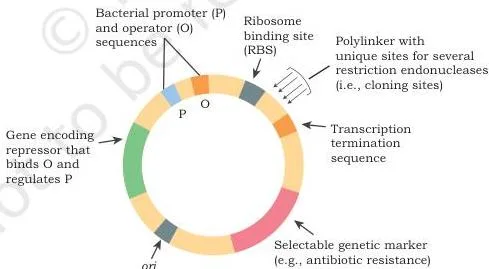
Fig. 2.14 draws the expression vector as a cassette: the insert sits sandwiched between the promoter upstream and the termination sequence downstream. When you reproduce it in an answer, label the three parts in that order — promoter, insert, terminator — plus the 5′ and 3′ ends.
The two constraints on heterologous gene expression
Expressing a gene of eukaryotic origin in a prokaryotic host (or the reverse) is heterologous gene expression, because the gene being expressed is foreign to the host. Two hard constraints follow (NCERT, p. 23):
- the eukaryotic gene must not contain introns, because the process of splicing is absent in the prokaryotic host;
- the expressed protein must not require post-translational modification (for example glycosylation) for its biological activity or functionality.
Shuttle vectors: two hosts, two origins
Shuttle vectors are DNA constructs developed for replication in two alternative hosts — either two prokaryotic species, or a prokaryote (usually E. coli) and eukaryotic cells (including yeast, plants and animals). They are themselves built by recombinant DNA techniques, and most eukaryotic vectors are shuttles (NCERT, p. 23).
The clever part: a shuttle vector contains two origins of replication, but in a given host only one origin is active at a time (NCERT, p. 24).
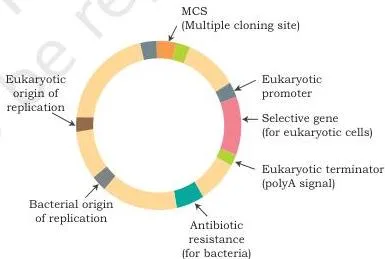
Fig. 2.15 shows a shuttle vector for E. coli and yeast: one origin serves replication in E. coli, the other in yeast, and only the appropriate one is active in each host.
Exercise Q8 asks why a vector is required for cloning a gene at all. The complete idea: the vector is the carrier that brings the gene into the host, and in an expression vector it also supplies the promoter and terminator so the gene is actually expressed.
Key Terms and Definitions at a Glance
One-line meanings for the exam-critical terms of the chapter — the fastest possible revision pass.
| Term | Meaning | Example / context |
|---|---|---|
| Insert | The desired DNA fragment (target gene) isolated from its source | A gene to be cloned, cut out of the source genome |
| Vector | Carrier DNA molecule into which the insert is placed | Plasmid, lambda phage, cosmid |
| Recombinant DNA (rDNA) | The vector molecule carrying the insert | pBR322 with a foreign gene inserted |
| Host | Organism that receives the rDNA and provides replication and expression machinery | E. coli K12 strain |
| Gene cloning | Propagation and expression of a gene through a host | Amplifying a target gene in bacterial cells |
| Origin of replication (ori) | Sequence enabling autonomous replication of the vector inside the host | The ori labelled on the pBR322 and pUC19 maps |
| Selectable marker | Gene that helps screen out transformants | \( tet^R \), \( amp^R \) |
| Plasmid | Circular, double-stranded, extra-chromosomal DNA capable of autonomous replication | The 2 µm plasmid of yeast |
| Episome | A plasmid able to integrate into the host chromosome | Plasmid integrated into the E. coli chromosome |
| R-plasmid | Plasmid encoding enzymes that deactivate antibiotics | Ampicillin, tetracycline, chloramphenicol resistance |
| Col plasmid | Plasmid producing colicins, toxins that kill other bacteria | Col plasmids of E. coli |
| F-plasmid | Plasmid carrying transfer genes that form a pilus for plasmid transfer | F factor moving between bacterial cells |
| Relaxed replication | Plasmid replication free from the control of bacterial chromosome replication | Multi-copy plasmids, 10–30 copies per cell |
| Stringent replication | Plasmid replication under the same control as the bacterial chromosome | Single-copy plasmids, one or few copies |
| Multiple cloning site (polylinker) | Short synthetic DNA fragment with many unique restriction sites | Accepts inserts cut by several different enzymes |
| cos site | Sealed junction formed when the two complementary 12-base cohesive ends pair and ligate | The cos junction of circular lambda DNA |
| Prophage | Phage DNA integrated into the host chromosome in lysogeny | Lambda DNA resident in the E. coli chromosome |
| Insertion vector | Lambda vector with a single cloning site for the insert | \( \lambda \)gt10, \( \lambda \)gt11 |
| Replacement vector | Lambda vector with a pair of cloning sites flanking a stuffer region that is replaced by the insert | \( \lambda \)EMBL3 |
| Replicative form (RF) | Double-stranded M13 DNA formed inside the host; used as the vector | M13 RF isolated from infected cells |
| Intergenic region | Small non-essential region of the M13 genome flanking ori | Where the insert is placed in M13 vectors |
| Cosmid | Hybrid vector that replicates like a plasmid and is packaged in vitro into lambda coats | Cosmid holding inserts up to 45 kbp |
| Phasmid (phagemid) | True phage-plasmid hybrid: lambda ends, linearised plasmid middle | Forms plaques, or replicates as a plasmid if the λ repressor gene is present |
| Expression cassette | Promoter + cloned gene + termination sequence as one unit | The sandwich unit of an expression vector |
| Heterologous gene expression | Expression of a gene that is foreign to the host | A eukaryotic gene expressed in a prokaryotic host |
| Shuttle vector | Vector that replicates in two alternative hosts | E. coli–yeast shuttle vector |
| YAC | Yeast artificial chromosome built from telomeres, centromere, ARS and selectable markers | Cloning inserts of 200–500 kb |
| BAC | Bacterial artificial chromosome, a high-capacity vector from a bacterial plasmid | \( \le 300\ \text{kb} \) inserts |
| PAC | Phage artificial chromosome, a high-capacity vector from a phage | 100–300 kb inserts |
| GRAS | Generally Recognised As Safe; status of S. cerevisiae from long safe use in the food industry | Baker’s yeast as a cloning host |
Key Numbers and Size Rules to Memorise
This chapter has no algebraic formulas. What recurs instead is a set of exact numbers and size rules, collected here with their sources.
| Quantity | Value | Where it matters |
|---|---|---|
| E. coli doubling time | about 20 minutes | Why E. coli grows so fast as a cloning host (NCERT, p. 10) |
| pBR313 size | 9 kb | The large plasmid trimmed to build pBR322 (NCERT, p. 13) |
| pBR322 size | 4,361 bp | The most widely used cloning vector (NCERT, p. 13) |
| Multi-copy plasmid range | 10–30 copies per cell | The relaxed-replication class (NCERT, p. 12) |
| Lambda linear genome | 48,490 bp | Linear dsDNA inside the phage head (NCERT, p. 16) |
| Lambda circular genome | 48,502 bp | After the cos ends pair inside the host (NCERT, p. 16) |
| cos sequence length | 12 bases, single-stranded, at each end | The complementary cohesive ends that pair (NCERT, p. 16) |
| Lambda packaging window | 38–52 kbp | Recombinant must fall in this range for efficient packing (NCERT, p. 16) |
| Dispensable middle region | about one-third of the lambda genome | The region replaced by insert DNA (NCERT, p. 16) |
| M13 genome | about 6.4 kb, single-stranded circular | Filamentous phage genome in a tube-like capsid (NCERT, p. 17) |
| M13 cloning capacity | more than 42 kb | Inserts placed in the intergenic region (NCERT, p. 19) |
| Minimum lambda DNA for a cos junction | as little as 250 bp | Enough to provide the cosmid cos junction (NCERT, p. 19) |
| Cosmid insert capacity | up to 45 kbp | The advantage of cosmid vectors (NCERT, p. 19) |
| YAC capacity | 200–500 kb | Cloning large eukaryotic inserts (NCERT, p. 20) |
| Insert-size ladder | Plasmid \( \le 10 \); bacteriophage 8–25; cosmids 23–40; PAC 100–300; BAC \( \le 300 \); YAC 200–500 kb | Choosing a vector by insert size (NCERT, p. 22) |
These numbers are the raw material for the worked examples below. Learn them as a set — most questions in this chapter are answered by recalling one of these values.
Worked Examples: Doing the Vector Arithmetic
Three original calculations built from the textbook’s own numbers. Each shows how two or three published values fit together — the kind of reasoning you may need to reproduce.
Example 1: How much of pBR313 did pBR322 throw away?
Rule or method: pBR322 was built by deleting non-essential sequences from the 9 kb pBR313 down to 4,361 bp (NCERT, p. 13).
- Step 1: Express the original size in base pairs: \( 9\ \text{kb} = 9000\ \text{bp} \).
- Step 2: Find the DNA removed: \( 9000 – 4361 = 4639\ \text{bp} \).
- Step 3: Fraction of the original removed: \( \frac{4639}{9000} \approx 0.515 \).
- Step 4: Convert to a percentage: \( 0.515 \times 100 \approx 51.5\% \).
Final answer: about 51.5% of the pBR313 DNA was deleted — more than half the plasmid was non-essential, matching the textbook statement on NCERT, p. 13.
Example 2: Sizing an insert for the lambda packing window
Rule or method: for efficient packaging into the lambda head, the recombinant genome must lie between 38 and 52 kbp (NCERT, p. 16).
- Step 1: Take a replacement vector that keeps 30 kbp of essential phage DNA after its stuffer region is removed.
- Step 2: Minimum insert: \( 38 – 30 = 8\ \text{kbp} \).
- Step 3: Maximum insert: \( 52 – 30 = 22\ \text{kbp} \).
Final answer: the insert must be 8 to 22 kbp so the recombinant stays inside the 38–52 kbp window.
Example 3: Why the circular lambda genome is 48,502 bp
Rule or method: the linear genome is 48,490 bp, and each end carries a 12-base single-stranded cos overhang; the two complementary overhangs pair into 12 base pairs, which are then ligated by a host enzyme (NCERT, p. 16).
- Step 1: Linear genome: 48,490 bp.
- Step 2: Paired overhangs add one set of 12 bp — not 24, because the two single strands pair with each other.
\[ 48{,}490 + 12 = 48{,}502\ \text{bp} \]
Final answer: the circular form of the lambda genome is 48,502 bp.
Six Common Mistakes Students Make in Host–Vector System
Each row is an error → correction pair. If you catch yourself writing the left column, the middle column is the fix and the right column is the reason.
| Students write… | Correct is… | Why / how to check |
|---|---|---|
| “High-copy plasmids have stringent replication.” | Multi-copy plasmids use relaxed replication; stringent replication belongs to low/single-copy plasmids. | Relaxed = free from the control of bacterial chromosome replication → 10–30 copies. Stringent = under the same control as the chromosome → one or few copies. Spot the phrase “same control as the chromosome” — that is stringent. |
| “Cosmids replicate like a phage.” | Cosmids replicate like plasmids; they are only packaged in vitro into lambda coats via cos sites. | Ask what happens inside the host: the cosmid uses its plasmid replication functions. The lambda part contributes only the cos junction for packaging. |
| “M13 kills its host by lysis, like lambda.” | M13 is non-lytic: new phage are extruded while the host keeps growing. | Run the M13 cycle: RF → single-stranded genomes → assembly and extrusion through the membrane without lysis. Lysis is lambda (lytic cycle) behaviour. |
| “Plasmid and vector are synonyms.” | A plasmid is a natural extra-chromosomal DNA molecule; it becomes a vector only when engineered with ori, unique restriction sites and a selectable marker. | Test with the four-feature checklist. A natural plasmid lacking those engineered elements is not yet a cloning vector. |
| “A eukaryotic gene with introns can be expressed directly in E. coli.” | It cannot. Splicing is absent in the prokaryotic host, so introns must be absent; the protein must also require no post-translational modification. | Check the two heterologous-expression constraints before answering (NCERT, p. 23). |
| “The lambda genome is 48,490 bp in all contexts.” | 48,490 bp is the linear form; after the two cos overhangs pair, the circular form is 48,502 bp. | Read the state in the question: “inside the head / linear” → 48,490 bp; “after infection / circular” → 48,502 bp. |
Exam Notes: Structuring Answers to the Chapter’s Exercises
The chapter closes with 14 exercises. Group them by the demand each makes, and structure answers accordingly.
Definition and characteristic questions — Q2, Q3, Q8
Q2 asks for the major characteristics of a vector, Q3 for the plasmid and its types, Q8 for why a vector is required at all.
- Open with the definition, then list every relevant point with a one-line explanation.
- Q2 → the four vector features: small size with large insert capacity, ori, unique restriction sites, selectable marker.
- Q3 → plasmid definition, natural families (R, Col, F), episomes, and the relaxed/stringent copy-number classes.
- Q8 → the vector is the carrier that provides the sequences needed for replication in the host, and in expression vectors the elements needed for expression.
Descriptive and structural questions — Q1, Q4, Q5, Q6
Q1 asks for the importance of the host–vector system, Q4 for the pBR322 development strategy, Q5 for lambda structure and vector roles, Q6 for M13-based vectors and their applications.
- Answer in stages: definition → structure → function → application.
- For a structure question (Q5), a labelled diagram drawn from Figs 2.6 and 2.8 makes the answer complete — name the head, tail, linear genome and cos ends.
- Q4 → the design sequence: pBR313’s strengths and 9 kb size, deletion to 4,361 bp (pBR322), addition of the MCS, then blue/white selection in pUC19.
- Q6 → genome structure, F-pilus requirement, the double-stranded RF as vector, intergenic-region insertion, the more-than-42 kb capacity, and M13mp18.
Differentiation question — Q7
Q7 asks to differentiate between cosmids and phagemids. A comparison table answers “differentiate” far more completely than prose — use the component, replication and packaging rows from the cosmids/phasmids section above.
Quantitative and explanation questions — Q10, Q12
Q10 asks why single-copy plasmid replication is called stringent; Q12 asks how a large eukaryotic gene insert can be cloned.
- State the controlling fact first, then explain.
- Q10 → single-copy plasmids replicate under the same control as bacterial chromosomal DNA, which restricts them to one or few copies — hence “stringent”.
- Q12 → eukaryotic genes can contain introns hundreds of kb long, and even intron-free genes can exceed plasmid capacity — so use high-capacity vectors such as YAC (200–500 kb), or BAC/PAC from the upper end of the ladder.
Objective questions — Q9, Q11, Q13, Q14
Justify each choice in one line using the definitions:
- Q9 → the answer is (b) episome, a plasmid capable of getting integrated into the host chromosome.
- Q11 → the incorrect match is (i) multicopy plasmid paired with stringent replication, because multicopy plasmids replicate by relaxed replication.
- Q13 → both assertion and reason are true, and the reason correctly explains the assertion: selectable markers exist precisely to screen out transformants.
- Q14 → both assertion and reason are true, and the reason correctly explains the assertion: a cosmid is a hybrid because it carries both plasmid and lambda phage properties.
For every answer, close by stating the conclusion in the chapter’s own terms — for example, naming the vector class and its insert capacity — so the response ends on the key point.
Revision Summary: The Whole Chapter on One Page
The chapter’s logic in one flow:
\[ \text{two-component system (host + vector)} \rightarrow \text{host choice} \rightarrow \text{four vector features} \rightarrow \text{plasmid vectors} \rightarrow \text{bacteriophage vectors (lambda, M13)} \rightarrow \text{hybrid vectors (cosmid, phasmid)} \rightarrow \text{high-capacity vectors (YAC, BAC, PAC)} \rightarrow \text{expression and shuttle vectors} \]
All vector classes in one view — this table combines the data of the two NCERT tables (Table 2.1 and Table 2.2) with the chapter’s text:
| Vector class | Nature | Typical host | Insert capacity | Screening / selection feature |
|---|---|---|---|---|
| Plasmid | Circular double-stranded extra-chromosomal DNA | E. coli (typically) | \( \le 10\ \text{kb} \) | Antibiotic markers (\( tet^R \), \( amp^R \)); pUC19 adds blue/white via lacZ |
| Lambda (insertion) | Phage genome with a single cloning site | E. coli | \( \lambda \)gt10 up to 6 kbp; \( \lambda \)gt11 up to 7.2 kbp | \( \lambda \)gt10: lytic plaques; \( \lambda \)gt11: blue-white |
| Lambda (replacement) | Cloning sites flanking a stuffer region that is replaced | E. coli | \( \lambda \)EMBL3 up to 20 kbp | Lytic plaques |
| M13 | Filamentous phage with single-stranded circular 6.4 kb genome | E. coli carrying the F plasmid | more than 42 kb | M13mp18: blue-white |
| Cosmid | Plasmid + lambda cos junction | E. coli; packaged in vitro into lambda coats | 23–40 kb (Table 2.2); up to 45 kbp (text) | Packaging via cos sites |
| Phasmid | Linear duplex: lambda ends + linearised plasmid middle | E. coli | Not stated in the textbook | Plaques, or plasmid replication if the lambda repressor gene is present |
| YAC | Artificial chromosome (circular in bacteria, linear in yeast) | Saccharomyces cerevisiae | 200–500 kb | Yeast selectable markers |
| BAC | Bacterial artificial chromosome, from a bacterial plasmid | Bacterial host | \( \le 300\ \text{kb} \) | — |
| PAC | Phage artificial chromosome, from a phage | Not specified in the textbook | 100–300 kb | — |
Heterologous expression rule (two lines): a eukaryotic gene expressed in a prokaryotic host must have no introns, and its protein must need no post-translational modification for biological activity.
Three numbers most worth memorising: pBR322 = 4,361 bp; lambda packing window = 38–52 kbp; lambda genome = 48,490 bp linear vs 48,502 bp circular.
Use this section as a trigger list: each row or number should pull up the full explanation from earlier in the page. For revision pages of the other subjects in this class, browse the Class 12 notes; every chapter page for every class lives in the CBSE notes library.
Frequently Asked Questions About Hosts and Vectors
What is the difference between relaxed and stringent replication in plasmids?
Relaxed replication is free from the control of bacterial chromosomal DNA replication, so multi-copy plasmids build up 10–30 copies per cell. Stringent replication is under the same control as the chromosome, which keeps single-copy plasmids at one or a few copies (NCERT, pp. 12–13). High-copy, relaxed-replication vectors give higher yields and stronger screening signals.
Why must the recombinant lambda genome stay between 38 and 52 kbp?
Lambda’s head packs DNA efficiently only within that size window. About one-third of the lambda genome — the middle lysogeny region — is dispensable and is replaced by the insert, and the recombinant must end up between 38 and 52 kbp for efficient packaging into the head (NCERT, p. 16). A recombinant smaller or larger than that window does not pack efficiently.
What is the difference between a cosmid and a phasmid?
A cosmid replicates like a plasmid and is packaged in vitro into lambda coats via cos sites. A phasmid is a true phage-plasmid hybrid: linear duplex DNA whose ends are lambda DNA carrying all the genes for lytic infection and whose middle is a linearised plasmid. Inside E.
coli a phasmid forms plaques like a phage, but if it carries the lambda repressor gene it replicates as a plasmid (NCERT, pp. 19–20). Cosmids accept inserts up to 45 kbp.
Why can a eukaryotic gene with introns not be expressed directly in E. coli?
Because splicing is absent in the prokaryotic host, introns cannot be removed — so a eukaryotic gene used for heterologous expression must not contain introns. In addition, the expressed protein must not require post-translational modification (such as glycosylation) for its biological activity (NCERT, p. 23).
What is the difference between a cloning vector and an expression vector?
A cloning vector propagates the inserted DNA; an expression vector also makes the gene express efficiently.
It carries an efficient promoter (generally inducible) upstream of the gene, unique restriction sites for inserting the gene, and a transcription termination sequence near the 3′ end — the promoter–gene–terminator unit being the expression cassette, which is why these are also called sandwich expression vectors (NCERT, pp. 22–23).
Does a shuttle vector use both of its origins of replication at the same time?
No. A shuttle vector carries two origins of replication, but in a given host only one origin is active at a time (NCERT, p. 24). That is what lets the same vector replicate in two different hosts, typically E. coli and a eukaryote such as yeast.
Reference: NCERT Class 12 Biotechnology textbook, chapter Host–Vector System.
Explore Class 12 Biotechnology Notes
- Class 12 Biotechnology Notes
- Class 12 CBSE Notes
- CBSE Notes for Classes 1 to 12
- Previous: Recombinant DNA Technology
- Next: Gene Cloning
Class 12 Biotechnology on LearnCBSE:
Related chapters:
- Applications of Recombinant DNA Technology notes
- Genome Engineering notes
- Plant Tissue Culture notes