
Plant tissue culture (PTC) is the cultivation of undifferentiated plant cells, tissues or organs on synthetic media under aseptic and controlled physical conditions — a technique that works both as a research tool and as a commercial method of producing plants.
This page is your plant tissue culture class 12 notes for Chapter 7 of the NCERT Biotechnology textbook: definitions, media, culture types, applications, and the mistakes students make, compressed so you can revise in one sitting. These notes follow the 2026-27 session.
The entire technique rests on one property of plant cells — totipotency, the ability of a vegetative cell to divide and differentiate into any type of specialised cell, or to regenerate into a whole plant (NCERT, p. 167). Everything else in the chapter is about supplying those cells with the right medium, the right hormone ratio, and a sterile (aseptic) environment.
For companion material, browse the full Class 12 Biotechnology notes or the whole Class 12 notes collection in our CBSE notes library. When you want the full textbook wording, NCERT publishes the chapter PDF (lebt107.pdf) as the official source.
What Plant Tissue Culture Is, and Why Totipotency Makes It Possible
PTC works because a single plant cell carries the genetic information for the whole organism. In culture, cells are kept on a synthetic medium — a recipe of inorganic salts, organic supplements, a carbon source, hormones, and a gelling agent — under aseptic and controlled light, temperature and humidity.
The same setup serves basic research (studying growth, differentiation and gene expression) and commerce (producing planting material and valuable metabolites) (NCERT, p. 167).
The useful part of the history is the discovery-idea pairs. Keep this landmark table rather than memorising the full 1902–1993 timeline (NCERT, p. 169).
| Year | Landmark | Why it matters |
|---|---|---|
| 1902 | Haberlandt proposed culturing plant cells on artificial media | He is regarded as the Father of Plant Tissue Culture |
| 1937 | White formulated the first synthetic tissue culture medium (WM) | First defined recipe for growing plant tissues |
| 1957 | Skoog and Miller described how auxin and kinetin ratios control root and shoot formation | Gives the hormone-ratio rule you apply in problems |
| 1962 | Murashige and Skoog formulated MS medium with higher salt concentrations | MS remains the most widely used plant culture medium |
| 1964 | Guha and Maheshwari produced the first androgenic haploid Datura by anther culture | Opened the route to haploid plants |
| 1972 | Protoplasts of two Nicotiana species were fused to generate somatic hybrids | First demonstration of somatic hybridisation |
| 1978 | Melchers produced ‘Pomato’ — a potato-tomato hybrid by somatic hybridisation | Easy-to-cite example of a somatic hybrid |
| 1987 | Fujita and Tabata commercialised shikonin from Lithospermum erythrorhizon cultures | Industrial-scale production of a secondary metabolite |
Definitions at a Glance: Terms and Page References
The chapter expects you to reproduce these terms exactly. Use this table as a lookup before attempting any definition question.
| Term | Meaning (student-friendly) | Textbook page |
|---|---|---|
| Totipotency | A vegetative cell can divide, become any specialised cell, or regenerate into a whole plant | p. 167 |
| Explant | Any plant tissue, organ or part transferred onto nutrient media to regenerate cells, tissues, organs or a whole plant | p. 171 |
| Dedifferentiation | Specialised cells of the explant start dividing and form a mass of undifferentiated cells | p. 171 |
| Redifferentiation | The undifferentiated mass next forms organ primordia such as shoot or root | p. 171 |
| Organogenesis | Induction of various vegetative organs from cells or tissues in culture | p. 171 |
| Somatic embryogenesis | Formation of an embryo from somatic (non-sexual) cells | p. 171 |
| Callus | An unorganised mass of undifferentiated cells formed through dedifferentiation | p. 176 |
| Cell suspension culture | Single cells isolated from callus or plant parts and cultured in liquid medium | p. 176 |
| Micropropagation | Rapid clonal multiplication of plants without sexual reproduction or seed formation | p. 177 |
| Artificial (synthetic) seed | A somatic embryo encapsulated in a protective matrix such as calcium alginate | p. 177 |
| Double haploids | Haploid plants whose chromosome number is doubled with colchicine to give homozygous diploids | p. 178 |
| Somatic hybridisation | Fusion of protoplasts from somatic cells, often of different species | pp. 178–179 |
| Cybridisation | Combining the nuclear genome of one parent with the cytoplasmic genome of another | p. 179 |
| Somaclonal variation | Genetic variation seen in plants regenerated from cultured somatic tissues; such plants are somaclones | p. 180 |
| Secondary metabolites | Specialised compounds (alkaloids, flavonoids, tannins, etc.) not needed for survival but valuable industrially | p. 180 |
The Tissue Culture Pipeline: Explants, Steps and Regeneration Pathways
Every culture begins with an explant — any plant tissue, organ or part transferred onto nutrient media to regenerate cells, tissues, organs or a whole plant (NCERT, p. 171). The most commonly used explants are root or shoot apical meristems, leaves, cotyledons, hypocotyls and immature embryos (NCERT, p. 172).
Explants do not all respond equally. On a given medium and set of culture conditions, immature embryos respond better than apical meristems, which respond better than leaf explants (NCERT, p. 170). Writing this order down will settle any starting-material question.
Two regeneration pathways
- Organogenesis — formation of vegetative organs (shoot or root primordia) from cells or tissues. It runs through two stages: dedifferentiation (specialised cells divide and form an undifferentiated mass), then redifferentiation (the mass forms organ primordia) (NCERT, p. 171).
- Somatic embryogenesis — formation of an embryo from somatic (non-sexual) cells. Somatic embryos follow the pathway of zygotic embryogenesis and resemble zygotic embryos except in place of origin and larger size (NCERT, p. 171).
The eight steps, in the order a lab performs them (NCERT, pp. 171–172)
- Select a suitable nutrient medium and sterilise it by autoclaving or by passing it through micropore filters.
- Select the explant.
- Surface-sterilise the explant with a disinfectant such as sodium hypochlorite, then wash it with sterile distilled water. (Explants from seedlings grown in sterile conditions need no second sterilisation.)
- Inoculate the explant onto the nutrient medium.
- Grow the cultures in the culture room under suitable light, temperature and humidity.
- Transfer growing cultures onto shoot-regeneration medium so shoots form and elongate.
- Excise regenerated shoots and transfer them to a rooting medium.
- Transfer rooted plantlets to sterilised soil in pots for hardening in a greenhouse or growth room, then to the field.
Memory device: Select, Sterilise, Inoculate, Grow, Transfer, Excision, Pot — SSIGTEP. The first S covers both selection steps (medium, then explant); the final step is the pot/plantlet step.
The basic lab requirements from page 171 are equally simple: a washing area for glassware and plasticware, stocks of media components, a facility to sterilise media and store them cold, and a controlled aseptic area for growing cultures.
Reading the Four Figures in This Chapter
Four figures carry most of the visual information, and each tests a different skill: reading a procedure, reading an application map, reading a structure, and reading a genetic outcome.
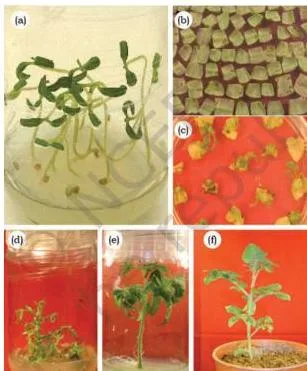
Figure 7.1 is the eight-step procedure in one photograph series — a visual version of the numbered list above.
Stages (a)–(f) read as: (a) germination of seeds on the culture medium in a culture bottle; (b) explant preparation from the germinated seedlings; (c) regenerating callus with shoot buds from the inoculated explant; (d) regenerating shoots ready for the rooting medium; (e) rooting in the transferred shoots; and (f) a plantlet transferred to soil in a pot.
If you recall the label sequence, you can reconstruct the steps without memorising the list.
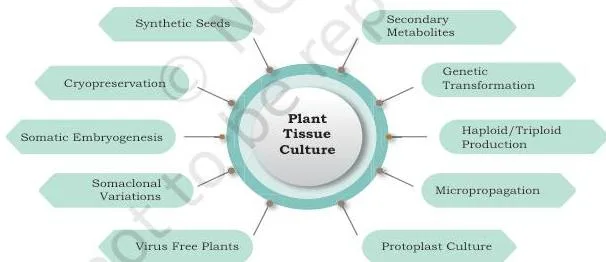
Figure 7.2 is the chapter’s application map — a visual index of the commercial uses of tissue culture, from micropropagation to secondary metabolites. Its caption does not name individual panels, so learn the applications table below and let it name what the map shows.
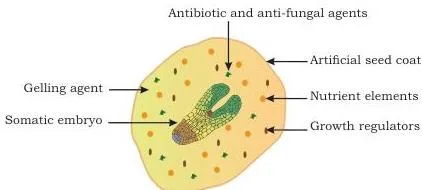
Figure 7.3 shows how an artificial seed is built. A somatic embryo produced on callus is wrapped in a protective coating of a suitable matrix — calcium alginate — and nutrients plus growth regulators are added to the coat. Those additions mimic the stored food of a conventional seed, which is why the product is called a synthetic or somatic seed (NCERT, pp. 177–178).
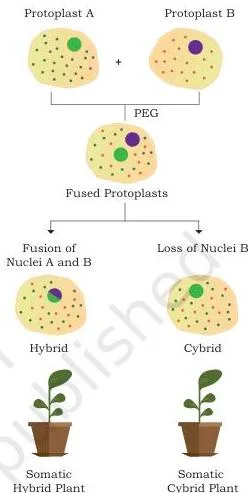
Figure 7.4 follows the fate of a fusion event. Protoplast A and protoplast B come from two different plant species; they fuse into one product, and the product’s name depends on which genomes combine. If the fused cell keeps the nuclear and cytoplasmic genomes of both parents, the regenerated plant is a somatic hybrid.
If the nuclear genome of one parent combines with the cytoplasmic genome of the other, the product is a cybrid (NCERT, p. 179).
Nutrient Media: Six Components and the MS-versus-White’s Difference
Culture media vary with plant species — monocot versus dicot, domesticated versus wild — and even different tissues of the same plant can need different recipes (NCERT, p. 173). The broad recipe always has six component groups:
- Inorganic components: macronutrients needed at millimolar concentrations (C, Ca, H, K, Mg, N, O, P, S) and micronutrients needed at micromolar concentrations (B, Co, Cu, Fe, Mn, Mo, Zn).
- Organic supplements: amino acids as a nitrogen source (arginine, asparagine, glycine, proline) and vitamins (thiamine, nicotinic acid, pyridoxine).
- Carbon source: sucrose is the best, used at about 2–5 per cent; glucose, fructose and mannose are alternatives.
- Plant growth hormones: auxins and cytokinins are the most used in culture; their ratio decides which organs form.
- Gelling agent: agar is the common choice for solid media.
- Antibiotics: optional — they suppress bacteria, while antifungal agents control mould (NCERT, p. 174).
pH and medium-hardness rule sheet. Medium pH is usually adjusted to about 5.8–6.0. Three effects follow:
- Raising the pH increases the hardness of the solidified medium.
- Lowering the pH causes poor solidification.
- pH also affects nutrient uptake by plant cells and the solubility of the media salts (NCERT, p. 174).
MS and White’s media are compared in detail in the table on NCERT p. 175, and the differences between the two columns are the whole point:
| Component | White’s (\(\text{mg L}^{-1}\)) | MS (\(\text{mg L}^{-1}\)) | What the row tells you |
|---|---|---|---|
| \(KNO_3\) | 80 | 1900 | Near 24-fold difference — the main reason MS is called a high-salt medium |
| \(NH_4NO_3\) | absent | 1650 | Ammonium nitrate present only in MS |
| \(KH_2PO_4\) | absent | 170 | Phosphate source differs: White’s uses \(NaH_2PO_4\) (19) instead |
| \(CaCl_2 \cdot 2H_2O\) | absent | 440 | Calcium chloride present only in MS |
| \(Na_2MoO_4 \cdot 2H_2O\) | absent | 0.025 | Molybdenum present only in MS |
| \(CoCl_2 \cdot 6H_2O\) | absent | 0.025 | Cobalt present only in MS |
| \(FeSO_4 \cdot 7H_2O\) + \(Na_2EDTA \cdot 2H_2O\) | absent | 27.8 + 37.3 | Chelated iron present only in MS |
| Myoinositol | absent | 100 | Organic additive present only in MS |
| Sucrose | 20 | 30 | MS supplies more carbon |
Notice also what the table omits: no antibiotic appears in either recipe. Antibiotics are optional additions to suppress contamination, not essential components of MS medium (NCERT, p. 174).
Culture Types: Organ, Callus, Suspension and Protoplast
The chapter groups cultures into four families (NCERT, p. 174). Map each one by its starting material, its product, and its use:
| Culture type | Starting material / method | What is produced | One grounded use |
|---|---|---|---|
| Organ culture | Cultivation of organs such as roots, anther, ovary, embryo, endosperm or seeds | The organ itself — root culture, anther culture, embryo culture and so on | Anther culture produces haploid plants (shown with Datura in 1964) |
| Callus culture | Plant parts dedifferentiate on media and form an unorganised cell mass | Callus | Plant regeneration and genetic transformation studies (NCERT, p. 176) |
| Cell suspension culture | Single cells isolated from callus or other parts by mechanical or enzymatic methods, grown in liquid medium | Free single cells in suspension | Genetic transformation, secondary metabolite production, and induction of somatic embryos (NCERT, p. 176) |
| Protoplast culture | Cell walls digested with cellulase and pectinase to release naked cells | Protoplasts | Fusion of protoplasts to produce somatic hybrids (NCERT, p. 178) |
The idea of culturing organised living structures under controlled conditions connects directly to what you study in the Stem Cell Culture and Organ Culture notes.
The Chapter’s ‘Formula’: Auxin to Cytokinin Ratio
Most of the medium feeds the cells; the auxin-to-cytokinin ratio decides what the cells become. Skoog and Miller showed in 1957 that the morphogenic fate of cultured cells is directly controlled by the exogenous balance of auxin and kinetin — exogenous, because the hormones are supplied through the medium (NCERT, p. 168).
| Relative level of the two hormones | Outcome in culture |
|---|---|
| Relatively high auxin to kinetin/cytokinin | Rooting |
| Relatively high kinetin/cytokinin to auxin | Shoot formation |
| Intermediate (balanced) levels | Proliferation of callus |
Memory line: more auxin for roots, more cytokinin for shoots. This chapter has no chemical equations — the ratio rule plays the role that formulas play in chemistry chapters, so keep it separate in your mind from the media components table.
Seven Applications of Plant Tissue Culture
Figure 7.2 maps the applications visually; this table is the same map in words, with a named example for each (NCERT, pp. 177–181).
| Application | Process in one line | Named example | Page |
|---|---|---|---|
| Micropropagation | Rapid clonal multiplication without sexual reproduction or seeds | Banana (India regenerates more than 400 million plantlets a year); also potato, carnation, chrysanthemum | p. 177 |
| Artificial (synthetic) seeds | Somatic embryos encapsulated in calcium alginate with added nutrients and growth regulators | Carrot, grapes, sandalwood | pp. 177–178 |
| Haploids / triploids | Haploid plants doubled with colchicine to give homozygous double haploids | Broccoli, brassica, sorghum, rice, tobacco | p. 178 |
| Somatic hybrids | Protoplast fusion after digesting walls with cellulase and pectinase; PEG promotes fusion | Potato, rice, brassica; ‘Pomato’ | pp. 178–179 |
| Virus-free plants | Culture from an apical or axillary meristem tip smaller than 1 mm | Sugarcane, banana, potato | p. 179 |
| Somaclonal variation | New genetic variation appears in plants regenerated from cultured somatic tissues; somaclones are screened for useful traits | Disease-resistant sugarcane, banana, tomato; improved wheat yield | p. 180 |
| Secondary metabolites | Cultured cells accumulate valuable specialised compounds, often at levels higher than the parent plant | Shikonin, taxol, artemisin (list below) | pp. 180–181 |
Secondary metabolite production deserves a closer look because cultured cells or tissues can accumulate these compounds at levels higher than the parent plant, independent of season, environment or disease (NCERT, p. 180). A few products from the chapter’s box (NCERT, p. 181):
- Shikonin — Lithospermum erythrorhizon — antimicrobial; first commercialised in 1987.
- Taxol — Taxus sp. — anticancer.
- Artemisin — Artemisia sp. — antimalarial.
- Azadirachtin — Azadirachta indica (neem) — insecticidal.
- Vincristine — Catharanthus roseus — anticancer.
- Digoxin — Digitalis lanata — cardiac tonic.
Hairy root systems are also routinely used in industry because they produce high-quality secondary metabolites (NCERT, p. 180). The chapter’s timeline also mentions the transformation events (Agrobacterium-based and biolistic gene transfer) that made engineered production possible — these belong to the toolkit covered in the Genome Engineering notes.
Worked Example: Predicting Root, Shoot or Callus from Hormone Ratios
A lab prepares three media flasks with different hormone loads. Predict what each flask regenerates.
Step 1: Write each flask as an auxin-to-cytokinin ratio, keeping the units visible.
\[ \text{Flask A: } \frac{1.8}{0.6} = 3 \quad \Rightarrow \quad \text{auxin : cytokinin} = 3:1 \ (\text{auxin-dominant}) \]
\[ \text{Flask B: } \frac{0.5}{2.0} = 0.25 \quad \Rightarrow \quad \text{auxin : cytokinin} = 1:4 \ (\text{cytokinin-dominant}) \]
\[ \text{Flask C: } \frac{1.2}{1.0} = 1.2 \approx 6:5 \ (\text{near balanced}) \]
Step 2: Apply the Skoog and Miller rule: relatively high auxin produces roots, relatively high cytokinin produces shoots, and intermediate levels produce callus proliferation (NCERT, p. 168).
Step 3: Read off the predictions.
| Flask | Auxin (mg/L) | Cytokinin (mg/L) | Simplified ratio | Predicted outcome |
|---|---|---|---|---|
| A | 1.8 | 0.6 | 3 : 1 (auxin-dominant) | Rooting |
| B | 0.5 | 2.0 | 1 : 4 (cytokinin-dominant) | Shoot formation |
| C | 1.2 | 1.0 | about 6 : 5 (intermediate) | Callus proliferation |
Final answer: Flask A → rooting; Flask B → shoot formation; Flask C → callus proliferation.
The ratio, not the absolute amount, decides the outcome because the two hormones act as a pair: the same amount of auxin can favour roots or shoots depending on how much cytokinin is present. That is why the chapter stresses the balance (NCERT, p. 168).
Common Mistakes to Avoid in Plant Tissue Culture Answers
These are the confusions that most often appear in student answers. Each row gives the wrong idea, the correct version, and a way to check yourself.
| Students write | Correct version | Why / how to check |
|---|---|---|
| Rooting needs more cytokinin. | Rooting needs relatively more auxin. | A high auxin-to-kinetin ratio causes rooting (NCERT, p. 168). |
| Dedifferentiation and redifferentiation are the same stage. | Dedifferentiation forms the undifferentiated callus first; redifferentiation then forms organ primordia. | Two sequential stages — name the callus stage before the organ stage (NCERT, p. 171). |
| Somatic embryos come from zygotic embryos. | Somatic embryogenesis forms embryos from somatic cells; they resemble zygotic embryos but differ in origin and are larger. | The phrase ‘place of origin’ is the key difference (NCERT, p. 171). |
| Somatic hybrid and cybrid are the same thing. | A somatic hybrid keeps both nuclear and cytoplasmic genomes; a cybrid pairs one parent’s nuclear genome with the other parent’s cytoplasmic genome. | Ask which genomes are combined — that tells you the name (NCERT, p. 179). |
| Antibiotics are an essential part of MS medium. | Antibiotics are optional additions to suppress bacteria; antifungal agents control mould. | The MS recipe on p. 175 has no antibiotic row (NCERT, p. 174). |
| Meristems are virus-free because they lack vascular bundles. | Viruses are unevenly distributed in the plant; a meristem tip smaller than 1 mm is excised as a virus-free explant. | The reason is uneven distribution, not vascular bundles (NCERT, p. 179). |
| Higher pH makes the medium softer. | Higher pH increases medium hardness; lower pH causes poor solidification. | Check the pH rule sheet before answering (NCERT, p. 174). |
| Somaclonal variation is always an advantage. | It is both a boon and a bane — it can spoil clonal value but also produces new cultivars. | List both sides before concluding (NCERT, p. 180). |
How to Write Strong Answers to the NCERT Exercise Questions
These are answer-writing strategies, not model answers — apply them to the chapter’s own exercises (NCERT, pp. 182–184).
- Definition questions (Q1, Q7): open with the term in a complete sentence, then add the qualifiers: synthetic/artificial medium, aseptic conditions, and controlled physical conditions. For Q7, after defining explant, list the five most common explants: root or shoot apical meristems, leaves, cotyledons, hypocotyls, immature embryos (NCERT, p. 172).
- ‘Describe the media components’ (Q2): organise the answer around the six component groups — inorganic (macro and micro), organic supplements, carbon source, growth hormones, gelling agent, antibiotics — and give one example for each (sucrose as carbon source, agar as gelling agent, thiamine as a vitamin).
- Steps of tissue culture (Q3): write all eight steps in order, and never skip surface sterilisation.
- Applications (Q4): attach one real crop or product to every application — banana for micropropagation, carrot or sandalwood for artificial seeds, sugarcane for virus-free plants, taxol for secondary metabolites.
- ‘Describe the method’ (Q5, Q10): write the process as a sequence — digest cell walls with cellulase and pectinase, isolate protoplasts, fuse them with PEG, regenerate the hybrid plants — then add the advantage of crossing the species barrier.
- Role of pH (Q9): mention hardness, solidification, nutrient uptake and salt solubility — all four points, not just one.
- Somaclonal variations (Q6, Q11): give the definition, then acknowledge both sides — they can compromise clonal value, but screened somaclones have given disease-resistant sugarcane, banana and tomato, and improved wheat yield.
- Objective and assertion-reason items (Q12–Q20): check each choice against the media table, the hormone-ratio rule, and the four figures. In the virus-free item, notice that the reason supplied is not the correct explanation: the chapter’s reason is uneven virus distribution and an excised meristem tip smaller than 1 mm (NCERT, p. 179).
A complete ‘describe’ answer always says what each component or step does, not just its name. State the purpose and you have written the full answer.
One-Page Revision Recap for the Night Before
Scan this table once before the test and you will have covered every section of the chapter.
| Concept | One-line takeaway | Page |
|---|---|---|
| PTC definition | Cultivation of undifferentiated plant cells/tissues on synthetic media, aseptic and controlled | p. 167 |
| Totipotency | A vegetative cell can become any specialised cell or a whole plant | p. 167 |
| Founder | Haberlandt (1902) proposed cell culture; Father of PTC | p. 168 |
| MS medium | Most widely used medium; high-salt | pp. 168, 175 |
| Hormone rule | High auxin → roots; high cytokinin → shoots; balanced → callus | p. 168 |
| Dediff / rediff | Callus first, then organ primordia | p. 171 |
| Culture types | Organ, callus, suspension, protoplast | p. 174 |
| Micropropagation | Fast clonal multiplication; banana is a major crop | p. 177 |
| Artificial seeds | Somatic embryos encapsulated in calcium alginate | p. 177 |
| Double haploids | Colchicine-doubled haploids; homozygous for breeding | p. 178 |
| Somatic hybrid vs cybrid | Both genomes vs nuclear + foreign cytoplasmic genome | p. 179 |
| Virus-free plants | Meristem tip smaller than 1 mm; sugarcane, potato, banana | p. 179 |
| Somaclonal variation | Variation from cultured somatic tissues; boon and bane | p. 180 |
| Secondary metabolites | Shikonin, taxol; often higher than the parent plant | p. 180 |
Night-before facts:
- Sucrose is the best carbon source, used at 2–5 per cent.
- Agar is the usual gelling agent.
- Medium pH is adjusted to about 5.8–6.0.
- MS is a high-salt medium.
- More auxin → roots; more cytokinin → shoots.
Plant Tissue Culture FAQs: Clearing Common Doubts
What is the difference between organogenesis and somatic embryogenesis?
Organogenesis is the formation of vegetative organs — shoot or root primordia — from cells or tissues in culture, passing through dedifferentiation and redifferentiation. Somatic embryogenesis is the formation of an embryo from somatic cells, following the zygotic embryogenic pathway. The somatic embryos resemble zygotic embryos but differ in place of origin and are larger (NCERT, p. 171).
What happens if the auxin-to-cytokinin ratio is high or low?
A relatively high auxin-to-cytokinin ratio produces roots; a relatively high cytokinin-to-auxin ratio produces shoots; intermediate levels produce callus proliferation (NCERT, p. 168).
Is antibiotic an essential component of MS medium?
No. Antibiotics are an optional addition used to suppress bacteria, while antifungal agents control mould. The MS recipe on NCERT p. 175 lists no antibiotics, so they are not an essential component of the medium.
How can a virus-free plant be produced from an already infected plant?
By excising a very small piece — less than 1 mm — of the apical or axillary meristem and culturing it as an explant. Viruses are unevenly distributed in the plant and meristems are generally virus-free, so plantlets regenerated from this tip are virus-free. The method is used for clonally propagated crops like sugarcane, banana and potato (NCERT, p. 179).
What is the difference between a somatic hybrid and a cybrid?
A somatic hybrid, produced by protoplast fusion, carries the combined nuclear and cytoplasmic genomes of both parents. A cybrid carries the nuclear genome of one parent combined with the cytoplasmic (mitochondrial or plastid) genome of the other (NCERT, p. 179).
Why was coconut water used in early tissue culture media?
Coconut water stimulated the development of young embryos, so it was used as a natural supplement with nutrient media for in vitro cultures (NCERT, p. 168). Van Overbeek introduced it as a media component in 1941 and demonstrated its beneficial effects (NCERT, p. 169).
Reference: NCERT Class 12 Biotechnology textbook, chapter Plant Tissue Culture.
Explore Class 12 Biotechnology Notes
- Class 12 Biotechnology Notes
- Class 12 CBSE Notes
- CBSE Notes for Classes 1 to 12
- Previous: Genome Engineering
- Next: Stem Cell Culture and Organ Culture
Class 12 Biotechnology on LearnCBSE:
Related chapters:
- Recombinant DNA Technology notes
- Host–Vector System notes
- Gene Cloning notes
Official source: download the NCERT textbook free from ncert.nic.in.