
These applications of recombinant DNA technology class 12 notes cover every application in Chapter 4 of the NCERT Class 12 Biotechnology textbook (pages 67–110): DNA fingerprinting, transgenic organisms, gene therapy, recombinant vaccines, and therapeutic agents. The notes follow the rationalised NCERT for the 2026-27 session, so everything here maps to the chapter you are revising.
The page is organised for speed: the core idea of each application, then the mechanism as numbered steps, then the tables that gather vocabulary, key numbers, dates and common mistakes in one place. If the toolkit behind these applications — vectors, restriction enzymes and host cells from Chapter 3 — feels hazy, you can refresh the gene cloning notes first.
You can also browse the full Class 12 Biotechnology notes hub, the general Class 12 notes, or the CBSE notes collection for context from other chapters.
Five Applications, One Technology: The Chapter Map
All five applications are the same set of recombinant DNA tools at work. This table is the chapter’s spine — keep it in mind as you revise the details.
| Application | Core idea | Chapter section |
|---|---|---|
| DNA fingerprinting | Uses inherited, highly variable repeat sequences (VNTRs) to establish identity and relatedness | 4.1 (p. 67) |
| Transgenic organisms | Inserting a foreign gene (transgene) that is transmitted to and expressed in the progeny | 4.2 (p. 71) |
| Gene therapy | Repairing faulty genes by introducing correct genetic material into cells | 4.3 (p. 85) |
| Recombinant vaccines | Safer immunity using modified pathogens, their parts, or their genes | 4.4 (p. 90) |
| Therapeutic agents | Recombinant monoclonal antibodies, insulin and human growth hormone | 4.5 (p. 98) |
The common thread is the Chapter 3 toolkit: vectors, restriction enzymes and host systems. If those feel shaky, revisit the gene cloning notes before going further.
DNA Fingerprinting: Reading the 0.1% That Makes You Unique
Your DNA is about 99.9% identical to every other human’s; the remaining 0.1% is sites of inherited variation, and it is this 0.1% that makes each of us unique (NCERT, p. 67).
Sequencing and comparing whole genomes every time would not be feasible, so British geneticist Sir Alec Jeffreys developed DNA fingerprinting in 1984 at the University of Leicester to compare just the variable spots (NCERT, p. 68). Think of it as scanning a genetic barcode — comparing the stripe pattern of repeat lengths, not every letter of the instruction manual.
Why non-coding DNA holds the key
More than 90% of the human genome does not code for protein (NCERT, p. 68). Inside these non-coding regions lie short nucleotide sequences repeated a number of times in tandem at a locus — the short tandem repeats (STRs). A locus where the repeat number varies between individuals is called a VNTR (variable number tandem repeat).
Because VNTRs show a high degree of polymorphism and are inherited from parent to offspring, they form the basis of DNA fingerprinting.
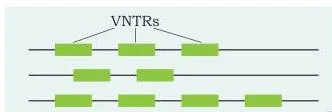
Fig 4.1 shows the same VNTR locus in three alleles — the repeated block appears a different number of times in each allele, and that length difference is exactly the polymorphism DNA fingerprinting detects. VNTRs are subdivided into two principal families: microsatellites (repeat units of 1–9 bp) and minisatellites (repeat units of 10–100 bp) (NCERT, p. 68).
The seven-step RFLP protocol
We carry two different copies of every VNTR locus because we inherit one chromosome from each parent (NCERT, p. 69). The simplest way to compare them is Restriction Fragment Length Polymorphism (RFLP) — cutting DNA with restriction enzymes and comparing the fragment patterns. The protocol runs in seven ordered steps (NCERT, pp. 69–70); Fig 4.3 shows how a sample travels through the whole flow.
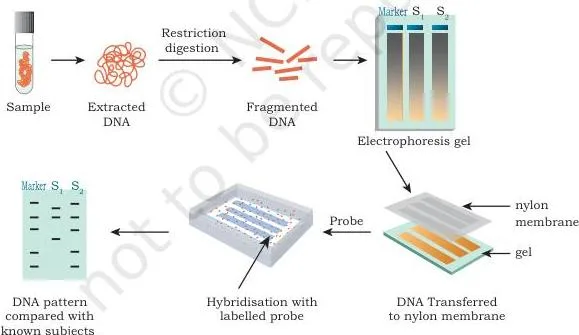
- Isolate DNA from samples like blood, hair, skin, semen or a buccal swab.
- Cut the DNA into fragments of different sizes using one or more restriction enzymes.
- Separate the fragments by agarose gel electrophoresis — pieces sort by size.
- Transfer the separated DNA to a nitrocellulose or nylon membrane, and fix it permanently by exposing to UV radiation on a UV transilluminator for three minutes or baking at 80°C for two hours (NCERT, p. 70).
- Probe by Southern hybridisation using labelled VNTR probes — short stretches of single-stranded DNA that detect complementary target sequences.
- Detect the hybridised DNA bands.
- Compare the band patterns — they are highly specific for each individual and can be used in forensics and paternity disputes.
Mnemonic: In Court, Suspects Tell Police Details Clearly — In = Isolate, Court = Cut, Suspects = Separate, Tell = Transfer, Police = Probe, Details = Detect, Clearly = Compare.
Sensitivity note: PCR is often used to increase the sensitivity of the technique because it amplifies the DNA, irrespective of how little DNA is available (NCERT, p. 70).
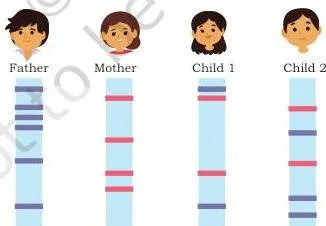
Paternity in one glance: what Fig 4.2 shows
Fig 4.2 applies the inheritance rule. In the figure, the father and mother shown are the parents of child 1 but not of child 2 — so child 1’s profile combines bands from both parents, while child 2’s pattern does not fit.
Five places DNA fingerprinting is used
- Paternity and maternity cases: VNTR patterns are inherited, so parent–child VNTR patterns settle such disputes; even a parental pattern can be reconstructed from the offspring’s pattern (NCERT, p. 70).
- Forensic evidence: DNA from blood, hair, skin or semen at a crime scene is compared with a suspect’s VNTR pattern to establish guilt or innocence (NCERT, p. 70).
- Evolutionary biology: DNA from fossils can be compared with modern-day counterparts (NCERT, p. 71).
- Study of inherited disorders: Comparing DNA profiles of people with and without a disorder helps identify the DNA patterns involved (NCERT, p. 71).
- Genetic barcode: A DNA profile has been proposed as a personal-identification barcode, alongside social security numbers and picture IDs (NCERT, p. 71).
Transgenic Organisms: How a Foreign Gene Becomes Inheritable
What transgenesis means
Transgenesis is the insertion of a foreign gene (a transgene) into the genome of an organism and its transmission and expression in the organism’s progeny. The resulting organisms are called transgenic organisms or genetically modified organisms (GMOs) (NCERT, p. 71). These organisms are not found naturally in the environment — Bt cotton and Rosie the cow are examples, created for human benefit.
- 1973: first GMO, a bacterium, made by Herbert Boyer and Stanley Cohen (NCERT, p. 71).
- 1974: first transgenic animal — transgenic mice — engineered by Rudolf Jaenisch and Beatrice Mintz (NCERT, p. 71).
- 1994: Flavr Savr tomato released as the first GM food crop approved by the USFDA (NCERT, p. 71).
Making transgenic plants: two routes
| Route | Mechanism | Key details |
|---|---|---|
| Vector-mediated: Agrobacterium tumefaciens | The bacterium transfers a segment of its Ti plasmid (T-DNA) into the plant genome upon infection | Called the ‘natural genetic engineer’; causes crown gall disease; tumour genes are replaced with genes of interest (disarming) (NCERT, p. 73) |
| Vector-mediated: plant viruses | Caulimoviruses enter intact plant cells and introduce their DNA | Less common than Agrobacterium (NCERT, p. 75) |
| Vector-less: biolistics (particle gun) | DNA-coated gold or tungsten particles (1–3 µm) are accelerated and bombarded into target tissue | Works for cereals and for chloroplast transformation, giving higher transgene expression (NCERT, p. 75) |
| Vector-less: protoplast transformation and electroporation | Naked plant cells (protoplasts) take up DNA with PEG and dextran sulphate, or with an electric current | Transfected protoplasts regenerate cell walls and then whole plants (NCERT, p. 75) |
The Agrobacterium route is the most important to reproduce in answers. Its steps, based on NCERT pages 73–74, are shown in Fig 4.4.
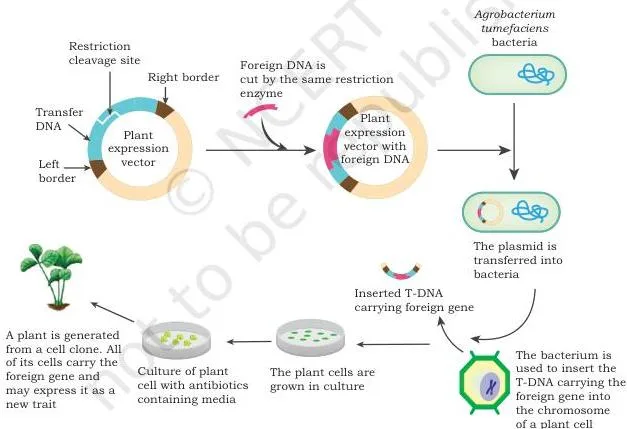
- Replace the tumour-inducing genes in the T-DNA with the gene of interest (for example, the Bt gene) and add an antibiotic marker gene — the Ti plasmid is now a disarmed plasmid.
- Transfer the recombinant disarmed T-DNA into Agrobacterium cells.
- Infect plant cells with these Agrobacterium cells; the T-DNA carrying the target gene integrates into plant nuclear DNA.
- Culture the tissue on regeneration medium containing a bacteriostatic agent (to stop further Agrobacterium growth) and a lethal concentration of the marker antibiotic (which selectively eliminates non-transformed cells).
- In a few weeks the transformed tissue forms shoots, which are transferred to rooting medium, where roots develop within two to three weeks.
- Transfer the resulting plantlets to soil.
Making transgenic animals: three routes
- DNA pronuclear microinjection: the transgene is injected directly into the larger male pronucleus of a freshly fertilised egg; embryos are cultured in vitro and implanted into foster mothers. Simple and reliable, but success rate is low and integration is random (NCERT, p. 76).
- Embryonic stem (ES) cell-mediated transfer: rDNA is transferred into ES cells (collected from the inner cell mass of the blastocyst) by electroporation; transformed ES cells are injected back into the blastocyst and implanted into a foster mother (NCERT, p. 76).
- Retrovirus-mediated transfer: retroviruses have RNA genomes; retroviral vectors stably introduce a single copy of the transgene at a particular location — lentivirus is an example (NCERT, p. 78).
Fig 4.5 shows the overall production route for transgenic animals, from microinjection of the transgene to the birth of a transgenic offspring.
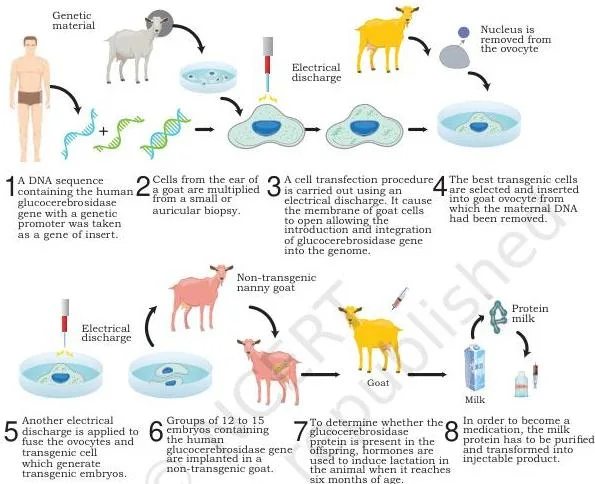
The ES-cell route can produce a chimeric mouse — a patchwork of normal cells and genetically manipulated ‘knockout’ cells, often visible as a spotted coat colour. Chimeras are tools for studying cell specification, differentiation, lineage, disease mechanisms and tissue repair (NCERT, p. 78).
What transgenics are used for
| Area | What is achieved | Named example |
|---|---|---|
| Agriculture | Insect resistance, stress tolerance, better nutrition, delayed ripening | Bt cotton (cryIAc and cryIIAb control cotton bollworm; cryIAb controls corn borer); Golden Rice; Bt cotton grown commercially in India since 2002 (NCERT, pp. 78–79) |
| Gene silencing | Antisense technology and RNAi block mRNA, so a specific gene is silenced | Agrobacterium-delivered antisense RNA makes tobacco resistant to the nematode Meloidogyne incognita (NCERT, p. 82) |
| Molecular farming in plants | Purposeful addition of genes so plants produce valuable biomolecules | Elelyso (2012, first plant-made human biologic, from carrot cell cultures, for Gaucher’s disease); lettuce Hepatitis B antigen; safflower insulin (NCERT, pp. 82–83) |
| Environmental benefits | Biodegradable plastics and pollutant removal | Polyhydroxybutyrate (PHB) in transgenic sugarcane; mercury-detoxifying plants carrying a mercuric reductase gene (‘mercury-breathing plants’) (NCERT, p. 83) |
| Molecular pharming in animals | Transgenic animals act as bioreactors producing recombinant proteins in milk | Tracy the ewe (human alpha-1-antitrypsin, 1990s); Rosie the cow (human alpha-lactalbumin-enriched milk, 1997) (NCERT, pp. 83–84) |
| Research | Model organisms for disease and safety testing | Mice engineered to develop cancer or Alzheimer’s symptoms; toxicity testing of vaccines, drugs and chemicals (NCERT, p. 84) |
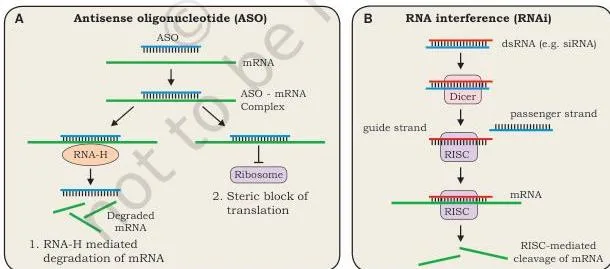
Antisense technology and RNAi silence genes by two routes, both shown in the second Fig 4.5. In the antisense oligonucleotide (ASO) technique, a synthetic RNA or DNA molecule complementary to the target mRNA either triggers RNase H-mediated degradation of the mRNA or blocks its binding to ribosomes.
In RNA interference (RNAi), a double-stranded RNA is cleaved in the cytoplasm by the enzyme DICER into short fragments; the multiprotein complex RISC separates them into a guide strand and a passenger strand. The passenger strand is degraded while the guide strand directs cleavage of the target mRNA — silencing the gene (NCERT, p. 81).
GMO concerns and regulation
- Transgenic crops may produce proteins that cause allergic reactions in humans.
- Viral vectors and promoters raise concerns about viral infections.
- Improved characteristics may make GMOs invasive against native or wild-type species.
- Variable insertion of the transgene can cause unpredictable or non-target effects (NCERT, pp. 84–85).
India’s Ministry of Environment, Forest and Climate Change has established the Genetic Engineering Appraisal Committee (GEAC), which regulates the manufacture, use, import, export and storage of GMOs and hazardous microorganisms, and decides on the validity and safety of introducing GMOs (NCERT, p. 85).
Gene Therapy: Repairing Faulty Instructions Inside the Cell
Gene therapy is a technique designed to repair faulty genes in humans by introducing correct genetic material inside the cells (NCERT, p. 85). Candidate diseases include the immune disorder Severe Combined Immunodeficiency (SCID) and inherited disorders like cystic fibrosis, hemophilia and muscular dystrophy.
The first gene therapy was performed in 1990 in a four-year-old girl with SCID caused by a defect in the adenosine deaminase (ADA) gene. ADA deficiency meant she could not produce enough immune cells, leading to frequent life-threatening infections (NCERT, p. 86). The treatment is shown step by step in Fig 4.6.
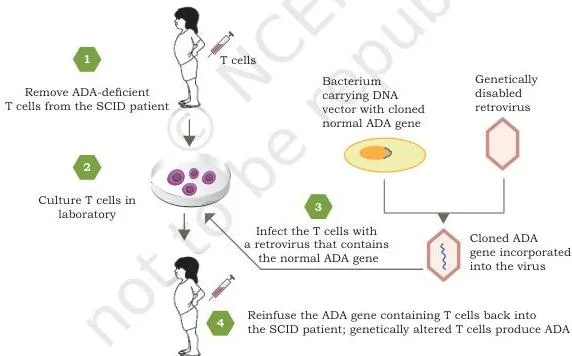
- Collect lymphocytes from the patient.
- Insert a functional copy of the ADA gene into a viral vector.
- Introduce the vector into the collected lymphocytes.
- Reintroduce the corrected lymphocytes into the patient’s bloodstream.
The girl’s immune function improved, but the cure was not permanent (NCERT, p. 86).
The three approaches
- Gene replacement or gene addition: a functional copy of the gene is delivered to replace the non-functional defective gene. Examples: replacing the mutated CFTR gene in cystic fibrosis, and replacing defective p53 (a tumour-preventing gene) in cancer cells (NCERT, pp. 86–87).
- Gene inhibition: a gene is introduced whose product blocks the expression of the faulty gene or disarms its products. Applicable in Tay-Sachs disease, phenylketonuria and colour-blindness (NCERT, p. 87).
- Gene repair or gene editing: DNA is inserted, deleted, modified or replaced in the defective gene in living cells using CRISPR/Cas9 — a system adopted from the natural defence of bacteria and archaea against viruses, where the Cas9 enzyme cuts viral DNA (NCERT, p. 87). This connects to the genome engineering notes, where the editing tools are developed further.
Two ways to classify gene therapy
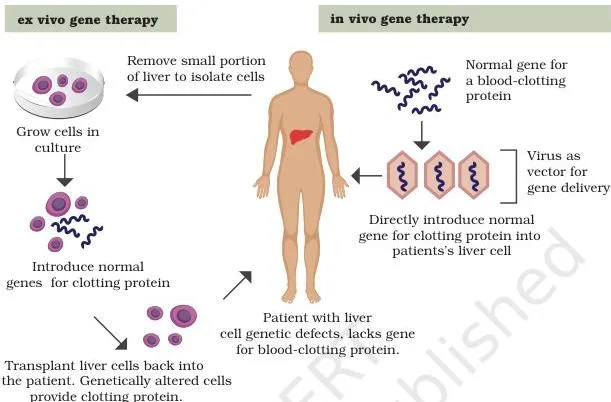
Fig 4.8 shows the first classification pair — ex vivo versus in vivo delivery.
| Basis | Types | Key fact |
|---|---|---|
| Delivery strategy | Ex vivo (cell-based delivery) vs in vivo (direct delivery) | Ex vivo = cells removed from the patient, grown in culture, corrected, then returned — simpler because external manipulation is easier. In vivo = normal genes introduced directly into the target cells and tissues of the person (NCERT, p. 87) |
| Nature of target cells | Somatic vs germ-line | Somatic changes affect body cells only and are not heritable; germ-line changes in egg or sperm are integrated into the genome and are heritable (NCERT, p. 88) |
A second naming system (NCERT, pp. 88–89) describes the functional strategy instead:
- Gene augmentation therapy: adding a functional gene to replace a missing gene product.
- Gene inhibition therapy: using antisense RNA or other inhibition techniques to block the expression of dominant acting mutated genes.
- Gene targeting therapy: replacing the non-functional gene with a normal gene using homologous recombination.
Merits, demerits and ethics
Gene therapy offers a potential cure for devastating inherited diseases, and understanding of cancer as somatic genomic aberrations has pushed researchers towards manipulating cancer cells genetically.
But the technique has real limits (NCERT, p. 89): uncontrolled expression of the therapeutic gene, random integration at a wrong place (integration into a tumour-suppressor gene can itself cause a tumour), short-lived therapy needing frequent re-administration, host immune rejection of the gene or the viral vector, high cost, and effectiveness only for single-gene defects — not multigene disorders.
Bioethics means assessing the risks and moral implications of new techniques (NCERT, p. 90). Somatic cell modification is broadly accepted, but germ-line therapy is controversial: it could cure a genetic disorder in future generations, yet may carry long-term side effects. Gene enhancement — for traits like athletic ability or intelligence — is another concern that demands strict regulation (NCERT, p. 90).
Cystic fibrosis in one figure
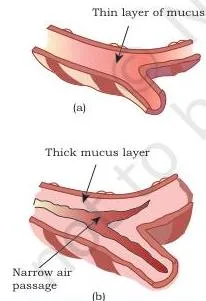
Fig 4.7 illustrates why the CFTR defect is so damaging: a cross-section of the air passage in a normal person compared with one in cystic fibrosis shows the tissue damage that follows when defective CFTR protein hampers salt and water movement in body cells, harming the respiratory and digestive tracts (NCERT, p. 86).
Recombinant Vaccines: From Weakened Pathogens to mRNA
A vaccine is a preparation of killed or weakened pathogen, or its components, given to elicit an immune response so the body recognises and fights off the infectious agent (NCERT, p. 90). The word comes from the Latin vacca (cow) — Edward Jenner injected cowpox virus to protect against smallpox, and Louis Pasteur coined the term vaccination in 1881.
Common infant vaccines include DPT and MMR.
Conventional vaccines had serious drawbacks: live attenuated vaccines carried a chance of infection, toxoids could revert to toxigenic forms, undesirable components could be co-purified, and getting sufficient purified antigen was difficult. Recombinant vaccines, built with rDNA tools, avoid these problems (NCERT, p. 91).
Four types appear in the chapter — the comparison in the table below is the most asked-about distinction in the exercise set.
| Vaccine type | What is injected | How immunity is triggered | Named example |
|---|---|---|---|
| Live genetically modified vaccines | A live organism (bacteria or virus) made non-pathogenic by gene deletion or inactivation, or a live vector carrying a foreign antigen gene | The weakened organism replicates safely and displays the foreign antigen, provoking a protective immune response | Salmonella vaccine (sheep, poultry), Pseudorabies virus vaccine (pigs); vaccinia virus as a vector (NCERT, pp. 91–92) |
| Recombinant subunit vaccines | Only a part of the pathogen — a synthetic peptide or an expressed whole protein from cloned genes | The purified antigen (for example HBsAg) stimulates immunity without any infection risk; advantage: purity, stability and safe use | HBsAg gene expressed in yeast → Recombivax and Engerix-B, licensed 1987 (NCERT, pp. 94–95) |
| DNA vaccines | A plasmid carrying the antigen gene, with a promoter, cloning site, origin of replication, selectable marker and poly-A tail | The DNA is taken up by muscle cells (via gene gun or nasal spray); the antigen is expressed in the body, inducing both humoral and cellular immune responses | Plasmid-based antigen vaccines delivered by gene gun in animal models (NCERT, p. 94) |
| RNA vaccines | mRNA, stabilised by a 5′ cap and 3′ poly-A tail, formulated in lipid nanoparticles (LNPs) | mRNA is taken up by antigen-presenting cells and translated into a properly folded, glycosylated protein antigen; both humoral and cellular responses follow | COVID-19 mRNA vaccine candidates (NCERT, pp. 96–97) |
Counting note: the NCERT summary lists three main types—live genetically modified, subunit and RNA/DNA vaccines—while the body also describes DNA and RNA vaccines separately. Do not be confused by the count — the four rows of the table are the complete set.
Polyvalent vaccines and the vaccinia vector
A polyvalent or multivalent vaccine provides simultaneous protection against several diseases because one vector carries antigenic genes from several pathogens (NCERT, pp. 91–93). The workhorse vector is the vaccinia virus, a large enveloped poxvirus with a linear double-stranded DNA genome of around 200 genes that can accommodate foreign DNA and express it alongside its own genes.
Fig 4.10 (top) shows how such a vector-based vaccine is produced.
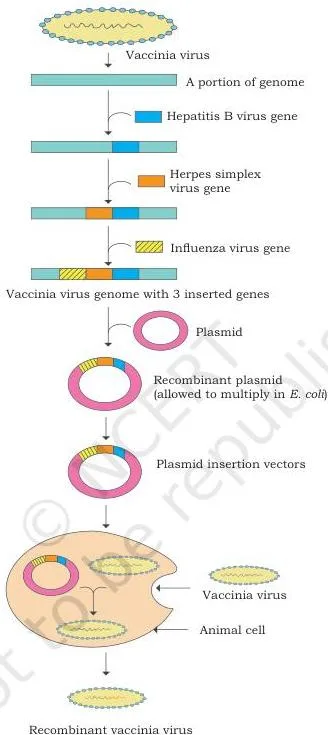
- A small portion of vaccinia DNA is cloned in a plasmid vector (the insertion vector); this acts as the recombination site.
- Antigen genes — for example from hepatitis virus, herpes simplex virus and influenza virus — are inserted into the insertion vector to form a recombinant plasmid.
- The recombinant plasmid is introduced into normal vaccinia virus host cells along with normal vaccinia virus.
- During viral DNA replication, the recombinant plasmid recombines with viral DNA, and the antigen-coding genes become part of the vaccinia virus genome — generating recombinant vaccinia virus that offers elevated protection against those pathogens (NCERT, p. 93).
The first recombinant subunit vaccine: HBsAg in yeast
Hepatitis B virus carries surface antigen HBsAg, the key element of the hepatitis B vaccine, but culturing the virus to obtain this antigen is very complicated. Instead, the HBsAg gene was inserted into the yeast plasmid vector pMA56 and expressed in Saccharomyces cerevisiae yeast.
The gene was ligated to a strong alcohol dehydrogenase (ADH) promoter; selection used an antibiotic resistance marker and a gene permitting growth in the absence of tryptophan (NCERT, pp. 94–95). The purified protein was used for immunisation — this was the first recombinant subunit vaccine for public use, licensed in 1987 and marketed as Recombivax and Engerix-B (NCERT, p. 95).
An aside: edible plant vaccines are vaccines produced in plants and administered by simply eating the plant material. The HBsAg gene has been inserted into banana genome to make a Hepatitis B banana vaccine — banana is easy to digest, needs no cooking, is palatable, inexpensive and available year-round (NCERT, p. 93).
RNA vaccines and the COVID-19 context
RNA vaccines contain mRNA that is translated directly inside the body. Fig 4.10 (RNA vaccine) shows the principle: injected mRNA is taken up by antigen-presenting cells and other target cells, where it is expressed as a protein antigen.
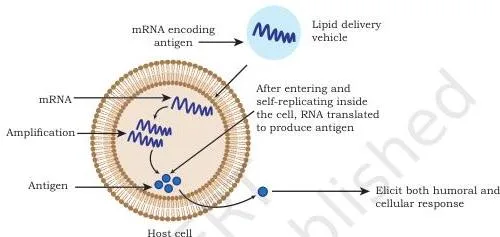
- Stability problem: RNA is labile. Stability is improved by adding a 5′ cap and a 3′ poly-A tail, and by packaging the mRNA in lipid nanoparticles (LNPs) that protect it from degradation and increase cellular uptake. Storage requires freezing; lyophilisation (freeze-drying) and thermostable LNPs are proposed to improve thermostability (NCERT, p. 96).
- Advantages: simple, high-yield, virus-free (cell-free) production with less concern about contaminants; rapid response to emerging viral variants; lower dose per shot, possibly without a second dose; and greater safety — no risk of pathogen reactivation, and RNA is degraded in vivo with no risk of antigen persistence or genome integration (NCERT, pp. 96–97).
- COVID-19: in India, Covaxin (inactivated whole virus) and Covishield (adenovirus-based DNA vaccine) were used, while RNA-based vaccines were developed to control pandemics effectively; mRNA candidates entered different phases of trials (NCERT, p. 97).
Therapeutic Agents: Monoclonal Antibodies, Insulin and Growth Hormone
Compounds used for treating disease and improving health are therapeutic agents. Recombinant DNA technology now produces safe, pure human proteins on a large scale — because they are identical to natural human proteins, unlike those isolated from cows or pigs, they do not induce immune or allergic responses (NCERT, p. 98).
Monoclonal antibodies: one epitope, one weapon
Antibodies are protein molecules produced by B cells that protect the body against foreign substances called antigens. Five antibody classes exist in human serum: IgA, IgD, IgE, IgG and IgM. A B cell response produces many different antibodies against different regions of the antigen called epitopes — these are polyclonal antibodies.
Polyclonal responses are excellent in vivo (they drive antigen processing and degradation) but their heterogeneity restricts in vitro use. Monoclonal antibodies (MAbs) target a single specific epitope, making them ideal for diagnostics and therapy (NCERT, p. 98).
Early attempts to produce MAbs by culturing B cells failed because B cell culture is tricky and the antibodies produced were short-lived.
In 1975, George Kohler and Cesar Milstein developed hybridoma technology: the short-lived antibody-secreting plasma B cell is fused with an immortal myeloma cell using polyethylene glycol (PEG), forming a hybridoma that combines the immortality of the myeloma cell with the antibody production of the B cell (NCERT, p. 99). Fig 4.11 shows the complete process.
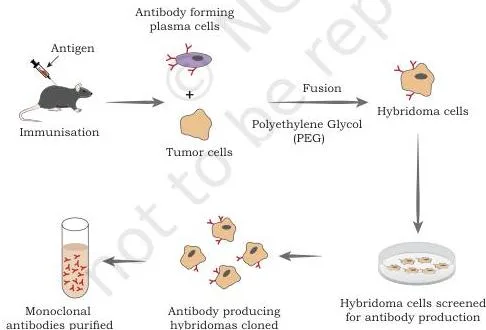
Why HAT medium selects the hybridoma: myeloma cells are genetically engineered so they cannot use hypoxanthine, aminopterin and thymidine (HAT medium) as a source for nucleic acid biosynthesis, so they die in culture. B cells can survive in HAT medium but have a definite lifespan.
Only the fused hybridoma cells — which get HAT survival from the B cell and immortality from the myeloma cell — survive and keep secreting antibody (NCERT, p. 99).
With advances in rDNA technology, mouse antibodies carrying a few human segments can be built — chimeric or humanised antibodies — with higher effectiveness and activity (NCERT, p. 99).
MAbs are used in commercially available diagnostic kits such as pregnancy detection kits, in diagnostic imaging of cancer (tumour-specific MAbs differentiate cancerous from non-cancerous cells), and as targeted therapeutic agents coupled with toxins or drugs and carried to target tissues (NCERT, p. 100).
Insulin: the 51-amino-acid triumph
Insulin is secreted by the beta cells of the pancreas and triggers glucose uptake from blood, also stimulating conversion of glucose to glycogen (glycogenesis). Its deficiency causes diabetes mellitus, marked by sugar in the urine (NCERT, p. 100).
Frederick Banting and Howard Best first isolated insulin in 1921, and Sanger determined its primary structure in 1955, for which he received the Nobel Prize in 1958 (NCERT, p. 100).
Structurally, insulin has an A chain of 21 amino acids and a B chain of 30 amino acids, interconnected by disulphide bonds (NCERT, p. 100). Fig 4.12 shows this primary structure with the A chain in red and the B chain in green.
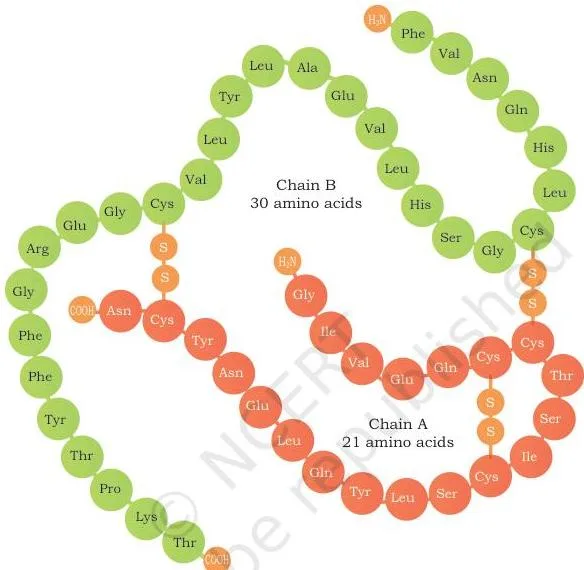
Insulin purified from pigs (porcine) and cows (bovine) differs from human insulin by just one or three amino acids — yet those minor differences can cause allergic responses in some diabetic patients, so human insulin is far more suitable (NCERT, p. 100).
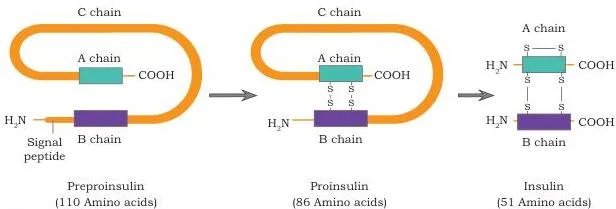
The mRNA of insulin is first translated into preproinsulin, a primary protein of 110 amino acids. In the endoplasmic reticulum the signal peptide is cleaved off, forming proinsulin of 86 amino acids, which carries three distinct chains: A-chain, B-chain and C-chain (31 amino acids). Removal of the C-chain and four additional connecting amino acids yields the biologically active 51-amino-acid insulin (NCERT, pp. 100–101).
Fig 4.13 tracks this conversion.
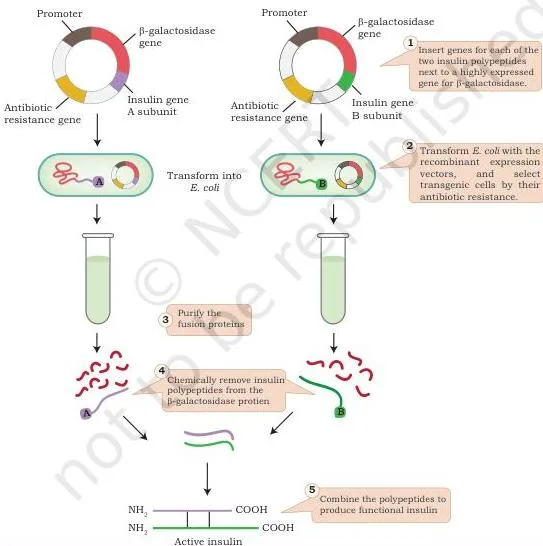
In the late 1970s, biochemists used rDNA tools to produce insulin: the insulin gene was isolated from a gene library and inserted into a bacterial plasmid of E. coli, with a promoter from the lac operon placed next to it.
Because processing of preproinsulin is not feasible in bacteria, the problem was sidestepped by cloning the A and B chain genes separately. Each chain was expressed as a fusion protein with the enzyme beta-galactosidase, then treated with cyanogen bromide (CNBr) to separate the beta-gal fragment from the A and B chains.
Finally the disulphide bonds were re-established between the chains to reconstruct active insulin (NCERT, pp. 102–103). Fig 4.14 shows this production route.
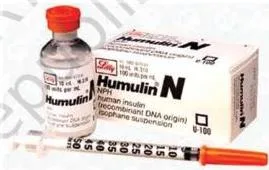
The first genetically engineered human insulin was marketed as Humulin in 1982 — more effective than pig or cow insulin, with the correct sequence completely free from allergic responses (NCERT, p. 103). Fig 4.15 shows how Eli Lilly marketed this E. coli-expressed insulin.
Human growth hormone: from cadavers to cDNA
Human growth hormone (HGH) is a peptide hormone of 191 amino acids secreted by the pituitary gland. It promotes body growth by increasing amino acid, lipid and carbohydrate metabolism in childhood and adulthood.
Childhood deficiency causes dwarfism — retarded body growth, chubby face, extra fat deposited at the waist, and a short height of about four feet; adult deficiency leaves average intelligence but abnormal body proportions (NCERT, p. 103). Fig 4.16 illustrates these effects of HGH deficiency.
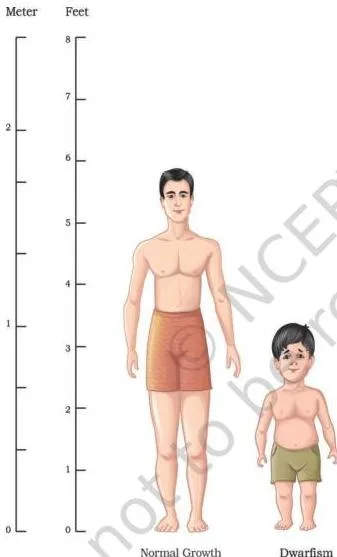
The old treatment was grim: one year’s supply of HGH required pituitary glands from more than 80 cadavers — expensive, and risky because infected brain tissue could transmit disease.
In 1978 the use of cadaver tissue was restricted in the United States and Britain because of the possible transfer of Creutzfeldt-Jakob syndrome, believed to be caused by a prion; by 1993, 24 cases had been identified in French recipients of cadaver-derived HGH (NCERT, pp. 103–104).
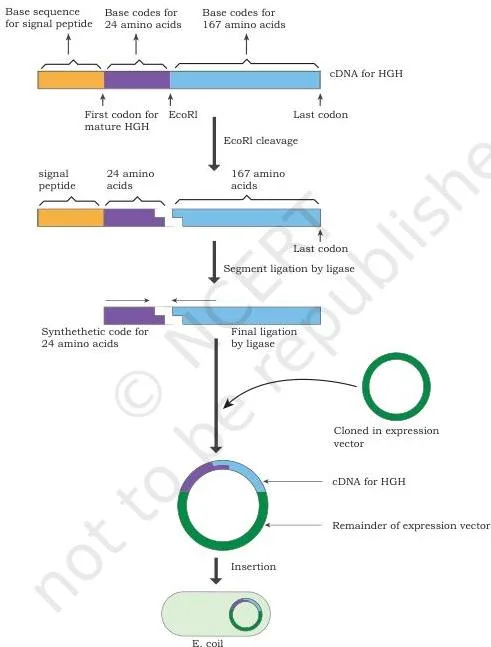
The recombinant route, shown in Fig 4.17, resembles insulin production. The HGH-encoding mRNA was used as a template to synthesise complementary DNA (cDNA). The problem: the intermediate HGH molecule carries an extra 26-amino-acid signal peptide that bacteria fail to remove.
Since no restriction enzyme could cut exactly at the signal peptide boundary, EcoRI was used to remove the bases for the signal peptide (26 amino acids) plus an additional 24 amino acids — 50 amino acids in total. The removed bases for the extra 24 amino acids were chemically synthesised and put back, generating the complete HGH gene without the signal sequence.
The gene was then expressed in bacterial cells, and in 1985 genetically engineered HGH was marketed as Humatrope and Protropin (NCERT, pp. 104–105).
The Chapter’s Vocabulary: Key Terms and Definitions at a Glance
These are the terms the chapter and its exercises assume. Definitions are kept short; page numbers point you to the textbook context.
| Term | Meaning in simple words | Page |
|---|---|---|
| VNTR | Variable number tandem repeat — short sequences repeated in tandem whose repeat number varies between individuals | 68 |
| STR | Short tandem repeat — the repeated nucleotide units that build VNTRs at a locus | 68 |
| RFLP | Restriction Fragment Length Polymorphism — cutting DNA with restriction enzymes and comparing the fragment patterns | 69 |
| DNA probe | Labelled single-stranded DNA used to detect complementary target sequences | 70 |
| Transgenesis | Inserting a foreign gene (transgene) into an organism’s genome so it is inherited by progeny | 71 |
| GMO | Genetically modified organism — an organism carrying a transgene | 71 |
| Ti plasmid | Large tumour-inducing plasmid of Agrobacterium tumefaciens | 73 |
| T-DNA | The plasmid segment transferred to the plant genome upon Agrobacterium infection | 73 |
| Disarmed plasmid | Ti plasmid whose tumour-inducing genes are replaced by the gene of interest | 73 |
| Biolistics | Particle bombardment — DNA coated on gold or tungsten particles is fired into tissue with a gene gun | 75 |
| Molecular farming | Producing new biomolecules in transgenic plants | 82 |
| Molecular pharming | Using transgenic animals as bioreactors to produce recombinant proteins in large quantities | 83 |
| Phytoremediation | Using plants to remove pollutants from the environment, especially soil | 83 |
| Gene therapy | Repairing faulty genes by introducing correct genetic material into cells | 85 |
| Ex vivo / in vivo | Cell-based delivery (cells modified outside, then returned) vs direct delivery into the body | 87 |
| Somatic / germ-line gene therapy | Body-cell therapy (non-heritable) vs egg or sperm therapy (heritable) | 88 |
| CRISPR/Cas9 | Gene editing system from bacterial antiviral defence that cuts and replaces mutated DNA | 87 |
| Vaccine | Killed or weakened pathogen, or its components, given to elicit an immune response | 90 |
| Polyvalent vaccine | One vector carrying antigen genes of several pathogens, giving protection against several diseases at once | 91 |
| Subunit vaccine | Vaccine containing only a part of the pathogen, such as an expressed surface antigen | 94 |
| DNA vaccine | Plasmid carrying an antigen gene, injected so the antigen is expressed inside the body’s cells | 94 |
| RNA vaccine | mRNA that is translated to a protein antigen inside the body | 96 |
| Monoclonal antibody | Antibody specific to a single epitope of an antigen | 98 |
| Hybridoma | Hybrid of a B cell and a myeloma cell — an immortal antibody factory | 99 |
| Preproinsulin | 110-amino-acid primary translation product of the insulin gene | 100 |
| Proinsulin | 86-amino-acid intermediate formed after signal peptide removal | 101 |
| Human growth hormone | 191-amino-acid pituitary hormone; childhood deficiency causes dwarfism | 103 |
| GEAC | Genetic Engineering Appraisal Committee — regulates manufacture, use, import, export and storage of GMOs | 85 |
The Only ‘Formulas’ in This Chapter: Key Numbers and Timings
This chapter has no algebraic equations, so these numbers act like formulas. Learn them as one set — they are the quantitative facts the exercises test. Every value can be verified in the official NCERT Class 12 Biotechnology textbook PDF for Chapter 4, which is the authority for all page references on this page.
| Quantity | Value | Page |
|---|---|---|
| Human genome shared vs unique | 99.9% same; 0.1% sites of inherited variation | 67 |
| Microsatellite repeat unit | 1–9 bp | 68 |
| Minisatellite repeat unit | 10–100 bp | 68 |
| Fixing DNA to the membrane | 3 minutes on a UV transilluminator OR 2 hours at 80°C | 70 |
| Particle size for biolistics | 1–3 µm (gold or tungsten) | 75 |
| Preproinsulin | 110 amino acids | 100 |
| Proinsulin | 86 amino acids (C-chain has 31) | 101 |
| Active insulin | 51 amino acids — A chain 21 + B chain 30, joined by disulphide bonds | 100–101 |
| Human growth hormone | 191 amino acids | 103 |
| HGH signal peptide handling | Signal peptide 26 amino acids; EcoRI removed 26 + 24 = 50 amino acids total | 104 |
| Vaccinia virus genome | Large linear double-stranded DNA, around 200 genes | 91 |
| cry gene specificity | cryIAc / cryIIAb → cotton bollworm; cryIAb → corn borer | 79 |
| Old HGH supply problem | Pituitary glands from more than 80 cadavers for one year’s treatment | 103 |
| Humulin marketed | 1982 — first genetically engineered human insulin | 103 |
| Recombinant HGH marketed | 1985 — Humatrope and Protropin | 105 |
| First recombinant subunit vaccine licensed | 1987 — Recombivax and Engerix-B (HBsAg in yeast) | 95 |
| First gene therapy | 1990 — ADA-SCID in a four-year-old girl | 86 |
| First plant-made human biologic | 2012 — Elelyso, produced in carrot cell cultures | 82 |
| Bt cotton in India | Grown commercially since 2002 | 79 |
Worked Walk-Throughs: Three Procedures to Reproduce
The exercises expect you to reproduce key procedures as ordered steps. Each example below names the method first, then gives the reasoning in the exact order you should write it.
Example A — VNTR paternity inference (RFLP band matching)
Step 1: State the inheritance rule: we carry two different copies of every VNTR locus because we inherit one chromosome from the mother and one from the father (NCERT, p. 69).
Step 2: Record the profiles: Mother has bands at 4.2 kb and 6.0 kb; Child has bands at 4.2 kb and 7.5 kb; candidate father 1 has bands at 7.5 kb and 9.1 kb; candidate father 2 has bands at 3.0 kb and 9.1 kb.
Step 3: Remove the maternal contribution from the child’s profile.
The child’s 4.2 kb band matches the mother, so it is the maternal copy.
The child’s remaining 7.5 kb band cannot come from the mother and must therefore be the paternal copy.
Step 4: Match the remaining child band against the two candidates.
Only candidate father 1 carries the 7.5 kb band; candidate father 2 carries 3.0 kb and 9.1 kb, neither of which is the child’s paternal band.
Conclusion: Candidate father 1 is the biological father, because the child’s non-maternal band (7.5 kb) can only have been inherited from him. This is the same logic Fig 4.2 above demonstrates for child 1 and child 2.
Example B — Disarmed Agrobacterium transformation of a plant
Step 1: Replace the tumour-inducing genes in the T-DNA of the Ti plasmid with the gene of interest and an antibiotic marker gene — creating a disarmed plasmid (NCERT, p. 73).
Step 2: Transfer the vector containing the recombinant disarmed T-DNA into Agrobacterium cells (NCERT, p. 73).
Step 3: Infect plant cells with these Agrobacterium cells; the T-DNA carrying the target gene integrates into plant nuclear DNA (NCERT, p. 74).
Step 4: Culture the infected tissue on regeneration medium with a bacteriostatic agent (to stop further Agrobacterium growth) and a lethal concentration of the marker antibiotic, which selectively eliminates non-transformed cells (NCERT, p. 74).
Step 5: In a few weeks the transformed tissue forms shoots; transfer the shoots to rooting medium, where roots develop in two to three weeks (NCERT, p. 74).
Step 6: Transfer the plantlets to soil — a regenerated transgenic plant (NCERT, p. 74).
Final result: a plantlet whose every cell carries the transgene, selected by the antibiotic marker. Fig 4.4 above walks through this same route.
Example C — Humulin production through separate-chain cloning
Step 1: Isolate the insulin gene from a gene library and insert it into a bacterial plasmid of E. coli, with a promoter from the lac operon next to the gene (NCERT, p. 102).
Step 2: Recognise the obstacle: processing of preproinsulin is not feasible in bacteria, so the A and B chain genes must be cloned separately (NCERT, p. 102).
Step 3: Express each chain as a fusion protein with beta-galactosidase — the expressed product is beta-gal-insulin (NCERT, p. 102).
Step 4: Extract the fusion protein and treat it with cyanogen bromide (CNBr) to separate the beta-gal fragment from the A and B chains (NCERT, p. 103).
Step 5: Purify the chains and re-establish the disulphide bonds between the A and B chains to reconstruct the final product, insulin (NCERT, p. 103).
Final product: biologically active 51-amino-acid human insulin — marketed as Humulin from 1982. Fig 4.14 above shows this exact route.
Common Mistakes Students Make in This Chapter
These are the mix-ups that most often turn a correct idea into a wrong answer. Learn the correction and the reason together.
| Students write | Correct idea | Why |
|---|---|---|
| VNTRs are coding sequences | VNTRs lie in non-coding DNA — more than 90% of the human genome does not code for protein | The tandem repeats are not translated; their polymorphism is exactly what fingerprinting reads (NCERT, p. 68) |
| Microsatellites are the longer repeat family | Microsatellites are 1–9 bp; minisatellites are 10–100 bp | The repeat unit of a minisatellite is longer, despite the ‘mini’ prefix (NCERT, p. 68) |
| Agrobacterium transfers the entire Ti plasmid | Only the T-DNA portion of the plasmid is transferred to the plant genome | T-DNA is the segment that integrates into plant DNA; the rest of the plasmid remains in the bacterium (NCERT, p. 73) |
| A gene gun is a type of gene therapy | A gene gun (particle gun, biolistics) is a delivery device for plant transformation and for DNA vaccines | The gene gun shoots DNA-coated particles into cells; gene therapy corrects human faulty genes — different goals entirely |
| Ex vivo means direct injection into the body | Ex vivo means cells are taken out of the body, modified in culture, then returned; direct injection is in vivo | Ex means ‘out of’ and vivo means ‘something alive’ (NCERT, p. 87) |
| Somatic gene therapy is heritable | Somatic changes affect only body cells and are not passed to offspring; germ-line changes are heritable | Only changes in germ cells (egg or sperm) are carried into the next generation (NCERT, p. 88) |
| Bacteria can process preproinsulin into insulin | Bacteria cannot do this processing, so the A and B chains are cloned separately and joined after purification | Bacteria lack the eukaryotic machinery to remove the signal peptide and C-chain (NCERT, p. 102) |
| HAT medium kills B cells | HAT medium kills the engineered myeloma cells; B cells survive in HAT but have a limited lifespan | Only the fused hybridoma gets the B cell’s HAT survival plus the myeloma’s immortality (NCERT, p. 99) |
| DNA and RNA vaccines are the same thing | DNA vaccines deliver a plasmid that expresses antigen inside muscle cells; RNA vaccines deliver mRNA translated directly in the cytoplasm | The payload differs (DNA vs mRNA), and DNA must reach the nucleus to be transcribed while mRNA is translated directly (NCERT, pp. 94, 96) |
| Monoclonal antibodies are produced by cultured B cells directly | MAbs come from hybridomas — B cells fused with myeloma cells | Cultured B cells are short-lived; the myeloma partner supplies immortality (NCERT, pp. 98–99) |
How to Structure Answers to the NCERT Exercises
The long questions in the exercise set (NCERT, pp. 108–110) are all process questions. One pattern answers most of them: define the term, then give the mechanism in numbered steps, then state the application or significance. The templates below apply that pattern to each named exercise focus.
| Exercise focus | Answer template (define → steps → apply) |
|---|---|
| DNA fingerprinting through RFLP (Q1) | Define VNTR and RFLP; list the seven steps from DNA isolation to band comparison; close with one application such as paternity testing or forensics. |
| Development of transgenic plants (Q2) | Define transgenesis and GMO; choose a route (Agrobacterium for dicots); give the numbered steps from disarming to plantlet regeneration. |
| Direct vs indirect gene transfer (Q3) | Build a table: principle, examples (Agrobacterium, plant viruses vs biolistics, protoplast/PEG, electroporation); name Agrobacterium as the indirect method suitable for dicots. |
| Molecular pharming (Q4) | Define molecular pharming; give two animal examples (Tracy with alpha-1-antitrypsin, Rosie with alpha-lactalbumin); list the milk proteins from Table 4.2. |
| Recombinant subunit vaccine production (Q6) | Define subunit vaccine; use HBsAg: gene → pMA56 vector → yeast expression → purification → immunisation; state the 1987 licence of Recombivax and Engerix-B. |
| Humulin development (Q9) | State the bacterial processing problem first; then separate cloning of A and B chains, beta-galactosidase fusion, CNBr cleavage, and disulphide reformation. |
| Role of vaccinia virus (Q13) | Describe the large dsDNA genome (~200 genes); foreign DNA inserts and is expressed alongside viral genes; explain the insertion-vector and homologous recombination route; state the polyvalent vaccine outcome. |
| Advantages of monoclonal antibodies (Q8) | Monospecificity to one epitope; use in diagnostic kits and cancer imaging; targeted drug or toxin delivery; chimeric or humanised versions with higher activity. |
For differentiation questions, answer as a table with the basis of comparison in the first column. For short-note questions, use definition + one named example + one numbered mechanism.
The objective items in the exercise set test vocabulary and key data — the definitions table and key numbers table on this page cover them, including VNTR, probe, cry genes, somatic versus germ-line, hybridoma and Humulin.
One-Page Revision Recap: Map and Timeline
Five sentences hold the whole chapter:
- DNA fingerprinting identifies individuals by comparing inherited VNTR patterns — Jeffreys, 1984.
- Transgenic organisms carry and pass on foreign genes — Bt cotton, Rosie the cow.
- Gene therapy corrects faulty genes — the 1990 ADA-SCID treatment.
- Recombinant vaccines give safer immunity — yeast-made HBsAg, mRNA vaccines.
- Therapeutic agents are pure recombinant human proteins — monoclonal antibodies, Humulin (1982) and HGH (1985).
The timeline below ties every landmark date to its application.
| Year | Event | Application link |
|---|---|---|
| 1973 | First GMO bacterium (Boyer and Cohen) | Transgenics (p. 71) |
| 1974 | First transgenic mice (Jaenisch and Mintz) | Transgenics (p. 71) |
| 1975 | Hybridoma technology (Kohler and Milstein) | Therapeutic agents (p. 99) |
| 1982 | Humulin — first engineered human insulin | Therapeutic agents (p. 103) |
| 1984 | DNA fingerprinting developed (Jeffreys) | DNA fingerprinting (p. 68) |
| 1985 | Recombinant HGH — Humatrope and Protropin | Therapeutic agents (p. 105) |
| 1987 | First recombinant subunit vaccine licensed (Recombivax, Engerix-B) | Recombinant vaccines (p. 95) |
| 1990 | First gene therapy, for ADA-SCID | Gene therapy (p. 86) |
| 1994 | Flavr Savr tomato — first GM food crop approved by USFDA | Transgenics (p. 71) |
| 1997 | Rosie — first transgenic cow producing alpha-lactalbumin-enriched milk | Transgenics / molecular pharming (p. 84) |
| 2002 | Bt cotton grown commercially in India | Transgenics (p. 79) |
| 2012 | Elelyso — first plant-made human biologic approved | Molecular farming (p. 82) |
| COVID-19 era | mRNA vaccines developed to respond rapidly to the pandemic and its variants | Recombinant vaccines (p. 97) |
The NCERT summary on pages 106–107 is the official condensed version of the chapter; this recap is designed to pair with it.
Frequently Asked Questions
Why does DNA fingerprinting use non-coding DNA instead of genes?
Because the non-coding regions carry the variation fingerprinting needs. More than 90% of the human genome does not code for protein, and VNTRs sit inside these non-coding regions where their repeat numbers vary greatly between individuals — a high degree of polymorphism. Coding sequences are far too similar between people to distinguish them (NCERT, pp. 67–68).
What is the difference between microsatellites and minisatellites?
They differ in the length of the repeated unit. Microsatellites are repeats of 1–9 bp and minisatellites are repeats of 10–100 bp; both are families of VNTRs (NCERT, p. 68).
Why could bacteria not produce insulin directly from the preproinsulin gene?
Because processing of preproinsulin is not feasible in bacteria. Bacteria lack the eukaryotic machinery to remove the signal peptide and then the C-chain, so scientists sidestepped the problem by cloning the A and B chain genes separately and joining the purified chains later (NCERT, pp. 102–103).
What is the difference between ex vivo and in vivo gene therapy?
In ex vivo gene therapy, cells are taken out of the diseased person, grown in culture, given the normal gene, and then reintroduced into the patient — this is cell-based delivery and it is simpler because external manipulation is easier.
In in vivo gene therapy, normal functional genes are introduced directly into the target cells and tissues of the person — direct delivery (NCERT, p. 87).
How are DNA vaccines and RNA vaccines different?
A DNA vaccine is a plasmid carrying the antigen gene, complete with a promoter, cloning site, origin of replication, selectable marker and poly-A tail; it must be taken up by muscle cells, where the antigen is expressed to trigger both humoral and cellular immunity.
An RNA vaccine delivers mRNA directly — it is taken up by antigen-presenting cells and translated immediately into the antigen, but the unstable RNA needs lipid nanoparticle packaging and cold storage (NCERT, pp. 94, 96).
Why does the hybridoma survive in HAT medium when both parent cell types die?
Because the two parents die for different reasons, and the hybrid combines the strengths of each. Myeloma cells are engineered so they cannot use HAT medium as a source for nucleic acid biosynthesis, so they die in culture; B cells survive in HAT but have a definite lifespan.
Only a B cell fused with a myeloma cell gets the B cell’s HAT survival plus the myeloma’s immortality, so it keeps growing and secreting antibody (NCERT, p. 99).
Reference: NCERT Class 12 Biotechnology textbook, chapter Applications of Recombinant DNA Technology.
Explore Class 12 Biotechnology Notes
- Class 12 Biotechnology Notes
- Class 12 CBSE Notes
- CBSE Notes for Classes 1 to 12
- Previous: Gene Cloning
- Next: Genome Engineering
Class 12 Biotechnology on LearnCBSE:
Related chapters:
- Recombinant DNA Technology notes
- Host–Vector System notes
- Plant Tissue Culture notes
Official source: download the NCERT textbook free from ncert.nic.in.