
Revising Chapter 5 Rural Development for Class 11 Economics? These notes compress the whole chapter into one scannable page: the meaning of rural development, the credit and marketing systems, diversification into allied activities, and organic farming — plus a key-data table, two worked numerical examples and a guide to writing complete answers to the textbook’s eighteen exercises.
They follow the 2026-27 session and the rationalised NCERT textbook, and they sit alongside the rest of the Class 11 notes collection.
Rural development is a chapter that carries no formulas — its weight sits in definitions, policy measures, statistics and the reasoning that links them. The page is organised so you can study section by section or skim the tables the night before your exam, and it includes the mistakes students commonly make and a quick revision summary.
Use the contents below to jump straight to the section you need.
Why Rural Development Matters for India
The chapter opens with Thiruvalluvar’s epigraph: “Only the tillers of the soil live by the right. The rest form their train and eat only the bread of dependence” (NCERT, p. 76). Gandhi carried the same idea into the modern era — the real progress of India meant mainly the development of villages, not simply the growth of industrial urban centres (NCERT, p. 76).
The chapter also picks up from where the study of poverty left off: the majority of the poor live in rural areas, without access to the basic necessities of life (NCERT, p. 76).
The numbers make the argument concrete. More than two-thirds of India’s population depends on agriculture that is not yet productive enough to provide for everyone who depends on it, and one-fourth of rural India still lives in abject poverty (NCERT, p. 76). Put simply, national progress is incomplete while the villages lag.
The post-reform record explains the urgency:
- Agriculture sector growth decelerated to about 3 per cent per annum during 1991-2012, lower than earlier years (NCERT, p. 77).
- In 2023-24, the GVA growth rate of agriculture and allied sectors was only about 2 per cent (NCERT, p. 77).
- Scholars blame declining public investment since 1991, inadequate infrastructure, lack of alternate employment opportunities and increasing casualisation of employment (NCERT, p. 77).
- The visible result is growing distress among farmers across many parts of India (NCERT, p. 77).
Against this backdrop the chapter examines three pillars of rural development: credit and marketing systems, diversification of productive activities, and organic farming as a route to sustainable development. Each gets its own section below. The full chapter, with all its boxes and figures, is available in the official NCERT textbook PDF for Indian Economic Development.
All the chapters of this subject are collected on the Class 11 Economics notes hub — use it to keep earlier chapters fresh while you revise this one. For the rest of your subjects, the CBSE notes library holds the complete set.
What Is Rural Development? Definition and Key Issues
Rural development is a comprehensive term: it is a plan of action for developing areas that are lagging behind in the overall development of the village economy (NCERT, p. 76).
The chapter lists five areas that need fresh initiatives for rural India:
- Development of human resources — literacy, especially female literacy, education and skill development; and health, covering both sanitation and public health (NCERT, p. 76).
- Land reforms (NCERT, p. 76).
- Development of the productive resources of each locality (NCERT, p. 76).
- Infrastructure development — electricity, irrigation, credit, marketing, transport including village roads and feeder roads to nearby highways, agricultural research and extension, and information dissemination (NCERT, p. 76).
- Special measures for poverty alleviation and for improving the living conditions of weaker sections, with emphasis on access to productive employment opportunities (NCERT, p. 76-77).
Two ideas complete the definition. People engaged in farm and non-farm activities must be helped to raise their productivity, and they need opportunities to diversify into non-farm productive activities such as food processing — with affordable healthcare, sanitation and education for all as top priorities (NCERT, p. 76-77).
The human-resources item on this list is where this chapter meets the human capital formation in India notes, so keep the two connected in revision.
Key Terms and Definitions at a Glance
These are the definitions the chapter expects you to reproduce in answers. Learn them exactly, because most exercise answers begin with a definition.
| Term | Meaning | Example |
|---|---|---|
| Rural development | A comprehensive plan of action for areas lagging behind in the overall development of the village economy (p. 76) | Building roads, credit and marketing systems in a village |
| Agricultural marketing | The process of assembling, storage, processing, transportation, packaging, grading and distribution of farm commodities (p. 80) | Vegetables from a farm moving through a chain to a city market |
| Micro-credit | Small-scale credit to the poor, typically delivered through self-help groups, without collateral (p. 79) | A loan given to an SHG member from the group’s pooled savings |
| Self-help group (SHG) | A group that promotes thrift by small fixed contributions from each member; pooled money is lent to needy members in small instalments (p. 78) | A women’s group lending from its pooled savings at reasonable interest |
| Diversification | Two aspects — change in the cropping pattern, and shift of workforce from agriculture to allied and non-agricultural activities (p. 82) | A farmer adding poultry and dairy to crop income |
| Allied activities | Sectors connected with farming — livestock, poultry, fisheries and activities such as jaggery making (p. 82) | Animal husbandry, fisheries, horticulture |
| Non-farm employment | Work outside agriculture, in sectors such as food processing, tourism, leather and handlooms (p. 83) | A rural worker employed in a food-processing unit |
| Minimum support price (MSP) | Assurance of a minimum support price for agricultural products (p. 81) | A government assurance that protects farm income from price falls |
| Buffer stock | Stocks of wheat and rice maintained by the Food Corporation of India (p. 81) | Abundant grain stocks cited as proof of food security |
| Public distribution system (PDS) | Distribution of food grains and sugar at subsidised rates to the poor (p. 81) | Subsidised grains reaching poor households through PDS |
| Organic farming | A whole system of farming that restores, maintains and enhances ecological balance (p. 86-87) | Organic cotton grown by 130 farmers in Maharashtra (Box 5.5) |
| e-NAM | A pan-India online portal, launched in 2016, connecting mandis and regulated market yards (p. 81) | Farmers comparing prices across connected mandis online |
Rural Credit: From Moneylenders to Self-Help Groups
Why farmers borrow
Farming has a gestation gap: the period between sowing a crop and realising income after production is long. Farmers bridge it by borrowing for seeds, fertilisers and implements — and also for family expenses of marriage, death and religious ceremonies (NCERT, p. 77).
At independence, moneylenders and traders exploited small and marginal farmers and landless labourers by lending at high interest rates and manipulating accounts to keep them in a debt trap (NCERT, p. 77). The system had to change.
The evolution of rural credit
| Period / event | Development | Effect |
|---|---|---|
| Pre-independence | Moneylenders and traders dominated rural credit | High interest, manipulated accounts, debt trap for small and marginal farmers |
| 1969 | India adopted social banking with a multi-agency approach | Major change in meeting rural credit needs |
| 1982 | NABARD was set up | Apex body coordinating all institutions in the rural financing system |
| Green Revolution era | Rural credit portfolio diversified | Shift towards production-oriented lending |
| Recent years | Self-help groups and micro-credit emerged | Fill the gaps left by the formal system; reach households without collateral |
| Current | Jan-Dhan Yojana | Universal bank accounts with insurance, overdraft and direct benefit transfers |
How self-help groups work
SHGs emerged because the formal credit system had gaps: it demanded collateral, so a vast proportion of poor rural households were automatically out of the credit network (NCERT, p. 78). The mechanism has three steps:
- Each member contributes a small fixed sum regularly, promoting thrift.
- The pooled money is lent to members who need credit.
- Loans are repaid in small instalments at reasonable interest rates (NCERT, p. 78).
By May 2019, nearly 6 crore women were members of 54 lakh women’s SHGs. In recent years each SHG has received about Rs 10,000-15,000, plus another Rs 2.5 lakh per SHG as a Community Investment Support Fund (CISF), to take up income-generating self-employment. Credit delivered this way is called micro-credit, and the chapter credits SHGs with empowering women (NCERT, p. 78-79).
Kerala’s Kudumbashree shows the model at its largest scale: a women-oriented poverty-reduction programme whose 1995 thrift and credit society mobilised Rs 1 crore in savings — acclaimed as the largest informal bank in Asia (NCERT, p. 78, Box 5.1).
Formal versus informal credit
The two sources differ sharply on interest, collateral and reach:
| Feature | Formal credit (commercial banks, RRBs, cooperatives, land development banks) | Informal credit (moneylenders, traders) |
|---|---|---|
| Interest rate | Cheaper, regulated rates; SHGs lend at reasonable interest | High interest rates |
| Collateral | Banks demand collateral, which excluded the poor; SHGs lend without collateral | No paperwork, but accounts were manipulated to keep borrowers in debt |
| Reach | Multi-agency structure — commercial banks, regional rural banks, cooperatives, land development banks — yet gaps remain | Locally available and easy to approach, but exploitative |
Rural banking — a critical appraisal
The positive record comes first: rapid expansion of the banking system raised rural farm and non-farm output, income and employment, especially after the Green Revolution; famines became events of the past, and food security today shows in abundant buffer stocks of grains (NCERT, p. 79).
The failures are serious. With the possible exception of commercial banks, other formal institutions have failed to develop a culture of deposit mobilisation, of lending to worthwhile borrowers and of effective loan recovery. Agricultural loan default rates have been chronically high (NCERT, p. 79).
Jan-Dhan Yojana as a corrective
Jan-Dhan Yojana encourages every adult to open a bank account. Accounts come with no minimum balance, Rs 1-2 lakh of accidental insurance cover and a Rs 10,000 overdraft facility; wages from government works under MNREGA (now Viksit Bharat – Guarantee for Rozgar and Ajeevika Mission [Gramin]), old age pension and other social security payments are transferred directly into them (NCERT, p. 79-80).
The outcome: more than 50 crore people have opened accounts, and banks have mobilised funds of more than Rs 2,00,000 crore — promoting the thrift habit and the efficient allocation of financial resources, particularly in rural areas (NCERT, p. 80).
Misconception autopsy: default and consumption borrowing
The chapter asks two uncomfortable questions and leaves them open: why farmers failed to pay back loans, and why SHG borrowings are often spent on consumption instead of production.
- Defaults usually follow crop failure plus insufficient income and employment opportunities — the same circumstances the chapter’s own activity panel connects with farmer suicides (NCERT, p. 79). Calling farmers deliberate defaulters misses this structural cause.
- Consumption borrowing is not new behaviour: the chapter’s very first credit paragraph lists family expenses of marriage, death and religious ceremonies among the reasons farmers borrow at all (NCERT, p. 77). Low and irregular rural incomes force loans towards immediate household needs.
The honest reading is that neither pattern is a failure of will. This is exactly why SHGs — collateral-free, small-instalment, reasonable-interest credit delivered inside the community — were needed to fill the formal system’s gap (NCERT, p. 78).
Agricultural Marketing: Problems, Four Government Fixes and New Channels
Take the vegetables in your dinner. They are assembled after harvest, stored, transported, processed, packaged, graded and distributed before they reach your plate. That whole chain — not just the final sale — is agricultural marketing (NCERT, p. 80).
Before independence the chain failed farmers at every step. Traders used faulty weighing and manipulated accounts; farmers had no information on prevailing prices and were often forced to sell low; and without storage they could not hold back produce to sell later at a better price.
More than 10 per cent of farm goods are still wasted today for lack of storage (NCERT, p. 80). Government intervention became necessary to regulate the activities of private traders.
The four government measures
Think of the four measures with the memory device R-P-C-P — Regulated markets, Physical infrastructure, Cooperatives, Policy instruments:
| Measure | What the government did | Current status |
|---|---|---|
| Regulation of markets | Created orderly and transparent marketing conditions | About 27,000 rural periodic markets still need to become regulated markets |
| Physical infrastructure | Roads, railways, warehouses, godowns, cold storages and processing units | Inadequate to meet growing demand |
| Cooperative marketing | Farmers market collectively; milk cooperatives transformed Gujarat’s landscape | Setbacks: inadequate coverage of farmer members, weak marketing-processing links, inefficient financial management |
| Policy instruments | MSP for agricultural products; buffer stocks of wheat and rice through the Food Corporation of India; subsidised food grains and sugar through PDS | Protect farmer income and provide subsidised food to the poor |
Note the honest assessment: despite all four measures, private trade — by moneylenders, rural political elites, big merchants and rich farmers — still predominates in agricultural markets (NCERT, p. 81).
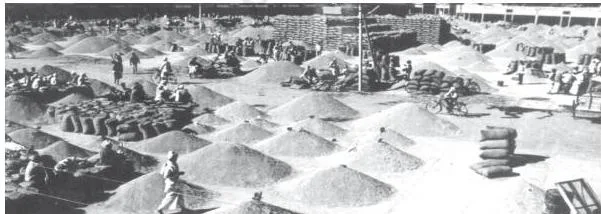
Fig 5.1 shows why the first measure matters: a regulated market yard gives farmers orderly and transparent conditions to sell, which is why it benefits farmers as well as consumers (NCERT, p. 80).
Alternate marketing channels
Farmers earn more when they sell directly to consumers, and several channels do exactly that: Apni Mandi (Punjab, Haryana and Rajasthan), Hadaspar Mandi (Pune), Rythu Bazars (vegetable and fruit markets in Andhra Pradesh and Telangana) and Uzhavar Sandies (farmers’ markets in Tamil Nadu).
National and multinational fast-food chains have also begun contracting with farmers — supplying seeds and inputs and buying produce of the desired quality at pre-decided prices, which reduces the farmer’s price risk (NCERT, p. 81-82).
Two more developments belong to this story. In 2016 the government launched e-NAM, a pan-India online portal connecting mandis and regulated market yards (NCERT, p. 81). And in 2020 Parliament passed three laws to reform the agricultural marketing system; a section of farmers opposed them and the Acts were later repealed (NCERT, p. 82).
Diversification: Livestock, Fisheries, Horticulture and Non-Farm Work
Diversification has two aspects: a change in the cropping pattern, and a shift of the workforce from agriculture into allied activities (livestock, poultry, fisheries) and into the non-agriculture sector (NCERT, p. 82).
Why is it necessary? Depending exclusively on farming carries greater risk. Agricultural employment is concentrated in the Kharif season; during Rabi, areas with inadequate irrigation offer little gainful work. Expanding into other sectors provides supplementary gainful employment and higher incomes, which is how rural people work out of poverty (NCERT, p. 82).
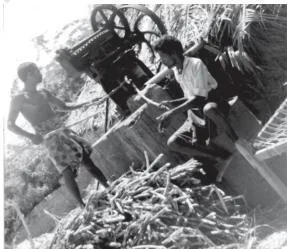
Fig 5.2 shows one allied activity — jaggery making — adding value within the farming sector itself (NCERT, p. 82).
Allied activities: animal husbandry, fisheries and horticulture
The allied sectors form the backbone of diversification. Their data and livelihood significance run as follows:
| Sector | Key data | Livelihood significance |
|---|---|---|
| Animal husbandry | Mixed crop-livestock farming (cattle, goats, fowl); livelihood for over 70 million small and marginal farmers including landless labourers; poultry is 61 per cent of total livestock (Chart 5.1); about 303 million cattle including 110 million buffaloes in 2019; milk production up about twelve times between 1951-2021 under Operation Flood | Income stability, food security, transport, fuel and nutrition for the family without disrupting other food-producing activities |
| Fisheries | Inland sources contribute about 75 per cent of fish production value, marine 25 per cent; total fish production about 1.5 per cent of GDP; major states West Bengal, Andhra Pradesh, Kerala, Gujarat, Maharashtra and Tamil Nadu | Water body regarded as ‘mother’ or ‘provider’; women hold about 60 per cent of export-marketing and 40 per cent of internal-marketing jobs; problems include underemployment, low earnings, no labour mobility, illiteracy and indebtedness |
| Horticulture | Nearly one-third of agriculture output value and 6 per cent of GDP; India is a world leader in mangoes, bananas, coconuts, cashews and spices, and the second-largest producer of fruits and vegetables | Food and nutrition plus employment; flower harvesting, nursery maintenance, hybrid seed production, tissue culture and food processing are highly remunerative options for rural women |
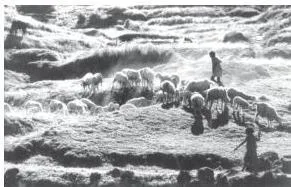
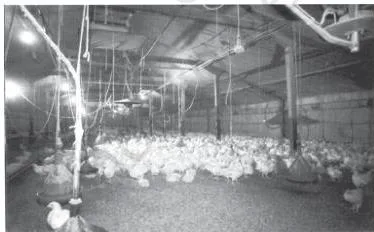
Gujarat, Madhya Pradesh, Uttar Pradesh, Andhra Pradesh, Maharashtra, Punjab and Rajasthan are the major milk-producing states (NCERT, p. 84). Fig 5.3 shows sheep rearing — an important income-augmenting activity in rural areas — and Fig 5.4 makes the poultry point visually: poultry has the largest share of total livestock in India, confirming Chart 5.1’s 61 per cent figure (NCERT, p. 83-85).
Non-farm employment and information technology
The non-farm economy has two kinds of segments:
- Dynamic segments with healthy growth linkages: agro-processing industries, food processing, the leather industry and tourism (NCERT, p. 83).
- Traditional home-based industries — pottery, crafts, handlooms — which have potential but seriously lack infrastructure and support (NCERT, p. 83).
Most rural women find employment in agriculture while men generally look for non-farm work; in recent times women have also begun entering non-farm jobs (NCERT, p. 83).
The TANWA project in Tamil Nadu (Box 5.2) trained women from the late 1980s in the latest agricultural techniques and organic farming, helping farm women’s groups earn from ventures such as vermicompost and run mini-banks on a micro-credit system (NCERT, p. 83).
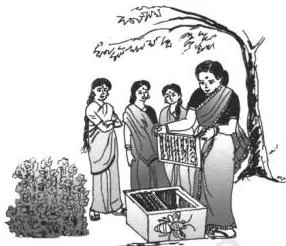
Fig 5.5 shows women in rural households taking up bee-keeping as an entrepreneurial activity — a working model of exactly the supplementary income diversification the chapter promotes (NCERT, p. 85).
Information technology completes the diversification picture. IT can disseminate information on emerging technologies, prices, weather and soil conditions, help governments predict areas of food insecurity and vulnerability, and generate employment in rural areas.
The chapter is careful to call IT a tool rather than a catalyst in itself — it releases the creative potential and knowledge already embedded in society (NCERT, p. 86).
Organic Farming and Sustainable Development
Conventional agriculture relies heavily on chemical fertilisers and toxic pesticides. These enter the food supply, penetrate water sources, harm livestock, deplete the soil and devastate natural ecosystems (NCERT, p. 86). Against this, organic agriculture is a whole system of farming that restores, maintains and enhances ecological balance — the chapter’s working definition (NCERT, p. 86-87).
Benefits and limitations belong in one table, because exercise answers present them as two clear blocks:
| Benefits of organic farming | Limitations of organic farming |
|---|---|
| Substitutes costlier inputs (HYV seeds, chemical fertilisers, pesticides) with cheaper, locally produced organic inputs, giving good returns on investment | Yields are lower than modern farming in the initial years |
| Generates income through exports as world demand for organic produce rises | Small and marginal farmers may find large-scale adaptation difficult |
| Organically grown food has more nutritional value | Produce may have more blemishes and a shorter shelf life than sprayed produce |
| Requires more labour input, so it suits India’s employment conditions | Choice in the production of off-season crops is quite limited |
| Produce is pesticide-free and produced in an environmentally sustainable way | Needs awareness, infrastructure, marketing support and an appropriate agriculture policy |
The commercial case strengthens these points. Many countries have around 10 per cent of their food system under organic farming, retail chains and supermarkets are given ‘green status’ to sell organic food, and organic foods command prices about 10-100 per cent higher than conventional ones (NCERT, p. 87, Box 5.4).
An Indian example from Box 5.5: when an NGO first suggested in 1995 that cotton — the biggest user of chemical pesticides — could be grown organically, a cotton-research director famously asked, “Do you want India to go naked?”
Yet today 130 farmers have committed 1,200 hectares to grow cotton organically under international standards, and the produce was quality-tested by the German accredited agency AGRECO and found to be of high quality (NCERT, p. 87).
Also worth knowing: SAGY (Saansad Adarsh Gram Yojana), launched in October 2014, under which each Member of Parliament develops one model village — population 3,000-5,000 in the plains and 1,000-3,000 in the hills — building infrastructure in health, nutrition and education (NCERT, p. 86, Box 5.3). It belongs to rural development generally, not to organic farming specifically.
Organic farming is one route to sustainable development. The wider debate — environment versus growth, and the policy trade-offs it creates — is the subject of the environment and sustainable development notes, so the two chapters revise well together.
Key Data Points to Remember
This chapter has no formulas, so this table carries the recall weight in place of a formula box. The 2023-24 entry is the most recent update in the rationalised textbook; every other figure is the chapter’s own data, so quote it exactly.
| Data point | Value | Context |
|---|---|---|
| Population dependent on agriculture | More than two-thirds of India’s population | The motive for rural development (p. 76) |
| Rural poverty | One-fourth of rural India in abject poverty | (p. 76) |
| Agriculture GVA growth | About 3 per cent per annum (1991-2012); about 2 per cent (2023-24) | Post-reform deceleration and recent volatility (p. 77) |
| Social banking | 1969 | Adoption of multi-agency approach to rural credit (p. 77) |
| NABARD | 1982 | Apex body coordinating rural financing (p. 78) |
| SHG reach | Nearly 6 crore women in 54 lakh SHGs (May 2019) | Micro-credit (p. 78) |
| SHG funding | About Rs 10,000-15,000 per SHG plus Rs 2.5 lakh CISF | Funding for self-employment (p. 79) |
| Jan-Dhan accounts | More than 50 crore accounts; over Rs 2,00,000 crore mobilised | Financial inclusion (p. 80) |
| Jan-Dhan cover | Rs 1-2 lakh accidental insurance; Rs 10,000 overdraft; no minimum balance | (p. 79-80) |
| Storage loss | Over 10 per cent of farm goods wasted for lack of storage | Marketing problem that survives today (p. 80) |
| Unregulated periodic markets | About 27,000 | Still needing to become regulated markets (p. 80) |
| Poultry share | 61 per cent of total livestock | Chart 5.1 (p. 83) |
| Cattle population | About 303 million cattle including 110 million buffaloes (2019) | (p. 84) |
| Milk production | Up about twelve times between 1951-2021 | Operation Flood (p. 84) |
| Livestock livelihoods | Over 70 million small and marginal farmers including landless labourers | (p. 83) |
| Fisheries split | Inland 75 per cent, marine 25 per cent of value; about 1.5 per cent of GDP | (p. 84) |
| Horticulture share | About one-third of agriculture output value; 6 per cent of GDP | (p. 85) |
| Organic food price | About 10-100 per cent higher than conventional | Box 5.4 (p. 87) |
| Organic cotton (Maharashtra) | 130 farmers committed 1,200 hectares | Box 5.5 (p. 87) |
The figures most likely to surface in recall answers are the poultry share (61 per cent), the inland-marine split (75:25) and the NABARD year (1982) — lock these in first.
Worked Examples: Micro-Credit and Diversification in Numbers
Both examples use invented numbers for practice — the SHG mechanism and the diversification logic, however, are the textbook’s own (NCERT, p. 78, 82-83).
Example 1: Is an SHG loan cheaper than a moneylender’s loan?
Method: Compare the cost of the same loan from two sources — an SHG and a moneylender.
Step 1: A women’s SHG has 15 members, each saving Rs 150 per month.
The pool after 8 months is \( 15 \times 150 \times 8 = 18{,}000 \) rupees.
- Step 1: A member borrows Rs 6,000 for 6 months from the pool.
- Step 2: Interest at the SHG’s 12 per cent per annum rate:
\[ \text{Interest} = 6000 \times \frac{12}{100} \times \frac{6}{12} = 360 \text{ rupees} \]
Step 4: The same loan from a moneylender at 60 per cent per annum:
\[ \text{Interest} = 6000 \times \frac{60}{100} \times \frac{6}{12} = 1800 \text{ rupees} \]
Step 5: Saving through the SHG on this one loan: \( 1800 – 360 = 1440 \) rupees.
Final answer: The SHG route saves Rs 1,440, demands no collateral, and repays in small instalments — precisely how micro-credit reaches households the formal system excluded.
Example 2: How much can diversification add to a farm household?
Method: Measure how allied activities lift and stabilise household income.
- Step 1: Baseline — the household earns Rs 40,000 a year from crops alone.
- Step 2: It adds allied activities: 20 hens earn Rs 12,000 a year, and one buffalo produces milk worth Rs 18,000 a year.
Allied income = \( 12{,}000 + 18{,}000 = 30{,}000 \) rupees.
- Step 1: New total income = \( 40{,}000 + 30{,}000 = 70{,}000 \) rupees.
- Step 2: Percentage rise = \( \frac{70{,}000 – 40{,}000}{40{,}000} \times 100 = 75\% \).
Final answer: Income rises about 75 per cent and is now spread through the year instead of depending on one cropping season — the chapter’s own logic of supplementary gainful employment and higher incomes (NCERT, p. 82).
Common Mistakes Students Make in This Chapter
Each row pairs a wrong idea with the correct rule and the reason that separates them:
| Mistake | Correct rule | Why / how to check |
|---|---|---|
| “Agricultural marketing is just selling produce” | It is the whole chain — assembling, storage, processing, transportation, packaging, grading and distribution | A complete answer for Q7 must name all seven stages; naming only ‘selling’ covers one stage |
| “Micro-credit means any small bank loan” | Micro-credit is small-scale credit to the poor, typically through SHGs, without collateral | The term is bound to the SHG mechanism of pooling and small instalments |
| “Diversification only means shifting workers out of farming” | It has two aspects: changing the cropping pattern AND shifting the workforce | The chapter defines both aspects; a complete answer states both |
| “NABARD was set up in 1969” | 1969 is the year social banking began; NABARD came in 1982 | The two events are different; keep each year with its own event |
| “Organic farming gives higher yields from the start” | Yields are lower than modern farming in the initial years | The yield dip is exactly why small and marginal farmers find adaptation difficult |
| “SHGs failed because loans are spent on consumption” | Treat it as an open debate, not a settled verdict | The chapter itself asks why consumption borrowing happens, and SHGs still build thrift and empower women |
| “Allied activities and non-farm employment are the same” | Allied activities (dairy, fisheries, poultry) are tied to farming; non-farm work (food processing, tourism, handlooms) is outside agriculture | The chapter treats them as separate destinations of diversification |
How to Write Complete Answers to the Textbook Exercises
The chapter has eighteen exercise questions. They group into five themes, and each theme has a repeatable answer structure.
Definition and key issues (Q1, Q7)
- Q1: open with the meaning of rural development, then list the key issues — human resources, land reforms, productive resources, infrastructure and poverty-alleviation measures (NCERT, p. 76-77).
- Q7: define agricultural marketing and name all seven stages of the chain (NCERT, p. 80).
Credit (Q2, Q3, Q6, Q18)
- Q2: argue from the gestation gap between sowing and income, plus family expenses of marriage, death and religious ceremonies (NCERT, p. 77).
- Q3: explain the SHG mechanism — thrift, pooled fund, small instalments — and support it with micro-credit data (NCERT, p. 78-79).
- Q6: use a critical-appraisal structure — positive effects first (farm and non-farm output, income, employment and food security after the Green Revolution), then failures (weak deposit mobilisation, chronic default), then recent correctives such as Jan-Dhan (NCERT, p. 79-80).
- Q18: take a clear position and support it with the scheme’s features — no minimum balance, insurance, overdraft, direct transfer of wages and pensions, and more than 50 crore accounts (NCERT, p. 79-80).
Agricultural marketing (Q4, Q8, Q9, Q11)
- Q4: the four government measures are the spine — regulation of markets, physical infrastructure, cooperative marketing and policy instruments (NCERT, p. 80-81).
- Q8: obstacles come from the same material — storage shortage, private trade predominance and unregulated periodic markets (NCERT, p. 80-81).
- Q9: list the named alternate channels with their states — Apni Mandi, Hadaspar Mandi, Rythu Bazars, Uzhavar Sandies (NCERT, p. 81-82).
- Q11: balanced discussion — acknowledge the government’s intervention, then note that private trade still predominates and infrastructure remains inadequate (NCERT, p. 81).
Diversification and non-farm work (Q5, Q12, Q13, Q14)
- Q5: explain the two aspects of diversification and the Kharif-Rabi seasonality logic (NCERT, p. 82).
- Q12: non-farm employment absorbs an overcrowded agricultural labour force — contrast dynamic segments (agro-processing, food processing, leather, tourism) with traditional home-based industries (pottery, crafts, handlooms) (NCERT, p. 83).
- Q13: cover animal husbandry, fisheries and horticulture separately, one key statistic each, plus the women’s-employment point (NCERT, p. 83-85).
- Q14: a comment-type answer — state IT’s roles (predicting food-insecurity areas, disseminating information on technologies, prices, weather and soil, generating rural employment) and end with the chapter’s own judgement: IT is a tool, not a catalyst in itself (NCERT, p. 86).
Organic farming (Q15, Q16, Q17)
- Q15: define organic farming, then connect it to the restoration of ecological balance (NCERT, p. 86-87).
- Q16: give benefits and limitations as two clear blocks (NCERT, p. 87-88).
- Q17: list only the initial-year problems — lower yields, blemishes, short shelf life, limited off-season choice and adaptation cost (NCERT, p. 87-88).
Q10 — ‘Green Revolution’ versus ‘Golden Revolution’
Answer honestly at the level the chapter supports: the rationalised text never defines the ‘Golden Revolution’, and its nearest material is the horticulture section, where India leads the world in mangoes, bananas, coconuts, cashews and spices and is the second-largest producer of fruits and vegetables (NCERT, p. 85).
A safe one-line distinction: the Green Revolution raised cereal output through high-yielding varieties and chemical inputs, while the Golden Revolution is the name popularly connected with the boom in fruits, vegetables and horticulture. Do not invent statistics around it.
Finally: every ‘discuss’ or ‘do you agree’ answer needs a closing sentence of reasoned judgement — a clear stand supported by one or two points, not a trailing restatement of the question.
The ‘Work These Out’ Panels: What They Train You to Do
Every few pages the textbook inserts ‘Work These Out’ panels. They are classroom activities, not exam questions, but they train the observation, data-collection and reasoning skills the exercise answers need — and their themes supply ready real-life examples for written answers.
- Newspaper and village problem surveys (rural problems and the solutions offered) — p. 77
- Government scheme reports drawn from rural.nic.in — p. 77
- SHG meeting reports (members, savings, credit and loan use) — p. 78
- Farmer-suicide and loan-waiver discussions — p. 79
- Visits to regulated market yards and the e-NAM portal — p. 81
- Comparisons of alternative marketing systems — p. 82
- The 2020 farm-laws repeal debate — p. 82
- Organic product comparisons (price, shelf life, quality, advertising) — p. 88
- Horticulture farm visits and cropping-pattern discussions — p. 88
In an answer, these become evidence: a loan-waiver example strengthens Q6’s critical appraisal, and an e-NAM or Rythu Bazar example makes Q11 concrete. One well-chosen real example lifts a complete answer above a mere list.
Quick Revision Summary
1. Rural development — the idea
- A comprehensive plan of action for areas lagging behind in the village economy.
- Five issue areas: human resources, land reforms, productive resources, infrastructure, poverty-alleviation measures.
- Target: higher productivity in farm and non-farm work, plus diversification into activities such as food processing.
2. Credit timeline
- Moneylenders and traders (high interest, manipulated accounts) → 1969 social banking → 1982 NABARD → Green Revolution production credit → SHGs and micro-credit → Jan-Dhan Yojana.
- SHGs: small thrift contributions → pooled lending → small instalments at reasonable interest → empowerment of women.
3. Marketing fixes
- Four measures (R-P-C-P): regulation of markets, physical infrastructure, cooperative marketing, policy instruments (MSP, buffer stocks, PDS).
- Alternate channels: Apni Mandi, Hadaspar Mandi, Rythu Bazars, Uzhavar Sandies; contract farming; e-NAM (2016).
4. Diversification
- Two aspects: changing the cropping pattern; shifting the workforce to allied and non-farm activities.
- Animal husbandry: poultry 61 per cent of livestock; milk up about twelve times (1951-2021) under Operation Flood.
- Fisheries: inland 75 per cent versus marine 25 per cent; about 1.5 per cent of GDP. Horticulture: about one-third of agriculture output value; 6 per cent of GDP.
5. Organic farming
- A whole system of farming that restores, maintains and enhances ecological balance.
- Benefits: cheaper inputs, export income, nutrition, employment, pesticide-free produce. Limits: lower initial yields, blemishes, short shelf life, limited off-season crops.
6. Current data
- About 2 per cent agriculture GVA growth in 2023-24; more than 50 crore Jan-Dhan accounts; over Rs 2,00,000 crore mobilised.
- Closing agenda: diversify into dairying, poultry, fisheries, vegetables and fruits; link rural production with urban and export markets; choose eco-friendly technologies through ‘learning by doing’ from best-practice examples (NCERT, p. 88-89).
Frequently Asked Questions
What is the difference between micro-credit and a regular bank loan?
Micro-credit is small-scale credit to the poor, usually delivered through self-help groups without any collateral. A regular bank loan comes from commercial banks and other formal institutions, which demand collateral — which is exactly why a vast proportion of poor rural households were left out of the formal credit network (NCERT, p. 78).
Which four measures did the government take to improve agricultural marketing?
The four measures are: regulation of markets for orderly and transparent conditions; provision of physical infrastructure such as roads, railways, warehouses, cold storages and processing units; cooperative marketing, whose milk cooperatives transformed Gujarat; and policy instruments — MSP, buffer stocks of wheat and rice, and subsidised distribution through PDS (NCERT, p. 80-81). Memory device: R-P-C-P.
Why is diversification essential for sustainable rural livelihoods?
Depending exclusively on farming carries greater risk, and agricultural employment is concentrated in the Kharif season, with little gainful work in Rabi where irrigation is inadequate. Allied and non-farm activities provide supplementary gainful employment and higher incomes, reducing agriculture’s risk and giving rural people productive, sustainable livelihood options (NCERT, p. 82).
What are the main benefits and limitations of organic farming?
Benefits: cheaper locally produced inputs replace costly HYV seeds, chemical fertilisers and pesticides; export income; higher nutritional value; labour-intensity suits India’s employment conditions; and the produce is pesticide-free and environmentally sustainable.
Limitations: lower yields in the initial years, difficulty of large-scale adaptation for small and marginal farmers, more blemishes and shorter shelf life, limited off-season crop choice, and the need for awareness, infrastructure, marketing support and policy (NCERT, p. 87-88).
How do self-help groups empower rural women?
SHGs pool the small, regular savings of their members and lend to needy members in small instalments at reasonable interest rates — giving women access to credit without collateral. The chapter records nearly 6 crore women as members of 54 lakh SHGs by May 2019 and states directly that SHGs have helped in the empowerment of women (NCERT, p. 78-79).
What role does Jan-Dhan Yojana play in rural development?
Jan-Dhan Yojana brought more than 50 crore people into the banking system with no minimum balance, Rs 1-2 lakh accidental insurance and a Rs 10,000 overdraft, and it transfers wages and social-security payments directly into accounts. The chapter credits it with promoting thrift and the efficient allocation of financial resources, particularly in rural areas (NCERT, p. 79-80).
Reference: NCERT Class 11 Economics textbook (Indian Economic Development), Chapter 5 Rural Development.
Explore Class 11 Economics Notes
- Class 11 Economics Notes
- Class 11 CBSE Notes
- CBSE Notes for Classes 1 to 12
- Previous: Human Capital Formation in India
- Next: Environment and Sustainable Development
Class 11 Economics on LearnCBSE:
Related chapters:
- Liberalisation, Privatisation and Globalisation: An Appraisal notes
- Development Experiences of India: a Comparison with Neighbours notes