
These Environment and Sustainable Development Class 11 notes cover Chapter 7 of Indian Economic Development for the 2026-27 session, following the rationalised NCERT textbook. The chapter asks one serious question: economic growth has made India richer, but at what cost to the environment — and what can be done about it?
It moves through the four functions of the environment, the supply-demand reversal that produced the environmental crisis, the present state of India’s environment, and the strategies that make development sustainable. For quick revision, this page puts definitions, data and worked examples first; you can verify any figure against the official rationalised textbook at ncert.nic.in.
When you need other chapters, the CBSE notes library, the Class 11 notes and the Class 11 Economics notes hub hold the rest of the book.
Chapter Map: From Environment Functions to Sustainable Development
The chapter is built in three parts, and the parts follow one cause-and-effect chain.
- Part 1 — Functions of the environment: what the environment gives the economy (four functions) and the limits within which it works (carrying capacity and absorptive capacity).
- Part 2 — State of India’s environment: India’s natural abundance, the priority environmental problems, and the data that measure them.
- Part 3 — Sustainable development: the definitions (UNCED, Brundtland, Barbier, Daly) and nine practical strategies India is applying.
The causal spine that connects them: development raised the demand for environmental resources beyond their supply, which created the environmental crisis, which then forced the search for sustainable development.
- Economic development → more extraction and waste.
- Extraction and waste go beyond carrying capacity.
- The environment fails its life-sustaining function → environmental crisis.
- Sustainable development becomes the corrective path.
One idea holds the chapter together: every environmental problem is a limit being crossed — a rate of regeneration, an absorptive capacity, or a carrying capacity.
Environment Definition: Biotic and Abiotic Elements
The environment is defined as the total planetary inheritance and the totality of all resources — the whole stock of what the planet offers (NCERT, p. 116). It includes all the biotic and abiotic factors that influence each other, and a study of the environment is really a study of the interrelationship between those two groups.
| Element | What it covers | Examples |
|---|---|---|
| Biotic | Living elements | Birds, animals, plants, forests, fisheries |
| Abiotic | Non-living elements | Air, water, land; also rocks and sunlight |
Economics cares because every production activity draws its material inputs from these resources. NCERT’s own game makes the point: books → paper → plant → nature, and cloth → cotton → mineral → earth (NCERT, p. 122). Every product you can name traces its roots back to the environment.
Four Functions of the Environment and the SARA Mnemonic
The environment performs four vital functions for the economy (NCERT, p. 116).
| Function | What it means | Example |
|---|---|---|
| Supplies resources | Gives renewable and non-renewable inputs | Trees and fish (renewable); fossil fuels (non-renewable) |
| Assimilates wastes | Absorbs and processes what production and consumption throw away | Waste within the environment’s absorptive capacity causes no crisis |
| Sustains life | Provides genetic and biodiversity | Forests that support wildlife and the web of life |
| Provides aesthetic services | Generates beauty and scenery | Natural landscapes, rivers and mountains |
Memory device — SARA: the environment Supplies, Assimilates, Sustains and provides Aesthetics. Say it as one name and the order stays fixed.
Renewable vs non-renewable resources
| Feature | Renewable resources | Non-renewable resources |
|---|---|---|
| Meaning | Can be used without the resource becoming depleted or exhausted; a continuous supply remains available | Get exhausted with extraction and use |
| Examples | Trees in forests, fish in the ocean | Fossil fuels such as coal and petroleum |
| Depletion risk | Runs down only when extraction exceeds regeneration | Permanent exhaustion; the stock is gone once used |
| Sustainability rule | Extraction must not exceed regeneration | Depletion must not exceed creation of renewable substitutes |
Carrying capacity, absorptive capacity and the plimsoll line
The environment performs its four functions without interruption only while the demand on them stays within its carrying capacity — the load limit of the environment, like the plimsoll line of a ship, which marks how much load a ship can safely carry (NCERT, p. 125).
Inside that limit, resource extraction is not above the rate of regeneration and wastes stay within the environment’s ability to absorb them (NCERT, p. 117).
Absorptive capacity is the narrower idea inside the broader limit: the environment’s ability to absorb degradation. When the demand on functions exceeds carrying capacity, the environment fails its third function of life sustenance — and that failure is an environmental crisis (NCERT, p. 117).
Why the Environmental Crisis Happened: The Supply-Demand Reversal
Environmental problems are not new. What changed is the balance of supply and demand for environmental quality (NCERT, pp. 119-120).
| Condition | Early civilisation | After population explosion + Industrial Revolution |
|---|---|---|
| Resource extraction | Below the rate of regeneration | Above the rate of regeneration |
| Waste generation | Within the absorptive capacity of the environment | Beyond the absorptive capacity |
| Result | No environmental problems | Environmental crisis |
Before, the demand for environmental services was less than their supply. After population explosion and industrialisation, demand for production and consumption went beyond regeneration, and pressure on the absorptive capacity rose steeply. The result is a supply-demand reversal: demand for environmental resources stays high, while supply is limited by overuse and misuse.
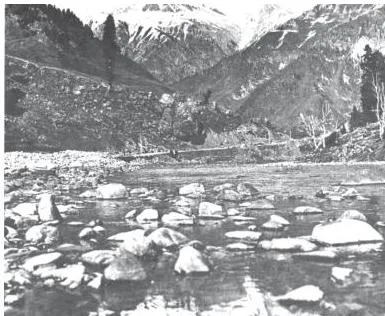
Figure 7.1 shows how far the damage has gone: small, snow-fed Himalayan streams are now described as the few fresh-water sources that remain unpolluted. That image is the visual evidence for the chapter’s claim that past development has polluted and dried up rivers and aquifers, which is exactly why water has become an economic good (NCERT, p. 117).
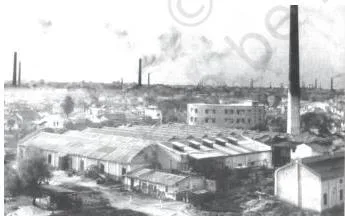
Figure 7.2 shows the same process on the industrial side — the Damodar Valley, one of India’s most industrialised regions, where pollutants from heavy industries along the river’s banks are converting it into an ecological disaster (NCERT, p. 119). Together the two figures say that both mountain sources and industrial rivers are losing their clean-water function.
Two global issues: global warming and ozone depletion
Global warming (Box 7.1) is a gradual increase in the average temperature of the earth’s lower atmosphere, caused by the increase in greenhouse gases since the Industrial Revolution. Burning fossil fuels and deforestation raise carbon dioxide, methane and other heat-absorbing gases, which warms the planet’s surface.
Consequences include melting polar ice with sea-level rise and coastal flooding, drinking-water supplies disrupted by snow melts, species extinction as ecological niches disappear, more frequent tropical storms, and more tropical diseases (NCERT, p. 118).
Ozone depletion (Box 7.2) is a reduction in the amount of ozone in the stratosphere. It is caused by chlorine and bromine compounds that come from chlorofluorocarbons (CFCs) used in air conditioners, refrigerators and aerosol propellants, and from halons used in fire extinguishers.
With less ozone, more ultraviolet radiation reaches the earth, which is linked to skin cancer, lower phytoplankton production, and harm to aquatic organisms and plant growth. The Montreal Protocol banned CFCs and other ozone-depleting chemicals (NCERT, p. 119).
The two are different problems: warming is heat trapped by greenhouse gases near the surface, while ozone depletion is destruction of the ozone layer high in the stratosphere.
Opportunity costs of environmental damage
Negative environmental impacts carry high opportunity costs — what society gives up because of the damage (NCERT, p. 118):
- Huge spending on technology and research to explore new resources because old ones are exhausted;
- Health costs — with 70% of water in India polluted, respiratory and water-borne diseases have increased, so health expenditure rises;
- Extra financial commitments for the government from global issues such as warming and ozone depletion.
State of India’s Environment: Abundance vs Degradation
India’s natural endowment is large: rich-quality soil, hundreds of rivers and tributaries, lush green forests, mineral deposits below the land surface, the vast Indian Ocean and mountain ranges.
The black soil of the Deccan Plateau suits cotton, which is why textile industries concentrate there; the Indo-Gangetic plains are among the most fertile, intensively cultivated and densely populated regions in the world; and India holds about 8% of the world’s total iron-ore reserves, plus bauxite, copper, coal, natural gas and more (NCERT, p. 120).
And yet the threat to India’s environment is a dichotomy — two opposing problems at once (NCERT, p. 120):
- Poverty-induced environmental degradation — the poor overusing open-access resources to survive;
- Pollution from affluence and a rapidly growing industrial sector — vehicles, factories and affluent consumption.
The chapter’s five priority issues are: (i) land degradation, (ii) biodiversity loss, (iii) air pollution with special reference to vehicular pollution in urban cities, (iv) management of fresh water, and (v) solid waste management. The pressing concerns behind them are air pollution, water contamination, soil erosion, deforestation and wildlife extinction (NCERT, p. 120).
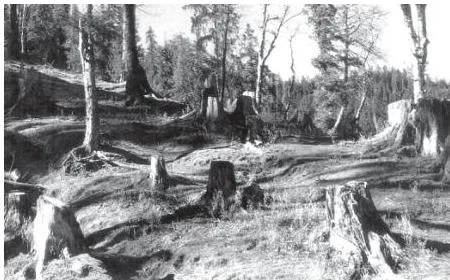
Figure 7.3 links cause to consequences in one image: deforestation leads to land degradation, biodiversity loss and air pollution (NCERT, p. 120). Deforestation is not just lost trees — it is the starting point of three separate environmental problems.
Factors behind land degradation
The chapter lists twelve factors, which condense into four clusters (NCERT, p. 122):
- Loss of vegetation: deforestation, unsustainable fuelwood and fodder extraction, shifting cultivation, encroachment into forest lands, forest fires and over-grazing;
- Poor soil management: non-adoption of soil conservation measures, improper crop rotation, indiscriminate use of agro-chemicals such as fertilisers and pesticides;
- Poor water management: improper planning of irrigation systems and groundwater extraction beyond recharge capacity;
- Pressure and poverty: overuse of open-access resources and the poverty of agriculture-dependent people.
High density makes the pressure worse: India supports about 17% of the world’s human population and 20% of its livestock population on a mere 2.5% of the world’s geographical area (NCERT, p. 122). Per capita forest land is only 0.06 hectare against a requirement of 0.47 hectare, causing excess felling of about 15 million cubic metres of forest over the permissible limit.
Vehicles, industry and the institutions watching them
Vehicles are the major source of air pollution in urban areas; because their emissions are at ground level, they have the maximum impact on the general population. Registered motor vehicles rose from about 3 lakh in 1951 to 35 crore in 2022, and two-wheelers and cars made up about 85% of registered vehicles (NCERT, p. 123).
India is among the ten most industrialised nations, and that status brought unplanned urbanisation, pollution and the risk of accidents.
The government set up the Central Pollution Control Board (CPCB) in 1974, followed by state-level boards. The CPCB monitors water quality in 125 rivers and their tributaries and has identified 17 categories of large and medium industries as significantly polluting (NCERT, pp. 123-124).
Sustainable Development: Definitions That Matter
Environment and economy are interdependent — the environment sustains the economy, so development that ignores its environmental effects destroys the system that supports life (NCERT, p. 124). Four definitions show up in this chapter, and a good answer keeps them apart.
| Source | Definition in one line | Key phrase |
|---|---|---|
| UNCED (United Nations Conference on Environment and Development) | Development that meets the needs of the present generation without compromising the ability of the future generation to meet their own needs | ‘Needs’ and ‘future generations’ |
| Our Common Future (Brundtland Commission) | Meeting the basic needs of all and extending to all the opportunity to satisfy their aspirations for a better life | Basic needs of all |
| Edward Barbier | Directly concerned with increasing the material standard of living of the poor at the grassroots | Measurable: income, education, health care, sanitation, water supply |
| Herman Daly | Operational rules for keeping human activity within the environment’s carrying capacity | The plimsoll line |
Intergenerational equity is the moral core of the definition: the present generation should bequeath a better environment to the future generation, or at least leave a stock of ‘quality of life’ assets no less than what it inherited (NCERT, p. 125).
Herman Daly’s five operational rules for sustainable development (NCERT, p. 125):
- Limit the human population to a level within the environment’s carrying capacity — the plimsoll line of the ship is its load-limit mark, and without such a line for the economy, human scale grows beyond the earth’s capacity;
- Make technological progress input-efficient, not input-consuming;
- Extract renewable resources sustainably — the rate of extraction must not exceed the rate of regeneration;
- Deplete non-renewable resources only at a rate that does not exceed the rate of creation of renewable substitutes;
- Correct the inefficiencies that arise from pollution.
In 2015, the UN formulated 17 Sustainable Development Goals (SDGs) intended to be achieved by 2030 (NCERT, p. 125).
Strategies for Sustainable Development in India
The chapter closes with nine strategies India is using, each aimed at a specific problem (NCERT, pp. 125-128).
| Strategy | What it is | Why it helps |
|---|---|---|
| Non-conventional energy | Tapping wind and solar instead of relying only on thermal and hydro power | Thermal plants emit CO2 and fly ash; hydro projects inundate forests and disturb river flow |
| LPG and gobar gas in rural areas | Subsidised LPG for cooking; gobar gas plants run on cattle dung | Replaces wood and dung cake — reducing deforestation, green-cover loss and indoor air pollution |
| CNG in urban areas | Compressed Natural Gas in public transport, starting with Delhi | Significantly lowered air pollution; many cities have followed |
| Wind power | Wind turbines generate electricity where wind speed is high | No adverse environmental impact; high initial cost gets absorbed by benefits |
| Solar power through photovoltaic cells | Sunlight is converted directly into electricity | Pollution-free and ideal for remote areas; India leads the International Solar Alliance (ISA) |
| Mini-hydel plants | Small turbines driven by perennial mountain streams | Local power without changing land-use patterns; avoids transmission towers and transmission loss |
| Traditional knowledge and practices | Environment-friendly agriculture, healthcare, housing and transport | About 15,000 medicinal plant species, roughly 8,000 in regular use across Ayurveda, Unani, Tibetan and folk systems |
| Biocomposting | Compost from organic wastes; earthworms speed up the process | Rebuilds soil damaged by chemical fertilisers and reduces waste for civic authorities |
| Biopest control | Plant-based pesticides (from neem), mixed cropping, crop rotation and friendly predators | Chemical pesticides contaminated food, soil, water and even milk and meat; snakes, owls, peacocks and lizards prey on pests |
The chapter also recalls people’s forest-protection movements — Chipko in the Himalayas and Appiko in Karnataka, where villagers physically hugged trees to stop felling — as proof that local communities can guard their own environment (NCERT, p. 121).
Conventional vs non-conventional energy sources
| Point of comparison | Conventional energy (the chapter’s baseline) | Non-conventional energy |
|---|---|---|
| Examples | Thermal power plants (coal) and hydroelectric projects | Wind power, solar photovoltaic, mini-hydel, gobar gas |
| Environmental cost | Thermal: large CO2 emissions and fly ash; hydro: inundates forests and changes river flow | Mostly clean; solar is pollution-free and mini-hydel does not change land use |
| Role today | Still the backbone of India’s power supply | Expanding, especially where grid power is costly or impossible |
| Cost note | — | Wind power has a high initial cost, but the benefits absorb it |
The chapter’s section heading is ‘Use of Non-conventional Sources of Energy’, and that is where wind and solar belong in any answer (NCERT, p. 125).
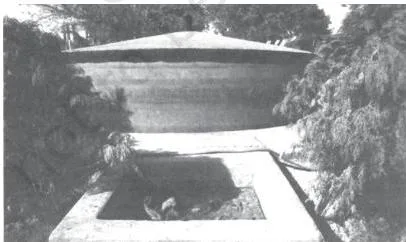
Figure 7.4 shows how a gobar gas plant works: cattle dung is fed into the plant, gas is produced and used as household fuel, and the leftover slurry is a good organic fertiliser and soil conditioner (NCERT, p. 126). One input solves two problems — energy and soil fertility — which is why the chapter counts it as a rural sustainable-development strategy.
The same logic connects these village-based strategies to the themes covered in the Class 11 Rural Development notes.
Quick Definitions Table for Last-Minute Revision
| Term | Meaning | Example / note |
|---|---|---|
| Environment | Total planetary inheritance and the totality of all resources, including all biotic and abiotic factors that influence each other | The planet and everything on it |
| Biotic | Living elements of the environment | Birds, animals, plants, forests, fisheries |
| Abiotic | Non-living elements of the environment | Air, water, land, rocks, sunlight |
| Renewable resource | Can be used without becoming depleted; a continuous supply remains available | Trees in forests, fish in the ocean |
| Non-renewable resource | Becomes exhausted with extraction and use | Fossil fuels such as coal and petroleum |
| Carrying capacity | The load limit within which the environment can perform all four functions without interruption | Like the plimsoll line of a ship |
| Absorptive capacity | The environment’s ability to absorb degradation | Wastes beyond this lead to pollution |
| Environmental crisis | Failure of the environment’s life-sustaining function | Resources extinct + wastes beyond absorptive capacity |
| Global warming | Rise in the average temperature of the earth’s lower atmosphere due to increased greenhouse gases since the Industrial Revolution | CO2 up 31% since 1750 |
| Ozone depletion | Reduction in the amount of ozone in the stratosphere | Caused by CFCs and halons |
| Sustainable development | Development that meets present needs without compromising the ability of future generations to meet their own needs | UNCED definition |
| Intergenerational equity | Leaving the next generation a stock of quality-of-life assets at least as good as the present one inherited | The moral obligation behind ‘future generations’ |
Key Data to Remember: Numbers and the Methane Formula
This chapter has no algebraic formulas. Its only formula-like entry is \( CH_4 \) — methane — the greenhouse gas named in Box 7.1, whose atmospheric concentration has risen 149% above pre-industrial levels (NCERT, p. 118). The numbers worth memorising are gathered below.
| Statistic | Value | Page |
|---|---|---|
| Water in India that is polluted | 70% | NCERT, p. 118 |
| CO2 concentration above pre-industrial levels (since 1750) | Up 31% | NCERT, p. 118 |
| CH4 (methane) concentration above pre-industrial levels | Up 149% | NCERT, p. 118 |
| Rise in atmospheric temperature over the past century | 1.1°F (0.6°C) | NCERT, p. 118 |
| India’s share of the world’s total iron-ore reserves | About 8% | NCERT, p. 120 |
| World’s human / livestock population India supports | About 17% / 20% | NCERT, p. 122 |
| India’s share of the world’s geographical area | 2.5% | NCERT, p. 122 |
| Per capita forest land vs requirement | 0.06 ha vs 0.47 ha | NCERT, p. 122 |
| Excess felling over the permissible limit | About 15 million cubic metres | NCERT, p. 122 |
| Soil eroded per year (whole country) | 5.3 billion tonnes | NCERT, p. 122 |
| Registered motor vehicles | 3 lakh (1951) to 35 crore (2022) | NCERT, p. 123 |
| Two-wheelers and cars as a share of registered vehicles | About 85% | NCERT, p. 123 |
| Rivers and tributaries whose water quality the CPCB monitors | 125 | NCERT, p. 123 |
| Categories of significantly polluting industries | 17 | NCERT, p. 124 |
| UN Sustainable Development Goals | 17 goals, target year 2030 | NCERT, p. 125 |
| Indian plant species with medicinal properties / in regular use | 15,000 / about 8,000 | NCERT, p. 127 |
Worked Examples: Applying Sustainability Rules to New Numbers
Each example below follows the same method: name the rule first, write the numbers with units, compare, conclude, then prescribe. None of the numbers come from the textbook, so you can practise the method on any values.
Worked Example 1: Is the village’s timber cutting sustainable? (Renewable resource rule)
Situation: A forest regenerates about 600 tonnes of timber a year.
The surrounding village cuts about 900 tonnes a year.
Step 1 — Name the rule: Herman Daly’s third rule: for renewable resources, the rate of extraction must not exceed the rate of regeneration (NCERT, p. 125).
Step 2 — Write both rates with units: regeneration = 600 tonnes/year; extraction = 900 tonnes/year.
Step 3 — Compare: \( 900\ \text{tonnes/yr} \gt 600\ \text{tonnes/yr} \), so extraction exceeds regeneration by \[ 900 – 600 = 300\ \text{tonnes of timber per year.} \]
Step 4 — Conclude: because extraction is above regeneration, the forest’s stock falls every year until it is exhausted.
The practice is unsustainable and violates the carrying capacity of the forest system.
Step 5 — Prescribe: cut annual felling to 600 tonnes or below, or raise regeneration through replanting, so extraction again stays within the rate of regeneration.
Final answer: The cutting is unsustainable because 900 > 600 tonnes/yr, and must be brought down to at most the regeneration rate.
Worked Example 2: Will the river stay clean? (Absorptive capacity rule)
Situation: A river can naturally absorb and assimilate about 200 tonnes of organic waste a year.
A town on its bank discharges 350 tonnes a year into it.
Step 1 — Name the rule: wastes must remain within the environment’s absorptive capacity — its ability to absorb degradation (NCERT, p. 117).
Step 2 — Write both rates with units: absorption = 200 tonnes/year; discharge = 350 tonnes/year.
Step 3 — Compare: \( 350\ \text{tonnes/yr} \gt 200\ \text{tonnes/yr} \), so the excess is \[ 350 – 200 = 150\ \text{tonnes of waste per year.} \]
Step 4 — Trace consequences: the 150 tonnes beyond capacity is not decomposed.
It pollutes the river, raises the incidence of water-borne diseases and pushes up health expenditure — these are the opportunity costs of environmental damage (NCERT, p. 118).
Step 5 — Conclude and prescribe: the discharge pattern is unsustainable.
Treat the effluent so the load falls to 200 tonnes a year or less, or reduce the town’s waste output.
Final answer: The discharge exceeds the river’s absorptive capacity by 150 tonnes/yr, so pollution and health costs follow until the load is cut back.
Worked Example 3: Is the mineral’s depletion acceptable? (Non-renewable resource rule)
Situation: A mining firm extracts about 1,500 tonnes of a non-renewable mineral every year.
The economy creates about 1,000 tonnes of renewable substitutes a year.
Step 1 — Name the rule: Herman Daly’s fourth rule: for non-renewable resources, the rate of depletion must not exceed the rate of creation of renewable substitutes (NCERT, p. 125).
Step 2 — Write both rates with units: depletion = 1,500 tonnes/year; substitutes created = 1,000 tonnes/year.
Step 3 — Compare: \( 1,500\ \text{tonnes/yr} \gt 1,000\ \text{tonnes/yr} \), so the gap is \[ 1,500 – 1,000 = 500\ \text{tonnes per year.} \]
Step 4 — Conclude: depletion outruns the creation of substitutes by 500 tonnes a year, so the switch-over to renewables is too slow.
The pattern is not sustainable.
Step 5 — Prescribe: cut extraction to at most 1,000 tonnes a year and invest in creating substitutes faster, so the rule is satisfied.
Final answer: The depletion rate violates Daly’s rule because 1,500 > 1,000 tonnes/yr; extraction must be reduced and substitute creation accelerated.
Practical plimsoll-line check for any real resource use
You can run the chapter’s carrying-capacity idea as a five-step test on any real resource or waste flow (NCERT, p. 125):
- Name the resource or waste flow — water, a fish stock, a forest, urban air;
- Find nature’s side — the regeneration rate for a resource, or the absorption rate for waste;
- Find the human side — the extraction rate or the discharge rate;
- Compare — if the human side is greater than the natural side, the activity is above the plimsoll line and unsustainable;
- Prescribe — bring the human side back within the natural side using needs, poverty or technology.
Common Confusions in This Chapter (and Their Corrections)
| Mistake | Correct rule | How to check your answer |
|---|---|---|
| ‘Environment means only nature’ | Environment = total planetary inheritance + totality of all resources, including all biotic and abiotic factors and their interrelationship | Does the definition include living and non-living parts and the link between them? |
| ‘Renewable resources can never run out’ | Renewables stay renewable only while extraction does not exceed regeneration | Compare extraction rate with regeneration rate; extraction above regeneration depletes the resource |
| ‘Carrying capacity = absorptive capacity’ | Carrying capacity is the general load limit (plimsoll line); absorptive capacity is specifically the ability to absorb degradation | Use carrying capacity for overall load and absorptive capacity for waste absorption |
| ‘Global warming = ozone depletion’ | Warming is heat trapped by greenhouse gases (CO2, CH4); ozone depletion is loss of stratospheric ozone from CFCs and halons | Check the cause: fossil fuels/deforestation → warming; CFCs/halons → ozone layer |
| ‘Wind and solar are conventional sources’ | NCERT’s section ‘Use of Non-conventional Sources of Energy’ lists wind and solar under non-conventional sources | Place the source under the chapter’s non-conventional energy strategy, not with thermal and hydro |
| ‘Sustainable development is only about ecology’ | It also covers needs, poverty and the material standard of living of the poor, and fairness to future generations | Does the answer mention needs, the poor or future generations? If not, it is incomplete |
Answer Writing Frameworks for the NCERT Exercise Types
The chapter’s 19 exercises fall into four families, and each family has one reusable answer skeleton. No model answers are needed — the skeleton is the answer structure.
| Family | Exercise numbers | What a complete answer contains |
|---|---|---|
| Definition questions | Q1 (environment), Q6 (functions of the environment), Q17 (sustainable development) | One-line definition; explanation of the key words (e.g. ‘needs’, ‘future generations’); one example or the source (UNCED) |
| Factor-based questions | Q5 (factors → crisis → government problem), Q7 (six land-degradation factors) | For every factor: the factor → the environmental effect it creates → the challenge it poses for the government |
| Substantiate questions | Q10 (India has abundant natural resources) | The statement, then 2-3 pieces of evidence with data — 8% of world’s iron-ore reserves, fertile Indo-Gangetic plains, hundreds of rivers |
| Locality-linked and equity questions | Q18 (four strategies for your locality), Q19 (intergenerational equity) | Four strategies chosen for the local setting, each explained; intergenerational equity = leaving the next generation at least as good a stock of quality-of-life assets |
The same logic handles the chapter’s compare-and-explain questions. Q11 and Q15 (is the crisis recent? supply-demand reversal) are answered with the before/after comparison — extraction and waste were once within limits, and after population explosion and industrialisation they crossed them.
Q8 and Q14 (opportunity costs of environmental damage) are answered by listing the three cost heads: technology and research, health expenditure, and the government’s additional financial commitments (NCERT, p. 118).
Revision Summary: Chapter 7 at a Glance
| Area | One-line recap |
|---|---|
| Environment’s four functions | Supplies resources, assimilates wastes, sustains life, provides aesthetic services — SARA |
| The limits | Carrying capacity (the environment’s plimsoll line) + absorptive capacity (ability to absorb degradation) |
| Why the crisis happened | Supply-demand reversal: after population explosion and the Industrial Revolution, demand for environmental quality exceeded limited supply |
| India’s dichotomy | Poverty-induced degradation + pollution from affluence and the industrial sector |
| Priority concerns | Land degradation, biodiversity loss, vehicular air pollution, fresh-water management, solid waste |
| Sustainable development | UNCED: meet present needs without compromising future generations’ ability to meet their own needs |
| Daly’s rules | Population within carrying capacity; input-efficient technology; extraction ≤ regeneration; depletion ≤ renewable substitutes; correct pollution inefficiencies |
| Nine strategies | Non-conventional energy, LPG/gobar gas, CNG, wind, solar PV, mini-hydel, traditional knowledge, biocomposting, biopest control |
The chapter’s closing conviction is that development lasts only when it carries a concern for future generations — without that concern, resource depletion and degradation end in an environmental and economic crisis (NCERT, p. 124). The same book’s comparative story of how this pattern of growth played out across economies is covered in the Development Experiences of India notes.
FAQs: Environment and Sustainable Development Quick Answers
Why does the definition of sustainable development focus on needs and future generations?
Because the word ‘needs’ connects the definition to the distribution of resources — meeting the basic needs of all requires redistribution, which is a moral issue. ‘Future generations’ expresses intergenerational equity: the present generation should leave behind at least as good a stock of quality-of-life assets as it inherited (NCERT, pp. 124-125).
What is the difference between carrying capacity and absorptive capacity?
Carrying capacity is the broader load limit — like a ship’s plimsoll line — within which the environment can keep performing its four functions without interruption. Absorptive capacity is the narrower idea: the environment’s ability to absorb degradation, mainly the waste load it can process before problems appear. Staying within absorptive capacity is one condition for staying within carrying capacity.
Why has water become an economic good in India?
Because past development polluted and dried up rivers and aquifers, and 70% of water in India is polluted. When clean water is scarce and has to be paid for, it stops being a free resource and becomes an economic good — which is exactly the position India is in now (NCERT, pp. 117-118).
What are the four functions of the environment and how can I remember them?
The environment (1) supplies resources, (2) assimilates wastes, (3) sustains life through genetic and biodiversity, and (4) provides aesthetic services like scenery. Remember the name SARA: Supplies, Assimilates, Sustains, Aesthetics (NCERT, p. 116).
How is India’s environmental problem a dichotomy?
A dichotomy means two opposing things at the same time. India faces poverty-induced environmental degradation — the poor overusing open-access resources to survive — and simultaneously pollution from affluence and a rapidly growing industrial sector, such as vehicular and factory emissions. Development policy has to fight both directions together (NCERT, p. 120).
Reference: NCERT Class 11 Economics textbook, chapter Environment and Sustainable Development.
Explore Class 11 Economics Notes
- Class 11 Economics Notes
- Class 11 CBSE Notes
- CBSE Notes for Classes 1 to 12
- Previous: Rural Development
- Next: Development Experiences of India: a Comparison with Neighbours
Class 11 Economics on LearnCBSE:
Related chapters:
- Liberalisation, Privatisation and Globalisation: An Appraisal notes
- Human Capital Formation in India notes