
These binomial theorem class 11 notes compress the whole chapter into one revision page — the theorem, Pascal’s triangle, the four special expansions, worked examples with fresh numbers, common mistakes and exam patterns. Every key point carries its NCERT page number, so you can cross-check against the Rationalised NCERT Class 11 Mathematics textbook.
Earlier classes made \((a+b)^2\) and \((a+b)^3\) look easy, and used them for numbers like \((98)^2 = (100-2)^2\). For higher powers such as \((98)^5\) or \((101)^6\), repeated multiplication becomes tedious — the binomial theorem exists to remove that labour (NCERT, p. 127).
One scope note before you start: this chapter proves and applies the theorem for positive integral indices only. That means \(n\) is a positive integer — never a negative or fractional power — so these notes stay inside that boundary, the same line the NCERT chapter draws.
Use the jump links to move straight to a section you need, or read top to bottom for a full revision pass. The official textbook is freely downloadable from the NCERT portal if you want the unshortened chapter.
Why the Binomial Theorem Exists
You already know three expansions from earlier classes: \((a+b)^2\), \((a+b)^3\) and the difference forms \((a-b)^2\), \((a-b)^3\). Those gave quick tricks like \((98)^2 = (100-2)^2\) and \((999)^3 = (1000-1)^3\).
The trouble starts when the power climbs. \((98)^5\) or \((101)^6\) by repeated multiplication means writing out dozens of products. The binomial theorem replaces that grind with a single formula that gives any power in one pass (NCERT, p. 127).
The figure records exactly this: the squared and cubed expansions of binomials like \(a+b\) and \(a-b\) that you mastered earlier. The theorem generalises these into one rule that works for any power \(n\).
Here is the chapter’s roadmap: state the theorem → prove it by mathematical induction → read the observations that govern every expansion → apply the four special cases → use them in the worked examples and the two exercises (NCERT, pp. 133–134).
Patterns First: Pascal’s Triangle and the Road to the Formula
Write out the expansions from \((a+b)^0\) to \((a+b)^4\). Three patterns jump out (NCERT, pp. 127–128):
- (i) Term count: the number of terms is one more than the index — \((a+b)^2\) has 3 terms.
- (ii) Power drift: the power of \(a\) falls by 1 in each successive term while the power of \(b\) rises by 1.
- (iii) Power sum: in every term, the indices of \(a\) and \(b\) add to \(n\), the index of the binomial.
Arranging only the coefficients from these expansions gives a neat triangular array (the content of Figs 7.1 and 7.2 in the textbook):
| Index | Coefficients |
|---|---|
| 0 | 1 |
| 1 | 1 1 |
| 2 | 1 2 1 |
| 3 | 1 3 3 1 |
| 4 | 1 4 6 4 1 |
Build the next row from the one above: each inner entry is the sum of the two entries directly above it, and 1s sit at both ends. So the row for index 5 becomes 1, 5, 10, 10, 5, 1.
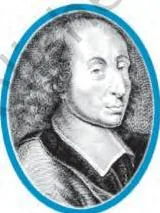
This array is called Pascal’s triangle, after the French mathematician Blaise Pascal. The same triangle, named Meru Prastara, was given by Pingla in Chhanda shastra long before (NCERT, p. 134).
Writing rows of the triangle by hand works, but for index 12 or 20 it is slow. The fix is to read every entry as a combination. Recall from the permutations and combinations chapter that \( {}^nC_r = \frac{n!}{r!(n-r)!} \) with \( {}^nC_0 = 1 = {}^nC_n \).
With that, row \(n\) becomes \( {}^nC_0, {}^nC_1, \dots, {}^nC_n \) (Fig 7.3). For index 7 the row is \( {}^7C_0 \; {}^7C_1 \; \dots \; {}^7C_7 \), which expands to:
\[ (a+b)^7 = {}^7C_0 a^7 + {}^7C_1 a^6 b + {}^7C_2 a^5 b^2 + {}^7C_3 a^4 b^3 + {}^7C_4 a^3 b^4 + {}^7C_5 a^2 b^5 + {}^7C_6 a b^6 + {}^7C_7 b^7 \]
Even this row becomes impractical to hand-write for big indices — which is exactly why the theorem below replaces the whole triangle with one formula.
Binomial Theorem Class 11 Notes: Formula, Proof and Observations
This is the statement you must know cold. For any positive integer \(n\) (NCERT, p. 130):
\[ (a+b)^n = {}^nC_0 a^n + {}^nC_1 a^{n-1}b + {}^nC_2 a^{n-2}b^2 + \dots + {}^nC_{n-1} ab^{n-1} + {}^nC_n b^n \]
The compact sigma form means exactly the same thing:
\[ (a+b)^n = \sum_{k=0}^{n} {}^nC_k a^{n-k} b^k \]
| Symbol | Meaning |
|---|---|
| \(n\) | positive integer — the index of the binomial |
| \(a, b\) | any real numbers or algebraic expressions |
| \({}^nC_r\) | combination (binomial coefficient), \(\frac{n!}{r!(n-r)!}\) |
Proof idea: mathematical induction
The proof runs by the principle of mathematical induction (NCERT, pp. 129–130). Examiners rarely ask you to reproduce the full algebra, but two ideas keep recurring, so know them:
- Base case: \(P(1)\) says \((a+b)^1 = a+b\), which is true.
- Inductive step: assume \(P(k)\): \((a+b)^k = {}^kC_0 a^k + {}^kC_1 a^{k-1}b + \dots + {}^kC_k b^k\). Multiply both sides by \((a+b)\).
- Grouping: collect like powers of \(b\) using the identity \( {}^kC_r + {}^kC_{r-1} = {}^{k+1}C_r \). This converts the \(k\)-expansion into the \(k+1\) form, so \(P(k+1)\) holds.
That identity is the algebraic engine of the whole proof — it is the same “two entries above add” rule from Pascal’s triangle, written in combinations.
The five observations that govern every expansion
- 1. Coefficients: the numbers \( {}^nC_r \) are called binomial coefficients.
- 2. Term count: there are \(n+1\) terms — one more than the index.
- 3. Power drift: the power of \(a\) falls from \(n\) to 0; the power of \(b\) rises from 0 to \(n\).
- 4. Power sum: in every term the two powers add to \(n\).
- 5. End values: \(b^0 = 1 = a^{n-n}\), which is what makes the sigma form valid.
All five are listed by NCERT on p. 130. They are not decoration — every expansion you write should be checked against them.
Special Expansions and Identities at a Glance
Putting \(x\), \(y\) or 1 in place of \(a\) and \(b\) produces four forms you will meet again and again (NCERT, pp. 130–131). Keep them straight with this comparison table:
| Form | Expansion shape | Sign behaviour | Typical use |
|---|---|---|---|
| \((x+y)^n\) | \({}^nC_0 x^n + {}^nC_1 x^{n-1}y + \dots + {}^nC_n y^n\) | All terms positive | Direct expansion, e.g. \((3x+2)^5\) |
| \((x-y)^n\) | \({}^nC_0 x^n – {}^nC_1 x^{n-1}y + {}^nC_2 x^{n-2}y^2 – \dots + (-1)^n {}^nC_n y^n\) | Signs alternate, start with + | Minus-sign binomials like \((x-2y)^5\) |
| \((1+x)^n\) | \({}^nC_0 + {}^nC_1 x + {}^nC_2 x^2 + \dots + {}^nC_n x^n\) | All terms positive | Deriving identities |
| \((1-x)^n\) | \({}^nC_0 – {}^nC_1 x + {}^nC_2 x^2 – \dots + (-1)^n {}^nC_n x^n\) | Signs alternate | Alternating sums, approximations |
Two identities fall straight out of the \((1+x)^n\) forms by putting \(x=1\) (NCERT, p. 131):
- From \((1+x)^n\) at \(x=1\): \( 2^n = {}^nC_0 + {}^nC_1 + {}^nC_2 + \dots + {}^nC_n \).
- From \((1-x)^n\) at \(x=1\): \( 0 = {}^nC_0 – {}^nC_1 + {}^nC_2 – \dots + (-1)^n {}^nC_n \).
The substitution trick generalises: replace \(x\) by any number. Setting \(x=3\) in \((1+x)^n\) gives \( \sum_{r=0}^{n} {}^nC_r 3^r = 4^n \) — exactly the method behind Exercise 7.1 Q14.
Memory device: read a Pascal row as a list of choices. Row \(n\) holds \( {}^nC_0 \) to \( {}^nC_n \), and the entry \( {}^nC_r \) counts the ways to choose \(r\) of the \(n\) brackets to pull a \(b\) from. In \((a+b)^4\), the term \(6a^2b^2\) appears because there are \( {}^4C_2 = 6 \) ways to pick two brackets for the \(b\) factors.
Key Terms and Symbols: A Definitions Table
Scan the terminology once so no definition surprises you on the day (all terms trace to NCERT, pp. 127–130):
| Term | Meaning | Example |
|---|---|---|
| Binomial expression | An algebraic expression with exactly two terms | \(a+b\), \(2x-3y\) |
| Index | The power \(n\) to which the binomial is raised | 5 in \((x+2)^5\) |
| Binomial expansion | The fully expanded form with every term written out | \((a+b)^4 = a^4 + 4a^3b + 6a^2b^2 + 4ab^3 + b^4\) |
| Binomial coefficients | The numbers \( {}^nC_r \) that multiply each term | 1, 5, 10, 10, 5, 1 for index 5 |
| Pascal’s triangle | The triangular array of these coefficients; each entry is the sum of the two above it | Row 4: 1 4 6 4 1 |
| Combination symbol | \({}^nC_r = \frac{n!}{r!(n-r)!}\), with \( {}^nC_0 = 1 = {}^nC_n \) | \({}^4C_2 = 6\) |
| Positive integral index | \(n\) being a positive integer — the only case this chapter covers | \(n = 1, 2, 3, \dots\) |
Worked Examples: Four Problems Solved Step by Step
Four worked examples below use fresh numbers so you can practise the method without remembering textbook values. No units apply in pure algebra.
Worked Example 1: Expand (3x + 2)^5
Method: direct expansion using the theorem.
- Step 1: Read the coefficients from row 5 of Pascal’s triangle: 1, 5, 10, 10, 5, 1.
- Step 2: Write the powers of \(3x\) falling from 5 to 0 and the powers of 2 rising from 0 to 5.
\[ (3x+2)^5 = {}^5C_0(3x)^5 + {}^5C_1(3x)^4(2) + {}^5C_2(3x)^3(2)^2 + {}^5C_3(3x)^2(2)^3 + {}^5C_4(3x)(2)^4 + {}^5C_5(2)^5 \]
Step 3: Simplify each term — combine the coefficient with the constant power:
\[ = 243x^5 + 5\cdot 81x^4\cdot 2 + 10\cdot 27x^3\cdot 4 + 10\cdot 9x^2\cdot 8 + 5\cdot 3x\cdot 16 + 32 \]
\[ = 243x^5 + 810x^4 + 1080x^3 + 720x^2 + 240x + 32 \]
Check: the sum of the two powers is 5 in every term, as observation (iii) demands.
Final answer: \((3x+2)^5 = 243x^5 + 810x^4 + 1080x^3 + 720x^2 + 240x + 32\).
Worked Example 2: Compute (97)^4 by splitting the base
Method: numerical evaluation by writing the base as \(100 – 3\), because powers of 100 are trivial.
- Step 1: Write \(97 = 100 – 3\), so \((97)^4 = (100-3)^4\).
- Step 2: Expand with alternating signs — term \(r\) carries \((-1)^r\):
\[ (100-3)^4 = 100^4 – 4(100)^3(3) + 6(100)^2(3)^2 – 4(100)(3)^3 + 3^4 \]
Step 3: Simplify each power of 100 before adding — a single dropped zero changes the answer:
\[ = 100{,}000{,}000 – 12{,}000{,}000 + 540{,}000 – 10{,}800 + 81 \]
Step 4: Combine, keeping the signs:
\[ = 88{,}000{,}000 + 540{,}000 – 10{,}800 + 81 = 88{,}529{,}281 \]
Final answer: \((97)^4 = 88{,}529{,}281\).
Worked Example 3: Which is larger, (1.02)^1000000 or 20000
Method: comparison using only the first two terms — every other term is positive.
Step 1: Write \(1.02 = 1 + 0.02\) and expand the start of the series:
\[ (1.02)^{1000000} = (1+0.02)^{1000000} = 1 + 1000000(0.02) + \text{other positive terms} \]
Step 2: Evaluate the second term: \(1000000 \times 0.02 = 20000\).
\[ = 1 + 20000 + \text{other positive terms} \]
Step 3: Because every omitted term is positive, the total strictly exceeds 20000.
Final answer: \((1.02)^{1000000} \gt 20000\), so \((1.02)^{1000000}\) is larger.
Worked Example 4: Show that 7^n − 6n leaves remainder 1 when divided by 36
Method: divisibility proof by rewriting the base as \(1+6\), then factoring out \(6^2 = 36\).
Step 1: Replace 7 by \(1+6\) and expand:
\[ 7^n = (1+6)^n = {}^nC_0 + {}^nC_1(6) + {}^nC_2(6)^2 + {}^nC_3(6)^3 + \dots + {}^nC_n(6)^n \]
Step 2: Write out the first two terms and factor \(6^2\) out of the tail:
\[ 7^n – 6n = 1 + 6n + 36\left( {}^nC_2 + 6\cdot {}^nC_3 + \dots + 6^{n-2} \right) – 6n \]
Step 3: The \(6n\) terms cancel, leaving:
\[ 7^n – 6n = 1 + 36k, \quad \text{where } k = {}^nC_2 + 6\cdot {}^nC_3 + \dots + 6^{n-2} \]
Step 4: Since \(k\) is a natural number, \(7^n – 6n = 36k + 1\) is exactly “remainder 1 on division by 36”.
Final answer: \(7^n – 6n\) leaves remainder 1 when divided by 36.
Common Mistakes Students Make in Binomial Expansions
Each error below pairs the wrong step with the corrected rule and a quick self-check. Run through them before the exam.
| Common mistake | Correct rule | How to check your answer |
|---|---|---|
| Writing \((x-y)^5 = x^5 – 5x^4y – 10x^3y^2 \dots\) with two minuses together | Term \(r\) carries sign \((-1)^r\), so signs alternate strictly +, −, +, −, +, − | Count the minus signs: they must alternate, never repeat |
| Dropping coefficients: \((a+b)^4 = a^4 + a^3b + a^2b^2 + ab^3 + b^4\) | Coefficients 1, 4, 6, 4, 1 come from row 4 of Pascal’s triangle | The middle term must carry \({}^4C_2 = 6\) |
| Saying \((a+b)^5\) has 5 terms | An \(n\)-th power has \(n+1\) terms — here 6 | Count powers of \(b\) from 0 to 5 |
| Writing \(100^4 = 10{,}000{,}000{,}000\) | \(100^4 = 10^8 = 100{,}000{,}000\) | \(100^2 = 10^4\), so \(100^4 = (10^4)^2 = 10^8\) |
| Using the theorem for negative or fractional indices like \((1+x)^{-1}\) | This chapter proves it for positive integral indices only (NCERT, p. 127) | Check \(n\) is a positive integer before you start |
| Stopping the divisibility proof at \(7^n – 6n = 1 + 36k\) without naming \(k\) | State \(k = {}^nC_2 + 6\cdot {}^nC_3 + \dots + 6^{n-2}\) is a natural number | The remainder form \(a = bq + r\) needs the quotient written out |
| Writing the two powers in a term as adding to \(n+1\) | The sum equals the index \(n\) in every term (observation iii) | In \({}^5C_2 a^3b^2\), check \(3+2=5\) |
Exam Notes: Question Patterns and the Steps That Earn Marks
The chapter’s own exercises (NCERT, p. 133 Exercise 7.1 and p. 134 Miscellaneous) fall into a handful of patterns. Learn the pattern and you know the method before you read the numbers:
| Exercise | Pattern | Method |
|---|---|---|
| Ex 7.1 Q1–Q5 | Direct expansion of algebraic binomials like \((1-2x)^5\), \((\frac{2}{x} – \frac{x}{2})^5\) | Apply the theorem term by term, simplify each coefficient |
| Ex 7.1 Q6–Q9 | Numerical values: \((96)^3\), \((102)^5\), \((101)^4\), \((99)^5\) | Split as \(100 \pm k\) and expand |
| Ex 7.1 Q10 | Comparing \((1.1)^{10000}\) with 1000 | First two terms plus positivity of the rest |
| Ex 7.1 Q11–Q12; Misc Q2–Q3 | Symmetric sums and differences \((a+b)^n \pm (a-b)^n\), surd pairs like \((\sqrt{3}+\sqrt{2})^4 \pm (\sqrt{3}-\sqrt{2})^4\) | Odd-power terms cancel; keep only the wanted parity |
| Ex 7.1 Q13; Misc Q1 | Divisibility by 64; \(a-b\) a factor of \(a^n – b^n\) | Rewrite the base as \(1+k\) (or \(a-b+b\)) and expand |
| Ex 7.1 Q14 | Identity \(\sum_{r=0}^{n} {}^nC_r 3^r = 4^n\) | Substitute \(x = 3\) into \((1+x)^n\) |
| Misc Q4 | Approximation of \((0.99)^5\) | Use \((1 – 0.01)^5\), keep the first three terms |
The steps below are what earn the marks, in the examiner’s view:
- Writing the alternating signs correctly in \((x-y)^n\) — sign errors cost the most.
- Simplifying powers of 100 completely before combining — no dropped zeroes.
- Naming \(k\) as a natural number in a remainder proof — the statement needs the quotient form.
- Saying “other positive terms” in comparisons — that positivity is what justifies \(\gt\).
- Checking the sum of the indices equals \(n\) after every expansion — a fast self-check.
One-line factual recall may also appear: Pascal’s triangle is named after Blaise Pascal, and the same array was called Meru Prastara by Pingla in Chhanda shastra (NCERT, pp. 128, 134). The sum-of-terms thinking here connects naturally to the sequences and series chapter, where the same \(\sum\) notation reappears.
Revision Summary: The Binomial Theorem in One Look
Dense recap for the final hour — everything below appeared above with page support.
- The theorem: \((a+b)^n = \sum_{k=0}^{n} {}^nC_k a^{n-k} b^k\) for positive integer \(n\).
- Pascal’s triangle: each inner entry is the sum of the two above; row \(n\) reads \( {}^nC_0 \) to \( {}^nC_n \).
- Three observations: \(n+1\) terms; \(a\)-power falls while \(b\)-power rises; powers sum to \(n\) in every term.
- Four special forms: \((x\pm y)^n\) and \((1\pm x)^n\) — signs alternate for the minus forms.
- Two identities: \(\sum {}^nC_r = 2^n\) and \(\sum (-1)^r {}^nC_r = 0\).
- Four application styles: evaluation (split \(100 \pm k\)), comparison (positivity of the tail), divisibility (base as \(1+k\)), symmetric sums (cancel odd terms).
For the wider picture, browse the full Class 11 Mathematics notes hub, the class-level Class 11 notes, or the complete CBSE notes index. If the \( {}^nC_r \) tool feels shaky, revise the permutations and combinations notes that supply it.
Frequently Asked Questions on the Binomial Theorem
Why does the expansion of (a + b)^n contain n + 1 terms?
Because the power of \(b\) runs through every value from 0 to \(n\) — that is \(n+1\) different values, so \(n+1\) terms (observation 2, NCERT, p. 130).
How do I get the signs right while expanding (x − y)^n?
Term \(r\) (counting from 0) carries \((-1)^r\), so each minus flips the sign: +, −, +, −, and so on (NCERT, p. 131).
Can I use the binomial theorem for negative or fractional powers like (1 + x)^(−1)?
No — this chapter proves the theorem for positive integral indices only (NCERT, p. 127). Negative or fractional powers need a different version that is not covered here.
How do I use the binomial theorem to work out numbers like (97)^4 quickly?
Split the base as a round number plus or minus a small one, then expand: \(97 = 100 – 3\), so \((97)^4 = (100-3)^4\) — the worked example above shows every step.
Why do divisibility proofs end with something like 1 + 25k?
After you isolate the linear term, the remaining tail is always a multiple of the square of the added base (for \((1+6)^n\), that square is 36). Writing the result as \(1 + 36k\) with \(k\) a natural number makes the remainder 1 visible.
What is Meru Prastara and how is it related to Pascal’s triangle?
Meru Prastara is the same triangular array of coefficients, named by Pingla in Chhanda shastra; it is what the West later called Pascal’s triangle (NCERT, p. 134).
Reference: NCERT Class 11 Mathematics textbook, chapter Binomial Theorem.
Explore Class 11 Mathematics Notes
More for this chapter:
Class 11 Mathematics on LearnCBSE:
Related chapters: