
Searching for the food processing and technology class 12 chapter PDF? This is the official NCERT Class 12 Home Science (Human Ecology and Family Sciences Part I) Chapter 4 — Food Processing and Technology — as a free downloadable file.
In the printed textbook the chapter runs 14 pages (NCERT pages 61–74), opening with learning objectives and closing with a hands-on practical.
The official PDF is directly below. After it comes a plain-language guide to what the chapter teaches: the four basic definitions, the perishability classes, the five preservation concepts, the seven processed-food classes, and the career routes the book names.
Download the Food Processing and Technology Class 12 Chapter PDF
Open the NCERT Class 12 Home Science Chapter 4 Food Processing and Technology PDF on the official NCERT e-textbook portal — it gives you the full chapter online, with the same text, tables and figures as the printed book, from the learning objectives on page 61 to Practical 1 on page 74.
| What the chapter holds | Count | Where it is used |
|---|---|---|
| Printed pages | 14 | |
| Figures with NCERT captions | 2 | |
| Tables | 1 | |
| Exercise questions | 7 | answered in our NCERT Solutions |
| Activities | 1 | |
| Official NCERT PDF | Download the chapter PDF | the chapter exactly as NCERT publishes it |
Chapter at a glance
The counts table below shows how much the file holds — its sections, figures, activities and review questions. Beyond the numbers, this chapter is more applied than theoretical: it moves from definitions to history to a career roadmap, then ends with a project you actually do.
Along the way you will meet Activity 1 (home-preserved foods), Table 5.1 (the knowledge and skills a food technologist needs) and Practical 1 (design, prepare and evaluate a processed food product). The chapter is mainly text- and table-based rather than diagram-heavy.
What this chapter covers, section by section
If you are holding the book, this roadmap lets you jump straight to any idea. Each row names the section, the printed NCERT page where it starts, and what the section says in one line.
| Chapter section | NCERT page | What it says in one line |
|---|---|---|
| Learning objectives | 61 | The five things the chapter expects you to be able to do by the end. |
| Introduction and significance | 61–62 | Why foods are processed, from traditional pickles and papads to modern convenience foods and fortification. |
| Basic concepts | 63 | The four working definitions — food science, food processing, food technology, food manufacturing. |
| Development of food processing and technology | 64 | The history from Appert’s canning (1810) to Pasteur’s pasteurisation (1864) and today’s health-driven reformulation. |
| Importance of processing and preservation | 65 | What spoils food and why processing adds value, safety and shelf life. |
| Classes of foods based on perishability | 66 | How long perishable, semi-perishable and non-perishable foods keep, plus the bacterial danger zone. |
| Activity 1 | 67 | A home task: list home-preserved foods and identify their method and preservatives. |
| Table 5.1 — knowledge and skills | 68 | The three-stage framework: food as a material, food product development, recipe development. |
| Preparing for a career | 69 | The knowledge a professional needs and the courses that lead to jobs. |
| Scope and career avenues | 70–71 | Where food technologists work, the listed job roles, and self-employment options. |
| Key terms | 71 | The six terms the chapter expects you to remember. |
| Review questions | 72 | Seven questions that track the learning objectives. |
| Practical 1 | 73–74 | Design, prepare, package, cost and label a preservable food product. |
Key concepts: what the chapter actually teaches
The chapter starts with definitions because every later idea — spoilage, preservation, careers — depends on knowing which term means which activity. Food processing is the applied bridge between food science and food technology.
The four working definitions (NCERT page 63)
These four terms are the chapter’s foundation and the first thing review question 1 asks you to explain.
| Term | What it means | How to remember it |
|---|---|---|
| Food Science | Studies food’s composition and how it changes from harvest to consumption, using chemistry, physics, microbiology and agronomy. | The science of understanding food. |
| Food Processing | The set of methods and techniques that turn raw ingredients into finished or semi-finished products. | The actual step of transforming food. |
| Food Technology | Applies the knowledge of food science and food engineering to produce safe, nutritious, convenient foods at scale. | Science put to industrial use. |
| Food Manufacturing | Mass production of food products, applying food technology to meet the needs of a growing population. | Making food in bulk. |
Foods by perishability (NCERT page 66)
The book groups foods by how long they stay safe, and the exact shelf lives are worth memorising for the review questions. Notice that fruits and vegetables sit in the middle class, not the first one.
| Class | Shelf life | Examples from the book |
|---|---|---|
| Perishable | 1–2 days | Milk, curds, fish, meat |
| Semi-perishable | 1–2 weeks | Fruits and vegetables |
| Root crops | 2–4 weeks | Onions, potatoes |
| Non-perishable | About one year | Rice, wheat, pulses, dals, oilseeds |
Five preservation concepts (NCERT pages 65–66)
Foods spoil through pests and insect infestation, wrong temperatures, excessive light, oxygen, moisture, microorganisms, chemical residues and the food’s own enzymes. Processing counters these with five basic concepts:
- Application of heat — destroys microbes and inactivates the food’s enzymes.
- Removal of water (moisture) — microbes cannot grow without it.
- Lowering temperature during storage — slows microbial and enzyme activity.
- Reduction of pH — an acidic environment discourages spoilage organisms.
- Controlling oxygen availability — stops aerobic microbes and oxidative enzymes.
Seven classes of processed foods (NCERT page 66)
Processed foods are classified by the extent and type of processing. In order, the seven classes are:
- Minimally processed — cleaned, trimmed, cut, sliced and refrigerated to keep the quality of fresh food.
- Preserved — character kept, e.g., frozen peas, dehydrated vegetables, canned fruits and vegetables.
- Manufactured — original character lost, using salt, sugar, oil or preservatives, e.g., pickles, jams, marmalades, squashes, papads, wadis.
- Formulated — ingredients mixed and processed into shelf-stable products, e.g., bread, biscuits, ice cream, cakes, kulfi.
- Food derivatives — components purified from a raw product, e.g., sugar from sugarcane, oil from oilseeds; oil can become vanaspati by hydrogenation.
- Functional — foods with a beneficial effect on health, e.g., probiotics.
- Medical — used in dietary management of disease, e.g., low-sodium salt, lactose-free milk.
Worked example: classifying six everyday Indian foods
The chapter names examples for each class; this worked example applies the same rules to six common Indian foods. The deciding question is always: does the product keep the raw material’s character or lose it?
| Food | Class | Why this class |
|---|---|---|
| Frozen green peas | Preserved | Freezing keeps the pea’s character, exactly like the frozen vegetables in the book. |
| Ready-to-eat khichdi pouch | Manufactured | The raw ingredients’ original character is lost; salt, oil and processing preserve it. |
| Tetra-pack lassi | Formulated | Milk, sugar and culture are mixed and processed into a relatively shelf-stable product. |
| Groundnut oil | Food derivative | Oil is purified from groundnuts, as sugar is purified from sugarcane. |
| Probiotic curd | Functional | It carries a beneficial effect on health, the chapter’s own definition of functional foods. |
| Lactose-free milk | Medical | Made for people with lactose intolerance, matching the book’s medical food example. |
A memory hook for the seven classes
Keep the seven classes in order with the phrase My Parents Make Five Favourite Fresh Meals: Minimally processed, Preserved, Manufactured, Formulated, Food derivatives, Functional, Medical.
Reading this chapter’s figure (NCERT page 63)
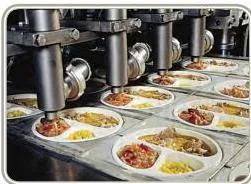
NCERT sets the definition of food processing apart in a box on page 63: it is the set of methods and techniques used to transform raw ingredients into finished and semi-finished products. Read that box next to the other two definitions and the three terms stop blurring together.
Food science explains what food is and how it changes; food technology applies that knowledge with engineering; food processing is the set of methods and techniques that does the transforming. Read the figure that way and the three terms become layers rather than synonyms.
The chapter is mainly text- and table-based, and this definition box, with Table 5.1 on page 68, is the visual it leans on.
Definitions: every term the chapter names
Use this table as a quick lookup before you write answers to review questions 1 or 7. Every meaning is in plain words; the page number sends you to the book’s own version.
| Term | Meaning in one or two lines | NCERT page |
|---|---|---|
| Food Science | Studies food’s composition and its changes from harvest to consumption, using basic sciences like chemistry, physics and microbiology. | 63 |
| Food Processing | The set of methods and techniques that transform raw ingredients into finished or semi-finished products. | 63 |
| Food Technology | Applies food science and engineering knowledge to select, store, preserve, process, package and distribute safe, nutritious, convenient food. | 63 |
| Food Manufacturing | Mass production of food products using the principles of food technology. | 63 |
| Food Spoilage | Deterioration that brings off-flavours, poor texture, discolouration and nutrient loss, until food is unfit or unsafe to eat. | 65 |
| Food Preservation | Keeping food in a safe, edible form and stopping spoilage after harvest or slaughter. | 65 |
| Pasteurisation | Treating milk to destroy disease-producing organisms — not to sterilise it. | 64 |
| Canning | Appert’s 1810 process of sealing food in containers and heating it; a turning point in preservation. | 64 |
| Food Fortification | Adding the nutrient that is lacking to a staple food or condiment; FSSAI sets standards for salt, wheat flour, milk and oats. | 62 |
| Minimally Processed Foods | Cleaned, trimmed, cut or sliced foods kept fresh by refrigeration, processed as little as possible. | 66 |
| Preserved Foods | Products whose character is kept through preservation — frozen peas, dehydrated vegetables, canned fruits. | 66 |
| Manufactured Foods | Products that lose the raw material’s original character and use salt, sugar, oil or preservatives — pickles, jams, squashes. | 66 |
| Formulated Foods | Shelf-stable products made by mixing and processing ingredients — bread, biscuits, ice cream, cakes, kulfi. | 66 |
| Food Derivatives | Components purified from a raw product — sugar from sugarcane, oil from oilseeds. | 66 |
| Functional Foods | Foods with a beneficial effect on health, such as probiotics. | 66 |
| Medical Foods | Foods used in managing disease, such as low-sodium salt or lactose-free milk. | 66 |
| Food Product Development | The stage of food production in which new products are designed, tested to specifications and assessed by sensory methods. | 68 |
| HACCP | Hazard Analysis and Critical Control Point — the food-safety system listed in Table 5.1’s product-development stage. | 68 |
Common mistakes in this chapter (and the correction)
Most errors in this chapter come from its classification and history sections, not from difficult ideas. The table names each trap before you fall into it.
| Mistake | Correct rule | How to check your answer |
|---|---|---|
| Calling fruits and vegetables “perishable” | The book classifies them as semi-perishable (1–2 weeks); perishable means 1–2 days — milk, curds, fish and meat. | State the shelf life with every class name, not just the name (NCERT, p. 66). |
| Giving only four factors for microbial growth in a general answer | The chapter lists five: nutrient availability, moisture, pH, oxygen levels, and the presence or absence of inhibiting substances such as antibiotics. | If the question says “four conditions” (Q7), answer four; anywhere else give the five the chapter explains (NCERT, p. 66). |
| Saying pasteurisation sterilises milk | It destroys disease-producing organisms — not all microbes. | Use the book’s wording “destroy disease producing organisms”, never “sterilise” (NCERT, p. 64). |
| Mixing preserved and manufactured foods | Preserved foods keep their character (frozen peas); manufactured foods lose the raw character (jam, pickles). | Ask: does the product still look and taste like the raw material? Yes → preserved; No → manufactured (NCERT, p. 66). |
Exam notes: what the review questions test
The seven review questions on page 72 track the five learning objectives from the opening page, so working through them covers the chapter’s own checklist. The mapping below shows which question tests which material — it does not promise weightage or specific exam questions.
| Question | What it tests | Where the material lives |
|---|---|---|
| Q1 | The five definitions — food science, processing, technology, manufacturing, spoilage. | Basic concepts, p. 63; spoilage, p. 65 |
| Q2 | Significance of food technology, including its effect on working women. | Introduction, pp. 61–62; history, p. 64 |
| Q3 | Old home preservation methods and their viability today. | Importance section, p. 65 |
| Q4 | Development of preservation from Appert to the present. | Development section, p. 64 |
| Q5 | The knowledge-and-skills framework in Table 5.1. | Table 5.1, p. 68 |
| Q6 | Health-and-wellness reformulation — fortification, artificial sweeteners, fat-replaced ice cream. | Introduction, p. 62 |
| Q7 | A five-part cluster: why process food, causes of spoilage, conditions bacteria need, extending shelf life, professional scope after 10+2. | Pages 65–70 |
For Q3, the book lists the old home methods — sun drying, controlled fermentation, salting/pickling, candying, roasting, smoking, baking and using spices as preservatives (NCERT, p. 65). For each method, be ready to say whether it is still viable today; most are, often in modernised form.
The four-vs-five factors point
The chapter explains five factors that influence microbial growth: nutrient availability, moisture, pH, oxygen levels, and the presence or absence of inhibiting substances such as antibiotics (NCERT, p. 66). Review question 7, however, asks for the four conditions bacteria need to grow and multiply — read it carefully and answer exactly what it asks.
The chapter never prints a four-item list, so build your four from its own material: a food supply (bacteria prefer protein-rich foods), moisture, a suitable pH and a suitable temperature (bacteria grow between \(5^\circ\text{C}\) and \(60^\circ\text{C}\)). All of these appear in the chapter’s discussion on page 66.
Activity 1 and Practical 1
Activity 1 (NCERT, p. 67) is a folder or classwork task with two parts: list the foods preserved at home in your region and identify the method and preservatives used; then find a processed food made with artificial sweeteners that is available in your area.
Practical 1 (NCERT, pp. 73–74) is the chapter’s hands-on project. Divide the class into groups of 5–6 and work through these ten steps to design, prepare, package, cost and label a preservable product:
- Choose a product that can be preserved and stored (e.g., pickles, jam, squash, murabba, papad) and make it distinctive — a different raw ingredient, or partly an artificial sweetener instead of sugar. Make about 500 g, using locally available produce and peels such as watermelon rind or orange peel.
- List the vegetables/fruits, ingredients, preservatives, utensils, gadgets and the medium of heat required, and collect them.
- List the criteria used in selecting raw materials, equipment and accessories.
- Write the recipe and method of preparation, step-wise, in detail.
- Identify the packaging material — glass or plastic bottle, or polyethylene pouches or bags.
- Prepare the product under as hygienic conditions as possible.
- Do the costing: food materials and ingredients, energy consumed, labour, and storage and packing material.
- Evaluate the product for texture, taste, colour and quality, and write down your observations.
- Prepare a label with the six required fields: product name and a picture or drawing; name and address of the manufacturer; ingredients listed in descending order of proportion plus net weight/volume; instructions for use; storage instructions; and the Use By or Best Before date.
The six label fields are the part examiners check most — and the descending order of ingredients is the rule students most often miss.
Industry figures you can quote
If you quote the industry’s size in an answer, the book states these figures on page 70 (the GDP share also appears on page 62): the Indian food industry is valued at about 61 billion US dollars, ranks fifth in size, contributes nearly 6 per cent of GDP and about 13 per cent of exports. Say which page you are citing.
One honest warning: textbook contents and the examinable syllabus are not always identical. Before planning your preparation, check the current official CBSE syllabus at cbse.gov.in.
One page revision summary
This recap follows the five learning objectives the chapter opens with (NCERT, p. 61). Read it the night before a test, then open the chapter for anything you cannot recall.
- The four definitions: food science (composition and changes), food processing (methods and techniques transforming raw ingredients), food technology (applying science and engineering to production), food manufacturing (mass production) — p. 63.
- History markers: Appert’s canning, 1810; Pasteur’s pasteurisation, 1864; 20th-century wars, space exploration and working women drove convenience foods (instant soups, ready-to-cook meals); the 21st-century shift is health-driven reformulation — fortification, artificial sweeteners, fat-replaced ice cream — pp. 62, 64.
- Why process food: spoilage from pests, insects, temperature, light, oxygen, moisture, microorganisms, chemicals and natural enzymes; five preservation concepts — heat, removing moisture, lowering temperature, reducing pH, controlling oxygen — pp. 65–66.
- The seven processed-food classes in order: minimally processed, preserved, manufactured, formulated, food derivatives, functional, medical — p. 66.
- What a professional needs: knowledge of food science, chemistry, microbiology, safety and quality assurance, and the three-stage framework of Table 5.1 — food as a material, food product development, recipe development — p. 68.
- Careers: roles from production manager to consultancy; routes from certificate and diploma courses (CFTRI, Mysore) to degrees and research (NIFTEM, Sonepat); self-employment in low-investment units such as salted peanuts, drinking-water pouches, dehydrated products and pickles — pp. 69–70.
Related resources
This listing is maintained for the 2026-27 academic session using the NCERT textbook information available to us. NCERT remains the authority for confirming the latest edition.
Keep revising from the same book with the Class 12 Home Science notes hub, which holds the chapter notes for this textbook. From there you can open the food quality and food safety chapter notes and the care and maintenance of fabrics in institutions chapter notes.
For other subjects, use the Class 12 notes hub or return to the main CBSE Notes index.
Reference: NCERT Class 12 Human Ecology and Family Sciences Part I textbook, Chapter 4, official edition on ncert.nic.in.
Sources and data verification
This page states where its information comes from and which authority settles what.
- This page describes NCERT’s Human Ecology and Family Sciences Part I (Class 12), Chapter 4 — Food Processing and Technology, official edition on ncert.nic.in.
- Page references are to the printed NCERT textbook pages (61–74).
- The listing is maintained for the current session using the NCERT information available to us.
- NCERT settles textbooks, editions and PDFs; CBSE settles the curriculum, syllabus and examinations. Textbook contents and the examinable syllabus are not always identical.
FAQs on Food Processing and Technology Class 12
What is the difference between food science, food processing and food technology in Class 12 Home Science Chapter 4?
Food science is the study of food’s composition and how it changes from harvest to consumption. Food processing is the set of methods and techniques that transform raw ingredients into finished or semi-finished products.
Food technology applies that science with engineering knowledge to produce safe, nutritious, convenient foods on a large scale (NCERT, p. 63). Think of them as layers: science gives understanding, technology gives application, processing gives the actual step.
Which foods are perishable, semi-perishable and non-perishable, with examples?
Perishable foods spoil within one or two days — milk, curds, fish and meat. Semi-perishable foods last 1–2 weeks, for example fruits and vegetables; root crops like onions and potatoes last 2–4 weeks.
Non-perishable foods generally last about a year — rice, wheat, pulses, dals and oilseeds (NCERT, p. 66). This is a common trap: fruits and vegetables belong to the semi-perishable group, not the perishable one.
Why do we need to process and preserve food, and what causes spoilage?
Processing and preservation keep food in an edible, safe form and extend its shelf life. Foods spoil through pests and insect infestation, wrong temperatures, excessive light, oxygen, moisture, microorganisms (bacteria, fungi, moulds), chemical residues such as pesticides, and degradation by the food’s own enzymes (NCERT, p. 65).
Processing counters these with five concepts: applying heat, removing moisture, lowering temperature, reducing pH and controlling oxygen (NCERT, pp. 65–66).
What is the danger zone for bacterial growth in food?
Bacteria grow at any temperature between \(5^\circ\text{C}\) and \(60^\circ\text{C}\); the book calls this range the danger zone. It also warns that bacteria prefer protein-rich foods — meat, fish, poultry, eggs and dairy — which are known as high risk foods (NCERT, p. 66). Keep food out of this temperature range to slow bacterial growth.
What career options and courses are available after Class 12 in food processing and technology?
After 10+2 you can take short-term certificate, craft and diploma courses at institutes across states, including CFTRI, Mysore — these suit self-employment and small units. Bachelor’s and Master’s degrees plus research qualifications open jobs in large-scale industry, research, training and entrepreneurship.
NIFTEM, Sonepat offers post-graduate courses in specialised aspects of the field (NCERT, p. 69). Job avenues in the book include production management, quality assurance, research and development, technical marketing, teaching and consultancy (NCERT, p. 70).
What does Practical 1 in this chapter require students to do?
Practical 1 is a group project to design, prepare and evaluate a processed food product that can be preserved — for example pickles, jam, squash, murabba or papad (NCERT, p. 73).
The ten steps cover choosing and differentiating the product, listing materials, writing the recipe, packaging, hygienic preparation, costing, sensory evaluation and, finally, preparing a label with six required fields: product name, manufacturer’s name and address, ingredients in descending order with net weight/volume, use instructions, storage instructions, and the Use By or Best Before date (NCERT, pp. 73–74).
Explore Class 12 Home Science Books
- Previous: Public Nutrition and Health
- Next: Food Quality and
Class 12 Home Science on LearnCBSE:
Related chapters:
- Work, Livelihood and Career
- Clinical Nutrition and Dietetics
- Human Development and Family Studies