
This chapter introduces the language of sets — the notation, definitions, and operations you need to work with collections of objects. This sheet covers the key formulas: set-builder and roster forms, subset and equality conditions, union, intersection, difference, complement, interval notation, and De Morgan’s laws.
Each formula is grouped by topic with the meaning of every symbol, guidance on when to use it, and original worked examples. For the detailed explanations and derivations, visit the Sets Class 11 notes.
Formulas at a Glance
| Purpose | Formula |
|---|---|
| Set-builder form | \( A = \{x : P(x)\} \) |
| Subset condition | \( A \subset B \text{ if } a \in A \Rightarrow a \in B \) |
| Union of two sets | \( A \cup B = \{x : x \in A \text{ or } x \in B\} \) |
| Intersection of two sets | \( A \cap B = \{x : x \in A \text{ and } x \in B\} \) |
| Difference of two sets | \( A – B = \{x : x \in A \text{ and } x \notin B\} \) |
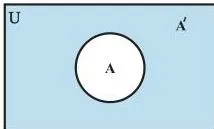
| Complement of a set | \( A’ = \{x : x \in U \text{ and } x \notin A\} \) |
| De Morgan’s law (union) | \( (A \cup B)’ = A’ \cap B’ \) |
| De Morgan’s law (intersection) | \( (A \cap B)’ = A’ \cup B’ \) |
| Number set relationships | \( \mathbf{N} \subset \mathbf{Z} \subset \mathbf{Q}, \mathbf{Q} \subset \mathbf{R}, \mathbf{T} \subset \mathbf{R}, \mathbf{N} \not\subset \mathbf{T} \) |
| Open interval | \( (a,b) = \{x : a \lt x \lt b\} \) |
| Closed interval | \( [a,b] = \{x : a \leq x \leq b\} \) |
| Half-open intervals | \( [a,b) = \{x : a \leq x \lt b\} \), \( (a,b] = \{x : a \lt x \leq b\} \) |
All Formulas, Grouped by Topic
Representation of Sets
Roster form – list all elements inside braces:
\[ \{a_1, a_2, a_3, \dots, a_n\} \]
Set-builder form – describe the common property of elements:
\[ A = \{x : x \text{ satisfies condition } P(x)\} \]
Example: \( V = \{x : x \text{ is a vowel in the English alphabet}\} \) (NCERT, p. 3).
Types of Sets
Empty (null) set – a set with no elements:
\[ \phi \text{ or } \{\} \]
Finite and infinite sets – a set is finite if it is empty or has a definite number of elements; otherwise it is infinite.
Equal sets – two sets A and B are equal if they have exactly the same elements:
\[ A = B \iff (A \subset B \text{ and } B \subset A) \]
Subsets and Intervals
Subset definition (NCERT, p. 9):
\[ A \subset B \text{ if } a \in A \Rightarrow a \in B \]
Proper subset – \( A \subset B \) and \( A \neq B \).
Number set relationships (NCERT, p. 11):
\[ \mathbf{N} \subset \mathbf{Z} \subset \mathbf{Q},\; \mathbf{Q} \subset \mathbf{R},\; \mathbf{T} \subset \mathbf{R},\; \mathbf{N} \not\subset \mathbf{T} \]
Intervals as subsets of \(\mathbf{R}\) (NCERT, p. 11):
\[ (a,b) = \{x : a \lt x \lt b\} \]
\[ [a,b] = \{x : a \leq x \leq b\} \]
\[ [a,b) = \{x : a \leq x \lt b\} \]
\[ (a,b] = \{x : a \lt x \leq b\} \]
Set Operations
Union (NCERT, p. 14):
\[ A \cup B = \{x : x \in A \text{ or } x \in B\} \]
Intersection (NCERT, p. 15):
\[ A \cap B = \{x : x \in A \text{ and } x \in B\} \]
Disjoint sets – \( A \cap B = \phi \).
Difference (NCERT, p. 17):
\[ A – B = \{x : x \in A \text{ and } x \notin B\} \]
Complement and De Morgan’s Laws
Complement of a set (NCERT, p. 18):
\[ A’ = \{x : x \in U \text{ and } x \notin A\} \]
De Morgan’s laws (NCERT, p. 19):
\[ (A \cup B)’ = A’ \cap B’ \]
\[ (A \cap B)’ = A’ \cup B’ \]
Complement properties (NCERT, p. 20):
\[ A \cup A’ = U, \quad A \cap A’ = \phi, \quad (A’)’ = A, \quad \phi’ = U, \quad U’ = \phi \]
What Each Symbol Means
| Symbol | Meaning | Nature (unit) |
|---|---|---|
| \( \in \) | belongs to (is an element of) | relation |
| \( \notin \) | does not belong to | relation |
| \( \subset \) | is a subset of | relation |
| \( \not\subset \) | is not a subset of | relation |
| \( \phi \) | empty (null) set | set |
| \( \cup \) | union of sets | operation |
| \( \cap \) | intersection of sets | operation |
| \( A – B \) | difference of sets (A minus B) | operation |
| \( A’ \) | complement of A with respect to universal set U | set |
| \( U \) | universal set | set |
| \( \mathbf{N} \) | set of natural numbers | set |
| \( \mathbf{Z} \) | set of integers | set |
| \( \mathbf{Q} \) | set of rational numbers | set |
| \( \mathbf{R} \) | set of real numbers | set |
| \( \mathbf{T} \) | set of irrational numbers | set |
| \( (a,b) \) | open interval from a to b | set of reals |
| \( [a,b] \) | closed interval from a to b | set of reals |
| \( n(A) \) | number of distinct elements in set A | count (natural number) |
When to Use Each Formula
- Set-builder form: Use when you need to describe a set by a common property (e.g., all numbers satisfying an equation).
- Subset condition: Use to check whether every element of A is also in B. The implication \(a \in A \Rightarrow a \in B\) must hold for all elements.
- Equal sets: Use when you need to prove two sets are identical; show both \(A \subset B\) and \(B \subset A\).
- Union: Use to combine all elements from two sets, without duplication.
- Intersection: Use to find the common elements of two sets.
- Difference: Use to find elements that are in A but not in B (order matters).
- Complement: Use when you need the set of everything in the universal set that is not in A.
- De Morgan’s laws: Use to simplify complements of unions or intersections.
- Intervals: Use to describe contiguous subsets of real numbers. Open interval \((a,b)\) excludes endpoints; closed \([a,b]\) includes them.
Worked Examples
Example 1: Union and Intersection
Step 1: Let \(A = \{2, 4, 6, 8, 10\}\) and \(B = \{5, 6, 7, 8, 9\}\).
Find \(A \cup B\) and \(A \cap B\).
Step 2: Use the definitions: \(A \cup B = \{x : x \in A \text{ or } x \in B\}\) and \(A \cap B = \{x : x \in A \text{ and } x \in B\}\).
\[ A \cup B = \{2, 4, 5, 6, 7, 8, 9, 10\} \]
\[ A \cap B = \{6, 8\} \]
Answer: \(A \cup B = \{2,4,5,6,7,8,9,10\}\), \(A \cap B = \{6,8\}\).
Example 2: Complement and De Morgan’s Law
Step 1: Let universal set \(U = \{1,2,3,4,5,6,7,8,9\}\), \(A = \{2,4,6,8\}\), \(B = \{1,3,5,7\}\).
Find \(A’\), \(B’\), and verify \((A \cup B)’ = A’ \cap B’\).
- Step 1: Compute complements: \(A’ = \{1,3,5,7,9\}\), \(B’ = \{2,4,6,8,9\}\).
- Step 2: Compute \(A \cup B = \{1,2,3,4,5,6,7,8\}\), so \((A \cup B)’ = \{9\}\).
- Step 3: Compute \(A’ \cap B’ = \{1,3,5,7,9\} \cap \{2,4,6,8,9\} = \{9\}\).
\[ (A \cup B)’ = \{9\} = A’ \cap B’ \]
Answer: De Morgan’s law is verified. \(A’ = \{1,3,5,7,9\}\), \(B’ = \{2,4,6,8,9\}\).
Example 3: Interval Notation and Set-Builder Form
- Step 1: Write the set \(\{x : x \in \mathbf{R}, -3 \leq x \lt 5\}\) as an interval.
- Step 2: The left endpoint \(-3\) is included (≤), the right endpoint \(5\) is excluded ().
So the interval is \([-3,5)\).
- Step 1: Write the interval \((2,7]\) in set-builder form.
- Step 2: \(2\) is excluded (open), \(7\) is included (closed).
So \(\{x : x \in \mathbf{R}, 2 \lt x \leq 7\}\).
Answer: \([-3,5)\) and \(\{x : 2 \lt x \leq 7\}\).
Common Mistakes to Avoid
| Mistake | Correct rule | How to check your answer |
|---|---|---|
| Writing \(a \in \{a,b\}\) but then saying \(\{a\} \in \{a,b\}\) (confusing element and subset). | \(a \in A\) means a is an element; \(\{a\} \subset A\) means the set containing a is a subset. | Ask: is the object on the left an element of the set? If it is a set itself, use \(\subset\) not \(\in\). |
| Forgetting that the empty set is a subset of every set. | \(\phi \subset A\) for any set A. | When listing subsets, always include \(\phi\). |
| Mixing up union and intersection when taking complements, e.g., writing \((A \cup B)’ = A’ \cup B’\). | De Morgan’s law: \((A \cup B)’ = A’ \cap B’\). | Test with a small example (like Example 2 above) to verify. |
| Writing an interval \((a,b)\) when the endpoints are included, or \([a,b]\) when they are excluded. | Use round brackets \(( \) for strict inequalities (\(\lt , \gt\)), square brackets \([ \) for inclusive (\(\leq , \geq\)). | Check the inequality signs in the set-builder form. |
| Assuming a set with repeated elements is different from the set without repetitions. | A set is defined by its distinct elements; repetitions do not change the set. | Rewrite the set without duplicates and compare. |
Frequently Asked Questions
What is the difference between \(\subset\) and \(\in\)?
\(\subset\) is a relation between two sets: \(A \subset B\) means every element of A is also in B. \(\in\) is a relation between an element and a set: \(a \in A\) means a is an element of A. For example, \(2 \in \{2,3\}\) but \(\{2\} \subset \{2,3\}\).
How do I know if a set is finite or infinite?
A set is finite if it is empty or has a definite number of elements (you can count them). It is infinite if its elements cannot be listed completely (e.g., the set of natural numbers, the set of points on a line). Look at the definition: if the set has no bound (like “all even numbers”) it is infinite.
What is the complement of a set?
The complement \(A’\) of a set A is the set of all elements in the universal set U that are not in A. It is the same as \(U – A\). The complement depends on the choice of U.
When do I use De Morgan’s laws?
Use them when you need to find the complement of a union or intersection. They let you “distribute” the complement: the complement of a union is the intersection of the complements, and vice versa. This is useful for simplifying expressions in set theory.
Practise these formulas on the textbook’s own questions — see the Sets Class 11 NCERT solutions for step-by-step answers.
Reference: NCERT Class 11 Mathematics textbook, chapter Sets.
Explore Class 11 Maths Formulas
More for this chapter:
Class 11 Maths on LearnCBSE:
Related chapters:
Official source: download the NCERT textbook free from ncert.nic.in.